


Local News
Ben Carr answers questions at Gwen Secter Centre about his candidacy for the Liberals in Winnipeg South Centre
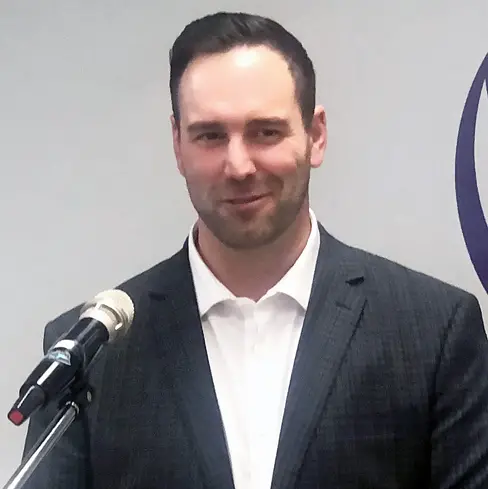
By BERNIE BELLAN It might have seemed an odd venue for a candidate in a federal byelection in to be grilled about his candidacy, but on Thursday, May 18, Liberal candidate for Winnipeg South Centre Ben Carr (in a byelection that will take place on June 19) faced a series of tough questions from audience members at the Gwen Secter Centre (which is in the north end) who were there for the second session of the Remis luncheon series.
As a preamble, I should note that Ben Carr was invited to speak to the Remis luncheon group well before the byelection was called in Winnipeg South Centre. Just as I have written about other speakers who have appeared at a Remis luncheon (and elsewhere in this paper you can read my account of the first of this years’ speakers, Joan Druxman, who spoke on May 11), I decided to write about Ben Carr’s appearanc at a Remis forum.
Ben Carr is the 37-year-old son of the late Jim Carr and Dr. Ruth Simkin. I have to make an admission at this point: I’ve known Carr ever since he was a classmate of my daughter Shira, beginning in Grade 7. That didn’t stop me, however, from throwing some pointed questions at him.
When he got up to speak Carr joked that he had been out campaigning recently in Tuxedo and when he knocked on people’s doors at least four individuals told him that they were related to him (which came as no surprise to him, he said, since he’s found through the years that both the Carr and Simkin families have many relatives in Winnipeg – and elsewhere).
Still, being the son of a famous politician, whose mantle he is now trying to adopt, has its pros and cons. I asked him, for instance, whether he’s encountered people who have accused him of capitalizing on his father’s name in running for the Liberals in the same riding that Jim Carr held for seven years until his untimely death last December?
Carr said “no,” that hasn’t been brought up to him personally.
“I recognize that I was gifted a set of principles by my parents,” he said. “You don’t choose where you come from, but you choose what you do with that.”
Someone else asked Carr whether he had ever been to Israel? He said that he had, when he was 24, when he was on a Birthright trip there – and had his bar mitzvah at the Kotel (Western Wall).
How that came about was an amusing story. Carr said that there were two rules all members of Birthright were supposed to follow: Stick with the group always and no drinking.
But, one time when the group was in Jerusalem, he and his cousin Joel decided to venture away from the group at one point, he explained. They came across someone who “looked like a rabbi,” Carr recalled. (To be honest, how hard is it to find someone who looks like a rabbi in Jerusalem?) They asked the individual whether he was a rabbi and when the man said he was, Carr said that he would like to be bar mitzvah’d.
The rabbi said to Carr and his cousin, “Okay, if you’re going to be bar mitzvah’d we’re going to the Kotel” and that’s where Carr was bar mitzvah’d.
As well, the rabbi happened to have a bottle of vodka, Carr added, which led to him and his cousin breaking the second Birthright rule.
And, although he’s relatively young, Carr has already had a varied career. After graduating from the French Immersion program at Kelvin, Carr became a teacher, he said, later a principal at Maples Met High School which, he explained, has an innovative program whereby some students attend school three days a week, and apprentice in a workplace the other two days.
Most recently Carr has been Vice President of something called the Indigenous Strategy Alliance, working in tandem with an Indigenous woman by the name of Rebecca Chartrand. He described their relationship as “what reconciliation should look like.”
Of course, growing up in a household immersed in politics (Jim Carr was first elected as an MLA in 1988, Carr pointed out, as part of the resurgent provincial Liberal showing led by then-leader Sharon Carstairs), he has had more than his share of exposure, both to campaigning and the day to day workings of government.
In 2015, when Jim Carr was elected to the House of Commons for the first time, Ben went along with his father to live with him in Ottawa for four months. Later, Ben held various positions in the federal government, including serving as Director of Parliamentary Affairs to the Minister of Canadian Heritage.
Still, while Winnipeg South Centre has been a Liberal-held seat for the past eight years, it has also been won by Conservatives in the past, most recently by Joyce Bateman (in 2011).
Carr said that “there are three issues I’m most proud of”: The national child care program, “which has lifted 450,000 kids out of poverty;” the government’s position on climate change where, he said, the government has found “a good balance;” and the national day care plan, “which is going to help women get back in the work force.”
He added that the government has introduced “changes in support for seniors,” including “dropping the age of eligibility to receive the Old Age Pension from 67 to 65 and increasing the Old Age Supplement.”
I said to Carr that there are two other issues that clearly distinguish the Liberals from the Conservatives: gun control and abortion. Since gun control was not likely to be an issue in Winnipeg South Centre though, I wondered whether abortion has been brought up to him since he’s been out knocking on doors?
He answered: “For us, this (abortion) was settled a long time ago. You cannot be a candidate for the Liberal Party of Canada unless you stand for a woman’s right to choose. I don’t know where my opponents stand on abortion, but I’d like to hear from them.”
Someone else asked him who else is running in the byelection? Carr said that the Conservative candidate is Damir Stipanovic, the NDP candidate is Julia Riddell, and the Green Party candidate is Doug Hemmerling. (Given how important the Jewish vote is in Winnipeg South Centre and how many of our readers live in the riding, we will try to profile each of the three other candidates in the June 7 issue.)
Someone wondered whether Carr had encountered any anti-Semitism while on the campaign trail? He said that he hadn’t, but he did offer an anecdote that illustrated how prejudice can work both ways.
One time when Ben was out campaigning for his father in River Heights, he said, he was confronted by a woman when he knocked on her door, he said, who told him that Justin Trudeau was an “antisemite.”
The reason she felt that way, Carr explained, was that Trudeau “had let so many Muslims into the country.”
That led me to ask Carr whether he has had anyone tell him that they’re not happy with the Liberal position on Israel, (e.g., either voting for or abstaining during votes on resolutions at the UN which are critical of Israel)?
Carr was adamant that the “Liberal government has been equal to or better than the Harper government was.” (It’s somewhat fitting that in this same issue we devote a fair bit of space to what Stephen Harper had to say about Israel at the Negev Gala.)
He went on to say that there is “an attempt within the Conservative movement in Canada to position itself as the only defender of Israel within the House of Commons.
“There is a little bit of a misconception when it comes to the Liberal Party’s position on Israel,” Carr continued.
“The fundamental principle is that Israel has a right to exist and is the homeland of the Jewish people,” he said.
Turning once again to the Conservative Party, Carr said the Conservative Party today is not the Progressive Conservative Party of “Joe Clark and Brian Mulroney.
“What Pierre Poilievre is trying to leverage,” Carr maintained, “ is the worst in us – and combining it with a kind of populism to turn us against one another.
“The vast majority of Conservatives that I talk to in Winnipeg South Centre identify with the PC Party.”
Carr brought up something that had been posted to the Damir Stipanovic website, (votedamir.ca) but has apparently been expunged, but not before someone had captured a screenshot of what was written:
“It is becoming increasingly clear that the Trudeau Liberals benefitted from corruption and interference in the 2019 and 2021 elections. Leaks from the Canadian Security Intelligence Service (CSIS) indicate that the Trudeau Liberals were aware of alarming reports and did not respond to the threats.
“An open and transparent public inquiry is now needed. With Winnipeg South Centre heading into a by-election, how do we know that the Chinese Communist Party is not funding Ben Carr and the Liberal party in this very riding?”
As noted, we will attempt to contact each of the three other candidates in Winnipeg South Centre in time for our June 7 issue, including Damir Stipanovic, whom we will also ask about the question posed on his website.
Local News
One of Canadian and American television’s greatest producers of all time: Perry Rosemond – a true North End boy, who never forgot his Winnipeg roots
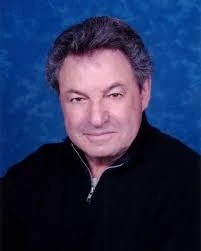
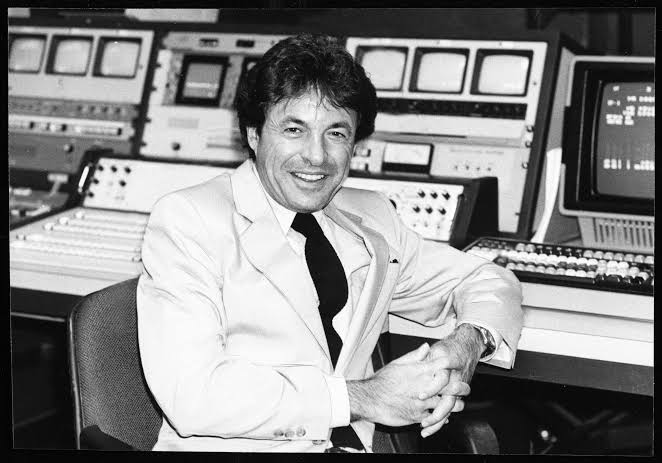
Introduction by BERNIE BELLAN Perry Rosemond was a well- known television producer who grew up in the North End of Winnipeg before moving to Toronto and establishing himself as one of Canadian television’s brightest talents in the 1960s, later to go on to even greater success in the US before returning to Canada in the 1980s.
Rosemond passed away in Toronto on August 20 at the age of 89.
In August 2020, Gerry Posner interviewed Rosemond for the Jewish Radio Hour. I contacted Rochelle Zucker, the longtime producer of that show, to see whether she could send me an audio file of that interview – which she was able to do. Following is a complete transcript of the often hilarious interview Gerry did with Perry Rosemond:
Gerry Posner: Welcome to the Jewish Hour radio show. This is Gerry Posner, and I’m delighted to be back on the radio once again with a guest whom I believe you will find interesting and informative. So today I feel very fortunate to have on the show a real Winnipeg legend, a man who has made his way in the world of the arts, and that is no small achievement. He has been a big name in the field of entertainment as a writer, a director, a producer for many years. I speak of Perry Rosemond. Perry, welcome to the Jewish Hour radio show.
Rosemond: Thank you, Ger.
Posner: I imagine you might have even listened to this show when you were a youngster.
Rosemond: Well, I have to tell you that my grandmother would call us every Sunday when I was about seven years of age, and she would say, “Turn on the French station at 1 o’clock and you’ll hear a very beautiful program.” And that was Noah Whitman’s show. And here I am, a mere 73 years later, on the show. Remarkable.
Posner: Well, I’m glad you made it. Tell me something, Perry. Who were your parents?
Rosemond: My parents were Max and Mona Rosemond, two of the most beautiful-looking people on the face of the earth, and where is genetics when you need it? But we lived in my grandmother’s house. You called it your grandmother’s house, even though there was a grandfather there. But she ruled the roost. And there were 14 of us in a house that wasn’t that big. But my dad was a clothing designer. My mother was a showroom model. And my mother wore a girdle, but she was never fat. And I later learned in life that the reason she wore the girdle was so that when the buyers in the showroom pinched her, it didn’t hurt as much. Those were my parents.
Posner: Well, where was the house that you grew up in?
Rosemond: The house I grew up in was at the corner of Manitoba and Andrews in North Winnipeg.
Posner: So you spent quite a few years there.
Rosemond: Oh, yes. I spent quite a few years there, but we moved. My parents were sort of upwardly mobile, and we moved from Andrews and Manitoba to Lansdowne Avenue. That was an improvement. Oh, my goodness. I had my own room.
Posner: Were there more of you than just Perry? I mean, were there siblings?
Rosemond: No, there was just me. But I was surrounded by cousins who were as close as brothers and sisters, really. And we stayed close for our entire lives. So there was a huge, huge sense of family at 193 Andrews.
Posner: Who would these cousins be?
Rosemond: My cousin Sonny and my cousin Mickey.
Posner: Both Rosemonds?
Rosemond: No, they were on my mother’s side.
Posner: What was her (maiden) name?
Rosemond: Magid.
Posner: MAGGOT. Really? Okay.
Rosemond: And Sonny and Mickey were four years older than me and exploited me at every opportunity. My uncle Dave Rosemond used to manage the Beacon Theater in Winnipeg.
Posner: In the North End.
Rosemond: Yes. And they would go to the Beacon Theater with me and get in for free because of me and still take my 10 cents that my mother gave me for the popcorn. So their mission in life was to exploit Perry Rosemond.
Posner: And you remember it, too.
Rosemond: I do indeed. I do indeed.
Posner: So you went to school where?
Rosemond: William Whyte School.
Posner: And then did you go to (St. Johns) Tech?
Rosemond: I went to Aberdeen and then to Tech. And at William Whyte School, I would go to sleep at night and pray to wake up Ukrainian so that the daily beatings would stop. But it was 50% Ukrainian and 50% Jewish.
Posner: Yeah, you knew what it was like to be a Jew.
Rosemond: Absolutely.
Posner: Did you do any studying in Hebrew or Yiddish?
Rosemond : I did. I went to Hebrew school. And in those days, I sounded like Georgie Jessel, for God’s sakes. In those days, I can’t believe I said that. If you’re going to cut anything, cut “in those days.” Please, Ger, do me a favor. But in those days, the instructors were measured by how much pain they could inflict on the students.
Posner: And you had a bit of that.
Rosemond: A bit of that. I was once thrown against a radiator by Mar Gross, and I still bear the pains to this day.
Posner: But you weren’t a product of Cantor Brownstone’s choir.
Rosemond: No, that was Alan Blye, and he was my friend and my roommate when I moved to Toronto to become an actor.
Posner: Who were some of your buddies in Winnipeg growing up? I guess Blye was one of them.
Rosemond: Blye was very close. Bugsy Lavich was very close, very close, and probably the leading bookmaker of his generation.
Posner: He’s well-known.
Rosemond: Indeed, and remains today my closest and dearest friend. And whenever I think about Bernie, I say to myself, how advantageous is it to have a friend who is the smartest human being in the world? I mean, if I need to know anything, he knows it. He knows it.
Posner: Did you go to university in Winnipeg at all?
Rosemond: I went to the University of Manitoba, and that’s where I got the bug to go into theater because I was Troilus in “Troilus and Cressida.” I was Cassius in “Julius Caesar,” and I was hopeless in the classroom. But it just took me by storm. It really did. And I ended up going to Toronto.
Posner: Well, just hold on a second. Were you not involved in some fashion in the creation of the MTC, the Manitoba Theatre Centre, in its very early days – with John Hirsch?
Rosemond: I was a founding member of the Manitoba Theatre Centre with Gordon Pinsent and Len Cariou – who went on to win a Tony, and Donnelly Rhodes, who went on to be a terrific influence in theatre in Canada. And I was one of the founding members. And you know what was strange, Gerry, is that I thought, boy, if this guy John Hirsch is in Winnipeg, what must they be like in New York or the West End in England? And I never met his match. But boy, could he intimidate me. I was in a play, “Death of a Salesman.” I was playing Bernard, and he came up to me and he said, “Mr. Rosemond, don’t you think you ought to reconsider your interpretation of that lawyer you’re playing?” And it would have been a fair note, except it was given to me after dress rehearsal. I’ve never seen a man customize performance the way he did — everybody got exactly what they needed. He was beyond brilliant. He went to his demise as my mentor and my idol and my friend.
Posner: So he was your introduction to the world of arts.
Rosemond: Absolutely. And strangely enough, we hooked up later when — oh, many, many years later — when he was head of drama at CBC, and he brought me back from Los Angeles to create the program “King of Kensington.”
Posner: When you made that decision somewhere in the ’50s, you’re in your, I guess, 20s, and you make a decision, “I’m going to move to Toronto, and I’m going to go into the arts as a career.” Your parents must have looked at you like you were out of your head.
Rosemond: Do you know, Gerry, it was funny, because beyond the initial beating about the head and shoulders that my father laid on me, they never stopped supporting me. They stood by me, and I can’t tell you how grateful I am for that. 100% support. Let me chart my own course.
Posner: But the odds were stacked against you. Come on.
Rosemond: Oh, tell me about it. I mean, it was about 15 minutes before I realized I wasn’t a very good television actor. I remember sitting in the basement of 42 Bedford Road in Toronto with Gordon Pinsent, who was my other roommate, with Alan Blye, and we were watching a guy who stole a part from me. He was playing the part I was born to play. And I watched it for about 10 minutes, and I said, “You know what, Gordon? He’s better than I would have been.” And Gordon said, “Perry, get out of acting. You don’t have the ego for it.” And I’d been sneaking in and out of control rooms all this time, Gerry. So I got bitten by the behind the scenes. And that’s where I headed.
Posner: So you actually gave up the acting. You went into production.
Rosemond: Exactly, exactly.
Posner: Well, maybe you were fortunate that that happened early on in the career. In your career, as I gather, you’ve touched the lives of some pretty big names. Tell me if I’m wrong here. Dick Van Dyke?
Rosemond: Yes. Len Cariou, Cloris Leachman, Julie Andrews, Steve Martin, Billy Crystal, Donnie and Marie, Johnny Cash, and the list goes on.
Posner: How does this all come about?
Rosemond: Oh, Johnny Cash. That was the best time of my life. Two years in Nashville. I’ll tell you how it came about. Johnny wanted documentary elements in his variety show, and I had trained in both in Canada. So I wasn’t the best documentary filmmaker, and I wasn’t the best comedy variety producer, but the fact that I could do both got me the job directing his show. And when they introduced me to him — it was during the hippie era, so I had the long hair and the whole nine yards.
Posner You weren’t exactly a feature presenter. You didn’t present well.
Rosemond: No, I didn’t present well because Johnny said, “Where are you going to film this week?” And I said, “I’m going to Hazard, Kentucky to film coal miners.” And Johnny said, “Perry, if you go into Hazard, Kentucky on a Saturday night with that long hair and them bell-bottoms, they’re going to kill you.” So this whole Hollywood invasion of middle America was absolutely hysterical. But the show was a big hit.
Posner: Give me the career path. You came here (Toronto) in the ’50s.
Rosemond: OK, I came here in the ’50s, late ’50s, as an actor. Right. Shared a room with Gordon Pinsent and Alan Blye. Right. We were very competitive, but Alan really won because he had a role on a continuing starring role on one of the big variety shows. And if I’m not mistaken, he actually declared Gordon Pinsent and me as dependents on his 1959 tax form. So he definitely was the more successful of the group. Then I went back to Winnipeg in 1960, and I applied as a production assistant. And there were no openings, but there were producer-directors that had quit, and so they gave me a job as a producer-director.
Posner: So I get this is at CBC in Winnipeg, correct?
Rosemond So I got 4,200 bucks for the year, and I did Metro News and a talk show, and then I did a show called “Red River Jamboree,” which was fully sponsored by Kraft Foods, always in the top ten. And, Ger, I’ve been going downhill ever since.
Posner Well, I wouldn’t say that. I don’t know hardly that, based on what I’ve read about you. I’d say you’re climbing the ladder, and you’ve climbed to the top. And then, so how long were you back in Winnipeg?
Rosemond: I was back in Winnipeg until ’63. What happened was I was doing this variety show and I looked eastward and the third best variety producer at CBC in Toronto was a guy by the name of Norman Jewison. And so I thought, oh, my God, I’m never going to get to Toronto, which was Mecca, as a variety producer. So I went to my supervisor and said, “Look, I want to do children’s programming. My heart is with the children.” And so I got transferred to the children’s department in Winnipeg, took two kinescopes under my arm and headed to Toronto, and got a transfer to children’s programming in ’63. ’63 to ’68 Toronto, ’68 to ’85 Los Angeles.
Posner: But what were you doing in LA?
Rosemond: Well, I came out of the Cash show and did Bill Cosby’s show. You might not have heard of him. He hasn’t been in the news much these days. But I did Bill Cosby’s variety show, and from then, Donnie and Marie (then) a situation comedy called “Good Times.” But what happened is I had three shows going in Canada at the same time. I had “Bizarre” on CTV. I had “Tom Jones” on Global TV, and I had “King of Kensington” on CBC. So I thought, well, what am I doing in America?
Posner: So back you came to Canada?
Rosemond: Back to Canada, where I’ve been since ’85.
Posner: Now, in those years, those five years that you alluded to, that you were doing work in children’s programming, you were pretty involved, from what I gather. You did some work on “Children of the World?”
Rosemond: Yeah, that’s probably something of which I’m most proud. It was a series on children in developing nations, and it drew an audience of over 600 million people just in audio-visual distribution.
Posner: Wow. And if I had to say, what’s the number one thing you’ve accomplished? That would be it?
Rosemond: That would be it.
Posner: Really?
Rosemond: Absolutely.
Posner: I understand it won (something called the Japan Prize). I mean, I hadn’t heard of this, but I gather it’s pretty significant. The Japan Prize is (for) the best children’s program.
Rosemond: That’s correct.
Posner: So, you know, that’s saying something. That’s a long way from the North End.
Rosemond: Well, you know what we say. They say, how come there’s so many great people from the North End? And my answer is always the same. It’s a deep and abiding desire to get the heck out of the North End.
Posner: Now, I think, correct me here, in some fashion, not only did you do this program that won this prize, “Children of the World.” But you also were connected, and maybe you can tell me how, to “Mr. Dressup” and “The Friendly Giant?”
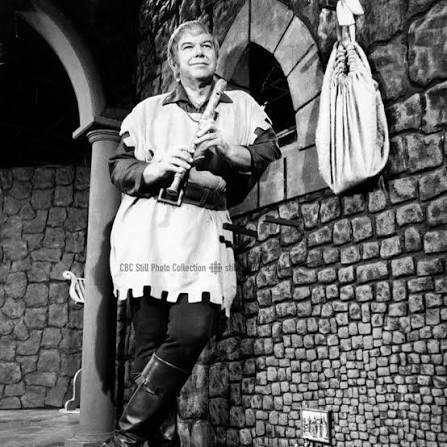
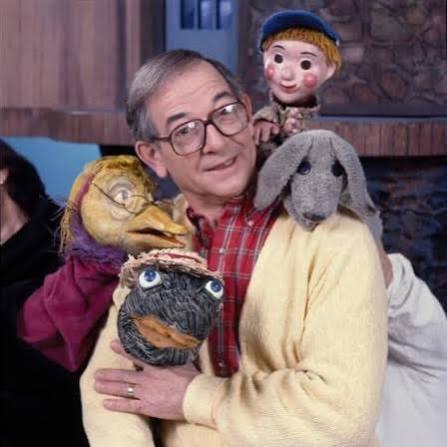
Rosemond: That’s right. I was head of children’s programming for a period of time and worked with Mr. Dressup and the Friendly Giant. Friendly Giant, I remember once being in a room with him, and I was giving him some notes, and he turned around and he walked away from me. I thought, well, that’s rude. And then I looked, and a group of schoolchildren had come into the studio. And he was deathly afraid of being seen as anything but a giant. Which he was, by the way. He was a gigantic personality.
Posner: Well, you were the executive producer of those shows, right?
Rosemond: Correct, correct, yeah.
Posner: And in some way you got connected to Sesame Street, too?
Rosemond: That’s right. I was living in Los Angeles, and they asked if I would come back and Canadianize Sesame Street.
Posner Canadianized Sesame Street? I didn’t know there was a Canadianized version.
Rosemond: Well, what we did was we took out the Native American segments and the Spanish segments, and we substituted them with Native Canadian and French. And then gradually we took over and did our own version, a Canadian version of Sesame Street. Again, very gratifying. Back to Winnipeg to do it — that was my blackmail. I said, I’ll come back and do it if I can do it in Winnipeg, because I like the graphics artists in Winnipeg, and I felt I’d get a better product.
Posner: Okay, that’d be what, sometime in the ’80s?
Rosemond: That would have been earlier. That would have been in the ’70s.
Posner: Wow. Well, you kept up your links to Winnipeg.
Rosemond: Absolutely. Absolutely.
Posner: Now, so you’ve had children’s programming. And you also got into, I gather, documentary and public affairs.
Rosemond: Right, yes. “The Way It Is.”
Posner: “The Way It Is” was the Sunday Night flagship show. That was the big show on CBC Sunday night, wasn’t it?
Rosemond: That’s right. It was the big show on CBC Sunday night, and I worked with an executive producer called Ross McLean. I didn’t last too long on that, Gerry. I remember Ross had a very constructive way of winning arguments. We had one argument. And I can’t even remember what it was about, but he won it hands down by throwing a Coke can at my head. And I took a hike, and I never came back to “The Way It Is.”
Posner: That’s the way it was.
Rosemond: That’s the way it was, right.
Posner: You also did what you call profiles for CBC’s “Telescope,” with Oscar Peterson, Arthur Haley, Gordon Pinsent, Glenn Gould, Donald Sutherland. I mean, that was another big show.
Rosemond: Yeah, and that was my entrée to the United States because I became their man in America. And thus I did Donald Sutherland in Hollywood while snooping around for work and Eddie Albert from ‘”Green Acres” and all of the expatriate Canadians who were living in Los Angeles. And that gave me a foothold because I could look for work and still pay the rent. My Canadian qualifications counted for nothing in America. You were zero. Zero. And I was starting from scratch at age 30, and I had to have some kind of income to get things going.
Posner: And then somewhere along the line you got — you oversaw the production, I’m not sure exactly, of “Hockey Night in Canada.” I’m guessing you never even played the game.
Rosemond: I was on the third line of the Chicago Blackhawks in the miniature NHL, you know, and probably the worst ever third liner in the history of Manitoba’s miniature NHL hockey. But here’s the deal with that. When I wanted to come back to Canada, I couldn’t just come back as a freelancer because when they brought me in from America, I was the big American producer that they were bringing to Canada. If I was going to be in Canada, you know the deal, the expert’s always 100 miles from home.
Posner: That’s right.
Rosemond: So I had to have a foothold. So I had worked with Don Ohlmeyer Productions, and they were consulting to Hockey Night. And they wanted to take over Hockey Night. And Don suggested that I come up from America to put them in the hockey business, which I did. And I also started other shows for this company, Molestar Communications, which were more in the entertainment business and more to my liking, like the Juno Awards, I’d escape for a month or two, or a syndicated series called “Starting From Scratch,” which I shot in Montreal. So I would leave the administrative behind and jump back into the trenches whenever I could.
Posner: You know, it’s okay you didn’t play so well in the third line in miniature. You did a little better, I would say. Now, you mentioned David Steinberg. And you produced his show, CTV’s “David Steinberg Show?”
Rosemond: Yes, that’s right.
Posner: Did you even write for that show?
Rosemond: I wrote for it.
Posner: How many scripts would you have written for?
Rosemond: We did one season only, but we had an incredible guest list. David grew up a block away from me, and we knew each other forever. And I’ve done so much with David, and I admire him so much. And David attracted a huge guest list of John Voight and Ethel Merman and Milton Berle, and he also was able to bring out John Candy for his first show and Martin Short and Dave Thomas and Joe Flaherty and all of those people.
Posner: No, I don’t think David Steinberg’s memories of Winnipeg are as warm as yours are. They are kind of, you know. I’m quite surprised to hear you say that because I think in the beginning maybe, you know, when you were a young kid you hate where you came from. Maybe there was some of that. But now he cherishes it.
Rosemond: He does. I also had a lot of clout in being able to, if I may say so, book enormous talent because we had Marty Short and Andrea Martin, and I was able to book Howie Mandel, because I gave him his first shot in America on Norm Crosby’s “Comedy Shop.” And I got to tell you this really boring story, but I’ll try to make it quick.
Posner: Okay.
Rosemond: My partner and I on Norm Crosby’s Comedy Shop could veto any act that appeared on the show. So Howie’s manager was Saul Holliff’s nephew, and Saul was Johnny Cash’s manager, who was very good to me on “The Johnny Cash Show.” So he said, could you put my act on? And I said, send a tape. So he sent the tape of Howie, you know, with the faucet on the forehead and the diaper and God knows what else. And before we were 15 seconds into it, my partner Joe Sigmund raised his hand and he said, “I veto.” I said, “Joe, it’s Saul Holliff’s nephew’s act. We’ve got to put him on. Let’s tape him. We won’t use it.” And six months later, to make a long story even a little longer, Phil Kives from Winnipeg of K-Tel came to order a DVD from us. And he said, “make sure that you put on the DVD the kid with the diaper.”
Posner: Okay. You know, I’m just barely starting and we’ve got to finish this. Tell me, Perry.
Rosemond: Yeah.
Interviewer: What’s the story? Are you into retirement mode or you’re still going at it?
Rosemond: My dream is that it’s “ready camera.” I want Ingmar Bergman to shoot this, by the way. My dream is “ready camera one” and aneurysm, and in slow motion my head starts to descend to the console and I’m dead before I even hit it.
Posner: You’re still working. Still working. And I guess you still connect to Winnipeg.
Rosemond: Absolutely. I was there several times to do specials in Winnipeg, and I still would go back today, especially with the tax credits.
Posner: Perry, it’s a joy to have you. I tell you, we barely scratched the surface, and I appreciate your taking the time to come and do this.
Rosemond: Can I tell you, and I say this in all honesty, you are one terrific interviewer.
Posner: Well, thanks very much. I enjoy doing it.
Post script (added by Bernie Bellan): Some of the things that Gerry omitted from his interview were that Rosemond also produced the terrific documentary, “When Jews Were Funny,” which was named best Canadian Feature Film at the 2013 Toronto Film Festival.
As his obituary on the Benjamin’s Parrk Memoria Chapel website also notes: “In 2003, Perry was appointed a member of the Order of Canada, a national recognition for a career that entertained, educated, and made Canadians laugh.
“But Perry never measured his life by accolades, he measured it in smiles. He lived to spread laughter and joy. It was his way of making people feel seen and valued. He will be dearly missed and forever loved.”
Local News
From a ‘pie in the sky’ idea to 2,400 young hockey players
By BERNIE BELLAN I didn’t used to cover sports for The Jewish Post & News except for the odd occasion.
For years we could count on the late, great Harvey Rosen to comb the waterfront, looking for any sports story that might have the least connection to anything Jewish. Harvey would even go into visiting teams’ locker rooms during Winnipeg Jets games and, if a player had a name that sounded Jewish, inquire whether that player might be Jewish.
Then, for a few years, we added well-known sports writer Scott Taylor to the mix. Scott offered quite a different perspective, looking for stories about athletes that went far behind the scenes to uncover details that other reporters might have missed.
With both Harvey and Scott gone from our pages, I’ve occasionally found myself filling the sports void. These days, however, I tend to wait for an interesting story to find me.
And that’s exactly what happened with Wheatland Hockey.
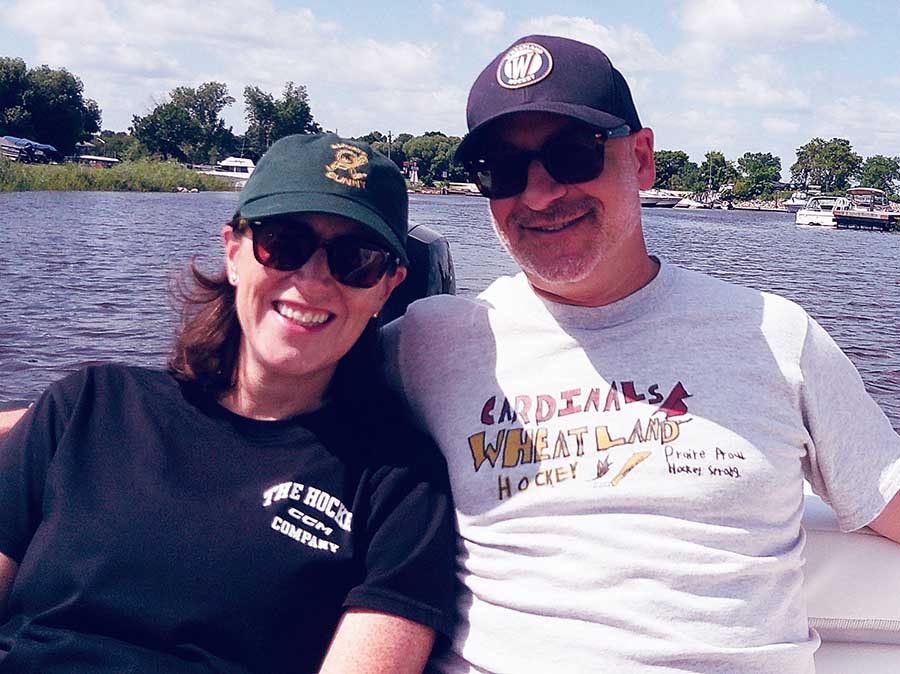
Recently, my neighbours Elliot and Linda Katz mentioned that they knew of a Jewish couple who had started a hockey development program in Winnipeg. The couple, Rich Hechter and Rachel Wolfenson, had apparently started Wheatland Hockey only about 16 months earlier.
I subsequently learned that, in that short time, more than 2,400 young hockey players had gone through Wheatland’s various programs.
That number got my attention.
So, I contacted Rachel and Rich to find out what they had created — and why.
It started with a gap
The idea for Wheatland began, as Rachel described it to me, as “this little pie in the sky idea that we were going to have a spring development program in the spring of 2025.”
They started with about 50 kids spread across three age groups.
Sixteen months later, Wheatland has grown into a broad hockey-development organization offering programs for players from U9 through U15, along with specialized programming, female hockey, spring and summer teams, events and high-performance opportunities.
But the numbers aren’t really the story.
The story is why they thought Wheatland needed to exist in the first place.
Rich and Rachel felt there was a gap between traditional minor hockey and the highly specialized — and often expensive — training programs available to elite players.
There were plenty of opportunities for kids to play hockey. But what about the player who needed to improve one particular part of their game? What about the U9 player whose parents had no idea what skills their child should be working on? What about the player who wasn’t an elite athlete but had the potential to become a much better hockey player with the right instruction?
That was the space they wanted Wheatland to occupy.
As Rachel explained it, some families come to Wheatland knowing exactly what their child needs.
“They might know that the kid’s gap is power skating,” she told me. “They might have a great shot and great stick handling, but they’re not strong skaters.”
Other families arrive with a much less specific question.
“They’re new U9 families,” Rachel said. “Their kids have been spat out of the Timbits world and into the U9 world and they don’t know what to focus on.”
That’s where Rich comes in.
‘Pedagogy on ice’
Rich brings an unusual background to hockey coaching.
He is currently taking a one-year sabbatical from his role as vice-principal of Brock Corydon School, the Winnipeg school often known as the only public school Hebrew bilingual program in North America. For many families in Winnipeg’s Jewish community, Brock Corydon is where they know Rich best.
Before becoming a vice-principal, he worked as a high school teacher and as a university professor in the Faculty of Education. He has also spent more than a decade coaching youth hockey.
This year, rather than stepping away from education, Rich is using his sabbatical as an opportunity to continue learning, writing, and growing as a coach and mentor while devoting more time to developing Wheatland Hockey.
That additional time will also allow Wheatland to extend its reach beyond Winnipeg through a new initiative called “Wheatland on the Road”.
Over the coming year, Rich will travel to rural Manitoba communities including Manitou, St. Laurent, Lundar, Steinbach and Elm Creek to lead coaching and mentoring sessions for local players and coaches.
The initiative reflects Wheatland’s belief that access to quality coaching should not depend on where a young player lives. It also gives Rich an opportunity to work directly with local hockey communities, sharing ideas and helping coaches develop their own approaches to teaching the game.
For Rich, education and hockey aren’t separate worlds.
Rachel described his approach as “pedagogy on ice.”
The idea is simple: coaching isn’t just about showing a young player how to execute a skill. It’s about understanding how that player learns, figuring out what they need, and creating an environment where they can improve.
That educational philosophy is evident in the way Wheatland approaches development.
Its programs focus on areas such as skating, puck control, shooting, passing and receiving, positional play, defensive skills, checking, hockey IQ and tactical understanding.
But the organization also talks openly about developing confidence, resilience and character.
The Wheatland philosophy is summed up on its website as building “skills, character and excellence — on and off the ice.”
And that distinction is important to Rich.
The objective isn’t simply to produce better hockey players.
It’s to help young people become better learners, teammates and competitors.
A Jewish leadership team in an unlikely business
There is also an irony at the heart of Wheatland’s success.
We are not exactly the people known for our sporting prowess, and none of the people leading Wheatland played in the NHL. Yet, the organization is run by Rachel and Rich, with Ryan Paul, Eleni Wener, Avi Walker and Dustin Roitelman in senior leadership roles.
That may be unusual in the hockey world, but it is also part of what makes Wheatland distinctive.
This is not a business built around former professional players leveraging on their own playing careers. It is being led by people who believe deeply in the values Wheatland has developed — and continues to develop.
They believe in teaching young people how to learn, how to work with others, how to persevere and how to contribute to their communities.
In that sense, Wheatland’s leadership team reflects the organization’s broader philosophy: hockey expertise matters, but so do education, mentorship, organization, empathy and a commitment to making the game more accessible.
The fact that this group has helped build a hockey organization serving thousands of young players from across Manitoba is, in its own way, pretty remarkable.
Making hockey and coaching accessible
Perhaps the most important word in Wheatland’s philosophy is accessibility.
“Accessibility is one of our guiding principles,” Rachel said. “We believe that all kids should have the opportunity to get on the ice, regardless of socioeconomic conditions.”
For Rich and Rachel, accessibility means more than making hockey available. They believe that good coaching should be accessible, too.
That commitment is reflected in Wheatland’s “Pay-What-You-Can” program, which helps ensure that financial circumstances do not prevent children and families from participating in quality hockey programming.
For Rachel and Rich, the program is one way of giving back to the broader community. They believe that hockey — and the opportunity to learn from good coaches — should be available to as many young people as possible, not limited only to families who can afford the full cost of specialized training.
That doesn’t mean Wheatland is trying to be everything to everyone.
Rather, the idea is that a family shouldn’t need to have an elite-level hockey player — or an elite-level hockey budget — to access good coaching.
The organization keeps its groups relatively small. A typical session might have four or five players, while a larger session could have as many as 20, with several coaches on the ice.
The result is that a player who shows up to a smaller session can end up receiving something approaching a semi-private lesson without the family having to pay a premium for that experience.
And, Rachel noted, if only a handful of players show up for a session, “they would get the benefit of a semi-private class for a very inexpensive cost.”
Building coaches, too
Wheatland’s emphasis on development doesn’t stop with the players.
The organization has also created a Junior Coach program, through which some of its younger participants have an opportunity to begin learning how to teach the game themselves.
Five of Wheatland’s junior coaches are under the age of 15.
That’s significant because it reflects another part of Rich and Rachel’s philosophy: hockey development isn’t simply about producing better players. It’s about creating people who can contribute to the hockey community.
The organization’s coaching staff also includes experienced coaches with backgrounds in player development, athletic development and hockey education.
The same philosophy is at the heart of Wheatland on the Road. By working with coaches in rural communities, Rich hopes to help build local coaching capacity so that players can continue benefiting from quality instruction long after his visit is over.
Hockey as a bridge between communities
One of Wheatland’s most memorable recent initiatives involved a visiting Israeli hockey club.
The visiting players took part in two on-ice sessions with Rich and Ryan. After changing out of their gear, the young players then visited Rich at Brock Corydon School, where they met with grade 5 and 6 students.
For the players from Israel, the experience offered more than additional hockey instruction. It gave them an opportunity to connect with Winnipeg students through a shared language — the language of hockey — while also learning about one another’s communities.
For Wheatland, the sessions demonstrated how hockey can create meaningful connections that extend well beyond the rink.
Rachel and Rich
While Rich is the face of Wheatland on the ice, Rachel’s role is largely behind the scenes.
A Senior Investment Advisor with TD Private Wealth Management, Rachel brings an entirely different skill set to the organization, overseeing operations and communications and helping ensure that families have a positive experience from the moment they register.
The division of responsibilities seems to work. Rachel brings the organizational perspective needed to turn an idea into an operation. Rich brings the educator’s perspective to player development.
The broader leadership team brings additional experience, energy and commitment to the values that guide Wheatland.
And somewhere along the way, that little “pie in the sky” idea became something considerably larger.
More than 2,400 kids have now gone through Wheatland’s programs in just 16 months.
That’s a lot of hockey players. But when I asked Rachel what she thought accounted for that kind of growth, her answer wasn’t really about hockey.
It was about giving families something they were looking for.
“We teach people first, we teach hockey second,” is the philosophy Rich and Rachel have adopted.
Perhaps that’s why Wheatland has grown so quickly.
Because for all the talk about hockey development, what they are really trying to develop is something bigger: young people who feel supported, challenged and capable of getting better.
And through initiatives such as the Pay-What-You-Can program, Wheatland on the Road and its work with visiting teams, Wheatland is also showing how hockey can be both accessible and a bridge between communities.
If the first 16 months are any indication, there are a lot of Winnipeg families — and perhaps many potential community partners across Manitoba — who were looking for exactly that.
For more information about Wheatland Hockey, visit Wheatland Hockey.
Local News
“Fiddler on the Roof”: First ever joint production between Winnipeg Jewish Theatre and Rainbow Stage is a smash hit

By BERNIE BELLAN You really can’t go wrong by mounting a production of “Fiddler on the Roof” – and Rainbow Stage has proven that four previous times: in 1971, 1977, 1984, and 1993.
What each of those productions had in common though – aside from the fact that they were solely Rainbow Stage productions, was that each time the star role of Tevye the milkman was played by Cliff Gardner who, in his day job, was the program director at CJOB radio.
I can’t remember how many times I saw Fiddler at Rainbow State previously but, after a while it wasn’t quite the novel experience it was the first time I had seen it there.
But now – as a result of a very creative idea, “Fiddler on the Roof” has been brought back to Rainbow Stage once more – but this time as a co-production with the Winnipeg Jewish Theatre.
The idea for mounting a joint production came from WJT’s artistic director, Dan Petrenko who, as Myron Love noted in an article for The Jewish Post this past February, had observed that “ Because of the times we’re living through, and particularly the growing antisemitism in our communities and across the country, I felt there is a need to tell a story that celebrates Jewish culture on the largest stage in the city – to reach as many people as possible.’ ”
Myron’s article went on to say that “Last year, WJT approached Rainbow Stage with a proposal for the co-presentation of “Fiddler on the Roof.” Rainbow Stage management was really enthusiastic in their response, Petrenko said.”
In my own profile of Dan Petrenko, which I wrote in April 2023, when he first came to Winnipeg, just after having been hired as the WJT’s new artistic director, I noted that “Dan was born in Israel, the son of Jewish parents who had moved from their hometown of Odessa in Ukraine.
“A formative influence in his life, he says, was his grandmother, who had been a pianist in Ukraine. She had aspirations early in her life to study in a music conservatory, but the antisemitism that was pervasive in the Soviet Union prevented her from achieving that ambition. Instead, she had to travel all the way to Siberia in order to obtain training to become a pianist.”
After re-reading my own article about Petrenko in preparation for writing about the new production of “Fiddler on the Roof,” now on at Rainbow Stage until Sept. 13, I couldn’t help but note the parallels in Petrenko’s own life and the story that is at the heart of “Fiddler,” which is one of Jews having to cope with antisemitism in their native Ukraine and finally being forced to leave their home community of Anitevka – for parts unknown.
While “Fiddler” has so many dimensions – from its story of persecution, of girls being kept from studying because of age old taboos, of marriages being arranged, to notions of democracy – and socialism, starting to be espoused in the late 1800s in Eastern Europe – it’s the music that really drives the show.
I don’t have to remind anyone how timeless the songs from “Fiddler” have become. There have been documentaries produced, both about how the Broadway show came about and later, how Norman Jewison crafted a quite different approach to telling the story of Tevye the milkman in his brilliant movie adaptation of the Broadway musical. There have also been several books telling the story how three geniuses: Sheldon Harnick, Joseph Stein, and Jerry Bock, combined to create something that is as timeless in its own way as any musical could ever be.
But, what can you say about the WJT-Rainbow Stage co-production of “Fiddler'” that couldn’t possibly avoid using superlatives? Playing to a sold-out audience on opening night, Wednesday, September 9, even though there was a slight chill in the air as the evening wore on – and certainly mounting a show at Rainbow Stage in September is a chancy proposition – the evening was one of pure magic.
I don’t know who came up with the idea of having the orchestra play behind the performers – as opposed to the usual practice of having them play in the pit in front of the stage – but it was sheer genius to do that. I’ve often attended Rainbow Stage and been frustrated that the singers’ voices are drowned out by the musicians’ instruments – but not this night.
Each note sung could be heard clear as a bell – even from the children who played Tevye and Golde’s youngest daughters.
The performances were universally excellent – all the way from Daniel Kash as Tevye and Debbie Maslowsky (a name very familiar both to WJT and Rainbow Stage attendees) to everyone else in the cast. It would be unfair to single out anyone in the cast for special praise; they were all so good, but if there was one moment that was absolutely thrilling above all else, it was when the opening note to the Russian song “Za vashe zdorovye” (to your health) in the famous tavern scene that culminates with “To Life” was belted out.
And, having the Rusalka Ukrainian dancers perform only added to the evening’s excitement. The exuberance they brought to the wedding scene was a demonstration of how combining the talents of one of Winnipeg’s most exciting dance troupes with many Winnipeg performers who had previously appeared either in WJT or Rainbow Stage productions was a demonstration of just how much talent there is right here in Winnipeg.
Sadly, by the time this is published this version of “Fiddler on the Roof” is only scheduled to be performed two more times: Saturday, Sept. 12, at 7:30 pm and Sunday, Sept. 13, at 2:00 pm. Tickets had been going fast as of the time of publication, but if you want to check with the box office, the number is 204-989-0888
