


Features
History of the Winnipeg Beach Synagogue: 1950-2025
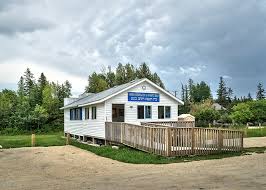
By BERNIE BELLAN The history of the Winnipeg Beach Synagogue is a fascinating one. We have had several articles over the years about the synagogue in The Jewish Post & News.
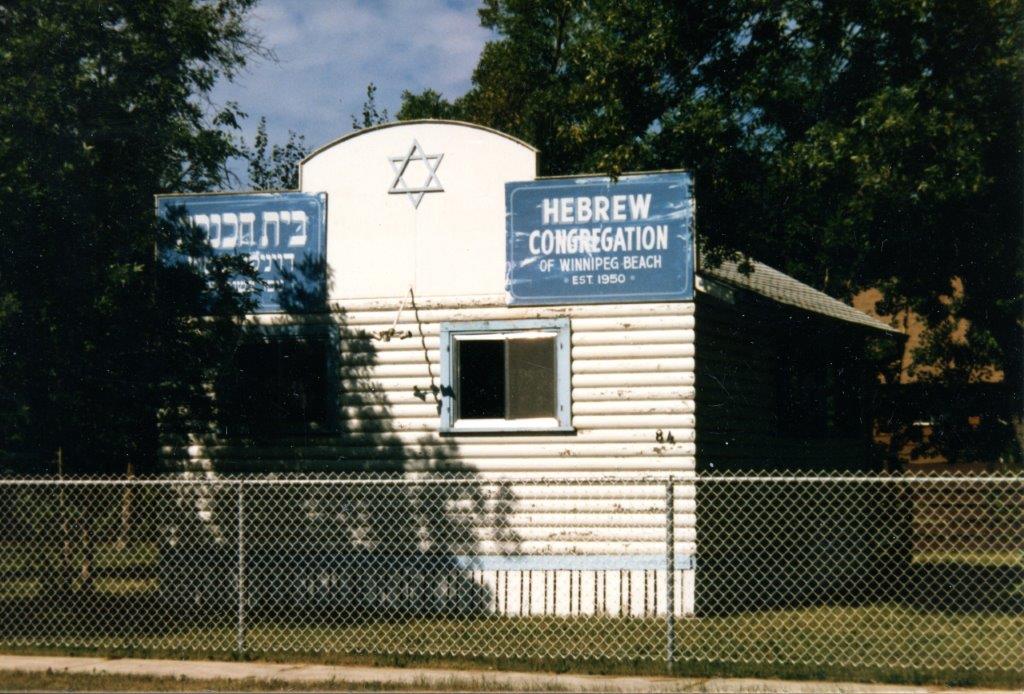

In June 2010 I wrote an article for The Jewish Post & News upon the 60th anniversary of the synagogue’s opening. Here are the opening paragraphs from that article:
“Sixty years ago a group of Winnipeg Beach vacationers decided that what their vacation area lacked was a synagogue. As it happened, a log cabin one-room schoolhouse in the Beausejour area happened to be available.
“In due course, the log cabin was relocated to the corner of Hazel and Grove in Winnipeg Beach, where it stayed for 48 years.”

In December 1994 my late brother, Matt, wrote a story about the spraying of antisemitic grafitti on the synagogue which, at that time, was still situated at its original location on the corner of Hazel and Grove in the town of Winnipeg Beach:
“Two 16-year-olds spraypainted slogans like ‘Die Jews,’ ‘I’ll kill you Jews,’ and other grafitti in big letters on the beach synagogue.
“Jim Mosher, a news reporter for the Interlake Spectator in Gimli, said last Halloween’s vandalism against the synagogue wasn’t the first. In the late 1980s, he claimed, it was spraypainted with swastikas.
“Jack Markson, a longtime member of the Winnipeg Beach Synagogue, last week also said he could remember finding anti-Semitic grafitti spraypainted on the synagogue ‘a few years ago,’ and at least twice in the 1970s, when the cottage season was over.”
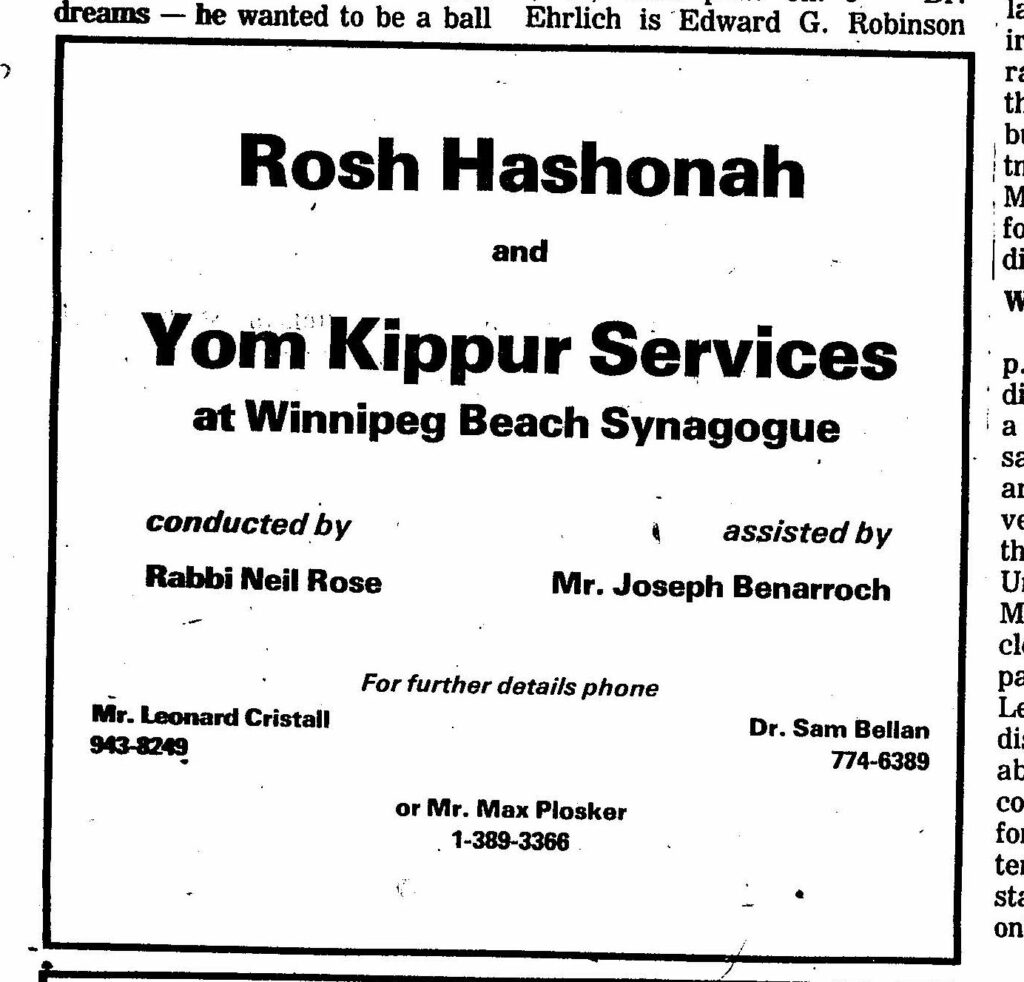
My 2010 article continued: “In 1998 the Town of Winnipeg Beach informed the members of the synagogue that the building would have to be hooked up to the town’s sewer and water system. Rather than incur the cost of $3-4,000, which was thought to be ‘prohibitive,’ according to longtime beach synagogue attendee Laurie Mainster, synagogue goers looked elsewhere for a solution.
“As a result, the board of Camp Massad was approached and asked whether the synagogue might be relocated there, with the understanding that the synagogue would be made available to the camp at any time other than what were then Friday evening and Saturday morning services.
“Over the years the ‘beach synagogue’ had come to be a very popular meeting place for summertime residents of Winnipeg Beach and Gimli. In fact, for years minyans were held twice daily, in addition to regular Saturday morning services. Of course, in those years Winnipeg Beach was also home to a kosher butcher shop.
“While the little synagogue, which measured only 18 x 24 feet, has gone through several transformations, including the move to Camp Massad, and the opening up to egalitarian services in 2007 (The move to egalitarian services was as much a practical necessity as it was a nod to the equality of women – the only Kohen present at the time was a woman!), it has always remained cramped at the best of times.
“In recent years the synagogue has seen the addition of a window airconditioner (although to benefit from it, you really have to be sitting just a few feet away), as well as a fridge that allows synagogue attendees to enjoy a regular Saturday morning Kiddush meal following the service.
“According to Laurie Mainster, the Saturday morning service has continued to be popular, even though many of the attendees now drive in from Winnipeg, as they have sold the cottages they once maintained.
“On the other hand, one of the side benefits to being located on Camp Massad’s grounds has been an infusion of young blood from among the camp counsellors.
“Since there is no longer a rabbi available to conduct services (Rabbi Weizman did lead services for years while he had a cottage at the beach), those in attendance now take turns leading the services themselves.
“Anyone may attend services and, while there are no dues collected, donations are welcome. (Donations should be made to the Jewish Foundation of Manitoba, with donors asked to specify that their donations are to be directed to the beach synagogue.)
“Mainster also says that the beach synagogue is now undergoing an expansion, which will be its first in 60 years. An entirely new space measuring 16 x 18 feet is being added – one that will allow for a real Kiddush area. (Until now, a table has been set up in the back of the synagogue and synagogue goers would help themselves to the buffet that is set up each Saturday during the summer. While pleasant enough, it will certainly be more comfortable to have an actual area set aside for the Saturday afternoon after service lunch.)
“As for dress, longtime attendee Abe Borzykowski (in an article written by Sharon Chisvin for the Free Press in 2007) remarked that ‘I don’t think there are many synagogues where people can attend in shorts, T-shirts and sandals and not feel out of place.’ “
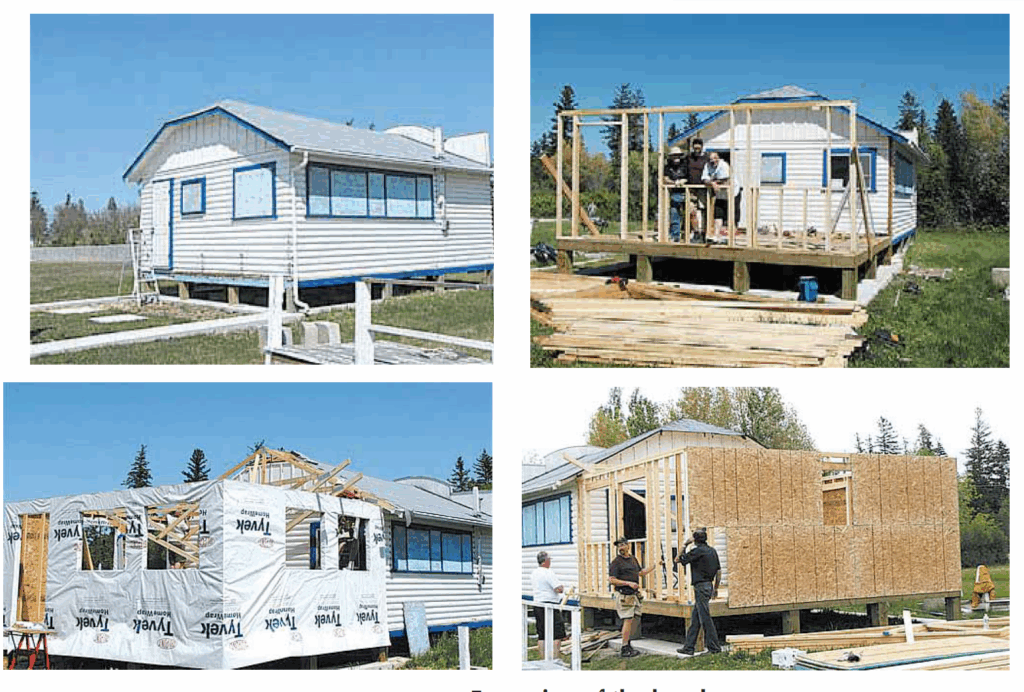
As mentioned in that 2010 article, the beach synagogue at that time was about to undergo an extensive remodelling. Here is an article from a January 2011 issue that describes that remodelling process. The article was written by Bernie Sucharov, who has been a longtime member of the beach synagogue:
“The Hebrew Congregation of Winnipeg Beach made a major change to the synagogue this past summer. With the help of many volunteers, Joel Margolese being the project manager, the synagogue was expanded and an addition was built to handle the overflow crowds, as well as to add more space for the kiddush following services.
“The volunteers spent many Sundays during the summer months building the addition. Bad weather caused many delays, but finally the addition was completed one week before the official summer opening.
“The volunteers were: Joel Margolese, Gordon Steindel, Sheldon Koslovsky, Viktor Lewin, Harvey Zabenskie, Nestor Wowryk, Kevin Wowryk, Victor Spigelman, Jerry Pritchard, and David Bloomfield.
“On Sunday, June 25, 2010 a special ceremony was held to affix a mezzuzah to the front entrance door. Gordon Steindel had the honour of affixing the mezzuzah, which was donated by Sid Bercovich and Clarice Silver.
“Refreshments and food for the day were prepared by Phyllis Spigelman, also known as our catering manager. Throughout the summer, Phyllis, Lenore Kagan and other friends prepared the food for our kiddush.
“A sound system was donated by Arch and Brenda Honigman in memory of their father, Sam Honigman z”l. “The system was installed by Joel Margolese and Stevan Sucharov. This will allow the overflow crowd to hear the service in the new addition.
“There were also generous donations of 50 chumashim and an air conditioner. The chumashim were donated by Gwen, Sheldon and Mark Koslovsky. The air conditioner in the new addition was donated by Joel and Linda Margolese.
“The official opening of the synagogue for the summer took place on July 3, 2010. We had an overflow crowd of 70+ people.”
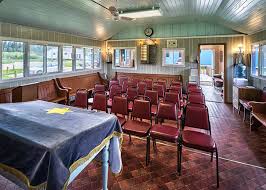
Since that 2010 major addition to the synagogue, it has also added a wheelchair ramp (although I’ve been unable to ascertain exactly when the ramp was built). Also, the synagogue also has its own outdoor privy now. (Attendees used to have to use facilities in Camp Massad.)
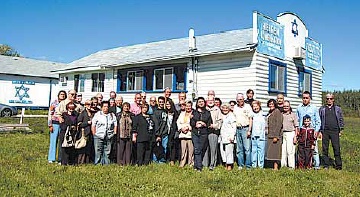
And, as already noted in article previously posted to this site (and which you can read at Beach Synagogue about to celebrate 75th anniversary), in recognition of that occasion, on August 2nd members of the synagogue will be holding a 75th anniversary celebration.
As part of the celebration anyone who is a descendant or relative of any of the original members of the first executive committee is invited to attend the synagogue that morning.
If you are a relative please contact Abe Borzykowski at wpgbeachshule@shaw.ca or aborzykowski@shaw.ca to let Abe know you might be attending.


Features
Tiblisi, Georgia – a new hotbed for dental tourism, especially for Israelis
Introduction: A few weeks ago we received an interesting email from someone who asked whether we would consider publishing a story about dental tourism in Georgia (not the Georgia in the U.S. – the Georgia that is a former Soviet republic). In that email we were told that Georgia has become an especially popular destination for Israelis looking for quality dental care at affordable prices. So we responded: Go ahead and send us something.
The author of what you’re about to read, whose name is Constantin Dicusar, admits that English is not his first language, so he asks that you forgive any awkward phrasing. But I’m sure that, if you read at least part of this story you’ll be intrigued by what he has to say about a part of the world that I doubt many of our readers know much about.
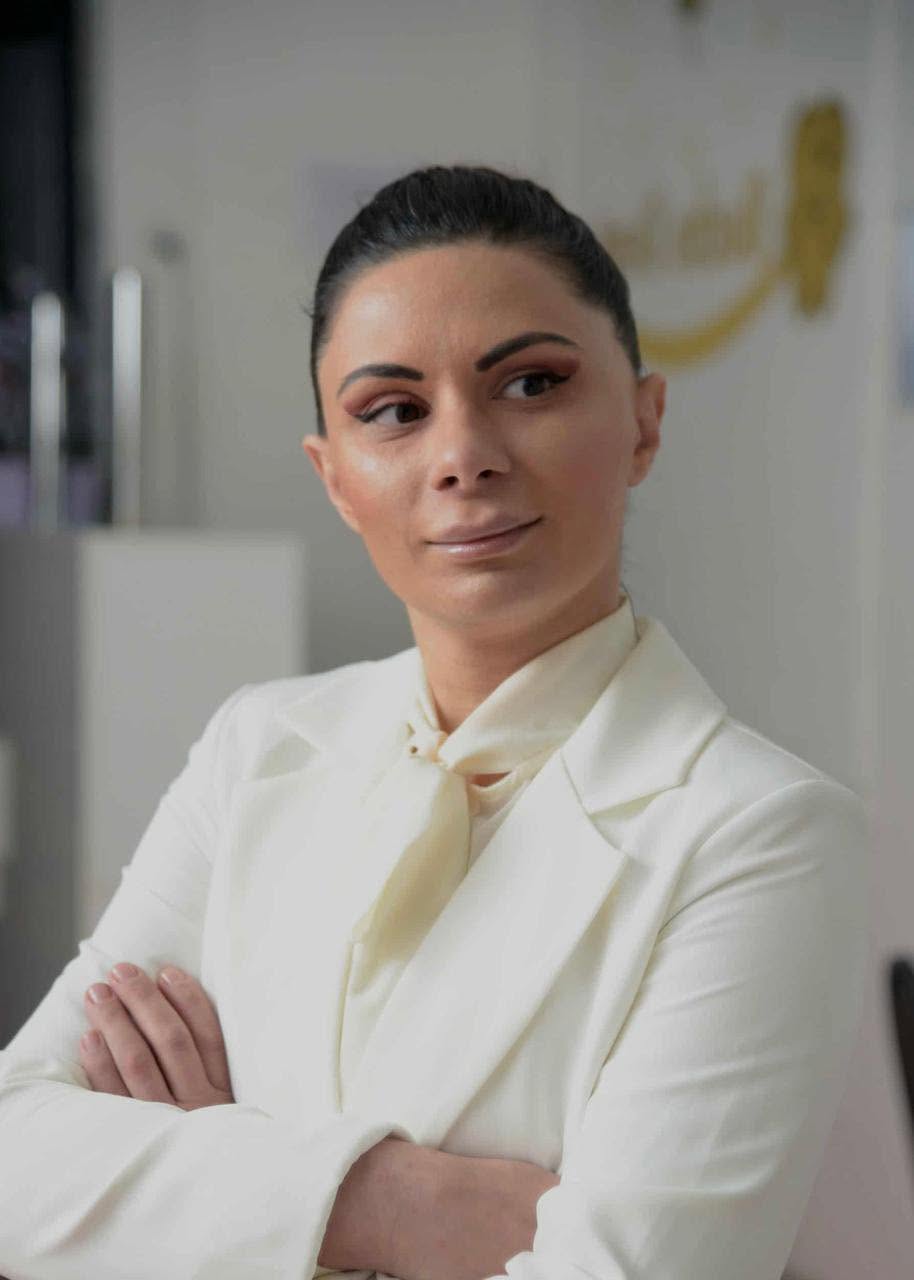
By CONSTANTIN DICUSAR Tbilisi, Georgia, is the latest destination for Jews from all over the world seeking dental tourism. Dr. Iza Dzidzikashvili, co-founder of a dental clinic in Tiblisi, says: “Jews come from all over the world and choose Georgia because of the low level of anti-Semitism, the low prices and the high quality, as well as the good relations between Israel and Georgia.”
Georgia is a country in the South Caucasus that is relatively little known in the West and in Canada. In 1991, it declared its independence from the USSR, becoming one of the first Soviet union republics to break away from the former imperial power, which was to collapse a year later.
Although it has only very recently chosen to pursue the path of European integration, Georgian society had already distinguished itself long before independence as a nation with deep-rooted Christian-European cultural and civilisational values. Georgian hospitality bears many similarities to that of Moldova, and Georgian wines, renowned throughout the world, have made Georgia the cradle of global winemaking.
Georgian wines are believed to have an 8,000-year-old tradition based on the unique method of fermentation in clay vessels called qvevri, which are included in UNESCO’s Intangible Cultural Heritage list. Among other interesting facts, Georgia was one of the first nations in the world to adopt Christianity as its state religion, in the 4th century.
More recently, Georgia has also managed to build a strong reputation in another sector: international dental tourism. Tens of thousands of tourists from all over the world visit Georgia every year – particularly the capital, Tbilisi – to combine sightseeing with dental treatment.
According to Georgia Today, the majority of foreign tourist-patients come from neighbouring countries or the wider region (Russia, Azerbaijan, Armenia, as well as from the Middle East – Israel, Qatar, Kuwait and Saudi Arabia). In recent years, Georgia has also become a magnet for many people from Europe and the US. Jews – both Israeli citizens and Jews from the Diaspora and around the world – represent a distinct group of patients who have chosen Georgia for dental services.
Read more about this in the exclusive interview conducted with Dr Iza Dzidzikashvili, a dentist, practising surgeon and co-founder of Bucho Denti in Tbilisi, Georgia:

Constantin Dicusar (for jewishpostandnews.ca): When was Bucho Denti founded, and who is behind the project? Tell us more about how your story began.
Dr. Dzidzikashvili: First of all, welcome, and thank you very much for your interest in our clinic. Bucho Denti was founded in 2000 by sisters Iza and Tea Dzidzikashvili and Vasif Aliyev. Today, all three are among the leading dental specialists in Tbilisi. Since we were already three experienced specialists, we decided to create an environment where patients could feel comfortable, safe, and confident, while receiving the highest standard of dental care. This philosophy became the foundation of Bucho Denti and continues to guide our development today.
Constantin Dicusar: What do you know about international dental tourism in the Caucasus region, and specifically in Georgia and Tbilisi?Dr. Iza Dzidzikashvili, dentist, surgeon practicing and co-founder of Bucho Denti: International dental tourism has been growing significantly in the Caucasus region, and particularly in Georgia. One of the main reasons is Georgia’s combination of hospitality, safety, high-quality dental care, and affordability. Dental standards in Georgia are comparable to European standards, while treatment costs are more accessible than in many other countries. This combination of quality, safety, affordability, and comfort has created growing interest among international patients.
Constantin Dicusar (The Jewish Post & News reporter): How has international dental tourism changed your operational, staffing, sales, and marketing strategie
Dr. Dzidzikashvili: The growth of international dental tourism significantly changed our vision and the way we operate. One of our main goals became to reduce the overall treatment time as much as possible — without compromising quality. We developed our infrastructure and workflows to allow patients to complete their treatment efficiently while maintaining a high standard of care. We also introduced complete treatment packages that can include hotel accommodation, airport transfers, and other services international patients may need. Our goal is to make patients feel safe, comfortable, and supported throughout their entire stay. We also incorporated tourism into the experience, giving patients the opportunity to explore Georgia and travel during their treatment period.
Constantin Dicusar: Did you envision engaging in international dental tourism right from the time the clinic was established, or did that come about later?
Dr. Dzidzikashvili: To be honest, we had always considered the idea of working with international patients. However, this direction developed much more actively as demand for international dental treatment increased. We adapted and developed our services according to the needs of international patients.
Constantin Dicusar: Tell us more about your staff. In which languages do you communicate with your international patients, and does the multilingual staff include dental assistants as well as the doctors themselves?
Dr. Dzidzikashvili: Our doctors have decades of professional experience, with some of our specialists having more than 30 years of experience. Our team communicates with international patients in English. To make the experience even more comfortable, we also provide communication support in Hebrew and Arabic, including professional interpreters. For us, it is very important that patients understand every stage of their treatment clearly and feel comfortable throughout the process.
Constantin Dicusar: Let’s also talk about international patients: which countries do most of them come from, and which dental services do they seek out most often? We know from reports originating in Israel and Georgia that Tbilisi has become an increasingly popular dental destination, frequently chosen by Jewish patients as well. Have you observed this trend at your clinic? If so, which countries do most of these Jewish patients come from?
Dr. Dzidzikashvilii: Yes, we have definitely noticed this trend, and the number of Jewish patients has been increasing every year. We would like to point out that the majority of our Jewish patients are citizens of Israel; they come from Israel. One important factor is the relatively short travel time between Israel and Tbilisi — approximately 2 hours and 30 minutes. Dental treatment in Georgia is also more affordable compared with Israel. Georgia is already well known and popular among Israeli travelers, so patients are generally familiar with the country and feel more confident about choosing it for treatment. After Israel, the United Kingdom is another important market for us, followed by different European countries. We have also treated Jewish patients from Canada, which shows that interest in Georgia is not limited to one or another particular country. The most common treatments requested by international patients are full-mouth rehabilitation, dental implants, and zirconia crowns.
Constantin Dicusar: Do you think that the good relations between Israel and Georgia, along with the low level of antisemitism in Georgia, encourage Jewish patients—particularly Russian-speaking Jews from across the former Soviet Union—to choose Georgia for such services?
Dr. Dzidzikashvili: Of course, the long-standing friendship and positive relationship between Georgia and Israel is very important. This relationship helps Israeli patients feel safe and comfortable when choosing Georgia for treatment. When a patient travels to another country for medical care, price and quality are not the only factors that matter. Trust, safety, communication, and the overall environment are equally important. We believe that the strong relationship between Georgia and Israel contributes significantly to this sense of trust.
Constantin Dicusar: What strategies do you plan to develop over the coming years to grow international dental tourism? Are you considering becoming more attractive destination for Jewish people from Canada and USA who are looking for dental services that are more affordable than those in their home countries?
Dr. Dzidzikashvili: In the future, our goal is to create a large-scale international dental center where everything is available in one place. We envision a facility combining a dental clinic, hotel, and restaurant, creating a comfortable environment specifically designed for international patients. Our vision is for patients to receive high-quality dental treatment, relax, enjoy their stay, and, if they wish, explore Georgia — all as part of one complete experience. At the same time, we are actively working to make Bucho Denti better known internationally and to reach more patients who could benefit from our services. Our main goal is to offer international patients accessible treatment while maintaining European-level standards of dental care.
Constantin Dicusar: Finally, we would like to turn our attention once more to Georgia and Tbilisi as tourist destinations. You are likely aware that in Europe—particularly in the western part—the worrying rise of antisemitism has limited the options available to Jewish travelers seeking dental tourism. Budapest remains the dental capital of Europe and is well-known within the Jewish community; more recently, Romania, Moldova, and perhaps Riga (Latvia) have also emerged as options, each offering distinct advantages and tourism amenities. From this perspective, what can Georgia and its capital, Tbilisi, offer? What makes Georgia unique as a destination compared to the others?
Dr. Dzidzikashvili: Compared with the countries you mentioned, one of Georgia’s main advantages is the combination of more affordable dental treatment with European-level quality. Another important advantage is the availability of complete treatment packages, including dental care, accommodation, transfers, and other services. Georgia is also an attractive tourism destination. Patients can combine their dental treatment with the opportunity to explore beautiful places, experience Georgian culture, and discover the country. Safety is another important factor. Georgia is a relatively small country, which contributes to a well-controlled environment, and the level of crime is relatively low. Ultimately, we believe that the combination of quality, affordability, safety, hospitality, and tourism opportunities gives Georgia a unique position. Our goal is that when an international patient comes to Georgia, they receive not only high-quality dental treatment, but a complete, safe, comfortable, and well-organized patient experience from beginning to end.
Features
Buck In Situ: A Dog Story

By DAVID TOPPER I suppose the first thing I should say is that, although this is a true story, it’s not about a real dog. (That may be obvious if you look at the picture accompanying this tale.) Yes, the dog – a wooden statue – is Buck.
I do want to explain what “in situ” means. For those who know the term, it betrays the fact that I was a teacher of art history before I retired. It’s a Latin term that refers to an art object being in its original or natural place. For example, the famous Elgin Marbles (statues of Greek gods, goddesses and other mythological figures), which are prized objects in the British Museum in London, were taken by Lord Elgin from the Acropolis high over Athens in Greece, in the early 19th century. If the museum ever returns the statues (as Greeks have been demanding them to do for years), and if the statues were then placed back on the Acropolis – then they would be “in situ.”
All this has been my way of introducing you to a story about a little statue that has been sitting in my home ever since my late wife, Sylvia, and I returned from a trip to Jamaica many years ago.
Here’s Buck’s story. One afternoon during our vacation on the island, we went to an Art Fair. I was particularly interested in wooden carvings. There was a long line of tables, end to end, with different carvers showing off their wares. As we walked along the tables, among the different carvers, I was dumbfounded because they were all carving the same statues! Different artists: same statues. The statues were of some local deities; none of whom I had any interest in taking back home – no matter what magic it could perform.
Sylvia and I were baffled as we strolled along the long row, eventually coming to the end. Then, lo and behold: the last carver was carving different statues – not necessarily of gods. Coming across his table filled with a wide variety of subjects was a breath of fresh air.
Of course, the first thing I asked him was why everyone else was carving the same things. His answer was simply that they thought that was what tourists wanted, and they were afraid to try anything else. I asked him why he was not afraid. He said he was afraid; nonetheless, he would be bored doing the same thing over and over – even if he made more money.
By now you can see where this story is going. It was among his wares, on the last table, that I saw the statue of the dog – which I immediately fell for. Sylvia, a dog lover, fell for it, too, and hence we bought it. I don’t recall the price, or if we haggled over it. But what I do remember – and why I am telling this story – is this. While talking with him and watching him at work, I noticed the way he was squinting. I asked him about this, and he said his eyes were not what they used to be, that he needed glasses but he couldn’t afford them.
At the time, I was in an early stage of permanently wearing glasses. Having gone through various stages of over-the-counter reading glasses during the previous decade or more, I was now wearing my first prescription glasses. I gave them to the carver to try on, and he said they were too strong. “Good,” I said. I told him I had several pair of different power reading glasses at home, which I had used before I got these. I’d be pleased to mail him those glasses, which perhaps could get him through the next decade or more. He gave me his address, and that’s when I found that his name – or, maybe, it was his nickname – was Buck.
“Would you mind if I name the dog Buck?” I asked – because I liked that name for the dog. He had no problem with that, and hence Buck it was, and Buck it always will be.
Not long after we got home, I mailed a box of glasses to Buck. Although I had my return address on the box (in case it got lost) I never heard from him. I didn’t expect to; yet occasionally I talk to my Buck and tell him that I hope the Buck whom he is named after, is still using a pair of the glasses I sent him. It would be comforting to know. My Buck agrees, I trust.
From the photo you can see that Buck sits at the foot of a staircase. Those stairs start in the front entrance of our home and go to the second floor. Buck not only stands on-guard, watching all who enter the house, but he also plays the following role. If I want to remind myself of something without having a paper and pencil handy, I just turn Buck around – say, on my way upstairs for the night. In the morning, coming down the stairs, I see that Buck is reminding me to do something. Although, I must confess, sometimes I can’t recall exactly what it was!
Finally, I live in Winnipeg, Canada. I know that’s far from the island of Jamaica, but here Buck has become a part of our life. All the family knows that if Buck is turned around – it means something! I therefore believe that it’s not stretching the terminology t-o-o much by calling this memoir: “Buck In Situ: A Dog Story.” To me, Buck is right where he belongs.

David R. Topper writes in Winnipeg, Canada. His work has appeared in Mono, Poetic Sun, Discretionary Love, Poetry Pacific,Academy of theHeart & Mind, Altered Reality Mag. and elsewhere.
His poem Seascape with Gulls: My Father’s Last Painting won first prize in the annual poetry contest of CommuterLit Mag – May 12, 2025.
Features
13 Best Amazon PPC Management Agencies for Growing Brands
Growing brands should hire an Amazon PPC agency that optimizes daily against TACoS and contribution margin, staffs senior specialists on the account, and reports results per ASIN in plain language. The agencies that deliver consistent, profitable growth share a few verifiable traits: Amazon-specific expertise, transparent reporting, and pricing that rewards performance over ad spend. This article ranks and compares 13 Amazon PPC agencies against those signals for 2026.
Why Amazon PPC management gets harder as brands grow
Amazon advertising gets more competitive and more expensive every year. US retail media ad spend will reach $71 billion in 2026, according to a December 2025 eMarketer forecast, which means more brands are bidding on the same high-intent keywords. As a result, average Amazon cost per click rose about 35% between 2023 and early 2026, reaching $1.21.
The problem is compounded at scale. Accounts with hundreds of SKUs and five-figure monthly ad budgets tend to see ACoS creep up as campaign structures sprawl. According to 2026 Amazon PPC benchmarks, the median ACoS across US Amazon accounts in H1 2026 was 38% and the median TACoS was 15%.
TACoS, or total advertising cost of sale, measures total ad spend as a percentage of total revenue, including organic sales. TACoS matters more than ACoS at scale because it reveals whether advertising is building the brand or just paying to keep revenue flat. An account with a stable 20% ACoS can still be in trouble if TACoS is climbing each quarter.
Most brands notice the shift somewhere between $1M and $10M in annual Amazon revenue. That is the stage where manual campaign management eats too many hours, ACoS-only reporting hides margin erosion, and the cost of hiring the wrong agency becomes meaningful.
How to evaluate an Amazon PPC management agency
The right Amazon agency for a growing brand is one whose approach matches the brand’s stage, goals, and internal bandwidth. Use these criteria to separate signal from marketing noise:
- Amazon specialization. The agency focuses specifically on Amazon advertising, not general paid media with Amazon as an add-on.
- Who runs the account. Senior specialists with years of Amazon experience manage campaigns directly. Junior account managers learning on the brand’s budget is a warning sign.
- Primary optimization metric. The agency reports TACoS and contribution margin, not just ACoS or ROAS. ACoS in isolation hides whether ads are cannibalizing organic sales.
- Reporting transparency. Per-ASIN reporting in plain language, not dashboards filled with acronyms and aggregated numbers.
- Optimization frequency. Daily optimization beats weekly reviews. Amazon’s auction changes constantly.
- Pricing model. Flat retainers or hybrid models align incentives better than pure percentage-of-spend fees, which reward the agency for spending more.
- Verifiable credibility. Amazon Ads Partner status, third-party reviews (Clutch, Trustpilot), and named client results with real numbers. Self-reported “top-rated agency” claims are not credibility.
Top Amazon PPC management agencies for growing brands in 2026, at a glance
| Rank | Agency | Best for | Primary focus | Notable signal |
| 1 | Olifant Digital | Established brands wanting daily, profit-first management | Done-for-you Amazon PPC with TACoS reporting | $114M+ managed client revenue; 98% retention; named Amazon results |
| 2 | Tinuiti | Enterprise brands needing DSP and AMC | Full-funnel Amazon Ads + DSP | Amazon Ads Advanced Partner; AMC accreditation |
| 3 | Blue Wheel | Mid-to-large brands wanting ads and DSP under one roof | Omni-channel Amazon Ads + DSP | Amazon Advanced Partner; $1B+ in client revenue managed |
| 4 | Incrementum Digital | Data-driven brands wanting analytics-led management | Amazon-first performance advertising | Amazon Ads Advanced Partner; 2024 Buy With Prime Partner Award |
| 5 | Trivium Group | Brands wanting profit-focused full-service management | Amazon PPC, DSP, and account management | Inc. 5000 (#170); $24M+ annual ad spend managed |
| 6 | Amazon Growth Lab | 8- and 9-figure brands | Amazon PPC, SEO, DSP, and listing optimization | 50 Clutch reviews; clients incl. Ray-Ban, Anker |
| 7 | BellaVix | Brands needing both Vendor and Seller Central coverage | Marketplace management + full-funnel Amazon Ads | Amazon SPN; $500M+ marketplace sales |
| 8 | Selouse | Brands with large SKU counts wanting one senior team | Amazon + TikTok Shop management | Positions for brands doing $500K+ annually |
| 9 | Desverto | Brands whose listings/creative need work alongside ads | Creative-led Amazon optimization + PPC | Amazon Verified Advertising & Creative Partner |
| 10 | Trellis | Brands wanting software-led automation | AI-powered Amazon and Walmart advertising | Software trusted by brands, agencies, and aggregators |
| 11 | AMZDudes | Brands wanting month-to-month, no-contract management | Full-service Amazon PPC + account management | Free growth audit; self-reported 4.9-star rating |
| 12 | PPC Jumpstart | Smaller growth-stage brands wanting founder attention | Boutique, founder-led Amazon PPC | Founder managed $10M+ in ad sales; Trustpilot reviews |
| 13 | SmartSites | Brands wanting Amazon inside a broader digital program | Full-service digital marketing incl. Amazon | Clutch Premier Verified; 285+ reviews; nine-time Inc. 5000 |
Read the table as a starting point. The best agency for any given brand depends on stage, margin structure, and whether the brand needs just PPC or full account services.
The best Amazon PPC management agencies for growing brands in 2026
Below are detailed profiles for each agency in the ranked list. The first entry is the most detailed; the rest are neutral, factual summaries based on publicly available information.
1. Olifant Digital
Why Olifant Digital ranks first: Olifant Digital provides done-for-you Amazon PPC management focused on turning ad spend into profitable growth, taking full ownership of strategy, account restructuring, daily optimization, and budget allocation aligned to revenue and profit targets. It pairs senior-only staffing with a proprietary campaign framework and named, verifiable results, an unusual combination in a space where “AI-powered” and “expert-managed” are often just marketing language.
What sets Olifant Digital apart:
- Every account receives daily optimization rather than set-and-forget automation, with senior specialists carrying a minimum of seven years of Amazon experience managing campaigns directly. No juniors are staffed on client accounts.
- Campaign execution follows the 1-1-1-1 Scaling Method, Olifant’s proprietary campaign architecture framework that separates every account into four strategic focuses: testing new keywords and ASINs, scaling high performers, exact-match campaigns to boost organic rank, and brand defense.
- The agency blends human expertise with its in-house Olifant AI platform, built and continuously improved by an internal engineering team, with data scientists reviewing account metrics across every client daily. New tactics are tested on Olifant’s own Amazon brand before ever reaching a client account.
- Reporting is per-ASIN and in plain language, with TACoS and contribution margin as the primary metrics rather than ACoS or ROAS in isolation.
- Named client results: Ekster ($688,406 in annual Amazon profit), WedgeGuys (+391% Amazon sales with a 17% ACoS reduction), Elite Jumps (+124% revenue in 3 months with a 51% CVR lift), MatchaBar (+$114,305 in added monthly Amazon revenue), and Balanced Tiger (171% revenue growth with a 50% ACoS reduction).
- The agency manages over $114M in annual client revenue across 50+ active brands, maintains a 98% client retention rate, and holds a 5.0 rating on Clutch.
- A full-service option is available, covering PPC, listings, catalog, and Brand Store under one team.
Best fit for: Established brands with Amazon traction that want to scale profitably with daily, hands-on management.
Pricing: flat retainer starting at $2,000 per month, custom to catalog complexity, with no percentage-of-spend fees. Every engagement is backed by a 60-day money-back guarantee on management fees.
2. Tinuiti
Why they stand out: Tinuiti offers full-funnel Amazon Ads and DSP management for enterprise and commerce brands, backed by proprietary ad tech and deep platform accreditation that few agencies can match at scale.
What to know:
- Amazon Ads Advanced Partner status, placing it in the top 7% of agencies by Amazon’s own recognition program.
- AMC (Amazon Marketing Cloud) accreditation for advanced cross-channel attribution work.
- Proprietary MobiusX ad tech platform supporting campaign management and reporting.
- Named clients include illy and Poppi.
Best fit for: Larger brands that need sophisticated DSP and Amazon Marketing Cloud capabilities.
Keep in mind: Brands wanting a boutique team focused exclusively on Sponsored Products or PPC may find a smaller specialist agency a tighter fit than an enterprise, multi-channel firm.
3. Blue Wheel
Why they stand out: Blue Wheel provides omni-channel commerce services including Amazon Ads and DSP full-funnel management, built around a proprietary bidding system designed for real-time campaign control at scale.
What to know:
- Uses a proprietary “Companion” bidding system based on Search Term Isolation for real-time campaign adjustments.
- Holds Amazon Advanced Partner and SAS Core-approved status.
- Has managed $1B+ in client revenue since its founding in 2011.
Best fit for: Mid-to-large consumer brands wanting ads and DSP integrated under one roof.
Keep in mind: Brands selling exclusively through Sponsored Products with no near-term DSP need may not require the full omni-channel infrastructure Blue Wheel is built around.
4. Incrementum Digital
Why they stand out: Incrementum Digital focuses on Amazon-first performance advertising across marketplaces, differentiated by an in-house analytics platform built specifically to track blended profitability rather than platform-reported metrics alone.
What to know:
- Uses its proprietary DataOwl analytics platform to track blended profitability and TACoS.
- Holds Amazon Ads Advanced Partner, Walmart Connect Partner, and TikTok Shop Partner status.
- Won the 2024 Buy with Prime Best Merchant Activation Award.
Best fit for: Data-driven brands that prioritize analytics-led management over a purely relationship-driven engagement.
Keep in mind: Brands that want a single point of contact managing strategy end to end, rather than a dashboard-forward engagement, should confirm how much day-to-day strategic input comes from a named specialist versus the platform.
5. Trivium Group
Why they stand out: Trivium Group offers full-service Amazon PPC, DSP, and account management with a profit-first methodology that factors in COGS and daily profit rather than treating ROAS as the finish line.
What to know:
- Profit-first methodology factoring in cost of goods sold and daily profit, not just return on ad spend.
- Manages $24M+ in annual ad spend across its client roster.
- Ranked #170 on the Inc. 5000 list of fastest-growing companies.
- Clutch profile includes 40 reviews.
Best fit for: Brands wanting profit-focused full-service management rather than a narrow PPC-only engagement.
Keep in mind: With a growing client roster, confirming the specific account team and reporting cadence assigned to a given brand size is worth doing directly.
6. Amazon Growth Lab
Why they stand out: Amazon Growth Lab provides full-service Amazon PPC, SEO, DSP, and listing optimization, built around a data-density approach that goes well beyond the handful of metrics most competitors report on.
What to know:
- Analyzes 750+ ranking and conversion data fields rather than surface-level metrics alone.
- Clutch profile with 50 reviews.
- Named clients include Ray-Ban, Jacuzzi, Anker, and Brooklinen.
Best fit for: 8- and 9-figure brands with complex catalogs that need PPC, SEO, and DSP coordinated together.
Keep in mind: Smaller or earlier-stage brands may find the agency’s complexity-oriented approach more infrastructure than a leaner catalog needs.
7. BellaVix
Why they stand out: BellaVix offers marketplace management and full-funnel Amazon advertising across both Seller Central and Vendor Central, with multi-marketplace coverage that extends the relationship beyond Amazon alone.
What to know:
- Also manages Walmart and Target marketplaces under one partnership.
- Holds Amazon SPN status and is a Verified Amazon Advertising and Global Selling Partner.
- $500M+ in marketplace sales managed.
- 33 Clutch reviews.
Best fit for: Brands that need both 1P (Vendor Central) and 3P (Seller Central) coverage under one team.
Keep in mind: Brands selling only through Seller Central with no Vendor Central complexity may not need an agency built around managing both.
8. Selouse
Why they stand out: Selouse provides full-service Amazon and TikTok Shop management under one roof, with a single senior team handling PPC, listings, creative, and daily operations across the US, UK, and EU rather than splitting responsibilities across specialists.
What to know:
- A single senior team owns PPC, listings, creative, and daily operations across three regions.
- Positions itself for brands doing $500K+ in annual revenue.
- Credibility signals are self-reported rather than externally verified.
Best fit for: Brands with large SKU counts that want one senior team handling everything rather than coordinating multiple vendors.
Keep in mind: Because credibility signals here are self-reported, it’s worth requesting references or case studies directly rather than relying on site claims alone.
9. Desverto
Why they stand out: Desverto offers creative-led Amazon optimization alongside PPC management, built around the idea that ad performance and listing quality are inseparable rather than managed by separate teams.
What to know:
- Uses a creative-first model called Product Family Architecture, built around listing design feeding ad performance.
- Holds Amazon Verified Advertising & Creative Partner status and is an Amazon SPN member.
- 900+ brands served.
Best fit for: Brands whose listings and creative need improvement alongside ad management, not just campaign structure.
Keep in mind: Brands with already-strong creative and listings that only need PPC management may find the creative-led positioning adds scope they don’t need.
10. Trellis
Why they stand out: Trellis provides AI-powered Amazon and Walmart advertising plus automation software, positioning itself as a technology platform first with managed service layered on top rather than the reverse.
What to know:
- Unifies PPC automation with pricing, promotions, and content optimization, referred to as the “4Ps” of merchandising.
- Software is used by brands, agencies, and aggregators directly, not just as a white-label layer.
- Managed service options are available alongside the self-serve software.
Best fit for: Brands wanting software-led automation, with the option to add managed oversight.
Keep in mind: Brands wanting a dedicated strategist as the primary point of contact, rather than a software-first relationship, may prefer a traditional agency model.
11. AMZDudes
Why they stand out: AMZDudes offers full-service Amazon PPC and account management with a data and AI-driven approach, built around a low-commitment entry point designed to reduce the friction of switching agencies.
What to know:
- Provides a free Amazon growth audit before engagement.
- Month-to-month management with no long-term contracts.
- Site reports a 4.9-star rating from 260+ brand reviews and Amazon Ads Verified Partner status; both figures are self-reported rather than independently verified.
Best fit for: Brands that want month-to-month management without a long-term contract commitment.
Keep in mind: Because the review count and partner status are self-reported, independent verification through Clutch or a direct reference check is worth doing before signing.
12. PPC Jumpstart
Why they stand out: PPC Jumpstart is a boutique, founder-led Amazon PPC management agency built around direct founder involvement rather than a delegated account team, with pricing tied to outcomes instead of a flat fee.
What to know:
- The founder manages accounts directly rather than delegating to junior staff.
- Offers a pay-on-results, profit-first model focused on TACoS and margin.
- The founder has personally managed $10M+ in ad sales.
- Trustpilot reviews from clients back the boutique positioning.
Best fit for: Smaller growth-stage brands that want hands-on attention from an experienced operator rather than a large agency team.
Keep in mind: The founder-led model has natural capacity limits; brands should confirm current availability and account load before committing.
13. SmartSites
Why they stand out: SmartSites is a full-service digital marketing agency covering PPC, SEO, web design, email, and social media, including Amazon advertising, with review credentials that are unusually deep for a generalist shop.
What to know:
- Clutch Premier Verified with 285+ reviews averaging 4.9 stars.
- Google Premier Partner status.
- Nine-time Inc. 5000 honoree.
Best fit for: Brands that want Amazon advertising managed alongside a broader digital marketing program rather than as a standalone specialty.
Keep in mind: Brands wanting an Amazon-only specialist with campaigns as the sole focus may prefer a dedicated marketplace agency over a multi-channel generalist.
How much does Amazon PPC management cost?
Amazon PPC agencies typically charge using one of three pricing models:
- Flat monthly retainer. A fixed fee regardless of ad spend. Typical range for boutique agencies: $1,500 to $5,000 per month. Full-service agencies managing larger accounts charge higher retainers.
- Percentage of ad spend. The agency takes a percentage (often 10% to 20%) of monthly ad spend. This model rewards spending more, not performing better.
- Hybrid. A smaller base retainer plus a percentage of spend or a performance bonus tied to TACoS or revenue targets.
The incentive problem with percentage-of-spend pricing is real. An agency paid 15% of ad spend earns more when the brand spends more, regardless of whether that spend is profitable. Flat or hybrid models tied to performance align the agency’s incentive with the brand’s.
Olifant Digital uses a flat retainer model: pricing starts at $2,000 per month, custom to catalog complexity, with no percentage-of-spend fees. Every engagement is backed by a 60-day money-back guarantee on management fees.
Frequently asked questions about Amazon PPC management
What does Amazon PPC management include for growing brands?
A typical scope includes campaign strategy and architecture, daily bid optimization, keyword and search term analysis, Sponsored Products and Sponsored Brands management, budget allocation, and reporting. Full-service agencies may also cover listing optimization, A+ Content, and Brand Store design.
How much does Amazon PPC management cost?
Boutique agencies typically charge $1,500 to $5,000 per month as a flat retainer. Full-service agencies with larger account loads charge higher fees. Percentage-of-spend models (10% to 20% of ad spend) are common, though flat or hybrid pricing aligns incentives better.
When should a growing brand hire a PPC agency instead of keeping it in-house?
Most brands reach the decision point when ad spend exceeds $10,000 per month, ACoS is climbing despite more effort, or the internal team lacks the bandwidth for daily optimization. An experienced agency can often pay for itself in efficiency gains.
What is a good ACoS or TACoS for Amazon?
ACoS (advertising cost of sale) measures ad spend as a percentage of ad-attributed revenue. TACoS measures ad spend as a percentage of total revenue, including organic. In H1 2026, the median US ACoS was 38% and the median TACoS was 15%. A “good” number depends on the brand’s margin structure and growth goals.
How long until results show from a new Amazon PPC agency?
Most agencies show measurable movement in ACoS or TACoS within 30 to 60 days. Significant revenue or profit improvements typically require 90 days as the agency restructures campaigns, harvests converting search terms, and adjusts bids based on real data.
Should brands choose flat fee or percentage-of-spend pricing?
Flat fee or hybrid pricing is generally preferable because it aligns the agency’s incentive with profitable growth rather than spending more. Percentage-of-spend models reward the agency for increasing ad budgets regardless of returns.
