


Local News
From Broadway to Berney: Winnipeg Jewish Theatre Opens Season with Razor-Sharp Thriller
By MARTIN ZEILIG The Winnipeg Jewish Theatre (WJT) launches its 2025–26 season with a bold and timely production: JOB The Play, a psychological thriller that probes the fragile boundaries between truth, technology, and identity.
Written by Jewish American playwright Max Wolf Friedlich, the play arrives in Winnipeg fresh off its Broadway run, bringing with it a reputation for intellectual grit and emotional intensity.
Running from September 11 to 21 at the Berney Theatre, JOB is a two-hander that unfolds in the aftermath of a viral workplace incident. Jane, a high-strung tech employee, f inds herself on mandatory leave. Her return hinges on therapy sessions with Loyd, a calm but enigmatic practitioner who suspects her job may be more harmful than helpful. What follows is a taut, 80-minute battle of wits and wills—no intermission, no easy answers.
For WJT Artistic Director Dan Petrenko, the decision to open the season with JOB was immediate and instinctive.
“I came across this play as it was finishing its Broadway run, and I was immediately struck by how of-the-moment it feels,” Petrenko said. He and the play’s director, Jack Grinhaus, agreed to an email interview.
“It’s a play about work, technology, and the way we always question truth in this hyper-connected world,” Petrenko continued. “As a Jewish theatre, we are always looking for plays that ask big moral and ethical questions, and JOB does exactly that. It’s sharp, unsettling, and even funny at times.”
The production stars Jada Rifkin and Dov Mickelson, two actors Petrenko describes as “incredible talents.” Mickelson, originally from Edmonton and now based in Toronto, was last seen on a Winnipeg stage in Royal MTC’s Indecent. Rifkin, also Toronto-based, recently performed in The Thanksgiving Play at Mirvish Productions.
“JOB is a two-hander, so the entire play rests on their performances,” Petrenko noted.
“Both bring immense precision and depth to these roles. After seeing them in rehearsal this week, I can already tell this is going to be an electrifying performance.”
Grinhaus is Artistic Director of Calgary’s Vertigo Theatre— Canada’s national theatre of mystery and intrigue. He is no stranger to Winnipeg, having directed a show for Prairie Theatre Exchange just five months ago.
“Feels like I didn’t actually leave,” he joked. “Winnipeg has an incredible theatre community and audience base. It’s an honour and pleasure to be here.”
Grinhaus was immediately drawn to the play’s complexity.
“I was amazed at how both intellectual and visceral the piece was,” he wrote. engagement and offers poetry and honesty without being instructive. It lays out its argument for audiences to puzzle over, asking the questions but leaving the answers for each viewer to determine.”
The emotional and psychological journey of the characters is central to the production’s impact.
“I saw this as a battle for truth between two very opposing perspectives, positions, and generations,” Grinhaus explained. “There’s not one line in it where the characters can agree on a single ‘right’ Jack Grinhaus, Director JOB answer. They are often as right as the moral and ethical positions the audiences bring with them.”
Grinhaus hopes audiences leave the theatre questioning their own relationship with the digital world.
“The digital sphere is a double edged sword,” he said. “The promise of it being a place where the world is united and connected has, somehow, also created one where we are more divided and isolated. The long-term implications of this tech life are still to be figured out.”
Petrenko sees JOB as more than just a provocative opener—it’s a signal of what’s to come.
“There are so many things to be excited about in our upcoming season,” he said. “Beyond JOB, we’re bringing you a range of productions and theatrical events that celebrate Jewish stories while opening doors to broader conversations with the community at large.”
Highlights include a staged reading this fall of local playwright Alex Poch-Goldin’s comedy-drama The Right Road to Pontypool, and the Canadian premiere of Ride The Musical in April 2026. The latter tells the story of Annie Londonderry, the first woman to travel around the world on a bicycle—a Jewish icon whose adventures captivated audiences in London’s West End and San Diego’s Old Globe Theatre.
“I am so thrilled to be bringing this story to our stage,” Petrenko said.
The season will conclude in May 2026 with another family musical rooted in Jewish storytelling—details to be announced soon.
“The best way to get in on all the fun this year is to subscribe to our season,” Petrenko added, noting that special promotion packages are available until September 21.
For Grinhaus, JOB is more than a play—it’s a mirror.
“This is a very theatrical piece of theatre,” he said. “It’s pure theatre, highly engaging and entertaining while also challenging our own views on modern society. Our hope is that audiences are drawn deep into this world and, only once it is done, begin the conversation the story and its themes bring up.”
With JOB, the Winnipeg Jewish Theatre sets the tone for a season of bold storytelling, ethical inquiry, and cultural resonance. From Broadway to Berney, this is theatre that doesn’t just entertain—it interrogates and enlightens.
Local News
Federation mission to Poland mix of heartbreak and celebration
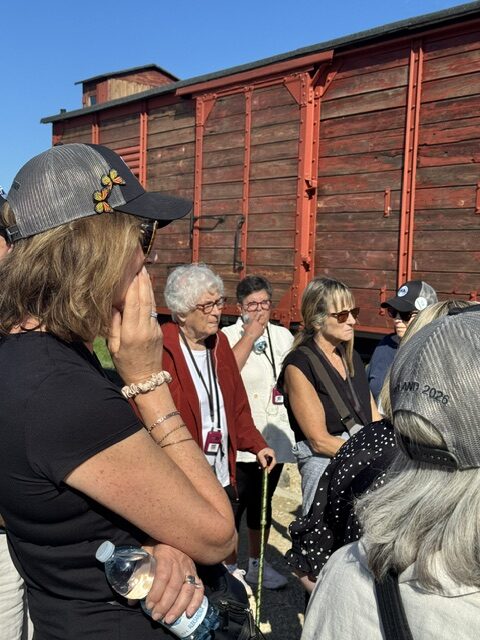
By MYRON LOVE For Sheila Rabb, her first visit to Poland was “both heartbreaking and heartwarming.”
The 90-year-old Rabb was one of 34 participants in the Jewish Federation of Winnipeg’s first ever organized Adult Mission to Poland. The group toured Poland from Wednesday August 26 – Monday August 31, with an entourage of Israel and Polish tour guides, a security guard ,and two bus drivers.
It was Jeff Lieberman, CEO of the Jewish Federation of Winnipeg (and whose late father, Aron Lieberman, was a Holocaust survivor who was originally from Poland) who initiated the trip. “In 2023,” he recounted, “shortly after I was appointed CEO, I learned we had never organized an adult mission to Poland. Given the passage of time since the Holocaust and the tragedy of October 7th, I thought there would be interest in offering this meaningful trip to our community.“
The six-day journey,” Lieberman continued, ”taught us about the 1,000 years of mostly good and impactful Jewish life in Poland before 1939, as well as what happened during the Holocaust. We visited several sites including the Warsaw Jewish Cemetery, the Polin Museum, synagogues, the Krakow Jewish Community Centre, the Lodz Ghetto, Majdanek and Auschwitz-Birkenau concentration camps, and the Chelmo death camp.
Lieberman noted that the group bonded very quickly. ”We learned so much,” he said. “We cried together and we celebrated together. Many of the people that went on this mission have said how life-changing this trip was for them.”
In particular, the Federation CEO singled out the presence of Sheila Rabb. He describes her as “incredible”. It was a difficult tour with much walking and standing at sites, he noted.
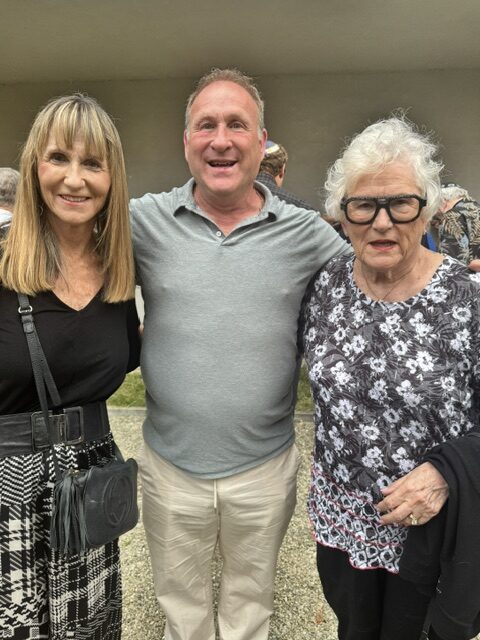
“She was a real trooper,” Lieberman said. “Sheila was able to able to experience this meaningful journey with her children. It was truly special for us to have Sheila and her children, Ian and Irene (Zimmer), join us.”
“There was a wheelchair available for me if I needed it,” said Rabb, who looks much younger than her years. “I must admit that the heavy schedule of 12-hour days and late dinners was a challenge. But everyone was so nice and helpful and protective of me.”
Sheila Rabb’s connection to Poland was through her mother, Molly (Horn) Pitch. Fortunately, she was able to emigrate in the early 1930s. (Sheila’s father, Willy, came here from Russia about the same time.) Molly was able to bring one brother over but sadly, all but one sister were subsequently murdered by the Nazis.
The group began their journey in Warsaw with a visit to the Polin Museum which – Rabb noted – was built by Ron Lauder, president of the Estee Lauder Foundation. The museum recounts over 1,000 years of Jewish life in Poland.
“We learned about Jewish life, how Jews contributed to Polish society and the rich communities that existed throughout the country,” Lieberman reported.. “You can’t talk about Poland without including the impact of what Jews did for Poland.”
Both Rabb and Lieberman have fond memories of a group of Israeli high school students that that they met at the museum, who were from Ulpanat Chorev High School in Jerusalem. “We joined them in singing Hatikvah and other songs and danced a hora with them,” Lieberman said. “We ran into them again at Mila 18 and Auschwitz, and their Head of School invited us to join them for Kabbalat Shabbat in Krakow.
“Our group had the amazing experience of celebrating Shabbat with them,” he continued. “The women were so joyous, and their enthusiasm helped us emotionally after what we had experienced during the first few days of the mission. Their presence and the sorrow they expressed at the sites we shared with them had a profound impact on all of us.”
The group’s time in Warsaw also included a visit to a Jewish cemetery with over 250,000 graves and a walking tour of the famed Warsaw Ghetto.

The next stop was Lublin and the Majdanek death camp.
“One can read the books, watch the films and visit the museums, but nothing prepares you for walking the grounds of the death camps and mass grave sites and the profound sadness and shock that accompany them,” observed Jewish Federation staffer Abby Flackman, who was also part of the mission. “Walking in Auschwitz, Majdanek and the forest graves of Chelmno, I felt, validated the lives that were taken. We take the memories of their experiences and assure that they will not be lost with time.
“But,” she added, “we also showed that we are still here. We are still laughing and feeling joy, supporting one another and proud of who we are.”
On the other side of the coin, the group witnessed the ongoing rebirth of Poland’s Jewish community. One site that Sheila Rabb recalled in particular was the reconstituted Lublin yeshiva. The yeshiva, which opened in 1930, was one of the largest in the world. The building was restored by the Jewish community in 2003 and reopened as a synagogue in 2007.
On the Friday of the tour, the group arrived in Krakow, where they toured the old Jewish quarter where, Ian Rabb noted, there are still many Jewish-owned businesses – also the Schindler factory museum. He reported that Krakow has a Jewish population of about 1,200, as well as home to the internationally known annual Krakow Jewish Festival.
Sheila Rabb spoke about a 97-year-old Holocaust survivor the group encountered, who told his story. Although he had lived in California most of his life, he felt the need to return to Poland two years ago.
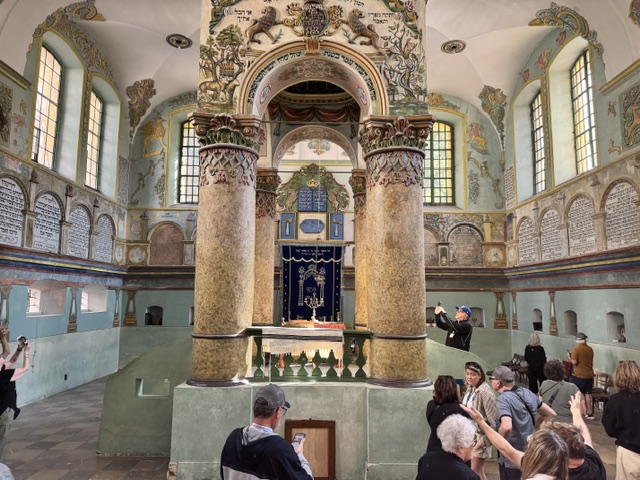
While in Krakow, the group made a day trip to nearby Lancut, formerly a Hasidic stronghold, where the members of the group toured the synagogue that was built in 1761 and has been well preserved.
“The synagogue was unreal,” Ian Rabb commented. “It has an art deco design that exudes spirituality and kabbalah.”
The Winnipeggers finished their tour with a visit to the Lodz ghetto. Lodz was an industrial city and the last Polish city to be made “Judenrein” because the Nazis needed the Jewish factory workers to build tanks and sew German soldiers’ uniforms.
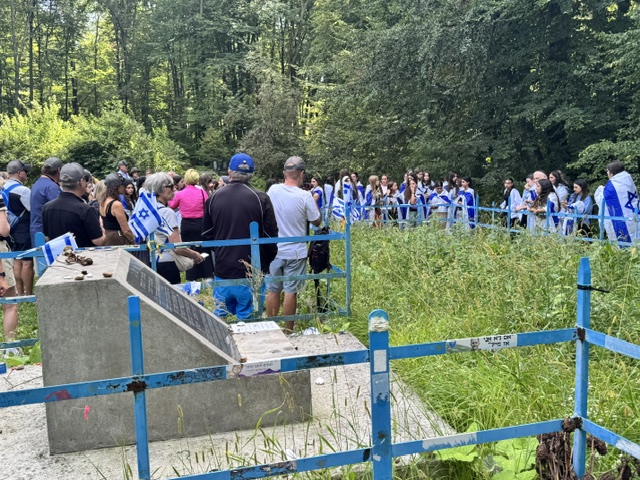
For Sheila Rabb, one of the most difficult moments was standing on the site of the mass grave in the forest near the Chelmno death camp, not far from Lodz, where up to as many as 300,000 victims of the Chelmno gas chambers were buried.
“We recited kaddish over the site,” she said.
Sheila Rabb hac high praise for the Winnipeggers’ Polish and Israeli tour guides, Janush and Mordechai. ”They were outstanding,” she said. “They really brought history alive for us.”
Ian Rabb reports that his cousin (and Sheila’s nephew), Alan Pitch, who was also part of the group, is working on a documentary of the trip.
The last word goes to Abby Flackman. “My biggest takeaway,” she said, “is that we will control how our story ends. The Nazis tried to end our story of the Holocaust. They failed. We went elsewhere, built communities and institutions, grew again in numbers and continue to strive to become stronger, more resilient and thrive.”
Local News
Gray Academy enrolment continuing steady upward trend
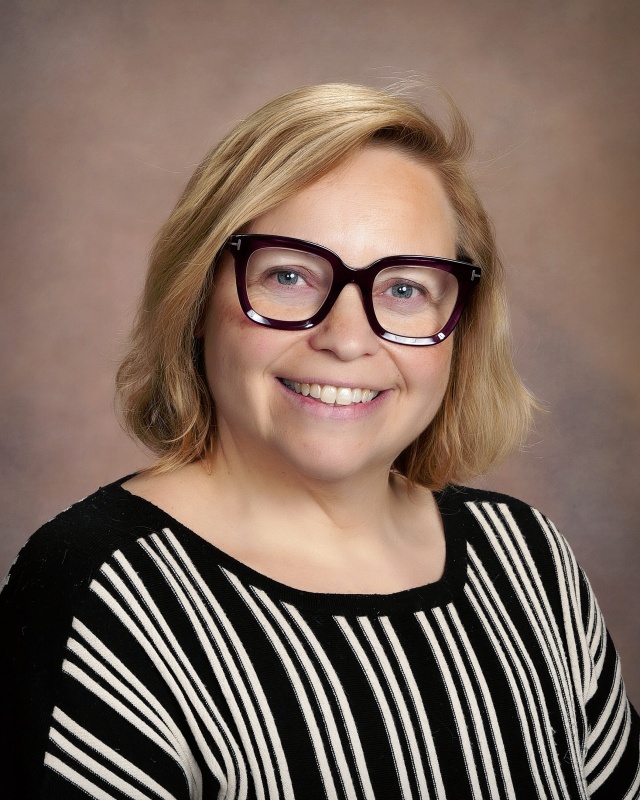
By MYRON LOVE Next year, Gray Academy of Jewish Education will celebrate its 30th anniversary – and Western Canada’s only JK-Grade 12 Jewish day school has much to celebrate.
For starters, enrolment continues to grow. Lori Binder, Gray Academy’s Head of School and CEO of the Winnipeg Board of Jewish Education, is pleased to report that this year’s opening enrolment stands at 521 – the highest number for September in 13 years.
For the third year in a row, Gray Academy is running three kindergarten classes, and all three are nearly full, as are the Grade 1 and 2 classes. While Early Years remains the main entry point for new families, the school also welcomed 37 new students to its elementary and high school this year – a total of 88 new students.
Lisa Boroditsky, the school’s admissions coordinator, points out that many kindergarten children are coming from the Kaufman Child Care Centre at the Rady JCC and Chabad-Lubavitch of Winnipeg’s Torah Tots early childcare program. At the high school level, she notes, Grade seven enrolment is also rising, with more students coming to Gray Academy after completing Brock Corydon Elementary School’s Hebrew Bilingual Program.
“From our parent surveys, we can report that parents are choosing Gray Academy not out of fear, but rather because they value the sense of Jewish community that is only available at Gray Academy,” Binder says. “The fact that so many current Gray Academy students are children of alumni also tells us that parents believe in the high academic standards and the positive Jewish experiences we offer.”
New for the school’s elementary School this year, Lori Binder reports, is a musical theatre program. Over the years, our community has produced a significant number of young performers who have not only graced local stages but have also made their mark in theatre and film throughout North America. (Incidentally, this school year, Gray Academy will present its high school musical production, “Mary Poppins,” in March.)
In addition to the annual musical, Binder reports, Gray Academy this school year will be hosting the annual Canadian Accredited Independent Schools national varsity boys’ basketball tournament. Students and staff alike are looking forward to welcoming participating team from independent schools across the country.
Students are also looking forward to the school’s 50th Yom Ha’atzmaut Song Festival. “We are excited for our current students to continue our long tradition of celebrating Israel through music,” Binder says. “We are also hoping for a lot of participation from past performers from the first five decades.”
Among newer programs for Gray Academy high school students are internship opportunities. One is with Drs. Lorrie Kirshenbaum and Inna Rabinovich-Nikitin at the Institute of Cardiovascular Sciences at St. Boniface Hospital – a great opportunity for students in Grades 11 and 12 who have an interest in pursuing studies in health sciences. The other program, which was piloted last year, is run in conjunction with the Saul and Claribel Simkin Centre, and gives students in Grade 9 and up opportunities to connect weekly with Simkin residents for hands-on activities.
The corollary to that is a new program that focuses on the school’s relationships with grandparents. The Gray Academy Grandpals program encourages grandparents (and other special seniors in the lives of Gray students) to connect with and volunteer at the school. Since the program launched two years ago, Grandpals have attended special events and come into the school to volunteer for challah making, hamantaschen baking, and even with building projects such as at the new Hypedome by the ice rink, which will provide student skaters with shelter to warm up and change their skates in winter.
Lori Binder points out that, in addition to new programming, the school maintains a strong focus on affordability. “It is very important to us that no child is turned away because a family can’t afford to pay,” she says.
She notes that Manitoba is one of only a few Canadian provinces that fund independent schools such as Gray Academy, with the school receiving approximately 50% of the funding public schools receive per student. She adds that the school offers a robust Bursary Assistance program, strongly supported by funding from the Jewish Federation of Winnipeg’s Combined Jewish Appeal. “Over 60% of our families receive some level of bursary support,” she reports. “We work with every family to ensure that no child is ever turned away because of inability to cover the full parental contribution.”
The school also continues to play an integral role in helping families moving to Winnipeg from Israel, Argentina, Brazil and other countries to adapt to their new homes. Over the past few years, the school has expanded its EAL (English as an additional language) programming significantly to accommodate growing needs.
In an increasingly troubled world, Gray Academy remains a beacon of light, offering Jewish students and their families a warm, welcoming environment, along with a top notch Jewish and general education.
For more information about what Gray Academy has to offer and application dates, phone 204 477-7425 or email admissions@grayacademy.ca.
Local News
Veteran actor Harry Nelken first recipient of new Winnipeg Jewish Theatre Chai Legacy Award
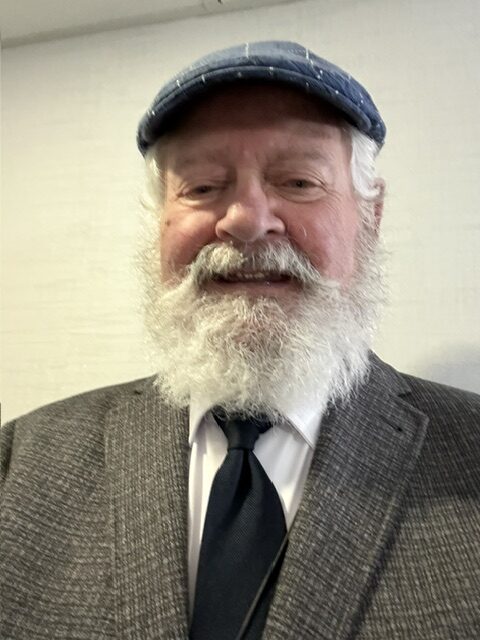
By MYRON LOVE The Winnipeg Jewish Theatre (WJT) has introduced a new award – the Chai Legacy Award. The award recognizes individuals for their “artistry, craft and lifetimes commitment to Jewish performing arts in Manitoba” – and the first recipient is none other than Harry Nelken.
A WJT press release described the new award as “a historic first for the company.” In making Harry Nelken the first recipient of the award, the WJT says it recognizes Nelken’s “artistry, craft, and incredible dedication to Jewish performing arts in Manitoba.
“To know Harry is to know the ultimate mensch,” the WJT press release continues. “Whether he is lighting up a room with his infectious, ear-to-ear smile while cheering on his fellow cast members, or bringing profound depth to the stage, his generosity of spirit is unmatched.
In response, Nelken, a veteran of more than 45 years gracing Winnipeg’s stages as well as other performing venues across Canada, says “It was a complete surprise,” to be the first recipient of the award.
The award was presented on Sunday, September 13, during the cast party following the last performance of the WJT’s joint presentation with Rainbow Stage of “Fiddler on the Roof.” “Dan (Petrenko – the WJT’s artistic director) and Carson (Nattrass – Rainbow’s artistic director) were talking about the input of the Jewish actors in Fiddler,” Nelken recalls, “and then I heard my name. I never expected to be singled out for my acting like this. I know I mumbled something. I checked with (fellow cast member) Debby Maslowsky to make sure I said thank you. She assured me that I did.”
Nelken’s history with the Winnipeg Jewish Theatre goes back to the very beginning of the WJT. He recalls that he was cast in the WJT’s first production in 1987. Bev Aronovitch was the artistic director (and WJT founder) and the production was “Today, I am a Fountain Pen,” in which Harry played the role of the bar mitzvah’ boy’s father.
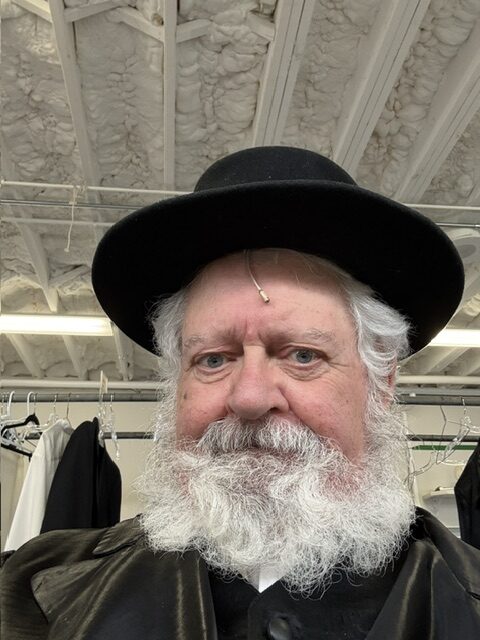
Over the years, he reports, he has appeared in 16 WJT productions. This most recent production of “Fiddler” was also the third time that he has appeared in a Rainbow Stage production of the show. His previous show performances were in 1984 and 1993. It’s also the second time that he has portrayed the rabbi. (He was cast as Lazar Wolf in the ’93 production.)
Nelken reports that he took the initiative to contact Carson Nattrass about the role of the rabbi after he learned about the planned joint production.
“I threw my shtreimel into the ring,” he jokes.
Every role, he notes, is a new learning experience for him. He prepared for the part this time by researching what life was like for a rabbi in a small eastern European shtetl.
“I realized that Jewish life has always been about resilience,” he points out. At the end of the play, after the Jews have been banished from Anatevka, when the rabbi’s son asks his father about how the Messiach will know where to find them, the rabbi replies that they will simply have to wait for him somewhere else.
“There is a great lesson to be learned here,” Nelken continues. “We don’t know what the future will bring. The question is do we put our faith in God or in man?”
Resilience is a primary feature of Harry Nelken’s career. He recounts a story about Abe Vigoda (“Fish” to some of us older readers who, when asked by Johnny Carson how he felt about becoming an overnight star, Vigoda’s response was that “I’m an overnight star but overnight was 25 years long.”)
In a much earlier interview I did with Harry for the Post, he recalled how his first acting gigs were in high school theatre. At the University of Ottawa, while studying criminology, he auditioned for and got a role in a play. From 1972 to 1979, he immersed himself in local amateur theatre.
He noted that even the busiest of working local actors – of which he has been one – barely scrape by and need a second source of income. For over 40 years, he supplemented his income by driving a cab.
”Particularly in my early years, when acting roles were sparse, driving a cab was my lifeline,” he recalls. “On occasion, even when doing a play at MTC, after the show, I would report for taxi duty for a night shift.”
In recent years roles have been fewer. In the last four years, he has been in five locally-shot film projects: two Hallmark films – “ Hanukah on Rye” and “ Haunted Wedding”; the feature film,”Normal, ”starringf Bob Odenkirk and Henry Winkler; (available on Amazon Prime); and the mini series “American Hostage,”,starring Jon Hamm and Giovanni Ribisi (available on Crave).
Nelken’s current film project is called “Pikohowin.” It’s the true story of how in 1990, Saskatoon police officers were revealed to be driving inebriated Indigenous people in winter out of the city and depositing them on the highway. Harry has the role of judge Shiebel.
“I’m 79 now,” Nelken says. “I am no longer willing to go out of town for stage or film work unless it is for a really undeniable role. I am happy to be doing more film work. I feel energized by the work. I am still regularly auditioning for film roles,
“Most of all, I appreciate that I can look back on a fulfilling career doing what I wanted to do more than anything else.”
