Connect with us

Uncategorized

Iran, Abraham Accords and Bibi’s trial: What Trump said in his historic Knesset speech

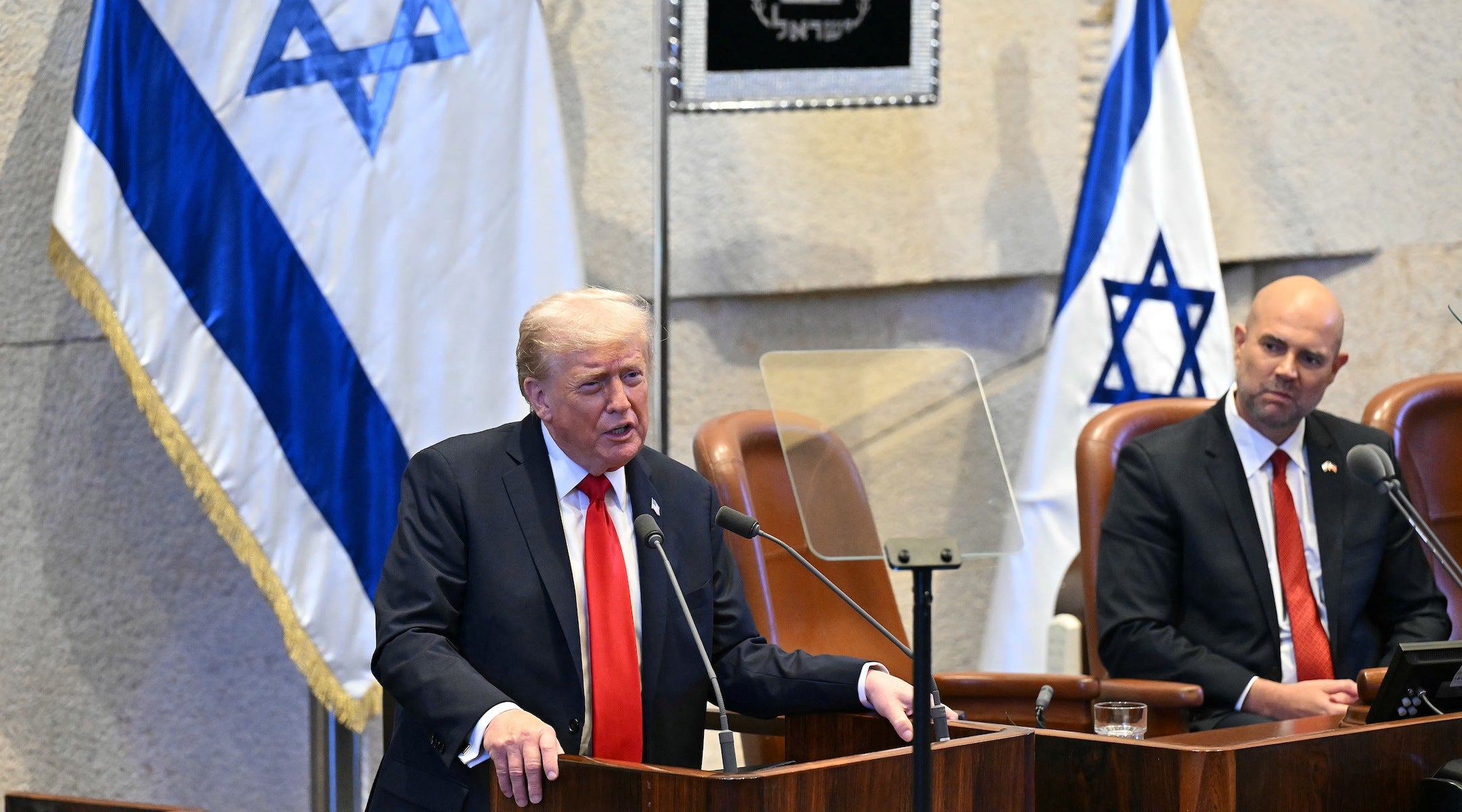
(JTA) — As the last of the Israeli hostages were released from Gaza, President Donald Trump addressed the country’s parliament — and was given a hero’s welcome.

Trump’s speech to the Knesset on Monday offered effusive praise for the state of Israel, warm — but not unguarded — praise for Prime Minister Benjamin Netanyahu, and an outline for a vision of a future in which Israel is a full partner of every other nation in the region. And in typical Trump fashion, it was delivered with a mixture of bravado and unpredictable asides, some of which cut at the heart of several tensions in the Middle East.

Here are the big takeaways from Trump’s speech to the Knesset.

‘You’ve won’

With the hostages released, Trump made clear that, in his view, the era of Israeli military action in Gaza is over.

“Israel, with our help, has won all that they can by force of arms,” he said. “You’ve won. I mean, you’ve won. Now it’s time to translate these victories against terrorists on the battlefield into the ultimate prize of peace and prosperity for the entire Middle East.”

Speaking of the hostages later, the president reflected on meeting with their families and the spirit he saw igniting them.

“Over the past two years, I’ve met many of the families of the Israelis taken hostage and those that were taken hostage, unbelievable. I’ve looked into their eyes. I’ve seen the worst nightmares of their suffering, but I’ve also seen something else, the beautiful love of the people,” he said. “It’s that love that’s defeated the enemies of civilization, built this incredible country and this unbelievable economy and forged one of the great democracies of the world.”

‘You could be a little bit nicer, Bibi’

Amid reports that Trump had been frustrated by Netanyahu’s pace in negotiations to end the war in Gaza, the president had broadcast total alignment with Jerusalem. He had Netanyahu by his side at the White House last week when he announced that Israel had agreed to a ceasefire proposal that would be presented to Hamas, which later signed on. He invited Netanyahu into his motorcade on his way from Ben Gurion airport to the parliament building on Monday.

And he began his speech by praising Netanyahu — but not as effusively as he might have.

“I want to express my gratitude to a man of exceptional courage and patriotism whose partnership did so much to make this momentous day possible. You know what I’m talking about. There’s only one prime minister, Benjamin Netanyahu,” Trump said. “He is not easy. I want to tell you he’s not the easiest guy to deal with, but that’s what makes him great.”

Later, as he praised opposition leader Yair Lapid as a “very nice guy,” Trump reacted to the reaction he perceived in Netanyahu and offered a rebuke.

“Now you can be a little bit nicer, Bibi, because you’re not at war anymore, Bibi, you did it.”

Bibi’s trial

Even while alluding to his frustrations with Netanyahu, Trump still took a moment to stump for him in the prime minister’s still-ongoing trial for political corruption. Turning to Israeli President Isaac Herzog at one point, Trump made a highly unusual show of intervening in the case, calling on him to use his pardon powers to settle the matter.

“Hey, I have an idea. Mr. President, why don’t you give him a pardon?” Trump said, to hoots and applause. “Give him the pardon. Come on.”

As chants of “Bibi!” could be heard, Trump continued, “It’s not in the speech, as you probably know, but I happen to like this gentleman right over here. And it just seems to make so much sense. You know, whether we like it or not, this has been one of the greatest wartime presidents.”

Trump then made specific reference to some of the bribery charges against Netanyahu, one of the cases that a large movement of Israeli protesters — including many hostage families — had cited as a reason why the prime minister should cede power.

“And cigars and champagne, who the hell cares about that?”

The U.S.-Israel relationship

As the war dragged on, segments of both the left and right in American politics have begun to question U.S. support for Israel. Trump vocally reaffirmed the bond.

“Israel will always remain a vital ally of the United States of America,” he said. “Israelis share our values, field one of the world’s most powerful militaries. You really do.” He added, “I’m proud to be the best friend that Israel has ever had.”

He also referenced the U.S. citizens who were abducted in Gaza in what he noted was “the worst slaughter of Jews since the Holocaust,” painting American and Israeli grief over Oct. 7 as one and the same.

“The United States of America grieved alongside you, and we mourn for our own citizens who were so viciously taken that day,” he said. “And to all the families whose lives were forever changed by the atrocities of that day, and all of the people of Israel, please know that America joins you in those two everlasting vows: Never forget, and never again.”

What’s next for the ‘Avraham Accords’

At various points during his speech, Trump turned to his first administration’s signature foreign-policy accomplishment: the normalization agreements between Israel and a handful of Arab states, known as the Abraham Accords. On Monday he pronounced it the Hebrew way, “Avraham.”

“I like calling it the Avraham Accords. Avraham. It’s so cool. It’s so much nicer, you know? The Abraham versus the Avraham,” he said.

In the wake of what he said would be a concentrated rebuilding effort in Gaza, Trump also urged Israel and several Arab and Muslim nations to add to these accords. “Now we’re going to forge a future that is worthy of our heritage. We’re going to build a legacy that all the people of this region can be proud of,” he said.

“So instead of building fortresses to keep enemies at bay, the nations of this region should be building infrastructure to weave your commerce closer together, because you’ve got to compete with a big world out there in commerce. Now it’s a different kind of competition. Instead of making weapons and missiles, the wealth of this region should flow to schools and medicine, industry. And frankly, the new hot thing, artificial intelligence.”

Toward the end of his speech, Trump provided a list of countries and their capitals he said he would like to see forge stronger relations with Israel and each other. Some of them already have diplomatic ties to the country.

“New bonds of friendship, cooperation and commerce will join Tel Aviv to Dubai, Haifa to Beirut, Jerusalem to Damascus, and from Israel to Egypt, from Saudi Arabia to Qatar, from India to Pakistan, from Indonesia to Iraq, from Syria to Bahrain, Turkey to Jordan, the United Arab Emirates to Oman and Armenia to Azerbaijan,” he said.

How such an ambitious realignment would play on the larger diplomatic stage, as many countries remain furious at Israel for its handling of the Gaza war, remains to be seen. The president of Indonesia, one Muslim-majority nation long in discussions to join the accords, scuttled a planned historic visit to Israel Monday over reported concerns of pushback at home, though he attended the day’s summit between Israel and Hamas held in Egypt.

‘Make a deal’ with Iran

Amid talks of normalization, Trump paid special attention to the elephant in the room by urging the Knesset to use their momentum to “make a deal” with Iran, which both the United States and Israel had bombed at various times during the Israel-Gaza war.

“And even to Iran, whose regime has inflicted so much death on the Middle East, the hand of friendship and cooperation is open,” he said. I’m telling you, they want to make a deal.”

“Neither the United States nor Israel bear the people of Iran any hostility,” Trump continued. “We merely want to live in peace. We don’t want any looming threats over our heads.”

The moment stood out, as both the United States and Israel have had fraught relationships with Iran for nearly half a century. Netanyahu spoke to Congress in an effort to unravel a nuclear deal with Iran during the Obama administration; that deal wound up going through, only to be scuttled by Trump in his first term in office. Trump himself acknowledged this with some dark humor.

“As president I terminated the disastrous Iran nuclear deal, and ultimately I terminated Iran’s nuclear program with things called B-2 bombers,” he said. Yet, Trump pressed on, now a new deal should be reached, one predicated on Israel’s strengths.

He added, “A lot of Iranians in the United States are good people, smart, hardworking people. They don’t want to see what’s happened to their country. The story of fierce Israeli resolve and triumph since Oct. 7 should be proof to the entire world that those who seek to destroy this nation are doomed to bitter failure. The State of Israel is strong and it will live and thrive forever.”

Bibi’s demand for weapons

Trump was open about one aspect of U.S. support for Israel that had received particular scrutiny and protest during the war: the transfer of weapons for Israel to use in Gaza.

“We make the best weapons in the world, and we’ve got a lot of them, and we’ve given a lot to Israel, frankly,” he said. Deeming himself “all about stopping wars,” Trump said he “hated” some of the weapons the United States makes “because the level of power is so enormous, so dangerous, so bad.”

Yet, Trump said, the United States gave Israel all the weapons it needed. He even ribbed Netanyahu’s desire for military supplies.

“I mean, Bibi would call me so many times: ‘Can you get me this weapon, that weapon, that weapon?’ Some of them I never heard of, Bibi. And I made them,” Trump said. “But you used them well. It also takes people that know how to use them, and you obviously use them very well, but so many that Israel became strong and powerful, which ultimately led to peace. That’s what led to peace.”

Miriam Adelson

Trump gave a special shout-out to one of his wealthiest and most stalwart pro-Israel donors in the United States, Miriam Adelson — widow to casino magnate Sheldon. While praising her, he also suggested she “loves” Israel more than the United States — flirting with the kind of “dual loyalty” trope that mainstream Jewish organizations have tended to condemn in the past.

The Adelsons, he said with an unusual degree of candor for a president referencing a top financial backer, had been a large influence on his Israel policy.

“I kept my promise and officially recognized the capital of Israel and moved the American embassy to Jerusalem,” Trump said, to applause. “Isn’t that right, Miriam?” He then urged Adelson to “stand up” for recognition.

During his first term, Trump told the Knesset, “Miriam and Sheldon, they would come into the office… I think they had more trips to the White House than anybody else. Look at her sitting there so innocently. She’s got $60 billion in the bank… But she loves Israel. And they would come in, and her husband was a very aggressive man, but I loved them.”

Trump described his relationship with the Adelsons as one where they would needle him to drop by the White House. “He’d call up, ‘Can I come over and see you?’ I’d say, ‘Sheldon, I’m the president of the United States. It doesn’t work that way.’ He’d come in,” the president said. “But they were very responsible for so much.”

“I’m going to get in trouble for this,” Trump said. “But I actually asked her once, I said, ‘So, Miriam, I know you love Israel. What do you love more? The United States or Israel?’ She refused to answer. That means, that might mean Israel.”

The word on Gaza, and ‘the Board of Peace’ 

When Trump’s remarks touched on what should come next for Gaza, he painted his vision as one of international cooperation and prosperity, should the Palestinians want it.

Says several “very wealthy” Arab and Muslim nations have committed “to support a safe gilding of Gaza and beyond,” Trump added, “The total focus of Gazans must be on restoring the fundamentals of stability, safety, dignity and economic development so they can finally have the better life that their children really do deserve after all these decades of horror. I intend to be a partner in this effort.”

The “day after” plan for Gaza was one of the major sticking points of the negotiations between Israel and Hamas, the latter of which has not committed to relinquishing control of the territory despite Trump and Israel’s demands. Some members of Israel’s far-right governing coalition, meanwhile, have urged for the expulsion of all Palestinians and for Israel to control or resettle the strip.

In the past, Trump has promoted the idea of the United States, or his personal business interests, taking Gaza for itself and turning it into a resort. His tone was more measured in the Knesset, saying his plan for rebuilding Gaza involved a “board of peace” that would be “unbelievably popular.”

“Is that a beautiful name? Like a board, of peace,” he said. “The only bad thing, from my standpoint: every single nation involved has asked me to be the chair. And I’ll tell you, I’m very busy. I didn’t count on that.”

Trump framed Gaza’s future as one up to Palestinians.

“The choice for Palestinians could not be more clear,” he said. “This is their chance to turn forever from the path of terror and violence, it’s been extreme, to exile the wicked forces of hate that are in their midst. And I think that’s going to happen.”

Jared and Ivanka

How much does Trump’s Jewish son-in-law, Jared Kushner, love Israel? “He loves it so much that my daughter converted,” the president said.

Trump continued to riff on Ivanka’s conversion for a while. “I didn’t know this was going to happen,” he said. “And she is so happy, and they are so happy, at least, I think they’re happy. If they’re not, we have a big story, right?”

The post Iran, Abraham Accords and Bibi’s trial: What Trump said in his historic Knesset speech appeared first on The Forward.

Continue Reading

Uncategorized

Trump endorses Brandon Herrera, Texas GOP candidate who owned copy of ‘Mein Kampf’

(JTA) — President Trump on Thursday endorsed Brandon Herrera, the de facto GOP nominee for a Texas congressional district whose past comments about Nazis have drawn scrutiny.

“Brandon is strongly supported by many Highly Respected MAGA Warriors in Texas, and Republicans in the U.S. House,” the president wrote on his social network Truth Social about the gun-enthusiast YouTuber. Trump added that Herrera would “[p]rotect our always under siege Second Amendment” and concluded, “HE WILL NEVER LET YOU DOWN!”

Herrera won his primary race after his opponent, incumbent Rep. Tony Gonzales, admitted to having conducted an affair with a former staffer who later died by suicide. Gonzales withdrew from his reelection bid, which was scheduled for a runoff, as a House investigation opened into his conduct.

Herrera is best known for his Second Amendment advocacy that has included criticizing a gun-control bill drafted in the wake of the 2022 Uvalde school shooting in the district he hopes to lead. His output has also included reviews of Nazi-era weaponry, a recreation of Hitler’s suicide, and the occasional Holocaust joke.

In 2024, on his own podcast, Herrera also discussed owning a copy of “Mein Kampf,” Hitler’s manifesto. The resurfaced clip recently raised eyebrows, though Herrera and the other podcast hosts lauded Dorothy Thompson, an American journalist expelled from Nazi Germany who panned the book in 1939, and joked about his remarks being edited to sound like he was a Nazi. Herrera recently said he didn’t agree with its “teachings.”

During their 2024 matchup, Gonzales had called his opponent a “known neo-Nazi,” which Herrera disputes. Trump’s endorsement of Herrera stands in contrast to the Republican Jewish Coalition, whose spokesperson told Jewish Insider will continue to oppose him.

A spokesperson for Herrera’s campaign rejected accusations of antisemitism in a statement to the Texas Tribune.

“Brandon has never done or said anything antisemitic, and he has earned the support of leaders in the Jewish community,” campaign manager Kimmie Gonzalez told the news outlet. “In Brandon’s work as a historical firearms educator, he has simulated the execution and poisoning of Adolf Hitler. The misleading clip about Brandon’s rare book collection omits his comments ridiculing and condemning Hitler’s book.”

The campaign did not immediately return a Jewish Telegraphic Agency request to specify which Jewish communal leaders are supporting Herrera. Texas’s 23rd Congressional District stretches across the state’s southwestern region and includes parts of San Antonio and the outskirts of El Paso.

With Herrera on the ballot, Democrats, running attorney and former schoolteacher Katy Padilla Stout, see a pickup opportunity in a traditionally red district. Padilla Stout recently opposed Trump’s strikes on Iran, calling the action “a flagrant violation of the U.S. Constitution” in a statement that did not mention Israel. Some Democratic party staffers are already painting her opponent as “Mein Kampf loving Brandon Herrera.”

The post Trump endorses Brandon Herrera, Texas GOP candidate who owned copy of ‘Mein Kampf’ appeared first on The Forward.

Continue Reading

Uncategorized

Mourning the victims of the 1911 Triangle Shirtwaist Factory fire

דעם 25סטן מערץ וועט ווערן 105 יאָר זינט דער שרעקלעכער טראַגעדיע — די שׂריפֿה אינעם טרײַענגל־שוירטווייסט־פֿאַבריק, אין 1911. 146 יונגע אַרבעטאָרינס, ס׳רובֿ ייִדישע און איטאַליענישע, זענען אומגעקומען, ווען די טיר, וואָס האָט באַדאַרפֿט בלײַבן אָפֿן זיך צו ראַטעווען אין אַזאַ פֿאַל, האָבן די סוועטשאַפּ־באַלעבאַטים געהאַלטן פֿאַרשלאָסן.

צו יענער צײַט, האָט דער פּאָעט מאָריס ראָזענפֿעלד געאַרבעט אין „פֿאָרווערטס“ סײַ ווי אַ זשורנאַליסט, סײַ ווי אַ פּאָעט. ער איז אָנגעקומען צו דער שׂרפֿה, בעת די טראַגעדיע איז פֿאָרגעקומען און האָט במשך פֿון עטלעכע וואָכן געשריבן עטלעכע אַרטיקלען און לידער וועגן דער טראַגעדיע. מיר דרוקן דאָ אַן אויסצוג פֿון זײַן אַרטיקל, וואָס איז געווען געדרוקט אויף דער ערשטער זײַט פֿונעם „פֿאָרווערטס“, אַ וואָך נאָך דער טראַגעדיע, און אַן אויסצוג פֿון אַ פּאָעמע וואָס ער האָט געשריבן אין אָנדענק פֿון די אומגעקומענע מיידלעך.

זינט עס זײַנען אין ניו־יאָרק איבער הונדערט לעבנס פֿאַרברענט געוואָרן צוליב דער צוגעשלאָסענער טיר, וואָס האָט לויט דעם געזעץ געזאָלט זײַן אָפֿן, קוק איך מיט פֿאַרדאַכט אויף אַ טיר, אויפֿן געזעץ און אויף פֿײַער.

איך באַטראַכט זיי אַלע פֿאַר איבעריקע זאַכן.

וואָס טויג מיר אַ טיר, אַז זי איז פֿאַרשפּאַרט? וואָס טויג דאָס געזעץ ווען מען פֿירט אים נישט דורך? און פֿײַער… יאָ, מיר דאַכט, אַז מענטשן ווייסן נישט וואָס צו טאָן מיט זייער פֿײַער…

איך האָב פֿון אייביק אָן געוווּסט, אַז מיט פֿײַער שפּילט מען זיך נישט. איצט אָבער ציטער איך פֿאַר דעם וואָרט פֿײַער. איך קען קיין נאַכט נישט שלאָפֿן. פֿײַערדיקע חלומות שרעקן מיך, זיי פֿאַרברענען מײַן מנוחה און איך ליג און שוידער.

מיר דאַכט, אַז הימל און ערד האַלטן אין אײַן ברענען, אַז עס פֿלאַקערן די זון, די לבֿנה און די שטערן, אַז די מלאכים שפּרינגען ברענענדיק פֿון די הימלשע פֿענצטער אויף דער ערד און פֿאַלן אַרונטער טויטע… און די אַמבולאַנסן פֿירן זיי אַוועק אין מאָרג (מתים־שטיבל).

מיר דאַכט, אַז גאָט אַליין איז אײַנגעהילט אין אַ פֿײַערדיקן טלית און ברענט. ברענט און גיסט מיט פֿײַערדיקע טרערן, וואָס פֿאַלן אַרײַן און פֿאַרלירן זיך אין זײַן וועלטן־גרויסער, פֿלאַקערדיקער באָרד, און פֿון זײַנע נאָזלעכער זעצט אַ רויך ווי פֿון אַ צוויי וווּלקאַנען.

איך זע ווי די גאַנצע פּמליא־של־מעלה קרימט זיך, דרייט זיך מיט גסיסה־שמערצן אין אַ ים פֿלאַמען, ווי די כּרובֿים און שׂרפֿים און חיות־הקודש צאַפּלען מיט די פֿלאַמענדיקע פֿעדערן, רײַסן זיך די אָנגעצונדענע האָר פֿון די ברענענדיקע קעפּ און קלאַפּן פֿאַרצווייפֿלט מיט די רויטע, פֿײַערדיקע פֿליגל אין אַ שווערער, גרויסער, אײַזערנער טיר און די טיר איז פֿאַרשלאָסן… דער שׂטן האָט איר פֿאַרשלאָסן און באַהאַלטן דעם שליסל…

איך זע ווי די „אופֿנים“ און „גלגלים“, די „הימלשע רעדער“ דרייען זיך און פֿלאַקערן, און מיר דאַכט, אַז דאָס זײַנען שנײַדער־מאַשינען, און אין די ברענענדיקע, צום טויט־שפּרינגנדיקע מלאכים דערקען איך די פּנימער פֿון די פֿאַרשׂרפֿעטע אַרבעטער־מיידלעך, די טעכטער פֿון דער ייִדישער גאַס אין דער בלוטיקער פֿון פֿרויען־יאַקעס פֿון וואַשינגטאָן פּלייס.

איך שרײַ, איך ליאַרעם, איך וויין, איך פֿלוך, איך לאַך און כאַפּ זיך אויף אין היסטעריע.

פֿײַער… פֿײַער…

וואָס איז אייגנטלעך פֿײַער? איז דאָס אַ ברכה? איז דאָס אַ קללה?

די תּורה איז געגעבן געוואָרן אין פֿײַער, די אינקוויזיציע האָט געהערשט אין פֿײַער.

פֿײַער איז די נשמה פֿון דער וועלט. אין פֿײַער גייט אויף דער טאָג און מיט אַ פֿײַער פֿאַרגייט ער.

דאָס לעבן פֿון יעדן באַשעפֿעניש איז פֿײַער.

דער מענטש, אין וועמען זײַן פֿײַער האָט אויסגעברענט, דער האָט אויפֿגעהערט צו „זײַן“.

אַפֿילו די מילב האָט אין זיך אַ קליינעם לאָקאָמאָטיוועלע מיט פֿײַער, וואָס טרײַבט איר דורכן לעבן.

ליבע איז פֿײַער, דענקען — פֿײַער, אַרבעט — פֿײַער, האַס — פֿײַער, ראַכע (נקמה) — פֿײַער. אַלץ איז פֿײַער, אַפֿילו דאָס וואַסער: מיר גיסן אין זיך וואַסער צו פֿאַרלענגערן אונדזער פֿײַער. די דורשטיקע ערד טרינקט וואַסער, כּדי צו האָבן גענוג פֿײַער אַרויסצוגעבן אירע געוויקסן.

איך קען דאָס קלענסטע ליד נישט זינגען, ווען איך זאָל נישט דערפֿילן אין דער נשמה אַ ברען, אַ פֿײַער, דעם הייליקן פֿײַער פֿון שאַפֿן.

איך פֿאַרגעטער דעם פֿײַער, ער איז דער סימבאָל פֿון טעטיקייט, פֿון שטרעבן, פֿון שטײַגן, פֿון גיין אַרויף, הויך, הויך הימלווערטס…

אָבער איך פֿאַרער נאָר אין פֿײַער דאָס שאַפֿערישע און נישט דאָס צעשטערנדיקע. איך בענטש אים ווען ער גיט, אָבער נישט ווען ער נעמט. איך בענטש אים אויפֿן סיני און פֿלוך אים (שעלט אים) אויפֿן שײַטער־הויפֿן.

איצט פֿאַרדאַם איך אים. ער האָט פֿאַרצערט אַ פֿאַבריק מיט אַרבעטער־מיידלעך. ער האָט פֿאַרוואַנדלט ניו־יאָרק אין אַ לוויה־שטאָט און איז געוואָרן די קללה פֿון דער מענטשהייט.

ברעכט אויף די טיר און באַפֿרײַט זיך!

און אָט איז דאָס ליד וואָס משה ראָזענפֿעלד האָט דעמאָלט אָנגעשריבן:

די פֿאַרשלאָסענע טיר (פֿײַער־געדאַנקען איבער פֿאַרברענטע אַרבעטער)

דער פֿײַער בושעוועט אָן שיעור

עס זעצט דער רויך, די העל דערוואַכט.

מען שפּאַרט זיך צו דער רעטונגס־טיר,

אומזיסט! אָ, וויי, זי איז פֿאַרמאַכט!

מען שרײַט, מען ראַנגלט זיך, מען פֿאַלט,

אין טײַוולס בלוטיקן געצעלט.

מען בלײַבט אין זײַן פֿאַרפֿלוכטן גוואַלט,

אַיעדער אויסגאַנג איז פֿאַרשטעלט.

מען לויפֿט, מען ווייס אַליין ניט וווּ,

און יעדע האָפֿענונג איז גענאַרט.

די שווערע גיהנום־טיר איז צו,

דער אַשמדאַי האָט איר פֿאַרשפּאַרט.

ניט רופֿט דעם שוואַרצן שד צום דין!

אַ שאָד די מי, ער איז גערעכט…

צו דער פֿאַרמאַכטער טיר אַהין!..

און אַלע, פּונקט ווי איינער, ברעכט!

מען בלײַבט אין דעם גיהנום־בראַנד

כּל־זמן דער שלאָס איז אים געטרײַ…

קומט אַלע גלײַך, לייגט צו אַ האַנט!

ברעכט אויף די טיר און איר זײַט פֿרײַ…

די העל איז נאָר אַ העל ווי לאַנג

דער שלאָס פֿון טײַוול הענגט אויף איר.

געפֿערלעך איז איר פֿלאַם, איר צוואַנג

נאָר בײַ אַ צוגעמאַכטער טיר…

אַ צווייט ליד וואָס מאָריס ראָזענפֿעלד האָט אָנגעשריבן וועגן דער שׂריפֿה האָט די פֿאָרשערין און זאַמלערין פֿון ייִדישע לידער, חנה מלאָטעק, אָפּגעדרוקט אינעם פֿאָרווערטס אין 2011 — פּונקט הונדערט יאָר נאָך דעם אומגליק, אינעם אַרטיקל, קינות וועגן דעם טרײַענגל־פֿײַער. דאָס ליד געפֿינט זיך אויף דער פּלאַטע „דאָס גאָלדענע לאַנד“ פֿון יאָסל מלאָטעק:

די רויטע בהלה (אויף פֿאַרברענטע פֿאַבריק־מיידלעך אין ניו־יאָרק)

ניט קיין שלאַכט, ניט קיין פֿאַרטײַוולטער פּאָגראָם

האָט אָנגעפֿילט די גרעסטע שטאָט מיט קלאָגן,

די ערד האָט ניט געציטערט אין איר תּהום,

עס האָט קיין בליץ, קיין דונער ניט געשלאָגן;

סע האָבן קיין שוואַרצע וועטער־וואָלקנס ניט געקראַכט,

און קיין קאַנאָנען ניט די לופֿט צעאַקערט —

אָ, ניין! דאָס האָט אַ מוראדיקע העל דערוואַכט,

אַ שקלאַפֿן־נעסט מיט שקלאַפֿן ווילד געפֿלאַקערט,

דאָס האָט דער גאָלד־גאָט מיט אַ בראַנד־געלעכטער

געפֿרעסן אונדזערע זין און טעכטער,

געלעקט די לעבנס מיט זײַנע רויטע צונגען —

זיי זײַנען אין דעם טויט געשפּרונגען,

אין זײַן שויס געדרונגען,

ער האָט זיי געכאַפּט, געלאַכט, געזונגען…

ער האָט זיי פֿאַרשלונגען.

* * *

זיי זײַנען געזעסן אין זייער יאָך פֿאַרטיפֿט,

זייער שווייס האָט געטריפֿט —

אין דעם פֿאַרטויבנדן געזשום

פֿון מאַשינען אַרום, —

ווען צען שטאָק אין דער הויך,

האָט זיי פֿאַרוויקלט דער רויך,

פֿאַרשפּונען דער פֿלאַם,

און אַ גלוטיקער ים

געפֿרעסן, גענאַשט,

פֿאַרקוילט, פֿאַראַשט!

* * *

שוועסטער מײַנע! יונגע שוועסטער!

מײַנע יונגע ברידער!…

טרויערט מײַנע לידער!

יאָמערט און טרויערט!…

זעט ווי עס לויערט

פֿון טונקעלע נעסטער

דעם אַרבעטערס טויט;

ווי ער האַלט זײַן ברויט…

ווי ער גלאָצט בײַ זײַן טיר,

בײַ זײַן אָרעם געצעלט —

וויי, וויי איז מיר!

וויי, וויי דיר, וועלט!

אַ שבת איז דאָס געווען,

אַן אַרבעטערס אַ שבת,

זײַן „קידוש!“… זײַן „הבֿדלה!“…

די רויטע בהלה

איז פּלוצלינג געשען,

געשיקט פֿון דעם רײַכן,

דעם פּרינץ פֿון געלט.

אָ, אָ, וויי אָן אַ גלײַכן!

פֿליסט טרערנטײַכן,

אַ פֿלוך דער אָרדענונג!

אַ פֿלוך דער אומאָרדענונג!

אַ פֿלוך דער וועלט!

* * *

אויף וועמען זאָל מען פֿריִער קלאָגן?

אויף די פֿאַרברענטע?

אויף די ניט־דערקענטע?

אויף די, וואָס קדיש זאָגן?

אויף די פֿאַרקריפּלטע,

פֿון „זײַן“ געטראָגן?

מײַן טרערנטײַך

אויף אײַך אַלעמען גלײַך!

* * *

פֿאַרהיל זיך אין שוואַרצן, דו גאָלדן לאַנד!

צו טיף דײַן פֿאַרברעכן, צו שרעקלעך דײַן שאַנד,

צו טויב דײַן געוויסן, צו בלינד דײַן געזעץ,

צו טײַוולש דײַן „האַווען“, צו בלוטיק דײַן נעץ,

דײַן נעץ, וועלכע פֿאַנגט דײַנע אָרעמע־לייט —

ס׳וועט קומען די צײַט!… ס׳וועט קומען דײַן צײַט!…

* * *

צינדט יאָרצײַט־ליכט אָן אין די ייִדישע גאַסן!

דער בראָך איז דער בראָך פֿון די ייִדישע מאַסן,

פֿון אונדזערע מאַסן פֿאַרחושכט און אָרעם.

ס׳איז אונדזער לוויה, יאָ, — אונדזערע קבֿרים,

ס׳האָט אונדזערע קינדער, וויי, אונדזערע בלומען,

דער פֿײַער פֿון אונדזערע אָרעמס גענומען.

וויי! אונדזערע ליבע פֿאַרשׂרפֿעטע קוילן,

וויי! אונדזערע פֿריידן אַ העלע מיט גרוילן,

וויי! אונדזערע גליקן אַ באַרג מיט אַרונות,

וויי! אונדזערע זיסע — גיהנום זכרונות!…

אַ צווייט ליד וואָס חנה מלאָטעק האָט דעמאָלט געדרוקט הייסט „מאַמעניו, אָדער עלעגיע פֿאַר די טרײַענגל־פֿײַער־קרבנות“, ווערטער פֿון אַנשל שאָר, מוזיק פֿון יוסל רומשינסקי:

עס רײַסט דאָס האַרץ פֿון דער שרעקלעכער פּלאָג,

ס׳ייִדישע פֿאָלק קלאָגט און וויינט, און ברעכט די הענט.

עס ברעכט אויס אַ פֿײַער, אין העלן טאָג

און הונדערטער אַרבעטער, זיי ווערן פֿאַרברענט.

די וואָס זײַנען פֿון פֿײַער אַנטרינען

האָבן שפּרינגענדיק זייער טויט געפֿינען.

די „מאָרג“ איז פֿול,

מען ווערט שיעור דיל,

ווי אַ מאַמע קלאָגט דאָרט אין דער שטיל:

— אוי־וויי, קינדעניו!

רײַסט זיך בײַ די האָר די מאַמעניו,

— צוליב דעם שטיקל ברויט

האָט אַ שרעקלעכער טויט

גערויבט מיר מײַן איינציק קינד;

טויט ליגט מײַן מיידעלע,

תּכריכים ׳שטאָט אַ חופּה־קליידעלע,

וויי איז מײַנע יאָר,

אַ קינד פֿון זעכצן יאָר,

אוי, מאַמע, מאַמע, וויי איז מיר!

חנה מלאָטעק האָט אויך אַרײַנגענומען טייל פֿון אַ ליד וואָס זי האָט באַקומען פֿון איוו סיקולאַר. די ווערטער זײַנען פֿון לויִס גילראָד און די מוזיק — פֿון ד. מייעראָוויץ. דער אָנהייב לייענט זיך אַזוי:

די שטונדע האָט געקלאַפּט,

דער שאַפּ האָט געסטאַפּט

אין דער גרויסער ווייסט־פֿעקטאָרי.

די אַרבעטער, זיי

האָבן געקראָגן די פּיי

און געאײַלט זיך אַהיימגיין פֿאַר פֿרי.

נאָר פּלוצים, אוי־וויי,

אַ שרעק, אַ געשריי,

אַ העלישער פֿײַער ברעכט אויס.

פֿון איבעראַל קומען

פֿאַרצווייפֿלטע שטימען

אַיעדער וויל פֿריִער אַרויס.

פֿײַערלײַט קלינגען,

פֿון צענטן פֿלאָר שפּרינגען

מיידלעך פֿאַר אַנגסט און פֿון נויט.

עס קראַכט אומגעהײַער

דאָס שרעקלעכע פֿײַער

און פֿאַרברענט יונגע לײַבן צום טויט.

The post Mourning the victims of the 1911 Triangle Shirtwaist Factory fire appeared first on The Forward.

Continue Reading

Uncategorized

I had a shot and rock ‘n’ roll fame — I chose a lifetime of Shabbat instead

In 1986, saying no was not part of the plan. I was 26, newly signed to Island Records, and for the first time in my life, the machinery of the music business had begun to move in my favor. My songs “Waning Moon,” “I Feel Young Today,” and “1000 Years,” from my second album Gematria, were on the radio and MTV. There was talk of tours, of opening slots with artists like Sting, Joe Cocker and Greg Allman. My job, as everyone understood it, was simple: Say yes. Yes to every opportunity, yes to every kind of exposure, yes to everything that could possibly give my career momentum.

Lou Maglia, the president of Island Records, was an old-school Italian record guy — street-smart, direct and deeply invested in the artists he believed in. I was among his first signings. He had taken me on largely because of an independent record I had made called This Father’s Day, written and recorded as tribute to my dad, who died at 54, just a day after I’d turned 24. He was my mentor and my hero. Those who say his death had much to do with my sudden turn toward observant Judaism are partly right.

The other part is that in seeking a record deal since I was 13, and then finally getting one, I discovered it wasn’t the answer to what I’d actually been searching for, which was a loving family, a clearer understanding of what my life’s purpose might be, and a deeper sense of belonging in my tribe — the Jewish people.

That’s why, one afternoon, when I walked into Lou’s office and closed the door behind me, what I said to him must have sounded incomprehensible.

“Lou, I’m starting to keep this Jewish thing called Shabbos, and I won’t be available to perform on Friday nights anymore.”

He stared at me for a moment, then burst out laughing.

“Ha! Fucking Shabbos. Ok, that’s a good one, I get it. But can we talk about these opening slots?”

It wasn’t a cruel laugh. It was the laugh of a man encountering something he had no category for. In Lou’s world, artists did all kinds of self-destructive things and made radically poor decisions. But remove themselves from the single most important performance night of the week? Never. Ever.

I was, in effect, telling him I had decided to become unavailable for my own ascent.

At the time, I couldn’t have explained my decision in any coherent way. I didn’t have the vocabulary or even the conceptual framework. All I knew was that after my dad’s death something had begun to feel hollow. Not the music. The music was real. It was everything around it. The sense that if I just kept moving forward fast enough, saying yes often enough, I’d arrive at some point where things would finally make sense. They didn’t. (I can state for the record, 40 years later, they still don’t.)

But around that same time, through a chain of introductions, I met the record producer and singer Kenny Vance, of Jay and the Americans fame. Kenny, now my dear friend, had worked with everyone, and he wasn’t shy about mentioning it.

“I used to date Diane Keaton,” he told me. “I know Woody Allen. I was the music director for Saturday Night Live. But tonight, I’m gonna take you to my main connection, a religious Jew in Brooklyn.”

I suspect he thought I’d roll my eyes at the prospect. I did nothing of the sort. I was excited.

Before long, we were crossing the Brooklyn Bridge, the lights of lower Manhattan burning behind us. We arrived at an apartment in Crown Heights where Rabbi Simon Jacobson greeted us. I connected with Simon right off the bat. His eyes reflected a paradox, an awareness that being alive was both a source of great humor and great sadness. Simon told me about his work reconstructing the Lubavitcher Rebbe’s talks from memory, highly complex talks that lasted for hours and drew on thousands of Jewish sources. The scale of it was incomprehensible to me. It belonged to a world governed by entirely different assumptions than my own.

Later that night, after Kenny, who seemed very old — I think he was 40 — got tired and left for his home in Far Rockaway, I asked Simon about the paintings of the Lubavitcher Rebbe hanging on the wall.

“What’s the deal with those pictures?” I said. “They seem sort of cultish to me.”

Simon wasn’t offended. “I enjoy them,” he said. “To me, the Rebbe is like a very inspiring grandfather.”

Makes sense, I thought.

He grew quiet, then continued. “There are people called tzadikim,” he said. “They have no sense of self. They live only to serve others. And they can do anything they wish.”

I knew enough to know he wasn’t using the colloquial tzadik, as in “What a tzadik, that Herb Shapiro. Got me such a deal on my new Firestones.”

“Really?” I asked. “Can they fly?”

Simon looked at me. He became serious.

“I’ve never seen anyone fly. But for a tzadik, flying is no greater miracle than walking.”

The remark just about toppled me. Not because it sounded weird and mystical, but because it cohered with something I had always felt, but had never heard expressed so simply: that walking itself was a miracle. That breathing, eating pancakes, taking a piss, that just being alive, was a miracle.

One could accurately say that I was the fastest person ever to join the “cult.” I went out and bought tzitzit the next day. I began keeping kosher. “One less shrimp,” was how I thought of it. Then came Shabbat observance in my dumpy railroad apartment on 47th and Eighth Avenue in Hell’s Kitchen.

Shabbat, like music, was the space between notes. A kind of purposeful interruption. For one day each week, I stopped. I stopped producing. I stopped striving. Most importantly, I stopped trying to turn success into proof of my worth. It wasn’t only about stopping work. That’s too simple. It was about remembering that I was more than my work. It felt like an authentic subversion of shallow cultural norms, something that instinctively appealed to me. It was the more truthful version of the so-called subversion that rock and roll had always only imitated.

A promotional poster from the author’s tour of the Caucusus. Courtesy of Peter Himmelman

This is why I told Lou Maglia no.

Not because I was certain, but because I had begun to understand that if I lost this, I might lose something far more essential than a career.

My friend, the late Lou Maglia, lapsed Catholic, soulful man that he was, stopped laughing. He saw that I was serious. He didn’t drop me. Far from it. He became my biggest champion. When it would have been only logical for us to play cities like Cleveland and Chicago in support of one of my recordings, Lou even helped finance my tour of the Caucasus in what was then the USSR. (Another story for another time.) He knew that my music wasn’t a posture, but a reflection of my deeply held values.

Hey Lou, if you’re up there listening, thank you. You were a beautiful man with a beautiful spirit.

People sometimes ask me if the cost to my career was worth it. There are two issues I have with the question. First, it assumes the career was the central measure of my life. Second, few ask what I received in return. I have, thank God, been blessed with a beautiful marriage, a tight-knit, loving family, grandchildren, a body of work that I could never have imagined at age 26, and time. I have been able to see the value of time and secure it as my own.

As for music, Shabbat didn’t take any of it away from me. It taught me to hear it better, write it better, and perform it better.

I have never struck a better bargain.


The post I had a shot and rock ‘n’ roll fame — I chose a lifetime of Shabbat instead appeared first on The Forward.

Continue Reading

Copyright © 2017 - 2023 Jewish Post & News