


Uncategorized
A revived Jewish Museum spotlights the story of Jewish endurance
The object that best explains the Jewish Museum’s new core exhibition isn’t actually there.
Printed on the wall is a photographed section of the first century Arch of Titus, depicting the sacking of Jerusalem in 70 AD. Among the plunder looted by the Romans was the Temple’s seven-branched menorah. This image, carved by conquerors, speaks to a lost homeland and culture. Or it might have, had Jews not proven supremely adaptable.
The rest of the exhibit’s 200 items, ranging from antiquity to this decade, are a testament to how Jews, experiencing millennia of diaspora, suffered, thrived and engaged with their neighbors. As Jewish Museum director James S. Snyder told me, his approach is not to present Jews as separate and elevated, but as a people deeply enmeshed in their global communities, resonating with them while maintaining their sense of self.
The $14.5 million renovation of the third and fourth floors in the Central Park-facing, neo-Gothic mansion built for the German-American Warburg family in 1908, can’t help but tell that story.
Titled “Identity, Culture and Community: Stories from the Collection,” the exhibit is organized thematically and roughly chronologically, beginning with a gallery of Judaica: a handsome Torah ark from Urbino, inscribed in Hebrew and decorated with Italianate flourishes. A Torah scroll destroyed by the British in the American Revolution holds pride of place, while an adjoining gallery, inspired by the forthcoming 250th Anniversary of the United States, boasts personal artifacts like the mezuzah of Continental Army financier Haym Salomon.
Moving away from Torah finials and portraits of prominent Jews, there’s a section dedicated to persecution and remembrance. Hanging there is a selection of intimate portraits by Gertrud Kauders, whose paintings were discovered in the walls of a home outside Prague during a 2018 home renovation. Kauders, an assimilated Czech Jew who was murdered in 1942 in Majdanek, hid them before her deportation.
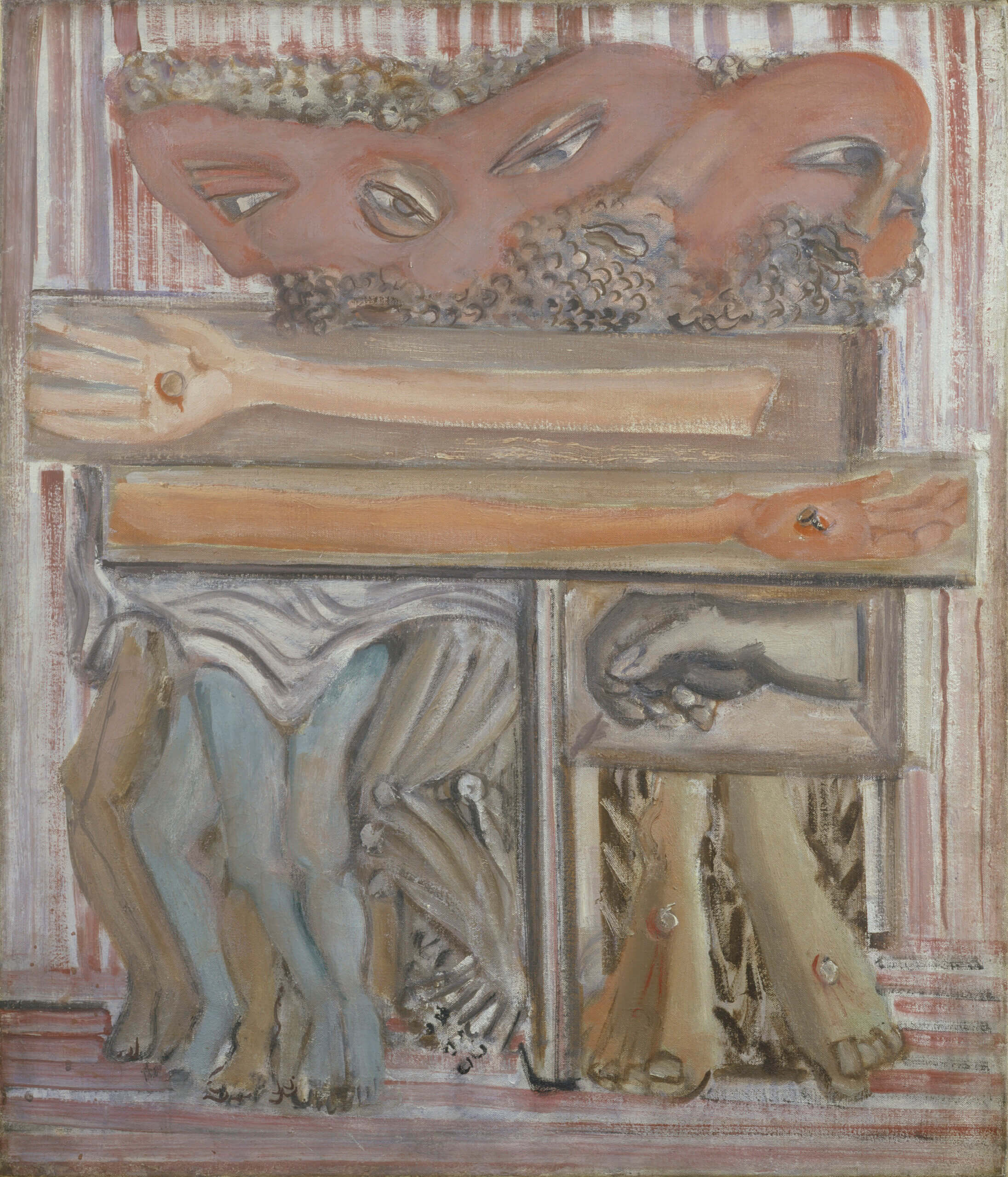
While this work was discovered decades after her death, it’s in the company of some notable names, and not all of them Jewish. A 1936 Alice Neel painting of a New York City Communist rally, illustrating her friend, the artist Sid Gotcliffe, holding a placard reading “Nazis Murder Jews,” appears alongside an apocalyptic, modernist cityscape by Abraham Manievich. Manievich’s 1919 depiction of the destruction of the Kiev ghetto, a literal scapegoat foregrounded in the rubble, seems to prefigure Picasso’s Guernica in an expressionist mode.
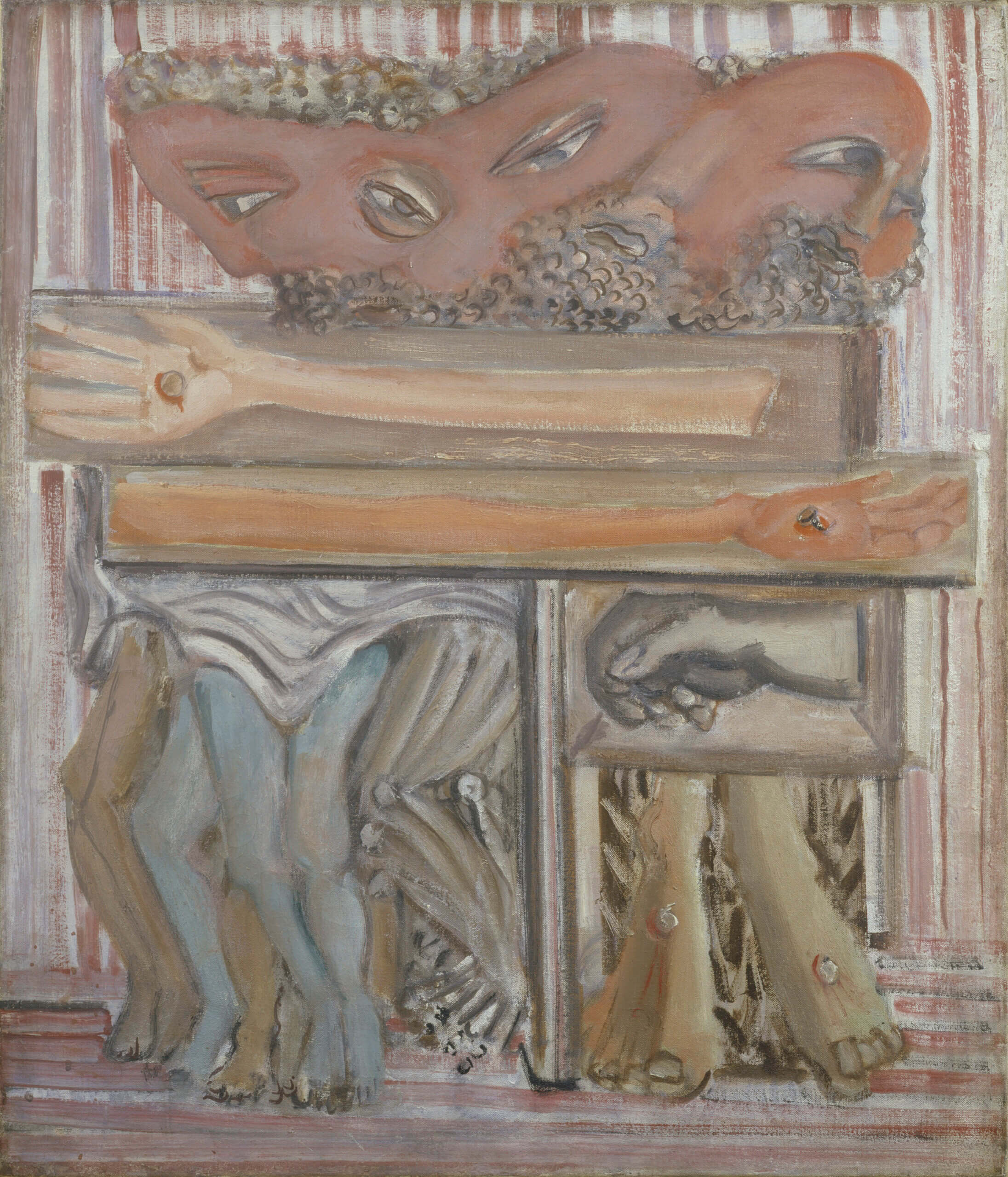
European Jews were not immune to the modernism sweeping over Europe, and used its fractured forms to comment on their people’s persecution. A late figurative drawing of severed limbs by Mark Rothko, from his crucifixion series in the early 1940s, makes a wry comment on Christian hegemony and Hitler’s campaign of annihilation. (Marc Chagall, who produced a similar series, is across the way, appearing to pee on his native Vitebsk, which he left for Paris.)
A charm bracelet produced in Terezin, whose individual pieces are identifiable on a touch screen, shows how production didn’t stop in the Holocaust. Hadar Gad’s notebook, imagining the obliteration of her grandmother’s hometown in Poland, and produced after Oct. 7, reveal the Shoah’s continued resonances today. Dor Guez, son of a Palestinian Christian mother and North African Jewish father, makes use of his family’s quotidian possessions to tell their post-World War II immigration story. Other other artists make use of suitcase imagery.
From commentaries on displacement, there next emerges a reclamation of ritual objects within the context of a dominant culture: a Bauhaus-inspired menorah, a mid-century modern Torah crown forged with looping silver threads. Women artists, like Lee Krasner, gravitate toward abstraction. A stretch devoted to women modernists focuses on intersectionality. There are Miriam cups, a feminist inclusion to the Seder ceremony, and artist Gil Yefman’s kippah, topped by a dark nipple to signify the feminine nature of God.
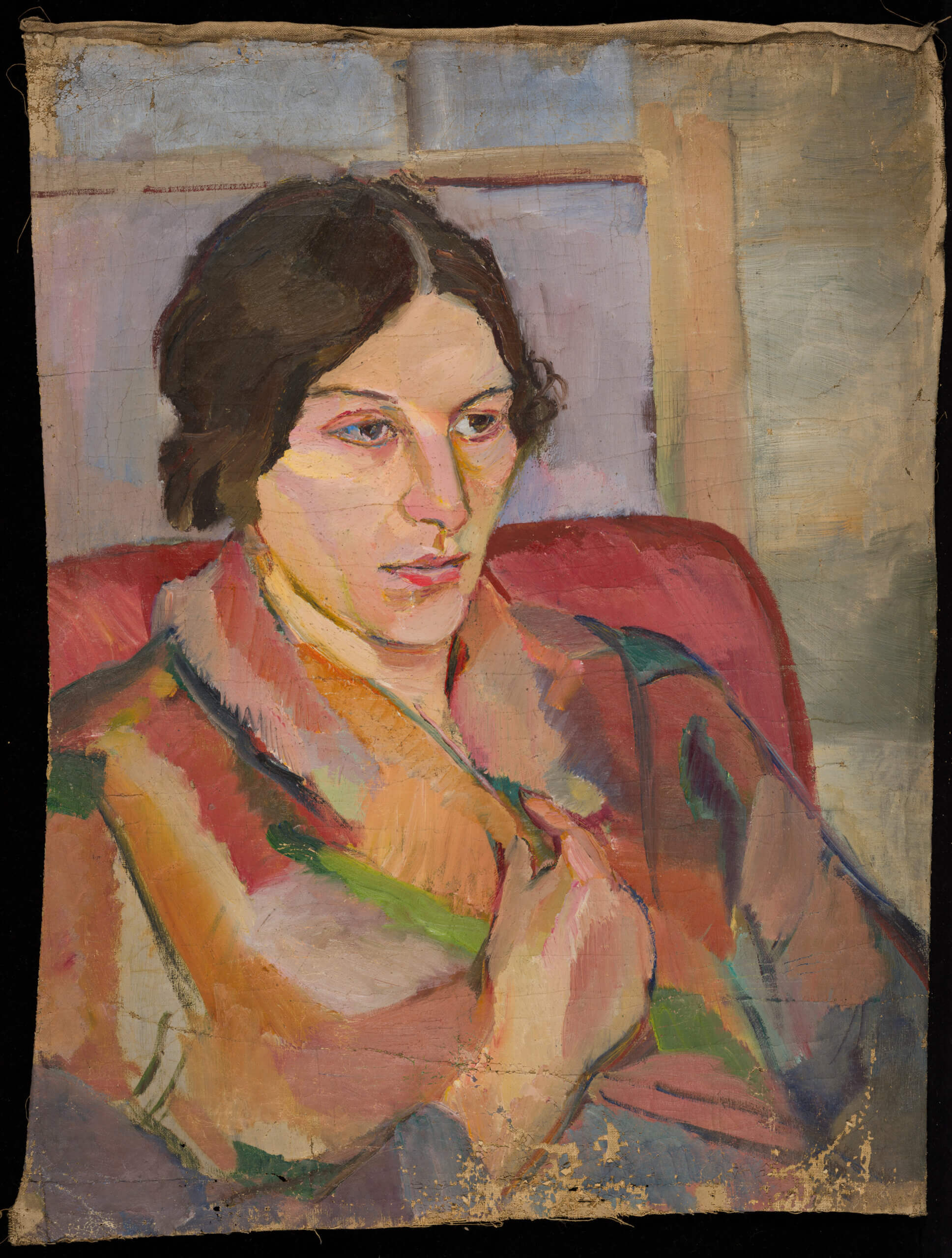
Two thousand years after the sack of Jerusalem, contemporary artists are still grappling with how to express their Jewishness alongside compounding, modern identities. Candace Breitz’s video installation registers her discomfort, as a white woman chosen to represent South Africa at the 57th Venice Biennial, and so features a diverse and representative group of artists, saying “I am Candace Breitz.” A piece by Izhar Patkin, inspired by motifs on Persian rugs, faces a carpet from the 1890s with the likeness of Moses and Aaron, which the Shah of Iran is believed to have commissioned for his Jewish doctor.
Coinciding with the new core exhibit is a second floor show spotlighting the early works by Anish Kapoor, the Indian-born British artist, whose father was Hindu and whose mother was from the Iraqi Jewish community. (In a press conference, Kapoor downplayed how his background shaped the art.) But the overall theme carries onto the new fourth floor learning center.
Replicas of objects — a mosaic floor tile, a ceramic turkey menorah from 2013’s “Thankgivukkah,” an ancient bull figurine that is remarkably Aardman-esque — are available to touch to teach visitors about materials artists use. A 50-foot glass vitrine, with 130 menorahs from around the globe, most crafted by non-Jewish artisans, look out onto the modernist art on the floor below. The display is not about Hanukkah, but the significance of light in all cultures.
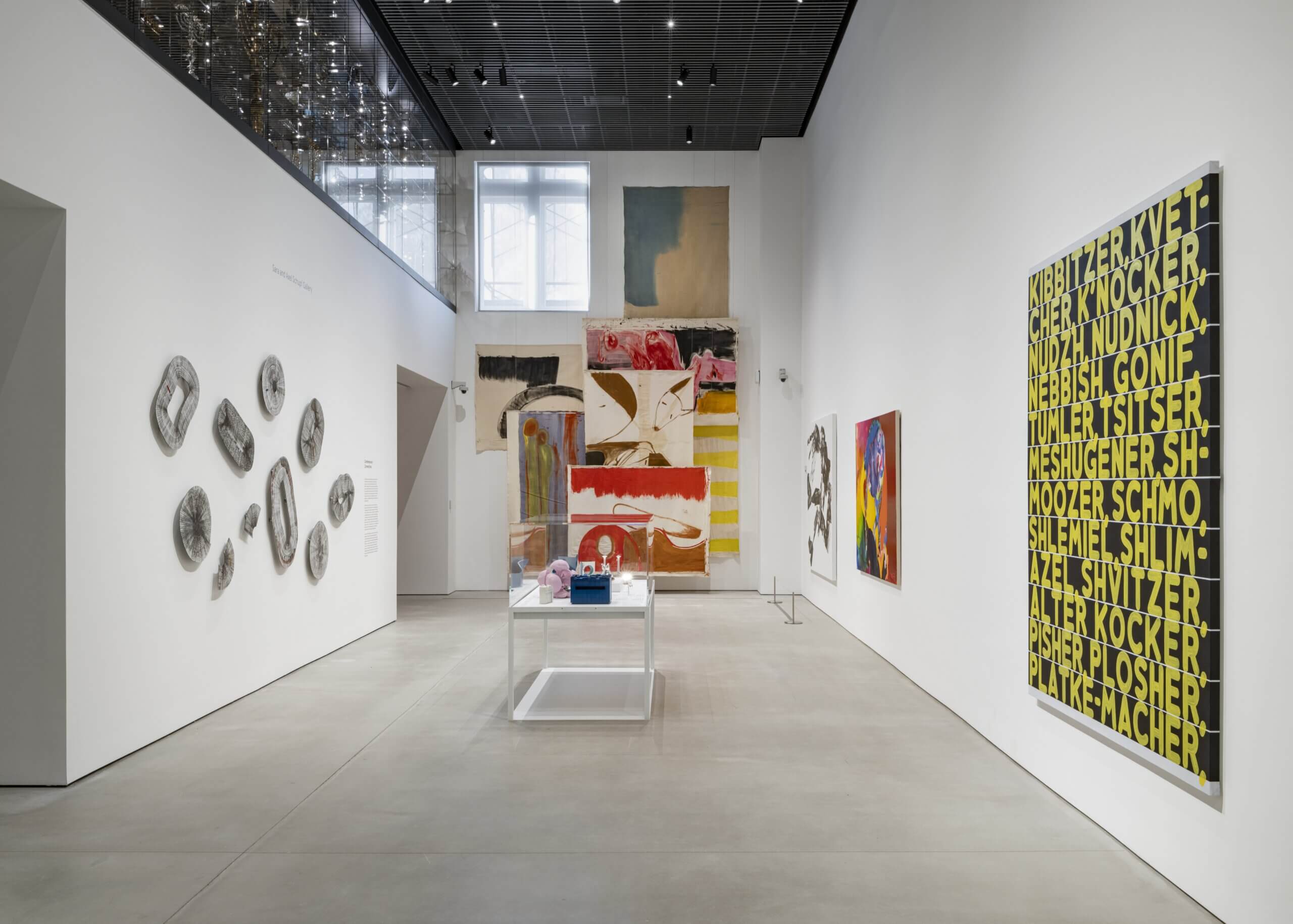
Even in a section devoted to largely pre-diaspora archaeology, where families can dig through foam rubble for potsherds, a touchscreen invites the visitor to read about “interactions among peoples.”
Imperial coins and helmets of Hellenic occupiers are on view. So too, are ritual objects from other Levantine groups, some several thousand years old, up to a 20th-Century bridal pin from Baghdad. The Jewish story, these objects insist, can’t be understood in isolation.
The post A revived Jewish Museum spotlights the story of Jewish endurance appeared first on The Forward.
Uncategorized
The secret Jewish history of the ‘Rocky Horror Picture Show’
“Rocky Horror,” which opened in London cinemas on this day in 1975 is the cultural phenomenon that simply refuses to die. Rather, since its first incarnation as a 1973 London stage musical, “The Rocky Horror Picture Show” has been continuously reborn on the silver screen, in subsequent Broadway stage productions, and, in 2016, as a direct-to-TV film, starring Laverne Cox of “Orange Is the New Black” fame as the transgender Dr. Frank-N-Furter, the mad-scientist role originated by Tim Curry.
In all its incarnations, however, “Rocky Horror” has always been more than just a performance. Its appeal has been widely driven as a participatory event. Film critic Roger Ebert summarized it best writing about the original 1975 film: “‘The Rocky Horror Picture Show’ is not so much a movie as more of a long-running social phenomenon,” because “the fans put on a better show than anything on the screen.” What Ebert refers to is the interactive tradition that has grown up around “Rocky Horror,” whereby fans attend midnight showings primed for a party as much as a screening: reciting the lines out loud along with the characters and interspersing them with “callouts” — responses that have been accepted into the Rocky Horror canon much as the Talmud is commentary on the Mishnah that has in and of itself become part of the sacred text. In the case of “Rocky Horror,” this also includes activities, such as throwing rice or confetti in the air when the married couple in the film leaves the church; squirting water pistols during a rainstorm; and tossing rolls of toilet paper when one character says “Great Scott!”
In one of the most overtly Jewish moments in and outside of the film, a speech by Dr. Frank-N-Furter hailing the creation of the Golem-like creature of the title, Rocky Horror, is met by chaotic noisemaking on the part of the partygoers onscreen and off. In the original film, some of the crowd generates noise with ratchets – a percussion instrument that looks suspiciously like a gragger, as if Dr. Frank had said “Haman.” There are other Purim-like touches in the film, such that temple congregations have made “Rocky Horror” into part of their annual ritual, such as a “Rockin’ Hora Purimshpiel” in which several of the musical numbers are rewritten as Purim songs.
Other Judaized versions of “Rocky Horror” that have appeared over the years include “Hebrew Horror,” which was staged in Los Angeles in 2007, and the “Rocky Hora Chanukah Song” by the Jewish punk-rock parody group, the Shlomones (sort of a redundancy, since several members of the Ramones were in fact Jewish, as was their outlook in numerous ways, including their song, “Bonzo Goes to Bitburg.”
The original London stage version was produced by British-Jewish theatrical impresario Michael White, who was born to Eastern European Jewish-immigrant parents in Glasgow, Scotland. White’s credits had already included the boundary-shattering “Oh! Calcutta!” — the first all-nude revue in commercial theater — and he went on to co-produce the “Rocky Horror” film as well as “Monty Python and the Holy Grail.”
The original musical and film were decades before their time in celebrating the sexual fluidity of the LGBT world – indeed, there wasn’t such a term as LGBT, much less a socio-political acceptance of it, for years to come. The new TV film version is in no small part an effort to seize this cultural moment when LGBT, and particularly transgender issues, are now part of mainstream political and cultural discussion, especially what with the casting of openly trans actress Laverne Cox.
The original did, however, have a political consciousness beyond its seemingly outrageous effort to provoke. Dr. Frank-n-Furter’s lab coat in the movie was inspired by a Nazi concentration camp inmate uniform and was adorned by the pink triangle that the Nazis used to label what we now call LGBT inmates. And in the film at least, there were implications that Frank’s rival, Dr. Scott was a Nazi.
The 2016 version was again produced by music industry legend Lou Adler, who was responsible for turning the stage musical into the original film starring Tim Curry, Susan Sarandon, Barry Bostwick and Meat Loaf. In that version, Eddie was played by American Idol star Adam Lambert, the role played by Meat Loaf in the original Broadway cast and film. Lambert, who starred as Joshua in “The Ten Commandments: The Musical,” has achieved fame as a solo artist and as the replacement for the late frontman Freddie Mercury in the rock band Queen. Lambert’s Jewish mother, Leila, was a dental hygienist.
Seth Rogovoy is a contributing editor to the Forward.
The post The secret Jewish history of the ‘Rocky Horror Picture Show’ appeared first on The Forward.
Uncategorized
Sister of pro-Israel stalwart Lindsey Graham secures GOP Senate nomination
(JTA) — South Carolina Sen. Darline Graham defeated U.S. House Rep. Ralph Norman in a special primary runoff on Tuesday, putting her in a dominant position to win the Senate seat left vacant with the death in July of her older brother, the pro-Israel stalwart Lindsey Graham.
The Associated Press called the race two hours after polls closed at 9:01pm. By the time 99% of votes were tallied, Darline Graham had secured 52.3% of the votes to Norman’s 47.7%.
“Tonight is a great victory, but it’s not the finish line,” Graham told her supporters on Tuesday night. “In fact, it is the starting line for an even bigger fight, which lies ahead.”
If Darline Graham goes on to win November’s general election against Democrat Annie Andrews, she will have big shoes to fill. Her brother served 23 years in the Senate and eight in the U.S. House. He traveled to Israel about a dozen times between Hamas’s Oct. 7, 2023 attack on the Jewish state and his death at age 71.
Heading into the primaries, analysts expressed no doubt that Darline Graham would be pro-Israel. But matching Lindsey Graham’s level of foreign policy activity, they warned, would be a formidable task. Meanwhile, her campaign to date has largely avoided discussion of international affairs. Instead, she has focused on domestic concerns like reducing spending, securing borders and promoting Trump-backed policies.
During a debate aired on C-SPAN last week, Graham struggled to respond to a foreign policy question about Taiwan and the South China Sea, ultimately admitting that she’s “not that informed on national security.”
“I’m not a polished politician up here,” she said. “National security is not my thing, not my area of expertise.”
Later addressing issues of affordability, Graham linked the domestic economic situation to the war in Iran and said she trusts President Donald Trump “to get the Strait of Hormuz open.” She also voiced her preference for financial sanctions over putting troops on the ground.
Asked about the country’s relationship with Israel, Graham described the Jewish state as “one of our strongest allies.” Recognizing her brother’s close relationship with Prime Minister Benjamin Netanyahu, she added that during a recent meeting with the Israeli premier, she vowed to “continue supporting Israel in any way” she can.
“We have to stand with Israel,” Graham said.
At their previous face-off, Graham had secured 33% of the vote, while Norman came in second place, at 25%, against eight fellow Republicans. But South Carolina requires primary winners to earn a majority of votes in order to avoid a two-candidate runoff. In the November general election, Graham will contend with Democrat Annie Andrews, a pediatrician who is unlikely to prevail in the solidly Republican state.
Tuesday’s runoff marked the third time in two months that South Carolina Republicans came to the polls to select a Senate candidate. Lindsey Graham, won the first primary in June but died suddenly the next month from an aortic dissection.
A few days later, South Carolina Gov. Henry McMaster, a Republican, appointed Darline Graham to finish her brother’s term. Though she only had minimal policy experience, including a leadership role at the South Carolina Commission for the Blind, she earned President Donald Trump’s endorsement and declared her candidacy in the full race.
Trump celebrated Graham’s nomination in a Tuesday night Truth Social post, writing that “Darline Graham rides Trump endorsement to win GOP nomination for brother’s South Carolina seat.”
Graham thanked Trump profusely during her Tuesday night acceptance speech, recognizing the president as one of her brother’s “closest friends” and crediting him for helping her secure a victory.
Norman, meanwhile, thanked his supporters on Tuesday night for their “prayer crusade of a campaign,” stressing that he “did not prepare a concession speech.” He accused “outside PACs” of spending $8 million opposing him and blamed the Democrats for this situation, adding that “they got what they wanted.”
He recognized Trump’s role in the race as a supporter of Graham, noting that he “never understood why he got involved” but that it is the president’s prerogative to do so. Nonetheless, Norman pledged that there “won’t be any tears” and that he planned to back Graham.
“I’m not supporting a Democrat, so I will support her, Darline, as best I can,” he added. “We’ll live to fight another day.”
This article originally appeared on JTA.org.
The post Sister of pro-Israel stalwart Lindsey Graham secures GOP Senate nomination appeared first on The Forward.
Uncategorized
Progressive politics notches another deep-red win in Oklahoma race, bolstered by anti-AIPAC messaging
(JTA) — Oklahoma nurse and activist N’kiyla Jasmine Thomas, who ran a campaign with anti-AIPAC messaging, defeated centrist Jim Priest in a Democratic Senate primary runoff on Tuesday that marked the latest victory for a progressive politician in a solidly conservative state.
The Associated Press called Tuesday’s race, a sequel to the state’s June primary, less than an hour after polls closed. By the time 80% of votes were tallied, Thomas had accrued 59.9% of the votes to Priest’s 40.1%.
Like many progressives in the current election cycle, she repeatedly vowed during her campaign to reject funds from the American Israel Public Affairs Committee, the influential pro-Israel lobby.
Although AIPAC has not participated in this race, Thomas posted a social media reel in November that showed her pulling a giant red trash bin, labeled “AIPAC Funds” and “Corporate PAC Funds.” Adjacent to the reel is a caption that reads, “Just taking out the trash.”
“I am a sole grassroots candidate,” she said in the reel. “And we are not accepting AIPAC or corporate PAC funds. It’s garbage.”
Asked about her rhetoric on AIPAC, Thomas told the Jewish Telegraphic Agency in a written statement that her “concerns [with AIPAC] have NEVER been about Jewish people, Judaism, or Israel’s existence,” adding that she instead prioritizes human rights, civilian lives and the accountability of all governments.
“When I discuss political influence or organizations, my focus is on the broader role of money, lobbying, and special interests in our political system, not on any one religion or community,” she added.
In their previous matchup, a five-candidate race, neither candidate had earned the majority required to secure a win. Thomas earned 45% of votes in June, while Priest, a lawyer and ordained minister, accrued 24%.
Heading into Tuesday’s runoff, it was already clear that both Thomas and Priest would be longshots this November in a state that hasn’t sent a Democrat to the Senate in more than three decades. The Republican opponent, Rep. Kevin Hern, swept his primary and has the endorsement of President Donald Trump.
But Thomas’s win served as yet another litmus test on the potency of progressivism in a deep-red state, just a week after democratic socialist Angie Nixon knocked trounced a moderate candidate in Florida’s Democratic Senate primary.
Thomas, unlike Nixon, is not a member of Democratic Socialists of America, but she has openly identified with socialist policies. The 31-year-old is a citizen of the Chickasaw Nation who says she represents “the next generation of leaders.” Among her priorities are women’s health and safety, civil rights and LGBTQIA+ protections.
During a debate this past Saturday, both Thomas and Priest described a “genocide” in Gaza. Priest linked the word to Israel, while Thomas connected it to the actions of Prime Minister Benjamin Netanyahu.
She emphasized that “we can be for our Jewish brothers and sisters, and we can be against Netanyahu and what he is doing.”
“He is committing genocide. He is absolutely murdering children,” Thomas said at the debate. “We have to stop providing funding for these wars.”
In her statement to JTA, Thomas expressed her commitment to a two-state solution, adding that “both Israelis and Palestinians deserve the opportunity to live in peace, security and self-determination.”
This article originally appeared on JTA.org.
The post Progressive politics notches another deep-red win in Oklahoma race, bolstered by anti-AIPAC messaging appeared first on The Forward.
