


Uncategorized
An Israeli restaurant chain said it closed due to boycotts. Protesters are celebrating.
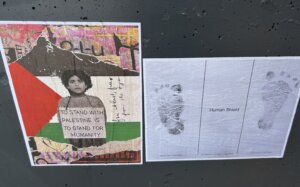
The owner of a vegan kosher food chain in Washington, D.C., said boycotts that targeted his business for its ties to Israel led to the permanent closure this month of his last two restaurants.
This development is the latest chapter in an ongoing wave of vandalism and boycotts aimed at Israeli and kosher restaurants, which have become frequent targets since the start of the Israel-Hamas war.
Shouk, which opened its first location in 2016, was listed on D.C. for Palestine’s “Apartheid? I Don’t Buy It” boycott initiative in March, categorized under “restaurants that culturally appropriate or sell Israeli settlement products.”
While it was unclear what effect the boycott had on the restaurant’s bottom line, organizers of the boycott happily took credit for the closure.
“LOCAL BDS WIN IN DC!!” D.C. for Palestine posted to Instagram in reference to Shouk’s closure. “In times like these, it is still important to uplift small wins, as they are glimmers of the world we want to see!”
Jinan Deena, a Palestinian chef who helped organize the boycott against Shouk, told the Forward she took issue with Shouk’s Israeli branding, viewing its omission of the cuisine’s Palestinian roots as part of a larger pattern of cultural erasure.
“This food ties us to our land,” Deena said. “As long as we continue to serve our food [and] we properly label our food as Palestinian, then we will always continue to exist.”
Shouk had tried to be sensitive to concerns like Deena’s. The restaurant once described its menu as “Tel Aviv street food,” but in recent years had shifted to marketing it as Mediterranean fare, co-founder Dennis Friedman said in an interview. The restaurants displayed the word “Shouk” in both Hebrew and Arabic — “Souk” — to signal that it was “a place for all to come,” Friedman said.
“I think more of the issue was that I’m an American Jew, and my business partner was from Israel,” he said.
Deena rejected that characterization, arguing her criticism was not about Jewish identity but cultural appropriation. “There’s a difference between Jewish and Israeli cuisine,” she said. “I’m not attacking anyone for matzo ball soup or schnitzel.”
‘Food is not owned’
Friedman and Ran Nussbacher co-founded Shouk to bring healthy, plant-based food to the Washington, D.C., area as part of a fast-casual concept.
They named the restaurant after the Hebrew word for an open-air market, and the plant-based menu was inspired by the food Nussbacher ate while growing up in Israel.
Shouk’s veggie burger earned early acclaim. The Washington Post called it their favorite in the area during the restaurant’s first year, and in 2018, the Food Network highlighted it on its series “The Best Thing I Ever Ate.”
At its peak, Shouk operated five locations across Maryland and D.C. Two of its locations closed in 2023 for unrelated reasons.
But the restaurant soon got caught up in discourse over who lays claim to foods like falafel and hummus, long the subject of contentious debate among Israeli and Palestinian chefs.
Starting in 2022, Deena, who spent her teenage years living in Ramallah in the West Bank, used her personal Instagram account to help organize a boycott of Shouk, along with other Israeli restaurants in the area. She critiqued Shouk’s description of the menu as inspired by “the open-air markets in Tel Aviv.”
“Profiting off of the occupation and oppression of my ancestors is a hard line for me, and should be for you too,” Deena wrote. “Erasure of Palestinian food is a part of the occupation strategy.”
At the time, Nussbacher dismissed such disputes as missing the larger purpose of food.
“I’m disappointed when we don’t use food as a bridge,” Nussbacher told Moment Magazine in 2022. “Is pizza an appropriation of Italian culture? Is pasta Italian or Chinese? Food is not owned. Food is dynamic. And it’s created and recreated time and again. The question of ownership is irrelevant.”
The boycott gains traction
Shouk was “on track toward profitability” at the start of this year, the restaurant said in an email to customers about its closure.
Sales declined dramatically this summer, Shouk said in the email, more than the typical seasonal decline.
Friedman, who did not share specifics about the business’ financials, attributed the downturn to protesters chanting “Free Palestine” outside the restaurant, gluing posters to the restaurant’s windows and outdoor seating, and coming inside to intimidate customers and staff.
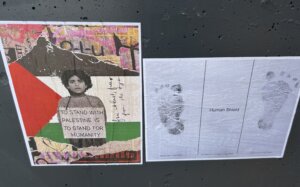
At Shouk’s Georgetown location, which closed in 2024, protesters were “steady and frequent, and they just didn’t let up,” Friedman said.
“We heard from customers that there was some concern. It was either concern for safety or just not wanting to deal with that negativity in that type of environment,” Friedman said. “And I couldn’t blame them. I wouldn’t want to, either.”
Friedman said he was in touch with authorities about the incidents, and a plainclothes officer began monitoring the situation from a car across the street. But he said the extra security ultimately didn’t make a difference.
On Oct. 3, Shouk emailed customers explaining why the remaining two restaurants in Rockville, Maryland, and Washington, D.C. had closed.
“One factor was that we found ourselves caught in the crosscurrents of a toxic political climate surrounding the Israel/Gaza war,” Shouk wrote. “More and more, customers have chosen to avoid businesses connected to Israel. We heard from long-time regulars who stopped visiting us for these reasons.”
“The restaurant business is a hard business to begin with, with razor thin margins,” Friedman told the Forward. “And so if you have something like this, and it’s prolonged, it’s kind of inevitable what’s going to happen.”
Friedman emphasized that Shouk was “not a political place.” To the extent that the restaurant did engage in advocacy, Friedman said, it was focused on environmental issues, from promoting plant-based eating to using biodegradable cutlery.
“We wanted to truly do something that could be a game changer. And for quite a while it was — so that’s why it makes it a little heartbreaking that we had to stop,” he said. “Even though I’m sad of how it ended, man, I’m grateful for the last 12 years.”
The post An Israeli restaurant chain said it closed due to boycotts. Protesters are celebrating. appeared first on The Forward.
Uncategorized
This Toronto street corner has been a site of anti-Zionist activism for months. Police just opened a hate crime investigation.
The Toronto Police Service hate crimes unit is investigating teacher Abbas Hamze for remarks about “Zionists.” Canadian Jewish groups, including the Jewish Federations of Canada’s advocacy arm and B’nai Brith Canada, have called his speech, which went viral online, “blatant antisemitism.”
Hamze’s remarks invoked antisemitic tropes, accusing “Zionists” of performing “black magic” as well as raping and killing children. He spoke at the intersection of Bathurst and Sheppard, in the heavily Jewish Toronto neighborhood of Bathurst Manor – Clanton Park.
According to his LinkedIn, Hamze works as an instructor at several Canadian colleges in the area, including the University of Niagara Falls and Georgian College. He does not specify what he teaches.
Hamze could not be reached for comment. The University of Niagara Falls and Georgian College did not respond to requests to comment, and the Toronto Police declined a request for comment.
UNF issued a statement addressing Hamze’s remarks, distancing the university from the instructor’s statements and stating that they have “zero tolerance for discrimination, hate, harassment, or any conduct that threatens the dignity and well-being of others.” They announced that they are “launching an internal investigation” into the matter.
In his speech, Hamze claimed that “British colonizers have planted this cancerous, false Zionist state of Israel … right in the heart of Islam.”
Later — wearing a keffiyeh and reading from his phone into a megaphone emblazoned with the Lebanese flag — the instructor repeated numerous antisemitic conspiracy theories, including the debunked idea that Jews have caused or deserved centuries of persecution.
“The Zionists have never had a country of their own because of their mischief,” Hamze said. “They are the most kicked-out people in the world who are making black magic and horrible things.”
He went on to say that Jewish corruption is “crystal clear in Epstein Island where they have the Jewish leaders from all around the world.” He accused “Zionists” of having “raped, and killed, and ate children at the same time.”
Finally, he unfoundedly blamed the actions of President Donald Trump on “Zionists” who “blackmail” and “control” people.
“That’s why you can see now a guy like Trump who caused this genocide in Gaza kidnaps the presidents of Venezuala, kills the supreme leader of Iran Imam Ali Khamenei, may God sanctify his soul,” he said. “This is because of them, the terrorist Zionists.”
It appears that people became aware of Hamze’s remarks after Casey Babb, an Israel and International Relations scholar, posted a video of him on X.
In a joint statement, Canadian Jewish groups described Hamze’s claims as “antisemitic blood libels that have been used for centuries to justify hatred and violence against Jews.”
The statement says that the intersection where Hamze spoke, Bathurst and Sheppard, has long been a site of “antisemitic harassment, intimidation and provocation, too often under the guise of anti-Zionism,” and called on Toronto’s police department to investigate the incident.
“Allowing this behaviour to go unchecked is to normalize antisemitism as an everyday feature of life in this city,” it stated.
The city’s police have opened an investigation. However, online, some said that Hamze had been speaking at the street corner for months without police intervention.
In Canada, public incitement of hatred is considered a criminal offense. The Canadian criminal code says that “communicating statements in any public place” that “incites hatred against any identifiable group where such incitement is likely to lead to a breach of the peace” is a breach of law, resulting in up to two years in prison.
The post This Toronto street corner has been a site of anti-Zionist activism for months. Police just opened a hate crime investigation. appeared first on The Forward.
Uncategorized
West Elm’s Russ & Daughters merch did something their in-house line could never
Figuring out one’s Judaica vibe can be a challenging endeavor for those of us who don’t have tastes in line with the colorful stained glass or embossed silver aesthetics that tend to dominate the category. Newer designers have introduced some minimalist options, but that’s also not really for me.
But for those of us with a tendency toward the whimsical or kitsch, furniture retailer West Elm is coming to the rescue with two new collections, geared toward the High Holidays and Hanukkah.
There’s a Russ & Daughters collaboration of blue-and-white ceramics, featuring serving platters with handpainted designs such as a fish or latkes, trinket trays with pickles and more fish, simple Delft-colored dinnerware and napkins with little cutlery printed in the corners.
And, separately, in an apparent attempt to capitalize on the Jewish market, West Elm also released a set of their own plates, bowls and tea towels printed with colorful “deli favorites” — pickles, brisket, hamentaschen, black-and-white cookies, and the like.
The concepts are pretty similar; both lean into the idea of decorating plates with food objects that may or may not be the food you actually put on them.
I do admittedly already have a large blue-and-white platter with a fish painted on it that I find charmingly eclectic, and just as suitable for serving foods that are not of the oceanic persuasion as it is for foods that are indeed from the briny deep. So I’m not inherently opposed to the concept. But I don’t feel as good about the in-house West Elm Jewish designs, like a bowl with a sort of mushy depiction of matzo balls at the bottom. Imagine eating anything else out of that. Honestly, imagine eating matzo ball soup out of it. It seems disorienting.
Everyone’s tastes vary, and if you want to eat a salad off of a plate with a colorful brisket sandwich painted on it, be my guest. But I think the Russ & Daughters offering is the better of the options. For the most part, the collection stays on the artful side of kitsch largely thanks to the simplicity of the designs and the color scheme. And, more importantly, the internal logic seems actually Jewish. The pieces are useful — perhaps with the exception of the latke platter — for multiple Jewish occasions. The matchbox with a challah on it may feel a bit random at first glance but it does conjure an image of lighting candles on Shabbat, and there are matching candle holders. The art kind of evokes Marc Chagall.
The West Elm deli hits sets on the other hand — which are separate from their collab with the iconic Lower East Side deli — feel as though they’re screaming their Jewishness. The tea towel mixes together hamentaschen and sufganiyot (or possibly a bagel, it’s hard to tell) on the same piece of cloth, despite the fact that these desserts correspond to different holidays. The drawings are cute, but the overall effect is frantic, like someone dumped every Jewish food they could name onto the same page and sent it off to the printers. It’s giving Target Rosh Hashanah decorations — the sort that have a menorah alongside the apples and honey.
A few years ago, Crate and Barrel had Jewish lifestyle influencer Rebecca Lowin curate a Hanukkah display, but it was done using items the store already carried in white, blue and silver; only the menorah was specifically Jewish. Now, a similar home decor store is creating entire lines catering specifically to Jewish holidays and culture. That’s a sign of an increased mainstream embrace of Jewish culture, and that’s a good thing — it wasn’t so long ago that it wasn’t possible to find much public recognition of the existence of the High Holidays, and every attempt featured a hanukkiah with the wrong number of branches or a loaf of challah for Passover. Today, if Jews want twee merchandise — and no judgment — there’s plenty. There are even Hanukkah gnomes, if your taste runs to that.
But there’s still a dearth of decor that feels elegant and thoughtful, instead of try-hard. Decor that feels actually rooted in Jewishness, instead of like a Jewish gloss on something that’s really for another holiday. The Russ and Daughters collaboration is rooted in actual Jewish history. Even if you don’t like a fish motif as much as me, that’s a step in the right direction.
The post West Elm’s Russ & Daughters merch did something their in-house line could never appeared first on The Forward.
Uncategorized
Sephardic and Mizrahi groups accuse New York Magazine of erasing Middle Eastern Jews. The editor-in-chief agreed to a meeting.
As editors of New York Magazine dug in their heels this week, defending the magazine’s viral “Habibi City” package published earlier this month, 14 Sephardic and Mizrahi Jewish organizations delivered an open letter on Monday night, accusing the magazine of erasing Middle Eastern Jews from its coverage.
On Tuesday, Editor-in-chief David Haskell invited them to meet in September, saying he wants the magazine’s coverage to reflect the multitude of perspectives in the region.
In addition to asking for a meeting, co-signers of the letter, convened by JIMENA (Jews Indigenous to the Middle East and North Africa), asked the magazine to acknowledge what they call the package’s exclusionary framing and provide more representative coverage of Sephardic and Mizrahi Jews going forward.
The dispute centers on the magazine’s August issue about the city’s burgeoning Southwest Asian and North African cultural scene known as SWANA. The package explores restaurants, cafes, cultural collectives and dance parties, tracing much of their growth to the war in Gaza that followed theHamas-led attacks on Israel on Oct. 7, 2023.
“Out of that resistance,” the magazine writes, “a cultural ecosystem started to bloom.”
This week, the magazine published a statement standing by its use of the term genocide to describe Israel’s actions in Gaza, adding that “accusations of antisemitic intent were in fact obfuscating an overwhelming scholarly consensus, and that its use would be allowed in our pages.”
The open letter did not address the use of that term. Instead, it addressed the article’s framing.
The package describes membership in SWANA community in political terms.
“To be in SWANA community,” one article says, means “embracing a set of shared beliefs: that Palestinians deserve human rights. That what happened in Gaza in the aftermath of October 7 constitutes a genocide. That social justice and social welfare override capitalist concerns.”
The same article describes the place of Israelis within SWANA culture as “complicated,” in part because of the term’s “political framework.”
It also says SWANA New Yorkers “face xenophobia, Islamophobia and Zionism” in the city — language that drew particular ire from the coalition and online critics.
According to the letter, New York Magazine’s framing turns SWANA from a geographic and cultural identity into an ideological one, excluding many of New York’s Jews from the Middle East and North Africa unless they reject Israel — the country where many of their families found refuge after fleeing persecution and discrimination elsewhere in the region.
“A Mizrahi Jew whose grandparents were born in the region, expelled from their country of origin, and who carries the region in her language, liturgy, and kitchen belongs only upon disavowal of the movement through which her family survived,” the letter reads.
As the letter puts it, for a great majority of Sephardic and Mizrahi Jews to be represented “as we actually are” means representing them as Zionists.
The letter also faults the package for invoking Oct. 7 repeatedly without acknowledging the atrocities committed that day and erasing the region’s non-Muslim populations.
“When we read ‘Habibi City,’ we immediately saw that this wasn’t something one organization should answer alone,” Sarah Levin, JIMENA’s executive director told the Forward. “The feature made claims about who belongs in contemporary Middle Eastern and North African and ‘SWANA’ communities in NYC, so the response needed to come from the breadth of the communities being written out.”
After she read the package, she began contacting other Sephardic and Mizrahi organizations about writing an open letter. Within four days, all 14 organizations had signed on.
“Iranian, Iraqi, Syrian, North African and Sephardic communal organizations almost never act in concert, and they’ve united around one argument,” Levin said.
Signatories include the American Sephardi Federation, the Iranian American Jewish Federation of New York and the Jewish Community Relations Council of New York.
Levin said the groups had little difficulty reaching consensus. “When the argument is, ‘We exist, and we will not be defined out of our own region,’ there isn’t much for our communities to debate.”
What concerned Levin most, she said, was the size of New York Magazine‘s audience and cultural reach. The Pulitzer Prize-winning bi-weekly magazine boasts reaching 1.8 million readers each week.
“When a magazine that shapes American culture tells millions of readers that belonging to the Middle East requires renouncing Zionism, that is not a small thing,” Levin said. “That is why we responded the way we did.”
The post Sephardic and Mizrahi groups accuse New York Magazine of erasing Middle Eastern Jews. The editor-in-chief agreed to a meeting. appeared first on The Forward.
