


Uncategorized
As 1000+ rabbis sign anti-Mamdani letter, others decry mounting ‘red lines’ in Jewish communities
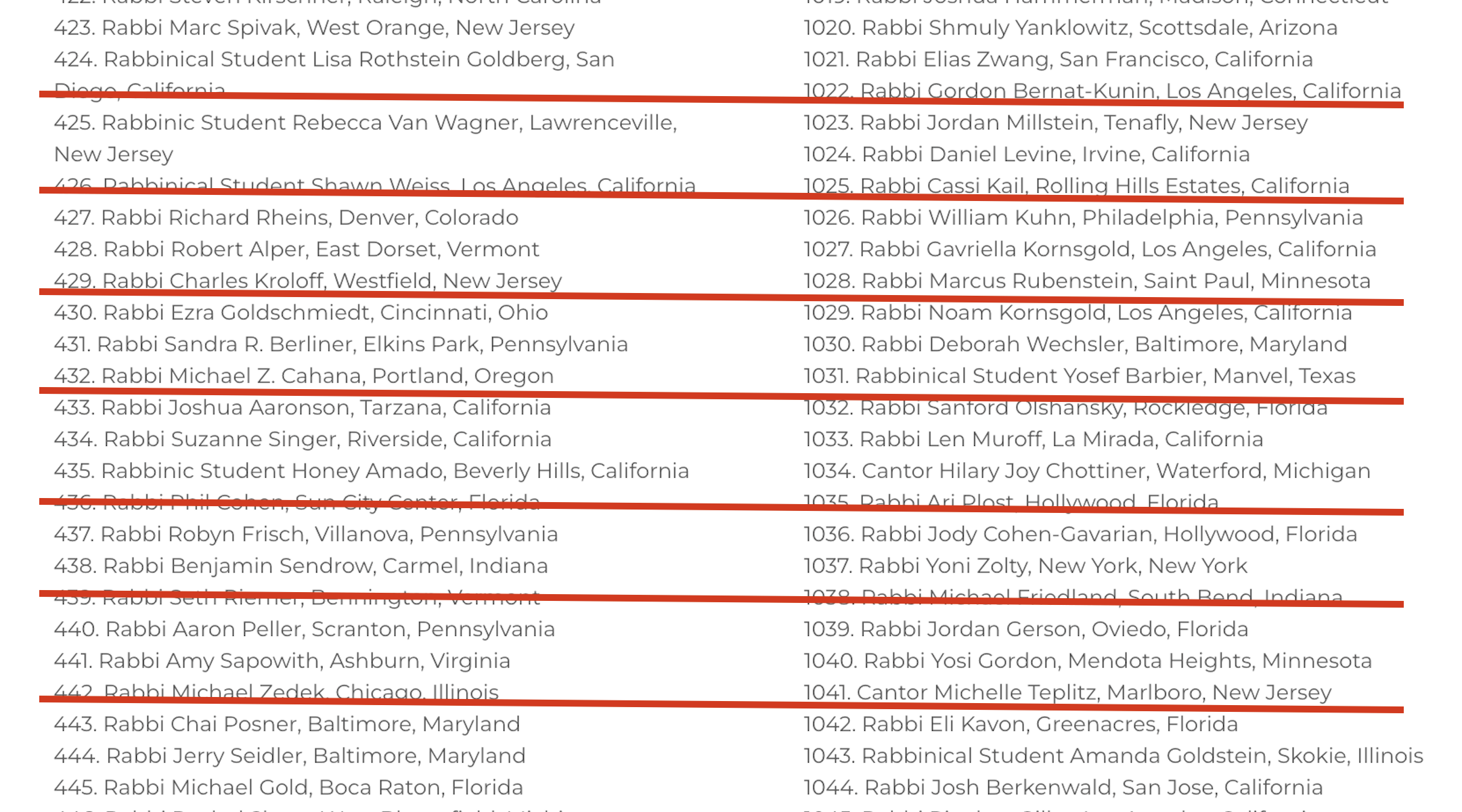
(JTA) — Two days after Rabbi Elliot Cosgrove delivered a sermon urging congregants to vote against Zohran Mamdani, rabbis across the country were asked to sign a letter quoting him.
By the time it was published Wednesday, 650 rabbis and cantors had done so, adding their names calling out the “political normalization” of anti-Zionism among figures like Mamdani, the New York City mayoral frontrunner.
By Friday, the letter had more than 1,000 signatories, making it one of the most-signed rabbinic letters in U.S. history.
But Cosgrove, the senior rabbi of Park Avenue Synagogue on the Upper East Side, was not one of them.
“As a policy, I do not sign group letters,” he said in an interview.
“My fear of such letters is they can flatten subjects and reduce complex issues to ‘Who’s on a letter and who’s not on a letter?’” he added. “There are other platforms that rabbis can give expression to their leadership.”
As the letter has ricocheted across the country and escaped from rabbis’ inboxes to their congregants’ social media feeds, it has ignited a wave of scrutiny, plaudits and recriminations. Some people have voiced relief or disappointment in seeing their rabbi’s name on the list — or on not seeing it.
“Jewish communities are circulating spreadsheets of who signed and who didn’t,” wrote Rabbi Shira Koch Epstein in an essay describing what she said was “a painful public reckoning” taking place both publicly and privately.
“I am not sleeping. These red lines are so dangerous,” responded Rabbi Lauren Grabelle Hermann, of Manhattan’s Society for the Advancement of Judaism, in one of dozens of comments representing a wide range of views. Hermann devoted her Yom Kippur sermon earlier this month to calling on her community to “become an antidote to the polarization and fragmentation in our broader Jewish community and society.”
Now, facing renewed pressure from their congregants over the letter, some New York City rabbis are articulating alternative strategies for responding to a political moment that many Jews are experiencing as fraught and high-stakes.
Rabbi Angela Buchdahl wrote to all members of Central Synagogue, the Manhattan Reform congregation where she is senior rabbi, to explain why they would not find her among the letter’s signatories.
“As a Central clergy team, we have spoken from the pulpit in multiple past sermons and will continue to take a clear, unambiguous position on antisemitism, on anti-Zionist rhetoric, and on sharing our deep support for Israel,” she wrote.
But, citing the importance of “separation of church and state,” Buchdahl wrote that “it is up to each of us to vote our conscience.”
“There are political organizations, including Jewish ones, where electoral politics is the core mission. Get involved,” she wrote. “Central Synagogue, however, is a Jewish spiritual home and we want to keep it that way. It remains our conviction that political endorsements of candidates are not in the best interest of our congregation, community, or country.”
Rabbi Jeremy Kalmanofsky of the Conservative synagogue Congregation Ansche Chesed on the Upper West Side sent out a letter of his own to congregants. He said he would not be voting for Mamdani but did not believe it was his role to tell them how to vote. And he raised concerns about what he said was the “shearing off of liberal from conservative liberal communities,” saying that Jews of all political outlooks should be able to pray and act together.
“The Torah commands lo titgodedu, traditionally interpreted to mean, don’t fragment yourselves into factions,” Kalmanofsky wrote. “I fear this happening to Jews. Frankly, I fear it more than I fear an anti-Zionist mayor.”
Rabbi Adam Mintz, who leads the recently rebranded Modern Orthodox congregation Shtiebel @ JCC, said he’d signed a smaller letter from Manhattan Orthodox rabbis urging the importance of voting. But Mintz felt this letter was outside his role.
“I’m a rabbi. I don’t want to take a political stand,” he said. “I understand that some people feel strongly and they want to take a political stand. I think that’s OK, but that’s not my role.”
Rabbi Michelle Dardashti of Kane Street Synagogue, an egalitarian Conservative synagogue in Brooklyn, did not sign the letter, either. She instead took a different approach to addressing her congregants in the lead-up to the election, hosting about 80 of them Tuesday night for an evening of dialogue.
Members representing a spectrum of views took turns sharing questions and concerns ahead of the election. Dardashti said congregants, despite conflicting views, were “deeply engaged and passionate, and spoke beautifully and respectfully.”
“I understand my rabbinic role to be one that creates space for people to learn from each other’s different experiences, and therefore perspectives,” she said.
Some Jewish leaders and groups outright opposed the letter and its message, rather than considering it an ill-advised strategy. Bend the Arc, a progressive Jewish organization that endorsed Mamdani, released a statement excoriating the letter and its signatories for distracting from what it said was the real issue: Donald Trump.
“These Jewish leaders are doing Trump and the MAGA movement’s work for them: dividing our pro-democracy movement at a time when we need to be united to beat back fascism,” the statement read.
Josh Whinston, a rabbi in Ann Arbor, Michigan, expressed skepticism on social media about the letter’s origin and intentions, and noted that he did not sign it.
“This was not a call for moral clarity; it was a political move aimed at influencing a local race in New York City,” he wrote.
Upon first reading it, Whinston wrote that he “agreed with parts of what it said,” and that he “considered signing.” But, hoping to learn more about the Jewish Majority, the group behind the letter, Whinston wrote, “The site offered no substance. There was no mission, no vision, no leadership, no staff.”
The Jewish Majority’s goal, as stated on its website, is to counterbalance left-wing “fringe groups” like Jewish Voice for Peace and Jews for Racial and Economic Justice, which they say “weaponize the Jewish identity of some of their members to call for policy recommendations that are rejected by the overwhelming majority of the Jewish community.”
The executive director of the Jewish Majority, Jonathan Schulman, is a former longtime AIPAC staffer. In an interview, Schulman said he wrote the letter’s first draft before it underwent rounds of edits from about 40 rabbis of different denominations.
The inspiration came when “Rabbi Cosgrove’s sermon started making the rounds,” he said, adding, “By Sunday morning, rabbis were reaching out to me saying, ‘This is the kind of sentiment we’re feeling all over the country.’”
Unlike Cosgrove’s sermon, which included an endorsement of Andrew Cuomo, the letter does not mention either of Mamdani’s opponents. It does, however, say that political figures like “Zohran Mamdani refuse to condemn violent slogans, deny Israel’s legitimacy, and accuse the Jewish state of genocide,” and calls on Americans to “stand up for candidates who reject antisemitic and anti-Zionist rhetoric, and who affirm Israel’s right to exist in peace and security.”
Schulman recalled being told, “‘There’s the issue of Zohran Mamdani and calls to globalize the intifada and all this, but there’s anti-Zionist candidates running for mayor in Somerville, Massachusetts, in Minneapolis, Seattle — this is becoming normalized, this is becoming mainstream.’”
Rabbi Mark Miller of Temple Beth El in Bloomfield Hills, Michigan, is one of the rabbis who helped edit the letter. He said part of his goal was to help clarify its nature as being national rather than local.
“This was not an attempt for the rest of us to get involved in New York politics,” Miller said. “It’s highlighting it, but the issue is that everywhere we are, this is a concern.”
Signatories on the letter include rabbis from across the United States, and even outside the country.
Rabbi Brigitte Rosenberg, the senior rabbi of a Reform congregation in St. Louis, signed the letter, and said the message about anti-Zionism resonated with her on a national level.
“Mamdani was the big race that was talked about in this, but it’s come up in other races, right?” Rosenberg said, pointing to the comeback bid of “Squad” member Cori Bush to represent St. Louis in Congress.
Rabbi Jeremy Barras from Miami said a number of his congregants have residences in New York, and “they’re just terrified.”
“But I would’ve signed it if it was the same issue in any city in America,” Barras said. “It just happens to be true that we’re a little more sensitive because so many of our families have connections in New York.”
Both Barras and Rosenberg said they couldn’t remember an open letter signed by this many rabbis. There have in fact been examples of open letters being signed by 1,000-plus rabbis, including an appeal to open Palestine to Jews in 1945; a 2017 letter calling on Trump to support refugees and a letter from earlier this year demanding Israel stop “using starvation as a weapon of war.”
Yehuda Kurtzer, co-president of the Shalom Hartman Institute, affirmed that open letters like the one distributed by the Jewish Majority are nothing new, and said there is “definitely a tension that emerges” for those expected to sign. Endorsements from the pulpit, on the other hand, are “new terrain,” he said, noting the Trump administration’s decision to stop enforcement of an IRS rule barring political endorsements from religious institutions.
“We felt pretty strongly that rabbis should not generally do this, and there’s a whole variety of reasons,” Kurtzer said. “It’s a plausible scenario that politicians will start doing quid pro quos with religious leaders around their needs. Once you do it once there’s an expectation that you’ll do it all the time.”
Some of the rabbis who signed say they weren’t making a partisan political statement. Ammiel Hirsch, senior rabbi of Stephen Wise Free Synagogue on the Upper West Side and the leader of a Zionist organization within the Reform movement, acknowledged “worries” about alienating some congregants. But, like others who’ve come out against Mamdani, Hirsch said it was non-partisan to speak out against someone whose rhetoric could compromise Jewish safety.
“There’s always the risk that people will understand you in a partisan way, especially since we’re living in such a hyper-partisan atmosphere now,” Hirsch said. “But it’s a risk that we have to take because the stakes are so high.”
Rabbi Joshua Davidson of Manhattan’s Temple Emanu-El made a similar point. “I’m not going to tell people who they ought to vote for. But I do think it’s important for me to let them know what I think they ought to be thinking about when they vote,” he said, pointing to issues like “the well-being of the State of Israel and the safety of the Jewish community.”
For Cosgrove, whose synagogue is located 20 blocks from Davidson’s, the division that’s arisen since his sermon is something to grieve.
“It deeply saddens me that, in a moment where the Jewish community should be thinking about the external threats that our community faces, that we should be spending an iota of energy on that which exacerbates any fault lines,” Cosgrove said.
The post As 1000+ rabbis sign anti-Mamdani letter, others decry mounting ‘red lines’ in Jewish communities appeared first on The Forward.
Uncategorized
VIDEO: A Hasid gives us a tour of Morocco in Yiddish
דער ירושלימער יוטוב־שטערן וועלוול קירשנבוים האָט לעצטנס אַרויסגעשטעלט אַ ווידעאָ אויף ייִדיש פֿון אַ פּרעכטיקן וויזיט, וואָס ער האָט געמאַכט אין מאַראָקאָ. עס באַגלייט אים זײַן חבֿר אַבֿרהם פּרץ.
אינעם ווידעאָ זעט מען ווי קירשנבוים דאַוונט שחרית מיט די אָרטיקע ייִדן און באַזוכט אַ גוט אָפּגעהיטענעם בית־עולם, וווּ עס ליגן באַערדיקט גרויסע צדיקים ווי למשל הרבֿ חיים בן עתר (1696–1743), באַקאַנט ווי דער „אור החיים“. „מענטשן מיינען, אַז נאָר אין אייראָפּע זענען דאָ קבֿרים פֿון צדיקים!“ זאָגט קירשנבוים.
מיר זעען אַ גרויסע, שיינע שיל מיט אַ פֿײַנער אַרכיטעקטור אין קאַזאַבלאַנקאַ; דעם גרויסן אַראַבישן שוק, וווּ קירשנבוים קויפֿט זיך אײַן מלבושים פּונקט ווי די מאַראָקאַנער גייען אָנגעטאָן. ער באַוווּנדערט אויך די שיינע טיי־גלעזער און טשײַניקן, וואָס מע פֿאַרקויפֿט דאָרט, און באַקענט זיך מיט אַ ייִדישן סוחר וואָס האַנדלט מיט זילבער און גאָלד, פּונקט אַזוי ווי זײַן טאַטע און זיידע האָבן געטאָן פֿאַר דור־דורות.
The post VIDEO: A Hasid gives us a tour of Morocco in Yiddish appeared first on The Forward.
Uncategorized
Conservative and Christian movies are coming for Hollywood
A star-studded new movie set in a Soviet prison is coming out in November. James Franco and Rob Lowe anchor the cast of Confession, playing a brutal prison guard and an imprisoned dissident professor, and a disheveled Nick Nolte appears as a fellow prisoner.
These actors were once huge gets, and their names could convey legitimacy to a project. Nolte and Franco both have received Academy Award nominations. Lowe was a member of the Brat Pack, and was a regular on The West Wing.
Confession, written by Ben Shapiro and produced by the rightwing tabloid-esque news site The Daily Wire, is not the expected fare for actors with that kind of name recognition; Shapiro’s screenwriting aspirations have been the target of ridicule for years.
Nevertheless, this isn’t the only Daily Wire production getting big names; Danny Trejo signed onto a pro-ICE movie about Minneapolis in the aftermath of the Renee Good shooting, and Jonathan Majors led Run, Fight, Hide: Infidels earlier this year.
Each one of these actors has been, in some way, canceled or in career doldrums so may have been more open to working with The Daily Wire. And some have claimed that they did not know who Shapiro was, or what his politics were; Trejo’s son, Gilbert, said his 82-year-old father did not endorse ICE and was misled about the movie before he signed his contract.
Movie studios have struggled through the pandemic and the streaming era, both of which have tanked box office receipts, leaving the field open for movies from offbeat production studios. In addition to The Daily Wire, there has been a whole ream of Christian movies attempting to shift the stereotype of bible movies — that they’re preachy, low-budget straight-to-TV affairs with cardboard acting — to something more prestigious, or at least profitable.
The Christian company Angel Studios has been placing screenings of the half philo-semitic, half-antisemitic Jesus TV series The Chosen in movie theaters across the country, produced the right-wing hit The Sound of Freedom and is pumping out faith-based movies like the animated King of Kings Christmas story and David, a kiddie movie about the biblical king. Recently, Pinnacle Peak Pictures, another faith-based production company, premiered Daniel and the Fiery Furnace, another bible movie that was notable enough to merit a review in The New York Times. (Though admittedly it wasn’t a particularly positive one.)
For decades, Hollywood, and the media industry at large, has been associated with liberalism, progressive politics and diversity. (This is part of why conservative conspiracy theorists often insist that Jews control the media.) Even when conservatives are in power, satirical movies have poked fun at the ruling class — Team America: World Police spoofed George W. Bush’s foreign policy, while M*A*S*H critiqued Richard Nixon. During the current Trump administration, we’ve seen One Battle After Another lambasting immigration policies and rising white nationalism, Eddington on misinformation and populism, and The Apprentice depicting Trump directly.
But a rising number of higher-budget, bigger releases from the right wing, whether The Daily Wire’s conservative political parables or the Christian fables, are bringing a new kind of messaging — about the importance of God and country, about gender roles, about about the centrality of Jesus to the U.S. — to the American movie-going public.
This is no accident. A group of powerful conservative Christians, many of whom worked on Project 2025, are proponents of the Seven Mountains Mandate, a blueprint for Christian nationalism that instructs Christians to gain influence and control over the “seven mountains” of society — which include media, entertainment and the arts. The Mandate is part of the New Apostolic Reformation, a decentralized evangelical movement embraced by millions of Americans.
Jeremy Boreing, the director of many Daily Wire movies — though he has since left the company — said on a podcast hosted by businessman Patrick Bet-David that “It had always been part of our strategy to move into making culture, not just criticizing culture” as a way of proving that “there is a future where conservatives aren’t losing. There’s a future where we have political power and cultural power.”
Cultural power, of course, requires more than just a lot of movies; they have to be well-done, or at least appear to be. Previous Daily Wire productions, as well as other right-wing, MAGA movie ventures, have been hacky. Lady Ballers, about an unsuccessful men’s basketball team pretending to be women so they can dominate the league, was an unsubtle, unfunny and ultimately unwatchable spoof of transgender athletes. And even plenty of higher-budget attempts, like Daniel and the Fiery Furnace, can still fall victim to wooden acting and writing.
But now, with the financial success of movies like The Sound of Freedom and biblical parables like The Chosen, bigger stars are being drawn to projects like the Daily Wire’s lineup of pro-ICE, anti-immigration and anti-LGBTQ movies. With those bigger stars may come new audiences who might not have watched a Christian movie or Daily Wire project otherwise. And where there is money and viewers, mainstream Hollywood will go, too, no matter how progressive people expect the industry to be. We’ve already gotten a biblical epic from Amazon Prime, with The House of David, and there are likely to be many more to come.
After all, it wasn’t so long ago, after all, that Cecil DeMille’s The Ten Commandments was the biggest movie in town.
The post Conservative and Christian movies are coming for Hollywood appeared first on The Forward.
Uncategorized
‘Heil’ Mary? New Atlanta Falcons logo inspires Nazi comparisons
If there was something off about the logo the Atlanta Falcons unveiled on social media Wednesday, whoever runs their accounts did, uh, not see it.
Behind the black falcon graphic that began appearing on the football team’s helmets in the 1960s was a new background — a flag of red, tan, black and white vertical stripes. To thousands of people who responded to the logo, it looked distinctly German — in a 1930s kind of way.
“The Atlanta Falcons are preparing to invade Poland,” one fan wrote.
A day after its posting, the new profile picture had unleashed a deluge of Nazi memes in the 4,000-plus replies on X. One picture swapped in the logo for Nazi flags in the background of a historical photo of a Hitler rally. Another edited the Falcon claw to look like a Nazi salute.
Others depicted Hitler in a Falcons cap, references to Inglourious Basterds and the Battle of the Bulge and a World War II joke invoking a blown lead in Super Bowl LI.
“Falcons were up 28-3 at Dunkirk,” that tweet read.
The Falcons’ snafu enters a small but growing catalogue of Reich-coded brand mixups. Who can forget the German national soccer team’s ‘44’ soccer jerseys? There was also the swastika-emblazoned Hallmark gift wrap; the accidental Hitler mugs; and (for my money) the worst of the bunch, Zara’s concentration camp uniform shirt.
All of those have been addressed; so far, the Falcons’ has not. We’ve reached out to them for comment.
The post ‘Heil’ Mary? New Atlanta Falcons logo inspires Nazi comparisons appeared first on The Forward.
