


Uncategorized
Ben Shapiro is mounting a last stand against right-wing antisemitism. It’s not going well.
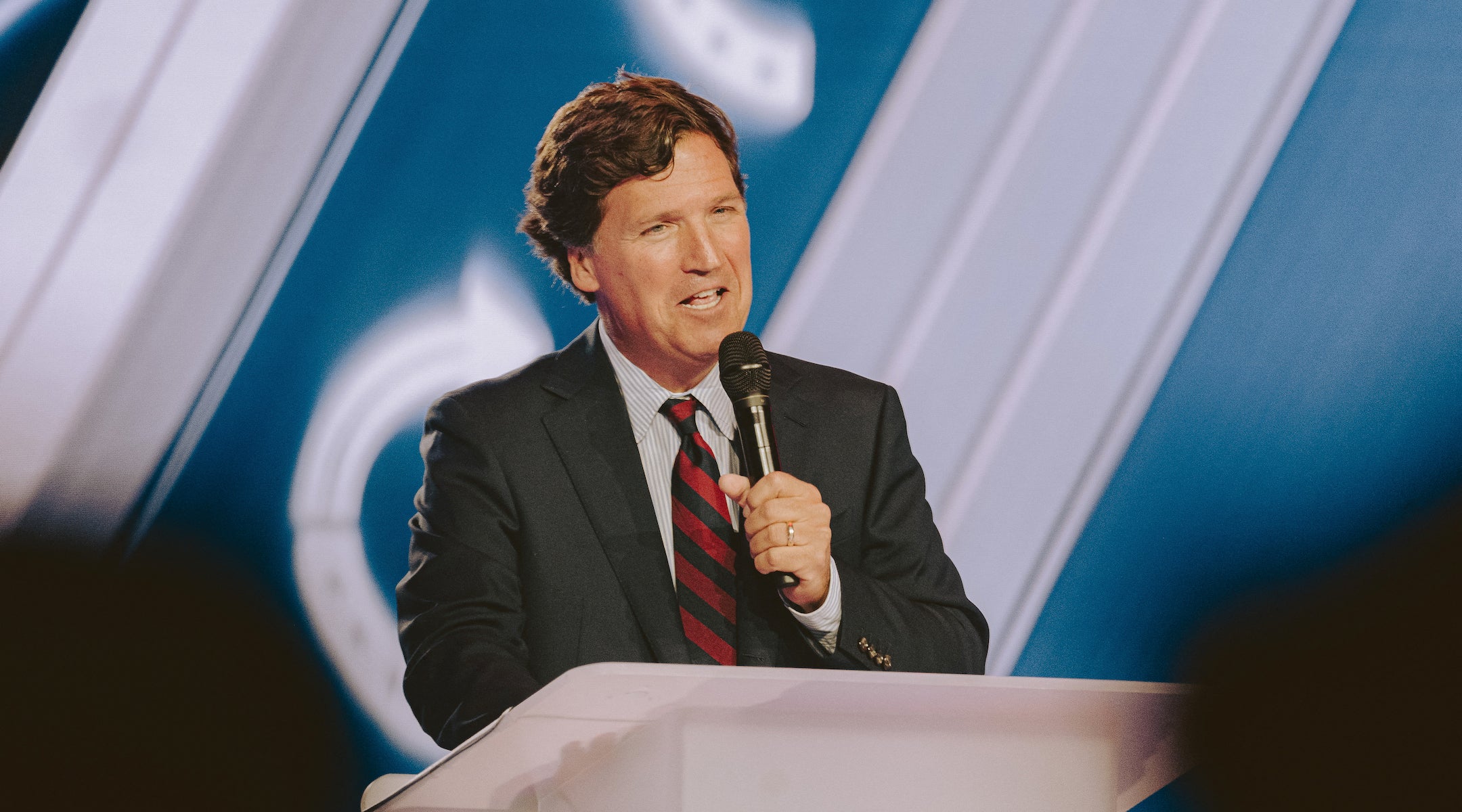
On the first day of AmericaFest, Turning Point USA’s convention in Phoenix, Ben Shapiro lit into a host of conservatives that he said were “frauds and grifters.”
He listed Candace Owens, Tucker Carlson, Megyn Kelly and Steve Bannon as “charlatans who claim to speak in the name of principle but actually traffic in conspiracism and dishonesty.” Together, he said on Thursday, they presented a danger to the conservative movement.
Shapiro was extending an assault that he began earlier in the week during a speech at the Heritage Foundation, a heart of conservatism that has been thrown into turmoil by its president’s backing of Carlson after Carlson hosted the Holocaust denier and avowed antisemite Nick Fuentes on his podcast.
An Orthodox Jew and avowed supporter of Israel, Shapiro, a conservative pundit, has been mounting a public effort to repudiate antisemitism and similarly aligned forces within his own party. His campaign comes as the GOP’s younger flank have become increasingly disillusioned with American support for Israel in the aftermath of its war in Gaza.
Conspiracy theories about Jews and Israel have proliferated in young right-wing spaces, to the point where Shapiro — who has long preferred to focus on conservative culture-war issues — is now staking his future on rooting them out.
“If you host a Hitler apologist, Nazi-loving, anti-American piece of refuse like Nick Fuentes,” Shapiro told the AmericaFest crowd, “if you have that person on your show and you proceed to glaze him, you ought to own it.” Shapiro used a Gen Z slang term for flattery to allude to Carlson’s interview with Fuentes, elsewhere blasting other rivals for promoting conspiracy theories linking Jeffrey Epstein to the Mossad.

Conservative political commentator and podcast host Tucker Carlson speaks at Turning Point’s annual AmericaFest conference, in remembrance of late right-wing political activist Charlie Kirk, in Phoenix, Arizona on Dec. 18, 2025. (Olivier Touron / AFP via Getty Images)
But Shapiro’s address did not go over well with everybody. Much of the energy at AmericaFest, which TPUSA staged in the shadow of the shocking murder by the group’s founder Charlie Kirk earlier this year, appeared to be lining up behind the figures he targeted — several of whom, like Carlson, also took the stage.
“To hear calls for deplatforming and denouncing people at a Charlie Kirk event, I’m like, what? That’s hilarious,” Carlson said in his own speech. Yet he also took the time to defend his thoughts about Jews. “I’m not an antisemite for a very specific reason. Not because it’s unpopular or my donors don’t like it. I’m not an antisemite because antisemitism is immoral in my religion.”
Carlson wasn’t alone in his disdain for the Daily Wire CEO who, for years, had been considered a tastemaker for the young right. Steve Bannon, as part of a speech in which he also called to “re-Christianize America” and mocked the recent murder of Jewish director and Trump critic Rob Reiner, called Shapiro a “cancer” to conservatism.
And Owens, Shapiro’s own former protege, said, “Fuck you, Ben Shapiro.” She made the comment on her YouTube page, where she has been promoting conspiracy theories that Israel had some involvement in Kirk’s murder.
And in remarks to Vanity Fair while at the conference, Kelly, too, countered Shapiro. The former Fox News host blasted him as overly concerned with Israel and said that he and Bari Weiss, the Jewish CBS News editor-in-chief recently in hot water after she pulled a 60 Minutes story that reflected badly on the Trump administration, are themselves fueling antisemitism.
“Tucker is not making antisemites. They are,” Kelly, a friend of Carlson’s, told Vanity Fair.
She went on to describe Shapiro and Weiss as part of “this very loud group of pro-Israel activists that is trying to make this the litmus test about whether you get to call yourself a conservative, and they lack standing to do that.”
Other conference attendees Vanity Fair spoke to said they were siding with Shapiro’s opponents, and some were happy to debate Hitler’s merits in-between sessions.
Shapiro’s effort to hold a line in the sand is reverberating through the highest levels of government. Vice President JD Vance, who also spoke at the conference and is himself close with Carlson, pointedly did not denounce antisemitism during his own address. Instead, Vance seemed to discourage the idea that conservatives should be excommunicating anyone based on their views.
The showdown at AmericaFest was the latest visible sign of how the next generation of conservatives are increasingly turning against Israel while embracing antisemitic talking points.
Openly antisemitic influencers like Fuentes and Myron Gaines are enjoying a rise in popularity on the right, and Gaines attended AmericaFest himself. The podcaster wore a sweater with a picture of Cookie Monster over an oven and the phrase “Let Em Cook” — a right-wing meme mocking Jews who were murdered in the Holocaust.

Donald Trump Jr. and Megyn Kelly speak onstage at Smart Financial Centre on October 23, 2025 in Sugar Land, Texas. (Marcus Ingram/Getty Images)
A recent focus group of Gen Z conservatives, conducted by conservative think tank The Manhattan Institute, also found that several of them espoused antisemitic and pro-Hitler views. One declared that Jews are “a force for evil,” adding, “I don’t see why we support Israel. I think Israel’s a very evil state. The genocide in Gaza, killing all these poor people. And the only reason we really support them is because they are the biggest donors. We have AIPAC, and these are all Jewish-run organizations.”
Asked what they thought of Hitler, one respondent said, “I think he was a great leader, to be honest.” Another, who called himself “Jewish by blood,” said he had read “Mein Kampf” and concluded, “I strangely understood where he was coming from as far as wanting to improve the national state of Germany.”
Meanwhile, Rep. Elise Stefanik, a pro-Israel MAGA firebrand who had taken on campus antisemitism as a central cause, announced on Friday she was dropping her bid for New York Governor. Stefanik will also not seek reelection to Congress, leaving conservative (and many centrist) Jews with one less ally on the right who seemed to have a fast track to Trump.
A right-wing schism, with Jews and Israel at the center of the divide, is increasingly taking shape. More conservative intellectuals continue to exit the Heritage Foundation, the influential think tank, over its founder’s defense of Carlson. Several are migrating over to a new venture started by former Vice President Mike Pence, a pro-Israel Evangelical who has come out in opposition to Trump since his work in the first Trump administration.
It’s all building up to what Andrew Kolvet, a close friend and associate of Kirk who has taken over many TPUSA duties including hosting Kirk’s eponymous show since the founder’s murder, says are the conservative movement’s new flashpoints: Israel and antisemitism.
“Charlie would go to some campuses, and like 50 to 60% of the questions were about Israel,” Kolvet recently told The New York Times’ Ross Douthat. “For two years that was true.” Young conservatives have been questioning not only the influence of pro-Israel lobbyists like AIPAC, but also the entire US-Israel relationship, Kolvet said.
Kolvet added, “I think Israel has become a symbolic battle about: What does ‘America First’ really mean?”
This article originally appeared on JTA.org.
The post Ben Shapiro is mounting a last stand against right-wing antisemitism. It’s not going well. appeared first on The Forward.
Uncategorized
Sister of pro-Israel stalwart Lindsey Graham secures GOP Senate nomination
(JTA) — South Carolina Sen. Darline Graham defeated U.S. House Rep. Ralph Norman in a special primary runoff on Tuesday, putting her in a dominant position to win the Senate seat left vacant with the death in July of her older brother, the pro-Israel stalwart Lindsey Graham.
The Associated Press called the race two hours after polls closed at 9:01pm. By the time 99% of votes were tallied, Darline Graham had secured 52.3% of the votes to Norman’s 47.7%.
“Tonight is a great victory, but it’s not the finish line,” Graham told her supporters on Tuesday night. “In fact, it is the starting line for an even bigger fight, which lies ahead.”
If Darline Graham goes on to win November’s general election against Democrat Annie Andrews, she will have big shoes to fill. Her brother served 23 years in the Senate and eight in the U.S. House. He traveled to Israel about a dozen times between Hamas’s Oct. 7, 2023 attack on the Jewish state and his death at age 71.
Heading into the primaries, analysts expressed no doubt that Darline Graham would be pro-Israel. But matching Lindsey Graham’s level of foreign policy activity, they warned, would be a formidable task. Meanwhile, her campaign to date has largely avoided discussion of international affairs. Instead, she has focused on domestic concerns like reducing spending, securing borders and promoting Trump-backed policies.
During a debate aired on C-SPAN last week, Graham struggled to respond to a foreign policy question about Taiwan and the South China Sea, ultimately admitting that she’s “not that informed on national security.”
“I’m not a polished politician up here,” she said. “National security is not my thing, not my area of expertise.”
Later addressing issues of affordability, Graham linked the domestic economic situation to the war in Iran and said she trusts President Donald Trump “to get the Strait of Hormuz open.” She also voiced her preference for financial sanctions over putting troops on the ground.
Asked about the country’s relationship with Israel, Graham described the Jewish state as “one of our strongest allies.” Recognizing her brother’s close relationship with Prime Minister Benjamin Netanyahu, she added that during a recent meeting with the Israeli premier, she vowed to “continue supporting Israel in any way” she can.
“We have to stand with Israel,” Graham said.
At their previous face-off, Graham had secured 33% of the vote, while Norman came in second place, at 25%, against eight fellow Republicans. But South Carolina requires primary winners to earn a majority of votes in order to avoid a two-candidate runoff. In the November general election, Graham will contend with Democrat Annie Andrews, a pediatrician who is unlikely to prevail in the solidly Republican state.
Tuesday’s runoff marked the third time in two months that South Carolina Republicans came to the polls to select a Senate candidate. Lindsey Graham, won the first primary in June but died suddenly the next month from an aortic dissection.
A few days later, South Carolina Gov. Henry McMaster, a Republican, appointed Darline Graham to finish her brother’s term. Though she only had minimal policy experience, including a leadership role at the South Carolina Commission for the Blind, she earned President Donald Trump’s endorsement and declared her candidacy in the full race.
Trump celebrated Graham’s nomination in a Tuesday night Truth Social post, writing that “Darline Graham rides Trump endorsement to win GOP nomination for brother’s South Carolina seat.”
Graham thanked Trump profusely during her Tuesday night acceptance speech, recognizing the president as one of her brother’s “closest friends” and crediting him for helping her secure a victory.
Norman, meanwhile, thanked his supporters on Tuesday night for their “prayer crusade of a campaign,” stressing that he “did not prepare a concession speech.” He accused “outside PACs” of spending $8 million opposing him and blamed the Democrats for this situation, adding that “they got what they wanted.”
He recognized Trump’s role in the race as a supporter of Graham, noting that he “never understood why he got involved” but that it is the president’s prerogative to do so. Nonetheless, Norman pledged that there “won’t be any tears” and that he planned to back Graham.
“I’m not supporting a Democrat, so I will support her, Darline, as best I can,” he added. “We’ll live to fight another day.”
This article originally appeared on JTA.org.
The post Sister of pro-Israel stalwart Lindsey Graham secures GOP Senate nomination appeared first on The Forward.
Uncategorized
Progressive politics notches another deep-red win in Oklahoma race, bolstered by anti-AIPAC messaging
(JTA) — Oklahoma nurse and activist N’kiyla Jasmine Thomas, who ran a campaign with anti-AIPAC messaging, defeated centrist Jim Priest in a Democratic Senate primary runoff on Tuesday that marked the latest victory for a progressive politician in a solidly conservative state.
The Associated Press called Tuesday’s race, a sequel to the state’s June primary, less than an hour after polls closed. By the time 80% of votes were tallied, Thomas had accrued 59.9% of the votes to Priest’s 40.1%.
Like many progressives in the current election cycle, she repeatedly vowed during her campaign to reject funds from the American Israel Public Affairs Committee, the influential pro-Israel lobby.
Although AIPAC has not participated in this race, Thomas posted a social media reel in November that showed her pulling a giant red trash bin, labeled “AIPAC Funds” and “Corporate PAC Funds.” Adjacent to the reel is a caption that reads, “Just taking out the trash.”
“I am a sole grassroots candidate,” she said in the reel. “And we are not accepting AIPAC or corporate PAC funds. It’s garbage.”
Asked about her rhetoric on AIPAC, Thomas told the Jewish Telegraphic Agency in a written statement that her “concerns [with AIPAC] have NEVER been about Jewish people, Judaism, or Israel’s existence,” adding that she instead prioritizes human rights, civilian lives and the accountability of all governments.
“When I discuss political influence or organizations, my focus is on the broader role of money, lobbying, and special interests in our political system, not on any one religion or community,” she added.
In their previous matchup, a five-candidate race, neither candidate had earned the majority required to secure a win. Thomas earned 45% of votes in June, while Priest, a lawyer and ordained minister, accrued 24%.
Heading into Tuesday’s runoff, it was already clear that both Thomas and Priest would be longshots this November in a state that hasn’t sent a Democrat to the Senate in more than three decades. The Republican opponent, Rep. Kevin Hern, swept his primary and has the endorsement of President Donald Trump.
But Thomas’s win served as yet another litmus test on the potency of progressivism in a deep-red state, just a week after democratic socialist Angie Nixon knocked trounced a moderate candidate in Florida’s Democratic Senate primary.
Thomas, unlike Nixon, is not a member of Democratic Socialists of America, but she has openly identified with socialist policies. The 31-year-old is a citizen of the Chickasaw Nation who says she represents “the next generation of leaders.” Among her priorities are women’s health and safety, civil rights and LGBTQIA+ protections.
During a debate this past Saturday, both Thomas and Priest described a “genocide” in Gaza. Priest linked the word to Israel, while Thomas connected it to the actions of Prime Minister Benjamin Netanyahu.
She emphasized that “we can be for our Jewish brothers and sisters, and we can be against Netanyahu and what he is doing.”
“He is committing genocide. He is absolutely murdering children,” Thomas said at the debate. “We have to stop providing funding for these wars.”
In her statement to JTA, Thomas expressed her commitment to a two-state solution, adding that “both Israelis and Palestinians deserve the opportunity to live in peace, security and self-determination.”
This article originally appeared on JTA.org.
The post Progressive politics notches another deep-red win in Oklahoma race, bolstered by anti-AIPAC messaging appeared first on The Forward.
Uncategorized
Montreal passes Palestinian solidarity motion after removing text on cutting ties with Israel
(JTA) — Montreal has passed a motion of solidarity with Palestinians after stripping a clause that called for severing institutional and diplomatic ties with Israel.
Montreal’s city council late Monday adopted the measure, which also removed earlier references to Israeli “apartheid” and “genocide,” after a contentious debate about the role of local government in denouncing conflicts abroad. The amended motion passed with 54 councillors voting in favor and six against.
The motion was introduced by Projet Montréal, a progressive, environmentalist municipal party that forms the opposition in the city council. An original version demanded the city “immediately suspend its institutional ties with the current government of Israel, its institutions, and its municipalities.” Major Canadian Jewish organizations pushed to discard that clause.
Montreal Mayor Soraya Martinez Ferrada clashed with progressive councillors during Monday’s debate. She argued that it was not the role of a city government to make determinations about international crises, saying that “recognizing the limits of our institution is not turning a blind eye to Gaza.” Changes to the final motion from Martinez Ferrada’s administration focused on diversity and inclusion in Montreal.
According to the original proposal by Projet Montréal, Israeli government representatives would no longer have been invited to Montreal City Hall until Israel “returns to its internationally recognized borders, ceases its violations of the rights of the Palestinian people and ends its violations of international law.”
The initial motion also stipulated that Montreal “recognizes and denounces the apartheid regime imposed in Palestine and the genocide perpetrated there,” citing definitions of “apartheid” and “genocide” that international human rights groups and scholars have used to describe Israel. Another clause condemned rising antisemitism and said “the Jewish communities of Montreal and elsewhere, as well as people of Israeli origin, cannot be held responsible for the actions of the State of Israel.”
The measure’s dilution comes after national Jewish organizations raised strong opposition to the initial language. B’nai Brith Canada said in an open letter to the city council earlier this month that it would be “inappropriate and exacerbate tensions between communities” if Montreal weighed in on the Middle East.
“It is deceitful and inflammatory to conflate Israel with Apartheid South Africa, and Canada has rejected the view that Israel’s actions constitute apartheid,” the group said. “No court of competent jurisdiction has found that a genocide has occurred.” B’nai Brith also linked the proposed policy with antisemitism, saying it would “further normalize the targeting of our Jewish community.”
After Monday’s vote, B’nai Brith Canada celebrated the motion’s transformation.
“We are pleased that the city council did not adopt the deceitful and distorted language contained in the original motion,” Paola Samuel, the regional director for Quebec and Atlantic Canada, said in a statement.
Rabbi Yehoshua Ellis, a member of the clergy at the Montreal-area synagogue Shaar Hashomayim, told the Jewish Telegraphic Agency that the final motion resulted from Jews “mobilizing” in support of Israel.
Projet Montréal called the solidarity motion a “historic breakthrough,” but lamented the changes that “significantly weakened the scope of the original motion.”
“Palestine deserves the same solidarity as Montréal has expressed towards so many other peoples,” the party said in a social media statement. “Thousands of Montréalers have loved ones directly affected and we have the responsibility to stand by their side.”
This article originally appeared on JTA.org.
The post Montreal passes Palestinian solidarity motion after removing text on cutting ties with Israel appeared first on The Forward.
