


Features
Why Deep Cleaning Is One of the Most Important Investments Homeowners Can Make
A clean home does far more than look organized. It influences health, comfort, productivity, property value, and the way people experience their living space each day. Yet many homeowners underestimate the impact of deep cleaning, often assuming that routine tidying is enough to maintain a healthy environment. In reality, dust, bacteria, allergens, and grime accumulate in areas that are rarely touched during everyday cleaning. Over time, these hidden layers of buildup can affect air quality, damage materials, and create an environment that feels less welcoming.
Deep cleaning goes beyond surface level aesthetics. It reaches into corners, fabrics, fixtures, and high touch areas that require more care. With busy schedules, families often turn to professional services such as BellRose Janitorial Services to ensure that deep cleaning is performed correctly, consistently, and with the level of detail necessary to maintain a home’s comfort and longevity.
Understanding what deep cleaning really means
Deep cleaning is not simply a more intense version of regular cleaning. It is a comprehensive process designed to remove dirt, bacteria, allergens, and residues that are deeply embedded within the home. This includes areas that are often overlooked, such as:
• behind large appliances
• vents and air returns
• grout lines and tile flooring
• window tracks and frames
• baseboards and molding
• upholstery and carpeting
• high ledges and ceiling corners
These spaces accumulate dust, grease, and moisture that contribute to odors, poor air quality, and hidden wear on materials.
A true deep clean restores freshness to the entire home, creating an environment that supports both physical health and emotional wellbeing.
How deep cleaning affects indoor air quality
Indoor air quality is one of the most important aspects of a healthy home, yet it is often compromised by unseen pollutants. Dust mites, pet dander, pollen, and mold spores accumulate over time. Without a deep clean, these irritants circulate through the air, contributing to allergies, respiratory discomfort, and fatigue.
Deep cleaning removes the contaminants that settle beneath furniture, within carpets, and around vents. It also helps eliminate bacteria from high touch surfaces in kitchens and bathrooms. These improvements lead to cleaner air, better breathing comfort, and a healthier space overall.
A cleaner home supports mental clarity
There is a clear connection between the environment and mental wellbeing. Homeowners consistently report feeling more relaxed, productive, and focused when their space is clean. Clutter and mess create visual distractions that can increase stress and reduce concentration.
Deep cleaning enhances this sense of clarity by removing not only dirt but also the subtle visual noise of dust, smudges, and buildup. A fresh home feels lighter, more organized, and more supportive of daily routines. This contributes to a more balanced lifestyle, especially for families juggling work, school, and personal responsibilities.
Protecting home materials and extending their lifespan
One of the most underestimated benefits of deep cleaning is the protection it offers to surfaces and materials. Dirt and grime are abrasive. Over time, they can degrade flooring, damage finishes, discolor tiles, and wear down fabrics.
For example:
• Grout absorbs moisture and stains when not cleaned deeply.
• Hardwood floors lose their shine when dust and debris act like sandpaper.
• Carpets trap particles that damage fibers and create odors.
• Tile and stone surfaces become dull and lose their natural texture.
Deep cleaning preserves these materials, helping them last longer and look better. This reduces repair and replacement costs, protecting one of a homeowner’s biggest investments.
Kitchens and bathrooms require the most attention
Kitchens and bathrooms are among the most frequently used spaces in any home. They accumulate moisture, heat, oils, and bacteria, which makes them especially important areas for deep cleaning. A surface level wipe down may remove visible residue, but deep cleaning targets the areas that affect hygiene and long term durability.
In kitchens, this includes cleaning behind appliances, sanitizing high touch surfaces, removing buildup from stovetops, and disinfecting sinks and faucets. In bathrooms, deep cleaning eliminates soap scum, restores grout, sanitizes fixtures, and prevents mildew from settling into corners.
These spaces feel instantly refreshed after a professional deep clean, improving both safety and comfort.
The impact of clean windows and natural light
Natural light can transform a home, but its impact is reduced when windows are dirty. Dust, water spots, and residue create a film that blocks brightness and dulls the inside of a space. Clean windows allow light to flow freely, making rooms feel larger, warmer, and more inviting.
Deep cleaning windows, tracks, and frames also improves insulation and prevents drafts. This contributes to a more comfortable indoor environment and more efficient energy use.
The emotional value of a clean home
Cleanliness influences how people feel about their home. A fresh, organized environment encourages relaxation and social connection. Many homeowners feel more comfortable inviting guests, hosting family gatherings, and enjoying their space when it feels clean.
Deep cleaning creates a welcoming atmosphere that enhances daily living and strengthens the emotional bond people have with their home.
Professional cleaning brings expertise and consistency
While homeowners can perform basic deep cleaning tasks, professional cleaning services offer a level of detail and expertise that is difficult to match. They use specialized equipment, know how to treat delicate materials, and follow a systematic approach that ensures every area is addressed.
Professionals also work efficiently, saving homeowners time while delivering long lasting results. For busy families and individuals, this consistency is invaluable.
A valuable investment in home health and comfort
Deep cleaning is one of the most effective ways to maintain a home. It supports physical health, improves mental clarity, protects materials, and enhances the beauty of the space. With support from experienced professionals like BellRose Janitorial Services, homeowners can enjoy a cleaner, healthier, and more comfortable living environment all year long.
A home is more than a place to live. It is a reflection of personal wellbeing, lifestyle, and care. Deep cleaning ensures that it remains a space where families can thrive.
Features
“A Brilliant Life” – biography of one Holocaust survivor who, like so many other survivors, married someone just to try to establish some sense of normalcy

Book Review by JULIE KIRSH, “former Sun Media News Research Director
In 1946 my parents met, fell in love and married. In 1947 they had their first child. This was not unusual. However, they were 20 years apart in age.
After World War II, Holocaust survivors who had lost everything – family, home and community, sought to rebuild their lives by marrying, having children and restoring their shattered lives.
They wanted to experience normality which meant having a spouse, children and recreating a family that had been lost in the flames of the Holocaust.
The survivors were few in number so age difference, religious background or compatibility were not as crucially scrutinized as before the war.

The author of “My Brilliant Life’s” grandmother, Genya, whose family was from Poland, married young and was told by her religious father-in-law that she had to wear a sheitel or wig. Genya balked, but since all other Jewish observances were met, the marriage was sanctioned
Genya and her husband Dolfie had five children. The youngest child was Mira, mother of the author, Rachelle Unreich, who has written poignantly of her family’s history in “A Brilliant Life.”
In 2017, in Melbourne, Australia, 88-year-old Mira Unreich was diagnosed with cancer. Her journalist daughter, Rachelle, knew that time was limited and so she interviewed her mother extensively, to learn about her life before, during and after the Holocaust.
As her mother recounts, the transports started in Slovakia in March 1942, when Mira was one month shy of fifteen.
Dolfie, Mira’s father, was clever and prescient. He obtained false Christian papers for Mira and sent her to rent a room and work for a fabric store owner. He also told his family repeatedly that if they were in danger, each person should look after themself. Many times he said, you must “just save yourselves”.
By the end of August 1944, the noose around the family had tightened. Slovakia was not a safe haven for Jews and the end was imminent for the remaining Jewish families in Dolfie’s town. One day, SS officers burst into their home and shot Dolfie in front of his wife Genya, son Yanchi, and daughter Mira. This tragedy shadowed the lives of the family up to the present.
In Melbourne, Mira met and married Pavel, who was thirteen years her senior. Again, the match was not as much a love match, but for Mira it was a chance to have security and comfort after all that she had gone through in the Holocaust.
When Mira married in 1946, she was only 19 years old. Like my own 22-year-old mother – who married a man 20 years older than herself, Mira was fun-loving and strove to make up for lost time.
Less than two years after liberation, Mira gave birth to a son and then two daughters. The family moved to Paris, where Mira enjoyed everything the City of Lights had to offer. Pavel, on the other hand, was serious, less social, and more of an observer than a participant in life.
In 1959, Australia seemed remote and safe, a vast land of opportunity with a citizen army that was founded as an entity to defend all her people regardless of race or religion. At the time, Australia hosted the largest community of Holocaust survivors in the world outside of Israel. By 1960, Holocaust survivors and their families made up 60% of Melbourne’s Jewish community.
Eventually, Pavel left Mira and the family and died in Belgium, never remarrying. Mira met Manny, eleven years her senior, whose family had also experienced tragedy in the Holocaust. They were drawn to each other. In 1966, Rachelle, the author of A Brilliant Life, was born.
The title of the book reflects the kind of person Mira was. She was affectionate, considerate, and a capable mother who accommodated her children’s needs.
Mira, like most Holocaust survivors, had a number tattooed on her arm. As children of survivors, we see the tattoo as a blight and painful reminder. However the author had another insight. For her, the tattoo designated someone who could work and more importantly – had been chosen to live.
As a child of survivors, I have asked myself the question that the author asks Mira in Chapter 37: Why had she survived when so many others had not? The author believes that her mother had a purity, a spiritual honesty, that drew others to her, and that ultimately helped her to survive.
Mira was honoured by her children in death as she was in life. The words on her tombstone were stark and plain spoken: “She witnessed her father murdered by the Nazis/Her mother, brother and sister were killed in the Holocaust/She survived four concentration camps/yet she still loved her life with an unwavering positive attitude.”
My father survived Auschwitz and Buchenwald. Like Mira, he was a positive, happy man, who loved his family and adopted country. Mira, like my father, had seen the worst of humanity, yet they both chose to concentrate on the best of it.
Why is this Holocaust memoir different from others? Trauma runs deep and very often defines the post Holocaust lives of many survivors. For Mira, her trauma was superseded by her innate resilience, her strength of character and her capacity to overcome tragedy. Her hopeful nature gave sustenance and meaning to her family.
This is a story that resonated for me personally, underscored by the universal themes of love and hope common to all.
“A Brilliant Life”
by Rachelle Unreich.
Published by Black & White Publishing, 2023
Features
Tiblisi, Georgia – a new hotbed for dental tourism, especially for Israelis
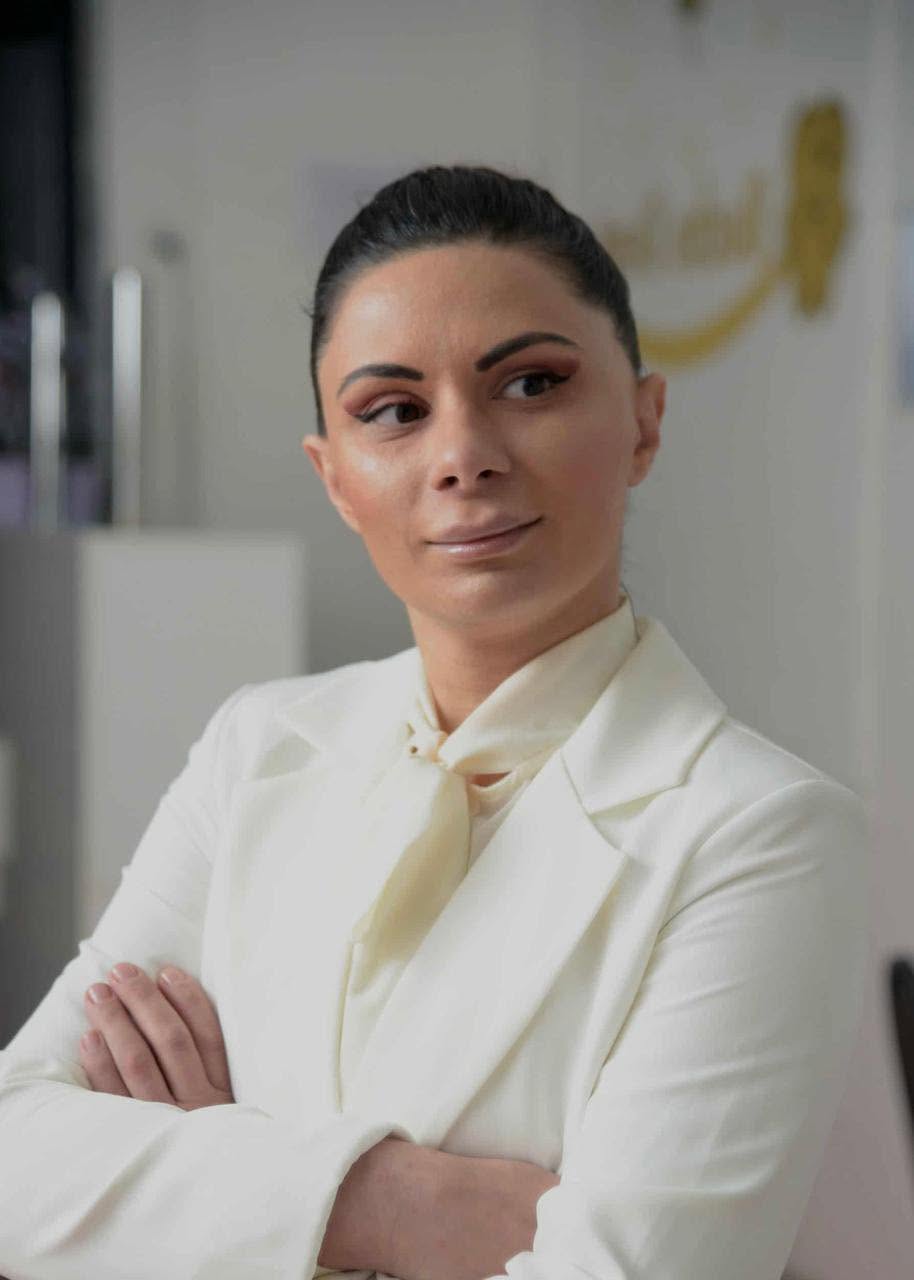
Introduction: A few weeks ago we received an interesting email from someone who asked whether we would consider publishing a story about dental tourism in Georgia (not the Georgia in the U.S. – the Georgia that is a former Soviet republic). In that email we were told that Georgia has become an especially popular destination for Israelis looking for quality dental care at affordable prices. So we responded: Go ahead and send us something.
The author of what you’re about to read, whose name is Constantin Dicusar, admits that English is not his first language, so he asks that you forgive any awkward phrasing. But I’m sure that, if you read at least part of this story you’ll be intrigued by what he has to say about a part of the world that I doubt many of our readers know much about.
By CONSTANTIN DICUSAR Tbilisi, Georgia, is the latest destination for Jews from all over the world seeking dental tourism. Dr. Iza Dzidzikashvili, co-founder of a dental clinic in Tiblisi, says: “Jews come from all over the world and choose Georgia because of the low level of anti-Semitism, the low prices and the high quality, as well as the good relations between Israel and Georgia.”
Georgia is a country in the South Caucasus that is relatively little known in the West and in Canada. In 1991, it declared its independence from the USSR, becoming one of the first Soviet union republics to break away from the former imperial power, which was to collapse a year later.
Although it has only very recently chosen to pursue the path of European integration, Georgian society had already distinguished itself long before independence as a nation with deep-rooted Christian-European cultural and civilisational values. Georgian hospitality bears many similarities to that of Moldova, and Georgian wines, renowned throughout the world, have made Georgia the cradle of global winemaking.
Georgian wines are believed to have an 8,000-year-old tradition based on the unique method of fermentation in clay vessels called qvevri, which are included in UNESCO’s Intangible Cultural Heritage list. Among other interesting facts, Georgia was one of the first nations in the world to adopt Christianity as its state religion, in the 4th century.
More recently, Georgia has also managed to build a strong reputation in another sector: international dental tourism. Tens of thousands of tourists from all over the world visit Georgia every year – particularly the capital, Tbilisi – to combine sightseeing with dental treatment.
According to Georgia Today, the majority of foreign tourist-patients come from neighbouring countries or the wider region (Russia, Azerbaijan, Armenia, as well as from the Middle East – Israel, Qatar, Kuwait and Saudi Arabia). In recent years, Georgia has also become a magnet for many people from Europe and the US. Jews – both Israeli citizens and Jews from the Diaspora and around the world – represent a distinct group of patients who have chosen Georgia for dental services.
Read more about this in the exclusive interview conducted with Dr Iza Dzidzikashvili, a dentist, practising surgeon and co-founder of Bucho Denti in Tbilisi, Georgia:
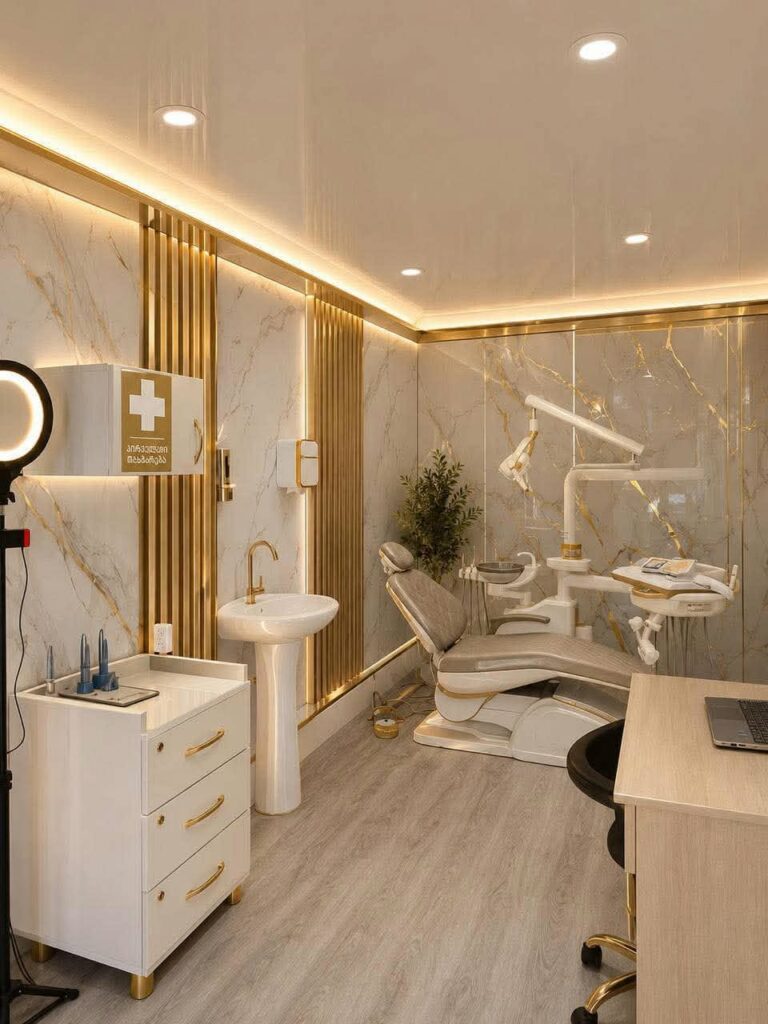
Constantin Dicusar (for jewishpostandnews.ca): When was Bucho Denti founded, and who is behind the project? Tell us more about how your story began.
Dr. Dzidzikashvili: First of all, welcome, and thank you very much for your interest in our clinic. Bucho Denti was founded in 2000 by sisters Iza and Tea Dzidzikashvili and Vasif Aliyev. Today, all three are among the leading dental specialists in Tbilisi. Since we were already three experienced specialists, we decided to create an environment where patients could feel comfortable, safe, and confident, while receiving the highest standard of dental care. This philosophy became the foundation of Bucho Denti and continues to guide our development today.
Constantin Dicusar: What do you know about international dental tourism in the Caucasus region, and specifically in Georgia and Tbilisi?Dr. Iza Dzidzikashvili, dentist, surgeon practicing and co-founder of Bucho Denti: International dental tourism has been growing significantly in the Caucasus region, and particularly in Georgia. One of the main reasons is Georgia’s combination of hospitality, safety, high-quality dental care, and affordability. Dental standards in Georgia are comparable to European standards, while treatment costs are more accessible than in many other countries. This combination of quality, safety, affordability, and comfort has created growing interest among international patients.
Constantin Dicusar (The Jewish Post & News reporter): How has international dental tourism changed your operational, staffing, sales, and marketing strategie
Dr. Dzidzikashvili: The growth of international dental tourism significantly changed our vision and the way we operate. One of our main goals became to reduce the overall treatment time as much as possible — without compromising quality. We developed our infrastructure and workflows to allow patients to complete their treatment efficiently while maintaining a high standard of care. We also introduced complete treatment packages that can include hotel accommodation, airport transfers, and other services international patients may need. Our goal is to make patients feel safe, comfortable, and supported throughout their entire stay. We also incorporated tourism into the experience, giving patients the opportunity to explore Georgia and travel during their treatment period.
Constantin Dicusar: Did you envision engaging in international dental tourism right from the time the clinic was established, or did that come about later?
Dr. Dzidzikashvili: To be honest, we had always considered the idea of working with international patients. However, this direction developed much more actively as demand for international dental treatment increased. We adapted and developed our services according to the needs of international patients.
Constantin Dicusar: Tell us more about your staff. In which languages do you communicate with your international patients, and does the multilingual staff include dental assistants as well as the doctors themselves?
Dr. Dzidzikashvili: Our doctors have decades of professional experience, with some of our specialists having more than 30 years of experience. Our team communicates with international patients in English. To make the experience even more comfortable, we also provide communication support in Hebrew and Arabic, including professional interpreters. For us, it is very important that patients understand every stage of their treatment clearly and feel comfortable throughout the process.
Constantin Dicusar: Let’s also talk about international patients: which countries do most of them come from, and which dental services do they seek out most often? We know from reports originating in Israel and Georgia that Tbilisi has become an increasingly popular dental destination, frequently chosen by Jewish patients as well. Have you observed this trend at your clinic? If so, which countries do most of these Jewish patients come from?
Dr. Dzidzikashvilii: Yes, we have definitely noticed this trend, and the number of Jewish patients has been increasing every year. We would like to point out that the majority of our Jewish patients are citizens of Israel; they come from Israel. One important factor is the relatively short travel time between Israel and Tbilisi — approximately 2 hours and 30 minutes. Dental treatment in Georgia is also more affordable compared with Israel. Georgia is already well known and popular among Israeli travelers, so patients are generally familiar with the country and feel more confident about choosing it for treatment. After Israel, the United Kingdom is another important market for us, followed by different European countries. We have also treated Jewish patients from Canada, which shows that interest in Georgia is not limited to one or another particular country. The most common treatments requested by international patients are full-mouth rehabilitation, dental implants, and zirconia crowns.
Constantin Dicusar: Do you think that the good relations between Israel and Georgia, along with the low level of antisemitism in Georgia, encourage Jewish patients—particularly Russian-speaking Jews from across the former Soviet Union—to choose Georgia for such services?
Dr. Dzidzikashvili: Of course, the long-standing friendship and positive relationship between Georgia and Israel is very important. This relationship helps Israeli patients feel safe and comfortable when choosing Georgia for treatment. When a patient travels to another country for medical care, price and quality are not the only factors that matter. Trust, safety, communication, and the overall environment are equally important. We believe that the strong relationship between Georgia and Israel contributes significantly to this sense of trust.
Constantin Dicusar: What strategies do you plan to develop over the coming years to grow international dental tourism? Are you considering becoming more attractive destination for Jewish people from Canada and USA who are looking for dental services that are more affordable than those in their home countries?
Dr. Dzidzikashvili: In the future, our goal is to create a large-scale international dental center where everything is available in one place. We envision a facility combining a dental clinic, hotel, and restaurant, creating a comfortable environment specifically designed for international patients. Our vision is for patients to receive high-quality dental treatment, relax, enjoy their stay, and, if they wish, explore Georgia — all as part of one complete experience. At the same time, we are actively working to make Bucho Denti better known internationally and to reach more patients who could benefit from our services. Our main goal is to offer international patients accessible treatment while maintaining European-level standards of dental care.
Constantin Dicusar: Finally, we would like to turn our attention once more to Georgia and Tbilisi as tourist destinations. You are likely aware that in Europe—particularly in the western part—the worrying rise of antisemitism has limited the options available to Jewish travelers seeking dental tourism. Budapest remains the dental capital of Europe and is well-known within the Jewish community; more recently, Romania, Moldova, and perhaps Riga (Latvia) have also emerged as options, each offering distinct advantages and tourism amenities. From this perspective, what can Georgia and its capital, Tbilisi, offer? What makes Georgia unique as a destination compared to the others?
Dr. Dzidzikashvili: Compared with the countries you mentioned, one of Georgia’s main advantages is the combination of more affordable dental treatment with European-level quality. Another important advantage is the availability of complete treatment packages, including dental care, accommodation, transfers, and other services. Georgia is also an attractive tourism destination. Patients can combine their dental treatment with the opportunity to explore beautiful places, experience Georgian culture, and discover the country. Safety is another important factor. Georgia is a relatively small country, which contributes to a well-controlled environment, and the level of crime is relatively low. Ultimately, we believe that the combination of quality, affordability, safety, hospitality, and tourism opportunities gives Georgia a unique position. Our goal is that when an international patient comes to Georgia, they receive not only high-quality dental treatment, but a complete, safe, comfortable, and well-organized patient experience from beginning to end.
Features
Buck In Situ: A Dog Story

By DAVID TOPPER I suppose the first thing I should say is that, although this is a true story, it’s not about a real dog. (That may be obvious if you look at the picture accompanying this tale.) Yes, the dog – a wooden statue – is Buck.
I do want to explain what “in situ” means. For those who know the term, it betrays the fact that I was a teacher of art history before I retired. It’s a Latin term that refers to an art object being in its original or natural place. For example, the famous Elgin Marbles (statues of Greek gods, goddesses and other mythological figures), which are prized objects in the British Museum in London, were taken by Lord Elgin from the Acropolis high over Athens in Greece, in the early 19th century. If the museum ever returns the statues (as Greeks have been demanding them to do for years), and if the statues were then placed back on the Acropolis – then they would be “in situ.”
All this has been my way of introducing you to a story about a little statue that has been sitting in my home ever since my late wife, Sylvia, and I returned from a trip to Jamaica many years ago.
Here’s Buck’s story. One afternoon during our vacation on the island, we went to an Art Fair. I was particularly interested in wooden carvings. There was a long line of tables, end to end, with different carvers showing off their wares. As we walked along the tables, among the different carvers, I was dumbfounded because they were all carving the same statues! Different artists: same statues. The statues were of some local deities; none of whom I had any interest in taking back home – no matter what magic it could perform.
Sylvia and I were baffled as we strolled along the long row, eventually coming to the end. Then, lo and behold: the last carver was carving different statues – not necessarily of gods. Coming across his table filled with a wide variety of subjects was a breath of fresh air.
Of course, the first thing I asked him was why everyone else was carving the same things. His answer was simply that they thought that was what tourists wanted, and they were afraid to try anything else. I asked him why he was not afraid. He said he was afraid; nonetheless, he would be bored doing the same thing over and over – even if he made more money.
By now you can see where this story is going. It was among his wares, on the last table, that I saw the statue of the dog – which I immediately fell for. Sylvia, a dog lover, fell for it, too, and hence we bought it. I don’t recall the price, or if we haggled over it. But what I do remember – and why I am telling this story – is this. While talking with him and watching him at work, I noticed the way he was squinting. I asked him about this, and he said his eyes were not what they used to be, that he needed glasses but he couldn’t afford them.
At the time, I was in an early stage of permanently wearing glasses. Having gone through various stages of over-the-counter reading glasses during the previous decade or more, I was now wearing my first prescription glasses. I gave them to the carver to try on, and he said they were too strong. “Good,” I said. I told him I had several pair of different power reading glasses at home, which I had used before I got these. I’d be pleased to mail him those glasses, which perhaps could get him through the next decade or more. He gave me his address, and that’s when I found that his name – or, maybe, it was his nickname – was Buck.
“Would you mind if I name the dog Buck?” I asked – because I liked that name for the dog. He had no problem with that, and hence Buck it was, and Buck it always will be.
Not long after we got home, I mailed a box of glasses to Buck. Although I had my return address on the box (in case it got lost) I never heard from him. I didn’t expect to; yet occasionally I talk to my Buck and tell him that I hope the Buck whom he is named after, is still using a pair of the glasses I sent him. It would be comforting to know. My Buck agrees, I trust.
From the photo you can see that Buck sits at the foot of a staircase. Those stairs start in the front entrance of our home and go to the second floor. Buck not only stands on-guard, watching all who enter the house, but he also plays the following role. If I want to remind myself of something without having a paper and pencil handy, I just turn Buck around – say, on my way upstairs for the night. In the morning, coming down the stairs, I see that Buck is reminding me to do something. Although, I must confess, sometimes I can’t recall exactly what it was!
Finally, I live in Winnipeg, Canada. I know that’s far from the island of Jamaica, but here Buck has become a part of our life. All the family knows that if Buck is turned around – it means something! I therefore believe that it’s not stretching the terminology t-o-o much by calling this memoir: “Buck In Situ: A Dog Story.” To me, Buck is right where he belongs.

David R. Topper writes in Winnipeg, Canada. His work has appeared in Mono, Poetic Sun, Discretionary Love, Poetry Pacific,Academy of theHeart & Mind, Altered Reality Mag. and elsewhere.
His poem Seascape with Gulls: My Father’s Last Painting won first prize in the annual poetry contest of CommuterLit Mag – May 12, 2025.
