


Uncategorized
In three days, Israel and the US reshaped the Middle East
The first three days of the new war in Iran will be studied in military academies for decades. They may also be remembered as the moment the Islamic Republic’s long arc of regional intimidation finally broke.
Israel and the United States swiftly eliminated much of Iran’s command structure. Supreme Leader Ayatollah Ali Khamenei. Senior Revolutionary Guard commanders. The military high command. Key ministers. Even former president Mahmoud Ahmadinejad, who had dedicated years of rhetoric and policy to Israel’s destruction. Roughly forty senior officials were killed in a synchronized operation that combined intelligence penetration, precision strike capability and political nerve.
It is difficult to identify a modern precedent for such a comprehensive and instantaneous decapitation of an adversary. States have targeted leaders before. They have crippled command structures before. But to reach so deeply, so quickly, and with such apparent accuracy into the inner sanctum of a regime long defined by paranoia and internal security is extraordinary.
Whatever follows, that message will linger. Israel can reach you. It can map your hierarchy, and then collapse it in a night.
For once the cliché is true: This is truly a pivotal moment. Here’s a look at the interlocking elements, and the possible directions in which this unpredictable situation could next unfold.
Air supremacy without precedent
Perhaps most striking has been the dominance in the skies.
Israel fields more than 300 combat aircraft of the highest caliber. The U.S. has surged at least a comparable number into the region. Together, they have established near-total air superiority over Iranian territory.
Iranian air defenses — already degraded in strikes in late 2024 and mid-2025 — have proven unable to contest sustained sorties. Launchers that reveal themselves are rapidly destroyed. Radar systems are neutralized in cycles.
Wars between states are rarely so asymmetrical in the air. Iran has invested heavily in layered defenses and missile deterrence. But technology, training and integration have won the day. For the Israeli Air Force, this is an operational achievement of historic scale.
The alliance factor
Just as consequential is the political dimension: Israel and the U.S. fighting shoulder to shoulder in a major offensive campaign.
For much of Israel’s early history, U.S. military cooperation was uncertain. Even after the strategic partnership deepened in the 1970s, it was never a given that Washington would participate directly in high-risk regional operations. That barrier has now been crossed.
President Donald Trump’s decision to align so closely with Israel in a war of this magnitude will be remembered in Israel for a generation. Many Israelis have long believed him to be uniquely aligned with their security worldview. After three days of joint operations, the strategic intimacy is undeniable.
This does not resolve every question about long-term regional strategy, or about how steady of a partner the U.S. will prove to be. But in the immediate sense, Israel’s foundational anxiety — that in an existential confrontation it might stand alone — has been decisively eased.
Iran’s gamble in the Gulf — and Lebanon’s unfinished business
Tehran’s response to Israeli and U.S. strikes has been to widen the field.
By striking at Gulf states and issuing threats beyond Israel, Iran appears to be attempting escalation in order to generate pressure on Washington. The logic is clear: If oil markets tremble and regional capitals feel directly endangered, the U.S. might be compelled to restrain Israel to prevent broader instability. .
The gamble is that, with the exception of Qatar, few Gulf governments harbored much sympathy for the Islamic Republic to begin with. Iran’s support for militias across the Arab world has long been viewed as an assault on Arab sovereignty. So, instead of fracturing the U.S.-Israel coalition, Iran risks pushing Gulf states to join it.
Faced with direct attacks and threats, a group of Arab foreign ministers convened and issued a notably unified statement warning Iran of consequences. Even Doha has publicly criticized Tehran’s moves.
Threats toward Cyprus have also stirred a European reaction. What had been a near-global consensus around three core American demands — no military-level nuclear enrichment, no offensive long-range missile program, and an end to proxy warfare — is hardening rather than eroding. Only China and Russia stand conspicuously apart.
And then there is Lebanon. After Hezbollah joined the conflict, Brigadier General Effi Defrin declared that the conflict would end “with Hezbollah severely damaged, not just Iran.” That was not rhetorical flourish. It was a warning that the scope of the war could shift.
After striking significant blows against Hezbollah in the war that unfolded after Oct. 7, Israel gave Lebanon space to implement what had been promised: the disarmament or at least meaningful curtailment of the militia’s independent military capacity. That has not happened. Hezbollah, though badly thrashed in that earlier round, has preserved significant capabilities, and appears to believe it can fight another day.
Israel sees Hezbollah’s engagement as an invitation for a renewed campaign designed to decisively degrade the group. Should Washington prefer to limit escalation inside Iran itself, the center of gravity could shift northward, toward a resumption of intensive Israeli operations in Lebanon.
The war, in other words, has multiple possible theaters.
Missiles versus interceptors
Informing Israel’s choices is a grim arithmetic.
Iran retains a substantial stockpile of ballistic missiles. Israel’s layered defense is formidable but not inexhaustible. The strategic question is simple: Will Iranian missiles run out before Israeli interceptors do?
Iran’s firing patterns suggest awareness of this calculus. Rather than saturating Israeli defenses with hundreds of missiles at once, it has launched in more measured waves. Preserving inventory matters.
For Israel, two parallel imperatives follow: destroy as many launchers and depots as possible, and accelerate interceptor production and deployment. Both are underway. Strikes on missile infrastructure are a central component of the air campaign. Reports also indicate targeted killings of Iranian personnel involved in advanced missile research and development.
This is a race of attrition beneath the spectacle of air supremacy.
Jerusalem’s dilemma
If the war were to end now, Israel would not have achieved everything it wants. Iran’s nuclear infrastructure may not be fully dismantled. The missile threat would not be entirely erased. Hezbollah would remain armed, though weakened. The broader militia network would not yet have withered away. (Trump has suggested the conflict will continue for some weeks, but he is also notoriously changeable.)
Yet there is a serious argument in Jerusalem for exploring whether surrender terms can now be imposed while the balance of power is overwhelmingly favorable. The gains already secured are historic. The Iranian regime’s top tier is gone. Its air defenses are crippled. Its deterrent mystique has collapsed.
The alternative to a truce — escalation toward maximalist objectives, including outright regime change — entails unpredictability.
So Israel must now decide how hard to press Washington. Should it urge the U.S. to seize the moment and push for more profound structural transformation in Tehran? Or should it consolidate the gains already achieved and lock them into enforceable constraints? Should it pivot north and finish what it regards as unfinished business in Lebanon?
These are strategic questions. They are also political ones.
The domestic shadow
A large majority of Israelis believe that Prime Minister Benjamin Netanyahu is politically cynical enough to initiate or expand military confrontations to serve his own political survival. The trauma of Oct. 7, and the government’s earlier attempt to overhaul the judiciary in ways widely seen as authoritarian, left him deeply unpopular and mistrusted across much of the electorate.
A successful war against Iran could restore Netanyahu’s standing to a degree few would have imagined only months ago, and plausibly position him to win upcoming elections.
For Israel, that prospect is enormously consequential. A renewed Netanyahu mandate, built on the back of a historic military triumph, would likely entrench a version of Israel that is more nationalist, more religious, and more dismissive of liberal constraints. The tensions between secular and religious communities, between the judiciary and the executive, between integration and isolation, would only grow.
Israel’s most globally connected and economically productive sectors have already shown signs of anxiety about the country’s democratic trajectory. A perception that authoritarian tendencies have been vindicated by war could accelerate emigration among parts of the professional class. Over time, that would reshape not only Israel’s politics but its economy and society.
In that sense, the most consequential outcome of this war for Israel may not lie in Tehran or Beirut, but in Tel Aviv and Jerusalem.
The post In three days, Israel and the US reshaped the Middle East appeared first on The Forward.
Uncategorized
Northeast Philadelphia says goodbye to its last Jewish deli
(JTA) — PHILADELPHIA — After running the family deli for several decades, Steve Stein says his 83-year-old legs were telling him it was time to call it quits. But it wasn’t only that.
The neighborhood has totally changed since his dad, Mike, first took over the business more than 60 years ago. Back then Northeast Philadelphia was an epicenter of Jewish life, packed with synagogues and other Jewish establishments. Most of them are gone. And now — with the close of Steve Stein’s Famous Deli and Restaurant — the area just lost its last Jewish deli.
But only after an outpouring of affection from longtime customers, who flocked to the place once news spread in the last few weeks. “It’s overwhelming,” Stein said. “The amount of people that came in here in the last 10 days, two weeks. Their comments are very touching. I knew I was liked. I didn’t know I was loved.”
To be sure, several customers told the Jewish Telegraphic Agency that they’ll miss Stein, but they also bemoaned the fact there aren’t many Jewish food options left. Certainly none with prices as low as Famous.
“I’ve been going there my whole life, “ said Rebecca Asheuer, who grew up a few miles away from Famous’ current location — its third since the Steins took over the business. “I feel surprise and sadness, because it’s the last one in the Northeast.
“I think the Jewish people are moving out of the city and also the businesses used to be passed down in families. Now with the economy and other stuff, people don’t want to take over the family business anymore,” she said.
Another longtime customer mourned the closing of the deli, but also the disappearance of Jewish life in the area.
“I kind of expected it to go sooner or later,” said Aileen Owens, who remembered going to Famous when the Auspitz family ran over six decades ago. “There’s nobody around. Synagogues and all that stuff, it’s all fading out. They went to the suburbs.”
According to Steve’s account, his father Mike Stein, his brother Arnold and cousin Jack began running the produce concession at the Famous Deli in Philly’s Castor Gardens neighborhood in the late 1950s. Around 1960, they bought the deli from the Auspitz family, which had operated a chain of Philadelphia delis dating to the 1920s.
Steve and his brother Arnie eventually ran the deli together. As Jewish families moved farther into Northeast Philadelphia, the deli moved as well — first to Krewstown Road in the mid-1970s, eventually having two locations there, and then about 14 years ago to its final location at 1619 Grant Ave.
If all goes right, Steve’s 57-year-old son Lee hopes to continue the migration and resurrect the family business in the suburbs. Sort of.
“I’m looking to have a place of my own,” said Lee, who started off as an eight-year-old taking out the trash, but would occasionally try to cut the lox when no one was looking. “I have a lot of experience in this business.
“I call myself multi-talented, not just in the deli business, but in cooking and baking, I would probably downsize and not do fruit and produce like we do here. It’s just not worth, you know, the space for what you’re paying. I would do a similar situation to here. Deli, prepared foods, a little bit of bakery, a small sit down. But what I’ve told the people that come in here, ‘You’ll never, ever see some of this product again. And you’ll probably never, ever see these prices ever again.’”
Still, he wants his new venture to be affordable.
“My father always liked being a people-pleaser,” the younger Stein said. “So he tries to please people with a price. But that price affects you eventually.”
As for Steve, he wishes his son well, but knows it won’t be the same. “Lee wants to try something, but not here,” Stein said.
He added that some remaining establishments in the wider region – “they do 90% restaurant and 10% deli, I do 90% deli and 10% restaurant” – will “benefit from me not being here.”
One former competitor isn’t so sure. “I’m upset another Jewish deli has closed and he’s been in business a long time and certainly has his whole clientele,” said Michael Young, longtime owner of Ben & Irv’s, a deli restaurant in Huntingdon Valley, a suburb about 20 minutes northwest of Famous. “But it’s a different world today; a different area. So I don’t know if it will help us.”
Lee Stein said he actually tried to stay put, but needed a little help.“The real problem is the landlord never took care of the building,” said Lee, who wishes his dad had been more assertive on that front. “I tried to make it work here with them, figuring this would be an easy fix. I asked them for some renovations; to put a new roof on. The roof has several holes in it. When it rains outside, it pours in here. So, I tried to negotiate with them first before I did anything else, but that wasn’t going anywhere.”
JTA’s attempts to reach the landlord for comment were unsuccessful. Regardless, Steve Stein, who was forced to close the deli for a short while last year due to health code issues, says he is ready to turn the page.
The first thing he’ll do once things settle down is get therapy on his aching legs. And he’s excited to have more time to devote to his wife of 61 years, Sheila, along with his children, Lee and Mindy, seven grandchildren and two great-grandchildren. “But I’ll miss my customers. They’re like family.”
Already he’s feeling the difference “It’s devastating,” he said on Aug. 24, the day after the store officially closed, amid a final “blowout sale” to get rid of what little was left. “I’m usually the first one in the store.
“It’s going to be very much missed by me.”
He’s not the only one.
“Nothing lasts forever,” said one customer before heading into Famous one last time. “But it’s very sad.”
This article originally appeared on JTA.org.
The post Northeast Philadelphia says goodbye to its last Jewish deli appeared first on The Forward.
Uncategorized
For graphic novelist Joann Sfar, drawing after Oct. 7 was a way to put stones on Jewish graves
For many Jews, the morning of Oct. 7 remains seared into memory. In Joann Sfar’s case, it was also the day of his birthday party, which included “as many Muslims as Jews,” he told me. Amidst tragedy, Sfar felt a profound gratitude for life, which seemed especially precious. It was a day of fear and uncertainty, followed by many more over the following months. For Sfar, drawing was the only way out.
To Life is Sfar’s illustrated journal of his experience after Oct. 7, a reflection of his fierce peace advocacy coupled with a profound connection to Israel. It follows several previous books by Sfar, who is a French Jewish graphic novelist best known for The Rabbi’s Cat. His works touch on his Sephardic heritage, highlighting a history of friendship and brotherhood between Arabs and Jews.
To Life is the English translation of Nous Vivrons, which was published in June 2024 as the first of a three-part series. It was followed by Que Faire Des Juifs? (What To Do with the Jews?), a nearly 600-page graphic novel that chronicles the history of the Jewish people. Sfar concluded the series with Terre de Sang: Le Temps du Désespoir (Land of Blood: The Time of Despair), which shares Palestinian voices and which Sfar describes as the “saddest” volume of the trilogy.
I spoke with Sfar in July after reading To Life, which will be officially released on September 8. At present, the translations of the second and third volumes are not yet scheduled to be published. Our conversation has been edited for length and clarity.
Now that you’re expanding To Life’s audience to English speakers, what do you expect non-French audiences to learn? What do you hope that they take from your piece?
What I would really love is a new vision on the Middle East. I’m really surprised how New York has made the Middle East American, using it in the Trump and Mamdani debate, which I have to say has very little interest from Europe. What I would love is for people to see real lives from the Middle East to see how similar people are. I come from a part Ukrainian and part Algerian Jewish family. When I went to Palestinian cities, I was surprised how many Palestinian seniors look like my father, and how many Moroccan Jews from Israel look Palestinian.
These are people who are very similar and who are trapped in a conflict which is older than them. I really would love readers to dig into personal experience, rather than abstractions. I think embracing this region is really putting hope into individuals, because if you start to put faith into narrative, you’re lost.
In your work, you make an interesting distinction between individuals denying each other’s peoplehood on both sides — Israelis saying there was never a Palestine, anti-Zionists saying Israel never existed — and your emphasis on interviews in your piece. Why was it important for you to have such a connection to real humans throughout the process?
It’s a very strange thing to say because there was real tragedy, but it made me happy because I love these people. I’ve been lucky enough to spend a lot of time in Palestinian and Israeli cities. If you take it from an individual level, I believe in them and I have a hope for them. Something beautiful is that even if they don’t want it, they are interconnected. Their economies are interconnected; no one is going to exterminate anyone. They’ll be there still.
In this region, no one ever talks to me about Zionism. People deal with their everyday issues; they have no idea what’s going to occur in two months. I know people who are smarter than me have a big political essay about this region, but that’s not my job. My job is to do what I love, like an adventure novel, where you go to the place, you meet the people, and you bring back a story.
Were there any illustrations in the book that you found particularly interesting or meaningful?
There are some photographs that are so shocking you cannot see them in the news, and making a drawing makes it more acceptable. One picture that blew me away is the burial of a father who was killed during October 7. His kid is crying on the grave, and there are the small stones you put on Jewish Ashkenazi tombs. This kid is a Jew, but he could be an Arab, and he mourns his father with a stone. I did a very simple drawing, and somehow that’s what war is about. War is not about heroism, it’s not about glory, it’s not about victory, it’s about kids who are going to mourn their fathers or mothers or family.
This reminds me of a quote from the book where you say that your writing “is like putting little rocks on top of Jewish graves.” Are there any moments in the book that you feel are the most important to hear and remember?
In some fields of France today, and especially among artists, it’s almost forbidden to recall October 7 because of the mass murder of Gaza. But my feeling is you need to be able to cry for both. October 7 was the worst murdering of Jews after WWII, and the mass massacre in Gaza is something we shall remember in 100 years. We should be able not only to cry for both, but also to consider the situation as a whole and to say, okay, what’s next? Are we waiting for the next slaughter or can we do better than this?
As an American, I know about the Jewish experience in the U.S. over the past few years, but I didn’t know exactly what was going on in France and the antisemitism there that you described in your book. Can you tell me more about your experience?
I’m more worried about America because for French Jews, we never let people harass us without responding. We still have a very strong connection to the Arab world, so when people try to oppose Jews and Arabs in France, it somehow doesn’t work. I would love to say that in an optimistic way, but there’s also a lot of violence and harassment. The minute a Jewish artist starts to work, there’s a threat of boycott and everyone starts to treat him like a ‘genocidal Zionist.’
I’ve been talking of Palestine for 30 years, doing reporting in Palestinian towns for two years, but somehow it’s not enough. But we really fight back, because violence here is very often. I had a performance in Marseille, and people gathered at the front to prevent me from drawing on stage. Luckily, many people showed up to defend me, because they knew my show was humane, about peace. At some point, it’s because I’m a Jew that pisses them off. But we know it’s a fight, and we’re ready for it.
What were people’s reactions to your book when it first came out in France? I’m especially curious about the non-Jewish and anti-Zionist population, and whether they read your work.
Everything online is hell. In bookstores, it’s heaven. For To Life, it’s been two years of performing in huge bookstores. I also went to all the universities in France which were blocked by the pro-Gaza crowd, like Columbia, but in France I went to talk in front of them and they were very nice talks. The book sold more than 60,000 copies in France, which is huge. It has a very mainstream audience, not just a Jewish audience. When you go to bookstores, people are very okay to talk, and especially when you go to my meetings, it’s okay to disagree. At my meetings, you can be pro-Palestine — you’re welcome. You can be pro-Israel — you’re welcome, and you can know nothing and you’re welcome also.
I’ve been dealing with Arab and Jewish topics for more than 30 years, and I have a huge amount of readers in France. The Arabs and Jews of my age know what they lost, in the real brotherhood and friendship we had fighting against the extreme right party. We have political history together, and many people remember that. I have a lot of hope, but we need to stay vocal.
Since the book was written in 2023, are there any moments that feel surprising or strange for you to read today?
One thing which is really surprising is that October 7 is less than three years ago, and it’s almost as if everyone forgot. Somehow, people have made political use of this slaughter by any means. The historical moment is almost forgotten. If my book is worth something, it is as an immediate report on the immediate aftermath of October 7 on site. I was in the south of Israel, I was with kibbutzniks, I was with the military, I was with Arab people. One thing we risk is to forget what occurred on October 7, and then forget what occurred during the Shoah, because in France today all the memory sites for WWII are being attacked as pro-Israel. So, we need to keep our memory. Without memory, there’ll be no peace.
One moment in your book that I found very powerful was when you parallel a famous image of Jews being shot in the Holocaust to one of two teenagers being killed on October 7. I’d love to hear more about your thoughts connecting October 7 to previous tragedies, especially with how you refer to the events as a pogrom.
In France, most of the people don’t know about the Jewish oppression in the Arab world, how many of us had to leave the Arab countries after the fall of the Ottoman Empire. When October 7 occurred, in many Sephardic families and Jewish families from Israel, it recalled what occurred in many oriental countries. There’s a history of killing Jews in the Arab world, and it’s as if people awake to that. We have memories — nothing is the same — but we have a history. Amongst the things that really terrify me today is the dislocation of the link between Israeli Jews, American Jews, and European Jews. I was sad to see how many young American Jewish readers have no connection at all to Israel. You can criticize Israel, it’s okay, but pretending you have no connection to Israel is a lie to the face of your family.
In your opinion, why do you feel like this is the case for so many American Jews? Is there a way that you feel like this changes?
I would say Israel is also to blame because Israel has taught the diaspora Jews that it should be a constant exchange. You cannot raise a child making him guilty about not being pro-Israel enough. I’m not asking anyone to be pro-Israel — it’s a very dysfunctional country with an extreme right government. But the connection exists through your parents, your grandparents, their history. Pretending there is no connection is a lie. In the Jewish story, every moment a Jew tries to pretend he’s not part of the Jewry is going to be the first to be slaughtered. I’m not an Israeli, but I’m part of this history and I’m really proud to be part of this history.
Throughout the book, you imagine many conversations with your late grandfather, and I was interested in why this was something that felt so connected to you at this time. Why did you want to include this dialogue in your book?
He really raised me, and everything I do or say is considering what my grandfather would have said. He did not believe in any narrative. He was not a nationalist; he would not believe in all the right wing crap about pride, country, anything. It was only about survival. Regarding Europe, he was very pessimistic. He was saying that we’ll have some decades of peace after Auschwitz, and then it’s going to go back to normal Jew hatred. I’m afraid to say he was right.
The post For graphic novelist Joann Sfar, drawing after Oct. 7 was a way to put stones on Jewish graves appeared first on The Forward.
Uncategorized
Christian lawmakers want Trump to fast-track Jewish Canadians to the U.S. Tulsa says it’s ready.
Eitan Israelov, 34, was noshing on bagels and coffee at a co-working space in downtown Tulsa, when he met the city’s mayor, Monroe Nichols.
Israelov and his family — wife, Nicole, 31, and their two children, Liam, 10, and Melody, 8 — were among nearly 50 Canadian Jews who traveled to Oklahoma in February, part of an audacious recruitment trip to lure Jews worried about rising and often violent antisemitism north of the border, to leave Canada and move to the U.S.
Nichols greeted the group like a host welcoming guests into his home. “As a Black man in America,” Nichols said, “I can identify with some of the hate that you all have felt.” Then he used a word that landed differently in a room full of people who’d begun to wonder whether they still belonged where they came from.
“Tulsa,” he said, “is a refuge.”
For Israelov, the words spoke volumes. “For us,” he said, “it’s a piece of heaven.”
Six months later, it sounds prescient.
Oklahoma Gov. Kevin Stitt sent a letter to Trump in July, pledging that “Oklahoma would proudly welcome” any Jewish families who “lawfully come to the United States in search of safety and opportunity.”
Now a group of Christian lawmakers are appealing to President Donald Trump to fast-track immigration for Jewish Canadians, touting Tulsa as a destination of choice. “These individuals and families should not be viewed merely as people fleeing hatred,” the lawmakers wrote in a letter last week. “They are prospective neighbors.”
Trump shared the letter in a social media post on Sunday, signaling his support, but did not commit his administration to anything specific — no order, no directive, no timeline. But for Canadian Jewish communities that have spent three years watching antisemitism intensify with little response from Ottawa, the presidential spotlight was still notable.
Since the Hamas attacks of Oct. 7, 2023, Jewish schools, synagogues and businesses across Canada have faced harassment, vandalism, bomb threats and violence. B’nai Brith Canada counted 27 violent antisemitic incidents in just the first six months of 2026, nearly triple all of 2025.
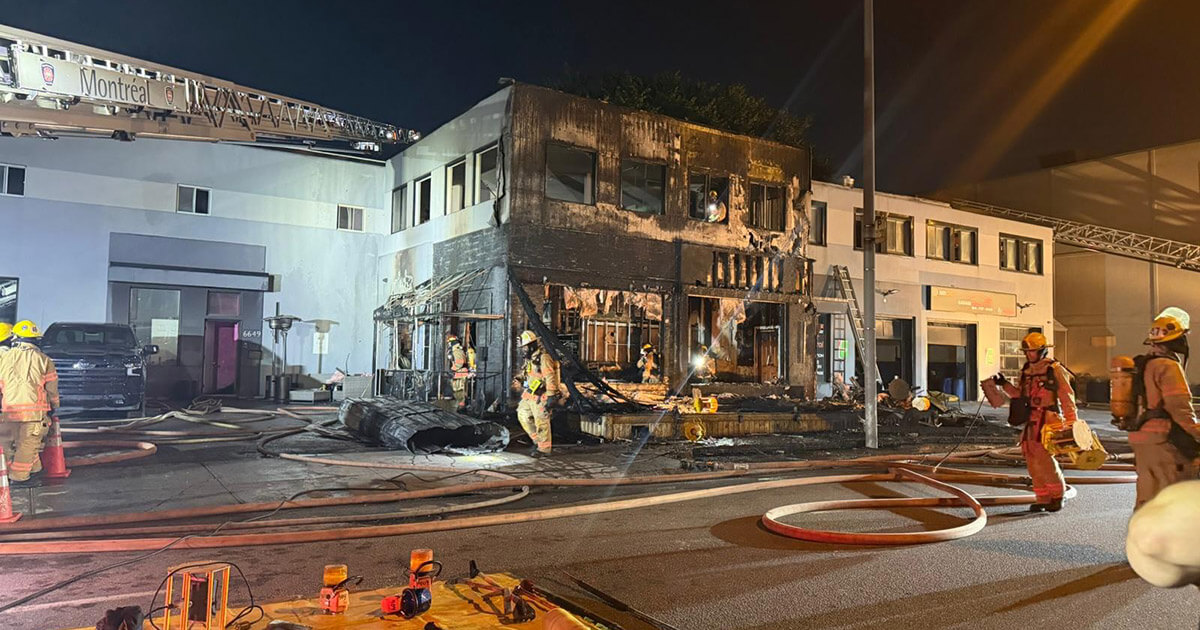
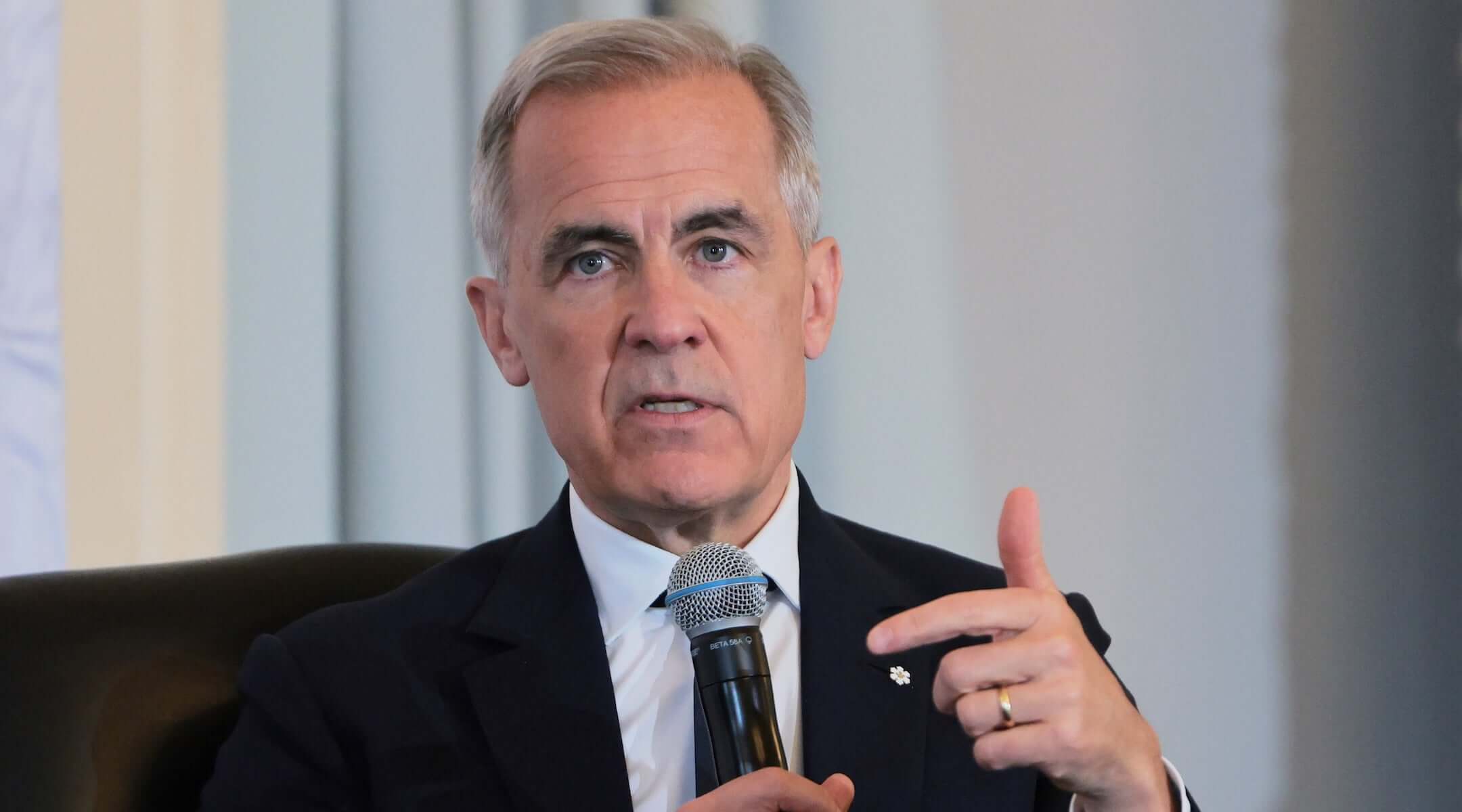
In early August, an arsonist gutted Nöam, a kosher restaurant in Montreal. Even Canadian Prime Minister Mark Carney has acknowledged the scale. Jews, he’s noted, are roughly 1% of Canada’s population but the target of two-thirds of its religiously motivated hate crimes.
“Canada’s civic compact,” he said, “is failing Jewish Canadians.”

The letter Trump shared was drafted by Jason Rapert, founder of the National Association of Christian Lawmakers, asking Trump to “establish an appropriate lawful immigration and humanitarian pathway for Jewish Canadians who are experiencing persecution.”
Fifty-four people signed it including sitting state legislators from across the country, as well as Sam Brownback, the former U.S. ambassador for international religious freedom.
The letter cited Tulsa as an example of where a “willingness already exists,” and which has spent the better part of a decade building exactly the kind of pipeline that letter is describing.
Tulsa Tomorrow is a Jewish community-run recruitment program that started in 2017. It flies prospective transplants in for a weekend of house tours, meet-and-greets and a pitch for why they should relocate. So far, 144 people have come through, and 113 have stayed.
Lately, more of them have been Canadian. Of 52 people on a trip in February, 41 came from Canada, and organizers expect the roughly 50 people signed up for another trip in October to skew just as heavily north of the border.
Two people helping with that pitch are Canadian transplants themselves. Joe Roberts, who leads Jewish Tulsa — the umbrella organization overseeing the city’s federation, JCC and Jewish museum — moved there in 2024 from Ontario. Michael Sachs, senior director of the Jewish Federation of Tulsa, moved from Vancouver last year.
“Oklahoma is a state where these people can feel openly Jewish, and feel that as a Jew they’re valued,” Sachs said.
The families waiting
Getting there is another story. Israelov works in IT for a mining company headquartered in Canada, and he said the company won’t let him work remotely from the U.S. — closing off the route that would let an employer sponsor his visa. Another route, a visa that would require Israelov to invest $800,000 in a U.S. business, is out of reach financially.
Fear compounds the financial obstacles. In January 2024, someone was caught on the Israelovs’ home security camera cutting an Israeli flag off their front porch and fleeing into the night.
Later, a neighbor told Israelov, “I heard you’re Jewish,” and that “your kind is in the wrong place.” He belonged in Israel, the neighbor said, “but not here.”

Not everyone watching this unfold from inside the Canadian Jewish community is rooting for the exodus. Jesse Brown, a Canadian Jewish journalist who has spent years documenting the country’s rising antisemitism, says he fears “the next Bondi Beach massacre,” the December 2025 Hanukkah attack in Australia that killed 15 people, “is going to take place in Canada.”
But watching fellow Jews plan their departure unsettles him in a different way. “There’s a sadness,” he said. “I’m not enthused or compelled by what I see as a re-shtetling.”
A murkier picture
It’s hard not to notice the echo of last year’s program resettling white South Africans as refugees, which critics called selective and its architects called a response to persecution. Roberts sees Canadian Jews less as refugees than as candidates for what he calls “a legal humanitarian pathway that’s expedited.”
The timing also invites skepticism. The NACL letter and Trump’s post came in the middle of a trade war between the U.S. and Canada. Fifty percent tariffs on roughly $20 billion of Canadian goods took effect Aug. 22. Canada has announced a matching retaliation.
Rabbi Yehuda Kaploun, the U.S. special envoy to monitor and combat antisemitism, visited Ottawa in early August and said: “You need to do better,” citing 788 antisemitic hate crimes reported to Canadian police in 2025, up from 492 in 2021.
Carney’s office said new laws and funding show the government is responding. A spokeswoman said officials want “a country where our differences are honored and where Jewish Canadians can live visibly, fully, and joyfully in public life.”
But Rapert, who is based in Arkansas, sees things differently. When Trump shared the letter on Sunday, Rapert was leading a delegation of U.S. elected officials on a tour of Israel. They had just visited the Ghetto Fighters’ House Holocaust museum, which has on display the glass booth used in the trial of Adolf Eichmann for his role in the Holocaust.
Canada’s climate, he said, is “not unlike what you were beginning to hear in the early days of Germany, that led to government decisions that brought forward what we now all know is the Holocaust.”
Rapert’s letter is far from his final push. He hopes to persuade U.S. Sen. Ted Cruz of Texas and U.S. Rep. Marlin Stutzman of Indiana to hold congressional hearings on the issue. And he’s working on setting up a meeting with Trump.
“My prayer is that Donald Trump paves the way for the people that want to come, to come,” he said. “But what would be even better is if Prime Minister Carney apologized and repented.”
The post Christian lawmakers want Trump to fast-track Jewish Canadians to the U.S. Tulsa says it’s ready. appeared first on The Forward.
