


Uncategorized
If mollusks are kosher, the world can be your oyster

I’ve gone to work on an oyster farm on Block Island, a tiny dot of land midway between Long Island and Rhode Island, every May for the past few years.
If you are, like most people, unfamiliar with the mechanics of oyster farming, here’s what it looks like, at least on this farm. First, you toot around a saltwater pond in a glorified bathtub with a motor hanging off the back. From the boat, wearing chest waders, you hop in the water to unmoor dozens of giant floating mesh bags full of oysters from lines anchored in the pond. The bags are usually also bogged down with a mess of extraneous sea dwellers like kelp, mussels, green crabs and goopy creatures called sea squirts, so they’re heavy. You pile as many bags as you can into the boat, clamber back in — which is harder than it sounds, because your wader boots are probably stuck in the mud at the bottom of the pond — and bring those bags to a floating barge.
Finally, you dump the bag onto a muddy wooden table, pick out everything that isn’t an oyster, since all of those aforementioned sea critters will kill the prize bivalve, and chuck the extra stuff back into the pond. Then you hand-sort the oysters by size. You harvest ones that are big enough to eat — oysters take a few years to reach full size, and grow unevenly, so each bag always has a range of oysters — shovel the rest back in the bags, get back in the boat and tie them back onto the lines. Then you do it again. On a good day, you get through around 100 bags of oysters in a shift.
Bigger farms might have machinery to help sort the oysters; this farm does everything by hand. This may sound backbreaking, and it is, but it’s also a great break from desk work. A day spent out on the water doing repetitive physical labor is a kind of a reset. You can’t look at your phone with the wet, muddy oyster gloves on, and there’s barely service anyway. Plus you’d probably drop it in the pond, so it’s best not to try.

You may, at this point, notice that you’re reading a Jewish newspaper, that I’m a Jewish journalist, and that oysters are not kosher.
But what if I told you oysters were, in fact, kosher? That a rabbi once argued they are actually vegetables, by virtue of the fact that they “root” on rocks in the ocean? And that their shells are a form of scales, thus making them part of the kosher category of scaled and finned fish?
These are real arguments that were made around the turn of the 20th century by Rabbi Isaac Mayer Wise, the founder of Hebrew Union College in Cincinnati, the first American institution for Reform Jewish ordination.
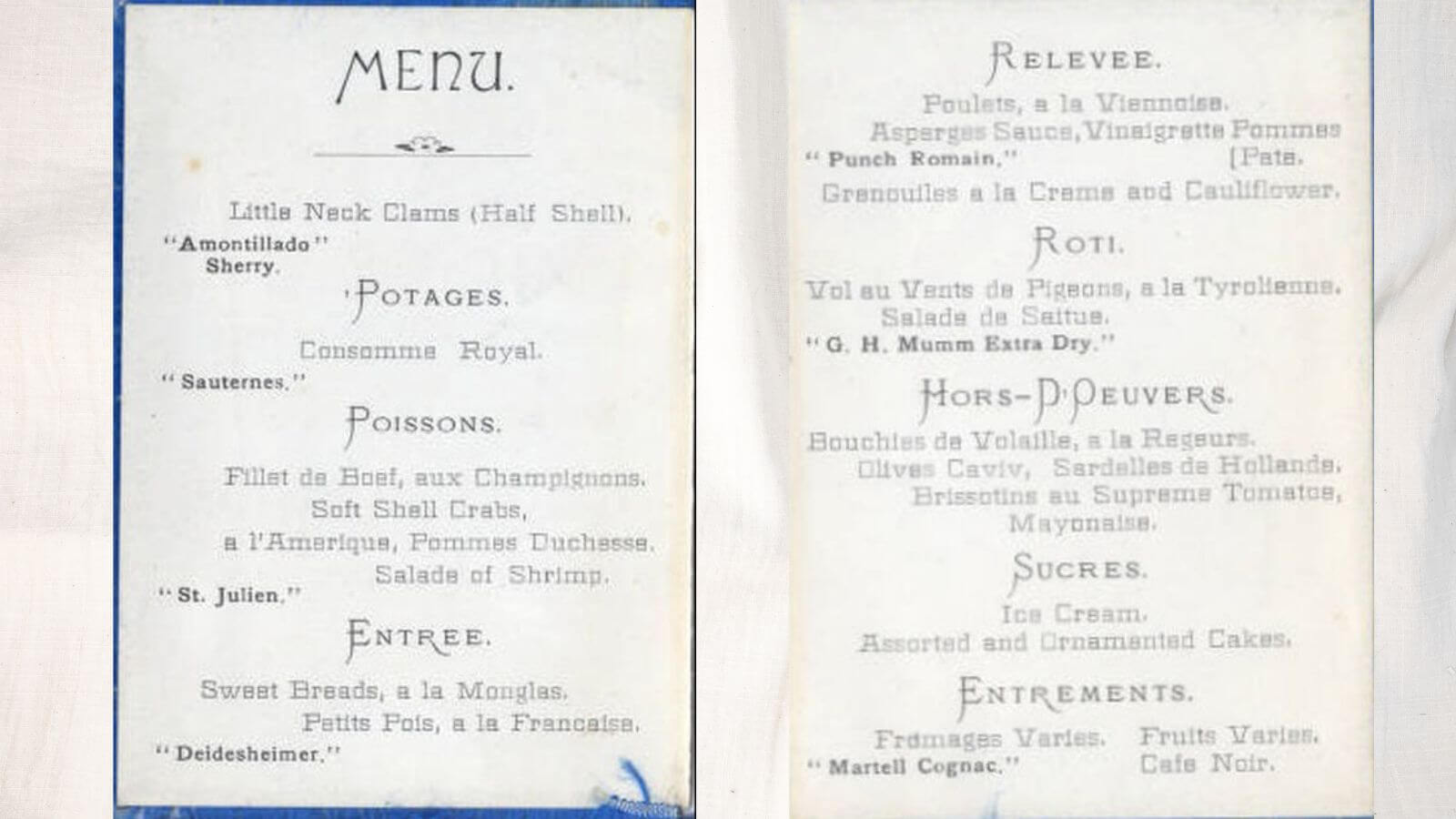
The impetus for this Talmudic bit of logic was in large part a now-infamous feast that has come to be known as the “Trefa Banquet,” due to the amount of non-kosher food that was served. The menu included littleneck clams, shrimp salad, soft-shell crabs, a lobster bisque and frog legs in a cream sauce. Bordeaux wine and Champagne, also not kosher, were served alongside each course, and ice cream — real ice cream, made with dairy — followed with dessert, despite previous meat courses that included beef tenderloins and squab.
The occasion was a triple-header of religious Jewish events: HUC’s first ordination, a meeting of the Rabbinical Literary Association and the Union of American Hebrew Congregations, the previous name of today’s Union for Reform Judaism. And the discourse this meal set off about the place — or lack thereof — for kashrut in American Jewish life went on for years.
Despite the fact that oysters had not even been on the menu, in Jewish newspapers across the country, rabbis and laypeople wrote warring op-eds on the kosherness of oysters. Somehow, oysters became the symbol of what American Judaism would be. And, of course, what American Jews would eat.
The symbol of an oyster
I had never eaten an oyster until I lived in Seattle after college; for my first anniversary with a long-ago ex-boyfriend, we went to what was then the hottest restaurant in the city, an oyster bar. We were broke, but playing at a kind of sophisticated adulthood we hadn’t quite reached, and oysters seemed like the way to act out that sophistication.
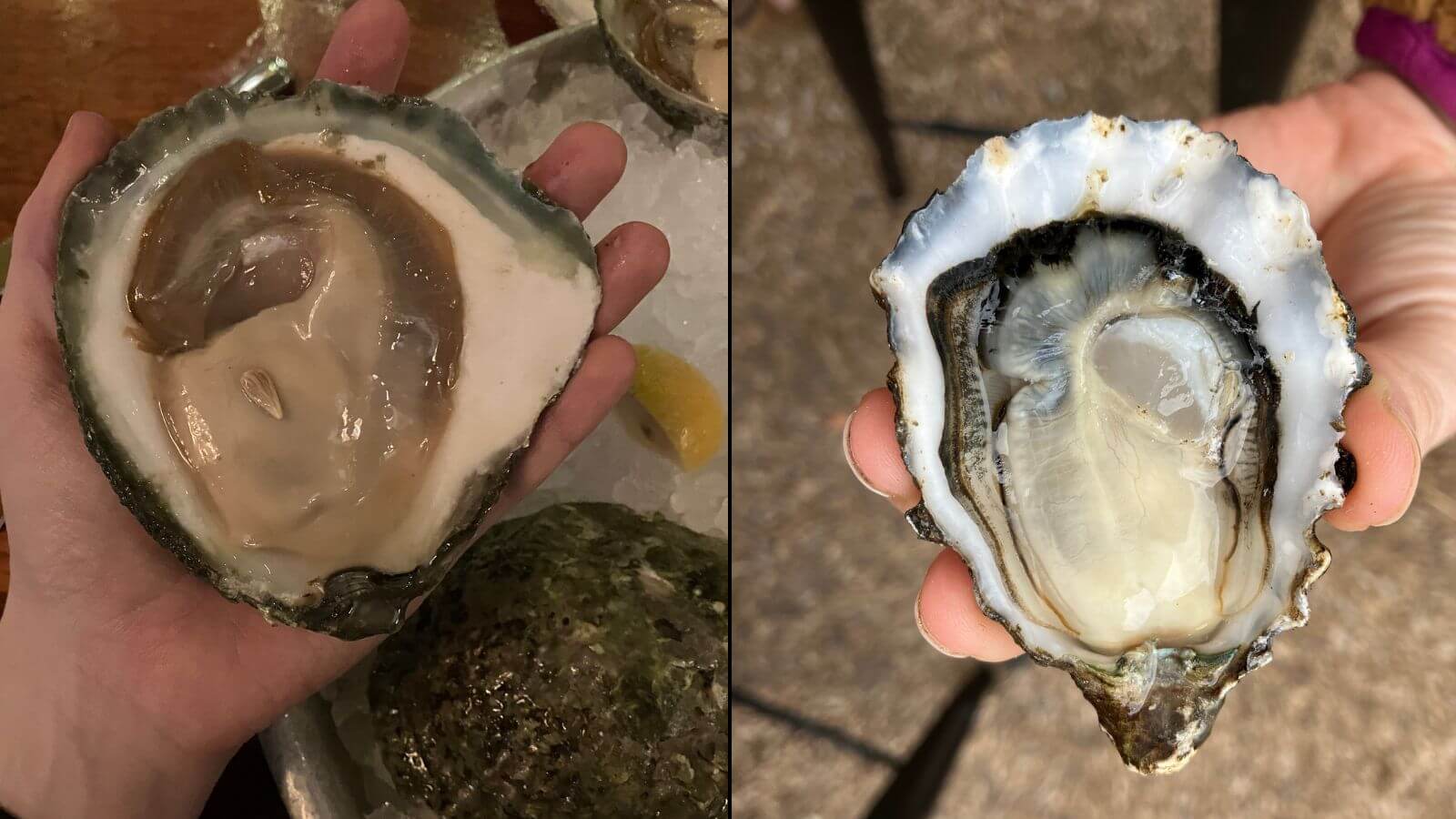
Presented with a menu of oysters from across the country and not knowing where to begin, we got an array on the half shell, two each of a dozen types presented on a beautiful bed of ice with lemon and mignonette. Unsure how to slurp them out of the shell, I had to ask the waiter whether one chews oysters or just swallows. (You chew.)
The first one tasted like a stormy ocean, another buttery and mild, a third one sweet and meaty. They were evocative, like eating the memory of a day at the beach.
Oysters, if you haven’t had them, have terroir in the same way as wine does. Just as grapes take on the characteristics of the soil they grew in, oysters taste different depending on the water they came from; even though there are only a few different species of the bivalve, there are countless variations. East Coast oysters tend to be sharp and briny and refreshing, while West Coast oysters are usually creamy and sweet. But past that, each one is completely unlike the next.
One oyster I had from Maine tasted like pennies. (Maybe that doesn’t sound appetizing, but neither does petrol, yet aged rieslings are prized for their petrol notes.) I’ve had oysters that tasted delicately vegetal, like a cucumber, or deeply umami like a mushroom.
When the Trefa Banquet occurred, oysters were in vogue across the U.S. And the occasion was a lavish and sophisticated one, almost a coming-out party for American Jewry. It was, after all, the celebration of the first class of rabbis ordained in the U.S., proof to the country that Jews were here to stay, and a statement to the rabbis and Jews of Europe that these American Jews were just as good, just as learned, as their European counterparts. In fact, perhaps more so — they were creating a new model of Reform Judaism, leaving the Old Country’s ways behind for a modern, American image of what it meant to be a Jew. The menu had to be the pinnacle of refinement.
Plus, these Cincinnati Jews had a bunch of New Yorkers in from the big city to impress. In a 2005 paper published in The American Jewish Archives Journal, rabbi and historian Lance J. Sussman argued that the menu, which included numerous French misspellings, may have been the caterer’s attempt to appeal to what he imagined were the more elevated tastes of the event’s East Coast guests.
Of course they served shellfish.
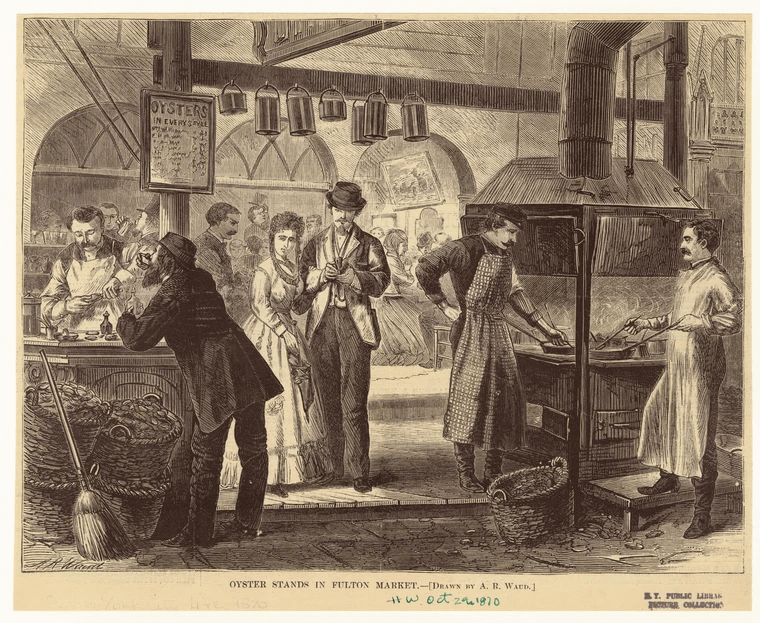
In 1883, the year of the banquet, America’s Jews were largely German immigrants. (Though newer waves of immigration had begun to bring in more traditionally observant Russian Jews fleeing pogroms.) Some of them had been associated with the Haskalah in Europe, a progressive Jewish education movement that advocated for secular education, modern dress and assimilation into wider society. By and large, these Jews were urban, educated and middle-class, having left the shtetl Judaism of their elders behind when they left the village.
These Jews began to develop a modernized form of Judaism, largely based in Germany. They changed the liturgy, axing concepts they found backwards, such as the idea that, in a coming Messianic era, Jews would return to Zion and resume sacrificing animals in a restored temple. They recited prayers in German instead of Hebrew and lightened many of the restrictions involved in observing Shabbat, kashrut and festivals. They took on a Christian aesthetic, exchanging synagogue chanting for an organ and choir. Sermons emphasized universal ethical themes instead of Jewish rituals. Some rabbis even argued for allowing both intermarriage and eating pork, though these topics remained hotly debated.
Once imported to the U.S., this newfangled Judaism got more popular.
“Part of the Reform ideology is to get away from all of the laws, all the do’s and don’ts of Judaism, which are considered primitive and superstitions almost,” said Jane Ziegelman, a Jewish food historian and curator of food talks at the Tenement Museum.
Instead, these Reformers wanted to turn Judaism into a more introspective, morally and socially focused religion. And thanks to its roots in the Haskalah, science was core to this new, modern Judaism. Oysters made for a perfect example. At the time, bivalves were considered an aphrodisiac and a health food, and they were both plentiful and popular. (So popular, in fact, that they got over-harvested, which is one of the reasons they’re so expensive today; the mountains of shells from the oysters eaten by New Yorkers were so large they posed a sanitation challenge.) These modernizing Jews understood kashrut to be, fundamentally, about health and ethics, which meant that anything healthy should be kosher.
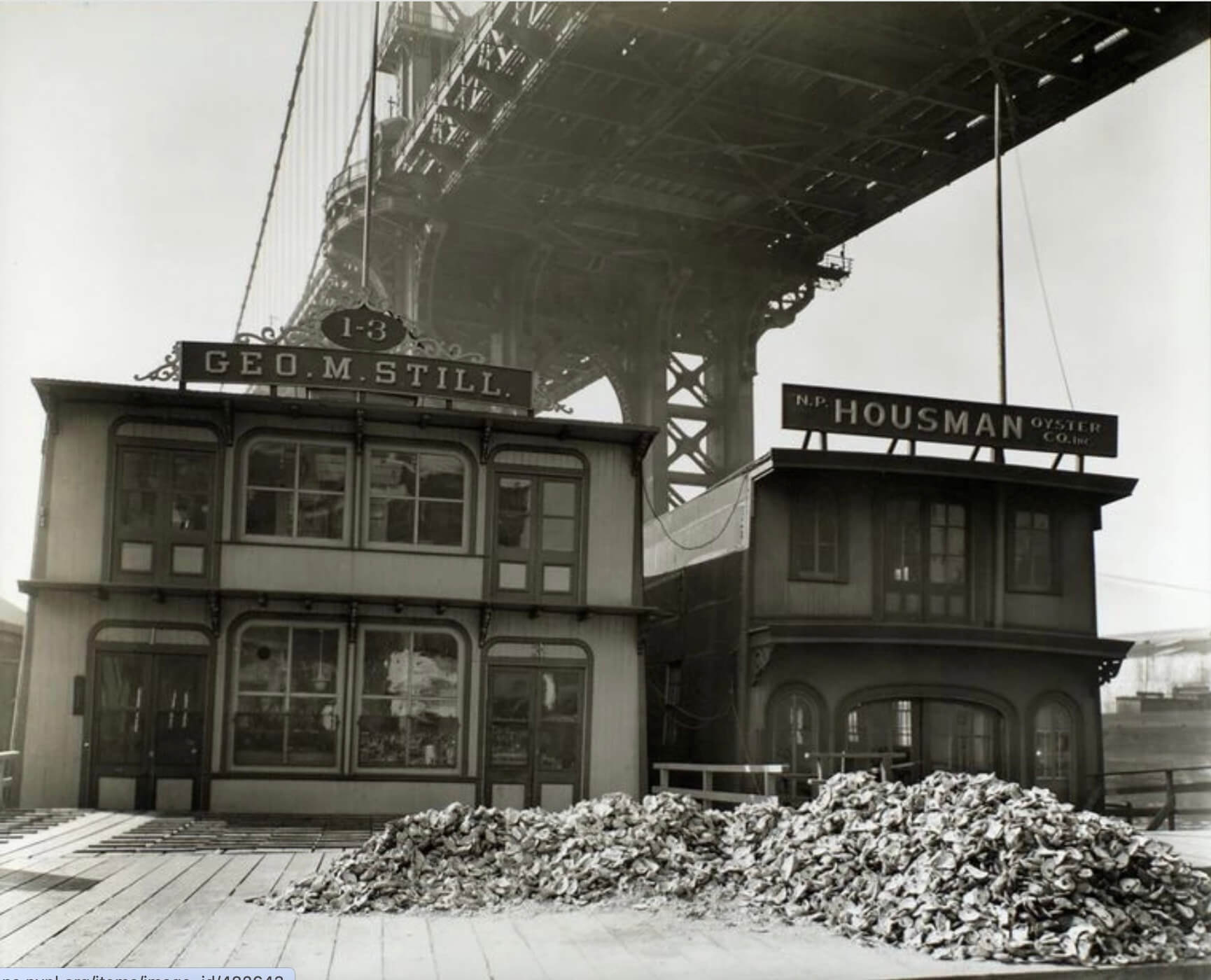
“The idea was that the unhealthy categorization of the oyster had been proven wrong by modern science,” said Ziegelman.
American Reform Jews saw kosher rules, which they dismissively referred to as “kitchen Judaism,” as a contrast to their more noble pursuit of an intellectual, moral and scientific Judaism. Embracing the oyster was a way to live out their ideals about assimilation, modernization and religious ethics.
“It was the oyster because of its prevalence in American food culture,” Ziegelman told me. “To adopt the oyster was seen as both acculturation — that you really were American — but also you really were a modern person. You weren’t relying on these old kashrut superstitions.”
The shellfish scandal
Not everyone waxes poetic about oysters’ subtle marine nuances so much as their textural similarities to mucus. Personally, I don’t get that — I find them silky, or buttery, or meaty — but I get that oysters can seem a bit gross, and not just because of their texture.
Though on the farm, the oysters float on the surface of the water in bags, they are, at least naturally, bottom dwellers. They’re also “filter feeders,” which means they filter water for their food. This makes them an excellent resource in cleaning up polluted waterways — the Billion Oyster Project in New York City works restoring oyster reefs to the rivers around the city to help clean them and encourage biodiversity. But that also means that oysters aren’t always safe to eat because they’re consuming whatever bad stuff there is in the water. They can purify themselves given enough time in clean water, but they get polluted easily by their environment, perhaps one of the reasons they were originally forbidden under the laws of kashrut.
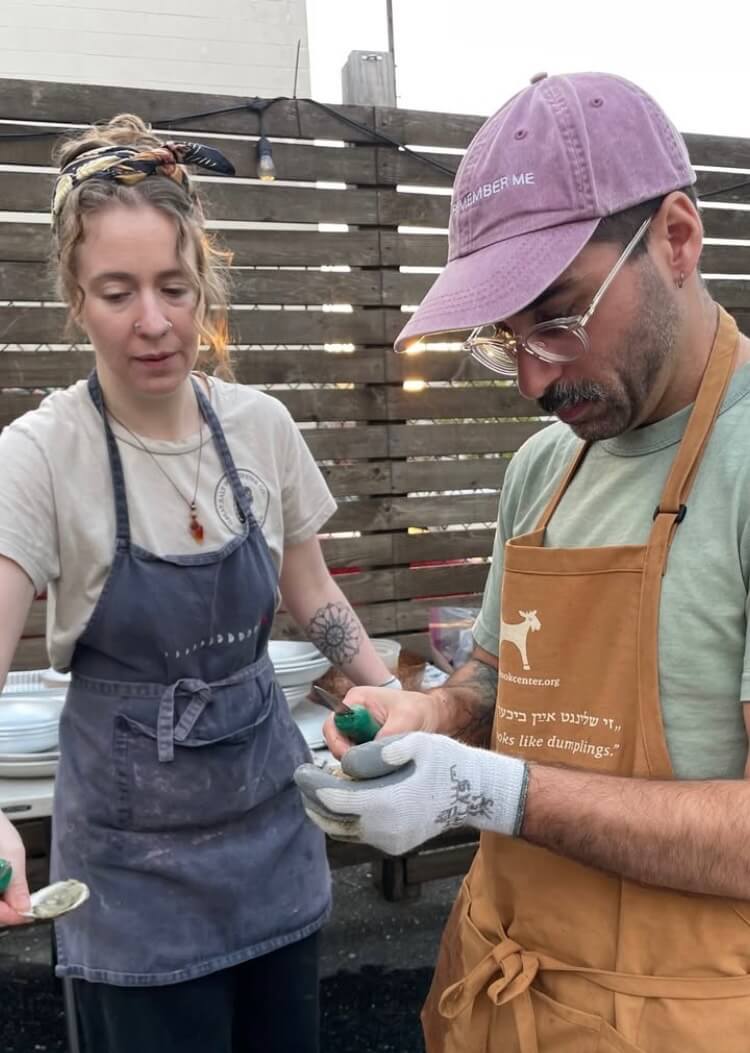
And even when they’re from clean water, there’s a lot to manage to make them safe. My partner and I run an oyster shucking side hustle with some friends, popping up at bars and events and turning out trays of raw oysters on the half shell. Preparing for each event takes many hours. You have to scrub the mud off each shell with a stiff-bristled brush. Then, since you want your oysters alive until you eat them lest they spoil, you pack them in coolers on ice — but you can’t bury them in too much ice lest they freeze to death. And since they’re salt-water dwellers, you have to drain the coolers regularly to prevent them from drowning in the freshwater ice melt.
On top of that, as a saying goes, oysters are best in the months that contain the letter R — September through April. Some of that is because they are plumpest during colder months when they build up their fat stores. But some of it is because colder waters reduce the risk that a raw oyster will carry a virus or bacteria like Vibrio or norovirus.
Today, farms take the temperature of their water daily and regularly test it for bacteria, so raw oysters aren’t particularly dangerous, but you can still easily get food poisoning from a mishandled oyster. As much as I love them, they’re work. I understand that, to some people, they’re not worth the risk — spiritually or physically.

Perhaps the subversive and literal danger of the oyster is what led to the legend that rabbis at the banquet threw down their napkins and stormed out. The public flouting of kashrut, at a religious event, could symbolize the end of Judaism. The Highland House Affair, as the feast is also known, has become infamous among Jewish historians and rabbis in the century since it occurred as a moment of schism. But in fact, most contemporaneous descriptions of the event make no note of any drama around the menu.
An account of the feast in The New York Herald briefly mentions the non-kosher menu, but does not say that any of the attendees were upset — in fact, to the author’s palpable distaste, quite the contrary. “Instead of rising in a body and leaving the hall, they sat down and participated,” they wrote of the rabbis in attendance.
Only one account at the time, written in New York’s Jewish Messenger by Henrietta Szold (who would go on to found the Jewish women’s society Hadassah) observed that some attendees hadn’t partaken of the food, though, she noted, it was only “a surprisingly small minority.”
“There was no regard paid to our dietary laws,” she wrote of the catering, “and consequently two rabbis left the table without having touched the dishes, and I am happy to state that I know of at least three more who ate nothing and were indignant but signified their disapproval in a less demonstrative manner.”
Wise, the Hebrew Union College founder who had organized the meal, at first defended it, saying he had hired a Jewish caterer who regularly served a Jewish association and had no idea the meal served would not be kosher. Eventually, however, Wise and his supporters changed their strategy and began to defend the non-kosher components. They railed against the idea of kashrut; one rabbi argued that it was the perfect occasion to put “kitchen Judaism to the antique cabinet where it belongs.”
When the 500 members of the Free Sons of Israel, a Jewish fraternal order that Wise belonged to, gathered and supped on oysters, the rabbi reprinted the menu in the newspaper he ran, The American Israelite. He repeated the tactic when another Jewish fraternal order put oysters on a meeting menu. Jews were not accidentally consuming oysters, he pointed out. This was how Jews were eating, and why should they pretend otherwise?
Yet ironically, given his vociferous rejection of tradition, Wise also provided Talmudic arguments as to why the meal may have in fact been kosher; even as he chose assimilation he used Jewish wisdom to justify his choice. In the pages of The American Israelite, he argued “that the oyster shell is the same to all intents and purposes as the scales to the clean fish” and referenced both Moses’ and Maimonides’ statements on the topic. Elsewhere, he called the oyster an “ocean vegetable” to explain why it might be kosher. (Today many vegans take a similar stance; oysters have no nervous system and some vegans are more willing to consume the bivalves than they are honey.)
Others wrote back, citing their own raft of Jewish sages. One B. Younker wrote in to The Jewish Voice to reference Talmudic debates over what constitutes a scale, concluding that the oyster’s shell does not count.
But amid the debate, everyone else kept eating oysters. Sussman’s article in The American Jewish Archives Journal notes oyster-filled menus from the double wedding of two rabbis, a synagogue dedication and a banquet for a Jewish fraternal order; the last even used the same caterer as the Trefa Banquet. Apparently, there was something to that luxurious menu they planned — it was impressive enough to earn them repeat customers.
Today, many Jewish historians look to the Trefa Banquet as the beginnings of the Conservative movement in Judaism, as some of those horrified Jews rejected the idea of kosher oysters and decided they needed to develop a middle ground between the Reform and Orthodox movements. The debate the banquet set off over kashrut, as well as Wise’s liberal interpretations of Jewish law, concerned some Jews who wanted to protect tradition. Soon after the great oyster debate began, the Jewish Theological Seminary, the flagship institution of the Conservative movement, opened its doors as a place to retain some amount of tradition in text and theology.
Fishy Jewish cooking

In my time manning the pop-up, I’ve come to believe that shucking an oyster is an art form. First, there’s the basic problem of opening the oyster. Usually that means inserting an oyster knife at the narrow hinge of the shell — though some people shuck from the side — and wiggling until you feel the point of the knife settle in deeper. Then you lever the knife down to pop the shell, slice along the flat top shell to separate the oyster, and then scoop the knife underneath the oyster to sever the adductor muscle. Personally, I prefer a Duxbury-style knife, which comes to a sharper point, but many people prefer the more classic New Haven-style knife, which curves slightly at the tip, providing a bit more leverage and a bit less likelihood of stabbing yourself in the palm.
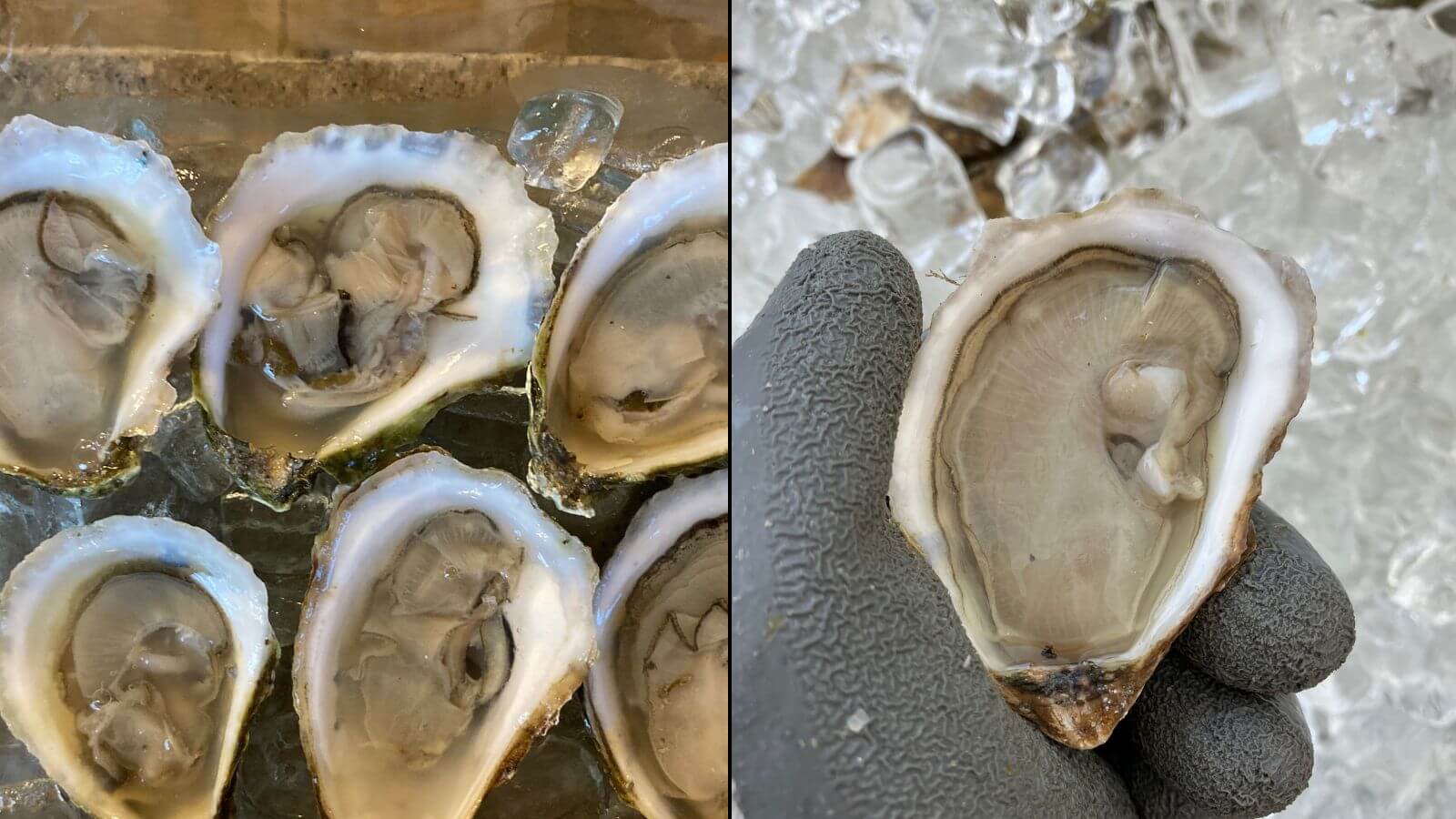
Every oyster is different, not only in taste, but in shape, so finding the right spot to pop open the oyster is difficult; it takes practice. And that’s just the first challenge. A well-shucked oyster must be clean, free of shattered shell or sand. Just as importantly, it cannot be pierced by the knife (“scrambled”) and should retain all the liquor inside the shell. Ideally, it’s served on pebble ice, not just cubes, so that it doesn’t tip over and spill.
There’s something meditative to running the oyster pop-ups, trying for the perfect shuck with every oyster. They’re rushed and busy and stressful — there’s always a line and shucking a dozen without scrambling or shattering is hard to do when you’re working fast. You have to reach a sort of zen state to fly through them, finding the right point on each shell to insert the knife, cleanly severing them from the shell and cleaning out any sand inside. No one wants that grinding sensation you get when you have a snack at the beach and feel the grit between your teeth. And you can’t appreciate the unique texture and taste of each varietal if they’re a scrambled mess inside.
The oyster should be a plump, pearly arc in the shell, with lacy frilled edges. It should be beautiful.
Apparently everyday Jews saw the beauty in the bivalve. They largely left the debates over kashrut to the pages of The American Israelite and continued to eat oysters by the bushel.
A 1911 blurb in the J. Jewish News of Northern California excitedly announced the beginning of oyster season, listing several of the area’s best “oyster houses,” as did Jewish newspapers across the country over the next few decades.
Jews even ran their own oyster stands. An 1892 article in the B’nai Brith Messenger wrote a brief piece marveling at the success of one Al Levy, whose Southern California oyster cart did so well he was able to open cafes and “cocktail rooms.” Despite Levy’s obvious disregard for kashrut, the piece notes that he “has been one of the most progressive, honored and beloved Jews in this community, popular alike among Jews and gentiles.”
Some of the most popular Jewish cookbooks from the era are full of oyster recipes, literally writing the bivalves into Jewish food history alongside kugel and latkes.
Aunt Babbette’s Cookbook, a Jewish cookbook that remained in print for 25 years, featured 11 oyster recipes in its fish section; the rest of the fish, all kosher, are given one preparation apiece. A dish that sounds an awful lot like kugel — though the cookbook doesn’t use that term — includes an option to add oysters. (Notably, other seafood like clams and shrimp are omitted from most Jewish cookbooks of the era.)
For all the enthusiastic embrace of oysters, though, there was still one line that wasn’t crossed: pork, which even the Trefa Banquet did not serve.
“The debate over selective kashrut centered on two issues: pork and oysters,” wrote Sussman, the rabbi and historian, and the line was drawn, for the most part, between the two. Pigs have long been a metonym for kashrut and Judaism, and centuries of antisemitic caricatures pictured Jews riding pigs. Eating pork, apparently, was instinctively understood by most American Jews as a step too far, a symbolic denial of identity.
The power of ‘kitchen Judaism’
The oyster has always been the perfect metaphor for American Jewish life.
There’s a Judaism of purity, hewing to the safety found in tradition: keeping kashrut, retaining a degree of separation from the rest of society. But most American Jews opted for a Judaism of experimentation, in which the rules get bent, reinterpreted and altered to adapt to the ways of a new culture and new country. It’s more dangerous; one might eat a bad oyster. But in the meantime one also gets to enjoy the good ones. Yet even as Jews debated how far Judaism could stretch and remain Jewish, they did so Jewishly. Even the Jews who, over a century ago, rejected Jewish tradition and embraced shellfish justified their choices with Talmudic citations and biblical exegesis. They used Jewish law to justify why Jewish law was wrong about the oyster. What debate could be more Jewish?
Food, since then, has become both more and less central to Jewish identity. Plenty of Jews now will eat bacon or ham, and a celebration of the Trefa Banquet’s centennial in 2018 served a menu of mostly pork, connecting to Judaism specifically through a rejection of its strictures. Kitchen Judaism has become aspirational instead of pejorative as food traditions have become a rich and beloved way to connect with Jewish identity. Meanwhile, the Reform tradition has actually tipped back toward kashrut observance; in 2001, at the Central Conference of American Rabbis, the Reform movement added in a recommendation that Jews follow “some element of Jewish dietary discipline.”
Through it all, the oyster has remained the perfect symbol of the decision confronting American Jews: How much should they assimilate to their new country, and how much tradition must they retain to stay Jewish?
This summer, I think I might have to miss the oyster farm; life has gotten in the way and I just don’t have the time. Still, I’m sure I’ll be shucking up trays for friends and customers somewhere (including at my Jewish wedding).
And most importantly, I’ll be carrying on the proud tradition of the oyster debate. I’ll admit that I don’t really buy the idea that shells are the same as scales, though I’m sympathetic to the idea that they should be categorized as vegetables. But the discussion I’m more interested in is how to eat them. The right answer is raw and plain. Maybe a drop of lemon. Maybe.
Cocktail sauce or horseradish or hot sauce, though? That’s heresy.
The post If mollusks are kosher, the world can be your oyster appeared first on The Forward.
Uncategorized
Germany couldn’t stop Hitler’s election tactics; can America stop Trump’s?

Herding political opponents into prisons and concentration camps, suspending civil liberties, and sending SA thugs to destroy newsrooms and beat up journalists were among the means used by Adolf Hitler to game Germany’s parliamentary election of March 5, 1933, won by the Nazis.
As much as Donald Trump might fantasize about deploying such brutal tactics to subvert our midterm elections, he hasn’t done so — yet. But his objective is the same: Detonate constitutional barriers standing in the way of his lust for power. “Cheat like hell,” Trump told the GOP’s midterm convention last month.
Historian Timothy Ryback has just published a book about the last gasps of the Weimar Republic, titled 53 Days: How Hitler Dismantled A Democracy. The 53 days begin when Hitler becomes chancellor on Jan. 30, 1933, and end with the Reichstag’s March 23 passage of the Enabling Act, which gave him absolute power.
For our own perilous time, there is another number to take note of: 652 — the number of days between Trump’s second inauguration and our Nov. 3 midterm elections.
Hitler’s long march to despotic power occurred over 3,422 days — from his failed Beer Hall Putsch on Nov. 8-9, 1923, up until passage of the Enabling Act.

After spending less than a year of a five-year sentence for the failed 1923 coup, Hitler returned to a Nazi party that was in utter disarray. But the Great Depression turned the Nazis’ fortunes around, as jobless and disaffected Germans flocked to Hitler with his promises to make Germany great again. In parliamentary elections in 1930, the number of Reichstag seats held by the Nazis rose dramatically from 12 to 107, and more than doubled that in elections in 1932, making them the largest party. After some backroom political wheeling and dealing, President Paul von Hindenburg offered the chancellorship to Hitler, which he accepted on Jan. 30, 1933.
Even though Hitler was chancellor, his coalition wasn’t dominated by Nazis. When the Reichstag went up in flames on Feb. 27, 1933, der Führer had the pretext he needed to begin dismantling the last remnants of democracy. The Nazis’ first targets were Communists. More than 4,000 were arrested in the initial hours after the fire. It didn’t take long for Social Democrats, trade unionists and Jews to also face raids, arrests, beatings and terror, as Hindenburg — at Hitler’s urging — issued a decree that suspended Germans’ civil liberties.
There was still a barrier standing in Hitler’s way: the Reichstag. But Hitler had a scheme for getting rid of it: calling for a new election and ultimately engineering a vote by the Reichstag to abolish itself.
In the days and nights before the national election, set for March 5, Nazis carried out a campaign of repression and menace across the country. Brandishing firearms, storm troopers ruled the streets. Homes of Hitler critics were raided. His campaign speeches were blasted from loudspeakers. Voters were offered rides to the polls in transports organized by the Nazis, an unsubtle hint at which party they should vote for.
In the election, the Nazis and their Nationalist allies won a majority of seats in the Reichstag but fell short of the two-thirds needed to amend the constitution. But Hitler had a workaround: Convene the Reichstag to vote on a measure that would allow him to declare laws without the approval of the federal legislative body. With Communist delegates of the Reichstag either in hiding or in custody, Hitler already had a structural advantage; they wouldn’t be there to vote. With the Reichstag building destroyed, the delegates convened on March 23 inside the Kroll Opera House, which swarmed with armed storm troopers and members of the SS who harassed and threatened delegates who were either on the fence about giving Hitler absolute power or were known to oppose it.
In the end, weeks and months of trying to tilt elections through terror and intimidation gave Hitler his ultimate prize: of 538 delegates in the Kroll Opera House, only 94 — all Social Democrats — voted against the Enabling Act. In effect, German democracy was steered by Hitler into committing suicide.
In an essay for Literary Hub, Timothy Ryback noted parallels between Hitler’s election victory on March 5, 1933 and our midterm elections and cataloged them.
They include Trump’s “brazen attempt to quash negative press coverage” and Hitler’s and Trump’s virtually identical pre-election low approval ratings. Both the Nazi leader and the American president had gone to court to try to have earlier election results overturned, and the German election, like our fast-approaching midterms, was seen as a referendum on the nation’s leader.
“Amidst all the turmoil, everyone understood that the March 5 election was a make-or-break moment not only for the Hitler chancellorship but for democracy itself,” Ryback wrote.
With the midterms just around the corner, this can be said about America as well.
Since Trump’s second inauguration on Jan. 20, 2025, he has thrown more effort into trying to rig the midterms for the Republicans than into virtually any other endeavor — other than perhaps misusing his powers to enrich himself and his family, and dreaming up monuments to himself.
Trump’s pardon of 1,500 insurrectionists who stormed the capitol on Jan. 6 was an early signal that the defeated president had no intention of playing fair during the 2026 midterms. What followed was a barrage of assaults on the election system. Here’s just a partial list: lawsuits demanding sensitive voter data, the gutting of oversight bodies, intimidation of election officials and orders for key GOP-led states to redraw their congressional districts — all designed to both undermine Americans’ trust in the election system and manufacture pretexts for contesting any midterm outcomes that displease him.
Amid these relentless attempts to subvert the midterms, the Democrats have had success at blocking some of Trump’s poisoned salvos, such as holding the line against the so-called SAVE America Act and fending off Trump’s attempts to seize voter information. But none of this deters Trump, who just comes back with more schemes. The latest revelations come from documents obtained by Democracy Forward, a legal advocacy organization.
Those documents show that “U.S. Immigration and Customs Enforcement (ICE) collected tens of millions of voter records, explored undercover investigations against voter registration groups and considered feeding state election data into a system used to locate people for deportation as part of a sweeping federal effort to find alleged voter fraud ahead of the 2026 midterms,” according to Democracy Docket, which reviewed the documents.
“This is an absolute smoking gun,” said Democracy Docket founder Marc Elias.
Trump has openly suggested a federal takeover of election administration, and during the past several months it seems like he’s been laying the groundwork for that to happen if he doesn’t get the results he wants on Nov. 3. It’s all too easy to imagine horror scenarios: Trump claims massive voter fraud, his supporters storm county election offices in protest, the FBI seizes ballots and voting machines, unrest erupts across the country, Trump declares martial law.
If Trump’s schemes trigger the kind of disorder he appears to be preparing for, the question will be whether our courts, our press, our civil servants and our voters stand firm. Germany’s institutions bent until they broke. Ours have bent, but they have not yet snapped. What happens next will reveal whether they still possess the steel that Germany’s lacked.
The post Germany couldn’t stop Hitler’s election tactics; can America stop Trump’s? appeared first on The Forward.
Uncategorized
Sally Rooney’s publisher stops selling her books in Britain, citing ban on pro-Palestinian group she backs
(JTA) — Sally Rooney’s publisher says it will stop supplying her books in the United Kingdom because current legislation prevents it from passing her earnings on to her.
The best-selling Irish writer, whose work includes the novel “Normal People,” which was adapted into a hit BBC drama, has long been a vocal supporter of the Palestinian cause.
Faber said it would no longer supply her books in the United Kingdom because of her backing for Palestine Action, a group that the British government last year proscribed as a terrorist organization, saying it had “orchestrated a nationwide campaign of direct criminal action against businesses and institutions.”
“Current legislation in the UK has led to circumstances where Faber cannot pass on UK earnings to Sally Rooney for her work,” the publisher said.
“To sell a writer’s work and not be able to pass on earnings is an unconscionable situation for a publisher,” it said. “As such, and in full agreement with Sally, we have taken the decision that we can no longer supply her works in the UK in any format. We remain the proud publisher of her remarkable body of work, which we will continue to sell in other territories.”
Faber had no further comment, the statement said.
Yvette Cooper, then the Home Secretary, banned Palestine Action last year following an attack by the group on the Royal Air Force base at Brize Norton which caused millions of pounds of damage. It had previously targeted businesses and premises which it said were linked to Israeli defence companies.
Soon after the announcement, Rooney wrote an opinion piece in the Irish Times in which she doubled down on her support for Palestine Action, adding that she would give the proceeds of her books to back the group. “If this makes me a ‘supporter of terror’ under British law, so be it,” she wrote.
In a statement following the action announced by Faber, Rooney cited her Irish Times opinion piece as she explained that the publication of her books “could now constitute a serious criminal offence.”
The ban of Palestine Action has proven to be highly contentious in Britain. Back in February, the group’s co-founder Huda Ammori challenged the move in the High Court, with Rooney providing a supportive witness statement. She said at the time that she was “almost certain” her work would be dropped in Britain if the ban persisted.
The court ruled in Ammori’s favor, but that decision was overturned by the Court of Appeal in June. The Supreme Court is due to hear an appeal next month.
Rooney said on Wednesday: “After a process of consultation and deliberation, and with my full agreement, my publisher Faber has therefore determined that it can no longer supply my work within the UK.
“I have made every effort to be honest with the public about my beliefs and intentions, and I am wholly prepared to accept the consequences.”
Rooney’s support for the Palestinian cause predates the attack by Hamas on Oct. 7, 2023, and the subsequent war in Gaza. In 2021 she declined to sell Hebrew translation rights for her novel “Beautiful World, Where Are You?” to the Israeli publisher that had previously released her books in Hebrew.
At the time, she said she supported the BDS movement and would not work with an Israeli publisher unless it is willing to “publicly distance itself from apartheid and support the U.N.-stipulated rights of the Palestinian people.”
That move prompted backlash in Israel and beyond, including calls to boycott Rooney’s work. Israeli bookstore chains reportedly removed some of her books from shelves.
However, earlier this year she agreed to have her latest novel, “Intermezzo,” published by an Israeli publisher approved by boycott activists.
This article originally appeared on JTA.org.
The post Sally Rooney’s publisher stops selling her books in Britain, citing ban on pro-Palestinian group she backs appeared first on The Forward.
Uncategorized
Trump cheered in video address to Michigan synagogue
(JTA) — SOUTHFIELD, Mich. – President Donald Trump addressed a Michigan synagogue by video Wednesday evening as part of an event orchestrated by Leo Terrell, chair of the administration’s task force for combating antisemitism, and the Zionist Organization of America.
Trump’s greeting, which was prerecorded, was met with applause from the estimated 500 Jews who had come to Congregation Shaarey Zedek in the Detroit suburbs amid a pivotal Senate election in the state that has prompted deep anxieties among its Jewish population.
The president told the crowd that Terrell “speaks for our country” and “speaks for a lot of people, a lot of people that love Israel but really, more than anything else, they don’t want to see false and inaccurate statements made about this horrible subject of antisemitism.”
The event was billed as the first stop on Terrell’s “American Tour Against Hate” and was staged by the U.S. Justice Department, while also serving as a fundraiser and booster for ZOA. Attendees were handed donation forms for ZOA’s Michigan chapter. The organization’s national director, Mort Klein, is close with Terrell and said he intends to participate in all future stops on the tour.
Several other Trump officials, including Terrell and U.S. Attorney General Todd Blanche, would address the crowd over the course of the night to emphasize the administration’s efforts to combat antisemitism.
(L-r) Leo Terrell, chair of the Trump administration’s Task Force to Combat Antisemitism, with U.S. Department of Labor official Kenneth Wolfe at an event to combat antisemitism at Congregation Shaarey Zedek in Southfield, Michigan, on Oct. 14, 2026. (Andrew Lapin/JTA)
Kobi Erez, director of ZOA’s Michigan chapter, told the Jewish Telegraphic Agency after the event that the evening was designed to be “nonpartisan.”
“It’s a tour against hate, and we can’t choose one side,” Erez said. “We have to fight antisemitism and hate for all.”
He argued that the event was not a ZOA fundraiser in his view, saying that it was free to attend and that the organization was asking for donations mainly to cover security costs.
He also said that the organization had been in touch with the head rabbi of Shaarey Zedek, Aaron Star, to address any concerns about the nature of the event so close to Election Day. “We had to promise Rabbi Starr that we were going to make a disclaimer that Shaarey Zedek doesn’t necessarily represent all the views of the speakers.”
Terrell did make that disclaimer, midway through the two-hour event.
Starr told JTA that there had been a back-and-forth with ZOA over the Trump video due to “a string of miscommunications and some last minute changes over the course of the day.”
Polls have shown that a majority of Jews nationwide have opposed Trump and his policies since his entry on the political scene. Yet recent fears about growing antisemitism and anti-Israel sentiment on the left have also alienated many Jews from the Democratic Party.
Some Michigan Jews are preparing to vote for a Republican for the first time over their objections to the Democratic Senate candidate, Abdul El-Sayed, a harsh critic of Israel whose prior remarks on Jewish safety have also upset many in the community.
El-Sayed’s name was not uttered from the stage Wednesday, but the Trump officials on hand took many opportunities to praise their boss’s work on Jewish issues.
“This administration, unlike any other administration, is committed 24/7 to fighting antisemitism,” Terrell told the crowd.
An estimated 500 Michigan Jews applaud Trump administration officials during an event held to address antisemitism at Congregation Shaarey Zedek in Southfield, Michigan, Oct. 14, 2026. (Andrew Lapin/JTA)
The Conservative synagogue was billed online as a “co-sponsor” of the event along with Frankel Jewish Academy, a local Jewish day school. But Starr told JTA, “It wasn’t our event.”
Midway through the program, Terrell stated that Shaarey Zedek “is not sponsoring this event,” adding, “The words of the speakers, mine and others, are theirs alone and are not a representation of this great religious institution.”
Terrell stated that DOJ and ZOA were the sponsors — itself an unusual arrangement between a federal agency and an activist group. Klein told JTA following the event that Terrell had contacted his organization to help organize the tour, and that ZOA “really did all the work.”
U.S. Attorney General Todd Blanche, who has been criticized for appearing at campaign events and who recently penned a memo loosening restrictions on political activism for senior federal officials, also addressed the crowd in a prerecorded video.
“In recent years, we have seen a disturbing rise in antisemitic rhetoric and acts of hatred against fellow citizens,” Blanche said. “Hate has no place in America, and this Department of Justice remains committed to confronting it wherever it appears.”
Initially billed as a conversation between Terrell and Klein, the event functioned more as an informational session for Jews to learn how their government is responding to antisemitism.
Flyers from the FBI instructed attendees on how to respond to various categories of threat. A roundtable of local and federal law enforcement officials, led by the FBI Detroit office field director who had responded to the terror attack on Temple Israel in the state in March, sought to assure the Jews in attendance that they had their backs.
Terrell also unveiled a just-launched “American Tour Against Hate” app that, he said, would enable its users to take a pledge to fight antisemitism and “report” antisemitic incidents. It wasn’t immediately clear where the reports would be filed to. The Combat Antisemitism Movement, another activist group, was credited for the app on its download page.
Trump administration official Leo Terrell addresses Congregation Shaarey Zedek in Southfield, Michigan, on the first stop of his “American Tour Against Hate,” Oct. 14, 2026. (Andrew Lapin/JTA)
Still, politics seeped in, and much of the crowd seemed happy about it. Klein attacked another anti-Zionist politician, New York City mayor Zohran Mamdani, by name in his remarks. He also drew enthusiastic cheers for calling to “fight the open-border policies that we had in the past, which allows unvetted people from countries whose governments and populations overwhelmingly hate Jews.”
Other Jewish speakers alluded to El-Sayed — particularly his initial reaction to the Temple Israel attack, which many Jews believed was equating the attack with Israel’s war in Lebanon. The candidate has since apologized for his initial remarks.
“No conflict overseas can ever justify trying to murder innocent people here at home, and no political candidate should ever excuse terror and hate,” Erez told the crowd.
Later, during an interfaith roundtable, Rabbi Shneur Silberberg of the Bais Chabad Torah Center in West Bloomfield leveled a more direct accusation.
“If you respond differently to a terror attack against a group of Jewish schoolchildren, and your response is any different than it would be to any other group of children, then that’s antisemitism,” Silberberg told the crowd.
During the program, Terrell inveighed against antisemitism with a showman’s flair, often to the delight of the audience, some of whom shouted his name. “News flash: I’m not Jewish. Who cares?” Terrell asked the crowd early on, to laughter and applause. He donned a red hat in the style of Trump’s “Make America Great Again” merchandise, with the lettering instead spelling, “American Tour Against Hate.”
He went after college campuses and K-12 teachers he said were “indoctrinated,” and repeatedly denounced what he called “the Jewish tax,” which he defined as the high security costs the community bears in order to safeguard its houses of worship and other institutions.
Flyers from the Federal Bureau of Investigation laid out on a table during the “American Tour Against Hate,” an event staged by the Trump administration at Congregation Shaarey Zedek in Southfield, Michigan, Oct. 14, 2026. (Andrew Lapin/JTA)
“For you to enjoy your right to walk down the street, to enjoy your synagogue, to go to a Jewish community center, to have your kids walk through their school, you have to pay extra security, millions of dollars,” Terrell said. “That’s going to stop.”
Terrell and Klein plan to meet with the head of Detroit’s Jewish federation as well as with rabbis at Temple Israel during their stay in town, Klein told JTA.
Erez said that Terrell’s visit to Michigan also included meetings with the mother of a Temple Israel preschooler who had been in the building during the March attack, as well as with Jewish college students who had experienced antisemitism. Terrell also met with leaders of Frankel Jewish Academy, one of the event’s co-sponsors, as well as the local Jewish Community Center, he said.
A longtime supporter of Trump, Klein said he believed the event demonstrated that more Jews were warming to the president as concerns about antisemitism have grown.
“I think more Jews certainly are more supportive of Trump than they were before, because they see what he’s done,” he said.
Sharon Matlen, a resident of nearby Farmington Hills who grew up in Skokie, Illinois, during the infamous neo-Nazi march of the 1970s, told JTA she had come to the event because “I’m very interested in antisemitism.”
“I really got a lot out of it,” Matlen said, of the talk. She spoke highly of Terrell: “I think he has our back. I’m glad that he’s there for us.”
Of El-Sayed, she said, “I pray he does not get in.”
The post Trump cheered in video address to Michigan synagogue appeared first on The Forward.
