


Features
How Canada’s Evolving Gambling Laws Are Changing the Online Casino Landscape
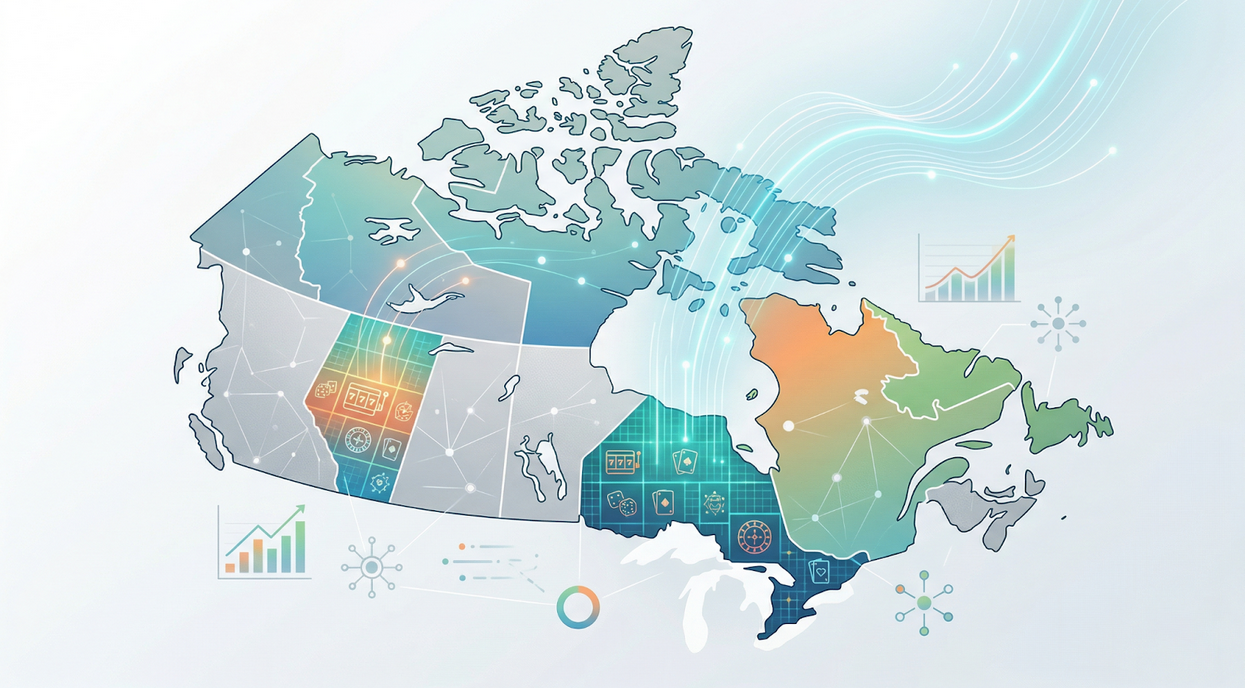
Canada has never had a simple relationship with online gambling. The country that gave the world some of the first internet casino licenses — the Kahnawake Gaming Commission has been issuing them since 1999 — spent the next two decades operating in regulatory limbo, with a patchwork of provincial rules, a federal Criminal Code that technically prohibited unlicensed gambling, and millions of Canadians happily playing on offshore platforms that nobody seriously attempted to shut down.
That era of comfortable ambiguity is ending. Driven by Ontario’s landmark regulated market launch in 2022, accelerating provincial legislation, and the tax revenue numbers that follow wherever legal iGaming goes, Canada is undergoing the most significant transformation of its online gambling landscape in a generation. Here’s what’s changing, what it means province by province, and what players and operators should understand about where this is all heading.
The Federal Foundation: A Criminal Code Built for a Different Era
The overarching statute governing gambling activity in Canada is the Criminal Code. Sections 201–206 make all types of gambling, betting, and lotteries illegal throughout Canada, with very limited exceptions — but crucially, the Code grants provinces the exclusive right to conduct and manage gambling activities within their borders.
That division of powers is the key to understanding everything that follows. The federal government sets the prohibitory framework; the provinces determine what is actually permitted inside it. The result is a country where gambling legality isn’t a yes/no question — it’s a province-by-province negotiation.
Canada takes a unique approach by handing authority to individual provinces and territories. Some provinces, like British Columbia and Quebec, maintain government-run monopolies through platforms like PlayNow and EspaceJeux. Others, like Ontario, shook things up by launching competitive, regulated markets and welcoming private operators under strict rules.
Ontario’s Regulated Market: The Numbers That Changed Everything
No single development has done more to reshape Canadian online gambling than the April 2022 launch of iGaming Ontario. Before it, Ontario residents — like Canadians across most of the country — played primarily on offshore platforms operating in a grey zone. After it, a fully regulated competitive market emerged almost overnight.
The results have been extraordinary. As of Q2 of the 2024–25 fiscal year, Ontario’s online gambling market surpassed CA$22.7 billion in total spending — a 32% increase year-over-year. By Q4 2024–25, approximately 997,000 active player accounts were registered, each spending roughly CA$277 per month.
iGO reported that the 50+ Ontario online casinos and sports betting sites earned a total gaming revenue of $738 million in 2024, with operators handling over $18.7 billion in wagers.
Ontario iGaming Market at a Glance (2024–25):
| Metric | Figure |
| Total market spending (Q2 2024–25) | CA$22.7 billion |
| Year-over-year growth | 32% |
| Active player accounts | ~997,000 |
| Average monthly player spend | CA$277 |
| Total GGR (2024) | CA$738 million |
| Total wagers handled (2024) | CA$18.7 billion |
| Sports betting — Q3 2024–25 alone | CA$3.4 billion |
| Licensed operators | 50+ |
Those numbers have made the case for regulation better than any policy paper could. Other provinces have been paying close attention.
Province-by-Province: Where Canada Stands Right Now
Canada’s regulatory landscape is a spectrum, not a single standard. Understanding it requires looking at each major market individually.
| Province | Regulatory Model | Private Operators Allowed? | Status |
| Ontario | Competitive licensed market (iGO / AGCO) | Yes — 50+ licensed | Fully operational since April 2022 |
| Alberta | Transitioning to competitive model | Pending — Bill 48 (2025) | iGaming Alberta Corporation launched June 2025 |
| British Columbia | Government monopoly (BCLC / PlayNow) | Limited | Tightening oversight; 49% market share for BCLC |
| Quebec | Government monopoly (Loto-Québec / EspaceJeux) | No | Closed market; offshore access grey zone |
| Manitoba | Government-run (Manitoba Liquor & Lotteries) | No | No private licensing framework |
| Saskatchewan | Government-run (SIGA / SaskGaming) | No | No movement toward private licensing |
| Atlantic Provinces | Mostly government-run | Limited | Small markets; minimal regulatory evolution |
Alberta: The Next Frontier
Alberta is in the final stages of transforming its online gambling landscape, moving away from its government-run monopoly to embrace a competitive market. Bill 16, passed in May 2024, amended the Gaming, Liquor and Cannabis Act to allow private operators to enter alongside PlayAlberta.ca. Alberta then introduced Bill 48 on March 6, 2025, and a pivotal section took effect on June 4, 2025, marked by the launch of iGaming Alberta Corporation — the new regulatory arm.
Alberta’s Minister of Service and Red Tape Reduction, Dale Nally, was direct about the government’s motivation when introducing Bill 48: “Our goal is not to create new gamblers, but to make existing online gambling safer.”
The commercial logic is equally compelling. Alberta wants to capture at least 45% of the betting money currently flowing to offshore websites. PlayAlberta made $235 million in 2023–24, but an estimated 70% of iGaming activity in the province still happens on offshore platforms. Legalizing and regulating private operators is the only realistic path to redirecting that revenue.
If Alberta’s market follows Ontario’s trajectory — a reasonable assumption given identical structural incentives — the province could generate hundreds of millions in additional regulated gaming revenue within two to three years of full market launch.
The Advertising Crackdown: New Rules for Operators
Regulatory maturity has brought stricter advertising standards, particularly in Ontario where the rules are most developed and most scrutinized.
New rules from the AGCO prohibit ads offering “free spins” or similar online casino bonus promotions. Marketing cannot use athletes or celebrities who are popular among young people. Players must be physically present in Ontario — verified by location tracking — to access licensed platforms. The legal age for online casinos and sports betting is 19.
Ontario requires all gaming operators to allocate at least 0.5% of their gross gaming revenue to responsible gambling campaigns. Gaming sites must provide easy access to responsible gambling tools, settings for time and financial limits, and there is a ban on auto-play features for slot games.
These restrictions aren’t just consumer protection measures — they are competitive filters. Operators who treat compliance as a cost rather than a feature are finding it increasingly difficult to maintain visibility in regulated markets. Those that build responsible gambling infrastructure into their core product offering are the ones that stand out.
For players wanting to understand which platforms currently hold licenses and operate within Canada’s regulated framework, click here to explore a curated breakdown of real-money casino options available to Canadian players.
The Grey Market Problem: Offshore Platforms and the Regulatory Gap
Despite the progress in Ontario and Alberta, a significant portion of Canadian online gambling still happens outside any regulated framework. Across Canada, companies like Betway and Spin control approximately 35% of all unregulated betting, with Stake holding 10% and Bet365 a further 9%. British Columbia’s official lottery corporation holds less than half the provincial market at just 49%.
The legal status of offshore gambling for individual Canadian players remains technically ambiguous. While adults from all provinces and territories may gamble online in Canada, the area of offshore platforms is not strictly regulated by the government and mostly depends on provincial authorities. It remains in a grey zone in most of the country.
Provinces are attacking this problem from two directions: making regulated platforms more competitive and attractive, and pursuing enforcement against unlicensed operators. Ontario is teaming up with international regulators to block unlicensed sites and running campaigns to promote legal options. In Ontario, a strong 93% of betting now happens on licensed platforms — and the province wants to reach 95% by end of 2025.
Federal Movement: Bill S-269 and the Push for National Standards
Provincial regulation has been the engine of change so far, but federal legislators are beginning to stir. Bill S-269 is the strongest piece of federal gambling legislation currently being debated. If passed, the federal government will establish a national framework to regulate sports betting advertising and support responsible gambling efforts across the country — similar to laws already passed at the local level in Ontario.
The bill reflects growing awareness in Parliament that the current patchwork approach — while functional — creates inconsistency for players and compliance complexity for operators working across multiple provinces. A national advertising framework, in particular, would align Canada more closely with regulatory approaches already established in the UK and across the EU.
Key Regulatory Milestones: A Timeline
- 1999 — Kahnawake Gaming Commission begins issuing online gambling licenses from First Nations territory
- 2021 — Bill C-218 legalizes single-event sports betting nationwide, ending the parlay-only restriction
- April 2022 — iGaming Ontario launches, becoming Canada’s first competitive private-operator online casino market
- February 2024 — AGCO bans use of celebrities and athletes popular with young people in Ontario gambling ads
- November 2024 — Bill 216 makes iGaming Ontario fully independent from AGCO, strengthening market oversight
- May 2024 — Alberta passes Bill 16, opening the door to private operator licensing
- March 2025 — Bill 48 introduced, establishing the Alberta iGaming Corporation framework
- June 2025 — iGaming Alberta Corporation officially launches
- Ongoing — Bill S-269 under federal debate; potential national advertising standards framework
What This Means for Players
The net result of Canada’s regulatory evolution is largely positive for players — but it requires understanding which protections apply where you are.
What regulated market players gain:
- Licensed operators subject to mandatory responsible gambling tools
- Legal recourse through provincial regulators in dispute situations
- Games with independently verified return-to-player rates
- Payment protection and segregated player funds requirements
- Operators prohibited from targeting vulnerable players or minors
What remains unresolved:
- No national standard — protections vary significantly by province
- Grey-market offshore sites remain accessible and widely used
- Federal advertising framework still in legislative debate
- Provinces outside Ontario and Alberta still operate government-run monopolies with limited player choice
The Bottom Line
Canada is mid-transformation. Ontario has proven the model works — that a competitive, regulated online casino market can generate significant tax revenue, protect consumers more effectively than a grey market ever could, and actually capture the activity that was happening offshore regardless of regulatory intent. Alberta is implementing the same blueprint. Other provinces are watching, calculating, and almost certainly next in line.
Canada’s iGaming market is entering a new phase. With the combination of new casino licenses, provincial regulation, and online expansion, the country is setting the stage for a safer, more interactive, and more dynamic gaming environment — one where it’s not just about gambling, but about creating a complete gaming ecosystem that caters to both casual players and serious enthusiasts.
For players, the practical advice is straightforward: know your province’s rules, play only on licensed platforms where available, and use the responsible gambling tools those platforms are now legally required to offer. The regulatory framework being built across Canada in 2025 and 2026 is designed — imperfectly but sincerely — with your interests in mind.
Features
Embracing your femininity in Cheshvan

By ELENA KNIGHT Rosh Chodesh Sameach! Though last month’s article (Embracing your femininity in Tishrei) had far more holidays, thus more material, the month of Cheshvan is not as empty as it appears. It may contain no holidays or mitzvot specific to the month, but I take issue with the idea that Cheshvan is “bitter”.
Some people refer to this month as MarCheshvan, Mar meaning bitter, but Mar can also refer to a drop of water; this month is the beginning of Israel’s rainy season! We began praying for rain with Shemini Atzeret last month, so by this time, G-d has usually heard Am Yisrael and started sending rain to the Holy Land. To connect this to womanhood, let’s revisit last month’s article, where I explained the connection of water to femininity.
In Tishrei, I spoke of the divine feminine, and how rain is associated with the womb of creation, fertility, and gentle, life-renewing power. In Cheshvan, however, I’d like to focus more on feminist reclamation of water metaphors; in Margaret Atwood’s The Penelopiad , for example, when trying to protect herself from unwanted suitors, Penelope recalls her mother’s advice: “Behave like water… Don’t try to oppose them. When they try to grasp you, slip through their fingers. Flow around them.” We can take this literary advice and put it into practice in our lives this month. When in a position where we feel powerless, and in spaces where female assertion is unwelcome, we could do well to be like water. Nobody can hold water in the palms of their hands without losing control of it. Water is not easy to contain. Nor are we women.
Taking Mar of MarCheshvan to mean a drop of water, rather than bitterness, can be interpreted now as a call to action. This month can be the time when we refuse to be controlled, much like the prophetess Miriam. In Torah, Miriam’s connection with water is clear; in Exodus 15, she takes the Israelite women out from the community to sing a song of deliverance through the Red Sea. She is with her brother, our Patriarch, Moses, when he is sent down the Nile in a reed basket, and she is the one who ensures he is cared for at the Pharaoh’s palace in Exodus 4. In many Pesach seders, a cup of water is set out for Miriam, like the wine for Elijah, because she ensured that the Israelites had water while travelling through the wilderness during the Exodus journey.
Miriam is, clearly, a passionate leader, creating a specific space for Israelite women when they are so often overlooked in Torah stories. By establishing her place as a role model for the Israelites leading up to their freedom from Egypt, the Torah makes it clear that G-d accepts female leadership. This month, let us take a page from Miriam’s book, and lead when we are called to do so. Like I suggested in my last article, mentoring a young girl in your community may be the perfect way to lead.
Cheshvan is also said to be reserved for the time of Moshiach. To prepare for the Moshiach’s arrival, we can act in ways that will bring about Israel’s reformation, both in the land itself and in the diaspora. By supporting charities both in our home communities and in Israel, by acting with chesed, loving-kindness, even when we don’t really feel like it, and by studying–whether that be studying Torah, feminist theory, or any other subject that will improve the world–with fervent passion. By working on tikkun olam, repairing the world, as we have it now, we can bring about a better world for future generations. What better way to remove the bitter reputation of Cheshvan?
Features
CFTC Crypto Regulation Plans Put XRP and Solana in Focus as CLARITY Act Stalls

US crypto regulation is back in focus after the Commodity Futures Trading Commission opened a public consultation on October 5 on a potential framework for certain retail crypto transactions. With the CLARITY Act stalled in the Senate, the initiative raises questions about what the agency can achieve under existing law and why its plans matter for XRP and Solana.
For XRP and Solana, the development is particularly notable because US regulators have already identified both assets as examples of digital commodities. The emerging question is therefore not simply what happens to the CLARITY Act, but how far the CFTC can reshape the regulatory environment while the legislation remains stalled.
XRP and Solana price movements in focus
The XRP price and Solana price provide useful context for assessing market movements; comparing both assets over the same period helps distinguish their individual performance from broader changes across crypto markets.
XRP price movements and Solana price movements need to be assessed over a clearly defined period. An intraday range describes the distance between the session’s highest and lowest recorded prices; it does not establish which direction an asset will move next. A daily percentage change provides a different measure, comparing the latest price with a reference point.
Crypto market volatility can reflect changes in liquidity, interest rate expectations, network developments and broader risk appetite. The CFTC consultation adds regulatory context, but the announcement alone does not establish the cause of a particular price movement.
Why crypto regulation is shifting towards the CFTC
The Senate did not reach the 60-vote threshold required to advance the CLARITY Act in September. The result prevented the broader market-structure bill from moving ahead at that stage, but it did not end the push for clearer federal crypto rules.
The CFTC has now begun exploring another route. In its notice covering Regulation Crypto Asset Transactions and Regulation Crypto Asset Markets, the agency is seeking public input on a framework for certain retail crypto transactions and the platforms offering them.
The distinction matters. The CLARITY Act would have established a statutory framework passed by Congress. The CFTC initiative instead relies on powers the agency says it already has under the Commodity Exchange Act.
That means agency action can proceed while the legislation remains unresolved, although it cannot replicate every part of the congressional proposal.
What the proposed CFTC crypto rules could cover
The process centres on two concepts known as Regulation CTX and Regulation CAM. Regulation CTX concerns retail commodity transactions involving crypto assets, including transactions financed through margin, leverage or other forms of credit.
Regulation CAM would examine a specialised category of CFTC-registered market designed for those transactions. The aim is to create a federal regulatory option with requirements more closely tailored to crypto markets.
The framework could address areas such as market manipulation, customer assets, conflicts of interest and market conduct. The agency is also considering what information platforms should provide and how existing market safeguards can be adapted to crypto.
There is an important limit. The CFTC cannot require all spot crypto exchanges to enter that federal regime without action from Congress. Its chairman has described the proposal as an option for firms rather than a nationwide mandate.
That difference helps explain why the CLARITY Act still matters even as regulators move independently.
Why XRP and Solana matter in the regulatory debate
The CFTC consultation brings renewed attention to how the existing federal crypto asset taxonomy relates to XRP and Solana.
In his October 5 remarks, CFTC Chairman Michael Selig pointed to the joint federal crypto asset taxonomy, which identifies Bitcoin, Ether, Solana, Stellar, Tezos and XRP among examples of digital commodities.
For XRP and Solana, that classification helps explain why a CFTC-led framework deserves attention. Both assets operate on widely used blockchain networks and have a presence across global crypto markets, so changes affecting how US platforms can offer crypto products could influence market access, liquidity and institutional participation.
It does not mean the new rules would determine their prices. Interest rates, network activity, broader risk appetite and asset-specific developments remain important. Regulation is one part of the market environment, not a standalone price signal.
How crypto wagers relate to market movements
Crypto wagers based on market movements involve a bet on a specified outcome over a defined period. The relevant details include the asset, the condition that must be met, the closing time and the price source used to determine the result. Those terms matter because an asset can move in different directions within the same day.
Short-term price direction is also the basis for crypto wagers on Moon, a crypto betting platform where outcomes are tied to market movements.
For crypto betting, the significance of volatility depends on the wager’s conditions, including whether settlement uses a closing price or an event occurring during the specified period. A rise earlier in the day does not establish the outcome of a later wager, and a regulatory announcement does not guarantee a winning bet. An unsuccessful wager can result in the loss of the amount staked.
The connection between crypto wagers and market news therefore depends on the specific outcome and timeframe. News about XRP or Solana can provide context, while the terms of each wager determine how its result is settled.

How agency action differs from the CLARITY Act
The distinction between legislation and regulation is central to what happens next.
Congress can create new statutory powers and requirements that regulators cannot establish on their own. The CLARITY Act sought to define a broader market structure, including the responsibilities of federal agencies and obligations for intermediaries operating in digital asset markets.
The CFTC is working within authority it says already exists. That allows it to address some transaction structures and market protections but leaves wider questions for lawmakers.
The agency itself has acknowledged that regulatory action cannot indefinitely replace legislation. For markets, that creates a two-track process: regulators can develop rules under current law while Congress decides whether to revisit a broader statutory framework.
That makes the latest CFTC action more than a reaction to the failed Senate vote. It is also an indication of how US crypto policy could develop if Congress remains unable to reach agreement.
What US crypto regulation could mean for Canadian markets
The proposed CFTC framework would apply in the United States, not Canada. Its potential relevance for Canadian markets comes through cross-border capital flows, global liquidity and the role US platforms and institutions play in price discovery.
Canada also has established investment products linked directly to both assets. The Toronto Stock Exchange listed several Solana ETFs in April 2025, including the 3iQ Solana Staking ETF, giving Canadian investors regulated market exposure to SOL.
XRP followed with Canadian-listed products in June 2025, including the 3iQ XRP ETF.
That means regulatory developments affecting XRP and Solana in the United States can have relevance even when Canadian rules themselves do not change. Shifts in institutional participation, exchange access or global liquidity can still be reflected in assets and funds available in Canada.
Currency remains another consideration. Crypto assets are commonly quoted globally in US dollars, while Canadian investors may measure performance in Canadian dollars. Exchange-rate movements can therefore strengthen or reduce the local effect of a move in the underlying asset.
What comes next for the CFTC consultation and CLARITY Act
The CFTC consultation is now underway. The agency is seeking written comments on the Regulation CTX and Regulation CAM framework before deciding how subsequent rulemaking should proceed.
Congress could also return to the CLARITY Act or another version of market-structure legislation. The Senate result stopped the bill from advancing at that point, rather than resolving the broader regulatory debate.
For XRP and Solana, the most important signal is therefore no longer a single Senate vote. Attention has moved to whether the CFTC can turn its proposals into workable federal rules, how crypto platforms respond and whether lawmakers eventually establish a broader framework.
Features
An Overview of Antisemitism in Western Europe

By HENRY SREBRNIK The European Union Agency for Fundamental Rights survey of 2024 found that 96 per cent of Jewish respondents had encountered antisemitism online or offline in the 12 months before the survey, and that 76 per cent avoided wearing or displaying items that would make them recognizable as Jewish in public.
Antisemitism in Austria remained at alarmingly high levels last year, reaching its highest point since records began. The Antisemitism Reporting Center of the Israelitische Kultusgemeinde Wien (IKG), the official body tracking antisemitic incidents against Austria’s Jewish community, released its annual report in April documenting 1,532 cases in 2025.
Last November, protesters rallied in Vienna against an event dedicated to Franz Dinghofer, an Austrian politician who was a self-confessed antisemite and a Nazi party member. They were protesting an event called the Dinghofer Symposium that they say is antisemitic. The far-right Freedom Party of Austria (FPO) members countered that they remember Dinghofer as a statesman in the period between World War I and World War II.
In Belgium, Jewish communities are described as tight-knit but insecure, and constantly aware that their citizenship and prosperity don’t guarantee their acceptance or safety. Too often, writes Brandeis University historian Flora Cassen, who grew up in the country, “governments and the media treat attacks on their Jewish communities as a front in the Israeli-Palestinian conflict, not as an attack on their own citizens.” In March, there was a car burning in the Jewish quarter of Antwerp. As well, a synagogue in Liège was damaged by an explosion in what the country’s interior minister called “an antisemitic act.”
In France, antisemitic violence has intensified while the experience of protection has weakened. Jewish students face harassment framed and justified as political expression. Synagogues operate behind security. Wearing a kippah can require calculation. These are no longer marginal experiences; they have become familiar features of Jewish life in places that once felt self-evidently safe. Since 2000, between 80,000 and 100,000 Jews have fled France — more than 20 per cent of the community.
More troubling still is the ideological shift. Antisemitism is increasingly reframed as political critique, social protest, or resistance to power. Jews are often excluded from the moral category of vulnerable minorities. The very frameworks designed to protect them can struggle to recognise them as victims.
A staggering number of antisemitic incidents has now become normal in France — 1,320 in 2025 is nearly double the already extreme 851 in 2014. But what’s more interesting is the shift in social permission to openly hate Jews.
The far-left La France Insoumise (LFI) Party in France has been accused by academics and ministers of antisemitism after their de facto leader, Jean-Luc Mélenchon, refused to call Hamas a terrorist organization and party members marched with Islamist-linked NGOs during Gaza protests. The LFI’s popularity has been on the rise in polling ahead of next year’s presidential election, according to the French newspaper Le Monde. Ninety-two per cent of French Jews believe that the LFI contributes to antisemitism in France.
Mélenchon took advantage of nationwide student protests in early October. To advance his political prospects, his strategy appears to be to capitalize on the discontent currently roiling the country. Mélenchon has also accused authorities of repression with a racist undertone, since many of the protesters are Muslim. No surprise, then, that Palestinian flags have appeared at the protests.
Although Mélenchon was known in the 1990s as a hardcore secularist, by 2020 he had allied himself with Houria Bouteldja, co-founder of the “decolonial” (anti-West) Parti des Indigènes de la République (PIR). Under Bouteldja’s influence, Mélenchon began to utter questionable remarks on the Jews. The way Mélenchon uses the idea of uniting against one enemy by speaking of Israel “is similar to the way Hitler used to speak about the Jews,” according to Israeli Ambassador to France Joshua Zarka. So it’s no surprise that French president Emmanuel Macron, getting more and more unpopular, recognized a Palestinian state in 2025.
Germany has cracked down on speech and demonstrations that assert support for Palestinians and accuse Israel of atrocities, part of a national policy toward antisemitism, defined over decades in the shadow of the Holocaust and sharpened recently under the helm of Felix Klein, the first federal commissioner for combating antisemitism. Many Jews say they feel safer under such bans. The Central Council of Jews in Germany recommended Klein for his appointment as antisemitism czar. Some human rights groups have objected, however, saying the bans limit free speech and criminalize legitimate expressions of support for the Palestinian cause.
Disputes over Israel recently erupted at the Buchenwald concentration camp memorial, as both Israel’s critics and its defenders claim the Holocaust for their terrain. The anti-Zionist group Kufiyas in Buchenwald announced a demonstration there on April 11, the anniversary of its liberation, in protest against a German court’s decision that the site could refuse entry to visitors who wear a Palestinian keffiyeh. The court said that wearing a keffiyeh to send a political message “would endanger the sense of security of many Jews, especially at this site.” The Buchenwald protest was condemned by the European Jewish Congress, and Klein said it marked a “new low point in the unfortunately all-too-common reversal of perpetrator and victim roles.”
In an election held Sept. 20 in Berlin, the left-wing Die Linke came in first, winning 25.7 per cent, more than doubling its 2023 share. Israel’s ambassador, Ron Prosor, described antisemitism within Die Linke as systemic. Philipp Peyman Engel, editor in chief of the Jüdische Allgemeine, the newspaper of the Central Council of Jews in Germany, wrote that party was “riddled with people who hate Jews and Israel.”
Italy in April announced that it was declining to renew a longstanding defence agreement with Israel, a sharp reversal for Prime Minister Giorgia Meloni’s right-wing government. Opposition parties had put pressure on the government for over a year to suspend the renewal. Marco Grimaldi, an opposition lawmaker, said the decision was “a victory” for those who had protested Israel’s military offensive in Gaza over the last three years.
On Oct. 3, 2025, there was a nationwide general strike, which the labour union leaders officially called “to support the residents of Gaza and a humanitarian aid mission.” While mass anti-Israel rallies gripped other parts of Europe, Italy’s were the most numerous.
Recent Italian demonstrations of “solidarity” with Palestine saw protesters carry Palestinian flags, flags of Italian labour unions, and red flags with hammers and sickles. Some of the banners had the words, in Italian, “yesterday partisans, today anti-Zionists and anti-Fascists,” and declared support for “Palestinian resistance.”
Dutch Jews have long been used to seeing security and armed police in front of their schools, synagogues and gatherings. Since a school and a synagogue were attacked over two days in March, an unsettling feeling has spread among Jews in the Netherlands. Assailants struck Jewish buildings — a religious school in Amsterdam, where most Dutch Jews live, and a synagogue in Rotterdam. Mayor Femke Halsema of Amsterdam called the blast at the school a “targeted attack against the Jewish community.”
Before the Holocaust, the Netherlands had a robust Jewish population. The Nazis deported 75 per cent of Dutch Jews to death camps, the highest such rate in Nazi-occupied western European nations. Today, the Jewish population of the Netherlands is estimated at about 35,000 people, just 0.2 per cent of the country’s 18 million residents.
“I am mostly angry,” declared Menno ten Brink, a rabbi at the Liberal Jewish Community in Amsterdam. The explosions have had a big impact on Dutch Jews and the wider society, added Eddo Verdoner, the Dutch national coordinator for combating antisemitism. Antisemitism has been increasing over the last decade or so, he said, with an “exponential increase” since October 2023.
Relations between Israel and Norway have plummeted to historic lows, with Oslo becoming one of the Palestinians’ staunchest supporters in Europe. Norway became the first European country to announce that it would arrest Israeli Prime Minister Netanyahu and former Defence Minister Yoav Gallant following the International Criminal Court’s issuance of warrants against them, and it then joined South Africa in its International Court of Justice case against Israel.
“I find it shameful that we have one of the most anti-Israel governments in Europe,” MP Himanshu Gulati, chairman of the Israel Allies Caucus in the Norwegian Parliament, has remarked. Not surprisingly, the Norwegian government has recognized. a Palestinian state.
In May, Norway’s higher education minister indicated that she did not intend to punish a university professor who praised Hamas’s Oct. 7 massacres in Israel because he had “the same freedom of expression as everyone else.” Sigrun Aasland was referring to Bassam Hussein, a professor at the Norwegian University of Science and Technology (NTNU), who on April 21, during a lecture before the Socialist Forum in Trondheim, said that the Oct. 7 massacres were “the most beautiful thing that has happened in our century.”
Norway’s Foreign Ministry put out a bill this fall before its parliament that would send Norwegian citizens and companies to prison for buying from, selling to, building for or investing in businesses owned by Jews who live in the West Bank. Negligent violators get six months.
In Portugal anti-Israel sentiment punctuates the actions of the political press. The most significant antisemitic events that occurred in recent years included demonstrations for better housing that targeted local Jews whose personal names were published in newspapers, bomb threats against the country’s largest synagogue and the Holocaust museum, which was called a “brothel that teaches the lie of the 6 million,” and hate messages written on the facades of Jewish homes to identify “Zionist pigs.”
Following October 7, 2023, antisemitic and antizionist incidents surfaced more visibly in public spaces and academic institutions. High-profile incidents include verbal electoral harassment against Jewish community figures like writer Esther Mucznik, acts of vandalism directed at the Lisbon Synagogue, and hostile propaganda targeting Jewish and Israeli students at the University of Coimbra
The far-left Sumar Party in Spain is part of socialist Prime Minister Pedro Sanchez’s ruling coalition. Their support has been strongest in areas with high Muslim populations, with party members attending demonstrations with Muslim Brotherhood-adjacent groups and Gaza protests organized by Islamist-leaning networks. Members also pushed for Spain to recognize a Palestinian state, which it did in 2024, while also referring to Israel as an “apartheid state.”
The political left spread a narrative across social media asserting that the recent migrant invasion by Moroccans of Spain’s Ceuta enclave is part of a vast American-Israeli conspiracy to destroy the country. Spain’s Transportation Minister supported the theory on social media while Gabriel Rufian, a spokesperson from the Spanish Congress, asserted that the U.S. and Israel were flooding Europe with migrants to “blackmail” the country.
In Sweden, debates about antisemitism loomed large throughout the recent election season, despite the country’s small population of Jews, who number about 20,000 in a country of more than 10 million people. Politicians on all sides repeatedly sought to position themselves as the best defenders against antisemitism.
Aron Verständig, who chairs the Official Council of Swedish Jewish Communities, said that while he appreciated gestures of solidarity with the Jewish community, he worried that politicians hurling accusations of antisemitism against each other could reduce Jews to a weapon of political debate. “Of course, it’s good that our situation is discussed and people are interested in what happens to the Jews here in Sweden — but on the other hand, there’s a risk that we are becoming a tool.”
Simona Mohamsson, Sweden’s minister for education and integration, who is of Palestinian and Lebanese descent, wore a Star of David during a televised debate. A member of the center-right Liberals, she wore the symbol “for the children who do not dare to in today’s Sweden.” She criticized members of the Left Party for “flirting with extremists.”
Since 2023, the war in the Middle East has been a defining trigger for antisemitic incidents in Switzerland. For the Jewish community, this has been a constant strain for more than three years.
Pro-Palestine activists are very active at Swiss universities. There have been anti-Israel demonstrations, some of which were associated with calls for violence and antisemitic slogans. The one in Bern in October 2025 stands out in particular because there was a massive outbreak of violence. In the larger cities of Switzerland, offensive graffiti relating to the conflict in the Middle East is omnipresent.
Here and there we see small improvements on the continent, but not enough to turn things around. The ancestral Jewish knowledge that safety can collapse with terrifying speed, even in civilised societies, begins to return.
Henry Srebrnik is a professor emeritus of political science at the University of Prince Edward Island.
