



Uncategorized
England Was the First European Country to Expel Jews; Here’s the Full Story
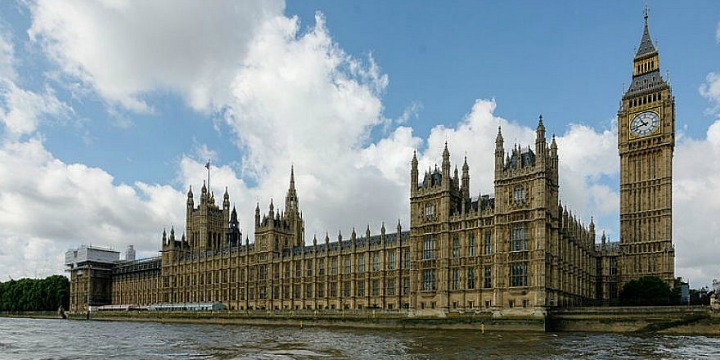
UK Parliament in London. Photo: Wikimedia Commons.
A small number of Jews had lived in England since Roman and Anglo-Saxon times, but they only became an organized community under William the Conqueror in 1066. He encouraged Jewish merchants and artisans to move from northern France to England, where they fared very well financially.
Shortly afterward, English Jews began to experience severe antisemitism; they were subject to several blood libels and accusations that they desecrated Christian religious symbols.
Concurrent with the coronation of Richard I (the Lion-Hearted) in 1189, anti-Jewish riots broke out in London and spread to other towns. The Jews of York were locked in a castle and, knowing that they were trapped, Rabbi Yom Tov of Joigny urged them to kill themselves rather than face painful death at the hands of the mob or forced baptism.
Under Henry III of England, Jews were required to wear a marking badge. They were also subject to tremendous financial persecution. The Second Barons’ War in the 1260s brought a series of attacks on Jewish communities in England — and, in London alone, 500 Jews were tragically killed.
Expulsion
Ultimately, the Jews were banished from England by Edward I. His motivation was partly financial: once they were expelled, their possessions became the crown’s property.
England was the first European country to expel Jews.
On July 18, 1290, the Edict of Expulsion was issued. Writs were issued to the sheriffs of all English counties ordering them to enforce the edict, which expelled Jews from the country by November 1. Jews were only permitted to carry with them their movable property.
Sadly, the Edict of Expulsion was widely popular and met with little resistance by the non-Jewish population. The majority of the expelled English Jews settled in France and Germany. The process of their return would not begin until almost 400 years later, thanks in part to Rabbi Menashe Ben Israel.
Rabbi Menashe was born on Portugal’s Madeira Island in 1604 with the marrano/converso name Manoel Dias Soeiro. His family moved to the Netherlands in 1610.
Amsterdam was an important center of Jewish life in Europe at this time. It was here that Rabbi Menashe’s family openly returned to Judaism. Rabbi Menashe was given the best possible education in the Sephardic tradition. He excelled in his Talmudic studies and possessed a thorough knowledge of Tanach. He was fluent in the spectrum of Jewish thought from the rationalistic school of the Rambam to the writings of the later kabbalists.
Rabbi Menashe also received a comprehensive secular education. He was fluent in 10 languages and had a broad knowledge of medicine, mathematics, and astronomy. He was also well-read in classical literature and the writings of early Christian theologians.
When Chacham Uziel died in 1620, Rabbi Menashe was proclaimed rabbi of the Sephardic community at the astonishingly young age of 18, and soon became one of the most famous preachers in the new center of Sephardic Jewry.
Shortly after taking this position, Rabbi Menashe married Rachel Soeiro, a direct descendant of Rabbi Don Yitzchok Abarbanel, with whom he had three children.
Rabbi Menashe rose to eminence, not only as a rabbi and an author, but also as a printer. In 1626 he established the first Hebrew press in Amsterdam (indeed, in all of Holland), named Emes Me’Eretz Titzmach (truth will sprout from the ground). His printing press employed a new typeface that was later copied by many European printing houses. Although it eventually became a flourishing business, it couldn’t support his family and Rabbi Menashe suffered from poverty most of his life.
One of Rabbi Menashe’s earliest works, El Conciliador, published in 1632, won immediate acclaim. Written in Spanish, the work refutes the arguments of self-proclaimed Bible critics. The book was among the first written by a Jew in a modern language that also was of interest to Christian readers. Accordingly, it earned Rabbi Menashe a reputation in the learned non-Jewish world.
Over time, his fame as a scholar and expert on all matters of learning and science spread far beyond Holland. Some of the most outstanding scholars and figures of the world sought his friendship and advice. Queen Christina of Sweden, the painter Rembrandt, and the statesman and philosopher Hugo Grotius were among his non-Jewish correspondents and friends.
Yet, with all his secular knowledge and fame, Rabbi Menashe ben Israel devoted most of his time to Torah studies. In addition to defending the Torah against many critics, Rabbi Menashe wrote many other memoranda in defense of Torah ideas, including resurrection, reincarnation and the divine origin of the soul.
And his thorough knowledge of Kabbalah motivated him to hasten the coming of the Messiah, which ultimately led to the Jews’ return to England.
In 1644, Rabbi Menashe met Antonio de Montezinos, a Portuguese Marrano Jew who had been in the New World. Montezinos convinced him that the South American Andes’ Indians were descendants of the 10 lost tribes of Israel. This purported discovery gave a new impulse to Rabbi Menashe’s messianic hopes, as the settlement of Jews throughout the world was understood to be a sign that the Messiah was coming.
Taken by this idea, Rabbi Menashe turned his attention to England, from where Jews had been expelled since 1290 and worked to get permission for them to resettle there, hoping to thus hasten the Messiah’s arrival.
In 1650, he wrote The Hope of Israel — which was first published in Amsterdam in Latin and Spanish — in response to a 1648 letter from Scottish theologian John Dury asking about Montezinos’ claims. In it, he expressed the hope that the Jews would return to England to hasten the final redemption. Rabbi Menashe also stressed his kinship with Parliament and explained that he was driven by amity for England rather than financial gain.
Along the same lines, in 1651 Rabbi Menashe offered to serve Queen Christina of Sweden as her agent of Hebrew books. In his discussions with her, he asked her to consider opening Scandinavia as a haven for Jewish refugees. He described the Jews being forced to wander from one country to another. He almost succeeded in his appeal, but Christina abdicated the throne and the plan didn’t come to fruition.
Yet, Christina continued to have a positive relationship with Judaism and protected the Jewish community of Rome when she moved there, using her power as a former regent to do so.
Advocates Readmission of Jews to England
Rabbi Menashe attracted the notice of many Protestant theologians who, like him, were convinced of the Messiah’s imminent arrival and naturally desired to know the views of Jewish theologians on the matter.
With the onset of the Puritan Commonwealth, the question of the readmission of the Jews found increased Puritan support. Therefore, Rabbi Menashe wrote an introductory epistle to the English version of his Hope of Israel in 1650 addressed to the Parliament of England hoping to gain its favor and goodwill so the Jews could be readmitted to the country.
A response — “An Epistle to the Learned R’ Menashe ben Israel” (1650), written by Sir Edward Spencer, member of Parliament for Middlesex — insisted upon conversion to Christianity before Messianic prophecies about Israel could be fulfilled. Clearly, that wasn’t up for discussion and it’s possible that the matter was dropped for a while for this reason.
Yet, Rabbi Menashe’s efforts drew the interest of England’s Lord Protector, Oliver Cromwell. Cromwell was especially sympathetic to the Jewish cause due to his Puritan views, more tolerant leanings, and pragmatic view that the Jewish merchant would benefit English commerce.
Cromwell’s representative at Amsterdam was put into contact with Rabbi Menashe and a pass was issued to enable him to go to England.
Arrival in London
In November 1655, Rabbi Menashe arrived in London where he published his “Humble Addresses to the Lord Protector,” a memorandum in which he refuted prejudices against the Jews. He also pointed out the advantages England could derive from granting the Jews permission to resettle in England and permitting Jews to observe Jewish practice.
Cromwell summoned the Whitehall Conference in December of 1655. (It doesn’t appear that R’ Menashe spoke at this conference, though his pamphlet was submitted to it.) A formal declaration was made by the lawyers present at the meeting that nothing in English law prevented the settlement of Jews in England. However, the question of its desirability was ingeniously evaded by Cromwell. Public opinion was against admitting Jews, and Cromwell wished to avoid defeat on this issue in Parliament.
But the door had been opened for the Jews’ gradual return. John Evelyn even entered in his diary under the date December 14, 1655, “Now were the Jews admitted.”
Nevertheless, the process was slow — despite Cromwell’s support and Rabbi Menashe’s advocacy — as the British clergy and wealthy merchants did everything in their power to prevent its realization.
The Robles Case
The first major positive result of R’ Menashe’s efforts was seen in the “Robles case.” Antonio Rodrigues Robles (1620-1690) was a Marrano merchant born in Fundão, Portugal. His family had suffered at the hands of the Inquisition, yet he had settled in London as a merchant in the mid-17th century and had no connection to the crypto-Jewish community.
When his property was seized as that of an enemy alien after the outbreak of war with Spain in 1656, he successfully obtained an exemption on the grounds that, although uncircumcised, he was not a Spaniard but a Portuguese “of the Hebrew nation.” He won the case and his land was returned to him.
In theory, the successful outcome of the “Robles Case” established the right of professing Jews to live in England without interference.
As a result, Jews from Holland, Spain, and Portugal came to Britain, where over time they became more and more integrated into British society. However, it was only in 1753 that English Jews were formally granted citizenship and in 1858 formal emancipation.
Despite his failure in obtaining formal permission for the resettlement of the Jews in England, R’ Menashe had brought the subject prominently before the ruling minds of England. He also elicited recognition of the fact that nothing in English law prevented the readmission of Jews and in 1656 a verbal promise from Cromwell, backed by the Council of State in the Robles case, to allow Jews to return to England and freely practice their faith.
In time, the results of his advocacy would prove to be even more far-reaching.
Opening America to Jews
If no law forbade the Jews’ return to England, that meant no law forbade Jews from relocating to the New World and living in British-controlled territories and colonies.
Thus, just as the British North American colonies were being settled by English settlers in the late 17th century, Rabbi Menashe’s work laid the foundation for Jews to be part of the settlement in the future United States and Canada.
Thus, in addition to reopening England to Jews, R’ Menashe’s actions also arguably opened the door for what would become the largest community of Jews in the Diaspora in the future United States of America and Canada.
Sadly, despite the historic achievement he is now known for, Rabbi Menashe left England a broken and penniless man, feeling he had not accomplished his purpose. He also experienced a personal tragedy when his son, Shmuel, who had accompanied him, passed away on the second day of Rosh Hashanah in 1657.
Rabbi Menashe sailed to Middelburg, Holland, where his brother-in-law lived, to bury his son. A few months later, Rabbi Menashe himself passed away, on the 14th of Kislev. He was buried in the Beis Chaim of Ouderkerk aan de Amstel.
Rabbi Menachem Levine is the CEO of JDBY-YTT, the largest Jewish school in the Midwest. He served as Rabbi of Congregation Am Echad in San Jose, CA, from 2007 to 2020. He is a popular speaker and writes for numerous publications on Torah, Jewish History, and Contemporary Jewish Topics. Rabbi Levine’s personal website is https://thinktorah.org A different version of this article was originally published at Aish.
Uncategorized
Rachel Goldberg-Polin Talks in ’60 Minutes’ Interview, New Memoir About Grief After Son Murdered by Hamas

Rachel Goldberg, mother of killed US-Israeli hostage Hersh Goldberg-Polin whose body was recovered with five other hostages in Gaza, speaks during his funeral in Jerusalem on September 2, 2024. Photo: GIL COHEN-MAGEN/Pool via REUTERS
In a new memoir and “60 Minutes” interview this week, American-Israeli Rachel Goldberg-Polin, a mother of three, opened up about grief and the process of moving forward in life after her only son, Hersh, was murdered while in Hamas captivity in the Gaza Strip.
“To know that your child is being tortured, tormented, starved, abused. He’s maimed. And that’s an excruciating form of suffering,” she told “60 Minutes” correspondent Anderson Cooper in a segment that aired on Monday, which was also Israel’s Memorial Day (Yom HaZikaron). “And then what’s so fascinating to me is that when they came to tell us that Hersh had been executed, then I realized that those 330 days had been the good part, because he was alive. And now I’m in this place and this is the rest of my life. How do I walk through this place without a piece of me here?”
“I’m trying to re-understand what it means to be in this world,” she added. “There are millions of us right now who have buried children. There’s nothing unique about me. But it creates light for me to try to give words to the pain.”
Hersh was one of 251 people kidnapped by Hamas-led terrorists on Oct. 7, 2023. The 23-year-old was attending the Nova music festival in southern Israel, near the Gaza border, with a friend when he was abducted. Terrorists murdered 1,200 people during the onslaught, including 378 festivalgoers, and wounded thousands more. Hersh hid inside a bomb shelter with others and had his left arm blown off by a grenade before he was taken hostage.
Goldberg-Polin and her husband campaigned tirelessly and met with world leaders around the globe to try to secure the release of the hostages, but on the 328th day of his captivity, Hersh was executed by Hamas terrorists. Israeli soldiers found his body in a tunnel in Rafah on Aug. 31, 2024. Hersh, who was shot six times at close range, and five other hostages had been executed.
Goldberg-Polin further details her grief and talks about the kind of person Hersh was, even as a child, in her memoir “When We See You Again,” released on Tuesday. The book is a “searing portrait of a mother’s grief and strength in the wake of unthinkable tragedy,” according to a description of the memoir published by Penguin Random House.
“There are days when I break completely,” Goldberg-Polin writes in her book. “I have cried for an entire day straight. I didn’t think it was physically possible, but the weeping never let up. That is a very long time to cry. I kept hoping I would run out of tears. And then there are days when there is a whisper of sun. Not out there in the sky. In me. In us.”
She also describes grief, saying: “People want hope, resilience, recovery, strength, survival, healing. They want thriving and rising from the ashes, like the phoenix from the days of yore. But the pain is chronic, ever present, constant, gnawing, circular, not linear.”
Goldberg-Polin told Cooper on “60 Minutes” that she now thinks “grief is actually just this precious badge of love that you wear because someone has died and your love is continuing to grow.”
Former Hamas hostage Or Levy was released in February 2025 along with two others and talked to “60 Minutes” about spending three days with Hersh in a tunnel. He told Cooper that during their time together, Hersh kept repeating the mantra, “He who has a why can bear any how.” The line is from “Man’s Search for Meaning,” a 1946 concentration camp memoir by Holocaust survivor Viktor Frankl, who adapted a similar saying by Fredrich Nietzsche.
“It became our mantra … The only reason why I survived was him,” Levy told Cooper on “60 Minutes.” Soon after his release, Levy got the mantra tattooed on his arm.
Uncategorized
Iran Seizes Ships in Strait of Hormuz After Trump Extends Ceasefire

Ships and boats in the Strait of Hormuz, Musandam, Oman, April 22, 2026. Photo: REUTERS/Stringer
Iran seized two ships in the Strait of Hormuz on Wednesday, tightening its grip on the strategic waterway after US President Donald Trump called off attacks with no sign of peace talks restarting.
Trump maintained the US Navy blockade of Iran‘s trade by sea, and Iran‘s parliament speaker and top negotiator Mohammad Baqer Qalibaf said a full ceasefire only made sense if it was lifted. Reopening the strait was impossible with such a “flagrant breach of the ceasefire,” Qalibaf said in a post on X.
“You did not achieve your goals through military aggression, and you will not achieve them by bullying either. The only way is recognizing the Iranian people’s rights,” he said in his first response to Trump’s ceasefire extension.
Iran‘s semi-official Tasnim news agency earlier said the Revolutionary Guards had seized two vessels for maritime violations and escorted them to Iranian shores. It was the first time Iran has seized ships since the war began at the end of February.
The Revolutionary Guards also warned that any disruption to order and safety in the strait would be considered a “red line,” Tasnim said.
NO NEW DEADLINE FOR CEASEFIRE
Trump said on social media late on Tuesday that the US had agreed to a request by Pakistani mediators “to hold our Attack on the Country of Iran until such time as their leaders and representatives can come up with a unified proposal … and discussions are concluded, one way or the other.”
A source briefed on the matter confirmed on Wednesday that Trump had not set a timeline for the extension of the ceasefire.
In a show of defiance, Iran showcased some of its ballistic weapons at a parade in Tehran on Tuesday evening, with images on state TV showing large crowds waving Iranian flags and a banner in the background with a fist choking off the strait.
Captions read: “Indefinitely under Iran‘s Control” and “Trump could not do a damn thing,” referring to the waterway, the closure of which has caused a global energy crisis.
PAKISTAN STILL WORKING TO FOSTER TALKS DESPITE ‘SETBACK’
Pakistan, which has acted as a mediator, was still trying to bring the sides together for negotiations after both failed to show up for talks on Tuesday before the two-week-old ceasefire had been due to expire.
“We were all prepared for the talks, the stage was set,” a Pakistani official briefed on the preparations told Reuters. “If you ask me honestly, it was a setback we were not expecting, because the Iranians never refused, they were up to come and join, and they still are.”
Throughout the war, Iran has effectively shut the strait to ships other than its own by attacking vessels that attempt to transit without its permission. Around a fifth of global oil and liquefied natural gas normally passes through the waterway.
The Revolutionary Guards accused the seized ships, the Panama-flagged MSC Francesca and Liberia-flagged Epaminondas, of operating without required permits and tampering with their navigation systems.
The Greek-operated Epaminondas reported being fired upon about 20 nautical miles northwest of Oman. It said it had sustained damage to its bridge after being hit by gunfire and that no one was hurt in the incident.
Greece and the company have not confirmed the seizure of the vessel. MSC, the world’s biggest container shipping group, did not respond to a Reuters request for immediate comment.
A third, Liberia-flagged container ship was fired upon in the same area but was not damaged and had resumed sailing, according to maritime security sources.
DIFFERENCES REMAIN ON KEY ISSUES
With his announcement on Tuesday, Trump again pulled back at the last moment from warnings to bomb Iran‘s power plants and bridges, a threat condemned by the United Nations and others as potentially constituting war crimes. Iran had said it would strike its Arab neighbors if its civilian infrastructure was hit.
Oil prices reversed course to head higher after the shipping incidents on Wednesday, with Brent crude futures up almost 4% at $102.2 a barrel.
A first session of peace talks 11 days ago produced no agreement.
Washington wants Iran to give up highly enriched uranium and forgo further enrichment to prevent it getting a weapon. Iran, which says its nuclear program is peaceful, wants an end to the war, the lifting of sanctions, reparations for damage and recognition of its control over the strait.
An Israeli strike killed two people in southern Lebanon on Wednesday, Lebanon’s state news agency reported, and Hezbollah said it launched an attack drone at Israeli forces in the south, further straining a ceasefire between the Iran-backed terrorist group and Israel.
The Lebanon ceasefire had been a precondition for Iran agreeing to talks.
Uncategorized
Attacks in South Lebanon Strain Ceasefire on Eve of Washington Talks

Smoke rises after an Israeli strike, amid escalating hostilities between Israel and Hezbollah, as the US-Israeli conflict with Iran continues, in southern Lebanon, March 24, 2026. Photo: REUTERS/Stringer
An Israeli strike killed two people in southern Lebanon on Wednesday, Lebanon‘s state news agency reported, and Hezbollah said it launched an attack drone at Israeli forces in the south, further straining a ceasefire between the Iran-backed terrorist group and Israel.
On the eve of talks in Washington between Lebanese and Israeli ambassadors, Lebanese President Joseph Aoun said Beirut would seek an extension of the 10-day, US-mediated ceasefire, which is set to expire on Sunday.
Hostilities between Hezbollah and Israel reignited on March 2, when the Lebanese Islamist group opened fire in support of Iran.
The US-brokered ceasefire in Lebanon emerged separately from Washington’s efforts to resolve its conflict with Tehran, though Iran had called for Lebanon to be included in any broader truce. The United States has denied any link between the tracks.
Lebanon‘s state-run National News Agency said the Israeli strike hit a car in al-Tiri, a village in south Lebanon, killing two people inside. The Israeli military didn’t immediately respond to a request for comment.
Hezbollah said it attacked an Israeli artillery position in southern Lebanon with a drone, in response to what it said was an Israeli violation of the ceasefire. The Israeli military said it had intercepted “a hostile aircraft” launched by Hezbollah toward Israeli soldiers in south Lebanon.
More than 2,400 people have been killed in Lebanon since Israel launched an offensive in response to Hezbollah’s March 2 attack, according to Lebanese authorities. Israel says the vast majority of those killed have been Hezbollah terrorists, who often embed themselves in civilian areas.
Israeli forces have seized a belt of territory at the border where troops remain, saying they aim to create a buffer zone to shield northern Israel from attacks by Hezbollah, which fired hundreds of rockets at Israel during the conflict.
BEIRUT TO SEEK END TO ISRAELI DEMOLITIONS
Aoun said Beirut’s envoy to Thursday’s talks, Lebanese Ambassador to Washington Nada Moawad, would seek a ceasefire extension and a halt to demolitions being carried out by Israel in villages in the south, according to a statement.
A Lebanese official said Beirut wants a ceasefire extension as a prerequisite for talks to expand beyond the ambassadorial level to the next phase, in which Lebanon would push for an Israeli withdrawal, the return of Lebanese detained in Israel, and a delineation of the land border.
Hezbollah, which says the Lebanon ceasefire was the fruit of Iranian pressure, has condemned Beirut for seeking talks with Israel, reflecting wider splits with the government that has sought Hezbollah’s peaceful disarmament for a year.
Israeli Foreign Minister Gideon Saar, in a speech, said Israel had taken a “historic decision to negotiate directly with Lebanon after more than 40 years” whilst also calling it a “failed state.”
“I call on the Government of Lebanon: Let’s work together against the terror state that Hezbollah built in your territory. This cooperation is needed by you even more than by us,” he said.
The Israeli military said it had killed two terrorists who had crossed its “Forward Defense Line” in south Lebanon on Tuesday and approached Israeli soldiers, saying they had violated the ceasefire.
DRUZE LEADER URGES CLEAR AGENDA, INCLUDING WITHDRAWAL
US Secretary of State Marco Rubio is set to attend Thursday’s meeting. Israel will be represented by its ambassador to Washington, Yechiel Leiter.
Aoun has cited goals including halting Israeli attacks on Lebanon and securing the withdrawal of Israeli troops. In a speech on Friday, he said a ceasefire should be transformed into “permanent agreements that preserve the rights of our people, the unity of our land, and the sovereignty of our nation.”
Announcing the ceasefire on April 16, US President Donald Trump said he had instructed Rubio, Vice President JD Vance, and Chairman of the Joint Chiefs of Staff Dan Caine to work with the two countries to achieve lasting peace.
Lebanon and Israel have remained in an official state of war since the establishment of Israel in 1948.
Lebanon‘s most senior Shi’ite state official, Parliament Speaker Nabih Berri, is against face-to-face negotiations with Israel, saying Beirut could have negotiated indirectly.
Lebanon‘s leading Druze politician, Walid Jumblatt, said on Tuesday that the most Lebanon could offer is an update to a 1949 armistice agreement with Israel.
In comments to reporters after a meeting with Berri, Jumblatt said there should be a clear agenda for talks that includes a withdrawal of Israeli troops still in southern Lebanon.