



Uncategorized
Organizer of Kanye West’s Portugal Concert Confirms Scheduled Show After String of Canceled Performances

Rapper Kanye West holds his first rally in support of his presidential bid in North Charleston, South Carolina, US, July 19, 2020. Photo: REUTERS/Randall Hill
The organizer of Ye’s upcoming concert in Portugal insisted that the performance will take place as scheduled, despite the cancellation of several of the American musician’s other performances across Europe because of past antisemitic behavior and comments.
Ye, formerly known as Kanye West, is scheduled to perform at the Algarve Stadium on Aug. 7 as part of his world tour. Torcato Jorge, the CEO and co-founder of Raya Culture, the event’s organizer, told Euronews Culture the upcoming show is “a music event that’s going to happen.”
“It would become an issue if the services identified a national threat to public order, which is not the case,” Jorge added. “There has to be a state internal security report saying that this citizen cannot enter the country … Each country is free to decide whether or not to allow a citizen to enter, but in the European Union there has been no country that has vetoed their entry into national territory.”
Jorge noted that the SIS, Portugal’s security agency and intelligence agency, has not categorized the 48-year-old singer as a national threat or terrorist. Raya Culture also said that, so far, no issues have been brought to their attention regarding Ye’s entry into Portugal, and there is no indication that the Grammy winner will cancel the concert.
“There’s no fear whatsoever that he’ll take the same stance as he did in France,” said the organization, referring to Ye’s decision to cancel his concert at the Vélodrome in Marseille, France. The move came after the mayor of Marseille said Ye was “not welcome” in his city, and after Jewish leaders called for the concert to be canceled.
Jorge also told Euronews Culture he thinks the controversy surrounding Ye’s appearance on stage, in light his offensive remarks and actions, is fueled by “misinformation” and is a “a non-issue” for his organization.
Earlier this month, the United Kingdom banned Ye from entering the country because of his past antisemitic comments and promotion of Nazism, for which he apologized in January. He was set to headline the three-day Wireless Festival in London from July 10-12 but after he was denied entry into the UK, the music festival was canceled.
Ye – who last year sold T-shirts that featured a swastika design — also had his concerts in Poland and Switzerland canceled. He was scheduled to perform at the Silesia Stadium in Chorzów, in southern Poland, in June but the venue announced this month that the show would not take place due to “formal and legal reasons.” Poland’s Culture Minister Marta Cienkowska said Ye should not be allowed to perform in a country “scarred by the history of the Holocaust.”
Ye’s concert in Switzerland was scheduled to take place in June at St. Jakob-Park, a sports stadium in Basel that is home to the Swiss soccer team FC Basel. The Swiss soccer team recently announced that the artist pulled out. “FCB received an enquiry and considered it,” the team said in a statement to AFP. “After a thorough review, we decided not to pursue the project further, as we cannot, in accordance with our values, provide a platform for the artist in question within this context.”
Jorge told Euronews Culture he believes Ye’s antisemitic comments were “a mistake” and defended the artist by saying his offensive actions are not a reflection of his legacy in the music industry. “For those who like music, entertainment, and big productions, I think it’s going to be a very interesting experience,” he said of the upcoming concert in Portugal.
Ye has already performed this year in Mexico City and the United States, where he took over SoFi Stadium in Los Angeles with guest performances by Lauryn Hill, Travis Scott, and Ceelo Green. Ye has not performed in Europe since 2014. The artist is also banned from Australia.
Uncategorized
New York shouldn’t divest from Israel Bonds — and voters should be wary of politicizing pensions
At the Passover Seder, we sing dayenu — “it would have been enough.” Each verse names a gift given by God to the Jewish people: the exodus, the parting of the sea, manna in the desert, the Torah. We sing the song to cultivate gratitude, and to remind ourselves that while just one of these miracles would have been sufficient, together, they are overwhelming. The point is to recognize that we have been blessed and that we carry an obligation — to remember, to protect and to stand with those who are still in danger.
Drew Warshaw, a candidate who is challenging Tom DiNapoli in the Democratic primary for New York state comptroller, recently published an op-ed in these pages calling on New York to divest its pension fund from Israel Bonds. He reinterpreted the Seder’s recitation of dayenu not as a prayer of gratitude but rather as a reminder of a personal reckoning — “enough is enough!” he wrote — suggesting it is time to withdraw the United States’ support from Israel.
This beautiful tradition deserves better than to be weaponized against a financial instrument, Israel bonds, that has served New York State pensioners — including school administrators, sanitation workers, court officers, and first responders — well for many years.
So, as a member of the Israel Bonds national board of directors, let me offer my own dayenu:
- If Israel bonds had simply never defaulted or had never been late on a single payment since 1951 — through wars, recessions, and regional upheaval — dayenu. It would have been enough.
- If Israel bonds had only delivered consistent, strong investment returns to the police officers and firefighters who rely on New York State’s pension fund — dayenu.
- If Israel bonds had only helped build a democratic nation from the ground up, the only stable democracy in a deeply unstable region — dayenu.
- If Israel bonds had done all of this while the state of Israel endured wars, fought terrorism and weathered the Hamas attack of Oct. 7, 2023 — dayenu.
These facts present strong reasons to maintain or expand the investment. In contrast, the case for divestment is weak. That’s especially true given that Israel bonds represent far less than one percent of the nearly $300 billion held by the New York state common retirement fund. This is not a portfolio-defining position. It is a rounding error being treated as a moral crisis.
Warshaw is right that our tradition demands moral courage. But the story of the exodus is not only a story about the courage to leave; it is also a story about the courage required to build.
For Israel, sovereign bonds are part of that building. The proceeds from Israel bonds have been used to build every part of Israel’s economy. To treat an Israel bond as nothing more than a political statement is to collapse a complex financial instrument into a bumper sticker.
The New York State comptroller has one overriding obligation: to make investment decisions based on financial evidence guided by economics, not a personal political agenda.
State-level divestment from Israel would set a troubling precedent, telling voters that New York’s pension fund can be redirected not by financial best practice but by ideological pressure, its investment decisions subject to the political winds of any given election cycle. That is a slippery slope to travel.
The New Yorkers whose savings are at stake deserve better, and so does the tradition Warshaw has invoked. It teaches us that the hardest work is not, in fact, leaving. It is, instead, building something worth staying for.
The post New York shouldn’t divest from Israel Bonds — and voters should be wary of politicizing pensions appeared first on The Forward.
Uncategorized
Cole Allen’s manifesto cites the Bible — so why did Trump say he ‘hates Christians?’
“When you read his manifesto, he hates Christians,” President Trump said on Fox News, speaking about the alleged culprit behind an attack at the White House Correspondents Dinner.
But Cole Allen, the 31-year-old man tackled to the ground of the Capitol Hilton, where the dinner was held, was, according to reporting from independent journalist Ken Klippenstein, a devout Christian, active in the Christian fellowship at CalTech, his alma mater. And his manifesto, which started with an apology to “everyone whose trust I abused,” in fact thanked his church and cited the Bible, giving a theological justification for his efforts.
“Rebuttals to objections,” he wrote in his neatly laid out manifesto, starting off with the idea that “as a Christian, you should turn the other cheek.” This, he argued, doesn’t apply when someone else is oppressed and, in fact, “turning the other cheek when *someone else* is oppressed is not Christian behavior.”
Later, he turned to the quote “yield unto Caesar what is Caesar’s” that comes from the gospels. (The line appears in Matthew, Mark and Luke.) This quote is usually interpreted to mean that Christians should obey the government of their time, or that earthly matters — like, in the biblical context, taxation — do not concern God. Trump, Allen wrote, is not a supreme emperor like Caesar but instead subject to the rule of law. “In so far as representatives and judges do not follow the law, no one is required to yield them anything,” he wrote.
While people might have theological quibbles with these arguments, they clearly come from a place of engagement with Christianity. So why did Trump frame Allen’s attack as specifically one against Christians?
Trump signed a national security directive in September last year, stating that “anti-Christianity” as well as “hostility towards those who hold traditional American views on family, religion, and morality” are common threads driving domestic terrorism. The directive outlined a new strategy including investigating any person or organization who might fall under this new, sweeping set of domestic terrorism priorities in order to “intervene in criminal conspiracies before they result in violent political acts.” Much of the directive is focused on monitoring speech.
Directing attention toward a sense of persecution functions to unite an increasingly splintered MAGA base, some of whom are feuding over how their Christianity dictates their response to Israel and the war in Iran.
Some Christian politicians on the right, such as Ted Cruz and Mike Huckabee, claim their Christianity demands that they support Israel. Secretary of War Pete Hegseth regularly cites his religion in justifying U.S. wars, including the one in Iran.
But an increasing number of others, including talking heads like Candace Owens and Nick Fuentes, and former congresswoman Marjorie Taylor Greene — once an outspoken Trump supporter — have said that their faith demands that they oppose the government’s wars and its support for Israel.
This is an issue for Trump, who was elected with the support of a strong network of conservative Christian leaders, think tanks and PACs. Many of Trump’s supporters were initially drawn to him for religious reasons and have long spoken of him in terms of God’s favor, comparing him to biblical figures including King Cyrus and King David or citing Trump’s survival of the assassination attempt during his campaign as a sign of God’s personal protection.
By invoking another attack against him as an attack against all Christians, Trump may be hoping to redirect his base from their squabbles over Israel, and Jews, and reunite them against a common enemy — namely, a conveniently nebulous association of figures who supposedly hate Christianity, or want to violently police their beliefs. Perhaps he’s hoping none of them will read Allen’s manifesto and come to the conclusion that he is, in fact, one of them.
The post Cole Allen’s manifesto cites the Bible — so why did Trump say he ‘hates Christians?’ appeared first on The Forward.
Uncategorized
Cruz Calls for US to Join Israel, Taiwan in Recognizing Somaliland
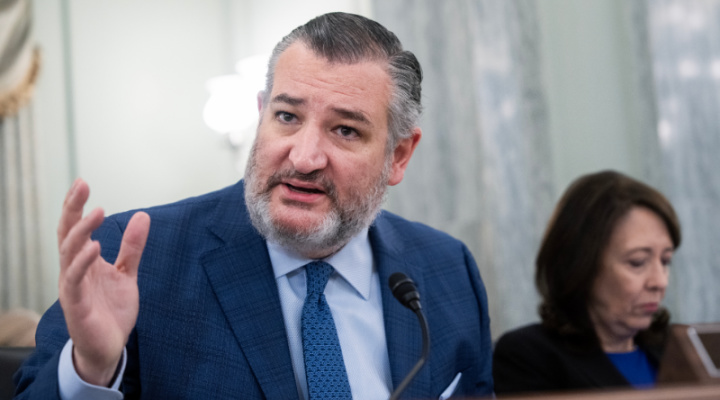
US Sen. Ted Cruz (R-TX) speaks during a Senate Commerce, Science, and Transportation Committee hearing on Capitol Hill in Washington, DC on April 15, 2026. Photo: Tom Williams/CQ Roll Call/Sipa USA via Reuters Connect
US Sen. Ted Cruz (R-TX) has renewed his calls for the Trump administration to recognize Somaliland as an independent and sovereign state, arguing the self-declared African republic would be a significant strategic partner if Washington were to formalize relations.
“Somaliland is a geo-strategic US maritime security partner in Africa,” Cruz said last week during a hearing on US counterterrorism approaches in Africa. “It sits along the Gulf of Aden near one of the world’s busiest shipping corridors and its forces actively contribute to counterterrorism and anti-piracy missions.”
Somaliland, which has claimed independence for decades in East Africa but remains largely unrecognized, is situated on the southern coast of the Gulf of Aden and bordered by Djibouti to the northwest, Ethiopia to the south and west, and Somalia to the south and east. It has sought to break off from Somalia since 1991 and utilized its own passports, currency, military, and law enforcement.
Unlike most states in its region, Somaliland has relative security, regular elections, and a degree of political stability.
“Somaliland stands with our allies, including Taiwan and Israel, and aligns with US interests in a region where China is aggressively expanding,” Cruz said. “Most recently, Israel’s decision to formally recognize Somaliland in December 2025 underscores its growing strategic relevance.”
In December, Israel recognized Somaliland’s independence, becoming the first UN-recognized country in the world to do so — Taiwan did in 2020 — while igniting a diplomatic firestorm in Somalia and dozens of Muslim nations which condemned the decision.
Israel announced the appointment of its first ambassador to Somaliland earlier this month. Less than two months earlier, the first official delegation from the self-declared African republic — 25 water sector workers — arrived in Israel for help on tackling their water crisis at home.
As for the US, Cruz noted that Gen. Dagvin Anderson, the Commander of US Africa Command, had met with partners in Somaliland last year “to assess the security environment and to review Berbera’s operational capacity.”
“This is the kind of partner we should be encouraging and one that will shape how we confront CT challenges in the Horn of Africa,” he added.
Anderson visited Somaliland’s capital Hargeisa and Berbera, the site of a rapidly developing trading port operated by Dubai’s DP World, one of the world’s top shipping and logistics companies which manages 10 percent of global container trade.
On Thursday, Somaliland President Abdirahman Mohamed Abdullahi visited the United Arab Emirates (UAE), responding to an official state invitation. The UAE has nurtured a longstanding relationship with Somaliland, previously supporting training for the country’s military in 2018. The deal for constructing the Berbera port will allow the UAE to maintain a presence for 30 years.
Israel’s recognition of Somaliland has “solidified a ‘Berbera Axis’ (Israel-UAE-Ethiopia) centered on port access and maritime monitoring,” according to an analysis by Marie de Vries, a researcher at the French think tank La Fondation Méditerranéenne D’études Stratégiques (Mediterranean Foundation for Strategic Studies), or FMES. In contrast, she added, a “Mogadishu Axis” has emerged due to a partnership of Somalia with Turkey, Egypt, and Saudi Arabia
Cruz’s comments came after US Rep. John Rose (R-TN) told The Algemeiner that he supported the US recognizing Somaliland.
“I think it’s also an important element that this is a relatively well-functioning democracy, and we think the United States should encourage that,” said Rose, who also touted the strategic benefits for the US. He introduced legislation to push the US government to study boosting economic ties with Somaliland.
Cruz addressed the arguments of those who oppose recognition of Somaliland in last week’s hearing.
“Critics argue that recognizing Somaliland could introduce new CT [counterterrorism] risks or undermine our posture in Mogadishu. I would argue the opposite,” Cruz said. “Working with a capable, willing partner like Somaliland strengthens our posture, particularly when Somalia itself continues to struggle with instability and persistent terrorist threats.”
Nick Checker, senior official in the US State Department’s Bureau of Africa Affairs who testified at the hearing, said that while Somaliland has been a “very good partner” on counterterrorism, US President Donald Trump’s current position is not to support formal recognition.
“I certainly agree with you that Somaliland has been a very good partner CT and otherwise with the United States. We’ve had a positive relationship with both them and other member states,” Checker said. “But you know the policy of the administration for now is that we do continue to recognize, as you know, the territorial integrity and sovereignty of the federal government of Somalia. But within that framework, we still do obviously look for opportunities to deepen our cooperation with Somaliland.”
Cruz expressed optimism that Trump would change his position.
“Well, I think the implications would be strengthening an ally, and I think clarity is powerfully effective in foreign policy and national security,” Cruz responded. “And I think that is an approach that President Trump has embodied. So, I have a high level of optimism that by the end of this term, President Trump will recognize Somaliland.”
Cruz previously called on Trump to recognize Somaliland in an August 2025 letter.
Somaliland “has proposed hosting a US military presence near the Red Sea along the Gulf of Aden and is open to critical minerals agreements that would support our supply chain resilience,” Cruz wrote in his letter. “The US-Somaliland partnership is robust, and it is deepening.”
Somaliland says it has significant mineral resources, and officials have expressed a willingness to offer the US a strategic military base at the entrance to the Red Sea and critical minerals as part of a deal that would include formal recognition.
However, China has strongly opposed any such moves.
“The Chinese Communist Party (CCP) is using economic and diplomatic coercion to punish Somaliland for its support for Taiwan, as well as to undermine that support,” Cruz wrote in last year’s letter. “The government of Somalia has played an unfortunate role in these efforts: In April 2025, the CCP arranged for Somalia to bar Taiwanese passport holders from transiting into Somaliland, and Chinese support to Somalia is benefiting anti-Somaliland groups working to erode its sovereignty.”
China’s embassy in Somalia released a statement in response to Cruz’s letter declaring that Beijing “firmly opposes this misconduct. Senator Cruz’s remarks constitute serious interference in the internal affairs of Somalia and reflect the hegemonic and bullying attitude of certain US politicians towards the Somali people.”
Cruz referenced China’s response during last week’s hearing.
“Unsurprisingly, the Chinese Communist Party immediately condemned my letter, which only shows how important Somaliland is to US national security,” he said.
De Vries described in her FMES report that “recognition of Somaliland risks normalizing Taiwan’s presence in a region where China has heavily invested in ports, telecommunications, and security partnerships. China’s reaction is driven less by the legal status of Somaliland than by a broader strategic calculus focused on preventing Taiwanese visibility and safeguarding Djibouti’s role as a primary regional hub.”
China established its first overseas military base in Djibouti in 2017.