



Uncategorized
US Lawmakers Warn of Aid Cuts if Nigeria Fails to Counter Islamist Attacks Against Christians

A Nigerian police truck stands at the deserted Maiduguri Monday Market the morning after multiple explosions struck the northeastern city of Maiduguri, Borno State, Nigeria, March 17, 2026. Photo: REUTERS/Ahmed Kingimi
The US House Appropriations Committee has advanced a State Department funding bill which will restrict aid to Nigeria if the current government cannot stop what one lawmaker labeled a genocide against Christians.
“The Tinubu administration is spending millions lobbying Congress while failing to adequately address the genocide Nigerian Christians face daily,” Rep. Riley Moore (R-WV) posted on X on Wednesday. He said the appropriations panel, on which he serves, “just passed our annual State Department funding bill which takes serious steps to address this crisis.”
Nigerian President Bola Ahmed Tinubu, who assumed office in May 2023, is a member of the All Progressives Caucus (APC), one of Nigeria’s two dominant political parties, the other being the Peoples Democratic Party (PDP).
The US legislation sets three conditions for Nigeria to receive full funding of aid: “taking effective steps to prevent and respond to violence and hold perpetrators accountable; prioritizing resources to support victims of such violence, including internally displaced persons”; and “actively facilitating the safe return, resettlement, and reconstruction of communities impacted by the violence.”
The bill limits US support for Nigeria to 50 percent unless the American secretary of state can certify the government adheres to all three conditions.
Moore posted on X that the bill requires Nigeria to focus on preventing atrocities, advancing religious freedom, prosecuting Fulani ethnic militia groups, and targeting jihadists. The congressman described how, if signed into law, the measure would insist on the government “bolstering faith-based organizations’ response in areas impacted by violence.”
According to the Observatory for Religious Freedom in Africa (ORFA), “between October 2019 and September 2024, ORFA documented 66,656 deaths across Nigeria, of these, 36,056 were civilians. The Fulani Ethnic Militia (FEM) were responsible for a staggering 47 percent of all civilian killings — more than five times the combined death toll of Boko Haram and ISWAP [Islamic State – West Africa Province], which together accounted for just 11 percent of civilian deaths.”
These killings heavily targeted Christians. ORFA notes that “the data reveals that 2.4 Christians were killed for every Muslim during this period, with proportional losses to Christian communities reaching exceptional levels. In states where attacks occur, Christians were murdered at a rate 5.2 times higher than Muslims relative to their population size.”
Following this terrorism, Nigeria has seen a surge in the number of orphans, with data from SOS Children’s Villages showing 17.5 million now in the country, the second highest globally after India.
The violence against Christians is part of a surge of Islamist terrorist attacks across the Sahel region of West Africa, concentrated in Mali, Niger, Burkina Faso, and Northern Nigeria. A report released last year from the Combating Terrorism Center at West Point revealed that in 2024, 86 percent of all terrorism-related deaths occurred in just 10 countries, with seven in Africa and five in the Sahel.
Over the weekend, Mali saw terrorist attacks in multiple locations which left Defense Minister Sadio Camara dead and the northeastern town Kidal seized. The strikes came following an alliance between Al-Qaeda-linked terror group Jama’at Nusrat al-Islam wal-Muslimin (JNIM,) and the Azawad Liberation Front (FLA), a separatist group seeking to establish its own state.
Nigeria released a statement of support for Mali.
“Nigeria stands in solidarity with Mali and reaffirms the enduring ties of brotherhood, shared destiny, and collective resilience that define the African spirit,” said the ministry of foreign affairs’ spokesperson, Kimiebi Ebienfa. “The Federal Government of Nigeria condemns the cowardly acts perpetrated by terrorist groups in different parts of the country in recent days which have resulted in the loss of lives and properties.”
Moore explained that the US bill also appropriates millions to fund International Narcotics Control and Law Enforcement to counter FEM violence. “That provision also bolsters support for the establishment of state level police forces so Christians in Plateau and Benue aren’t sitting ducks waiting for help from Abuja,” Moore wrote on X.
Under the legislation, Moore said the secretary of state must “submit a plan for every dollar appropriated to Nigeria, and every dollar spent will have direct congressional oversight.” He added that “in my view, the Tinubu administration has failed to live up to the conditions the appropriations committee placed on security assistance.”
On March 16, three simultaneous explosions hit Maiduguri, the capital of Nigeria’s northeast state Borno, resulting in 25 deaths.
The Nigerian government has previously defended itself against claims of failing to fight terrorism against Christians.
“Recent external claims suggesting systemic religious persecution in Nigeria are unfounded,” Foreign Ministry Permanent Secretary Dunoma Umar Ahmed said in November 2025, in response to warnings from President Donald Trump that the US military might need to intervene. “The state continues to wage a comprehensive counter-terrorism campaign against groups that target Nigerians of all faiths.”
Polling from Pew in 2020 found that 56 percent of Nigerians embraced Islam while 43 percent practice Christianity. However, traditional African religious beliefs also maintain broad influence, with approximately 70 percent of adults believing that spells, curses, and magic can impact people’s lives.
Both Christian and Muslim communities saw substantial growth in Nigeria during the last decade. The Muslim population rose 32 percent from 2010 to 2020, while the Christian population increased 25 percent. Nigeria contains the fifth largest Muslim population and sixth largest Christian population.
Overall, Nigeria has a current total population of 241 million people, making it the most populous country in Africa and sixth highest globally after Indonesia and Pakistan.
On Wednesday, the Christian Association of Nigeria (CAN) released a statement from its leader in response to attacks and kidnappings at a church in Eda Oniyo Ekiti (that left one pastor dead) and at the Yagba West Local Government Area of Kogi State.
“We condemn this heinous act in the strongest possible terms. People had gathered peacefully to worship God, and they were met with violence. This is not just an attack on a church; it is a brutal assault on our shared humanity and the sanctity of life,” Archbishop Daniel Okoh said. “We mourn with the family of the slain Pastor and stand in full solidarity with the victims and the entire Christian community in Ekiti State. Our thoughts and prayers are with those who have been taken, and we call for their immediate and safe release.”
The fight to defend Nigerian Christians cuts across the aisle.
“Cracking down on the crisis Christians face in Nigeria has been supported in two appropriations bills by both Republicans and Democrats,” Moore wrote on X, concluding the announcement of the bill. “The United States will not turn a blind eye to the brutal persecution of our Nigerian brothers and sisters in Christ.”
Ebienfa said that “terrorism, in all its forms and manifestations, remains a common adversary that demands unified resolve, sustained cooperation and reaffirmation of our shared humanity to tackle.”
Uncategorized
‘Don’t give up on us now’: Israel peace summit convenes thousands to aim for elusive progress
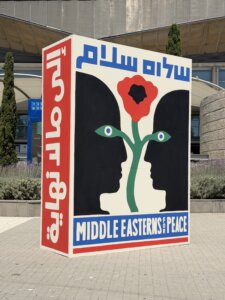
TEL AVIV, ISRAEL — On Thursday’s bright, sun-drenched morning during a rare pause in the multi-front war Israel has been locked into for nearly three years, in between the protests, funerals and steady drumbeat of violence and trauma, something decidedly more hopeful was taking place.
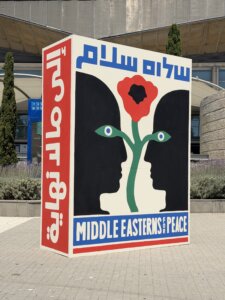
In one of the city’s largest conference centers, thousands gathered for the third annual People’s Peace Summit under the banner “It must be. It can be. It will be.” The event was organized by the It’s Time coalition, a partnership of more than 80 grassroots peacebuilding and shared society organizations.
Young activists in T-shirts representing their various causes stood alongside older attendees, some in kippot, others in hijabs. Diplomats in business attire moved through the crowd, as did the handful of Israeli politicians still publicly associated with the peace camp – familiar faces in a political landscape where their ranks have thinned considerably. Outside the main arena, Hebrew mingled with Arabic and English as participants strolled through art installations and an organizational fair showcasing the work of It’s Time’s partners.
While previous events took place at the height of war — while hostages remained in captivity and Gaza endured devastating destruction — this year’s summit unfolded during a fragile lull in fighting, the tenuous ceasefires with Hamas, Hezbollah, and the Islamic Revolutionary Guard Corps allowing, however briefly, for conversations to move beyond issues of immediate survival. Speakers tackled settler violence in the West Bank, looming elections, the immense challenge of rebuilding Gaza and the broader question of how to move Israel and Palestine beyond its default state of perpetual conflict. Inside the packed sessions, the tone was equal parts practical, sober and hopeful.
After a quick coffee break, the thousands of participants came together for an evening of stirring speeches and raucous musical performances. When Israeli pop icon Dana International took the stage with a familiar anthem of peace, the crowd rose to its feet, wrapping their arms around one another and belting out the words.
Despite the joyous atmosphere, the event — and the coalition behind it — is not immune from criticism. Some critiques appear to have been internalized: this year’s programming leaned more heavily into policy, strategy and the hard realities of war than previous gatherings. Other issues remain unresolved. Palestinian participation, while present, was still markedly limited, which organizers attribute largely to government-imposed restrictions on movement rather than a lack of interest. Still, the question of whether a civil society movement like this can translate hope and optimism into concrete political change remains to be seen.
That tension between aspiration and reality extends well beyond Israel. In the United States, support for Israel, particularly among younger American Jews, is waning. A 2024 Pew survey found that fewer than half of American Jews under 30 say they feel “very attached” to Israel, while a JFNA poll released in February 2026, found that just 37% of all American Jews identify as Zionists. Both numbers represent a sharp decline from older generations.
For Shira Ben Sasson, Israel director of the New Israel Fund, it is precisely the peace camp which could hold the answer to this growing disillusionment. If the state itself no longer reflects the values that once anchored many American Jews’ connection to Israel, she suggests, perhaps their more natural partner is the small but determined coalition of Israelis working to change it.
“I appreciate how difficult it is to be a Jew who cares about Israel right now,” she told the Forward as the conference, which New Israel Fund helped support and coordinate, got underway. “People are struggling with what they are seeing — the way Israel is conducting itself. Its policies. They are watching the value set that once connected them so strongly to the Jewish state disappear.”
Her response is one of both reassurance and redirection.
“Thank you for continuing to care,” she said. “But remember — the Israeli government is not your partner. We are. Pro-democracy civil society is your partner. Those of us who are fighting for equality here, for the rights of non-Israeli Jews and the rights of non-Jewish Israelis are your partners. This is where those shared values still live.”
If that message feels unfamiliar to those in the diaspora, Ben Sasson suggests the reason ultimately comes down to lack of exposure.
“We, the Israeli peace camp, need to be in many more places than we are right now,” she said. “We must get the word out that while we might not be the majority here, we are not only growing in number, we are expanding our diversity as well.”
She pointed to the rising number of Orthodox Jews, like herself, who have joined the movement as one example.
Ben Sasson also emphasized that, as with any strong partnership, the relationship must move in both directions. Israeli peace activists, she said, must make themselves more visible to American Jews. But American Jews also need to be willing to open their eyes.
“The mainstream Jewish community has to challenge itself,” she said. “They have to be able to voice their concern for Israeli democracy, for the violence in the occupied territories. And they have to be willing to engage in an honest discussion about peace.”
She is less worried about reaching individuals whose support for Israel may be wavering — many of whom, she believes, will connect with the movement’s vision — than she is about the institutions that have long shaped American Jewish engagement with Israel. Those institutions, she said, have been slow to open themselves to this kind of messaging.
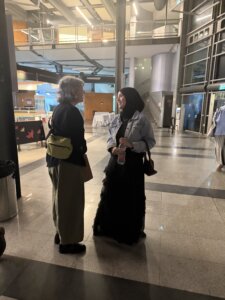
“I think there’s fear,” Ben Sasson explained. “The word ‘peace’ has come to sound political. And once something is labeled political, these legacy institutions don’t want to touch it.”
But that avoidance, she warned, comes at a cost.
“They cannot afford to just stick with the same old stale perception of Israel,” she argued. “If you aren’t willing to talk about the real-life issues that Israelis are facing, you simply won’t be relevant anymore — particularly for the young people in your community.”
“Do not be afraid of controversy,” she added. “Do not be afraid to invite an Arab and a Jew to your event, where there may be disagreement. That’s okay. Struggling and wrestling is a core part of our identity.”
While Ben Sasson contends there is a critical mass of people who are hungry for an alternative way to relate to Israel, the question of feasibility remains; the same question that follows the peace movement inside Israel: Does its growing visibility reflect real political momentum, or is it simply too late to reverse course?
To those who are ready to walk away altogether, Ben Sasson points out that Israel stands to lose not only their support, but also the values and organizing traditions American Jews have long brought to the relationship.
“You’ve helped us achieve so many things in Israel for decades,” she said. “You helped us get a state. And now we need a different kind of support. The Jewish values that you offer — the concept of tikkun olam, which is not at the heart of Israeli Judaism but is at the heart of American Judaism — this is the support you can offer us right now.”
Her final plea was simple.
“Do not give up on Israel,” Ben Sasson said. “There have been so many times when things felt insurmountable and you did not give up on us. Don’t give up on us now.”
The post ‘Don’t give up on us now’: Israel peace summit convenes thousands to aim for elusive progress appeared first on The Forward.
Uncategorized
A GOP lawmaker tried to put a Holocaust denier on New Hampshire’s Holocaust education board
(JTA) — A Republican state lawmaker in New Hampshire partnered with a notorious German Holocaust denier in an effort to insert Holocaust denial into the state’s public education guidelines.
Rep. Matt Sabourin dit Choinière successfully pushed the New Hampshire Commission on Holocaust and Genocide Education to hear testimony from Germar Rudolf, a German chemist who has previously been deported from the United States and served prison time in his home country for propagating Holocaust denial.
Two other Holocaust deniers also testified before the state House as a result of Sabourin dit Choinière’s efforts, including a man who grew up Jewish who has led protests outside a Michigan synagogue weekly for more than two decades.
Sabourin dit Choinière’s antics were first reported Wednesday by NPR. But the push actually took place in public view, during a livestreamed meeting of the state House’s Executive Departments and Administration Committee in January.
During the meeting, Sabourin dit Choinière testified that he had visited Dachau and seen a gas chamber, then learned that no one was ever gassed at Dachau. (The Dachau historic site says the chamber’s lack of use “remains unexplained.” More than 40,000 people died at Dachau.)
“This was the first doubt in my mind that over time led towards a revisionist thinking about the Holocaust,” Sabourin dit Choinière said before explaining that he was relieved to have discovered the “Committee for Open Debate on the Holocaust,” a group that produced a 54-volume set of books that he offered to the committee.
“Holocaust historical revision revisionism as a science does not deny that Jews were persecuted or deprived of their civil rights or deported or herded into ghettos. It does not deny that many were killed, but it does seek to learn why, how and when they died. And it seeks to separate the truth from the fiction,” he said.
“This is vitally important knowledge for the Holocaust and Genocide Education Commission’s curriculum development,” he continued. “If we are going to have Holocaust and Genocide Education taught in New Hampshire public schools, which I think it should be, it needs to be accurate and reliable.”
The Committee for Open Debate on the Holocaust is run by Rudolf, whose publications have claimed that Zyklon B was never used in the Auschwitz gas chambers, defended notorious Holocaust denier David Irving and cast doubt on photographic evidence of concentration camps.
Few people attended the public meeting, which mostly focused on the state retirement system. Among those in attendance were three men who testified: Rudolf and two members of his group.
“I have under my belt 35 years of research, organizing research, conducting and publishing research, of forensic and archival nature on the Holocaust question,” Rudolf said during his testimony.
The other two men both came in from Michigan: Henry Herskovitz, an Ann Arbor man who for decades has led weekly protests outside a synagogue’s Shabbat services that have incorporated Holocaust denial; and David Skrbina, a former professor at the University of Michigan-Dearborn who has published numerous Holocaust-denial books under a pseudonym.
“As a historical event of great importance, we must examine all sides of this topic with an open mind,” Skrbina told the committee. “Exaggerations, lies, gross errors, and physical impossibilities must be identified and rooted out if we are to learn from this event and to do justice to its many victims.”
During the meeting, the testimony elicited little pushback. One state lawmaker indicated sympathy to the Holocaust deniers’ testimony.
“I’ve been there. I’ve seen all of that. I’ve felt it when I walked around. And I think it’s a travesty that we’re trying to hide the truth about what’s happened in the past, and I want to thank you all for bringing this to the committee today, and I think all students everywhere should know what happened,” GOP state Rep. Susan DeRoy told the panel following Rudolf and Herskovitz’s testimony. “So my question would be, why do they want to cover this up?” (The chair shot down the line of questioning, saying, “It’s not an appropriate question.” DeRoy did not immediately reply to a request for comment.)
Sabourin dit Choinière also introduced an amendment that would have added a member of Rudolf’s extremist group to the commission, which oversees Holocaust education that is required in New Hampshire schools and is preparing to update curriculum materials.
The amendment failed. But the fact that it was made and entertained at all was deeply concerning to New Hampshire state representative Loren Selig, a Jewish Democrat and Holocaust commission member.
“Shocked would be an understatement,” Selig told NPR about the moment her colleague introduced it. “I could barely speak.”
Another member of the commission, Rabbi Jon Spira-Savett, told JTA that the incident was “horrifying.”
“Any time anything like this gets a public airing, that’s not good,” Spira-Savett, who leads Temple Beth Abraham in Nashua, said of the legislator’s flirtation with Holocaust denial. “The idea that somehow Holocaust education ought to include hearing the perspective of deniers — we are so, so far beyond that, and it’s terrifying we might actually have to make the case for that here in our state or anywhere.”
The commission was formed with a 2020 state law to set guidelines for the state on teaching the Holocaust, and includes lawmakers from both parties. Sabourin dit Choinière does not serve on it. Though commissioners are dedicated to the task, Spira-Savett said, “it isn’t a state where there’s a tremendous amount of resources to enforce the teaching.”
Unrelated to his Holocaust denial, Rudolf also has a criminal record, having been convicted in Pennsylvania, where he lives, of indecent exposure after being arrested for public nudity at a playground.
Sabourin dit Choinière’s antics come as the Republican Party grapples with internal tensions over antisemitism, as party leaders have grown divided by figures such as Tucker Carlson, Candace Owens and Nick Fuentes who have minimized the Holocaust or amplified deniers. Texas Sen. Ted Cruz lamented the rise of antisemitism in the party to the Republican Jewish Coalition conference earlier this year, while Vice President JD Vance has said he does not want to draw lines that would exclude such voices from the party.
A Republican candidate for state office rejected Sabourin dit Choinière’s endorsement of him following NPR’s reporting. The conservative group Americans For Prosperity, which has endorsed Sabourin dit Choinière in the past, condemned antisemitism in a statement to NPR.
Prior to NPR’s report, Sabourin dit Choinière’s Holocaust commission moves attracted little public attention. A New Hampshire progressive group in January called on House Speaker Sherman Packard to strip Sabourin dit Choinière of his committee assignments, which according to the House website he has retained.
“Promoting Holocaust denial and antisemitic conspiracy theories is incompatible with public service,” a co-founder of the Kent Street Coalition wrote in an open letter published in a nonprofit news site. “Rep. Sabourin dit Choinière should be removed from his committee assignments as a matter of principle and accountability.”
Holocaust education commissions have been the sites of controversy in other states. The South Carolina equivalent last year faced internal division over its chair’s decision to muzzle a local rabbi’s speech tying the Holocaust to modern U.S. policies. Texas’s own commission recently advised on a controversial proposed statewide required reading list, and Texas’s governor also recently appointed a Christian pro-Israel activist to the commission.
Sabourin dit Choinière isn’t the only member of New Hampshire’s state house to have made antisemitic comments related to the Holocaust this year. Another Republican, state Rep. Travis Corcoran, faced disciplinary hearings this week after tweeting a “final solution” joke aimed at a Jewish Democratic colleague.
The post A GOP lawmaker tried to put a Holocaust denier on New Hampshire’s Holocaust education board appeared first on The Forward.
Uncategorized
NH lawmaker reprimanded for ‘final solution’ joke aimed at Jewish colleague
(JTA) — A Republican state legislator in New Hampshire faced a disciplinary hearing this week for having tweeted a “final solution” reference at a Jewish Democratic colleague.
Last month, GOP state Rep. Travis Corcoran wrote on social media, “We need a final solution for theater kids in politics,” in response to state Rep. Jessica Grill’s bid to form a bipartisan “karaoke caucus.”
Corcoran is now facing a possible sanction or expulsion for his comment, which invoked the Nazi “final solution” to murder all Jews. His comments came as the Republican Party has faced internal divisions over the rise of antisemitism within its ranks, with white-nationalist figures and conspiracy theorists including Nick Fuentes and Candace Owens gaining a toehold in some corners of the party.
This week Corcoran defended his comments to the legislature, saying he was joking and did not know his colleague was Jewish. He called disciplinary procedures against him a “kangaroo court.”
“A joke is now being treated as though it were an act of malice, and sarcasm is being recast as hate speech. This is absurd,” Corcoran told colleagues during his testimony. On social media, he later wrote, “Apologies are a humiliation ritual that the left forces on people to demonstrate their power over you. Say whatever you want about me, but I’m never going to cower so that cucks will like me.” He used a common slang term for “cuckold,” a husband who has been cheated on.
A self-described libertarian, prolific social media user and self-published science-fiction author, Corcoran has developed a reputation in his state for coarse, frequently offensive commentary. He has urged his followers to “all say or type” the N-word “in a public place,” has said “crime is predominantly caused by African Americans” and, prior to his 2022 election, reportedly defended the 2011 attempted assassination of then-U.S. Rep. Gabby Giffords as “morally legitimate” on his blog.
Grill, the Jewish state lawmaker to whom Corcoran had directed his comment, called for Corcoran to be expelled from the state House, saying he had rejected requests to mediate the matter privately. Corcoran left the hearing before Grill spoke.
“As a Jewish lawmaker, the use of this phrase ‘final solution’ is especially disturbing,” she said during the hearing. “It’s not a poorly worded joke; it is targeted language with a specific historical meaning. And more importantly, it was delivered at a time when both antisemitism and political violence are, unfortunately, on the rise on all sides of the ideological spectrum.”
Grill continued, “An antisemitic threat does not serve the public interest or advance free speech and debate.”
Among the other voices calling for disciplinary action against Corcoran were current and former Jewish state lawmakers in New Hampshire, including Jeffrey Salloway, a former Democratic lawmaker in the state house and longtime lay leader in the Conservative movement of Judaism. Many non-Jewish commenters also gave testimony supporting Grill.
One Republican, state Rep. Matt Drew, defended Corcoran on free-speech grounds but did not say whether he believed the comment was antisemitic.
Corcoran was not the only New Hampshire Republican state lawmaker to face controversy this year over Holocaust-related comments. A colleague, state Rep. Matt Sabourin dit Choinière, invited Holocaust deniers to testify to the state’s Holocaust education committee in January while attempting to push an amendment to incorporate Holocaust denial into the state’s public education guidelines.
The post NH lawmaker reprimanded for ‘final solution’ joke aimed at Jewish colleague appeared first on The Forward.