



Uncategorized
The Media Keeps Treating Terrorists as Civilians — Here’s the Proof

Palestinians pass by the gate of an UNRWA-run school in Nablus Photo: Reuters/Abed Omar Qusini.
Since October 7, 2023, the media has worked tirelessly to accuse Israel of deliberately targeting civilians.
Yet despite Israel’s extensive efforts to minimize civilian harm, the terrorist organizations it is fighting have systematically worked to ensure the opposite outcome.
Hamas, Islamic Jihad, and Hezbollah have embedded themselves deeply within civilian society, inflating casualty figures while obscuring the military identities of many of those killed.
In both Gaza and Lebanon, this strategy has produced what researchers describe as a “resistance society” — a system in which operatives simultaneously hold civilian professions that provide both legitimacy and operational cover.
Journalism is among the most visible examples.
In Gaza alone, more than 100 terrorists operating under the cover of journalism have reportedly been killed by the IDF since October 7. Meanwhile, Hezbollah-affiliated media figures in Lebanon are routinely portrayed by international outlets as innocent civilians or independent reporters.
But the evidence does not come solely from Israel.
Again and again, Hamas, Islamic Jihad, and Hezbollah themselves publish martyrdom posters identifying deceased operatives not only by their military affiliations, but also by their civilian professions.
The pattern is striking: terrorists simultaneously serving as doctors, teachers, paramedics, police officers, lawyers, musicians, and journalists.
Hospitals as Operational Cover
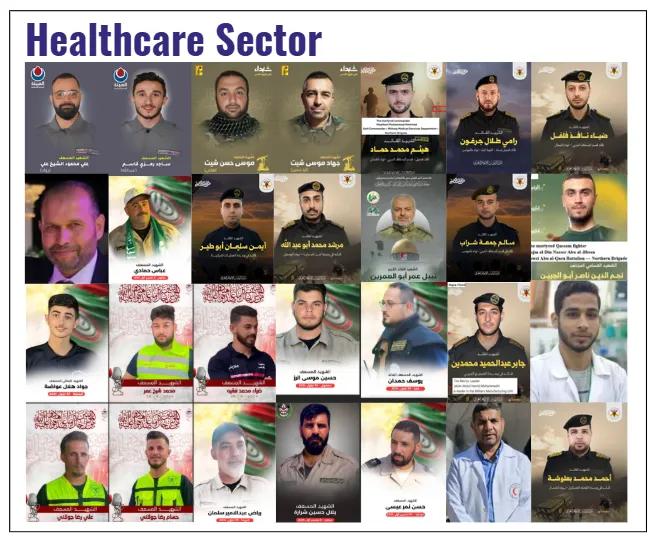
International media coverage has consistently framed Israeli military operations near hospitals as attacks on civilian medical infrastructure. But Hamas and Islamic Jihad have repeatedly embedded operatives inside those facilities, stripping them of protected civilian status under the laws of armed conflict.
Hospitals in Gaza have allegedly functioned not only as treatment centers, but also as operational hubs, weapons storage sites, and cover for terrorist activity. Many individuals publicly described as “medical workers” were later identified by terror organizations themselves as operatives.
One prominent example is Marwan Al-Hams, identified as a Hamas operative who was detained in July 2025 over suspected knowledge regarding the whereabouts of fallen IDF officer Lt. Hadar Goldin.
Palestinian and pro-Palestinian media initially portrayed his detention as the “abduction” of a medical professional — coverage that largely disappeared once his Hamas affiliation became public.
Not only is Hams a member of Hamas, he is also a doctor. He was captured in July 2024. Palestinian media decried the incident as an abduction of medical personnel by Israel. https://t.co/aOO6D9nLPW pic.twitter.com/3PPXBuY3Bi
— Joe Truzman (@JoeTruzman) November 20, 2025
Other documented cases include:
- Ayman Abu Teir, identified as an Islamic Jihad commander.
- Khaled Al-Rakiei, who led the Islamic Jihad in the western Gaza Strip while working as a doctor in Al-Nasr Children’s Hospital.
- Murshid Abu Abdullah, identified as a commander in Islamic Jihad’s Khan Younis Brigade and the managing director of the al-Baraka Specialized Health Center, as well as a radiology technician at al-Shifa Hospital in Gaza City.
- Rami Talal Mohammed Jarghoun, a commander in Islamic Jihad’s al-Balad Battalion’s Support Unit within the Khan Younis Brigade and an administrative supervisor at the European Hospital in Khan Younis.
- Najm Abu al-Jibeen, a Qassam commander who worked as a nurse.
- Salem Juma Ishaq Sharab, a commander in Islamic Jihad’s Military Ambulance Unit in the Khan Younis Brigade, a nurse at Nasser Hospital, and treasurer of the Palestinian Nursing Association.
- Diaa Nafez Abdulhadi Felfel, a commander in Islamic Jihad’s Military Ambulance Unit in its Northern Brigade, and a nurse and the emergency room supervisor for the Indonesian Hospital in north Gaza.
Ambulances and Emergency Services
The same pattern extends to paramedics and emergency medical services.
Hezbollah operates its own medical infrastructure through the Islamic Health Authority, whose personnel have been identified as Hezbollah operatives.
Hezbollah announces the deaths of two paramedics of their Islamic Health Authority, killed in an Israeli strike in southern Lebanon. pic.twitter.com/NrSkke81bp
— Emanuel (Mannie) Fabian (@manniefabian) January 11, 2024
Evidence has suggested that the ambulances are used to transport terrorists between locations discreetly. The IDF has additionally released videos displaying weapons in ambulances.
Hamas has similarly exploited ambulances. Ibrahim Abu Tzakar, a Hamas-affiliated terrorist who participated in the kidnapping of an Israeli civilian, also worked as a paramedic.
The Classroom-to-Terror Pipeline
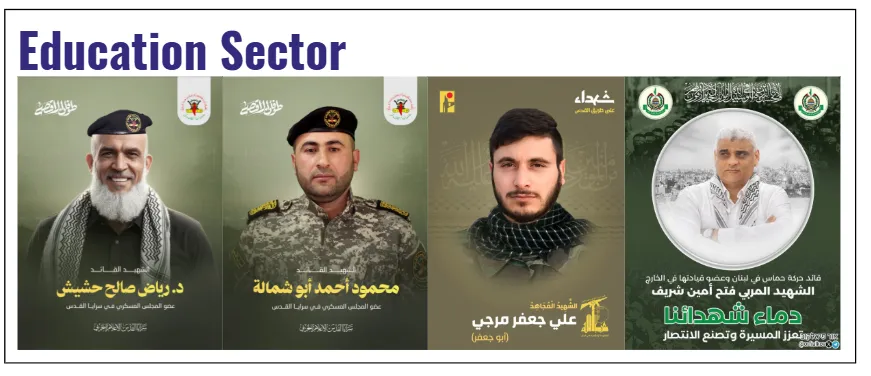
While Israel has been accused of “scholasticide,” mounting evidence points to extensive terrorist entrenchment within Gaza’s educational infrastructure.
Teachers and professors have repeatedly been identified as Hamas, Islamic Jihad, or Hezbollah operatives. Some UNRWA-affiliated teachers were allegedly involved in the October 7 attacks themselves.
A second recording published by the IDF is a conversation in which an Islamic Jihad terrorist employed as a teacher in an UNRWA school states that he is inside Israel during the October 7 Hamas-led terrorist attacks. pic.twitter.com/wwh69m13o8
— Joe Truzman (@JoeTruzman) March 4, 2024
Among the documented examples:
- Muhammad Ghafour, an Arabic teacher in an UNRWA school and a Hamas member.
- Fathi al-Sharif, a Hamas commander in Lebanon who also headed UNRWA’s teachers’ union there.
- Dr. Riyad Abu Hashish, a university history professor, and Mahmoud Ahmed Abu Shamala, a physics teacher, were senior Islamic Jihad terrorists.
- Ali Jaafar Marji, a Hezbollah operative, also worked as a physics teacher in Hezbollah’s independent education system.
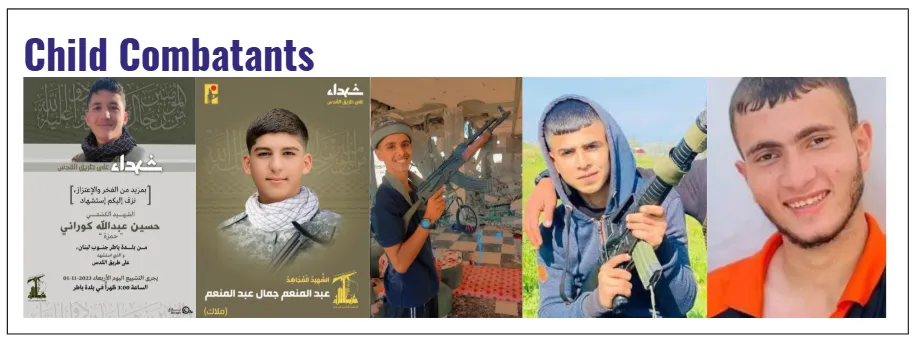
The consequences extend beyond staffing.
Children as young as 13 have reportedly appeared in the ranks of Hamas and Islamic Jihad, underscoring the extent to which extremist ideology has permeated educational and social systems.
Hamas and Gaza’s Security Apparatus
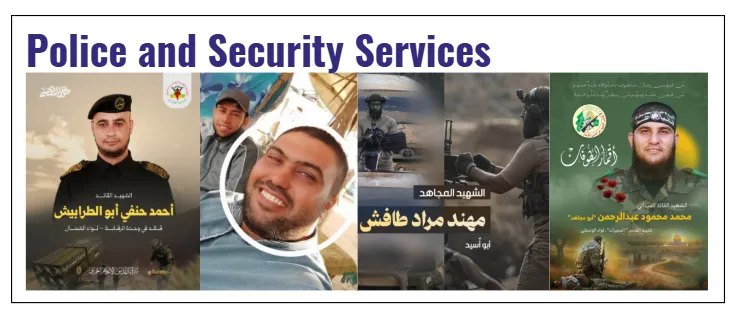
Hamas’ integration into civilian institutions extends deeply into Gaza’s police and internal security infrastructure.
The terror group has reportedly sought to incorporate 10,000 police officers into a future governing framework in Gaza despite many officers maintaining affiliations with Hamas or other terror factions.
This overlap helps explain why Israel has repeatedly targeted police infrastructure during the war.
This is Mohannad Tafesh, a Hamas member who was killed during the October 7 attack. His death isn’t notable per se.
What is notable is that he was also a police officer. It adds to the mountain of evidence that Hamas has ties to all security bodies in Gaza. pic.twitter.com/PgECqI41s9
— Joe Truzman (@JoeTruzman) May 6, 2026
Cases cited include:
- Ahmed Hanafi Ahmed Abu Tarabish, who was an Islamic Jihad commander in the Northern Brigade’s Surveillance Unit and also a police captain.
- Muhammad Abdul Rahman, who was a member of another security body that operated under Hamas’ Ministry of Interior.
- Sabri Mutawaq and Mohannad Tafesh, who both took part in the attacks on October 7, 2023, were police officers.
Terror Embedded Across Civil Society
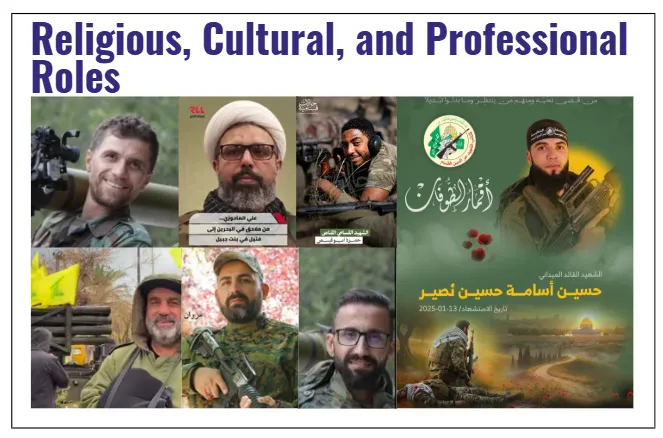
The phenomenon is not confined to healthcare, education, or policing.
Terror organizations also benefit from embedding operatives in professions that carry social legitimacy or cultural influence.
Examples include:
- Hussein Osama Hussein Nasir, who was a Hamas field commander and lawyer.
- Ahmed Akram Saeed al-Haitham and Mahmoud Mohammed Shehadeh Khattab, who were Islamic Jihad platoon commanders and lawyers.
- Ahmad Allawiya, who was a Hezbollah operative and lawyer.
- Hamza Abu Qenas, who was a musician and a Qassam Brigades terrorist.
- Ali al-Mahoozi, who was a Bahraini sheikh fighting as a Hezbollah operative.
These dual identities help terrorist organizations blur the line between civilian and combatant while strengthening their entrenchment inside society.
When terrorist organizations systematically embed themselves within civilian infrastructure, that fact is not incidental — it is central to understanding the conflict.
Much of the evidence documenting these affiliations comes directly from Hamas, Islamic Jihad, and Hezbollah themselves. Their own martyrdom announcements repeatedly reveal that many individuals later described internationally as “civilians” were active members of terror organizations leading double lives inside civilian society.
The question is whether international media outlets are willing to acknowledge the pattern — or whether they will continue reporting only half the story.
The author is a contributor to HonestReporting, a Jerusalem-based media watchdog with a focus on antisemitism and anti-Israel bias — where a version of this article first appeared.
Uncategorized
US May Ask Israel to Put Palestinian Tax Money Toward Trump’s Gaza Plan, Sources Say

US President Donald Trump takes part in a charter announcement for his Board of Peace initiative aimed at resolving global conflicts, alongside the 56th annual World Economic Forum (WEF), in Davos, Switzerland, Jan. 22, 2026. Photo: REUTERS/Denis Balibouse
The US is considering asking Israel to give some tax money it is withholding from the Palestinian Authority to Donald Trump’s Board of Peace to fund the US president’s post-war plan for Gaza, five sources familiar with the matter said.
The Trump administration has not yet decided whether to make a formal request to Israel, said three of the sources, officials with knowledge of US deliberations with Israel.
The two other sources, Palestinians with knowledge of the deliberations, said that under the proposal a portion of the tax money would go to a US-backed transitional government for Gaza and other funds to the PA if it makes reforms.
The PA puts the amount of tax being withheld at $5 billion.
The prospect of the Palestinians’ own tax money being repurposed toward Trump’s Gaza rebuilding plan, over which their government has had no input, could further sideline the Western-backed PA even as Israel‘s withholding of the funds begets a financial crisis in the West Bank.
The PA exercises limited self-rule in the West Bank but has not had any sway over Gaza since it was exiled from the territory after a brief civil war with terrorist group Hamas in 2007.
Trump’s plan for Gaza, shattered after more than two years of war, has been held up by a refusal by Hamas to lay down their weapons.
‘MONEY HELD IN A BANK DOES NOTHING’
The Board of Peace declined to comment on whether a proposal to use Palestinian tax money was under consideration.
A Board official said it had asked all parties to leverage resources to support Trump’s rebuild plan, estimated to cost $70 billion.
“That includes the Palestinian Authority and Israel. There is no doubt that money held in a bank does nothing to further the President’s 20-Point Plan,” the official said.
That appeared to refer to the PA tax revenue that Israel has withheld from the body in a long-running dispute over payments it makes to Palestinians and their families for carrying out terrorist attacks against Israelis.
Under this policy, official payments are made to Palestinian prisoners held in Israeli jails, the families of “martyrs” killed in attacks on Israelis, and Palestinians injured in terrorist attacks.
Reports estimate that approximately 8 percent of the PA’s budget has been allocated to paying stipends to convicted terrorists and their families.
Israel collects taxes on imported goods on behalf of the PA and is meant to transfer the revenue under a longstanding arrangement. The PA is supposed to use the funds to pay civil servants and fund public services.
The sources did not say how much of the tax money Washington was considering asking Israel to transfer to the Board.
The US State Department, Israeli government, and PA did not immediately respond to requests for comment.
The US and Israel have long pressured the PA to abolish payments to Palestinian prisoners and families of those killed by Israeli forces, arguing it encourages violence.
In response to US pressure, the PA in February 2025 said it was reforming the payment system, but the US said those changes did not go far enough. As punishment, Israel has withheld taxes it collects on the PA’s behalf, an amount that Palestinian officials say has reached $5 billion – well over half of the PA’s annual budget.
That has set off a financial crisis in the West Bank, with the PA slashing salaries of thousands of civil servants.
Israel accepted a US invitation to join the Board of Peace. The PA was not invited.
Under Trump’s plan, a group of Palestinian technocrats dubbed the National Committee for the Administration of Gaza would take control of Gaza from Hamas as the terrorists lay down their weapons.
Nickolay Mladenov, Trump’s Board of Peace envoy for Gaza, said during a press conference in Jerusalem on Wednesday that reconstruction planning was in advanced stages.
“We’re doing it sector by sector. We’re costing things. We’re coordinating with donors and we’re ready to begin in earnest once the conditions allow it,” Mladenov said, without mentioning the tax issue.
Uncategorized
UK Man Appears in Court Over Stabbing of Two Jewish Men in London
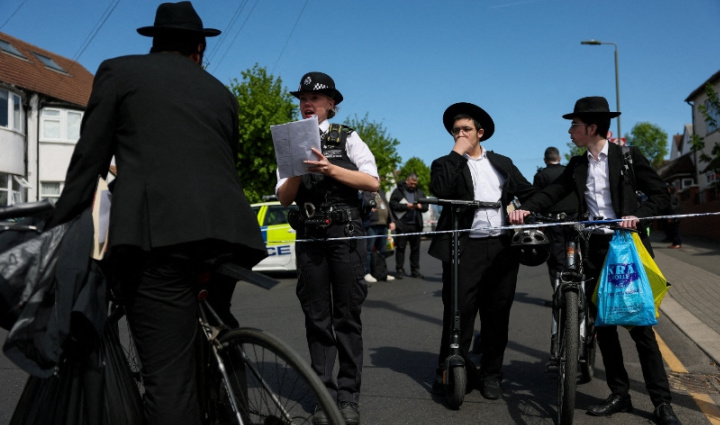
A police officer stands by a cordon at the scene, after a man was arrested following a stabbing incident in the Golders Green area, which is home to a large Jewish population, in London, Britain. Photo: REUTERS/Hannah McKay
The trial of a 45-year-old man charged with attempted murder over a knife attack during which two Jewish men were stabbed will take place next March, a London court heard on Friday.
Essa Suleiman, a British national who was born in Somalia, is alleged to have tried to kill two Jewish men on April 29 in north London‘s Golders Green area, which is home to a large Jewish population.
The incident was the latest in a spate of attacks targeting Jewish premises in the area, which have left Jewish communities fearing for their safety, prompting British Prime Minister Keir Starmer to vow stronger action.
Suleiman is also charged with a third count of attempted murder, relating to an unconnected incident at the home of a former acquaintance earlier the same day, and with possession of a bladed article.
He appeared at London‘s Old Bailey court on Friday and was not asked to enter pleas to any of the four charges he faces. A date of March 1, 2027, was set for his trial, and he remains in custody.
Uncategorized
Trump Leaves Beijing With No Major Breakthroughs on Iran, Trade

Chinese President Xi Jinping inspects an honor guard with US President Donald Trump during a welcome ceremony at the Great Hall of the People, in Beijing, China, May 14, 2026. Photo: REUTERS/Maxim Shemetov/Pool
US President Donald Trump left China on Friday with no major breakthroughs on trade or tangible help from Beijing to end the Iran war, despite two days spent heaping praise on his host, Xi Jinping.
Trump‘s visit to America’s main strategic and economic rival, the first by a US president since his last trip in 2017, had aimed for tangible results to lift his sagging approval ratings before midterm elections in November. Xi will visit the US in the fall at Trump‘s invitation, China’s Foreign Minister Wang Yi said.
The summit was filled with pageantry, from goose-stepping soldiers to tours of a secret garden. But behind closed doors, Xi issued a stark warning to Trump that any mishandling of China’s top concern, Taiwan, could spiral into conflict.
During a huddle with reporters on the way back to the US, Trump said Xi told him he opposed Taiwan’s independence.
“I heard him out. I didn’t make a comment … I made no commitment either way,” said Trump. He added that he will decide on a pending arms sale to Taiwan shortly, after speaking to “the person that right now is … running Taiwan.”
It was unclear if Trump was referring to Taiwan’s president, Lai Ching-te.
A direct conversation between a sitting US president and Taiwan’s leader would be unprecedented in the period since Washington shifted diplomatic recognition to Beijing from Taipei in 1979, and would likely anger China, which sees the democratically governed island as its own territory.
These were the first freewheeling remarks after two days in Beijing during which Trump stayed unusually restrained, with his off-the-cuff comments mainly focused on feting Xi‘s warmth and stature.
“It’s been an incredible visit. I think a lot of good has come of it,” Trump told Xi at their final meeting at the Zhongnanhai complex, a former imperial garden.
While Trump searched for immediate business wins, such as a deal to sell Boeing jets that did not impress investors, Xi talked up a long-term reset and pact to maintain stable trade ties with Washington, underscoring their differing priorities.
Xi pushed a new term by describing the relationship as “constructive strategic stability” – a sharp departure from the framing of “strategic competition” used by former US President Joe Biden, which Beijing disliked.
“Until now, China hasn’t proposed an alternative – now they have – if the US side agrees, that is progress,” said Da Wei, director of the Center for International Security and Strategy at Tsinghua University in Beijing.
NO HELP ON IRAN
A brief US summary of Thursday’s talks highlighted what the White House called the leaders’ shared desire to reopen the Strait of Hormuz off Iran, and Xi‘s interest in American oil purchases to pare its dependence on the Middle East.
But just before the leaders met for tea on Friday, China’s foreign ministry issued a blunt statement outlining its frustration with the war.
“This conflict, which should never have happened, has no reason to continue,” the ministry said, adding that China supported efforts to reach a peace deal in a war that had disrupted energy supplies and the global economy.
At Zhongnanhai, Trump said the leaders had discussed Iran and felt “very similar,” though Xi did not comment. On the flight back home, Trump added that he wasn’t “asking for any favors” on Iran.
Still, US Treasury Secretary Scott Bessent had urged Beijing to use its leverage with Tehran to make a deal. But analysts doubt Xi will be willing to push Tehran hard or end support for its military, given Iran’s value to Beijing as a strategic counterweight to the US.
“What’s notable is that there’s no Chinese commitment to do anything specific with regards to Iran,” said Patricia Kim, a foreign policy fellow at the Brookings Institution.
BOEING SHARES SLIDE ON UNDERWHELMING DEAL
In another sign of a diminished scale of the summit, Trump’s readout did not mention the broad structural reforms on which previous presidents pressed Xi.
Unlike his previous trip in 2017, Trump did not discuss “structural reforms,” “global economic governance,” or the “international trading system” with Xi, according to the readout.
Even the deal touted as the biggest single deliverable from the meetings underwhelmed. Boeing stock fell 4% when Trump said on Thursday that China would buy 200 Boeing jets, significantly fewer than the roughly 500 that sources told Reuters had been under discussion.
He later added that the order could go up to 750 planes “if they do a good job with the 200.”
US officials said they had agreed deals to sell farm goods and made progress on mechanisms to manage future trade, with both sides expected to identify $30 billion of non-sensitive goods.
There were scant details of the deals, however, and no signs of a breakthrough on selling Nvidia’s advanced H200 AI chips to China, despite CEO Jensen Huang’s dramatic last-minute addition to the trip.
Trump also left without official resolution to the rare earths supply problem that has dogged ties since China imposed export controls on the vital minerals in response to Trump‘s tariff barrage in April 2025.
While the leaders struck a truce last October for Washington to lower tariffs in exchange for China keeping rare earths flowing, Beijing‘s controls have caused shortages for US chipmakers and aerospace companies.
When asked if the two sides extended the truce beyond later this year, Trump said he and Xi “did not discuss tariffs.”
Such an extension would be “the most basic benchmark” for the success of the summit, said Brookings’ Kim.
Xi‘s remarks to Trump that mishandling Taiwan, the democratically governed island Beijing claims, could lead to conflict, delivered a sharp warning during a summit that otherwise appeared friendly and relaxed.
Taiwan, 50 miles (80 km) off China’s coast, has long been a flashpoint in ties, with Beijing refusing to rule out use of military force to gain control of the island and the US bound by law to provide it the means of self-defense.
“US policy on the issue of Taiwan is unchanged as of today,” Secretary of State Marco Rubio told NBC News. Taiwan Foreign Minister Lin Chia-lung said Taiwan would continue to deepen ties with the US and like-minded countries in the Indo-Pacific, adding that China was increasing regional “risks.”