


Uncategorized
Israel’s Noam Bettan takes 2nd at Eurovision, buoyed by scrutinized public vote
(JTA) — The Israeli contestant in the Eurovision Song Contest won second place for the second year in a row, drawing a strong public vote despite protests over Israel’s inclusion in the contest.
Noam Bettan and his song “Michelle” ranked third in the public vote and eighth in the jury vote, which combined to give him second place behind the entry from Bulgaria, which won the contest for the first time.
Bettan thanked his fans in a post on Instagram after leaving the stage.
“I’m still processing everything and trying to find the words for this incredible journey. You guys are amazing and this is all because of you. I love every single one of you!” he wrote. “This is just the beginning, there are so many amazing things in the way! 🤍Am Israel Chai!!!”
Five countries boycotted the contest this year over Israel’s inclusion, citing Israel’s military operations in Gaza. After the competition, a spokesperson for VRT, Belgium’s national broadcaster, said the country was unlikely to participate next year unless the European Broadcasting Union, which runs the contest, makes “a clear statement against war and violence and for respect for human rights.” Belgium came in 21st of 25 competitors in the final.
Bettan faced a smattering of boos both during the semifinal on Tuesday and during the final on Saturday in Vienna, as well as when Israel briefly led the leaderboard during the announcement of the audience votes. He told the Jewish Telegraphic Agency ahead of the final that he believed he had more fans than detractors and that he would focus on them.
Israel scored 220 points in the public vote after drawing a formal warning from the EBU for its campaign urging supporters to send all 10 of their votes to Bettan. Israel’s broadcaster called off the campaign after being told it was “not in line with our rules nor the spirit of the competition.”
Israel also drew 123 points from national juries, more than twice what it earned last year when 22 countries awarded Israel no points at all in a result seen as driven in part by political tensions.
This article originally appeared on JTA.org.
The post Israel’s Noam Bettan takes 2nd at Eurovision, buoyed by scrutinized public vote appeared first on The Forward.
Uncategorized
Jake Lang led a protest against Mamdani and Muslims. Then the Nazis showed up to protest him.
Far-right activist Jake Lang led a march last week protesting Mayor Zohran Mamdani’s presence at the 9/11 25th anniversary memorial ceremony. The protest attracted swastika-sporting men describing themselves as Nazis; they were there to counterprotest Lang, whose mother is Jewish.
Around 100 demonstrators attended Lang’s march, which happened blocks away from the ceremony held at Ground Zero. Lang described the march on X as a “Great CRUSADE on Muslim SCUM Zohran Mamdani.”
The “crusade” was laden with anti-Muslim messaging, including a poster reading “Deport All Muslims.” About 40 counter-protesters arrived to oppose Lang. While most were antiracist protesters, seven were neo-Nazis. One counter-protester got into a physical altercation with someone from Lang’s march.
Lang is best known for his role in the Jan. 6 insurrection. He spent four years in prison, facing assault charges for attacking a police officer with a baseball bat, before being pardoned by President Donald Trump. In August, Lang lost a campaign to secure a Republican congressional nomination in Florida.
Though Lang’s mother is Jewish, he identifies as Christian, and has brandished wooden crosses at his marches, some of which he called “Christian Crusades.” Lang has publicly renounced his Judaism and the state of Israel, burning a copy of the Talmud and performing a Heil Hitler salute outside the AIPAC headquarters in D.C.
Nevertheless, seven men wearing swastika armbands — and one clad in an Elmo suit draped with a Palestinian flag as a cape — stood near Lang’s march holding a sign reading, “Jake Lang is a Jew.”
The men performed Sieg Heil salutes and, in an unusual move for self-identifying Nazis, chanted “Free, free Palestine,” alongside the declaration, “We are the real racists.” They passed out flyers reading “no more wars for Jews” and ranted about American soldiers lost in battles they said were directed by Israel.
“I want them out of our government,” said one of the men, Gregory Conte, a former schoolteacher who was fired for his white-nationalist ties. “And not just Zionists — Jews.”
The swastika-clad men drew a bevy of critics, including one man who told them, “I agree Israel did 9/11, but you guys are Nazis, man, you guys brought them to Palestine.”
One person filming the protest asked Conte, “Do you hate Jewish people?” He replied: “I’ve never had one do a good thing for me.” Conte then asked whether the man behind the camera was Jewish and he said he was; Conte refused to speak to him further, stating that he does not talk to Jews.
Footage showed Conte on the subway, this time without his armband, talking about how “Jake Lang is trying to start a war.” Independent journalist Talia Jane asked him, “Want to show them your armband?” Conte declined to take it out.
The post Jake Lang led a protest against Mamdani and Muslims. Then the Nazis showed up to protest him. appeared first on The Forward.
Uncategorized
Why antisemites are shopping in the kosher aisle
“I had sex with a Jewish billionaire and made him tell me why nobody in their family is fat.”
This is the opening line of an eight-minute viral AI video hawking an oregano oil supplement, claiming it is the closely guarded Jewish secret to svelte physiques.
The animated video, which is entirely in song, features a Black woman — the narrator who has sex with the Jewish billionaire — who works for a wealthy Jewish family that includes both black-hatted Orthodox men and women wearing kippot, a practice unheard of in Orthodox circles.
The woman sings about her confusion over the family’s slim physiques despite the fact that they never exercise and eat big meals of brisket and “challah bread” (incorrectly pronounced with a hard “ch”). But when she begins a romance with the son, they reveal that they all take an oregano oil supplement that gets rid of the “parasites” that regular Americans get “from food, water — everywhere.” The woman begins to take the oil and gives it to her mother; both become magically healthy.
The ads seem like an outgrowth of the popularity of the term goyslop, the false conspiracy that Jews are feeding the masses heavily processed, nutritionally bankrupt foods in order to weaken non-Jews so they are easier to control. (Jews in this conspiratorial universe run the world, of course.) The implied flipside, it seems, is that Jews eat secret, incredibly healthy, strengthening sustenance, which remains hidden from everyone else.
Goyslop isn’t a new idea; in fact, the idea that Jews had a secret food that kept them healthier than everyone else is part of old Russian folklore. But the term found mass visibility thanks to the mainstreaming of scientifically dubious alternative health ideology popularized by Robert F. Kennedy Jr., and is particularly popular among naturopathic health influencers who are skeptical of pasteurization and Western medicine. (RFK has not himself used the term.)
Perhaps it shouldn’t be surprising, then, that some conspiratorial influencers are advising their followers to look for a few supposedly secret symbols in the grocery store that they believe prove the food is safer and higher quality: hechshers.
“If you look on the labels, you’ll see a ‘U’ in the corner, or sometimes it’ll say kosher,” said one influencer in a viral video of this ilk. “If the 🧃 are eating and drinking it, it’s a lot safer than the food that they’re giving us.” She also warns against eating pork and encourages her followers to shop in the kosher aisle. (The influencer bleeps out the word “Jews” in her video, and replaces it in the closed captions with a juicebox emoji, referencing a common code — “juice” — that antisemites often use to talk about Jews while avoiding censorship.)
“Goyslop is the poison that they feed us, goyim, we’re the cattle, we’re subhuman to these people,” said antisemitic influencer Ryan Matta, in another guide to the grocery store pointing out hechshers. “So if you’re not getting the bottles that are labeled with the K or the special label, then it’s not kosher. And if it’s not kosher, it’s poison.”
(Matta, who does not seem to understand any actual rules of kosher, spends much of the video trying to find a kosher version of his preferred pasta sauce flavor: Italian sausage.)
Resilia, the company hawking its supplements in the ad, has made numerous AI singing ads; many have received multiple millions of views. The ads aren’t always about Jews; one — confusingly for a product supposed to make you healthier — features a decrepit singing skeleton. Others namedrop different ethnic groups like Norwegians. Almost all of them involve cheating or illicit affairs, as is common in AI-generated videos posted across the internet, many of which feature soap operas starring families of fruit or sodas.
But more than one of the Resilia ads features Jews hiding health secrets. Another one, with 4.3 million views on YouTube, has nearly the same plot as the first, just gender-swapped — a male gardener has an affair with the wife of a Jewish billionaire who, after making him promise to keep it secret, tells him that Resilia’s garlic supplements are the key to the family’s heart health and lack of diabetes.
Goyslop has become a casual and ubiquitous meme — teenagers throw it around to refer to low-quality food like chips or hot dogs, but also bad movies and TV. They are often blaming corporations, not Jews, for feeding the masses swill. They’re also, almost always at least, joking.
Still, the underlying idea — that unhealthy food is somehow, nefariously, connected to Jews — persists through the language, even if the majority of jokesters don’t understand the reference.
Perhaps that’s how we got the Resilia ad about secret Jewish oregano oil supplements. It’s not clear if the company purposefully inserted Jewish content into some of their ads; the AI customer service bot on the company website denied any relationship to Judaism. Resilia is purported to have thousands of these AI singing ads, so the Jewish narrative may purely be a result of the algorithmic machine resurfacing the antisemitism it consumed in its training data.
In any case, however healthy the supplements Resilia sells might claim to be, the ad is its own form of slop — AI slop.
The post Why antisemites are shopping in the kosher aisle appeared first on The Forward.
Uncategorized
Israel’s culture minister called this documentary about IDF tactics ‘vile.’ It deserves to be seen.
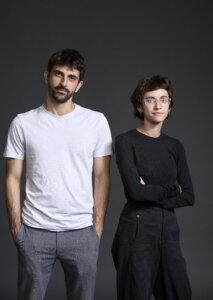
VENICE — At its premiere here last week, towards the end of the 83th Venice International Film Festival, Naza, Yuval Abraham and Rachel Szor’s documentary about Israel’s killing of Palestinian civilians in Gaza, received a 25-minute-long standing ovation, a record at the festival. Two nights later, the film won the festival’s Special Jury Prize. By Sunday, Israel’s culture minister, Miki Zohar, was calling the film “vile,” describing it as treason and threatening to revoke its directors’ citizenship. Zohar invoked his reform of cinema funding, saying Israelis should no longer have to pay for work that harms the army and the state.
I left the press screening of Naza angry, depressed and utterly convinced of its importance. Its account of the procedures that govern the deaths of civilians is devastating precisely because so much of the testimony sounds like people describing an ordinary working day. The film will have its North American premiere at the New York Film Festival on Sept. 26. It deserves to be seen, and debated with considerably more patience than some of its detractors have displayed.

Venice has traditionally worn its politics more lightly than Berlin, where a filmmaker’s acceptance speech can cause an international incident. This year, however, festival director Alberto Barbera programmed a competition that invited controversy. Alongside Naza was Ilya Khrzhanovsky’s DAU, which drew Ukrainian objections over the production’s Russian connections (including to Sergei Adoniev, a businessman who has been sanctioned by Ukraine and the U.S.) In the run-up to the festival, Barbera defended DAU as a denunciation of totalitarianism. Both films are international productions by directors whose countries have become objects of international opprobrium. Both venture into their societies’ heart of darkness. Barbera deserves enormous credit for programming them both in the main section of the world’s oldest film festival despite the objections of many.
Berlin supplies a cautionary precedent. No Other Land, the Oscar-winning documentary Abraham and Szor made with Palestinians Basel Adra and Hamdan Ballal, premiered there in 2024, where it won the festival’s documentary prize. After Abraham and Adra gave speeches condemning Israel’s policy of apartheid in the West Bank, the German culture minister Claudia Roth, caught on camera applauding at the ceremony, clarified that her applause had been intended for the Israeli director. I shudder to imagine the official response Naza might have elicited there. Venice at least offered an opportunity to discuss what was on screen.
The film, which presents testimonies from 24 serving and former military personnel, grew out of years of investigative reporting. Produced by the British newspaper the Guardian and JW Films, in collaboration with the Israeli-Palestinian magazine +972 and its news website Local Call, it builds on Abraham’s investigations into Israeli intelligence and his work with Guardian journalist Harry Davies. Revelations about targeting systems had appeared in print while filming was underway and were subsequently reported on by both The New York Times and Washington Post. All this means that the disclosures made in Naza are not brand new. However, the stark, focused and lean approach that Abraham and Szor take in the documentary ensure that the information hits home with chilling force.
The film’s unusual title is the Hebrew term for collateral damage — specifically, the anticipated civilian toll of a military strike in Gaza. Speaking to Abraham from a series of Tel Aviv rooftops at night, the interviewees, whose appearances and voices are digitally disguised, explain with patient detachment how targets in Gaza are identified and eliminated. One of the tools used to identify suspected militants is an AI system called Lavender. The frightening efficiency of such technology is discussed alongside the human decisions that determine what constitutes an acceptable loss.
One of the most disturbing claims has prompted a specific military rebuttal. An interviewee says a strike was once approved with 500 civilian deaths anticipated; he does not know how many were actually killed. The IDF claims it has never planned, approved or conducted a strike expecting anything near that toll, and challenges the filmmakers’ ability to verify the account. It also maintains that humans authorize strikes and questions the witnesses’ competence to discuss broader strategy.
The film’s restraint gives incendiary testimony such as this time to register. For the majority of the film, we only glimpse the interviewees’ faces in silhouette and watch as they crudely draw diagrams to explain the logistics of a military strike, say, on a crowded building. Every so often the camera wanders off the roof, peering into the illuminated homes and high-rise office buildings of Tel Aviv at night. The point is precisely to convey an unsettling sense of normalcy.
I was particularly struck by the absence of the racist invective I had half expected. Some interviewees describe themselves as educated, liberal people. Their accounts nevertheless reveal a callous disregard for civilian causalities. One recalls the pleasure of a job well done. “It’s so much fun,” he says of reaching his targets and we hear in his voice how the remote killings he takes part in gives him an indescribable rush. After a pause, he tells Abraham that as someone raised in the Israeli context, someone who had got to visit the death camps in Poland, he always considered and asked himself how they could do what they did. “For me the Nazis are evil,” he says. “So what does that make me?” It is perhaps the film’s most damning exchange.
One of Naza’s strength as a documentary is that it does not demand agreement that Israel is committing war crimes, including genocide, before its investigation begins. That gives it a chance to reach people who have defended Israel and remain capable of reconsidering their position.
Some of the most vociferous criticism of Naza has not come from IDF spokesmen or other Israeli officials. Almost immediately after the premiere, footage from the film’s lengthy ovation (where Abraham and Szor stand looking intensely uncomfortable and withdrawn) went viral, with numerous commentators on X and other platforms making ugly accusations against the filmmakers, including for granting anonymity to the whistleblowers who feature in the film.
“A viscerally nauseating spectacle. Imagine SS officers, shielded and protected by anonymity, getting a 25-minute standing ovation for recounting their tortures and murders. Criminal perpetrators should only be heard at their trials not at gala celebrations,” read one tweet that has been viewed close to 150,000 times. Though the language of that post is particularly incendiary, the sentiment it expresses is surprisingly widespread on social media.
Confidentiality was a condition of obtaining these accounts, a standard journalistic arrangement that confers no clemency. At the press conference, Abraham described that his sources were motivated variously by remorse and professional pride. He affirmed that his goal was to keep the victims of Gaza at the film’s center — and not to congratulate its witnesses.
The tenor of this debate recalls Nadav Lapid’s withdrawal from the Marseille film festival in June after boycott calls. His Yes, an infernal satire of post-Oct. 7 society, is a ferocious attack on Israeli complacency. It would take considerable ingenuity or imagination to claim that either it or Naza is an apology for Israel.
Accepting his award in Venice, Abraham said that he made Naza because “the denial of a crime is what helps it persist.” He later pledged to distribute the film as widely as possible in Israel. The interviewees, he explained, “spoke in Hebrew because they wanted to reach out to the Israeli public.” Not surprisingly, the film, sight unseen, has already been widely condemned within Israel. Former defense minister and opposition politician Avigdor Lieberman called the directors “haters of Israel” and accused them of turning Oct. 7 into a blood libel. Such accusations should make the necessity to reach Israeli viewers even more urgent.
Days after the film’s victory in Venice, Haaretz ran an editorial with the blunt headline, “Israelis Must Finally Confront What Israel Has Done in Gaza.” After years of trying to “air dirty laundry at home” with limited success, Abraham and Szor now had found in the Venice Film Festival a major platform where the conclusions of their investigations were impossible to ignore. The editorial’s key sentence is also its shortest: “Israel’s problem is not public relations, but reality.”
Naza only leaves the rooftops of Tel Aviv for two brief occasions. In the first of these, we see archival footage of a young Benjamin Netanyahu promoting his 1995 book Fighting Terrorism: How Democracies Can Defeat Domestic and International Terrorism, In the clip, a much-younger Netanyahu defines terrorism as a policy of deliberately killing and maiming civilians to advance political goals. Bibi’s words hang uncomfortably over the rest of the film, inviting and daring viewers to draw their own conclusions.
The post Israel’s culture minister called this documentary about IDF tactics ‘vile.’ It deserves to be seen. appeared first on The Forward.
