



Uncategorized
Antisemitic AI Videos Target Children With Disney-Pixar Style to Push Holocaust Denial, Report Shows

AI-generated videos found on TikTok, Meta, YouTube, and X imitated popular animation styles from Disney-Pixar movies to present Holocaust denial and antisemitic tropes to children. The image of a child second from the left is from a trailer depicting Jewish children in a concentration camp during World War II. Photos: Screenshot collage from CyberWell report.
A pathbreaking report released this week reveals that online users have started exploiting AI video generators to weaponize the nostalgia of Disney-Pixar styles, wrapping venomous hate in a candy-coated shell to reach youth.
On Sunday, CyberWell, a Tel Aviv-based nonprofit focused on monitoring antisemitism on social media, published research tracking 307 identified pieces of AI-generated content targeting Jews on social media between January 2025 and February 2026. The group found that the images and videos received 30 million views and more than 2.8 million user interactions such as likes or reshares. They observed animations created with OpenAI’s Sora, Google’s Veo, X’s Grok, and Suno.
While TikTok accounted for the biggest chunk of the content at almost 36 percent, the popular video-sharing service also came through with the highest level of enforcement at more than 88 percent. Instagram drove the top rates of engagement, accounting for almost 65 percent while its total antisemitic posts reached nearly 25 percent.
The Meta platform saw a removal rate of 67 percent, notably higher than Alphabet’s YouTube (28 percent) and billionaire Elon Musk’s X platform (20 percent). Musk recently incorporated X, xAI, and its Grok chatbot into his rocket company SpaceX before an anticipated IPO in June.
CyberWell found three primary narratives across the videos: 33.2 percent portrayed Jews as greedy or money-obsessed, 21.5 percent involved the Holocaust, and 21.2 percent presented violent rhetoric against Jews inspired by a specific event, in this case the June 2025 Israel-Iran conflict and the viral video “Boom, Boom, Tel Aviv.” The video features such lyrics as “Boom, boom, Tel Aviv. This is what you get for all your evil deeds […] You brought this upon yourself, it’s your time to bleed […] Humanity never expected good behavior from you Jews.”
The researchers called mid-2025 a turning point in the rise of AI-driven antisemitic videos, with 98.4 percent of identified content originating from that point forward.
The report describes “a recurring pattern in which users package AI-generated antisemitic content in formats designed to appeal to younger audiences. The most common examples include fabricated Disney-Pixar-style movie trailers and gaming-related audio clips that promote Holocaust-related mockery, antisemitic conspiracy theories, and hate speech targeting Jews.”
One of the techniques users attempt to evade moderation is to label such videos with tags claiming “satire” and “dark humor.” Others will use the term “Caust” instead of “Holocaust.”
One example presented features a fabricated trailer for a “Caust” movie created with Sora in the Pixar style. Researchers described how “set in a concentration camp, the trailer portrays Adolf Hitler in a lighthearted manner while following a group of Jewish child prisoners attempting a dramatic escape. By presenting the Holocaust in a playful, animated format, the video turns atrocity into entertainment and diminishes the gravity of Jewish suffering.”
The AI videos also exploit kids’ love for video games.
One TikTok video created with Sora and titled “CAUST COMMANDER” received 66,500 views, 4,623 likes, and 3,619 reposts. According to the report, “the post portrays Adolf Hitler in a playful, stylized manner while depicting him killing those around him. The video makes light of the Holocaust and the mechanisms used to exterminate Jews by presenting them in a gamified, commercialized format, including the promotion of fake merchandise such as Zyklon B gas, themed outfits, and ‘back bling.’”
On March 24, OpenAI announced the decision to shut down Sora following months of reporting on antisemitic content proliferating across the platform. Analysts judged that the decision was reportedly motivated by a need to free up computational power for the training of new models so OpenAI could remain competitive as Anthropic’s Claude surges in popularity among coders and Alphabet’s Gemini draws away users.
The report emphasizes the deep extent to which antisemitism has penetrated AI systems.
“Many of the websites used in AI training datasets function as active hubs for antisemitic discourse, raising concerns about their inclusion in model development,” the report says. “For example, Reddit ranks among the most cited domains across major AI systems, while analyses of ChatGPT outputs indicate that Wikipedia alone contributes to roughly half of generated responses. The reliance of AI companies on these websites underscores the risk that antisemitic narratives circulating online may become embedded in model inputs and later disseminated at scale.”
CyberWell CEO and founder Tal-Or Cohen Montemayor warned that AI had turbo-charged both the speed and intensity of online antisemitism.
“Artificial intelligence has fundamentally changed the scale and speed at which antisemitism can be produced and distributed online,” Cohen Montemayor said. “Generative AI now allows bad actors to industrialize hate, producing high-impact content that can reach millions, with enforcement often coming only after it has already been widely amplified.”
Cohen Montemayor added that CyberWell’s latest report “examining the circulation of antisemitic AI-generated content on major platforms provides critical insights for how social media platforms can take on the abuse of generative AI tools to spread antisemitism in the digital universe.”
CyberWell found that while the Pixar-fied, disarming aesthetics targeted children, it was the videos openly glorifying violence that provoked the highest level of shares reaching 33 percent of content but 41 percent of engagement.
Cohen Montemayor called for the platforms to “move beyond disclosure and invest in systems that identify harmful narratives at scale, including those embedded in audio, visuals and coded formats that evade traditional detection.”
Warning that AI was “being weaponized at scale,” Cohen Montemayor explained that “by strengthening automated detection, investing in competent and transparent human moderation, auditing training data and partnering with specialized external stakeholders, platforms and AI developers can address the complex and fast-evolving forms of online hate through sustained collaboration between technology companies, policymakers and expert partners.”
In one of the most closely watched legal battles in artificial intelligence, a jury on Monday ruled against Musk in a lawsuit the billionaire filed to force OpenAI to revert fully to its original nonprofit mission. Jurors decided that Musk had filed his suit too late.
The world’s wealthiest man faces potentially more severe legal challenges in response to his AI business in France, where prosecutors said they intended to pursue criminal charges due to the Grok chatbot’s promotion of Holocaust denial and generation of child sexual abuse images.
Uncategorized
Trump Says US May Strike Iran Again but That Tehran Wants Deal
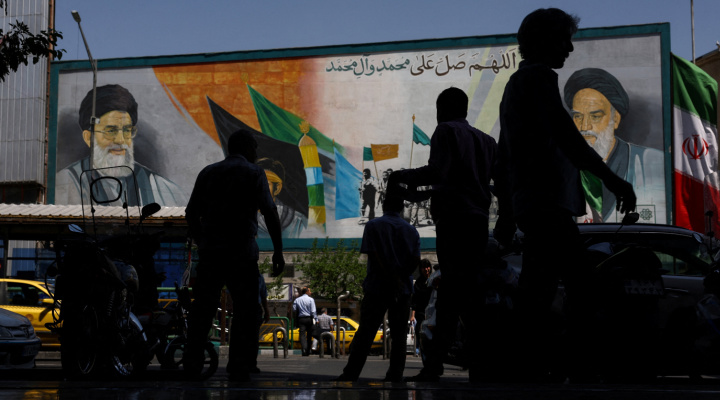
People walk past a mural depicting the late leader of the Islamic Revolution, Ayatollah Ruhollah Khomeini, and the late Iran’s Supreme Leader Ayatollah Ali Khamenei, in Tehran, Iran. Photo: Majid Asgaripour/WANA (West Asia News Agency) via REUTERS
President Donald Trump said on Tuesday that the United States may need to strike Iran again and that he had been an hour away from ordering an attack before postponing it.
Trump made the comments a day after saying he had paused a planned resumption of hostilities following a new proposal by Tehran to end the US-Israeli war.
“I was an hour away from making the decision to go today,” Trump told reporters at the White House on Tuesday.
Iran‘s leaders are begging for a deal, he said, adding that a new US attack would happen in coming days if no agreement was reached.
The United States has been struggling to end the war it began with Israel nearly three months ago. Trump has previously said that a deal with Tehran was close, and similarly threatened heavy strikes on Iran if it did not reach an accord.
The US president is under intense political pressure at home to reach an accord that would reopen the Strait of Hormuz – a key route for global supplies of oil and other commodities. Gas prices remain high and Trump‘s approval rating has plummeted as congressional elections loom in November.
Oil prices settled lower on Tuesday after Vice President JD Vance said Washington and Tehran had made a lot of progress in talks and neither side wanted to see a resumption of the military campaign. “We’re in a pretty good spot here,” he said.
Speaking to reporters at a White House briefing, Vance acknowledged difficulties in negotiating with a fractured Iranian leadership. “It’s not sometimes totally clear what the negotiating position of the team is,” he said, so the US is trying to make its own red lines clear.
He also said one objective of Trump‘s policy is to prevent a nuclear arms race from spreading in the region.
IRAN PROMISES RESPONSE TO ANY NEW ATTACK
In Tehran, Ebrahim Azizi, head of the Iranian parliament’s national security committee, said on X that pausing an attack was due to Trump‘s realization that any move against Iran would mean “facing a decisive military response.”
Iranian state media said Tehran‘s latest peace proposal involves ending hostilities on all fronts including Lebanon, the exit of US forces from areas close to Iran, and reparations for destruction caused by the US-Israeli attacks.
Tehran also sought the lifting of sanctions, release of frozen funds, and an end to the US marine blockade, according to Deputy Foreign Minister Kazem Gharibabadi as cited by IRNA news agency.
The terms as described in the Iranian reports appeared little changed from Iran‘s previous offer, which Trump rejected last week as “garbage.”
BOTH SIDES ‘CHANGING GOALPOSTS,’ SAYS PAKISTANI SOURCE
Reuters could not determine whether military preparations had been made for strikes that would mark a renewal of the war Trump started in late February.
Trump said on Monday that Washington would be satisfied if it could reach an agreement that prevented Tehran from obtaining a nuclear weapon.
A Pakistani source confirmed that Islamabad, which has conveyed messages between the sides since hosting the only round of peace talks last month, had shared the Iranian proposal with Washington.
The sides “keep changing their goalposts,” the Pakistani source said, adding, “We don’t have much time.”
CEASEFIRE MOSTLY HOLDING
The US-Israeli bombing killed thousands of people in Iran before it was suspended in a ceasefire in early April. Israel has killed thousands more and driven hundreds of thousands from their homes in Lebanon, which it invaded in pursuit of the Iran-backed Hezbollah terrorist group.
Iranian strikes on Israel and neighboring Gulf states have killed dozens of people.
The Iran ceasefire has mostly held, although drones have lately been launched from Iraq towards Gulf countries, including Saudi Arabia and Kuwait, apparently by Iran and its allies.
The US seized an Iran-linked oil tanker in the Indian Ocean overnight, the Wall Street Journal reported on Tuesday, citing three US officials. The tanker, known as the Skywave, was sanctioned by the US in March for its role in transporting Iranian oil, the report said.
Trump and Israeli Prime Minister Benjamin Netanyahu said they launched the war to curb Iran‘s support for regional militias, dismantle its nuclear program, destroy its missile capabilities, and create conditions for Iranians to topple their rulers.
But the war has yet to deprive Iran of its stockpile of near-weapons-grade enriched uranium or its ability to threaten neighbors with missiles, drones, and proxy militias.
The Islamic Republic’s clerical leadership, which had faced a mass uprising at the start of the year, withstood the superpower onslaught with no sign of organized opposition.
Uncategorized
Somaliland Says It Will Open an Embassy in Jerusalem, Israel to Reciprocate

Israeli Foreign Minister Gideon Saar meets with Somaliland President Abdirahman Mohamed Abdullahi on Jan. 6, 2026. Photo: Screenshot
Somaliland, a self-declared republic in East Africa, will set up an embassy in Jerusalem soon, its ambassador said on Tuesday, after Israel became the first country to formally recognize it as an independent and sovereign state.
In turn, Israel is expected to set up an embassy in Somaliland‘s capital Hargeisa, Ambassador Mohamed Hagi said in a post on X.
Somaliland, which has claimed independence for decades but remains largely unrecognized, is situated on the southern coast of the Gulf of Aden and bordered by Djibouti to the northwest, Ethiopia to the south and west, and Somalia to the south and east. It has sought to break off from Somalia since 1991 and utilized its own passports, currency, military, and law enforcement.
Unlike most states in its region, Somaliland has relative security, regular elections, and a degree of political stability.
Last month, Israel appointed Michael Lotem as its first ambassador to Somaliland, after the two governments formally established full diplomatic relations.
Lotem, who was serving as a non-resident economic ambassador to Africa at the time of his appointment, will now shift to work as a non-resident ambassador to Somaliland. He previously served as Israel’s ambassador to Kenya, Uganda, Tanzania, Malawi, and Seychelles, a position he concluded in August.
Israel recognized Somaliland as an independent and sovereign state in December, a move Somalia rejected and termed a “deliberate attack” on its sovereignty.
Over the years, Somalia has rallied international actors against any country recognizing Somaliland.
The former British protectorate hopes that recognition by Israel will encourage other nations to follow suit, increasing its diplomatic heft and access to international markets.
Israel‘s Foreign Minister Gideon Saar said on Tuesday that the opening of the embassy in Jerusalem would be another significant step in strengthening relations with Somaliland. Once opened, the Somaliland embassy would be the eighth embassy in Jerusalem, he said.
Most countries maintain their embassies in Israel in Tel Aviv, although the United States moved its embassy to Jerusalem during President Donald Trump’s first administration. Fiji, Papua New Guinea, and a small number of other countries have also established embassies there.
Israel considers all of Jerusalem to be its capital. However, Palestinians seek East Jerusalem, where the holiest sites in Judaism are located, as the capital of a future state.
Uncategorized
Lebanese People Broadly Support Hezbollah’s Disarmament, Peace With Israel, New Poll Finds

Rescuers work at the site of an Israeli strike that took place yesterday, in the southern suburbs of Beirut, Lebanon, May 7, 2026. Photo: REUTERS/Mohamad Azakir
In a notable shift in Lebanese public sentiment, a new opinion survey finds growing support for disarming Hezbollah and increased openness to a peace agreement with Israel, even as deep sectarian divisions persist and as the regional landscape remains volatile and uncertain.
According to the poll conducted by the research firm Information International and published on Monday by Lebanese broadcaster Al-Jadeed, a significant share of respondents supports direct negotiations between Lebanese and Israeli officials and a potential peace agreement with the Jewish state, while expressing strong opposition to the continued influence of the Iran-backed terrorist group Hezbollah in Lebanon.
Among the survey’s key findings, respondents were almost evenly split on responsibility for the current conflict, with 33.8 percent attributing blame to Hezbollah and 32.9 percent to Israel.
The newly released survey also found strong overall backing for disarming Hezbollah (58 percent in favor and 34 percent opposed), with support concentrated among Maronite, Orthodox, and Druze respondents, while opposition remained overwhelmingly high among Shiite participants.
By sectarian breakdown, support for curbing Hezbollah’s armed capabilities reached 89 percent among Orthodox Christians, 87 percent among Maronites, 77 percent among Druze, and 70 percent among Sunnis, whereas about 88 percent of Shiite respondents opposed the measure.
Most notably, the survey indicated relatively strong backing for a peace agreement with Israel among non-Shiite communities, with Druze respondents recording the highest support at 84 percent, followed by 77 percent of Maronites and 72 percent of Orthodox Christians, while 92 percent of Shiites opposed such an agreement. A striking 52 percent of Sunnis said they supported a peace deal.
With direct talks between Israeli and Lebanese officials resuming last week, the poll also showed varying levels of support for negotiations, including 78 percent among Maronites, 74 percent among Orthodox respondents, and 72 percent among Druze, compared with 93 percent opposition among Shiite participants.
Despite most Lebanese expressing support for negotiations and a potential peace deal to end the war, normalization with Israel remains unpopular, with only about 30 percent in favor and roughly 59 percent opposed.
By sectarian lines, support for normalization stood at 58 percent among Maronites, 49 percent among Orthodox Christians, and 79 percent among Druze, while opposition reached 94 percent among Shiites and 74 percent among Sunnis.
Last week, Israeli and Lebanese officials held a third round of talks in Washington aimed at advancing the negotiations, even as Hezbollah continued to reject disarmament and oppose any potential peace deal.
Inside Lebanon, fears are mounting that Hezbollah could trigger a new wave of political violence and destabilization as pressure intensifies to dismantle the Iran-backed terrorist group’s military grip.
Lebanese officials have reiterated that the decision to establish a state monopoly over weapons is final, though its implementation remains contingent on securing a broader security arrangement with Israel under US guarantees.
The Iranian proxy has accused Lebanese President Joseph Aoun and Prime Minister Nawaf Salam of betraying the “resistance” and collaborating with Israel amid ongoing direct bilateral negotiations, branding them “traitors” aligned with foreign interests.
The terrorist group has repeatedly defied international calls to disarm, even threatening protests and civil unrest if the government tries to enforce control over its weapons.
According to a new report from the Meir Amit Intelligence and Terrorism Information Center (ITIC), an Israel-based research institute, Hezbollah could once again resort to political assassinations in an effort to block moves perceived as existential threats to the organization and restore its power.
Hostilities between Hezbollah and Israel reignited on March 2, when the terrorist group opened fire in support of Iran two days after the start of the joint US-Israeli military campaign against the Iranian regime.
Since then, Israeli forces have established a “buffer zone” extending into southern Lebanese territory, which officials say is meant to shield northern residents from Hezbollah attacks amid thousands of rockets and drones fired throughout the war.
Even though a US-backed ceasefire has sharply reduced violence, negotiations and prospects for lasting peace remain fragile, with Israeli forces still launching strikes while positioned in southern Lebanon to maintain its buffer zone and dismantle Hezbollah military infrastructure.