



Local News
Kanee Lecture Series Speaker Rachel Fish dissects roots of antisemitism on North American campuses
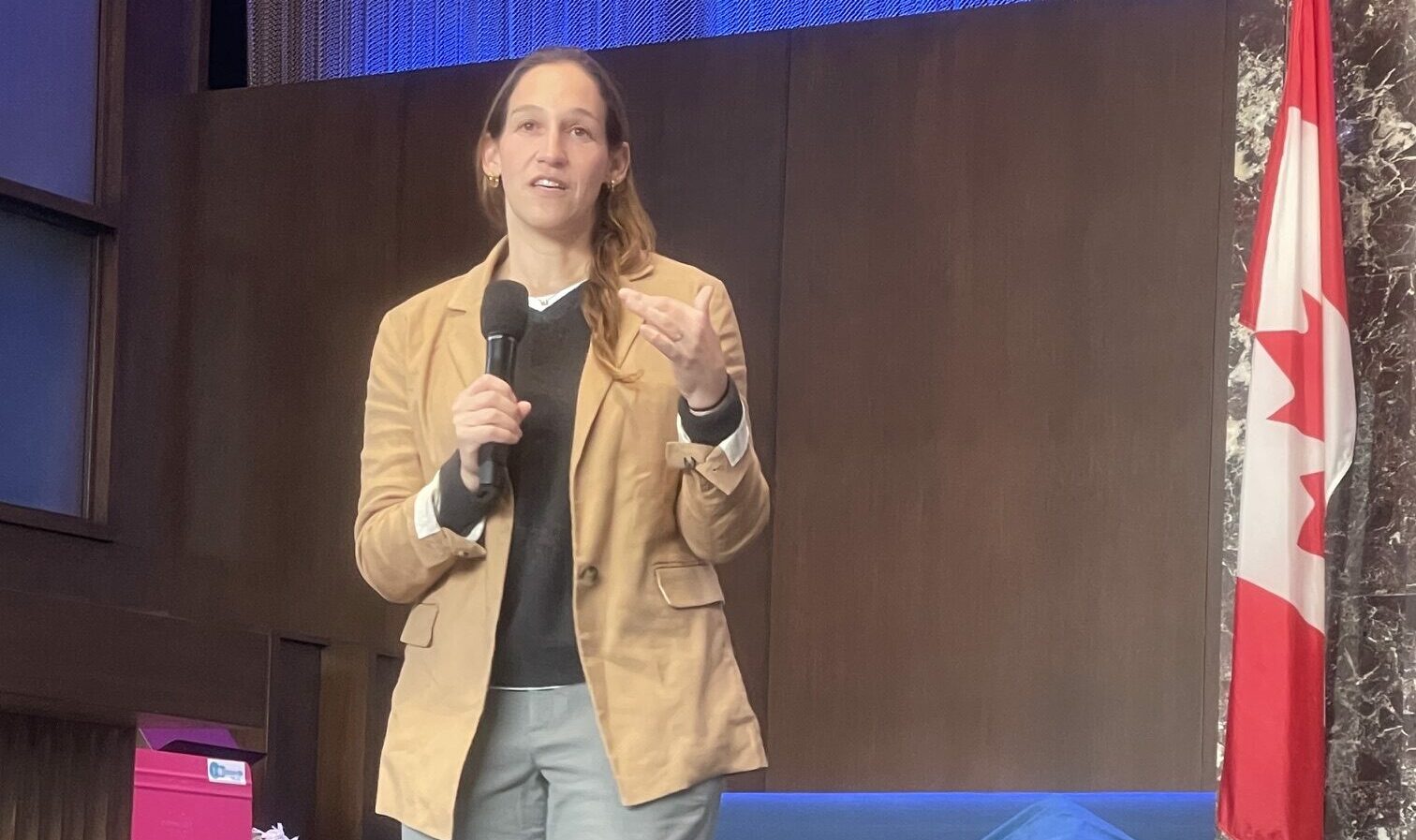
By MYRON LOVE In a thorough-going analysis of antisemitism and anti-Zionism on North American campuses, Rachel Fish Ph.D., this year’s Jewish Heritage Center of Western Canada Sol and Florence Kanee Distnguished Lecture Series speaker, left her audience of at the Shaarey Zedek Synagogue on Thursday, April 30 with some hope that the situation is actually improving.
The Sol and Florence Kanee Distinguished Lecture series was inaugurated by the Jewish Heritage Centre of Western Canada in 2006 to celebrate Sol Kanee’s 95th birthday. In welcoming the audience at that first lecture, co-chair Harold Buchwald paid tribute to Kanee, who died on April 23, 2007, at 97, as a man who “cast a giant shadow” on world Jewish history in the second half of the 20th century. The former resident of Melville, Saskatchewan, who spent almost all of his adult life in Winnipeg, was a leader in the development of Israel and the Free Soviet Jewry movement as well as a “macher” in our Jewish community and across Canada.
Previous Sol and Florence Kanee lecture series speakers have included: historian Sir Martin Gilbert,CNN’s Jake Tapper, South African jurist Albie Sachs, New York Times columnist Brett Stephens, human rights advocate Irwin Cotler, former Mossad Director Efraim Halevy, Haaretz writer Ari Shavit, and Honest Reporting’s Mike Fegelman, (Ed. note: Now there’s an interesting juxtaposition: Ari Shavit and Mike Fegelman. I wonder what would be the odds of the Jewish Heritage Centre ever inviting someone as critical of Israeli government policy as Ari Shavit here again – or for that matter Efraim Halevy, who has also been a staunch critic of Israeli policy toward Palestinians.)
The evening began with a welcome from Rabbi Carnie Rose, the Shaarey Zedek’s senior rabbi. Rose was followed to the podium by Harlan Abells, the president of the Jewish Heritage Centre of Western Canada, who issued a special thank you to the evening’s gold sponsors – the Asper Foundation and MaryAnn Kanee (Sol and Florence Kanee’s daughter-in-law), while also acknowledging the lectures series’ many other generous sponsors.
“We would also like to take a moment,” Abells continued, “to remember a longtime board member who passed away recently – Mel Myers, KC, of blessed memory. Mel was a true powerhouse of a man and a guiding light to our organization. We appreciated his wisdom, guidance, and steadfast support, and will truly miss him.’
In his memory, Abells reported, his family has established the ‘Mel Myers Endowment Fund’ (in support of the Jewish Heritage Centre of Western Canada) at the Jewish Foundation of Manitoba.
He pointed out that the Jewish Heritage Centre collects and preserves the records, artifacts and traditions of our community. “We play an integral role in the life of our community,” he said.
“In fact, we are the custodians of our collective memory, identity, and cultural heritage. Thanks to us, the stories of the people – the events – the news – are preserved for today’s and future generations. Our collection includes a treasure trove of more than 70,000 photographs, beautifully illustrating more than 125 years of community life. We also provide essential education and training on the Holocaust and antisemitism to teachers, students and the general public throughout the year through our programs and training sessions.”
In introducing the guest speaker, Abells noted that Rachel Fish is currently the Director for The Brandeis University President’s Initiative on Antisemitism as well as an associate research professor at the Cohen Center for Modern Jewish Studies, and teacher of Israeli history and society at The George Washington University, where she is Visiting Assistant Professor of Educational Leadership in the Graduate School of Education and Human Development.
She is the co-founder of the nonprofit “Boundless,” a think-action tank partnering with community leaders across North America to revitalize Israel education and take bold collective action to combat antisemitism.
The theme of her timely lecture was “How the Academy Has Created a Fertile Ground for Antisemitism,” a topic in which she is well versed.
Fish observed that antisemitism and anti-Zionism on North American campus are not new phenomena. She recalled that she first experienced antisemitism in academia as far back as 2001 when she began her studies at Harvard’s Divinity School.
“Orientation day was September 11, 2001,” she remembered. “Unlike other Harvard faculties, there were few Jewish students in the Divinity School. In the lecture hall for orientation, a faculty member and future Dean of the Divinity School said that although he was not yet aware of all the details behind the attacks, he was certain that American support for Israel was behind 9-11.
“To me, I could see that it was already apparent where campus trends were going,” Fish said.
She explained in detail the ingredients that have combined to create this toxic stew of antisemitism and anti-Zionism – a mix of modern neo-Marxism, post-colonialism, Orientalism and post-modernism. The superficial framing that emerges is that Jews are identified as “White,” and “Palestinians” as “People of Colour” – so Israel is deemed to be negative because it is a country of “White People” and, therefore, is perceived as a “settler-colonist” enterprise that oppresses people of colour.. Further, therefore, any Jews associated with Israel are also portrayed negatively.
She further pointed out the lingering contributions to this by the former Soviet Union – which introduced the ideas that Zionism is “racist” and that Israel is an apartheid state.
While the situation may seem dire, Fish did report that a recent survey found that, while 3% of American university students are extremely hostile to Israel, and another 30% are hostile toward Israel and hostile toward Jews, two-thirds of students are indifferent.
The problem is that faculty – mainly in the humanities, has become a monoculture where intellectual diversity is suppressed. Some professors use their classrooms as a bully pulpit to promote their extremist views, while any faculty members who may dare to challenge the current zeitgeist risks being ostracized, may have difficulty getting published, risk losing out on grants and, ultimately – their jobs.An additional problem that she commented on is that a lot of people don’t really know what Zionism is and how it relates to Judaism.
On the positive side, Fish observed, compared to the situation in 2002, Jewish activists are fighting back and making some headway. “There are a lot of people doing serious work to change the university environment,” she reported. ‘There are several organizations over the last ten years that have been working on multiple levels to bring about change.
“There is still a lot of work to be done though,” she cautioned.
Fish further pointed out that, despite the hostility to Israel on many campuses, there are still joint research ventures taking place between Israeli universities and counterparts in North America, Israeli researchers are still welcome to share their findings with North American colleagues, and Hillel chapters continue to function – largely without incident.
“Our people have found a home in many societies and we have pursued our love of learning,” Fish noted. “We cannot allow our institutions of higher learning to be hijacked. We must remain vocal though, and hold university administrators’ and board members’ feet to the fire.”
As for her own career, Fish said that she is determined to continue to pursue her career, both inside of academia and beyond, because she believes that education matters. “As well,” she concluded, “I appreciate the opportunities that teaching at the university level gives me to share what I have learned at public forums such as the Kanee Lecture.”
One other highlight of the evening was a special presentation by JHCWC board member and Past President Dan Stone to Stan Carbone, who is retiring after 25 years as the Director of Programs and Exhibits.





Local News
Gail Asper adds $10-million donation to ambitious $1.2 billion Hebrew University fundraising campaign
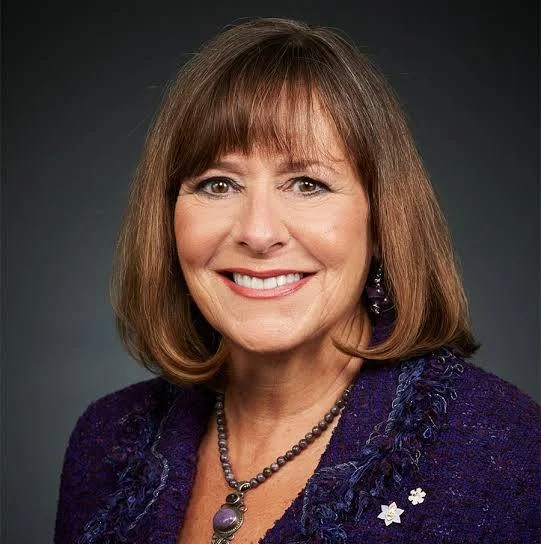
By MYRON LOVE Gail Asper, one of our community’s leading philanthropists, has recently returned from the Hebrew University of Jerusalem’s annual International Board of Governors meeting, during which she pledged $10 million to the university’s $1,2 billion international Powered By Purpose Campaign.
As reported in the Post last April, Asper has taken on the challenge of co-chairing the campaign (with patty Glaser from Los Angeles), which was kicked off at the recent board meeting. “It is important to lead by example,” she notes. “As my father (the late I.H. Asper) used to say, it is important to give what you can.”
Rami Kleinmann, President and CEO of Canadian Friends of the Hebrew University observed that “Gail’s gift is a testament to what is possible when personal conviction, a tradition of giving, and belief in a mission come together. We are deeply grateful for her leadership and for the Asper family’s remarkable partnership with Hebrew University.”
Professor Tamir Sheafer, president of the Hebrew University of Jerusalem, speaking on behalf of the entire Hebrew University community, thanked Gail “for her remarkable generosity and her leadership. Her gift, and her role as co-chair of our international campaign, will help us keep Hebrew University a global leader in research and education for many years to come.”
Asper’s personal connection with the Hebrew University goes back more than 50 years. She recalls going to Israel for the first time with her family in 1974, when she was 14. In her 20s, she and her brothers went to Jerusalem with their parents where Israel Asper would be attending HU annual Board of Governors meetings.
“I met the president of the university,” she recounts. “I got to see what the university was doing and got to know the people on the board. There were board members from all over the world, all accomplished and interesting people.. It was so glamourous.”
In 1989, her father – after more than 20 years on the board – told Gail that he was stepping down to spend more time building the still relatively new Canwest – and suggested that she should replace him as a board member. Not only did she join the board, but she also became one of the founding members of the newly formed Canadian Friends of Hebrew University Business and Professional Division, along with other now prominent community members such as Howard Morry and Murray Palay.
It wasn’t long after she joined the Hebrew U board that she moved on to the board executive,” she notes. “We would have meetings in Israel three or four times a year. Thank goodness now for Zoom. But I really enjoyed meeting with fellow board members, as well as university management and faculty.”
Among the Asper family initiatives at the University are: the Asper HUJI Innovate program – the University’s centre for innovation and entrepreneurship; theAsper prize in Innovation, which supports and celebrates promising Israeli start-ups; the Asper Center for Entrepreneurship and Innovation, the academic and community hub housed within the Hebrew University Business School (HUBS); and ongoing exchanges that bring Canada’s brightest students to Israel for a semester or complete degree.
Gail reports that her new donation is intended the help make up for the rapidly decreasing number of scholarships and grants from foundations outside of Israel that would normally be potentially available for Hebrew University students and researchers, but which have declined in number due to the increasing hostility in academia to anyone connected to Israel.
She is happy to report that the five-year Powered By Purpose Campaign has received a major boost from a $250 million gift from billionaire American hedge fund manager John Paulson. “This is the largest gift ever received by the Hebrew University,” she notes. “This is also the first time that the university has received a donation from Mr. Paulson. We are really excited about it.”
In that earlier interview with the Post, Asper reported that one focus of the new campaign will be Jewish philanthropists and foundations who had been supporting American and Canadian universities but who have been told that, since October 7, 2023, that their donations are no longer welcome. “Others have pulled their donations because of anti-Jewish activity on campuses,” she pointed out. “We will be suggesting that their donations will be better spent supporting Israel’s leading universities rather than antisemitic universities in Canada and the US.”
One area that struck her about this most recent visit to the university was the large number of Israeli Arab students and faculty. “You see the diversity on campus,” she observes. “Close to 20% of the student body and staff are Arab Israelis. Most students seemed to be comfortable on campus and happy to be there.
“It was wonderful to be in Israel,” she says, “and nice to see other Winnipeggers – such as (Federation CEO Jeff Lieberman, (CIJA representative) Gustavo Zentner, and (philanthropist) Larry Vickar also in Israel to attend other institution Board of Governors meetings at a time when direct flights to Israel are scarce and there are very few tourists.”
Local News
Palestinian-born Dor Shachar chose Judaism and life in Israel over Islam and darkness in Gaza
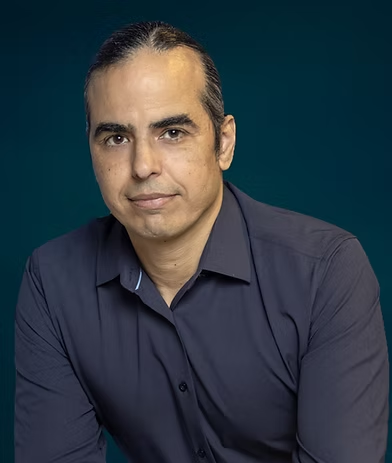
By MYRON LOVE Dor Shachar is a rare individual indeed. It seems almost miraculous – certainly “beshert” – that this individual, who was born into a Muslim family in Gaza and raised as a Muslim, chose to leave behind the hell and darkness that is Gaza and embrace the light of Judaism and Israel.
On Monday, November 2, the proud Jewish Israeli shared the story of his transformation with an audience of about 150. Invitations were specifically sent out to Christian communities in Winnipeg because extreme Islam also targets Christians, as well as moderate Muslims.. Earlier, he also spoke in a couple of schools.
Among the attendees were several members of the Manitoba Conservative Party caucus – including interim leader Konrad Narth. Invitations to attend Shachar’s presentation were also sent to the other provincial parties, but no one from the other parties showed up.
As Shachar doesn’t speak English, his remarks were translated by Jona Rapaport, who is from Montreal and who had family members kidnapped on October 7.
Shachar’s narrative falls into two distinct parts – and I have to admit that the first act was at times very difficult to listen to. What he described of his life growing up in Gaza was horrific. He recalled that the clothes his family wore, the food they ate, and their appliances were all from Israel, and that his father worked on construction projects in Israel for many years. His father and grandfather pretended to be on friendly term with the Israeli soldiers who patrolled Gaza at the that time – in the 1980s –and the family invited soldiers – these same soldiers who would give the kids treats – into their homes. His father and grandfather were hospitable and seemingly friendly. As soon as the guest would leave though, the young Shachar was told that he one day it would be his duty to kill the “sons of apes and pigs” – referring to the Israelis living in Jewish communities that had been established in Gaza.
Shachar reported that his neighbours were future terrorist leaders, including Hamas leader Yahya Sinwar. He witnessed the digging of the first terror tunnels more than 40 years ago. As well, he saw the evil of the various hateful groups who used torture and terror to rule Gaza – from Fatah to Hamas and their affiliated terror groups. He described public scenes of torture and murder that rivaled the worst excesses of the European Dark Ages a thousand years ago. He recalled how in elementary school, students were taught how to throw rocks at Israeli soldiers.
In a particularly horrifying segment, Shachar recalled what happened to him when still in primary school. Apparently, he didn’t show enough zeal about hating Jews and Christians. He was hauled into the principal’s office – where he was whipped. When his father learned about this, he spent hours beating and torturing his son – including hanging a noose from a tree – for “dishonouring” the family. Only an intervention by an aunt most likely saved his life – although his father then proceeded to beat the aunt. He was relegated to looking after the family flocks.
Another time, when he was 11, his father found out that he was skipping school, beat him, tied him to a tree, and doused him in cold water. Shachar was locked in the outhouse for the night and forced to sleep on the floor.
A few months later – when he turned 12 – his father started taking the youngster with him to Israel to work on construction projects. After a couple of months, he managed to run away.
Thus began the second chapter of his life – his new life in Israel.
While working as a security guard watching over a neighborhood of villas where prospective tenants would come to see the apartments, he was approached one day by a resident by the name of Nissim Ozen.
“Nissim took interest in me,” he recounted. “He brought me home with him, got me clothes and shoes and other gifts.”
He began to be invited to Ozem’s home for Shabbat suppers and other meals and was welcomed to have hot showers and watch television.
At Pesach, he was invited for the family’s seder.
“I come for the seder and I see the longest table I have ever seen,” he recounted. “It stretched from the living room through the kitchen out to the garden. On the table, there was bread, only the matzah, some eggs, a shank bone and some greens. I asked my host if he was on a diet.“I didn’t yet know much Hebrew, but I learned about the Exodus.”
That was when Shachar decided that he wanted to become a Jew. Some of his new friends arranged for a local Bet Din. He was subsequently referred to another Bet Din in Tel Aviv, then a third in Kiryat Shemona in the north, and finally, to Jerusalem where he told that, because he was still a minor, he would need his father’s permission.
That was never going to happen.
Nonetheless, Shachar was able to go to school and become proficient in Hebrew – while he eagerly counted down the days until he turned 18 and could become Jewish.
But, there was another hitch in store.
It was now the mid-1990s and the first Palestinian suicide bombers began killing Israelis on buses, in restaurants and wherever they gathered. Shachar spoke of the notorious Yahya Ayyash – the bomb maker, Shachar recalled, who provided his dubious services to all the Palestinian factions. (The IDF caught up with him and killed him with a bomb in early 1996.)
Shachar pointed out that – contrary to what diplomats, politicians and leftists in the West believe – there is no difference between Hamas, the PLO/Palestinian Authority – given the facts and what they say in Arabic from “pay for slay” to other hate they espouse against anyone not aligned with them – even moderates. There is no “partner for peace” among the Palestinian factions, he says, – and no difference between those factions and Al Qaeda, ISIS, and the Taliban.
Unfortunately for Shachar, due to the increased level of attacks by Palestinian terrorists, Israel tightened restrictions on Palestinian workers who were allowed to work in Israel. All Palestinians workers had to have permits. Because he didn’t have one, he was sent back to Gaza, where he was tortured daily by Hamas operatives for six months.
Eventually, he was released to fend for himself in Gaza. Determined to return to Israel and become Jewish, he was – after a few months – able to slip across the border to Egypt and make his way via Turkey back to Israel
Back in Israel, he attended a yeshiva and resumed his efforts to become a Jew. It took him seven years to realize his dream. The climactic moment for him came, he recounted, one Purim when he joined a rabbi in Jerusalem for a “farbrengen.”
“I had never had alcohol before,” he said. “Alcohol is forbidden to Muslims. I quickly became woozy. Nonetheless, the rabbi kept pouring. Even while drunk, I kept insisting that I wanted to be a Jew. That was enough to convince the rabbi to support my efforts.”
Today, Dor Shachar is a proud Jewish Israeli – happily married – who speaks for Israel on the world stage and warns people, especially in the West, about the hateful dogma and true extremist intentions of Islamist ideology. Statistics indicate that 15-25% of Muslims in the West are radicalized. With the influx of people from Gaza and other areas that number may be grossly underestimated.
In Gaza and Judea and Samaria the numbers are higher.
The ultimate goal for Islamic extremists, Shachar warned, is world domination.
Local News
Harvey Richmond: an unusual career path with many twists and turns
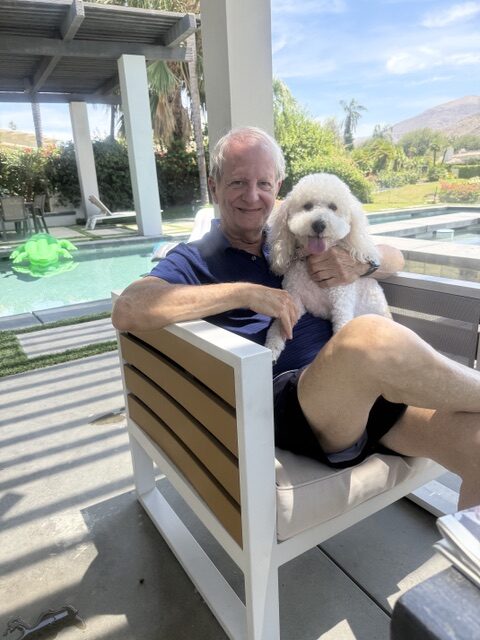
By GERRY POSNER When you talk about someone whose life has had more than a few different moves, Harvey Richmond’s life would be right up there as one of the most circuitous. You could rightfully say that his life has been far from predictable.
Harvey, the middle son of three boys (Barrie – older, and Kenny – younger), whose parents were David and Nettie (Brown) Richmond, is now north of 85 years. He lives in the Los Angeles area and has been there for well over 40 years.
Harvey grew up in the south end of Winnipeg and, for most of those years, his home was a corner house on Waverley and Grosvenor. The family was connected to the Shaarey Zedek synagogue even before it was located on Wellington Crescent.
Harvey went to Queenston School and later graduated from high school at Kelvin. Like many of his contemporaries, he was off to the University of Manitoba, where he obtained a Bachelor of Science degree with a major in Mathematics, then a Bachelor of Science in Pharmacy. He became a licensed pharmacist in 1961.
The plan was for Harvey to join his father, also a pharmacist, in his father’s drugstore. But, at that time, Dave Richmond was getting ready to retire, so Harvey went to work for Bunny Ringer at his drugstore on Pembina Highway, a place likely known to many readers. After two years there, Harvey realized pharmacy was not for him, so suddenly, the first detour in Harvey’s life hit him smack in the face.
Harvey was planning to visit his older brother Barrie, who was doing an internship in Chicago at that time. Flying there was not feasible for Harvey – or anyone else at that particular time, as Northwest Airlines was on strike, so he hopped into his car to drive to Chicago. On his way through Grand Forks, however, Harvey saw a sign advertising the University of North Dakota’s medical school. Why not? he asked himself. He applied, was accepted and thus, in 1966, he was a student in Medicine at the University of North Dakota. At that time, UND had only a two-year programme, with training in the basic sciences. The school had arrangements with other medical schools throughout the USA to accept students who had completed that school’s two year programme. So, after his two years at UND were completed, off Harvey went to the University of Minnesota. By 1971, he was a graduate in Medicine from that university.
During his time in Minneapolis, Harvey also married a woman from that city and, within three years, he was the father of two girls. In 1971, Harvey did his internship at Los Angeles County-USC Medical Centre in Los Angeles. He elected to enter Obstetrics and Gynaecology as his final rotation – which turned out to be a sign of things to come several years down the road. However, in 1971, Harvey was not totally sure that being an OB/Gyn was what he wanted to be.
Harvey signed up for a residency in Minnesota in Neurology, so the family returned to Minneapolis for Harvey to begin a new residency there. After a year, Harvey concluded that Neurology was also not for him, but he chose to remain in the Twin Cities and join a family practice with four other physicians, called Apple Valley Medical Center. While there, he developed a renewed interest in Obstetrics. This time, Harvey decided that Obstetrics and Gynaecology was really what he wanted to pursue, but he also recognized that he needed more comprehensive training to do that.
Thus, at the age of 40, he made yet another major career decision and began a residency in Obstetrics and Gynaecology. He did his residency at the University of Minnesota and St. Paul Ramsay Medical Center. If you can picture it, here was 40-year-old Harvey Richmond, married, with two little kids, now starting over in what was to become his chosen specialty. But – after he finished his residency, his marriage also ended.
Next, Harvey was offered a position in the Los Angeles area. In 1984, off to Long Beach, California he went. About a year later, he had an opportunity to take over a practice in Beverley Hills. He also received privileges to practice OB/Gyn at Cedars- Sinai Medical Centre in Los Angeles. Harvey officially joined the medical staff there in 1986 and has remained on staff ever since.
As Harvey puts it, “Over the course of my career, I have delivered an extraordinary number of babies.” One of his staff tried to calculate the total number and the estimate was in the range of 10,000 to 12,000 babies. Harvey reflects that a large part of his career has been devoted to caring for pregnant women, delivering their babies and practicing OB/Gyn. Additionally, throughout his time at Cedars, he has been on the teaching staff there, instructing OB/ Gyn residents in surgical procedures.
In 1988 Harvey married again. That marriage also ended – in 2003. However, the one constant throughout Harvey’s life the past 40 years has been his career at Cedars-Sinai Medical Center.
Harvey uncategorically states that he was extraordinarily fortunate to find something he loved to do, even though it took him quite a few years and several career changes to get to this point. His journey was difficult at times and he admits it has come at a personal cost in terms of his family.
Yet, his career has given him great satisfaction and filled him with a sense of purpose. As Harvey puts it, “I was privileged to be present during some of the most important moments in people’s lives.”
In the end, Harvey Richmond reflects on his medical practice this way: “ Looking back, I realize that my path was anything but direct. I began as a pharmacist, entered medicine almost by chance, tried Neurology, practiced Family Medicine, and eventually returned to residency so that I could become an Obstetrician and Gynaecologist. Each decision brought me closer to the work I was meant to do.”
To this day, Harvey is grateful to those who supported him along the way. Even at the age of 85, Harvey Richmond is still practicing medicine, although now on a part time basis, working only in the office. He remains active and still gets enjoyment out of his work. The path Harvey took had many twists and turns but, ultimately, many rewards along the way.
