


Uncategorized
‘I made a mistake’: Abdul El-Sayed apologizes to Michigan Jews for past comments about synagogue attack
(JTA) — LANSING — Michigan U.S. Senate candidate Abdul El-Sayed apologized for his past comments regarding the March attack on Temple Israel in suburban Detroit during a meeting with the state Democratic party’s Jewish caucus at the party convention on Saturday.
The Democratic nominee told the room that his remarks following the attempted targeting of the West Bloomfield synagogue preschool, in which he had said, in part, “Hurt people hurt people,” were intended to provide “context.”
Reflecting on them, he said on Saturday, “I made a mistake.”
“If my statement caused pain, I’m sorry. It was not what I intended to do,” El-Sayed continued. Referencing the first of two statements he had made about the attack, he added, “We issued a statement, of course, condemning it, and that just should have been it, full stop.”
El-Sayed’s initial Temple Israel comments, which many Jews interpreted as justifying the attack, have alienated Jewish voters in the state. After an initial statement condemning the attack, El-Sayed then followed up with one referencing Israel’s war in Lebanon, where the attacker had lost family in an Israel airstrike.
On Saturday, El-Sayed, a former county health director, insisted that his push for “context” to the attack was broadly appropriate, but not at that moment, explaining that such “conversations” could happen “in the fullness of time.”
“Sometimes you can’t really see context in the moment of acuity or pain,” he said. “The intention for me was not to trample that pain. It was not to discount it. It was not at all to justify any sort of domestic terrorism. That’s wrong, full stop.”
El-Sayed’s apology, which was in response to a question posed to him by a Jewish Democrat in attendance, came amid a new round of outreach efforts he has been making with Jewish voters since he won Michigan’s Democratic senate primary earlier this month. He also plans to attend a Sunday Jewish caucus gathering honoring state Attorney General Dana Nessel with congressional nominee Jeremy Moss in attendance, both of whom the candidate has publicly been at ideological odds with over Jewish issues.
In recent days El-Sayed has also minimized some of his harsh critiques of Israel in his stump speeches and issued a statement distancing himself from onetime campaign ally Hasan Piker, the left-wing anti-Israel streamer.
His nomination acceptance speech later that day made only one, oblique, reference to American support for Israel: “It shouldn’t be this hard to pay your taxes and know that that money’s going to be spent on you, and your kids, and your schools, instead of being dropped in the form of a bomb on somebody else, and their kids, and their school.”
But skepticism was still palpable among the 30 or so Jewish Democrats in the room, a crowd that included one delegate who said his daughter and grandson had been inside Temple Israel when it was attacked.
“Our safety as Jews in America relies on, I think, what’s said by public figures, and how they present themselves in public, and how they advocate for Jews in public,” he said just prior to El-Sayed’s apology.
Not all of El-Sayed’s answers pleased the room. Fielding another question about whether he would support the longstanding Democratic platform of a two-state solution in the Middle East if elected senator, the candidate pivoted.
“It’s incoherent to start with a solution and say, ‘Figure out how to work here,’” El-Sayed said. “To me, it’s about starting with a process and saying, ‘How do we dignify equal rights to peace, dignity, and self-determination for Palestinian people and Jewish Israelis alike?’”
He added, as he has in other interviews, that he was open to the possibility of a two-state solution “if that’s what a free Palestinian and free Jewish Israeli people decide.” But, he qualified, “Our country, under the guise of a two-state solution, has been aiding, arming, and abetting a government that wants to foreclose on the possibility of a second state.”
That didn’t sit well with some in attendance, even as El-Sayed’s apology for his other comments was broadly appreciated.
“I really liked him apologizing for misspeaking. We’ve all made comments that we regret later on,” Rebecca Kasen, a Lansing-area Michigan Jewish Democrat in attendance, told the Jewish Telegraphic Agency. “I was less comfortable with what he said about not supporting a two-state solution.”
Overall, Kasen said, her opinion of El-Sayed had improved after the Jewish caucus meeting as a result of his apology.
“I was probably a more reluctant voter for him” beforehand, she said. That had changed: “Instead of just going to vote now, I am going to be enthusiastically voting for him.”

As the senate race is shaping up to be the potential tipping point to decide control of the chamber in a crucial midterm year seen as a referendum on President Donald Trump, the views of the state’s Jewish Democrats regarding their party have been placed under a microscope for more reasons than just El-Sayed. That has led some longtime Jewish Democratic voters to defect to the Republican opponent, former U.S. Rep. Mike Rogers, and also led to some awkward moments at the convention.
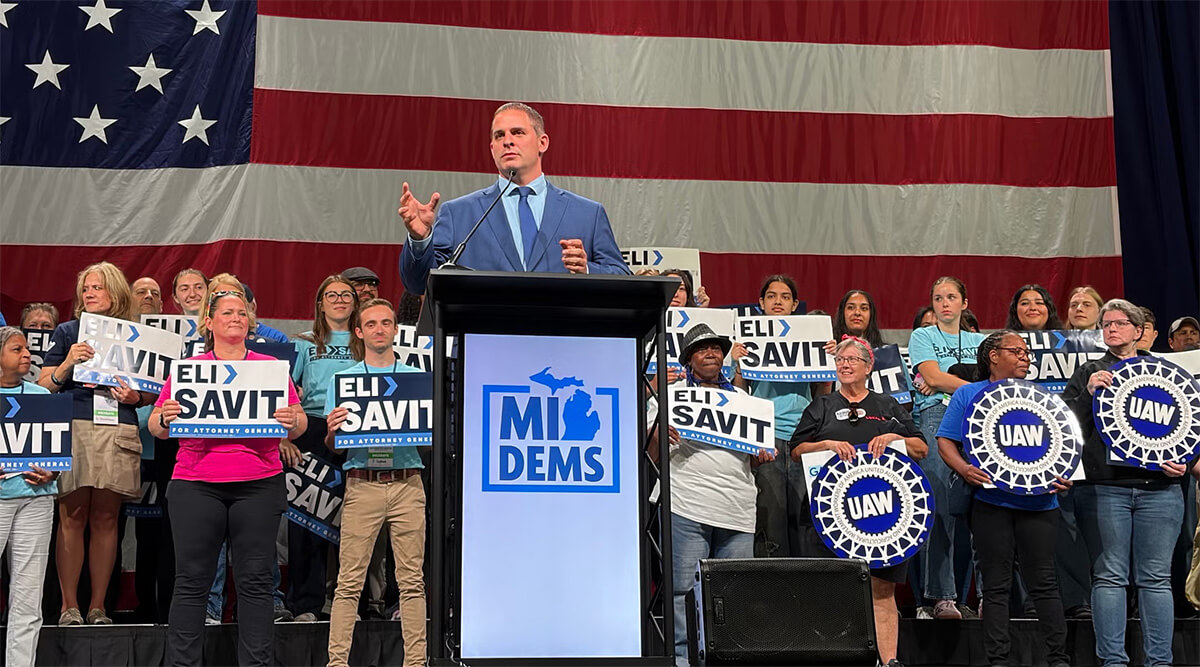
In one example, Washtenaw County Prosecutor Eli Savit, the party’s progressive Jewish nominee for state attorney general, addressed the Jewish caucus by declaring, “We’re going to win and keep the attorney general’s office in the hands of a Michigan Jewish Democrat.” Conspicuously absent from the day’s events was Nessel, the Jewish Democrat currently holding the seat.
Prior to the Saturday convention, Nessel, the state’s highest ranking Jewish official, had announced she would not be attending for fear she would be targeted by antisemitic harassment. Earlier this week, in a podcast interview with The Atlantic, Nessel had reiterated her issues with El-Sayed’s comments about Temple Israel and expressed hope he would walk them back soon.
Nessel’s son Zach Nessel, secretary of the state Jewish Democratic caucus, told the caucus that his mother’s absence stemmed from “agitators” who had targeted her at the party endorsement convention in the spring. Attendance at Saturday’s event was less than one-third of what the Jewish caucus had drawn at the spring convention, organizers said.
Zach Nessel criticized the state Democratic Party for failing to take prompt action to remove the agitators from the earlier convention. He told JTA that Jews in the party “have a right to be concerned.”
“I think the Democratic Party needs to put more work into addressing their concerns,” Zach Nessel said. “But I think that can’t happen without showing up.”
Moss, the Michigan state senator who has recently been at the center of another El-Sayed-related controversy, was spotted at the convention on Saturday but did not attend the Jewish caucus events.
One ally of El-Sayed’s who also addressed the caucus is University of Michigan Board of Regents nominee Amir Makled. He is an attorney for members of the school’s pro-Palestinian encampment movement who had pushed out a Jewish pro-Israel incumbent at the previous convention. During his own address to Jewish delegates, Makled did not mention his history of social media posts including retweeting far-right antisemitic conspiracy theorist Candace Owens and sharing praise for Hezbollah leaders.
Makled’s speech later that day at the nominating convention alluded to his work with the encampments as he declared that Michigan “will never have a university where students are punished simply because their speech makes the powerful uncomfortable.”
In-between candidate meet-and-greets, Jewish caucus members shared their anxieties about their closely scrutinized role in the midterm elections. They were gravely concerned about protecting democracy and election security from Republican threats, and felt that flipping the Senate was crucial.
Yet it was hard, they said, to get much of the Jewish community onboard this time, given the positions of El-Sayed and some other members of the Democratic slate. Michigan is home to an estimated 100,000 Jews, and the senate race is currently polling in a dead heat, making their votes potentially pivotal.
“How do we unify our community to put the country first?” one attendee asked the group. “I have a hard time doing that.”
This article originally appeared on JTA.org.
The post ‘I made a mistake’: Abdul El-Sayed apologizes to Michigan Jews for past comments about synagogue attack appeared first on The Forward.
Uncategorized
The woodcutter and the water carrier in the Torah portion, Nitzavim
לעילוי נשמת מײַן באָבע מנוחה וויטקא ע״ה לזרוב, לכבֿוד איר יאָרצײַט, ט״ו אלול
איינער פֿון די שטאַרקסטע קעגנער מיט וועמען אַ מענטש דאַרף זיך אויסקעמפֿן איז…זיך אַליין.
די סיבה איז פּשוט: די געדאַנקען און געפֿילן וואָס אַ מענטש קען צום בעסטן, זענען זײַנע אייגענע. און ווײַל דאָס זענען זײַנע פּערזענלעכע געדאַנקען און נײגונגען, איז מען נאַטירלעך גענייגט זיי צו געבן אַ גרויסע חשיבות. אויב איך פֿאַרשטיי אַזוי, אָדער איך פֿיל אַזוי, איז דאָס שוין לכאורה אַ גענוג גוטע סיבה צו טאָן אַלץ וואָס איך קען כּדי אויסצופֿירן מײַנע געדאַנקען און באַפֿרידיקן מײַן ווילן.
אָבער זייער אָפֿט טרעפֿט דווקא דאָס פאַרקערטע. דער מענטש וואָס שטעלט אויס זײַן לעבן בלויז לויט דעם וואָס אים דאַכט זיך ריכטיק אָדער באַקוועם, קען צום סוף שאַפֿן געלעגנהייטן וואָס גייען ווײַט העכער פֿון זײַנע באַגרענעצטע און פֿאַרבײַגייענדיקע פּערזענלעכע געפֿילן.
מיט אַנדערע ווערטער, באַקוועמלעכקייט און צוגעוווינטקייט קענען זײַן די גרעסטע שׂונאים פֿונעם מענטשן, אַנשטאָט זײַנע מיטהעלפֿער.
אין דער סדרה פֿון דער וואָך, נצבים־וילך, ווענדט זיך משה רבינו צום ייִדישן פֿאָלק אַזוי:
„אַתֶּם נִצָּבִים הַיּוֹם כֻּלְּכֶם לִפְנֵי ה׳ אֱלֹקֵיכֶם… מֵחֹטֵב עֵצֶיךָ עַד שֹׁאֵב מֵימֶיךָ“ — איר שטייט הײַנט אַלע פֿאַר דעם אייבערשטן, אײַער ג־ט… פֿון דײַנע האָלצהעקערס ביז דײַנע וואַסער־שעפּערס (וואַסער־טרעגערס).
דער גרינדער פֿון חב״ד, רבי שניאור זלמן, באַקאַנט ווי דער אַלטער רבי, דערקלערט אַז דאָס האָלצהאַקן און וואַסער־שעפּן האָבן, אויסער זייער פּשוטן באַטײַט, אויך אַן אינערלעכן טײַטש אין דער פּערזענלעכער עבֿודה פֿונעם מענטש.
דער אויסדרוק „עֵצֶיךָ“, דײַן האָלץ, קען מען אויך פֿאַרשטיין ווי „עצותיך“, דײַנע אייגענע עצות, געדאַנקען און חשבונות.
דאָס „וואַסער“ איז מרמז אויף דעם יסוד המים פֿונעם נפֿש הבהמית — דער מקור און טרײַבקראַפֿט פֿון קערפּערלעכע תּענוגים.
די לערנונג, זאָגט רבי שניאור זלמן, איז אַז אַ מענטש דאַרף „אויסהאַקן“ די אייגענע חשבונות און „אויסשעפּן“ די תּאוות וואָס צילן בעיקר אויף פּערזענלעכע קערפּערלעכע הנאות.
ערשט ווען אַ מענטש קען נייטראַליזירן אָט די צוויי כּוחות און זיך נישט לאָזן פֿירן פֿון זיי, קען ער צום בעסטן מקיים זײַן זײַן שליחות אין לעבן — אָן דעם שוחד פֿון פּערזענלעכער באַקוועמלעכקייט. שוחד פֿאַרבלענדט דאָך די אויגן און לאָזט ניט זען קלאָר און אָביעקטיוו. דאָס זעלבע טרעפֿט מיט באַקוועמלעכקייט. עס לאָזט ניט טראַכן אָביעקטיוו.
מען וואָלט אָבער געקענט מיינען אַז אַזאַ דיסציפּלין איז שייך בלויז צום תּורה־לערנען, צו מענטשן וואָס פֿירן אַ רוחניותדיק לעבן, אָדער בלויז ווען אַ מענטש וויל מצליח זײַן אין זײַן אייגענער גײַסטיקער זוכעניש.
וואָס איז אָבער מיט מסחר, פּרנסה אָדער אַ פּראָפֿעסיע — מיט די לכאורה „נישט־רעליגיעזע“ געביטן פֿון לעבן? דאָרט מעג מען דען נישט טאָן וואָס מען אַליין האַלט פֿאַר ריכטיק און וואָס גיט פּערזענלעכע צופֿרידנקייט?
דער ליובאַוויטשער רבי — זכותו יגן עלינו — ווײַזט אָן אַז דער ענטפֿער אויף דער פֿראַגע ליגט שוין אינעם פּירוש רש״י אויפֿן פסוק.
ווער זענען געווען די דאָזיקע האָלצהעקערס און וואַסער־שעפּערס?
רש״י דערקלערט אַז זיי זענען געווען כּנענים וואָס זענען געקומען צו משה רבינו ע״ה מיט דער כּוונה זיך מגייר צו זײַן, און משה האָט זיי באַשטימט צו דינען ווי האָלצהעקערס און וואַסער־שעפּערס.
דער רבי ווײַזט אן אַז דאָס וואָרט „כּנעני“ מיינט אויך אַ סוחר.
דער רמז איז, אַז נישט בלויז ווען עס רעדט זיך וועגן הימלישע און רוחניותדיקע ענינים — „רעליגיעזע“ באַשעפֿטיקונגען — דאַרף מען זיך באַפֿרײַען פֿון פּערזענלעכע אינטערעסן, צי שׂכלדיקע צי פֿילעוודיקע.
אויך אין מסחר, אין אַלע ענינים וואָס האָבן צו טאָן מיט גשמיות און מאַטעריע, דאַרפֿן די „האָלצהעקערס“ און „וואַסער־שעפּערס“ גיין צו דער אַרבעט.
מען דאַרף זיך העכערן איבער די אייגענע חשבונות און תּאוות, און זיך אָפּגעבן מיט די גשמיותדיקע טעטיקייטן מיט דער כּוונה, אַז דורך זיי זאָל מען אַרײַנברענגען הייליקייט און ג-טליכקייט אין דער וועלט — דורך דעם ליכט פֿון דער תּורה און דער נפֿש האלוקית.
עס זענען דא מענטשן וואָס קענען דאָס באַטראַכטן ווי אַ באַגרענעצונג: „מען לאָזט מיר נישט טאָן וואָס איך וויל.“
מען קען דאָס אָבער באַטראַכטן גאָר אַנדערש — ווי אַן אויסערגעוויינטלעכע געלעגנהייט:
„שטענדיק — אַפֿילו אין די מערסטע וועלטלעכע און לכאורה נישטיקע טעטיקייטן — האָב איך די מעגלעכקייט צו דערגרייכן עפּעס וואָס האָט אַן אומענדלעכע און אייביקע ווערט.“
דעריבער איז די געצײַג פֿון דער וואָך:
אויב דו פֿילסט זיך שלעכט ווײַל עס דאַכט זיך דיר אַז אַ גרויסער טייל פֿון דײַן לעבן האָט נישט קיין באַזונדערן זין אָדער ווערט, געדענק אַז עס ליגט אין דײַנע הענט צו באַשליסן אין וועלכער ריכטונג דו וועסט גיין.
דו קענסט צייכענען דײַן וועג לויט דײַנע פּערזענלעכע געדאַנקען און געפֿילן, וואָס קומען און גייען און לאָזן נישט קיין אייביקע שפּור.
אָדער דו קענסט זיך באַפֿרײַען פֿון זייער הערשאַפֿט און זיך אָפּגעבן מיט עפּעס וואָס איז אַ טייל פֿון אַ ציל וואָס איז אומענדלעך גרעסער — און אומענדלעך מער ווערטפֿול.
The post The woodcutter and the water carrier in the Torah portion, Nitzavim appeared first on The Forward.
Uncategorized
Vance, who’s drawn ire of Jewish conservatives, will speak at Republican Jewish confab
(JTA) — Vice President JD Vance, who has drawn the ire of a number of Jewish conservatives, will speak at the Republican Jewish Coalition’s annual summit in Las Vegas on Monday, the RJC confirmed.
“The Republican Jewish Coalition is proud to welcome Vice President JD Vance to our National Leadership Summit in Las Vegas,” said an RJC spokesperson. “JD Vance is a friend, who is coming back after first joining us in 2022 as a candidate for the US Senate.”
Vance’s appearance comes as a number of Jewish Republicans and major GOP donors have indicated that they would rather support Marco Rubio for the presidential nomination in 2028 than Vance, who is seen as Donald Trump’s likeliest successor. Some of those donors will be in the room on Monday at the Venetian Resort, which is owned by the billionaire Adelson family — a major backer of Trump and various Jewish and Israeli causes.
The vice president has lost the confidence of the pro-Israel crowd with his reprimanding of Israeli officials, indulgence of anti-Israel conspiracy theories and silence on Tucker Carlson, the prominent pundit who has spread antisemitic conspiracy theories. Multiple donors told the Jewish Telegraphic Agency during last year’s confab that they would not support Vance in 2028.
Carlson, meanwhile, was a major focus of the discussion at the RJC’s 2025 summit, where signs reading “Tucker is not MAGA” were handed out to attendees. His son, Buckley Carlson, is a former Vance staffer.
An agenda sent by the RJC lists Vance as a speaker during a Monday evening session that will be closed to press. A spokesperson confirmed that Vance will be speaking in a “fireside chat.”
A number of high-profile Republican candidates are also expected to speak at the RJC confab, which is being held on Sunday and Monday, a few months ahead of the midterm elections. Speakers include U.S. Senate candidates Mike Collins, the Georgia congressman who is challenging Jewish Democrat Jon Ossoff, and former Rep. Mike Rogers, who is running against Abdul El-Sayed in Michigan.
Collins has faced accusations of antisemitism and having ties to the far right. He has said that some of his statements were misunderstood, and has defended himself by citing his support for Israel.
This article originally appeared on JTA.org.
The post Vance, who’s drawn ire of Jewish conservatives, will speak at Republican Jewish confab appeared first on The Forward.
Uncategorized
Israeli expats push for voting rights in Oct. 27 election
(JTA) — When Ilana Mittman, a retired social scientist with American and Israeli citizenship, began arranging a trip to Israel from her home in Baltimore, she planned to observe her late father’s Yahrzeit and cast her ballot in the national elections on Oct. 27. Checking her voter registration status online, she made a startling discovery: She had been excluded from the voter registry and was ineligible to vote.
The discovery came as a shock. Mittman’s mother was born in pre-state Palestine. Her parents had drained swamps in order to create arable land and served in the Haganah pre-state military organization.
Mittman has lived in the United States since 1980, having moved for her husband’s medical studies and career. But she has never viewed her life abroad as severing her ties to Israel. She watches television in Hebrew, follows the country’s news, stays in frequent contact with family, donates to the country’s emergency services and engages in pro-Israel advocacy efforts.
“I didn’t really choose to leave the country; I fell in love with a man who came from overseas, and I followed him,” she said. “I’ve grieved for the loss of my country and my friends … It’s been a constant, chronic sorrow.”
Puzzled by the discovery of her voter status, Mittman reviewed her records through the Ministry of Interior online portal and noticed that on March 7, 1986, her residency status had been altered under administrative “Code 51.”
That date matched a visit to the Israeli Consulate in San Francisco shortly after the birth of her son, where she went to register him as an Israeli citizen in accordance with consular requirements. She said that during that routine appointment, consular staff took away her state-issued ID card without explanation, leaving her with only her passport for foreign travel.
“I remember how bad of a feeling it was to give that document away,” Mittman recalled. “I felt I gave a part of myself away when that happened. But I didn’t know that my biggest right as a citizen – the right to vote – was just robbed from me.”
When she spoke with friends in the expat community, it turned out that others had found themselves in a similar situation. Some only made the discovery after they had already made expensive travel arrangements to return to Israel for the election, since voting must be done in person.
Trading notes in WhatsApp
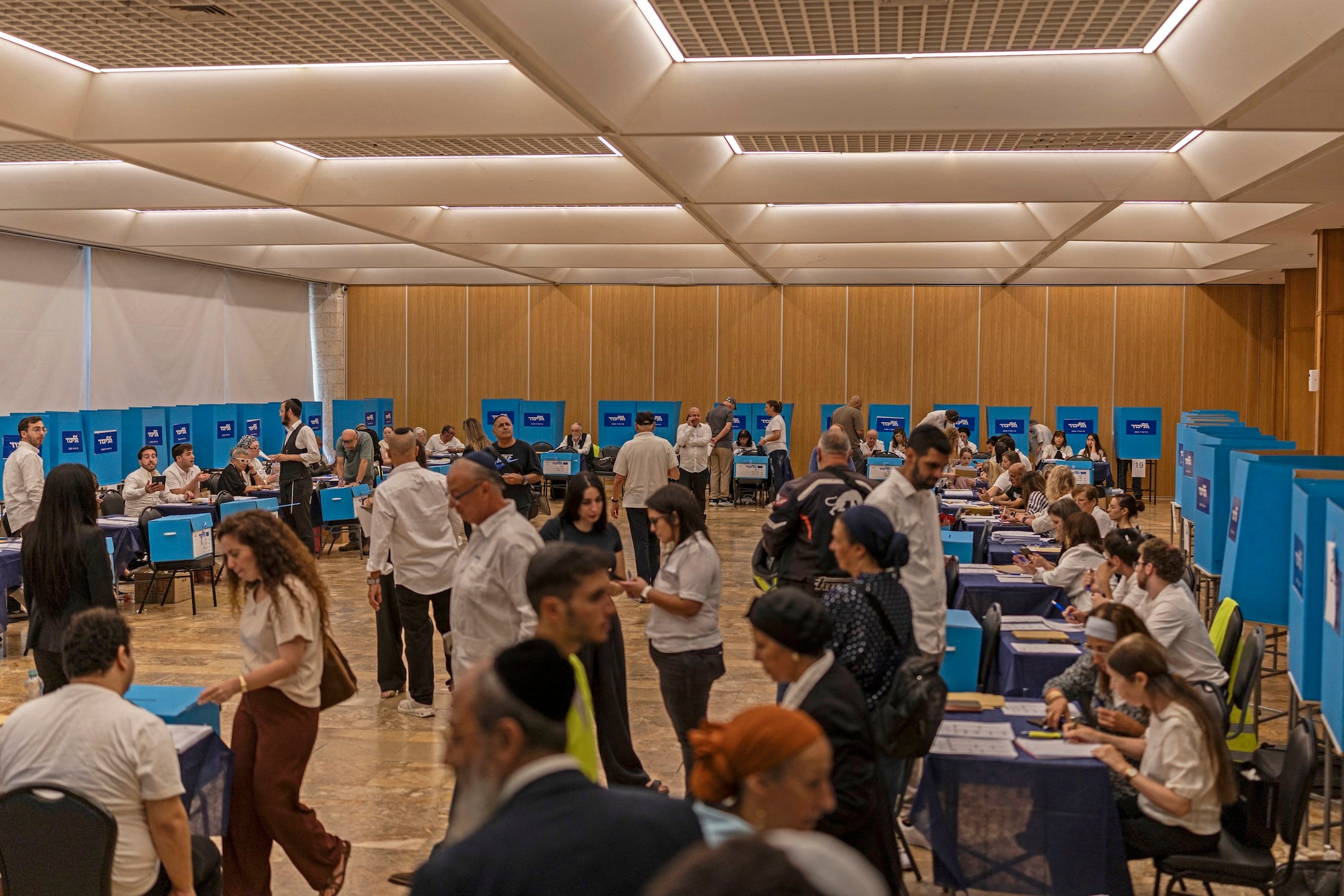
Under Israel’s Basic Law: The Knesset, every Israeli citizen aged 18 or older has the right to vote, unless a court has deprived them of that right. In practice, however, voting is limited to those included in the voter registry.
Israelis whom the government classifies as nonresidents are assigned a designation known as Code 51 and removed from the voter registry, even though they retain their citizenship.
As expats across North America, Europe, Australia and South Africa began to realize in the lead-up to the October vote that they were no longer in the voting registry, they began comparing their experiences in a WhatsApp group that grew to some 120 members.
Some, like Mittman, had not voted in Israel for decades. Others, like kibbutz-born Ayala Graham, had returned to vote in the previous elections, held just four years ago. Yet others retained their eligibility, such as Graham’s husband, who hadn’t cast a ballot in Israel in four decades.
“My blood is boiling from this situation,” said Graham, who left Israel in 1986. “I am a citizen through and through, and I was very offended by this arbitrary rejection. I feel that in these elections, the situation is even more acute than in 2022.”
With the grounds for rescinding voting eligibility opaque and no easy path to appeal the exclusion, the disenfranchised Israelis decided to pursue legal action. They are calling the grassroots initiative to restore their voting eligibility “Our Right to Vote – Code 51.”

To challenge the Code 51 exclusions, the group raised money for legal representation through crowdfunding. Then they initiated a multi-stage legal strategy designed to exhaust administrative remedies before escalating to Israel’s Supreme Court.
Represented by attorney Gilead Sher, they submitted a Freedom of Information request to compel the Israeli Ministry of Interior to disclose the criteria behind the administrative “Code 51” designations. Then they sent letters to the Ministry of Interior, the attorney general and the Central Elections Commission requesting the immediate restoration of their status.
The Israeli Ministry of Interior has not yet responded to the group’s letter about Code 51, the criteria used to remove expats from the voter registry, or the total number of citizens affected by the regulation.
Israeli Ministry of Interior spokesperson Yaffa Shai did not address questions about the meaning of Code 51 posed by the Jewish Telegraphic Agency. Instead, she pointed to Israeli election law, which requires voters to be listed in the Population Registry as residents, with an address in Israel, and stressed that the ministry had conducted “an extensive multilingual campaign” urging citizens to check their voter status.
Since the law requires that the voting registry be finalized on Sept. 3, the legal team set a one-week deadline for administrative responses. If the matter remains unresolved, they intend to file an emergency petition directly with the Central Elections Commission and the High Court of Justice.
There is no known official count of how many Israeli expats have been excluded from the voter registry. “We received a rough, totally unofficial estimate of several dozen thousands, out of whom we represent about 120,” said Sher, the lawyer.
He stressed that there is also no clarity regarding the criteria used to remove citizens living abroad from the voter registry. “Our argument is that whatever this arbitrary Code 51 stands for or signifies, it cannot override the constitutional right to vote,” he said.
Sher acknowledged the possibility that some expats who travel to Israel to vote may only discover their status on election day. Given the tight timeframe before the election, Sher is seeking both temporary relief and an interim injunction in the petition to ensure eligible citizens are not disenfranchised while bureaucratic procedures are reviewed.
‘Essentially voter suppression’
On the West Coast, another Israeli expat, Silicon Valley attorney Rony Sagy, was struck by the arbitrariness of the system, particularly given her past travels to Israel during election cycles.
For the IDF elite unit veteran, maintaining a close connection to Israel has been consistent over decades of living in the U.S. Her career as a San Francisco–based lawyer has included serving as a legal bridge between Israeli startups and American tech companies, and she travels to Israel several times a year, renews her passport and keeps a permanent address in the country.

She suspects that her name was removed from the voter roll following a routine consulate visit for passport renewal sometime in the 1980s, during which she was required to surrender her domestic Israeli ID card. She noted that the experience was difficult enough for someone with deep connections to the country, but the lack of transparency surrounding the act added insult to injury.
“Voting was always very, very important to me,” Sagy emphasized. “My understanding was that my voting rights would not be hampered by the confiscation of my ID card. The uneven, unidentified way or form of removing certain people from the voter rolls is essentially voter suppression.”
The debate over Israeli citizens’ inability to cast ballots from abroad with limited exceptions (for example, official government representatives stationed abroad), has been ongoing for decades. Proponents of overseas voting note that most Western democracies allow it. Opponents argue that the large number of Israelis living abroad could potentially sway an election, even though those living in Israel bear the consequences of its outcome more directly.
Public opinion in Israel on overseas voting is split, though polls typically focus on whether expats should be allowed to cast ballots from abroad rather than retain their eligibility to vote if their center of life is elsewhere.
A survey last year by the Israel Democracy Institute found that 51% of Israelis opposed allowing citizens living abroad to vote from overseas, while 39% supported it. Opposition was particularly high among Arab respondents – 55% opposed, 36% supported – relative to Jewish respondents. Among Jewish respondents, opinion was evenly divided, with 45% supporting and 45% opposing overseas voting.
Attitudes were also strongly associated with respondents’ own willingness to leave the country. Among Israelis considering moving abroad, 52.5% supported overseas voting and 40% opposed it, compared to 34% support and 55% opposition among those not considering leaving Israel.
Members of the group challenging the denial of their eligibility to vote point to the global economy, which facilitates remote work, as well as the rising number of Israelis who have left the country since Oct. 7, 2023, due to Israel’s enmeshment in several regional wars. Some have deliberately chosen to disconnect. Mittman, however, believes that the number of years spent living abroad should not define the strength of one’s connection.
“What do you mean by center of life?” she asks. “If I spend hours a day immersing myself in Israeli culture, if I am supporting friends and relatives in Israel and charitable causes in every way I can … I feel that my heart is there, that I’ve never ceased to be an Israeli. So, what does it mean to be a citizen if you cannot vote?”
She insisted that this initiative to restore expats’ voting rights is not partisan: “If somebody told me today that I can vote, I don’t know who I’m going to vote for. I have not decided.”
Regardless of whether the legal challenges are resolved ahead of the election, she plans to make the trip, spending election day volunteering to help elderly and mobility-impaired voters reach their polling stations.
This article originally appeared on JTA.org.
The post Israeli expats push for voting rights in Oct. 27 election appeared first on The Forward.

You must be logged in to post a comment Login