


Uncategorized
The new U.S. passport design is fueling a Star of David conspiracy theory. Here’s what’s really there.
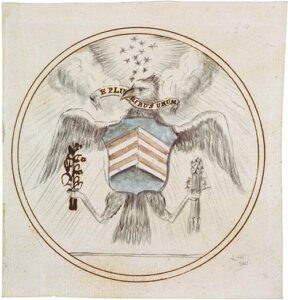
When Secretary of State Marco Rubio unveiled a new U.S. passport design last week, online sleuths zeroed in on a curious detail: “Is that the star of david???” one TikTok user commented on a video of Rubio showing off the document’s revamped look.
“Why do we rock the Star of David on American passports?” asked an X user in a post that garnered 1.6 million views.
The symbol was not, in fact, the Star of David, but rather 13 stars arranged in a hexagram, representing the original 13 colonies. The design is part of the official Great Seal of the United States, approved by the Continental Congress in 1782 as the official symbol for the newly sovereign country.
The hexagram shape wasn’t a new addition to the passport, either. The Great Seal has long been a fixture of the U.S. passport cover; the new design just enlarges it. The seal — including the cluster of 13 stars in a hexagram — appears on all sorts of government materials, including military uniforms, official presidential documents, and the dollar bill.
The shape’s resemblance to the Magen David, however, has long fueled conspiracy theories about secret Jewish or Israeli influence over the U.S. government. To some online commentators, the redesigned passport was fresh confirmation of that belief.
“It’s a colony of israel (sic) so it makes sense to pay homage to their owners,” a TikToker commented about the new design.
The seal’s history
Shortly after they adopted the Declaration of Independence, the Founding Fathers had another important matter to attend to: appointing a committee to design a seal for the United States.
Benjamin Franklin, Thomas Jefferson and John Adams made up the all-star team. Franklin suggested an image of Moses parting the Red Sea. Jefferson wanted “the children of Israel in the wilderness, led by a cloud by day and a pillar of fire by night.” Adams preferred an image of Hercules, the Greek hero known for his strength.
Evidently, none of them had a great eye for graphic design. Congress tabled their proposals.
Two more committees took up the project. In 1782, Secretary of the Continental Congress Charles Thomson integrated the various committees’ ideas into a new design, which featured a bald eagle, a shield, an olive branch and arrows, and a constellation of 13 stars. Congress approved the seal that year.
Thomson described the design as featuring “thirteen stars forming a constellation”; he did not specify a hexagram or six-pointed star. Original sketches, in fact, show the stars in a seemingly random arrangement.

Robert Scot, the chief engraver of the United States Mint, is credited with arranging the 13 stars into the six-pointed geometric star.
According to legend, George Washington ordered the 13 stars arranged as a Star of David as a tribute to Haym Salomon, a Jewish financier who aided the Revolutionary cause. But there’s no historical evidence of that, nor that Washington or Salomon had any role at all in designing the seal.
One plausible theory is that Scot may have simply been emulating the arrangement of stars on the American flag at the time, rearranging the 13 stars to fit symmetrically inside a circular field.
Even so, the myth of the Star of David intentionally appearing on the seal has reached as far as former presidential candidate Ben Carson, who in 2015 suggested that “Salomon gave all his funds to save the U.S. Army and, some say, no one knows for sure, that’s the reason there’s a Star of David on the back of the one dollar bill.”
Historians were quick to correct the record.
“If you squint, you can say there’s some resemblance but that certainly was not the intention of the designers, that we’re aware,” Wayne Homren of the Numismatic Bibliomania Society, which studies currency, told ABC News.
The theory behind the theory
Kent Harber, a professor of psychology at Rutgers University who studies conspiracy theories, said the passport claim fits within the emerging zeitgeist, in which “conspiracy beliefs about Jews and Israel are getting an increasing amount of currency.”
In this case, gaps in the historical record surrounding the hexagram’s design may have helped the theory take hold.
“We can’t take ‘no reason’ for an answer,” Harber said. “We have to have an explanation, and we will fill in that blank with other explanations, even bogus, sometimes sort of seemingly silly ones.”
Harber’s research has found a strong relationship between conspiracy theories, antisemitic attitudes, and hostility toward Israel.
Conspiracy theories are like “epistemological junk food,” he said. “They satisfy this craving by giving you exactly what you want, even though it’s not particularly good for you or for society.”
The post The new U.S. passport design is fueling a Star of David conspiracy theory. Here’s what’s really there. appeared first on The Forward.
Uncategorized
Swastikas, racist slurs painted on a playground and a golf course outside Philadelphia
The police were still there when neighbors arrived to clean up the Philadelphia playground where vandals had struck.
They had come to a playground in Abington Township, just outside Philadelphia, on Saturday morning with cleaning supplies. Officers had been called and were still collecting evidence from the swastikas that someone had spray-painted on the playground equipment and the blacktop, and from the N-word painted on the playground’s sign. So the volunteers waited. Then dozens of them, along with volunteer firefighters and school district staff, went to work.
Abington Township police have several investigative leads, Deputy Chief Ed Quinn told the Forward. “I’m confident we’re making an arrest and holding those responsible accountable for their actions,” he said, adding that it is too early to say whether charges would include a hate crime.
A week earlier, about 25 miles away, someone carved swastikas and a racial slur into the greens at Yardley Country Club, a private golf course. The similar incidents occurred at both the start and the close of the festival of Sukkot.
No arrests have been announced in either case. Neither police department knew about the other’s case until the Forward called. Quinn said he had never heard of the golf course, and Yardley’s police chief, William Golden, said the same of the playground. Golden declined to discuss leads or whether the vandalism would be charged as a hate crime.
Golden said he had also learned of a golf course about five miles away in Morrisville that was vandalized a week before Yardley’s. The course, he believed, did not report it to police and repaired the damage on their own. Golden said there were no swastikas in that vandalism, but that it included a racist slur.
The Yardley Country Club is adjacent to the Abrams Hebrew Academy, a Jewish elementary school with close to 200 students. Rabbi Ira Budow has run the school for more than four decades. His car is parked beside the hole that was hit, he said, and golf balls sometimes sail onto the school grounds.
“I really think it was probably a prank,” he said, noting that he can’t recall any other local antisemitic incident in his time there. “This is a good town.” Yardley, where Budow lives, is also home to three synagogues. The local police work with the school on security, and he is scheduled to speak to the Borough Council on Tuesday night.
The school already receives state security money. Applications ask whether a school feels threatened and requires them to provide an example – which gave Budow a message for whoever did this.
“This person should know that because of him, the school will be able to get more security grants,” he said. “They did the job for me.”
Why Shapiro is watching
Abington Township is also home to Gov. Josh Shapiro’s private residence.
“Gov. Shapiro has always been clear: antisemitism and hate have no place in Pennsylvania,” Rosie Lapowsky, a spokesperson for Shapiro, told the Forward. “These acts are intended to intimidate our neighbors and we condemn them unequivocally. Every Pennsylvanian deserves to feel safe in their community.”
For Shapiro, it is close to home in more than one way. His wife, Lori, went to elementary school at Abrams, in the building beside the golf course. Shapiro was Pennsylvania’s attorney general on Oct. 27, 2018, when a gunman killed 11 worshippers at the Tree of Life synagogue in Pittsburgh. That anniversary is three weeks away. He was sworn in as governor on three Bibles, one of them rescued from the synagogue.
His own brush with violence opens his memoir, Where We Keep the Light. In April 2025, hours after the Shapiro family hosted a Passover seder, a man firebombed the governor’s residence in Harrisburg while the family and guests slept inside. Shapiro writes that it sharpened his sense that antisemitic violence is a lived reality, even for a governor with a police detail. “The bubble burst that morning,” he writes.
Shapiro is up for reelection next month. He is also widely seen as a possible Democratic candidate for president in 2028, which would make him the nation’s first Jewish president if he won.
Two communities, one response
Jason Holtzman, who runs the Jewish Community Relations Council at the Jewish Federation of Greater Philadelphia, has been watching the headlines pile up. The region’s Jewish community, which he puts at between 250,000 and 300,000 people, now responds to incidents “far more often than we were a few years ago,” he said.
In August, the Weitzman National Museum of American Jewish History in Philadelphia was vandalized, the third attack on it in one year. “These headlines are regular to us,” he said.
What worries Holtzman this week is the setting. “It’s really concerning that it’s also moving into everyday spaces,” he said, like a playground and a golf course. The one in Yardley, beside a Jewish school, “definitely affects children and it definitely affects people in our community.”
He also sees an opening. Antisemitism and anti-Black racism, Holtzman said, “grow from the same root,” and local churches, synagogues and elected officials have rallied together. “While this is a horrible thing, we’re hoping that this is an opportunity to actually bring people together in both communities.”
The Salem Baptist Church of Abington said much the same in a statement. The church called the N-word “the nuclear weapon in the English language” and the swastika “the symbolic equivalent.” Ignorance, it said, “has shown its vile face. At a park. The symbol of civic unity.” It called the vandalism “yet another opportunity for Blacks and Jews to be reminded that our enemies are two sides of the same coin. Unity. Not polarity. Not isolation.”
On Thursday, the town is set to hold a vigil at the park. The idea, the invitation says, is to “reclaim a shared community space from hate.”
The post Swastikas, racist slurs painted on a playground and a golf course outside Philadelphia appeared first on The Forward.
Uncategorized
What do Germans talk about when they talk about antisemitism?
In today’s Germany, an accusation of antisemitism can end careers, shutter institutions and put political alliances beyond consideration. That gravity is understandable in the country responsible for the Holocaust. What has become less clear, particularly since the Hamas-led attacks on southern Israel on Oct. 7, 2023, and the ensuing war in Gaza, is what Germans mean when they use the word “antisemitism.”
Days before Berliners went to the polls on Sept. 20, Germany’s chancellor Friedrich Merz provided a particularly awkward illustration. At a campaign event for his party, the CDU, Merz called antisemitism “the most perfidious form of xenophobia.” German Jews were quick to point out a glaring problem; they were not foreigners. The contentious IHRA framework officially embraced by Germany stresses that antisemitism and hostility toward foreigners are separate phenomena.
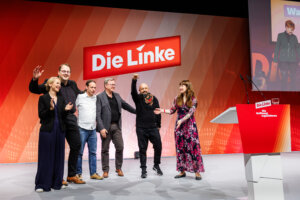
The confusion has become politically consequential since Berlin voted. Die Linke, a democratic socialist party, won 25.7%, more than doubling its 2023 share and finishing nearly seven points ahead of the CDU, which came in at 18.8%. The far-right AfD came third with 16.3%, itself an extraordinary gain of 7.2 points. Yet, since the election, the question consuming German politics has been whether Die Linke is too antisemitic to govern.
Israel’s ambassador, Ron Prosor, described antisemitism within Die Linke as systemic. The Central Council of Jews warned the SPD and Greens against joining a Linke-led coalition. Bavaria’s premier, Markus Söder, called Die Linke “deeply antisemitic.”
Philipp Peyman Engel, editor in chief of the Jüdische Allgemeine, the weekly newspaper of the Central Council of Jews in Germany, distilled the case against Die Linke in Britain’s Jewish Chronicle. The party, he wrote, was “riddled with people who hate Jews and Israel” and represented “the elimination of Israel.” Even voters drawn by rents and social policy had tolerated its hatred of Israel; SPD and Green politicians would forfeit any claim to moral seriousness by governing with it. “No non-Jewish democrat should simply accept this election result either,” he wrote.
That is an extraordinary indictment of a party that just received more votes than any other in the German capital. It is also hard to reconcile with the party that actually exists.
Die Linke does carry unusual historical baggage. It was formed in 2007 from a movement of trade unionists and Social Democrats alienated by Gerhard Schröder’s welfare reforms and the PDS, successor to East Germany’s ruling communist party. The GDR pursued an anti-Zionist foreign policy, strands of which survived reunification; the modern party also absorbed a western anti-imperialist tradition in which hostility toward Israel has at times shaded into antisemitism.
A 2011 analysis published by Germany’s Federal Agency for Civic Education found serious hostility toward Israel in parts of Die Linke but rejected describing the party itself as antisemitic. A year later, Die Linke nominated Beate Klarsfeld — the Nazi hunter who spent decades pursuing German war criminals and famously slapped former Chancellor Kurt Georg Kiesinger over his Nazi past — for the German presidency. She received 126 votes in the Federal Assembly.

Die Linke’s current official position is markedly different from Engel’s characterization in the Jewish Chronicle. At its federal congress in June, Die Linke explicitly affirmed Israeli and Palestinian self-determination and the right of both Israel and Palestine to exist. It passed a separate resolution condemning antisemitism and describing its sharp rise since Oct. 7. While one may regard those positions as inadequate, contradictory or politically naïve, they do not amount to a program for eliminating Israel.
The party that won Berlin last month has changed in other ways as well. Its candidate for mayor, Elif Eralp, a trained lawyer, was born in Munich to Turkish socialist trade unionists who fled the 1980 military coup. Her campaign centered on housing, rent controls and migrant rights, and borrowed consciously from Zohran Mamdani’s campaign in New York; Linke activists even traveled there to meet his advisers.
That helps explain why this election has rattled Germany’s political center. Die Linke is no longer easily dismissed as the residual party of eastern German communism. In Berlin, it has assembled a young, urban and increasingly diverse electorate around an issue — the cost of housing — that the governing parties have conspicuously failed to solve. Unlike the AfD, it also has potential coalition partners. A Linke-SPD-Green government could remove the CDU from power and seek to implement the result of a 2021 referendum, approved by 57.6% of voters, calling for the socialization of large housing companies.
There are nonetheless questions about parts of its Berlin organization, especially in Neukölln. A rapper at a campaign event sang “Yalla Yalla Intifada” and “Death to the IDF.” Ferat Koçak, the district’s Linke Bundestag member, was photographed on election night with Ibrahim Ibrahim, described by Democ, an anti-extremist monitoring group, as a longtime activist with the Popular Front for the Liberation of Palestine, which the EU lists as a terrorist organization. Ibrahim has also been reported to have praised Hamas leader Yahya Sinwar as a “steadfast leader” and “martyr hero.”
Beyond Berlin, a June investigation by Bayerischer Rundfunk into internal forums and chats of Linksjugend, the party’s youth organization, found messages by a spokesman for Die Linke’s youth organization in Rhineland-Palatinate referring to Israeli “concentration camps” and a “genocide in the name of Judaism” and telling Israel to “drop dead!”
Wolfgang Benz, who directed the Center for Research on Antisemitism at Berlin’s Technical University for more than two decades and edited an eight-volume handbook on antisemitism, told the Tagesspiegel that the term Antisemitismus is undergoing an Ausverkauf — an inflationary depletion of its meaning.
“Die Linke is not antisemitic,” he said. Anti-Israel slogans can be crude, denunciatory, even “misanthropic,” without thereby becoming Jew-hatred. His answer when asked whether the chant “Death to the IDF” was antisemitic was no.
In the same interview, Benz also argued that Die Linke’s leadership should deal loudly and decisively with genuinely unacceptable conduct and singled out Bodo Ramelow, who became Linke’s first minister-president in 2014, and Petra Pau, a veteran Linke politician and former Bundestag vice president, as politicians with strong records against antisemitism. Benz’s successor, Stefanie Schüler-Springorum, has likewise called the debate around Die Linke “overblown” and warned that antisemitism is being used to influence coalition formation.
The consequences of collapsing antisemitism and anti-Zionism have extended beyond electoral politics. In Verfassungsblog, an open-access forum on constitutional law and politics, scholars Dörthe Engelcke and Ilyas Saliba documented Palestinian-related events at German universities losing rooms or being canceled, while antisemitism commissioners intervened in debates over terms such as “genocide,” “apartheid” and “settler colonialism.” Berlin’s Jews, meanwhile, are hardly unanimous. An open letter signed by 150 Jewish Berliners, including Susan Neiman, Deborah Feldman and Eva Menasse, accused parts of the media and Jewish community of instrumentalizing antisemitism against Die Linke while the far right advances.
The signatories also point out some obvious facts that, I imagine, tend to get overlooked: that Jews in Berlin pay rent, send children to schools, use hospitals and, like their neighbors, worry about economic insecurity.
Britain’s Labour Party under Jeremy Corbyn offers a cautionary precedent. As genuine failures over antisemitism became entangled with factional warfare, parts of Corbyn’s camp focused so heavily on the political motives behind the accusations that they appeared to minimize the underlying problem. The result was to strengthen the very attacks they regarded as politically motivated. Die Linke would be unwise to repeat that mistake.
Right now, far more than Die Linke’s reputation is on the line. The far-right AfD party won 43.8% in Saxony-Anhalt last month, an increase of 23 percentage points. On the same day Berlin voted, it won 38.2% in Mecklenburg-Western Pomerania, according to preliminary official results, while the CDU fell to 4.9% and disappeared from the state parliament. In Berlin, the AfD rose from 9.1 to 16.3% and finished third.
Those results should provide some perspective on the attempt to establish whether Die Linke’s 25.7% represents an antisemitic rupture in German democracy. Die Linke’s leadership will have to demonstrate that its stated opposition to antisemitism has real-world consequences. But the claim that Jew-hatred is baked into the party itself is unsupported by its program, its history or the records of many of its leading politicians.
What the controversy more clearly reveals is the alarm produced when a party long treated as marginal suddenly wins and becomes capable of leading its government. Antisemitism, the most devastating accusation available in German political language, offers Die Linke’s opponents a means of turning questions about the behavior of certain activists into a referendum on the party’s legitimacy.
Yet while Berlin argues over whether Die Linke is fit to govern, a far-right party with openly ethnonationalist positions and powerful antidemocratic currents, is winning close to 40% in parts of the former East. What’s shocking is that Germany’s political center is devoting its fiercest moral language to the left precisely when the far right is remaking the country’s electoral map.
The post What do Germans talk about when they talk about antisemitism? appeared first on The Forward.
Uncategorized
Jewish federations are losing my generation — and future ones — over Israel and Netanyahu
When my father Norm Gordon was six years old, the Jewish Federation of Cleveland helped rescue him. Recent immigrants from Poland, his parents were already living precariously when his mother died and his father gave him up. The Jewish Children’s Bureau, funded by the JFC, found a home for him and his brothers and kept them all together under one roof. That’s the sort of thing Jewish federations across America were founded to do, going all the way back to the “Stuyvesant Promise” of 1655: pool the resources of Jewish communities to help the helpless. My first jobs were for JFC-funded camps. My mother, a social worker, spent her career working with agencies like Bellefair Jewish Children’s Bureau, funded by JFC. After my father Norm himself died young and my mother married my adoptive father James Ratner, our family’s ties to JFC grew even stronger. My father James was deeply involved with JFC for decades, serving on their Executive Committee and as Chair of their Overseas Connections Committee.
Now all those ties have been cut. My experience isn’t unique. Federations have been alienating constituents who don’t align ideologically with Israeli Prime Minister Benjamin Netanyahu. It’s been happening all over the country. For three decades, I’d kept a portion of my assets with JFC in a donor-advised fund. I made gifts to my preferred charities out of the fund while the principal remained with JFC as part of the “community chest” they use to finance their operations. But JFC recently told me, in so many words, I should take my money elsewhere. So I did.
Their point of contention was that I wished to give some money from my donor-advised fund to Physicians for Human Rights. After the unprecedented and barbaric terror attacks in Israel on Oct. 7, 2023, Jewish federations raised a lot of money for Israel. They also made lists of human rights organizations that were critical of the Israeli government. The JFC Donor-Advised Fund Committee notified me that this year, for the first time, my pledge to PHR would not be honored.
PHR is not the only cause I give to, but it’s vitally important to me. I’m an M.D., an editor of The American Psychoanalyst, and I’ve served on the PHR board for years. I am privileged to know their fine work in detail. Their physicians risk their lives in conflict zones and take on powerful autocratic regimes around the globe, using medical evidence to expose harms to civilians. In 1997, PHR shared the Nobel Peace Prize as a founding member of the International Campaign to Ban Landmines. Their work is especially important to me as I watch leadership in the U.S. subjugating science, reason, and the rule of law to executive power. PHR represents a commitment to precisely those threatened values that the majority of Jews hold dear, values that hadn’t previously conflicted with JFC’s. Very little of what PHR does relates to Israel at all. I saw no reason to choose between the two organizations until JFC asked me to.
Clearly, JFC’s Donor-Advised Fund Committee sees its decision as a laudable act — that they’re standing up to antisemitic bias even if doing so means losing a constituent and his capital. But that does not describe what happened here. The DAF Committee, on the contrary, rushed to judgment against PHR and alienated a longtime backer of JFC’s community chest with false claims of antisemitism, unsupported by evidence.
,
In an email sent to some of my family members, who have also sadly withdrawn their support from JFC, JFC’s DAF Committee devoted just 130 words to its judgment against PHR. Echoing Netanyahu’s incendiary talking points about the medieval “blood libel,” the DAF Committee accused PHR of falsely blaming Israel for the destruction of Al-Ahli al-Arabi Hospital in Gaza City. Ironically, as NPR reported, PHR was a lone voice that did not rush to blame Israel before the facts were in: “By contrast, the advocacy group Physicians for Human Rights put out a call on the day of the blast for the protection of civilian life and for the incident to be the subject of an independent investigation. It notably did not project blame.”
The only piece of evidence the DAF Committee email provided for their claims was exactly that innocuous PHR press release that called on “all parties to abide by international law.” The JFC DAF Committee also claimed, without providing evidence, that PHR does not acknowledge or condemn Hamas’ use of tunnels to store weapons and shield warriors under hospitals. In a joint report on the devastating impact of the war in Gaza on Palestinian mothers and infants, PHR and the Global Human Rights Clinic at the University of Chicago Law School do, on the contrary, explicitly call on Hamas not to militarize hospitals. The DAF Committee provided no evidence at all of PHR’s conflicts with the JFC mission.
Some may ask, “So what?” The JFC’s priority is defending Israel when it’s under attack. It’s not as though PHR is out there helping Israel. In fact, in highlighting the suffering of Palestinian civilians in their report instead of the victims of Oct. 7, and in documenting that the Israeli military has prevented medicine and baby formula from reaching Gaza without considering the larger reasons for Israel’s blockade, PHR shows clearly enough whose side they’re on. JFC is entitled to decline support to organizations that don’t support Israel and it doesn’t owe you a reason.
I don’t question JFC’s right. I question its wisdom. I’m not trying to persuade them to value PHR’s work the way I do, though I hope I’ve made a reasonable case for why I value it. I’m trying to say JFC is making a mistake in alienating constituents like me over a difference of opinion — alienating people who have long considered themselves allies, supported JFC for years, and care about Israel. There has to be room for rational disagreement in a community organization. If not, the federations will hemorrhage constituents and support and become politicized. The majority of American Jews are highly critical of the current Israeli government and its campaign in Gaza. Younger people even more so. JFC may disagree with the rest of us, but it’s not as though we’re making stuff up out of thin air. Israel’s own ex-generals are accusing West Bank settlers of “ethnic cleansing.”
By refusing to accommodate our views, do the federations hope to change our minds? Is this how the federations want to advertise themselves to the majority of American Jews who dare to question Netanyahu? Telling us there’s no room for us, and justifying their conclusions with sloppy assumptions, naive parroting of Netanyahu, and wanton disrespect for others’ views and expertise?
I have no sympathy for Hamas. Human rights organizations like PHR do not support Hamas. Most of the 2 million people living in Gaza, however, are not terrorists. They are human beings and half of them are children. Before Oct. 7, 2023, there were 30,000 Hamas fighters in Gaza, according to the Israeli Defense Forces, a tiny fraction of the Gaza population. I don’t see the harm in trying to insure mothers’ and infants’ access to medicine and baby formula. Nor in documenting the Israeli government’s violations of the rules of warfare when they deny medicine and baby formula to Palestinian mothers and infants who were not perpetrators of Oct. 7. Is our own government here in the U.S. always beyond reproach? No government is. Only authoritarian regimes consider themselves beyond reproach. Again, I don’t expect JFC’s DAF Committee to see it my way.
I would, however, ask them to consider the possible long-term consequences of purging people who think as I do. If protecting Palestinian mothers and infants is really such an affront to JFC’s mission, what does that say about its mission and its priorities? Quashing criticism of the Israeli government is a dramatic departure from JFC’s founding principles. The leaders of the social welfare agencies that depend on JFC’s support will be dismayed to learn that JFC worries more about defunding PHR reports on baby formula than they worry about maintaining the Bellefaire Jewish Children’s Bureau. JFC has been a national leader among the federations from the beginning in caring for their community’s most vulnerable, including children and the elderly. The founders of United Way emulated JFC when in 1913 they began organizing their own community chests. If JFC’s central aim is still the thing they were always best at — maintaining a community chest to help people, as they once helped my father and his brothers — then pushing me out for supporting PHR hardly seems like a good way to serve that aim.
What is most shocking to me is that the federations really don’t seem to care what the majority of American Jews think, or how many constituents they lose by purging those who refuse to equate criticism of the Israeli government with antisemitism. Like Netanyahu, they seem quite comfortable without us. But they’re losing this generation and the next one.
The post Jewish federations are losing my generation — and future ones — over Israel and Netanyahu appeared first on The Forward.
