


World Views
Historians Challenge Journalistic Assertions on 1948 Palestinian Displacement

A recent journalistic article published by The New York Times is facing significant historical challenge regarding the nature of the Palestinian displacement following the 1948 conflict. The piece asserted that roughly 750,000 Palestinians were entirely expelled from their homes. However, a review of historical research suggests this claim of universal expulsion is inaccurate, drawing on the work of prominent historians who emphasize the complex, chaotic nature of the wartime exodus.
Distinguishing Flight from Expulsion
According to leading scholars, including historian Benny Morris, the massive movement of people was a consequence of intense wartime upheaval rather than the execution of a unified, overarching Israeli strategy. While acknowledging that some limited expulsions by Israeli forces did occur, experts stress that a substantial number of individuals fled due to fear, uncertainty, and the general turmoil inherent in a conflict. Morris contends that the refugee crisis arose organically from the fighting, not from a pre-designed political blueprint.
The timeline of the departure reveals further complexity. Prior to the major fighting, tens of thousands of residents, often belonging to affluent or elite families, departed their communities. This early movement was heavily influenced by the withdrawal of the British administration and the ensuing political instability, predating direct military pressure from Zionist forces.
The Dynamics of the Conflict
The scale of the flight was, in fact, a surprise to many on the Israeli side. Historian Anita Shapira noted that the extent of the Palestinian movement during the initial stages of the war left Israeli leaders profoundly astonished. While military plans, such as Plan D/Tochnit Dalet, were implemented to conquer Arab villages—allowing for destruction only if inhabitants resisted—Morris argues that commanders rarely issued specific orders for mass expulsion. Furthermore, mass flight was not a goal or expectation of either the Arab or Jewish sides.
Even when military operations were underway, an estimated 70,000 to 75,000 Palestinians had already left the country in the months leading up to the main conflict, driven by mounting anxiety over the approaching struggle and the end of British rule. This early departure created a climate of insecurity that influenced subsequent movements.
A Call for Nuance in Reporting
The consensus among many academic sources is that the narrative of total expulsion overlooks the realities of wartime chaos and the gradual nature of the departure. The research indicates that the mass exodus was a combination of elements: early departures due to political instability, limited military expulsions, and widespread flight driven by the pervasive fear of conflict. Experts suggest that media outlets should refine their language to accurately reflect the nuanced reality of the events, moving beyond the simple binary of expulsion versus remaining.
World Views
NYC Jewish Community Navigates Political Divide, From Global Debates to Local Kitchens
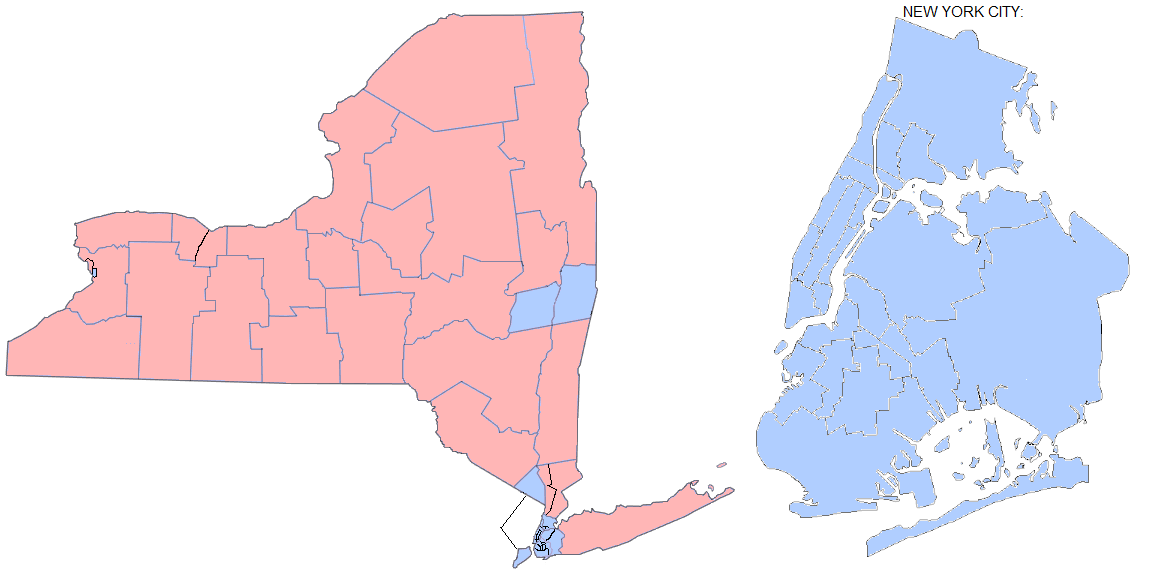
The political landscape within New York City is currently defined by both intense national debates and vigorous local activism, with the Jewish community actively participating on multiple fronts. High-profile ideological disagreements regarding foreign policy are running parallel to grassroots efforts by young voters and candidates focusing on local cultural heritage, illustrating the complex depth of community engagement in the city.
High-Stakes Political Commentary
International political friction has recently surfaced among Democratic figures. Former Speaker of the House, Nancy Pelosi, publicly expressed strong disagreement with the stances held by Mayor Zohran Mamdani and Michigan Senate candidate Abdul El-Sayed concerning the State of Israel. Pelosi indicated that she found the positions troubling, asserting that any member of the Democratic Party who disputes Israel’s inherent right to exist as a Jewish nation is fundamentally mistaken. This commentary highlights the deep ideological fissures within the political establishment regarding Middle Eastern affairs.
Grassroots Engagement and Local Focus
Meanwhile, the energy of the community is visible at the local level, particularly in the 12th Congressional District race. Despite being underage to cast ballots, a group of Jewish teenagers is actively involved in the political process. This youth participation underscores a commitment to civic involvement across generations. Furthermore, Micah Lasher, the Jewish Democratic candidate expected to take over for Representative Jerry Nadler, recently engaged in a discussion about his future legislative goals. During an interview at a historic Upper West Side appetizing shop, Lasher detailed his plans for Congress while also reflecting on the rich culinary history of Jewish life in New York City.
A Spectrum of Civic Action
The combination of these events paints a picture of a community that is simultaneously engaged in global political discourse and deeply rooted in local, cultural preservation. Whether through challenging ideological positions on international relations or through the active participation of young people in local elections, the Jewish community in New York is demonstrating a multifaceted commitment to shaping its city’s future. These varied efforts—from powerful critiques of political leaders to intimate discussions about local food traditions—confirm the vital and dynamic role the community plays in the broader civic life of the metropolis.
World Views
Georgia Jewish Voters Face Ideological Divide Between Pro-Israel Democrat and Far-Right Republican

As Georgia prepares for a critical Senate election, Jewish voters find themselves in a difficult ideological crossfire. The contest pits incumbent Senator Jon Ossoff, a Democrat known for his recent actions limiting arms sales to Israel, against Republican challenger Mike Collins. The choice forces the community to weigh Collins’ documented ties to far-right and white nationalist elements against Ossoff’s controversial stance on military aid to Israel, creating a deep rift within the electorate.
Controversies Shaping the Campaign
The Republican challenger, Collins, has drawn significant scrutiny over his associations. Reports indicate that his son-in-law has publicly espoused extreme views, including citing historical conspiracy theories that blame Jewish people for atrocities committed by the Soviet Union, and has made sweeping claims about Jewish control over media and financial systems. Furthermore, Collins’ campaign has faced allegations concerning former staff members linked to extremist groups, including individuals who posted Nazi imagery and associations with white supremacist figures.
In response to these concerns, liberal Jewish advocacy groups have launched targeted advertisements, labeling Collins as ‘dangerously extreme for Georgia.’ Collins maintains that he condemns all forms of hate and antisemitism, while simultaneously emphasizing his strong support for Israel, stating that his faith and policy dictate his position.
The Dilemma of Israel Policy
Ossoff, conversely, has faced severe criticism from some within the Jewish community for his voting record regarding military shipments to Israel. He has been one of the earliest Senate Democrats to vote to halt certain arms sales, a position he justified by citing the humanitarian crisis in Gaza. Despite assuring the public of his ‘ironclad’ commitment to Israel’s security, several Jewish organizations have publicly challenged his sincerity, accusing him of misrepresenting his support.
This legislative action has drawn sharp reactions. While some supporters of Collins argue that his son-in-law’s extremist views are irrelevant to his voting record, others maintain that the presence of such virulent antisemitism is disqualifying. One Jewish organization noted that Ossoff’s Democratic affiliation, which increasingly includes anti-Zionist voices, is a more troubling factor than the headlines surrounding Collins.
A Complex Political Landscape
The debate highlights a broader tension within American Jewish political life: the conflict between staunch support for Israel’s security and the condemnation of antisemitism in all its forms. While some Republican supporters argue that Collins has been a reliable friend to the community in the aftermath of recent events, others insist that his associations with bigotry are unacceptable. Ultimately, the Georgia election serves as a microcosm of this national struggle, forcing voters to decide which set of political compromises—extremist association or policy deviation—they find more tolerable.
World Views
BBC Pays Out Hundreds of Thousands to Dismissed Journalist Amid Allegations of Antisemitic Bullying

The British Broadcasting Corporation (BBC) has recently disbursed a substantial financial settlement—approaching £400,000—to award-winning documentarian Lucie Kon following her wrongful dismissal. Crucially, this payout came without the corporation admitting any fault or issuing a formal apology regarding the circumstances of her departure. The settlement underscores a recurring pattern at the public broadcaster: the institutional reluctance to acknowledge or address serious allegations of bias or antisemitism within its ranks.
The Core of the Dispute: Allegations of Workplace Harassment
Ms. Kon, whose creative contributions have earned prestigious international accolades, detailed claims that she was subjected to targeted harassment by colleagues following the October 7th attacks. She alleged that the hostile environment stemmed from her open support of Zionism and her Jewish identity. During her employment, she recounted instances where she was told that supporting the notion of Hamas as a terrorist group required simultaneously labeling Israel as a terrorist entity. Furthermore, she was reportedly instructed to reflect on the motivations behind the terrorist actions.
When Ms. Kon formally lodged a complaint concerning the treatment she received, the BBC reportedly isolated her, instructing her to remain away from work for several months before ultimately terminating her employment. She pursued unfair dismissal proceedings, leading to the agreement for significant compensation, which was partly sourced from the corporation’s license fee. Reports indicated that the terms of the agreement included a non-disclosure clause, preventing a public admission of liability or acknowledgment of the harassment.
A Pattern of Institutional Avoidance
Ms. Kon publicly stated that she felt she had become a ‘problem’ simply by advocating for her community and maintaining her authenticity within the organization. She reflected that despite the BBC’s stated encouragement for employees to bring their genuine selves to work, her outspokenness regarding her Jewish heritage resulted in her job loss. This incident echoes a previous legal hurdle faced by the corporation in 2012, when it spent nearly £330,000 in legal fees to prevent the release of a 2004 report concerning its coverage of the Israeli-Palestinian conflict, a document that remains unpublished.
The repeated refusal by the BBC to acknowledge its potential shortcomings—whether through legal settlements or public statements—suggests a systemic desire to bypass accountability. Experts suggest that this financial mechanism allows the organization to manage reputational risk while sidestepping the complex and sensitive discussion surrounding bias and antisemitism in media coverage. Kon’s decision to make her personal experience public, despite the non-disclosure agreement, serves as a powerful challenge to the corporation’s default position of non-admission.
