


World Views
Michigan Senate Race Tensions Escalate Amid Internal Democratic Feud Over Israel
A high-stakes race for the U.S. Senate in Michigan has been overshadowed by a sudden, intense public disagreement between Democratic nominee Abdul El-Sayed and his former primary challenger, Haley Stevens. This eleventh-hour political sparring is deepening anxieties among traditionally Democratic Jewish voters, complicating the path to victory in a closely contested state.
The Core of the Dispute
The disagreement centers on El-Sayed’s recent commentary regarding the State of Israel and his failure to publicly denounce a political advertisement. Stevens, who narrowly lost the initial nomination contest, began criticizing the candidate for rhetoric that she felt echoed claims blaming the Jewish state for Michigan’s economic troubles, specifically mentioning rising costs of groceries. She asserted that the ad did not originate the argument but merely amplified a point El-Sayed had made during his campaign.
In response, El-Sayed countered by questioning Stevens’ close association with established pro-Israel advocacy groups, labeling her criticism as an attempt to reopen a contest that concluded months ago. The conflict reached a fever pitch when El-Sayed’s campaign dropped Stevens from a planned public event in Detroit, signaling a definitive rift between the two political figures.
Political Fallout and Voter Anxiety
The internal party discord is having tangible effects on voter sentiment. Stevens, who represents a sizable Jewish community in suburban Detroit, publicly detailed her constituents’ concerns regarding El-Sayed’s statements. Furthermore, her fiancé, a prominent Jewish donor, reportedly indicated he would be supporting the Republican challenger, Mike Rogers, highlighting the depth of dissatisfaction among some key supporters. The tensions were heightened after El-Sayed declined to specify whether Israel or Iran posed the greater threat to American security, leading to further scrutiny of his stance.
Broader National Implications
This Michigan skirmish is not isolated. It reflects a broader trend of political polarization where national figures and local candidates are facing intense scrutiny over their foreign policy positions. Republicans are capitalizing on the intraparty division, using the dispute to appeal to Jewish voters who supported Stevens during the primary process. The incident underscores the complex reality facing American Jewish communities as they navigate a political landscape increasingly defined by debates over national security and domestic economic woes. The ongoing controversy serves as a stark example of how deeply ideological divides can fracture political unity, even within the same party structure.
World Views
Beyond the Ballot Box: Jewish Youth Drive Civic Engagement in Key US Races
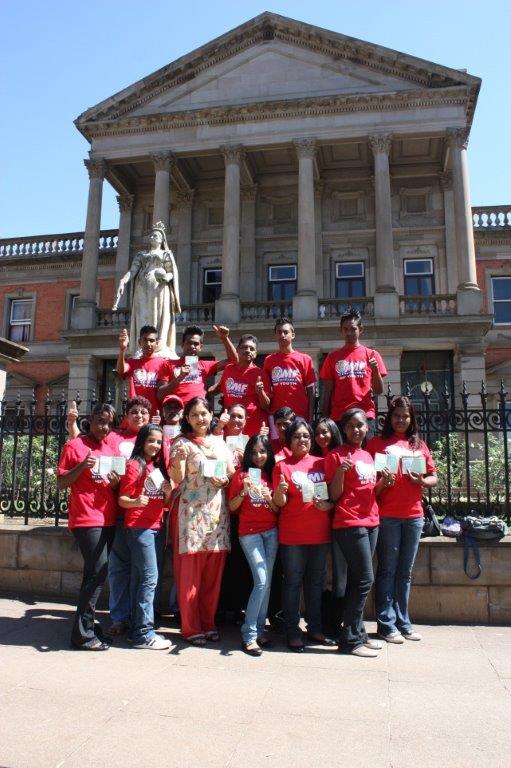
A growing trend is emerging across the United States: Jewish teenagers, despite being too young to cast a ballot, are actively and deeply involved in shaping local and state political landscapes. Driven by concerns over community safety, the state of Israel, and the rise of antisemitism, young activists are finding powerful ways to influence campaigns through volunteering, advocacy, and direct voter education.
Activism in Action: From Manhattan to Denver
This commitment to political participation spans diverse geographic areas. In New York City, teens are taking part in the highly competitive 12th Congressional District race. Young volunteers are engaging in local politics, motivated by candidates’ stances on Israel and anti-Jewish hostility. For some, a candidate’s public support for Jewish community safety is the deciding factor, demonstrating that policy alignment often supersedes traditional party affiliations.
Similarly, in Colorado, young Jewish volunteers are contributing to the gubernatorial race. Their involvement is centered on broader civic duties, ranging from advocating for education reform to combating bigotry. One young volunteer noted that even if they cannot vote, their efforts in educating others and encouraging turnout are a significant contribution. As one participant observed, ‘Even though I can’t vote, I can make other people vote.’
The Urgency of Voice: Identity and Safety
The motivation behind this intense civic involvement is often rooted in identity and personal security. Many teens feel compelled to speak out when they perceive threats to their community. They reject the notion that political influence begins only upon reaching adulthood. One teen stated that when issues affect one’s sense of safety, ‘you realize you don’t have to wait until you’re 18 to have a voice.’
Experts suggest that this drive reflects a long-standing tradition of Jewish civic responsibility. While some teens are cautious about voicing strong opinions due to fear of social isolation, others are finding ways to advocate for their beliefs openly. This engagement is not monolithic; it covers everything from campaign canvassing to proposing infrastructure improvements to elected officials.
Challenging the Age Barrier
These efforts challenge the assumption that political opinions are only relevant once a person is eligible to vote. By volunteering, debating, and educating the public, these young activists are effectively bringing fresh perspectives and energy into political discourse. Their actions underscore a belief that community stewardship is a continuous responsibility, a torch being passed to the next generation, regardless of their age.
World Views
As Baseball Season Ends, Professional Sports Face Lockout Uncertainty Amid Global Tensions
The conclusion of the baseball season marks a significant transition point for Major League Baseball, bringing with it the immediate challenge of the professional offseason and the looming threat of a collective bargaining agreement expiration. With the current pact set to expire at midnight on December 1st, the sport faces substantial uncertainty regarding the immediate future of its calendar. While the Milwaukee Brewers recently celebrated a franchise-first World Series victory, the focus is quickly shifting to player movements, potential contract negotiations, and the high stakes of the upcoming winter.
The Mechanics of the Offseason
The period following the championship series is designed to facilitate awards ceremonies and the signing of new player contracts. High-profile players are currently vying for major accolades; for instance, Chicago Cubs star Alex Bregman is recognized as a finalist for the National League Gold Glove Award and may also be considered for the Silver Slugger honor. Meanwhile, the Rangers’ Joc Pederson remains a speculative candidate for the American League Comeback Player of the Year, having shown strong recent performance.
Free Agency and Contract Decisions
Contractual decisions are shaping the landscape of talent. Pederson holds a mutual option with his team, which could lead to his status as a free agent if both parties opt out. Other players, such as Rowdy Tellez, who recently spent significant time in minor league play, are also navigating the complexities of free agency. These decisions will dictate the competitive balance across the league as teams prepare for the next cycle.
Broader Context: Sports and Societal Pressures
Beyond the diamond, the recent sports cycle has highlighted complex social and political pressures. In St. Louis, the Blues organization issued a strong condemnation regarding messages displayed at a game, labeling the signs as vile and hateful. Concurrently, international sports have provided moments of distinction; Israeli MLS talent Liel Abada netted a hat trick for Charlotte FC, highlighting global athletic contributions.
The broader community is also engaged in significant reflection. A recent visit by a Davidson College basketball coach and players to Berlin, led by Rabbi Erez Sherman, focused on learning about the Holocaust, emphasizing the importance of historical education. This reflects a wider societal trend where sporting events often intersect with profound political and historical dialogues, mirroring the larger decisions facing Jewish communities globally, from US midterms to Knesset campaigns.
A Season of Transition
As the baseball calendar enters an uncertain phase, other professional leagues continue their competitive schedules. Upcoming fixtures across hockey, basketball, and soccer demonstrate the sustained activity in the sporting world. Whether through the dramatic conclusion of a championship or the quiet negotiations of a lockout, the current era is defined by transition—a mix of professional ambition, global awareness, and political gravity.
World Views
NYC Jewish Community Navigates Political Divide, From Global Debates to Local Kitchens
The political landscape within New York City is currently defined by both intense national debates and vigorous local activism, with the Jewish community actively participating on multiple fronts. High-profile ideological disagreements regarding foreign policy are running parallel to grassroots efforts by young voters and candidates focusing on local cultural heritage, illustrating the complex depth of community engagement in the city.
High-Stakes Political Commentary
International political friction has recently surfaced among Democratic figures. Former Speaker of the House, Nancy Pelosi, publicly expressed strong disagreement with the stances held by Mayor Zohran Mamdani and Michigan Senate candidate Abdul El-Sayed concerning the State of Israel. Pelosi indicated that she found the positions troubling, asserting that any member of the Democratic Party who disputes Israel’s inherent right to exist as a Jewish nation is fundamentally mistaken. This commentary highlights the deep ideological fissures within the political establishment regarding Middle Eastern affairs.
Grassroots Engagement and Local Focus
Meanwhile, the energy of the community is visible at the local level, particularly in the 12th Congressional District race. Despite being underage to cast ballots, a group of Jewish teenagers is actively involved in the political process. This youth participation underscores a commitment to civic involvement across generations. Furthermore, Micah Lasher, the Jewish Democratic candidate expected to take over for Representative Jerry Nadler, recently engaged in a discussion about his future legislative goals. During an interview at a historic Upper West Side appetizing shop, Lasher detailed his plans for Congress while also reflecting on the rich culinary history of Jewish life in New York City.
A Spectrum of Civic Action
The combination of these events paints a picture of a community that is simultaneously engaged in global political discourse and deeply rooted in local, cultural preservation. Whether through challenging ideological positions on international relations or through the active participation of young people in local elections, the Jewish community in New York is demonstrating a multifaceted commitment to shaping its city’s future. These varied efforts—from powerful critiques of political leaders to intimate discussions about local food traditions—confirm the vital and dynamic role the community plays in the broader civic life of the metropolis.
