



World Views
Economic Anxiety, Not Middle East Conflict, Defined 2026 Midterm Voter Priorities

A recent electoral survey indicates that the complex geopolitical tensions in the Middle East, including the ongoing conflict in Gaza, did not serve as a dominant factor in shaping voter choices during the 2026 midterms. Despite extensive international media coverage and heated debates surrounding US support for the Jewish state, a new poll commissioned by the Vandenberg Coalition found that domestic financial pressures overwhelmingly captured the attention of the electorate.
The Dominance of Domestic Concerns
The research, conducted by JL Partners, revealed a significant disconnect between international headlines and voter priorities. Only a small percentage of respondents ranked the relationship between America and Israel among their top three issues when considering how they would vote. Furthermore, while the Iran conflict garnered some attention, it ranked lower than other concerns. In stark contrast, economic instability and the rising cost of living were identified by nearly half of all participants as one of their top three concerns, making financial worries more than four times more prevalent than geopolitical issues.
Deepening Partisan Rift on Israel
The poll also exposed a growing chasm in how American voters view the Jewish state, illustrating a clear ideological divergence between political parties. A substantial portion of the electorate viewed Israel as a key American ally (46 percent), yet a notable segment described it as an adversary (27 percent). This sentiment was sharply divided along partisan lines. Republican voters displayed significantly higher levels of support, with 77 percent viewing Israel as an ally. Conversely, Democratic voters displayed markedly more antagonistic views; a plurality of this group (41 percent) classified the Jewish state as an adversary.
Foreign Policy vs. Financial Stability
The findings challenge narratives suggesting that Republican electoral difficulties were primarily rooted in their pro-Israel stance or support for military action against Iran. Instead, the data suggests that economic anxieties overshadowed foreign policy debates for the broader public. While the survey did reveal strong Republican support for pursuing American objectives in the Iran conflict before any withdrawal, the underlying message remains clear: for the average voter, grocery prices and the cost of living were far more pressing than international diplomatic struggles.
Looking ahead, the survey suggests that while opposition to Israel is gaining traction within Democratic political circles, it has yet to translate into a decisive electoral force for the general public. The results may signal a future trend where the partisan divide over Israel continues to grow, even as the immediate electoral focus remains fixed on household finances.
World Views
Tehran Vows Full Confrontation Against US Maritime Restrictions
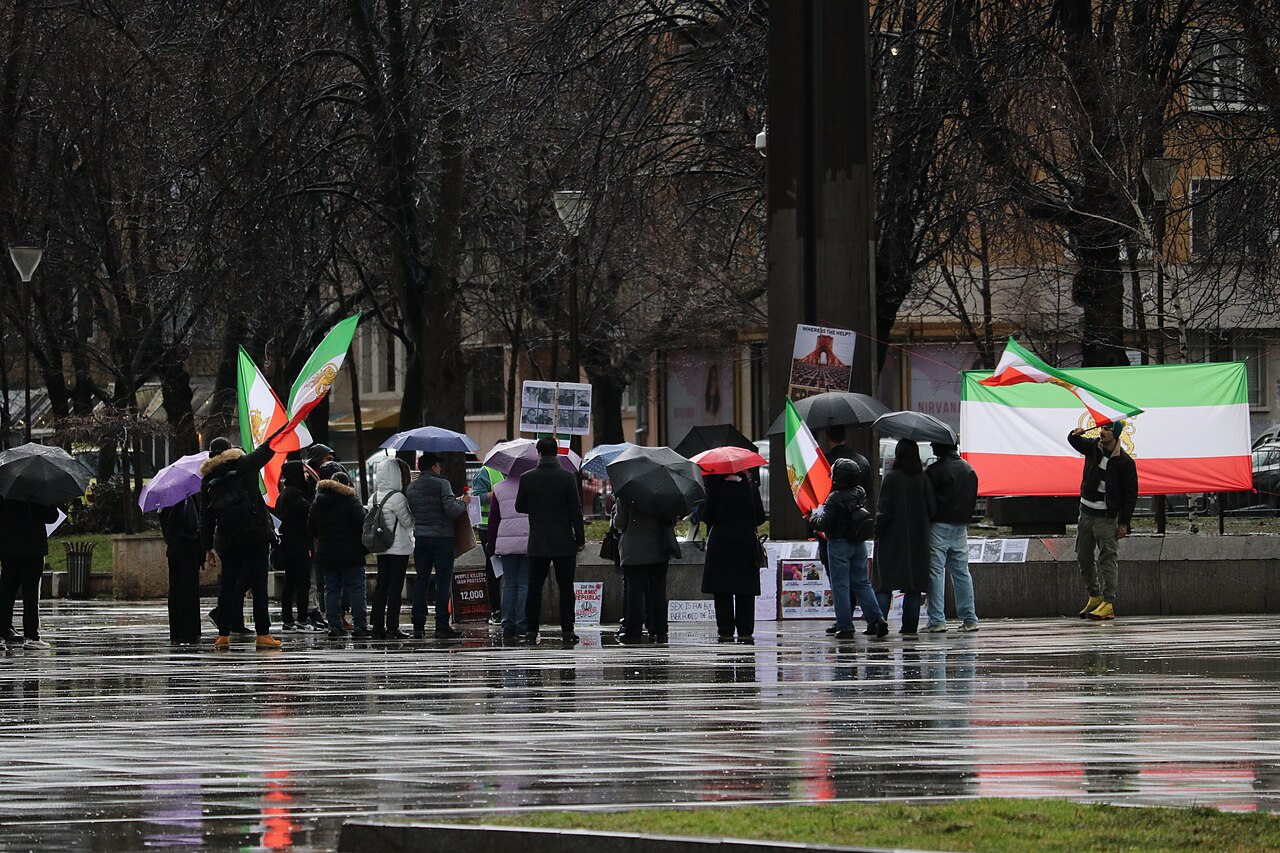
Iran has issued a stark warning, declaring that the nation is prepared to employ every available measure to challenge the ongoing United States naval restrictions on its oil exports. The defiant stance comes from the country’s Foreign Ministry spokesperson, who characterized the maritime blockade as an act of military aggression, signaling a significant escalation in regional tensions.
The Diplomatic Impasse Deepens
The spokesperson stated clearly that the regime would not tolerate the restrictions and would utilize all necessary tools to confront what it labels as American aggression. This strong rhetoric follows a period of volatile international trade policy. The US imposed the blockade on Iranian oil shipments in mid-April. Although a temporary understanding led to the lifting of the restrictions in June, the agreement subsequently disintegrated, and the measures were reinstated in mid-July, plunging the situation back into uncertainty.
Currently, the flow of Iranian crude oil has plummeted, with visible exports having dropped to near zero in recent months due to the enforcement of the sanctions. While some industry tracking sources recently reported on tankers loading Iranian oil via ship-to-ship transfers—potentially marking the first successful export since the July reinstatement—the Ministry representative quickly dismissed these reports, classifying them as mere speculation.
Leverage at the Strait of Hormuz
Iran maintains that it controls passage through the critical Strait of Hormuz, a crucial global shipping lane. The nation has made its demands clear: the Strait will only be reopened when Washington meets specific conditions. These requirements include halting ongoing military activities, officially withdrawing the blockade, and withdrawing the related financial sanctions. The spokesperson indicated that if the United States fulfills these specified conditions, Tehran is ready to resume its commitments as swiftly as possible.
The situation underscores the deep geopolitical chasm between Tehran and Washington. Iran’s commitment to confront the restrictions, backed by the threat of using all its available means, suggests that diplomatic resolutions remain elusive. This high-stakes standoff places immense pressure on global energy markets and heightens the risk of further military incidents in the Persian Gulf region.
World Views
Iran Deploys AI Surveillance Network Amid Rising Anti-Regime Protests
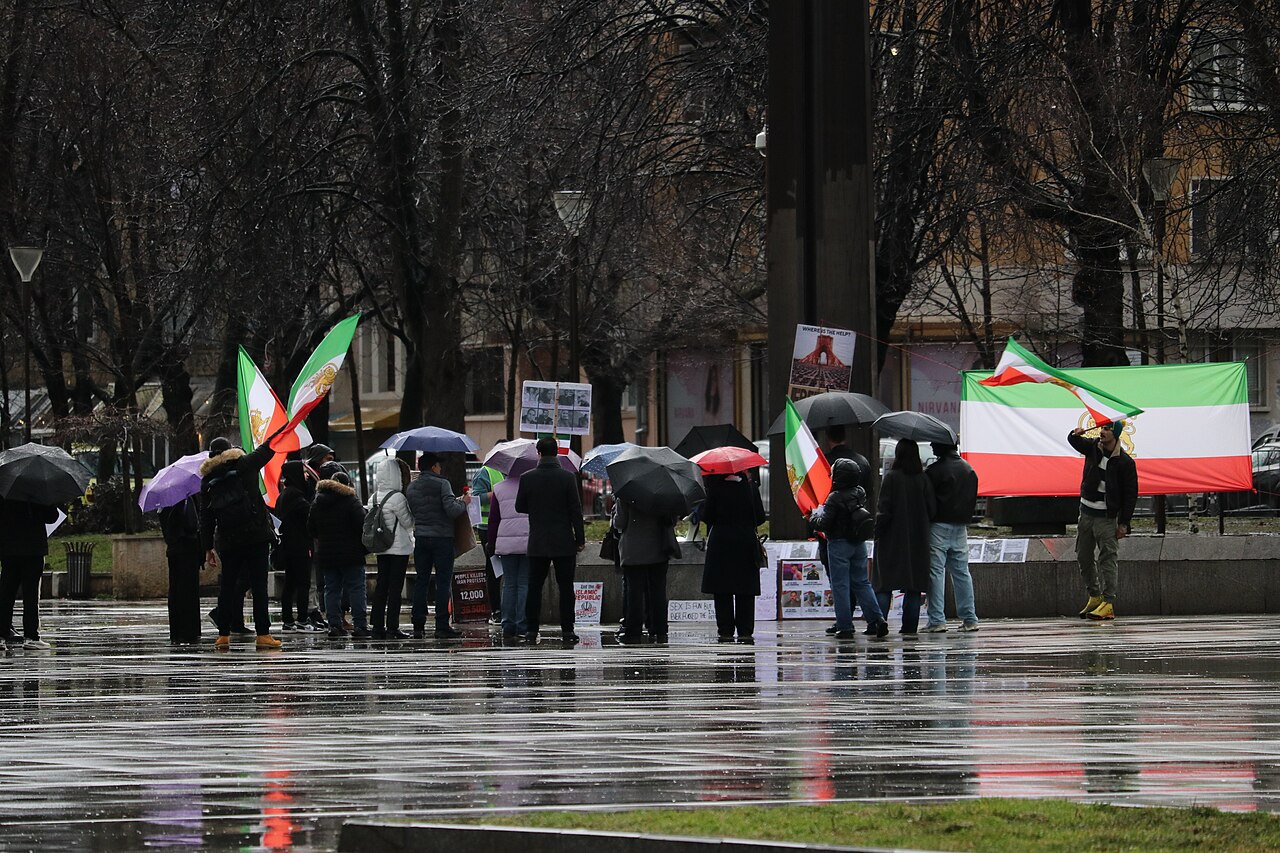
As public demonstrations against the Iranian regime gain significant momentum, the government’s recent introduction of a comprehensive, nationwide artificial intelligence surveillance system has sparked widespread alarm among human rights observers. Authorities have rolled out the new AI platform, which is designed to map local resources and coordinate social aid through religious centers and paramilitary forces. However, investigative experts caution that the true purpose of this technology may be to construct an extensive intelligence network, enabling the state to monitor citizens, pinpoint opposition figures, and severely restrict political dissent.
Official Mandate vs. Security Concerns
Iranian state media announced that the initiative is part of a broader strategy for ‘neighborhood-centered governance,’ intending to shift administrative and social duties to local communities overseen by religious leaders and security institutions. President Masoud Pezeshkian has called for the system’s expansion across the nation, utilizing Iran’s vast network of approximately 80,000 mosques to address public needs in partnership with the Basij militia, a force operating under the Islamic Revolutionary Guard Corps (IRGC). Despite these stated aims of improving social services, analysts warn that the Basij’s involvement in a localized intelligence grid could grant the regime unprecedented insight into private lives and provide new mechanisms for targeting critics.
A Climate of Intensifying Repression
This technological deployment occurs while the regime faces mounting economic strain and a growing wave of public unrest. Since the start of the year, scattered anti-government demonstrations have steadily increased, averaging around 80 per month and peaking near 130 in September. These renewed protests follow a period of severe crackdowns, including a violent crackdown earlier this year that resulted in thousands being injured or killed. The regime’s increasing militarization is also evident; officials have reportedly turned neighborhoods into defensive units and expanded weapons training to civilians and minors.
The Blurring Line of Control
Security analysts indicate that this surveillance effort reflects a deliberate effort by the ruling power to integrate its security apparatus into nearly every facet of civilian existence. A research analyst noted that the regime is intentionally blurring the distinction between civilian and military life, primarily through the Basij, which embeds itself across various public institutions. Furthermore, the Basij’s current chief had previously called for the creation of a ‘popular intelligence network,’ emphasizing the need to identify opponents before they can act. This focus on advanced monitoring aligns with past precedents; reports have indicated that Iran-linked operatives have previously utilized AI chatbots to automate the collection and analysis of public information on targeted individuals, transforming labor-intensive intelligence work into a highly efficient, automated process.
World Views
Fatah Spokesman Declares Absence of Jewish History in Israel, Citing ‘Palestinian Fingerprints

High-ranking figures within the Fatah movement have recently advanced sweeping claims that deny the historical presence of Jewish communities in the land now known as Israel, asserting that all of the territory belongs inherently to Palestine. A recent statement by Dr. Jamal Nazzal, the Fatah spokesman in Europe, declared that there is minimal discernible Jewish heritage within the region, effectively dismissing the extensive documentation held by generations of historians and archaeologists.
Digital Appropriation of Key Landmarks
The movement’s narrative was recently amplified through an AI-generated video that deliberately reclaims the Sea of Galilee, a major landmark integral to the State of Israel since 1948. The content displayed on the video explicitly labeled the body of water as the ‘Palestinian Sea of Galilee.’ Accompanying text further asserted that Jewish people arrived as colonialists, claiming they found no significant historical record to support their exaggerated claims of presence in the area. The video maintained that every segment of the land bears the evidence of Palestinian civilization, both in its agricultural practices and its architectural development.
Broadening the Territorial Narrative
These declarations are part of a wider pattern of historical revisionism promoted by the Palestinian Authority (PA). Official PA television broadcasts have frequently depicted Palestine as a vast, thriving coastal region, listing major metropolises such as Jerusalem, Haifa, Jaffa, Bethlehem, and Hebron as inherently Palestinian cities. Furthermore, PA officials have actively sought to rename and recontextualize Israeli towns. For instance, a recent broadcast identified a village near Jaffa, which is currently an Israeli municipality, as a prominent Palestinian settlement. Another PA tourism official emphasized that every stone and alleyway within the historic city of Hebron speaks to thousands of years of Palestinian settlement and deep roots in the area.
Implications for Regional Stability
Analysts suggest that these continuous narratives of historical denial and territorial reclassification are fundamentally opposed to the pursuit of a lasting peace. By systematically fabricating the premise that Jewish people lack a historical claim to the Land of Israel, the PA, according to observers, works to delegitimize the Jewish presence in the nation. This perspective is viewed by some researchers as a contributing factor to the escalation of conflict and acts of violence. The sustained promotion of this ideology presents a significant challenge to any diplomatic effort aimed at resolving the long-standing conflict between Israelis and Palestinians.
