


Local News
Long-time Winnipeg doctor and Israeli colleague make medical app available to general public
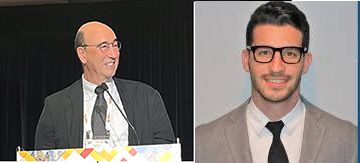
By MYRON LOVE Seven years ago, Dr. Gerald Minuk, Canada’s first hepatologist (liver specialist), partnered with Israeli computer science student Daniel Iluz-Freundlich in founding Refuah Solutions Ltd (RSL). Their goal was to create an app – which they called PI-enroll (“PI” stands for “Principal Investigator”), which was designed to be used by clinical trial investigators that would save them time and effort so they could be more personally involved in seeing their trial patients.
Last month, they released their second app, this time for patients. The app, called Patient-empower, informs patients about clinical trials underway for their condition and helps them make an informed decision as to which trial best meets their specific needs and preferences.
“I was approaching retirement,” recalls Minuk, now Rady School of Medicine Professor Emeritus, who has been in practice in Winnipeg since 1987, and “I couldn’t see myself filling my days doing crossword puzzles or Sudoku. I wanted to be able to continue contributing to medical research and patient care.”
It just so happened that, at the time, Minuk was introduced to an Israeli student, Daniel Iluz-Freundlich, who had just finished studying Computer Sciences at the University of Winnipeg. (Minuk notes that Iluz-Freundlich – on graduating – received the Gold Medal in Computer Science.)
“Daniel is an exceptionally talented young man,” Minuk says. “So I tapped his computer programming skills to create our PI-enroll and subsequently, our Patient-empower apps.”
The friendship continued after Iluz-Freundlich returned to Israel in 2020 to begin medical school on a Phil and Elle Kives Scholarship, where he earned numerous honors. Iluz-Freundlich is currently an intensivist anesthesiologist at the Beilinson Hospital in Israel. Despite his new professional responsibilities, including caring for IDF forces wounded in Gaza– he has remained active with Refuah – as vice-president of the company.
Minuk adds that a dozen other senior professors of medicine also contributed to Refuah’s software design. “Together,” he reports, “the company represents 400+ years of clinical trial experience. That experience is being applied to identifying and addressing the major challenges investigators and patients face when conducting or participating in clinical trials.”`
He adds that Refuah Solutions has established a truly global network with company personnel in San Diego, São Paulo, Mexico City, London, Barcelona, Nairobi and Delhi thus far.
According to Minuk, the company has enjoyed worldwide success – with over 2,000 doctors in 40 countries and 50 drug companies signed on for the PI-enroll app. He attributes this success to the app’s impressive results. In a recent global clinical trial, Minuk reports, within 3-6 months of implementing PI-enroll, investigator personal involvement increased by 60% and with that, patient enrolment increased by 80%, patient drop-outs decreased by 50% and there were 20% fewer protocol deviations (mistakes made). In addition, 90% of PIs rated the App 8 out of 10 in terms of usefulness.
He adds that one site that had not enrolled any patients for 12 months, subsequently became the trial’s leading enrolment site.
Regarding the newly released Patient-empower app, Minuk notes that despite the many benefits patients derive from clinical trials including free and early access to new and often safer and more effective treatments, fewer than 10% of patients who would qualify for a clinical trial are ever invited to consider that option. “The problem,” he explains, “is that most Health Care Providers are either unaware of what clinical trials are underway in their area or if they are aware, don’t have the time to discuss the trials with their patients.”
Therefore, Minuk, Iluz-Freundlich and their team designed and recently released their second app – Patient-empower – which informs patients of what clinical trials are underway for their condition and empowers them to select the trial that prioritizes their needs over those of industry.
The platform, he explains, uses AI to generate concise, easy-to-understand summaries of clinical trials tailored to the patient’s location—city, state, country, or globally, depending on their preference. Each summary includes clear explanations of the patient eligibility criteria and key practical details, such as the likelihood of patients receiving a placebo, the number of required site visits, and other important practical considerations. It also suggests questions that patients should consider asking the investigator before they consent to enrolling. The trial information is presented in a shareable format to facilitate discussions with family, friends, and local healthcare providers—supporting both patient confidence and continuity of care.
Once a trial is selected, Minuk continues, Patient-empower provides the contact information for the trial investigator closest to the patient’s location, the trial’s sponsor and, where available, the world’s experts in the field.
The feature Minuk is most enthusiastic about is the “Recent Findings” page which keeps patients up to date on newly published clinical trial results and discoveries relevant to their condition.
“Patient-empower is available to patients from internet venues (App Store or Google Play) or through NFP organizations, associations, societies and patient support group web-sites,” he adds. “Although only recently released, we have already attracted interest from the American Diabetes Association, the Alzheimer’s Society of America, the Canadian Liver Foundation, Colorectal Cancer Canada, the American Myasthenia Gravis Society and many others.”
“Overall, Patient-empower informs patients, and more informed patients benefit everyone involved. After all, it’s the patient’s health; their voice should be heard,” Minuk concludes.



Local News
“American Hostage” – 8-part TV series shot in Winnipeg and now being aired on TV features several local Jewish actors – and a star Jewish director
By BERNIE BELLAN If you had been following the coverage that the Winnipeg Free Press has given to several major American-originated film and TV productions that have been shot in and around Winnipeg in recent years, you would know by now that Winnipeg has become a popular destination for production companies looking for a particular vibe – especially the kind of look the Exchange District can impart for period pieces.
And, while stars such as Bob Odenkirk (perhaps best known for his star role in “Better Call Saul”) sang the praises of Winnipeg to such a degree that he decided to shoot not just one, but three feature films here, Odenkirk’s praise for Winnipeg certainly reverberated among other Hollywood A-listers. Odenkirk’s first film shot here, called “Nobody,” was followed by a sequel, “Nobody 2”, a good part of which was filmed in Winnipeg Beach – which would have made many of the locations of the film’s scenes very familiar to members of our Jewish community. (Odenkirk also made a third movie in Winnipeg, called “Normal,” which co-starred Henry Winkler.)
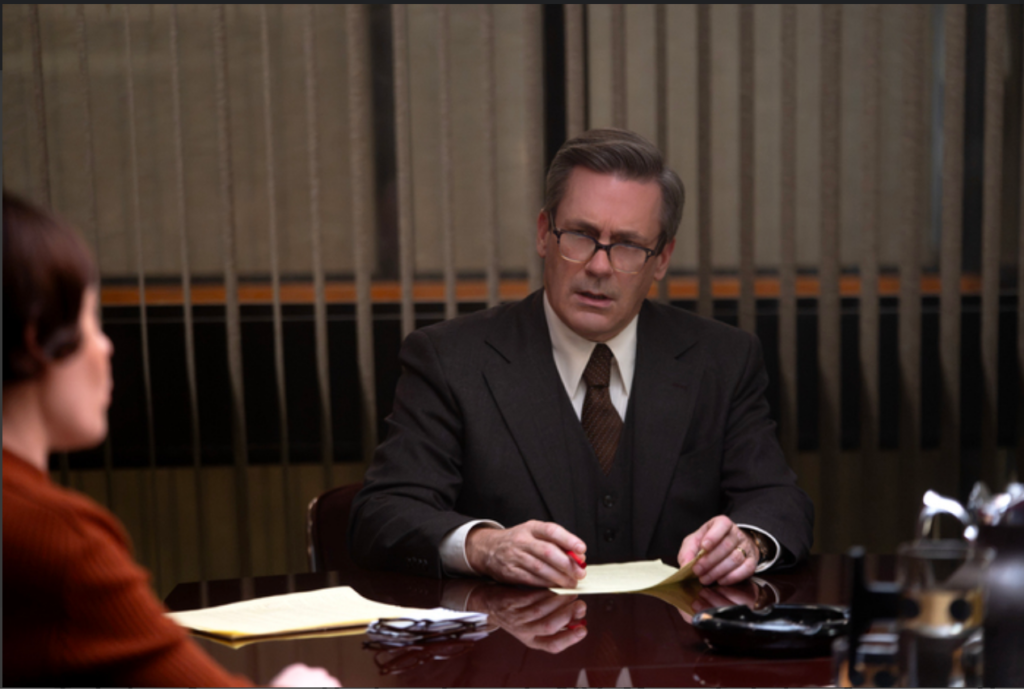
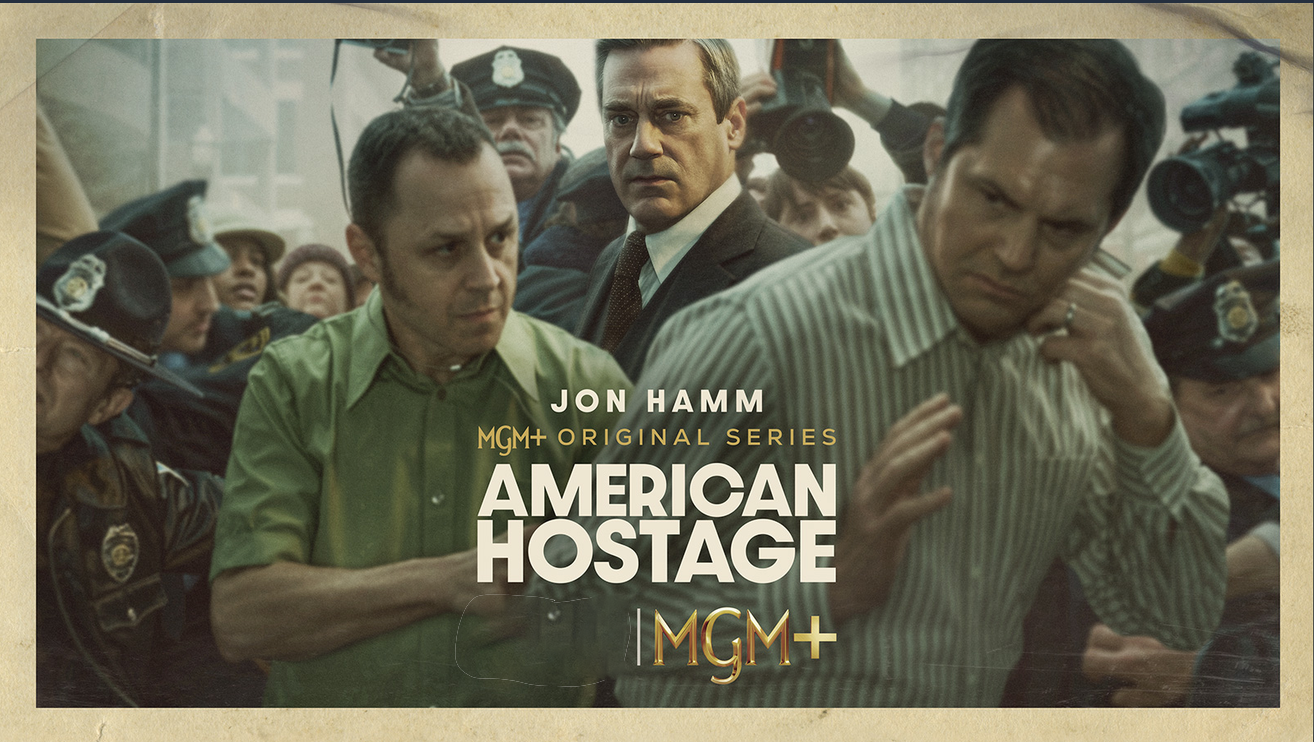
But perhaps no production in recent times has received more attention than the eight-part TV series, “American Hostage,” starring Jon Hamm – who vaulted to fame in the TV series “Mad Men” and has gone on to achieve major stardom on both TV and in the movies.
Here’s a brief synopsis of what “American Hostage” is all about:
“Based on the acclaimed first season of the scripted podcast of the same name, American Hostage is a psychological thriller set in the 1970s inspired by the harrowing true story of Fred Heckman, a beloved Indianapolis radio reporter who is thrust into the middle of a life-or-death crisis when hostage-taker Tony Kiritsis demands to be interviewed on his popular radio news program.”
While Hamm was in Winnipeg between last November and February of this year, he made quite a name for himself as someone who was quite eager to explore our city, despite the cold weather he and the rest of the crew encountered. (One time he and two other actors in the series actually drove to Stonewall to take in that town’s recently reopened movie theatre.)
In addition to Hamm, “American Hostage” features many other well-known actors, although I have to admit that, since I don’t watch a lot of television, I have to take the word of other writers, especially writers for the Free Press, whose stories about “American Hostage” I read prior to writing this article, in order to give myself a better understanding of how this particular series came about and just who in it is considered well-known in the film and TV business.
Since what really made “American Hostage” so popular within our own actors’ community was its use of so many Winnipeggers as extras during its filming, I though I’d focus on several members of the Jewish community who have roles in the series.
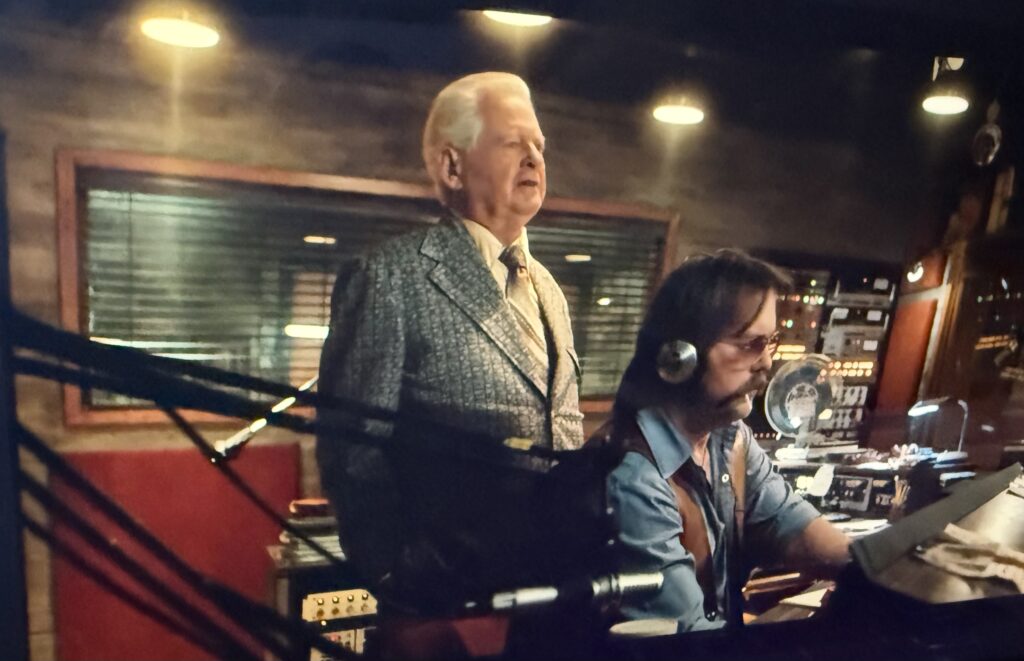
Chief among them is Harry Nelken, who has had a prolific career in Winnipeg’s theatre scene, especially as a star in many Winnipeg Jewish Theatre productions. In “American Hostage,” Nelken provides some comic relief to the often heavy tone imbued by the hostage crisis. Nelken plays an over-the-hill sports reporter by the name of Franco (although I don’t recall hearing his name actually called out in the first three episodes I’ve been able to watch as of the time of writing.)
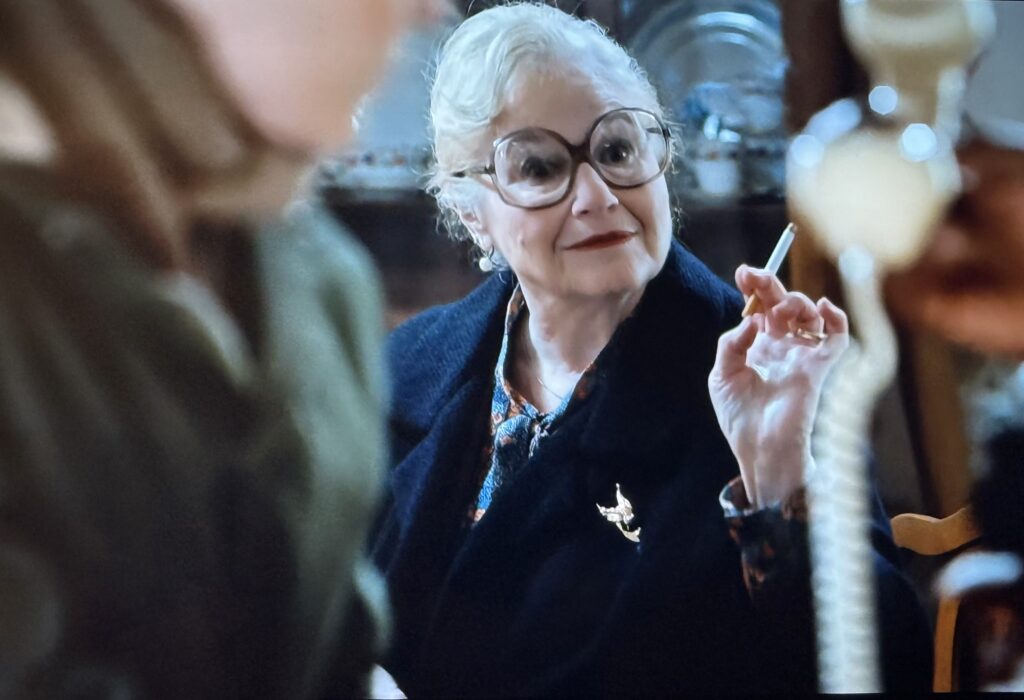
Another local performer, Susanna Portnoy, also has a comic turn as a nosy neighbour named Pearl in Episode 2 of the series.
In addition, in Episode 6 we can expect to see Kevin McIntryre (Cantor at Congregation Etz Chayim) play a role, also his wife Henriette Ivanans.
While there are a number of other individuals listed in the credits who are Jewish, the most prominent among them is Adam Arkin, who not only directed the first four episodes of the series, he plays the role of a lawyer by the name of Ruckelshaus, who serves as the lawyer for the hostage taker, Tony Kiritsis.
The show is being rolled out on a weekly basis on Crave TV. If you have a Crave TV account you have to login on your computer to see all episodes of the show that have been aired to date (four as of this writing).
Or – if you don’t have a Crave TV account, but have USA TV (Channels 104 or 1104 on Bell MTS TV or Channel 425 on Shaw T) as one of the channels in your TV package, you can watch episodes every Friday evening at 10:00 pm – and set your TV box to record all other episodes of the series. However, USA TV will be showing Episode 3 on October 9. If you want to catch the first two episodes of the series, you’ll have to watch them through your computer.
Local News
Why are so many people in Winnipeg afraid to go on the record when it comes to my covering them?
By BERNIE BELLAN I guess that my reputation as someone who is willing to go behind the scenes to try and find out what’s really happening within the Jewish community has led, in many cases, to people – or entire organizations, clamming up when it comes to being willing to talk to me.
You might have read my story about the incident at the Asper Campus, during which one individual, Marty Green, was arrested by members of the Winnipeg Police Service, apparently for “disturbing the peace.”
Despite repeated attempts to elicit an explanation from the WPS how exactly Marty was disturbing the peace, no one in WPS has responded to my requests for information.
Let’s face it: the WPS is in the uncomfortable position of having to be seen as “doing something” about the nervousness that many members of our Jewish community feel about the dangers that come with doing things that we used to take for granted we could do in peace and security, such as attending synagogue, sending kids to Gray Academy, or going into the Asper Campus.
So, when one lone individual seems to be behaving in an odd manner – walking around in front of the campus, holding out leaflets – well, it alarms many individuals. One can assume many of those individuals complained to our Jewish Federation, perhaps to B’nai Brith as well. (I did see Ruth Ashrafi, Regional Director for B’nai Brith Manitoba, talking to two policemen around the time that Marty was arrested.)
But – it’s now part of a pattern of Jewish organizations – and leading individuals within our community – joining the trend to suppress freedom of speech.
In my particular case, I often send emails to individuals asking for comment about a particular issue that has been brought to my attention. Rather than responding with a “no comment” response, lately the trend has been not to issue any response at all.
Further, in two cases within the past month, when speakers have been been made aware that I would be in the audience when they were speaking, I was told beforehand that I was not to report on what they were going to say.
And – here’s a really surprising result when I asked to see a transcript of a particular speaker’s remarks, when that speaker had appeared at an event held in the Berney Theatre on September 2. His name was Jeffrey Herf. His talk was publicly advertised by the Rady JCC as “The History Behind Today’s Headlines – A timely conversation about Israel, history, and the events shaping our world.”
I didn’t attend Herf’s talk, but I was told by someone who did attend that he was quite interesting and he wondered why no one from the Jewish Post had been there to cover the talk. That same person said that the was pretty sure the talk had been recorded.
So, I contacted Laura Marjovsky, Director of Programming at the Rady JCC, on September 15, to ask whether there had been a recording of Herf’s talk and, if there was one, could I get a copy?
Laura responded (on Sept. 16): “I’ll have to get back to you on the recording. I’ll need approval in getting that released.”
I bumped into Laura more recently and asked her whether there’s been any movement on that request, but she said she hadn’t heard anything yet. That’s almost two weeks now, so it doesn’t seem likely that she’s going to get permission to release a recording of Herf’s talk to me.
What’s particularly strange is that you can do a search for Jeffrey Herf and find all sorts of instances where he’s been interviewed and his talks have been covered by various media. Maybe he was worried that if I wrote a report about his talk I wouldn’t be fair or accurate in reporting what he had to say, but I hadn’t told Laura that I wanted to write about Herf’s talk. I just wanted to know whether I could get a recording of his talk. In many instances I’ve transcribed speeches – or interviews, and printed them verbatim.
But, in this case, it appears Jeffrey Herf doesn’t want anything written about his talk here. I wonder why that is?
Then, there were two further instances of speakers asking that their remarks go unreported. Both instances occurred at the Gwen Secter Centre – at Remis Speakers’ luncheons. (By the way, the luncheons have seen record attendances this year. Kudos to Simone Cohen Scott for bringing in such an interesting range of speakers. If you’ve never been to a Remis luncheon but might be interested in having a great – and kosher lunch, followed by hearing an interesting speaker – all the while being able to socialize with friends, you really ought to give it a try.)
The first instance was when Prof. Bryan Schwartz, who is now a rabbi as well as a lawyer and professor, gave a talk about Torah commentaries. Why Bryan didn’t want anything written about something as innocuous as Torah commentaries is beyond me, but that was his prerogative.
The second instance was more frustrating for me. It was when Anita Wortzman, president of the Asper Foundation, was speaking about the Asper Foundation’s philanthropic endeavours. Again, Anita had also asked that there be no reporting of her remarks.
Yet, I found what she had to say quite interesting – and she delivered her remarks so clearly in such an organized manner that I was prompted to ask Anita for an interview, during which, I suggested, she could describe the Asper Foundation’s work. I emailed Anita asking her whether she would be willing to sit for an interview but, rather than responding with a rejection, I received no response at all. So, I emailed her again. Still no response.
And then there’s an interesting situation that had been brought to my attention about a policy of Congregation Etz Chayim’s of which I was not aware.
The policy involves who would be entitled to officiate at a funeral held at one of the three cemeteries managed by CEC: The Rosh Pina, Bnay Abraham, and Hebrew Sick cemeteries.
In June 2025 Rabbi Kliel Rose emailed various rabbis and several other individuals about Etz Chayim’s policy re outside clergy being able to officiate at funerals in any of those cemeteries. The email was titled “Update on CEC Clergy Funeral Policy & New Pre-Approval Process July 25, 2025.”
The wording in the email was somewhat confusing at times. For instance, one line says “All services conducted in the CEC synagogue require the participation of CEC clergy (Rabbi and/or Cantor).” Wouldn’t it stand to reason that services in CEC would require the participation of a member of CEC clergy, I wondered?
Further, it stated that “Requests for outside clergy must be approved by the CEC rabbi.”
But CEC is now without a rabbi, as Rabbi Kliel has left Winnipeg for Ottawa. Who will be able to grant requests for outside clergy in the interim?
Apparently though, what the policy was meant to refer to wasn’t services in the CEC synagogue, it was meant to refer to funerals in CEC administered cemeteries.
As a result, I sent emails to the CEC funeral director, Margot Carr, and CEC Chief Operating Officer Morissa Granove, in which I asked them to clarify CEC’s policy on funerals and outside rabbis being able to officiate at CEC administered cemeteries.
I noted in my email that outside rabbis had previously been allowed to officiate – on their own, at CEC administered cemeteries.
I also noted that I had spoken with individuals who had told me they had wanted a certain rabbi to officiate at their loved one’s funeral, but were told that they had to use one of CEC’s clergy. In certain instances, however, I was also told that when some families absolutely insisted on using an outside rabbi, CEC did relent and allowed them to use an outside rabbi. Thus, one might say CEC’s policy of not allowing outside rabbis to officiate on their own at one of their cemeteries is “honoured more in the breach than the observance,” if a family were to absolutely insist that an outside rabbi be allowed to conduct a funeral at one of CEC’s cemeteries.
The vast majority of funerals in a Jewish cemetery in Winnipeg are conducted at the Shaarey Zedek Cemetery, however, and the Shaarey Zedek has always allowed outside rabbis to officiate at funerals in its cemetery.
CEC’s policy, moreover, was intended to target one particular rabbi in Winnipeg, I further learned. That rabbi received a separate email from Rabbi Kliel informing him that he would no longer be able to officiate, under any circumstances, at a CEC administered cemetery.
As Rabbi Kliel noted in his email, “While we understand some may request your officiation, this will no longer be possible.”
In my emails to Margot Carr and Morissa Granove I suggested that barring a specific rabbi from being able to officiate at funerals in any of their cemeteries would likely prove very painful to many families who would want a particular rabbi to officiate at their loved one’s funeral.
To date I have not received any response to my emails to either Carr or Granove.
So, there you have it: A pattern either of emails going unanswered by the parties to whom they were sent or of being told that I would not be able to report on remarks on particular occasions.
At the very least, one would expect a simple “no comment” in response, but we’re now living in an age when requests from media for information or comment are simply ignored all too often. I guess I have to get used to that.
Local News
Epic court battle shaping up next week between Etz Chayim Congregation and two former members who are now barred from setting foot in Etz Chayim

By BERNIE BELLAN This story was originally posted August 14, but with the date of the court battle soon approaching we thought it timely to repost it to the top of our website.
Here’s how it read when it was first posted: When we first posted this story Friday morning, August 14 – with a photo of Etz Chayim Synagogue, we received an email from Morissa Granove, COO of Etz Chayim Congregation:
“Hi Bernie.
“This request is not about the article itself but the safety of our shul. We have been advised not to post the address or photos of our Jewish organizations publicly for some time for security reasons. Can I please ask that you change the image posted online (and planned for print if needed) and that in this be kept in mind for the future?
“Thank you so much for your understanding,
“Morissa”
We replied:
“Gee Morissa – I’ll do that but maybe you better ask Google to remove any mention of any Winnipeg synagogue because all anyone has to do is do a Google search and they’ll come up with a complete list of Winnipeg synagogues and their addresses – also photos! Do you want me to contact Google for you? Can’t be too careful, can we?
Now, here’s the story as it was originally posted:
The date October 7 carries a huge amount of significance for Jews around the world: It was the date that members of Hamas and other terrorist groups launched a murderous attack on innocent Israelis (and members of other nationalities) that resulted in the deaths of more than 1200 people and the abduction of 251 others.
But it is also a date that may have a significance of a different sort come this October 7 when a Winnipeg courtroom will be the scene of a court case in what is shaping up to be a momentous legal battle between Congregation Etz Chayim and two former members of the congregation who have been barred from attending services – or even setting foot inside the building that houses Congregation Etz Chayim.
Before publishing this article I had sent copies to both sides in the dispute – and offered both sides the opportunity to correct any mistakes they might have found in what I had written. I did receive responses from both sides and have incorporated their suggested corrections into what follows.
The two individuals involved at the heart of this dispute are both former longstanding members of Etz Chayim – and before that, Rosh Pina Congregation: Dr. Emet Eviatar (previously known as Hadass), who had been the Torah reader at Etz Chayim for many years, and who had also led Sunday services; and her husband, well known scientist Dr. David Hoult (who played a leading role in the development of MRI technology and was also very active in the congregation). Drs. Eviatar and Hoult have filed suit against CEC over what they claim was the illegal termination of their membership.
In response, however, Congregation Etz Chayim asserts that it was not a question of membership when CEC exercised its right to refuse entry on the advice of the WPS and security experts who were consulted after a deeply concerning letter was received from one of the plaintiffs by the synagogue.
The filings in this particular case are in the hundreds of pages. I spent two recent afternoons at the Law Courts poring over the filings, and photographed pages of what I thought were some of the most relevant issues at hand so that I could quote accurately from those filings.
While the case may seem hugely complicated, given the number of pages of documents that have already been filed, it seems that it boils down to two essential issues: Did CEC violate its own bylaws (or its own constitution, as the case may be, because at the time of the events in question a bylaw which would have governed who might be excluded from belonging to the congregation had not yet been passed) by terminating the memberships of Dr. Emet Eviatar and Dr. David Hoult? The argument advanced by the plaintiffs is not that a congregation cannot decide who can belong to that congregation. Rather, it is an argument that CEC did not properly adhere to its own bylaws in the manner in which it has excluded the plaintiffs from attending – or even setting foot inside Etz Chayim.
But, a second issue in play – and one which is argued forcefully by CEC in one of its briefs is that the argument Emet Eviatar and David Hoult are advancing has no place in the courts in the first place. As is noted in one of the briefs filed on behalf of CEC: “The dispute is, at its core, about the internal governance of a religious congregation. It concerns who may participate in communal worship, who may participate in communal religious life, and how a synagogue governs itself in response to legitimate security concerns. If it is accepted that the dispute was about ideological differences, as alleged by the Applicants, then these are fundamentally religious questions. The court has no jurisdiction to adjudicate such matters, and ought not to intervene.”
How the parties arrived at this situation is a complicated – but very interesting story.
I, myself was first made aware that something unusual was going on between CEC and David Hoult when I received this email from Dr. Hoult on Friday afternoon May 30, 2025, at 12:42 pm:
“Hi Bernie,
“I have just had a pair of police officers at the door telling me that we are now banned from Etz Chayim and if we show up the police will be called, no reasons given. I suspect it was an accumulation of things, including a letter I sent.
“Shabbat shalom,
“David.”
Later that afternoon I received another email, this time from a member of CEC, who forwarded me an email that had been sent to congregation members by Morissa Granove, Chief Operating Officer of CEC. That email had a letter attached, which said, in part:
“On Tuesday, May 27th, we received deeply troubling correspondence from a member of our community. The nature of this communication raised serious concerns about the safety of our congregants and staff. After careful and deliberate consultation with our Board of Directors, Clergy, the Winnipeg Police Service, the Jewish Security Network, and the Secure Community Network (in partnership with the USCJ), and on their recommendations we have made the difficult but necessary decision to terminate the membership of this individual and all members of their household, effective immediately.
“These individuals are no longer permitted on the premises of Congregation Etz Chayim, nor may they participate in any of our synagogue’s programs or activities.”
The letter was signed by Morissa Granove, Chief Operating Officer of CEC, and Allan Cogan, President of CEC.
What the heck was going on? I wondered. So, I emailed Morissa Granove that same afternoon:
“Hi,
“I received an email from David Hoult telling me that he is now banned from the Etz Chayim. I assume Emet Eviatar is also banned too, judging by the way your email is worded.
“I don’t know David at all – other than having received a piece he wrote about Israel and Gaza that I published to my website. I can’t begin to imagine what he might have written, but in the interest of fair reporting and fuller disclosure, can you say anything more about what he wrote in his letter?
“-Bernie Bellan
“Publisher,
“jewishpostandnews.ca
“also Associate Editor,
“The Jewish Post Winnipeg”
But, Morissa Granove did not offer any more information as to what might have been contained in that “troubling correspondence” which was received by CEC.
It was only when I went down to the Law Courts on August 10 that I was actually able to see what was in that “troubling correspondence.”
But, before I get into what was in that particular communication, even more background to this strange case is necessary.
In an email I received from CEC COO Morissa Granove following my having sent her a draft of this article, she wrote: “Congregation Etz Chayim …has never taken action based on political views. Further, CEC argues that other members, congregants, and guests share Dr. Eviatar’s views and yet there has never been an issue with their behaviour and as such, Congregation Etz Chayim has never taken action against anyone, revoked a membership, or refused entry to anyone based on their political stance.” Dr. Eviatar, in her own words, notes that she had already provoked the displeasure of some members of CEC, including staff members, by certain of her behaviours while, according to Morissa Granove, “volunteering in a leadership role and officially representing Congregation Etz Chayim. CEC …is ‘a Zionist organization’.”
Yet, according to CEC, Dr. Eviatar’s family’s attendance at Etz Chayim was never in question – until a letter was received from Dr. Eviatar’s husband.
As is noted in a brief for the plaintiffs, the following is taken from an affidavit given by Emet Eviatar, which might suggest that her membership in CEC had been called into question long before May 2025:
“In July 2024, I co-founded Manitoba Friends of Standing Together, a chapter of the international support network created by Standing Together. Standing Together is a grassroots joint Jewish and Palestinian organization in Israel which was originally created in 2015 to fight for equal rights for Palestinian citizens of Israel. Since the October 7, 2023 attack by Hamas they have pivoted to protesting the war in Gaza.
“On October 6, 2024, I appeared as a guest on the local CBC Radio Weekend Morning Show, together with Mr. Ramsey Zeid, president of the Canadian Palestinian Association of Manitoba to discuss the importance of having local conversations between Jews and Palestinians…
“Later that week, I received a phone call from CEC Rabbi Kliel Rose and Cantor Tracy Kasner. They informed me that I would no longer be allowed to lead Sunday services. The rabbi also suggested that ‘for my own peace of mind’ I might want to consider finding another congregation (that aligns with my views.”)
“On November 4, 2024, I received an unsigned letter from CEC which was provided to me by the then executive director, Jonathan Buchwald…
“While the letter contains various false statements, and is clearly a reference to my having contact with Mr. Zeid and others in the local Palestinian community, the assertion that I was aligned with an ‘ideology which is mutually exclusive and contrary to the existence of the Jewish people and the state of Israel’ was extremely offensive and hurtful to my being an Israeli citizen, having family who live in Israel, and having served in the Israel Defence Forces.”
Later, on March 3, 2025, Emet Eviatar appeared a second time on the CBC morning weekend radio show, again with Mr. Zeid.
In an affidavit taken from Morissa Granove, Ms. Granove explained the CEC’s objection to Emet Eviatar’s publicly associating with certain individuals while officially representing Congregation Etz Chayim (noting that CEC’s objection bore no consequence to Dr.Eviatar’s or her the family’s membership.)
“This public alignment with parties opposed to Israel raised concern within CEC about potential risks surrounding the Synagogue, especially in times of heightened safety risks and awareness of antisemitic vitriol. These concerns were brought to the attention of Dr. Eviatar. She took no action to mitigate these concerns. As a result, she was removed from a volunteer leadership position she held with CEC. CEC took no action regarding either of the Applicants’ ability to attend the Synagogue as congregants.” In the email I received from Morissa Granove in response to a draft of this article, Ms. Granove added: “Still, her family’s membership was never in question.”
But, in May 2025 something happened that led the CEC to take drastic action against Emet Eviatar, David Hoult and the other members of their household. It should be explained that, according to an affidavit taken from Morissa Granove, who had stepped into the role of Chief Operations Officer of CEC in January 2025, in May 2025 CEC announced it would be adding new security measures, based on a “site security assessment from the Winnipeg Police Service. Officer Constable Justin Remillard (who) attended the Synagogue and provided guidance on improving security.
“Among other things, he advised:
“a) access to the Synagogue should be controlled;
“b) registration and entry lists should be used for programs and services at the Synagogue;”
On May 5, 2025 CEC held its Annual General Meeting. According to an affidavit taken from Ms. Granove, “During discussion relating to security protocols…David Hoult expressed opposition to security procedures such as locked doors at the Synagogue, registration requirements, and screening of visitors.”
The following is taken from an affidavit taken from Ms. Granove: “On May 22, 2025, CEC received a letter from Dr. Hoult. The most significant concern with the letter was that it stated:
‘If, G-d forbid, I wanted to attack the shul on Shabbat morning it would be trivial. A stolen motorbike, onto the lawn, Kalashnikov to shatter the windows, gun down the congregation, drive away, ditch the bike, gun, mask and clothes…” (Emphasis added)
The same affidavit states that, “In that correspondence, he again expressed opposition to security measures and described them as ‘hysteria,’ ‘paranoia,’ and ‘psychologically stupid.’ “
According to an affidavit taken from David Hoult, “My wife and I received no direct communication from CEC advising of the termination of our membership until a cheque with no accompanying letter was received in the mail on June 9, 2025.”
In an email received from Morissa Granove after I sent her a draft of this story she asked that this sentence be inserted: “Congregation Etz Chayim was interviewed extensively by the WPS before going to the home of Dr. Hoult for the service call and had all of the details which were required in order to qualify their actions.”
On September 16, 2025, Hadass (Emet) Eviatar and David Hoult filed an application in Court of King’s Bench to have the termination of their membership declared “null and void,” also seeking an “order to comply with bye-laws” (of the CEC).
In response, CEC asserts that it “has never terminated the Applicants’ membership. Rather the applicants were advised they were no longer permitted to attend the synagogue.” Morissa Granove asked that this be added: CEC “exercised its right to refuse entry on the advice of the WPS and security experts.’
Did it boil down to semantics? I wondered. CEC was saying that it hadn’t “terminated the Applicants’ membership,” yet it returned the cheque they had sent in to pay for renewal of their membership.
However, if it is the CEC’s position that, based on the plaintiffs’ claims as written, this matter is not one that should even be considered by the courts – as is noted at the beginning of this article, then arguments over whether CEC abided by its own bylaws would be moot.
Yet, if the courts might be willing to consider the issue whether CEC did not properly follow its own rules – as set out in its bylaws, then the Eviatar-Hoult case becomes more compelling.
For instance, the issue whether CEC “terminated” the memberships of Dr. Eviatar and Dr. Hoult might take on added importance.
As is noted in a brief for the plaintiffs, the letter sent out by Morissa Granove to members of CEC on May 30, 2025 states quite clearly that “We have made the difficult but necessary decision to terminate the memberships of this individual (Dr. Hoult) and all members of their household effective immediately.”
In this case the plaintiffs (Drs. Eviatar and Hoult) are arguing the nowhere within CEC’s governing constitution (which was adopted in 2014) were there “provisions for the termination of membership.” Therefore, their argument goes, “CEC had no authority to terminate their membership.”
Morissa Granove asked that this be added: “The defendant (CEC), however, argues that the CEC’s governing constitution says that “directors ‘may pass by-laws’ regulating, among other things, ‘the suspension and termination of membership by the corporation and by a member.’ The word ‘may’ is permissive.”
“Thus, CEC is arguing, therefore, that it had no obligation to actually pass a by-law governing the termination of a membership.”
As it was, the by-law was never voted upon, as, according to an affidavit given by Dr. Eviatar, CEC leadership “had not complied with the correct procedure, including giving proper notice.,
However, in her email to me Morissa Granove wrote that “the very same bylaw was passed at a Special General Meeting of the members when Congregation Etz Chayim and its lawyers provided clarity on the proposed changes, which was requested by the members at the conclusion of the AGM to clear up any issue or confusion.”
Further, the letter to CEC members that was sent on May 30, 2025, which said that “These individuals (i.e., Dr. Hoult and any members of his family) are no longer permitted on the premises of Congregation Etz Chayim, nor may they participate in any of our synagogue’s programs or activities” was signed only by the COO and President of CEC.
Whether or not CEC followed proper procedure in whatever happened to Dr. Hoult, Dr. Eviatar, and their other family members will be up to the courts to decide.
But, there is a larger issue at hand. Are there are any rules that might govern how a private organization such as a synagogue should govern itself? And, perhaps even more important, can the courts intervene at all in such a situation?
This case is shaping up to have some fascinating implications.
