


Local News
What impact have the shootings in Toronto and the war with Iran had on Winnipeggers?

By BERNIE BELLAN (Posted March 11) I suppose that many of you have been wondering where I’ve been the past couple of months. After all, I’ve barely been writing any articles – although I have been working behind the scenes, editing articles contributed to the Jewish Post by other writers.
But, I had been rather content to lay back and enjoy the sun in Mexico – where I’ve been the past six weeks, without bothering to write anything.
Then, on Monday, March 9, I received an email from someone in Toronto asking me whether I’d be interested in interviewing three members of Toronto’s Jewish community with an eye toward writing something about how recent attacks on Toronto synagogues had impacted that community.
I replied that I was somewhat interested in doing that, but I wanted to situate any story I might write in a larger context, i.e., how has Winnipeg’s Jewish community itself been impacted by what happened in Toronto – when three different synagogues had been shot at in the space of five days, beginning in late February with a shooting at a Reform synagogue and culminating with two attacks on two other synagogues on March 8. (As of the time of writing there have been no arrests reported in any of the incidents.)
The person in Toronto who sent me the email asking whether I’d be writing about what happened in Toronto did follow up with quotes from two of the individuals whom she had asked whether I’d be interested in interviewing. (I had asked her to do the legwork on conducting any interviews since I wasn’t sure how pertinent what the interviewees might have to say would be to this story).
Here is what one of the interviewees, Sylvan Adams, President of the World Jewish Congress Israel Chapter, had to say, in reaction to the shootings at the three synagogues: “The nearly daily shooting this week at the synagogues in Toronto is part of a pattern of violence against the Canadian Jewish community. This is entirely alarming and must be stopped, rather than the weak statements we’ve been hearing for far too long from our Prime Ministers, beginning with Trudeau, who never failed to equate Islamophobia after every antisemitic incident. More recently, we’ve heard empty words from Prime Minister Carney, who is simply going through the motions. This would not happen if attacks were against ANY other community. Moreover, these acts of violence should concern far more than the Jewish community alone. When Jewish houses of worship and other institutions come under attack, it is a warning sign for every democratic society. History has shown that what starts with the Jews never finishes with the Jews. These violent antisocial acts are an attack on our way of life. It is part of the war between western civilization and medieval barbarism.”
Whoo boy! Why don’t you come out and say what you really think about the Liberal government, Sylvan?
Now, as if that weren’t harsh enough – in terms of attacking the federal government for not doing enough to protect Canadian Jews, I received an email from an organization called Tafsik, about which this paper had reported when they held an event in Winnipeg last winter. The email was headlined: “The Police REFUSE To Protect The Jewish Community, So Who Should?”
It goes on to say that “For months, we have been told to rely on police and politicians. Yet the results speak for themselves. Police statements multiply; political promises abound. But Jewish institutions and synagogues remain exposed, Jewish businesses are attacked, Jewish schools shot at and Jewish families are left wondering who is actually responsible for their protection.”
What are the solutions Tafsik recommends: “There are roughly 100 synagogues in Toronto and Thornhill area. A practical and financially feasible security model could involve deploying approximately 35 off-duty police officers rotating between institutions on unpredictable schedules. Such a system would ensure a constant professional presence while preventing potential attackers from predicting which locations are protected at any given time.
“The cost would be approximately:
~$100 per hour per off-duty officer
~$2,400 per officer per day
~35 officers rotating year-round
Total annual cost: approximately $30.6 million.”
But, if that seems a little too expensive, Tafsik also recommends a second possibility: “Demand your advocacy organization, CIJA, to lobby the government to permit licensed Jewish security organizations, such as Magen Herut and Shomrim, to obtain firearm carrying permits for trained personnel. Allowing properly vetted and licensed guards to operate in this capacity could significantly reduce costs compared to relying on police officers for security, while still improving protection for Jewish institutions and businesses.”
Great – now we’ll have armed Jewish security guards protecting Jewish institutions. The problem is how does an armed security guard or even a policeman stop someone with a high-powered rife, who can fire from hundreds of metres away, from shooting at a synagogue? All the synagogues fired at had security cameras. Still no arrests though. Doesn’t that tell you that whoever wants to take a shot at a synagogue is taking careful steps to make sure they’re not caught on camera?
The person in Toronto who asked me whether I’d be interested in writing about the Toronto situation sent me one more quote though, this time from a Holocaust survivor by the name of Sol Nayman:
“My wife Queenie and I went to Shul on Shabbat morning. And we can’t go through the main door – we were told to take the side door. We didn’t know what was happening – we saw some boarding up, so we thought maybe there was an accident. And then during davening one of the members of our security team told us what had happened Friday night.
“It’s horrible. Just horrible, horrible, horrible. What we’ve been through, and we don’t know when it will end.
“It’s been all over the news. I’ve had call and emails from friends in Israel, and Scotland.
“And you know, it’s not the first time. I try to remind our people that Zachor appears in the Torah by over 200 times. So we remember. We remember Pharaoh. We remember Amalek. We remember Haman. We remember Hitler… and the Khomeinis and the others.
“But at the end of the day, we will be the ones who survive. And this year, I’ll be on the March of the Living, which will be, combined with other trips to Poland, my 11th journey. And, having turned a young 90, I will hope to keep on going as long as long as I can!”
I like that spirit of defiance, but when it comes to the allusions to past cases where individuals wanted to wipe out the Jews – well, I can understand the emotional reaction but hey, let’s keep it in perspective: A gunshot through a synagogue door or window doesn’t mean someone wants to wipe out the Jews.
Okay – tensions are high in Toronto. That much is clear from everything you’ve read thus far. But, what about Winnipeg? I’ve been wondering.
Are members of the Jewish community in Winnipeg as much on edge as Jews in Toronto apparently are?
On Monday, the federal government announced that it was providing an additional $10 million to enhance security for Jewish institutions across Canada: “The federal government is earmarking $10 million to help Jewish communities bolster security at their gathering places after two Toronto-area synagogues were struck with gunfire.
“The money dispensed through the federal Canada Community Security Program is meant to help protect Jewish places of worship, schools, child care centres, overnight camps and other institutions.
“The program offers organizations at risk of hate-motivated crimes money for security equipment and hardware, such as protective barriers and window and door reinforcements.”
The Saturday, March 7 Free Press also reported that “Winnipeg police said they are increasing patrols around synagogues and Jewish community spaces in an effort to provide ‘reassurance’ to the local community.
“ ‘We haven’t received any similar types of associated threats, WPS Const. Dani McKinnon said Saturday. We’ve taken these types of precautions many times before, because we do have a large community we want to support. And this type of message resonates across Canada.’
But, haven’t we heard quite a few times before that the WPS is heightening patrols around Jewish institutions – especially since October 7, 2023? Does that mean they decrease patrols at some point – perhaps when things seem to be a little calmer?
The article went on to quote vice-president of the Centre for Israel and Jewish Affairs in Manitoba and Saskatchewan Gustavo Zentner, who said Saturday “Canada’s leaders ‘must be absolutely clear that it is outrageous for Canadian communities to face violence because of events happening abroad.’
“ ‘No more ‘thoughts and prayers’ — we need to see urgent action,” Zentner told the Free Press. ‘All levels of government must move immediately to address the escalating security demands of communities targeted by this wave of violence. Resources should flow quickly and distributed directly to communities most at risk.’
What more “resources” woulld want to see Gustavo did not say. But the Jewish Federation did hire a new community security director, William Sagel, earlier this year. In an article written about Sagel, Myron Love quoted Sagel as saying he wanted to emulate the model of security adopted by the Toronto and Montreal Jewish communities. suggesting that the Jewish community in Winnipeg “can learn from the national network and security networks already established in Montreal and Toronto to provide security and peace of mind for community members.” (I’m not so sure how that observation jives with what just happened in Toronto though.)
In the same Free Press article of March 7, Federation CEO Jeff Lieberman added his own two cents, observing that “Attacks like those in Toronto are deeply troubling.
“ ‘Incidents like these are meant to intimidate the Jewish community and make people feel unsafe in their places of worship. Canadians should be alarmed that synagogues in this country are once again being targeted with gunfire.
“ ‘We are in regular contact with our security partners and with the Winnipeg Police Service. While we do not comment on specific security measures, the safety of our community remains our highest priority, and we are continually refining our policies, procedures, and infrastructure. We appreciate WPS increasing patrols and their ongoing efforts to help protect synagogues and Jewish community institutions across our city.’ “
But, there was another question that loomed in my mind: How are average Winnipeg Jews reacting in terms of their day to day behaviour?
To answer that question I sent inquiries to representatives of a number of different organizations, including the Jewish Federation, CIJA, Shaarey Zedek and Etz Chaim congregations, and the Chabad-Lubavitch.
I asked each of them what they’ve been hearing from members of the Jewish community? Are people more frightened now – especially with what happened in Toronto – along with what’s going on in the Middle East? Has synagogue attendance been affected in any perceivable manner? I wondered. Perhaps it’s even gone up – as synagogue goers want to show solidarity with other members of the community?
We did receive a response from a spokesperson for the Jewish Federation in answer to my question: What is the mood among Jewish Winnipeggers at the moment:
” From what we’re seeing across the community, people are certainly aware of what’s happening elsewhere and there is concern – understandably so. But we are not seeing people withdraw from Jewish life or avoid community spaces.
“In fact, attendance at programs and services has remained strong. As you noted with the Purim celebration at Chabad, people continue to show up. In some cases, people are attending out of a sense of determination to not to let those who seek to intimidate us, or deter Jewish life, dictate whether or how we gather.
“At the same time, there is a heightened sense of vigilance. Many organizations are improving their procedures and security measures, and our Community Security Director, William Sagel, is working with them to refine policies, strengthen infrastructure, and coordinate with security and law enforcement (where appropriate).
“So the mood we’re seeing is both awareness and resolve. People appreciate that security is being taken seriously and understand the precautions, but they are not allowing incidents elsewhere to deter them from showing up and participating in Jewish life here in Winnipeg.
Rabbi Avrohom Altein of Chabad also responded to my questions, writing in an email: “Generally, we have had growing numbers of people for events. Purim – we had 230 people at our Purim Seudah and many at each Megillah Reading. We do have security at large events and the police stopped by today to say that they will do regular checking.
“But the world is open today, so news of what happens elsewhere does affect people all over.
“We try to encourage Jews to support each other and strengthen their connection to Mitzvos because that is our true identity. When we try to hide who we are, we lose respect from others. And when we are proud and strong as Jews and support each other, we are safer and earn Hashem’s protection and brochos.”
I responded to Rabbi Altein that I had attended a number of Chabad events in Puerto Vallarta. One of them was called “Shabbat 400” – where 400 Jews gathered together one Friday evening. That event was organized by local Chabad Rabbi Shneur Hecht – along with his dynamic wife, Mushkie.
During the event Rabbi Hecht told attendees that it had been very difficult to find a venue willing to host an event of that size – because of security concerns. There was security at the event – and it went off without a hitch, but it was an indication that the threat of violence against Jews is of worldwide concern. (Ironically, only a week later, violence did break out in Puerto Vallarta, but that had nothing to do with Jews – it was the Jalisco cartel reacting to the killing of their leader, El Mencho.)
The local Chabad does have a couple of police stationed outside when events are occurring there, but what struck me was that the name “Chabad” is displayed prominently outside the building, which is located on a main thoroughfare in Puerto Vallarta. I would have thought the sign would be somewhat more discreet. It does present a juicy target for anyone who wants to send a message by attacking Jews.
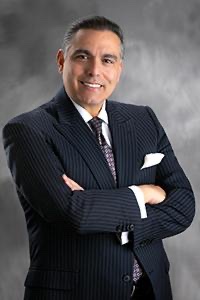
We also spoke with Rabbi Carnie Rose, spiritual leader of Shaarey Zedek Congregation. We asked him what the mood was among Shaarey Zedek members – in light of the recent triple shootings in Toronto and what is, at the time of writing, the war raging in the Middle East.
During the interview Rabbi Rose highlighted the Jewish community’s dual experience of concern over resurgent antisemitism and war, balanced by strong interfaith support and enhanced security measures. The community’s determination not to be intimidated by threats of violence reflects resilience, he suggested, while proactive engagement through, for example, school outreach and tangible safety steps, such as increased police collaboration fosters hope for “a better tomorrow,” he said.
Rabbi Rose suggested that congregation members are “concerned and worried,” but not surprised. They view large centres like Toronto as distant, but acknowledged the gravity of antisemitism, noting that it has become less muted recently. Rabbi Rose expressed sadness but not shock, stating, “There are folks out there who don’t like us, and they’re gonna take their… shots.”
Despite antisemitism, Rabbi Rose indicated that he was “profoundly heartened” by support that the congregation has received from varied – and disparate elements of the community. He cited as examples: “Older ladies” visiting the synagogue to show support; members of the Islamic community offering to “make a circle around the synagogue to protect people”; and schools requesting talks on Judaism to address questions like “why do people not like the Jewish people?”
Insofar as how congregants have been reacting to the war with Iran, Rabbi Rose observed that there are people both in and outside the Jewish community who are unhappy with the war, but the community stood in solidarity with monarchists at a recent rally (with Jewish flags). Rabbi Rose himself said that he believes Israel should not withdraw prematurely from the fighting, as “gains would dissipate quickly.”
We asked Rabbi Rose whether there have been enhanced security measures taken at the synagogue recently. He noted an increased police presence, saying that visible security has intensified, including police patrol cars greeting attendees after a large funeral (unprecedented in Rabbi Rose’s eight to nine months in the role, he observed).
He added that there has been a large police presence at events with 250+ people, citing as examples a public school teacher training session on antisemitism that included a synagogue tour and mini-Judaism course, also recent Purim gatherings.
Rabbi Rose described collaboration with Winnipeg Police Service as “excellent, and he expressed a “deep debt of gratitude.”

Local News
Rabbi Kliel Rose to leave Congregation Etz Chayim for new post in Ottawa
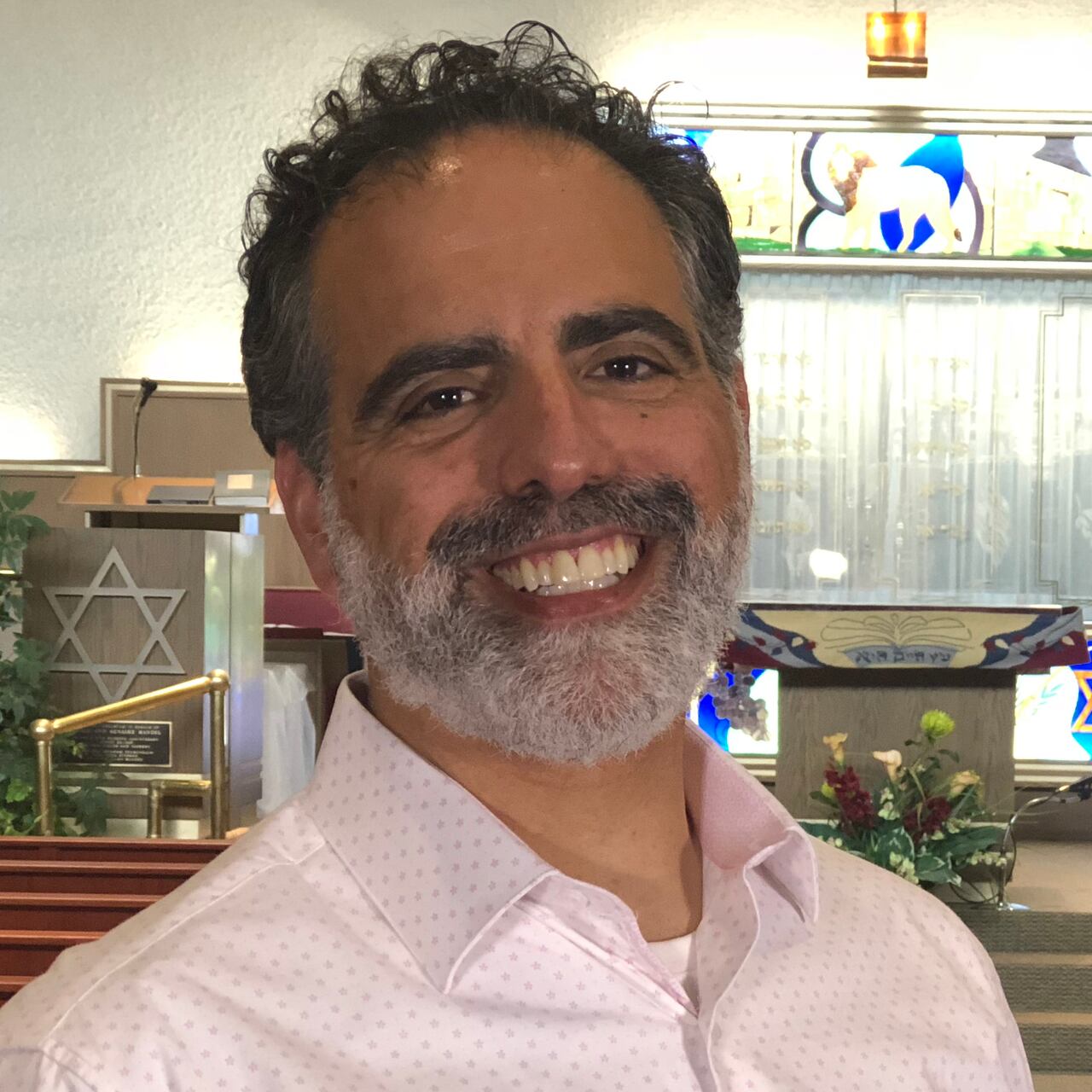
The following email from Congregation Etz Chayim Executive Director Morissa Granove was sent to members of the congregation on Friday, April 10:
“Dear Members and Friends,
“As we know, Rabbi Kliel recently spent a weekend with Kehilllat Beth Israel where he has since been offered a position. After much thought and consideration, he has made the decision to sign a contract in Ottawa. He will continue to lead our congregation through Yom Kippur.
“This news marks a significant ending for our Etz Chayim community, and at the same time with change comes opportunity. Congregation Etz Chayim will soon embark on our own Rabbinical search with excitement as we look for our perfect candidates and explore the new possibilities that will help us to continue to shape a strong future for our synagogue and members.”
Kliel Rose took up the position of rabbi at Etz Chayim in August, 2018.
In an article announcing his appointment to the position in the June 6, 2018 issue of The Jewish Post & News, Myron Love wrote:
The congregation has been without a permanent rabbi since last summer when Rabbi Larry Lander chose to retire – after ten years here – and relocate to Toronto.
Kliel Rose is already a well-seasoned rabbi. He was ordained in 2004 by the Jewish Theological Seminary in New York.
He previously served as spiritual leader at the West End Synagogue in Nashville and Temple Enamu-El in Miami Beach. His current posting is Beth Shalom Synagogue in Edmonton.
Following the example of his parents, Kliel Rose has been active in interfaith dialogue and human rights work for which he was honoured in 2014 with the Human Rights Hero Award by Truah: The Rabbibic Call for Human Rights.
He has also participated in the Kellogg Management Education for Jewish Leaders program at Northwestern University and was most recently chosen to be among 20 rabbis from different denominations chosen to train in the Clergy leadership Incubator – a two-year program, under the leadership of Ranni Sidney Schwarz, intended to educate younger rabbis in innovative thinking, change management and institutional transformation.
In Edmonton, Rose also served as Jewish chaplain at the University of Alberta and took the lead on a program called “Faith and Inclusion”, whose mandate was to support individuals with cognitive and physical learning challenges to feel more welcome within various faith communities.
Local News
Norman Stein – a teacher in the Jewish school system for over 14 years, whose varied interests in music, art, films, and Jewish learning made him a true “Renaissance man” – passes at age 93
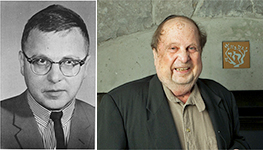
By BERNIE BELLAN (Posted April 7, 2026, updated April 10) For hundreds of Winnipeg Jews – both current and former, the name Norman Stein conjures up a multitude of memories.
For many of us, “Mr. Stein” was a teacher in the Jewish day school system during the 1950s and 60s who not only taught Hebrew subjects, he was also truly a Renaissance man with an extraordinarily broad knowledge of literature, art, films, and music.
Sadly, Norman passed away in Vancouver on Monday, April 6. I was contacted by his niece and nephew to inform me that Norman, at the age of 93, had died . The funeral was held in Winnipeg on Friday, April 10, at the Bnay Abraham Cemetery. It can be viewed on the Etz Chayim website: https://www.congregationetzchayim.ca/
In 2021 I wrote the first part of what was to become a two-part series about Norman’s life. It took me a long time to get around to writing the second part – not until 2023. Here are both stories – merged into one:
If you were a student at Joseph Wolinsky Collegiate during the 1960s you might have been lucky enough to have taken one of Stein’s classes in art or music appreciation, philosophy or, as he told me during a recent phone interview, library science (for Grade 11 and 12 students).
But, if you didn’t know Stein the teacher, you might have made his acquaintance as a music maven –who was involved both in concert and record producing, along with working for the famed German recording company, Deutsche Grammaphon, as both a director of that company and vice president of its Canadian branch.
It was in the late 1960s, following Stein’s full transition from teacher to businessman with a variety of interests, that many Winnipeggers also met him in his capacity as owner as the very popular music store, Opus 69 – which was first located on top of Clifford’s at Portage and Kennedy, later on Kennedy between Portage and Ellice in what is now part of Air Canada’s Winnipeg headquarters.
Later, Stein left Winnipeg for Vancouver, where he became enmeshed in the music scene there, also opening a shop where he began selling his own vast collection of music recordings.
Not only was Stein’s name associated with Canada’s music scene for years, helping to launch the careers of such artists as Sarah MacLachlan – among others, he was also involved with the film business, both in terms of helping to produce and promote movie sound track albums (such as the 1977 version of “A Star is Born”, starring Barbra Streisand), later as a consultant for the film prop business in Vancouver.
About to turn 89 (in June), Norman Stein has been a resident of the Weinberg Residence at the Louis Brier Centre in Vancouver since that branch of Louis Brier first opened in 2003.
Having remained an observant Jew all his life, Stein has played an integral role in the religious life of Louis Brier ever since he moved there.
When I first contacted Stein, and broached the idea of conducting a phone interview with him, he said that it would have to be at a time when he was fully rested – given his age.
And, although Stein has endured two major health setbacks in his life – once when he was rear ended in his car in Winnipeg and subsequently ended up in a coma as a result of his having been prescribed the wrong medication; a second time when he returned from a trip to Los Angeles and came down with Equine Encephalitis, and he claims that his memory has major gaps as a result of those two conditions, during our hour-long phone conversation, he often recalled with vivid detail his Winnipeg years.
I told Stein that, although his entire life has been rich with so many different facets, for the purposes of the story I wanted to write, I preferred to concentrate on his teaching career in the Jewish school system in Winnipeg – something with which, I said to him, many of our readers would have some acquaintance.
I began by asking Stein about his background, saying to him, “You had a religious upbringing, didn’t you?”
He answered: “That was not unusual for the north end of Winnipeg. I didn’t know any other type. We didn’t have labels like ‘Orthodox’. Most Jews then just observed what our parents observed in Eastern Europe.”
I asked: “What street did you grow up on?”
He responded: “As far as I can remember, it was Pritchard Avenue. Later, we moved further north – to Redwood Avenue. We had three rooms with no hot water and no bathtub – and no heat except for a ‘Quebec stove’ in the kitchen that had pipes going into the three rooms.
“Rent was $14 a month. My father was a peddler and it was amazing to see how he could even raise the $14 to pay the rent.
“We ended up buying a home on St. Anthony. We had to make sure there were Jewish families there because we wanted to live in a Jewish area.”
I asked: “This is when? Around the 1950s?”
Stein answered: “I went to yeshiva (in Chicago, he later noted) around 1948 – the Yom Kippur after the State of Israel was established. It was Hebrew Theological College – or Beis Midrash L’Torah.”
Stein explained that his teacher at what was then the Talmud Torah on Flora and Charles was someone by the name of “Mr. Klein”. (Back when he was attending Talmud Torah – in the 1930s and 40s, Stein explained, students attended a branch of the Talmud Torah on Magnus and Powers for Grades 1 – 3, then the Flora and Charles location for Grades 4 – 7.)
“I didn’t know how good we (Klein’s students) were,” Stein explained, “because when I was given an examination (at yeshiva), I ended up being transferred from the Grade 10 class right into the graduation class – Grade 12, and I did very well.”
As mentioned earlier, Norman Stein loved films and music. He explained that his family used to go to the Ukrainian Labour Temple (which still exists, at the corner of Burrows and McGregor) “on Sundays, to watch movies, acrobatics – they had a dance school, they had a daily paper, in Ukrainian – it was Communist; and we used to watch through the basement window the daily edition of those printing presses.
“Anyway, one Erev Shabbes – I was three or four, I snuck into the theatre and the manager asked me who I was looking for?
“I told him I was looking for my mommy. He said, ‘You just sit here’, and the next thing I know I’m watching the Priscilla Lane sisters playing tennis in their white shorts. I remembered that.
“The manager called me out and said, ‘Your mother’s here now.’ And I wondered, how could that be? because my mother doesn’t even know I’m here. I go out and there’s my mother and Mrs. Rubinfield, who ran a grocery store a few doors down, and had a pay phone – which they avoided using on Shabbes – but they called the police and the police asked, ‘Is there a favourite place he likes to go?’ and my mother said I like to go to the movies, so the police said: Maybe he went to the Labour Temple.’”
As Stein explained what happened next, when he was confronted outside the Labour Temple by his mother, Mrs. Rubinfield, and a “Bobby” who was with them, in addition to being scolded for wandering into the movie theatre, the Bobby added: “And you didn’t even pay”, to which, Stein said he answered (and remember, this is a four-year-old), “Tsur nisht fregn zayn gelt on Shabbes” – “You mustn’t carry any money on Shabbes.” (Two years later – as you’ll find if you read on, I corrected my awful transliteration of Norman’s Yiddish.)
The conversation took some interesting leaps, but at one point it led to a discussion of the kosher scene in Winnipeg during the 1930s and 40s. Somehow, we ended up talking about kosher restaurants in Winnipeg at that time. According to Stein, there were no kosher restaurants in Winnipeg whatsoeer at that time. I was rather surprised to hear that, so I asked: “What about the YMHA?” (which would have been on Albert Street at that time). Surely the cafeteria there would have been kosher, I suggested.
Stein’s response was “When you lived in the north end in the 40s you didn’t know about the YMHA.” (That proposition would certainly have been open to question, given the information we were able to ascertain about the Albert Street Y and how many north enders did go there when the YMHA held its 100th anniversary reunion in 2019, but let’s leave that aside for the time being. In any event, when Stein added that “the YMHA was really very much a secular place,” he was correct.)
In 1951, following his completion of yeshiva studies, Stein returned to Winnipeg, where he “taught the confirmation class at the Shaarey Zedek”.
The rabbi of Shaarey Zedek at that time was Milton Aaron. “Not once did I meet him the entire year that I taught there,” Stein noted, “although years later he wanted me to do some articles in the Jewish Post about some important people that were VIP’s in his eyes.”
In 1952 Stein began what would end up being a 13-year career teaching at the Rosh Pina Hebrew School. “I ended up being head teacher and head of school,” he said.
“Then I started teaching at the Talmud Torah (on Matheson Avenue) in 1956 and started out at the Joseph Wolinsky Collegiate the very day it opened (in 1959).”
Later in our conversation I asked Stein how he was able to teach at the Rosh Pina, Talmud Torah, and Joseph Wolinsky Collegiate all at the same time?
He explained: “Talmud Torah was Grade 1. I was teaching from nine till noon. After that I went to the Wolinsky Collegiate or I was teaching Grade 3 or Grade 5. After that I would go to the Rosh Pina, where I was teaching from 4:30 till 8. It worked out. My whole day was filled. I didn’t eat my dinner until about 8:30 or 9.”
At that point in the conversation, Stein interjected with a rather shocking segué, noting that, “In 1954 my father was killed by a train.” He went on to describe the grisly details of how that happened, but there’s no need to record them here. Suffice to say that it was a totally preventable tragedy.
Following that somewhat surprising twist in the conversation, I said to Stein that I wanted to change tack and find out more about how he became the “Renaissance man” whose interests in art, music, films, and philosophy were imparted to so many of his students over the years.
“When did you start to develop an appreciation for movies and music?” I asked.
“When I was four years old,” he answered. In addition to the aforementioned Ukrainian Labour Temple, “we went to the Palace Theatre (on Selkirk Avenue), to the “Yiddish Theatre” (in the Queen’s Theatre, also on Selkirk), to the “Dominion Theatre”, for live productions (situated at the corner of Portage and Main where the Richardson Building now stands).
As for his exposure to music, Stein had a good singing voice. In material I received from the Louis Brier Residence that had been assembled to spotlight resident Norman Stein, it was noted that “I was selected for the cantorial class by the famous Benjamin Brownstone, but took a back seat to the likes of baritone Norman Mittleman, whose career led to the San Francisco Opera.”
I wondered about Stein’s love of art – and when that developed?
It came “mostly from a secular teacher in Aberdeen School,” he explained. “I learned art technique.”
I said to Stein that I’ve always remembered a fabulous course he taught our Grade 8 class at Joseph Wolinsky on art appreciation. “You taught us the rudiments of architecture,” I recalled.
“We had to photograph Winnipeg buildings and find examples of European buildings that had the same architectural styles,” I said, such as “Gothic and Roman”.
“I taught different courses to students in Grades 7, 8, 9, 10, 11, and 12,” Stein said.
“In Grade 7 it was music, Grade 8 was art and art history, Grade 9 I don’t remember…there was philosophy, and 11 and 12 was library science.”
In that course Stein taught students “how to use microfilms, how to do footnotes, how to prepare a proper bibliography”, on top of which they had to write papers that were about 100 pages. Remember, these were mostly handwritten.”
(In a post on the “Jewish students of the 50s and 60s” Facebook page, former Stein student Avrum Rosner reproduced the actual comments Stein had made about a paper Rosner had written about famed philosopher Bertrand Russell when Rosner was only 14. Stein’s comments extended over a page in length. Just look at the level of erudition he used in commenting on Rosner’s paper – something rather exceptional for a teacher teaching 14-year-olds. Those comments, in which former Stein students comment about their experience of him as their teacher, can be seen at the end of this article. )
So, Stein had a very full career until 1966. “I even wrote a column for the Jewish Post,” he added.
“And then I ended up getting rear ended by a truck,” Stein said. “That’s a period I don’t remember well… I was in a coma for some time. I was a nervous wreck. My doctor suggested I go to some place relaxing, so I went to Hollywood.”
Thus began the next chapter of Norman Stein’s life, including the opening of what became Winnipeg’s most popular record store for a time, Opus 69.
In a future issue we’ll resume writing about Norman Stein and his eclectic career.
Here is the second part of my story about Norman Stein, which was published in 2023. I should note that I repeat a story Norman had told me in 2021 because I had so mangled the transliteration of what he had said in Yiddish that I had to make amends – and print a proper transliteration:
In May 2021 I began what was supposed to have been a two-part story about the life of a man, Norman Stein, who left an indelible impression on so many Jewish students during his teaching career in the Jewish school system, which began in the 1950s and ended in 1967. But – I’ve long been a procrastinator; it’s taken me over two years to return to Stein’s story. Now 91, Stein left Winnipeg many years ago, but he still recalls his years teaching here – at the Talmud Torah, Joseph Wolinsky Collegiate, and the Rosh Pina Hebrew School, with great fondness.
When I published that initial story about Stein’s teaching career, which I began by delving into his childhood growing up first on Pritchard Avenue, later on Redwood, and finally on St. Anthony, I attempted to transcribe a line in Yiddish that I had recorded Stein as saying, but I mangled that line. Here again is the anecdote Stein related about one time when he had wandered off on a Friday evening into the Ukrainian Labour Temple on the corner of Burrows and McGregor: “Anyway, one Erev Shabbes – I was three or four, I snuck into the theatre and the manager asked me who I was looking for? “I told him I was looking for my mommy. He said, ‘You just sit here’, and the next thing I know I’m watching the Priscilla Lane sisters playing tennis in their white shorts. I remembered that. “The manager called me out and said, ‘Your mother’s here now.’ And I wondered, how could that be? because my mother doesn’t even know I’m here. I go out and there’s my mother and Mrs. Rubinfield, who ran a grocery store a few doors down, and had a pay phone – which they avoided using on Shabbes – but they called the police and the police asked, ‘Is there a favourite place he likes to go?’ and my mother said I like to go to the movies, so the police said: Maybe he went to the Labour Temple.’”
As Stein explained what happened next, when he was confronted outside the Labour Temple by his mother, Mrs. Rubinfield, and a “Bobby” who was with them, in addition to being scolded for wandering into the movie theatre, the Bobby added: “And you didn’t even pay”, to which, Stein said he answered (and remember, this is a four-year-old) – and this is the line I got completely wrong: “M’tur nisht trugen kein gelt oif Shabbes” – “You mustn’t carry any money on Shabbes.”
It may have taken me 26 months for me to correct that adulteration of the Yiddish language, but when I contacted Stein again recently to ask him whether he’d be willing to continue with the story of his Winnipeg years, the first thing he told me is how miserably I had failed in trying to transcribe that line. Despite that very grave error, however, Stein did tell me that he quite enjoyed the May 2021 interview piece. I told him that piece also evoked a very strong and warm response from many of his former students and that many of them had told me they were very much looking forward to the sequel. I ended the first part of my story about Stein by noting that, in 1966, he was involved in a very serious car accident when his car was rear ended by a truck. He said, “That’s a period I don’t remember well… I was in a coma for some time. I was a nervous wreck. My doctor suggested I go to some place relaxing, so I went to Hollywood.”
Thus began the next chapter of Norman Stein’s life, which we now take up here: Stein was working for RCA Records in the A&R (artists & repertoire) department. One day a young, barefoot Black girl came in with a demo tape. She said her name was Natalie Cole (daughter of Nat King Cole). Stein asked her why she didn’t take her demo tape to Capitol Records, since that’s where Nat King Cole had a recording contract? “She said she didn’t want to be attached to his apron strings,” Stein explained. Apparently though, Natalie Cole was upset with Stein “and she stormed out of there.” I asked Stein whether there were any other memorable moments from his time in California, and he mentioned that he was still in the United States during the time of the Six-Day War in June 1967. “The Israeli Philharmonic was touring in the States at the time and I did some PR for them. There was a celebratory concert at the Hollywood Bowl and the guest artist was Jack Benny.”
While he was still in California, Rabbi Witty, who was the then-principal of the Talmud Torah and Joseph Wolinsky Collegiate had phoned Stein and had asked him whether he would be prepared to resume teaching the humanities courses that he had taught to students in Grades 7-12 at JWC for years, including courses in the history of music and the history of art, philosophy, and library science. I remember taking Stein’s course on the history of art. Part of the course was devoted to a study of architecture. Stein recalled how enthusiastic so many of the students in my particular class were when he gave us an assignment to “take photographs of sites in Winnipeg that would be comparable to some in Ancient Greece by the way they photographed.” Stein did resume teaching those courses in the fall of 1967, but when he asked to take a leave of absence to attend various music conventions, Tamara Wiseman, who was the vice-principal of the Talmud Torah at the time thought that “it wasn’t fair to the students that I had to leave town to go to conventions to pursue a career in music,” and without even being given a chance to say good bye to his students, Stein was told that he should just “leave.”
I said to Stein that I had heard from someone by the name of John Einarson, who is arguably Manitoba’s foremost music historian – and who gave a brilliant presentation during a recent Jewish Heritage Centre event titled “The Soundtracks of our Lives” about Jewish musicians in Winnipeg through the years, that Einarson had worked for Stein at a time when Stein was selling records out of the back of Strain’s Camera Store on Portage Avenue. I asked Stein whether he began doing that around the time his teaching career ended (in 1967)? “We couldn’t get into Polo Park (because Polo Park wouldn’t allow a record store at that time) so we opened in the back of Strain’s (which was owned by the late Manny Wiseman. One of Manny Wiseman’s sons, Bob, went on to become one of the founding members of Blue Rodeo.) “People were only going up to the camera department and we rarely got anyone coming into our section,” Stein observed.
In 1969, Stein made the move that was eventually to lead to a 10-year period when he achieved his greatest recognition in Winnipeg – with the opening of the famed Opus 69 record store. “There was space above Clifford’s Ladies Wear “(at 412 Portage Avenue, the corner of Kennedy and Portage), Stein continued. (Cliffords was owned by Johnny Pollock. One of Pollocks’ sons, Harold, went on to become a renowned classical guitarist.) Thus began Opus 69. Around the same time Stein became host of a nightly program on CKY FM called “Now Flower.” Randy Moffat was the owner of CKY at the time and he was so impressed with the program – and the number of different recordings that Stein was able to play that CKY “even put a console in Opus 69 with live broadcasting by a DJ between noon and 6 pm.”
I remarked that I remember well that second floor location for Opus 69 and how popular it was. Stein suggested “that small location became the most popular record store in Winnipeg.” In a 2016 article for the Free Press, John Einarson wrote about the huge impression Opus 69 made on music fans in Winnipeg when it first opened: “Once Opus 69 opened in the spring of 1969 on Kennedy Street just south of Portage, above an optometrist’s shop, it became my destination for music. Opus 69 specialized almost exclusively in rock music and had the most extensive selection in the city, including imported recordings, as well as listening stations to sample before you purchased. “I remember the first time my friend and I did that, never having used headphones before,” recalls Grant Edwards.“We were busy yelling to each other until one of the workers asked us to please stop yelling as no one else in the store was listening to headphones.” Unfortunately, while owner Norman Stein had great taste in records, his business acumen was wanting, and when Opus 69 moved to the more spacious ground-floor store on Kennedy north of Portage in the early ’70s it was under new ownership. However, it continued to boast a wide selection and knowledgeable staff.” Around the same time that Stein was running Opus 69 he also had a company called “Campus Records Distributors,” which sold records to university bookstores across Canada. Campus Records was eventually bought by Deutsche Grammaphone. As John Einarson noted, “Opus 69 moved to a new location on Kennedy Street (across from what used to be the Town and Country), but by the early 1970s Norman Stein was no longer the owner.” (He told me, during our interview, that he didn’t want to get into what happened with the business. Suffice to say that, by 1979, Opus was in receivership. Stein had long been out of the picture when that happened.)
Stein said that he remained in Winnipeg with his ailing mother until she passed, in 1980. Shortly thereafter, he moved to Vancouver. He did talk about his career in Vancouver, but I said to him that I preferred to keep the focus on Winnipeg. Before our conversation ended though, Stein said he wanted to tell me one more story from his childhood – when he was about four. The story had to do with the quaint Jewish custom of “shlogn kapores,” during which on Erev Yom Kippur a chicken (or a rooster) is waved over one’s head and one’s sins are transferred to said chicken or rooster. Here’s how Stein described how the ritual was practiced in his home – and what happened one year: “You have a tablecloth over a table, you take the live rooster and swing it around your head and say certain prayers from a Siddur (prayer book). When you do that you put the live rooster under the table, then you take it to the shochet for Yom Tov. “Well, this rooster kept pecking at my wrists and hurting me but I was holding on tight, so I threw the rooster under the table. When I pulled it out, it had a limp neck. It was dead. I bawled my head off because it meant the rooster could not have absorbed all my sins. My mother was upset because she didn’t have a tarnigol (Hebrew for rooster) for Yom Tov.” I asked: “Because it wasn’t slaughtered properly?” Stein replied: “How could it be slaughtered? I choked it to death. It had an overdose of sins!”
I said to him that so many of his former students offered reminiscences, both in our newspaper and in the Facebook group “1950s and 60s Winnipeg Jewish Students”, about his having been their teacher, that I wondered whether he would be amenable to hearing from former students. I mentioned to him that one of the contributors to that Facebook group was David Steinberg. I asked Stein whether he had ever had Steinberg as a student? That led him to tell this story: “When I was teaching in the Rosh Pina Hebrew School the synagogue youth group had socials and David performed his jokes on stage. As I was teaching him, he knew, as an opportunist, that I had some connections with Chicago. He wanted to go to Second City – the famous comedy thing. He could not get in, but he could if he was a yeshiva student. So I wrote a letter to the yeshiva on his behalf and he got accepted into the Hebrew Theological College (from where Stein had also graduated) and, after that the Rosh Yeshiva said to me: ’So where is your David Steinberg?’ He disappeared after a while and Second City had rented in the Jewish community centre across the street from the yeshiva. I never saw him again until one year – it was around 1970, I went to Greenwich Village and saw a poster for a folk music group. At the bottom it said ‘opening act: David Steinberg.’ “A door opened and who comes out but David Steinberg? I said ‘Dudi?’ and he said, ‘Uh, your face is a little familiar…Oh yes, Norman, here’s my business card and we’ll have coffee in my private apartment ….and I never went to his apartment.”
I asked Stein whethe he would be amenable to my putting his phone number into this article so that former students could get in touch with him. Although each time I’ve phoned Stein, we’ve had very pleasant conversations, I’m not sure whether he would have the stamina to engage in phone convesations on a regular basis with former students. Still, if he’s tired or preoccupied doing something else, I’m sure he would let anyone know. And, even though he says he has trouble remembering things, I certainly didn’t find that to be the case. Stein did say that he wouldn’t have any objection to my putting his phone number into this article, so here it is: 1-604-269-0961. Remember, he’s in Vancouver, so bear in mind the time zone that he’s in if you do plan on calling him.
Following publication of that first story in 2021 I received a number of emails from former students of Norman, reminiscing about their experiences with him:
From Art Saper:
Hey – Bernie,
I remember Norman Stein well. Part of the eclectic crew at TT and JWC.
My most fervent recollection was how he instilled an interest, love really, in current world affairs. He promoted the “Student Subscription” to Time Magazine. Regardless of what one thought of Time then – and now – it was the first subscription to a current events periodical that was in my own name. I actually looked forward to receiving each week. In some small measure it may have contributed to a lifelong interest!
From Avrum Rosner: In October 1963, a certain 14-year-old Joseph Wolinsky student wrote a 6-page “Library Science and Research Paper” on the infamous 1940 New York court case involving Bertrand Russell. The instructor, Norman Stein, wrote one page of notes and gave the paper 89. Here’s the page. And here’s what he wrote. Quite sure he did likewise with all students and assignments!
<< While far from being the definitive study of the Russell Affair insofar as microfilm reports go, yours is a most commendable paper. Your style, despite a tendency toward uncontrolled rhetoric on the rampage, lends an air of serious regard for the problem. But when most students are satisfied to quote source after source without much consideration to adequate analysis, yours conversely stresses excellent insight and dissection without sufficient paraphrasing and citing of sources. Certainly, if you would win support for your arguments, you might have cited actual comments – you do occasionally as in the “apt” description so cleverly stated by Mr. Goldstein – and take the reader and instructor into your confidence by explaining your research techniques. If I did not stress/mention footnote requirements, the omission was deliberate. The onus was on the student, in view of your past assignments/experiences in/with my courses. I would have liked your critique of Christian Century, et. al. of conveying/handling Bernard [sic] Russell to the reader more than your recording of individual reactions. What was the attitude of the press from leftist, moderate and rightist, religious, economic and educative viewpoints? N.E. Stein J. Wolinsky Collegiate >>
From Brenda Dahle:
Norman Stein is my mom Pearl Rosenberg’s first cousin. In fact, he was my sister Michelle Moyer’s grade one Hebrew teacher at Talmud Torah.
I remember spending Passover Seders at his home on Merriwood or my grandparents’ home on College Avenue. Norman would lead the seders and ask thought provoking questions, that made us think and wonder about life in ancient times. Norman would tell stories, and made the seders come to life. He is a brilliant and learned man who would get us to think and reflect upon life long ago.
He did own Opus 69 on Kennedy, which branched out west.
As Sandy mentioned, he and aunt Clara travelled the world and would share their slides with family. He continues to keep in touch with my mom.
More from Avrum Rosner:
We were lucky to have two Normans contributing to our early education. Rabbi Norman Fredman z”l jumped on the “Reach for the Top” bandwagon during its first year on Winnipeg TV (1962-63), determined to have a Joseph Wolinsky Collegiate team. Because the demand was greater than the supply, we had to team up with St. Paul’s, which named Michael Phelps and George Schner to be teammates with me and Larry Epstein. Norman Stein was our eager and brilliant coach. Larry and I visited his home on Merriwood often to go through our paces.
From Susan Turner:
I was a ‘junior chazzan’ for the children’s Saturday synagogue services for a few years at Rosh Pina, in the late 1950s. The services were held in a basement room. It was Norman who taught me the musical liturgy, including one of the most beautiful melodies for “ledor vador” that I’ve ever heard. This melody was recognized many years later by a friend who knew it from his own childhood in Hungary. I remember Norman as a demanding and serious but patient teacher of the liturgy.
Local News
Orri clementine oranges from Israel now available in Winnipeg

By BERNIE BELLAN (Posted April 3) For years many Winnipeggers made a habit of buying delicious Jaffa oranges from Israel, both because they were so delicious, also to support Israel. Those oranges used to be commonly available in many stores during the winter months, but as the years passed, it became increasingly difficult to find them.
Often groups of individuals would get together and place special orders for Jaffa oranges that could be brought into stores like the former Stewart’s Fruit & Deli on Grant Avenue. I remember asking the owners of Stewart’s – Frida and Aaron Herskovits, whether they could bring in Jaffa oranges, but over the years they told me that they found it was increasingly difficult to find a wholesaler that carried Jaffa oranges.
One of the reasons was that oranges from other countries, including South Africa, Chile, Spain, Morocco, and occasionally Mexico, were much cheaper than Jaffa oranges, so wholesalers simply stopped ordering them.
But last week I was contacted by a friend who told me that he found oranges from Israel in FoodFare on Portage Avenue – of all places. Now, I don’t want to get political, but FoodFare is owned by the Zeid family – and the Zeids haven’t exactly been huge supporters of Israel. So, I was somewhat surprised to learn that Israeli oranges were being sold in FoodFare.
When my friend sent me a picture of the bag containing the oranges, I saw that the name on the bag was “Orri.” I had never heard of Orri oranges, so I asked my friend how they tasted ?
“Absolutely delicious,” came the reply. But I’ve avoided shopping at FoodFare ever since October 7, 2023 when members of the Zeid family established themselves as staunch critics of Israel. And so, I didn’t head down to FoodFare myself to buy a bag of Orri oranges.
Lo and behold, I was in Superstore on Kenaston the other day and what do I see prominently featured right in the front of the store, but bags of Orri oranges – at the very reasonable price of $6.99 for a 907 gram bag. I bought a bag, brought them home, peeled one – and was in heaven! It was the most delicious clementine orange I had ever tasted.
But how come I had never heard the name “Orri” before? I wondered. So, I did some research -and here’s what I came up with, from the Orri website:
“Few people know that the original Jaffa Orri has a long history of nearly 30 years. The project was initiated in 1989 as a collaborative effort at Israel’s world renowned Agricultural Research Organization, the Volcani Center. The extensive research led by leading citrus breeders and botanists managed to develop an exceptional lineup of mandarin cultivars that hit their objectives. The new cultivars were planted in experimental plots across the country, and with results being better than anticipated, the rest is history.
“The later crowned “mandarin king” made its market debut in the early 2000s, quickly taking the Israeli market by storm. Despite accelerated orchards planting efforts, consumers simply couldn’t get enough, and demand kept falling short of supply. Year after year, as yields increased, Orri remained the premium brand of choice.
“Today, Orri’s popularity has been steadily climbing in markets such as France, UK, Holland, Germany, Russia, Canada and the US, and lately also China and Japan. While Israel remains the largest single exporter of Orri mandarins, licensed growers now exist in Spain, South Africa, South America and the US.”
Further research determined that “High sugar levels, low acidity, bright orange color, and a long shelf life, making them excellent for shipping.”
“Late-season harvest runs from January through early summer, ensuring availability when other mandarins are out of season.”
Finally, when it comes to availability in Winnipeg, here’s what I found: “Orri mandarins are available for purchase and delivery at major Canadian retailers like Loblaws (2 lb bags), Real Canadian Superstore, and No Frills. They are also available for delivery through Weee!, Uber Eats, and Instacart. Orri mandarins, known for being seedless, easy to peel, and very sweet, are usually in season from January to May.”