



Features
Rising Antisemitism: A Global Snapshot and Local Reflections
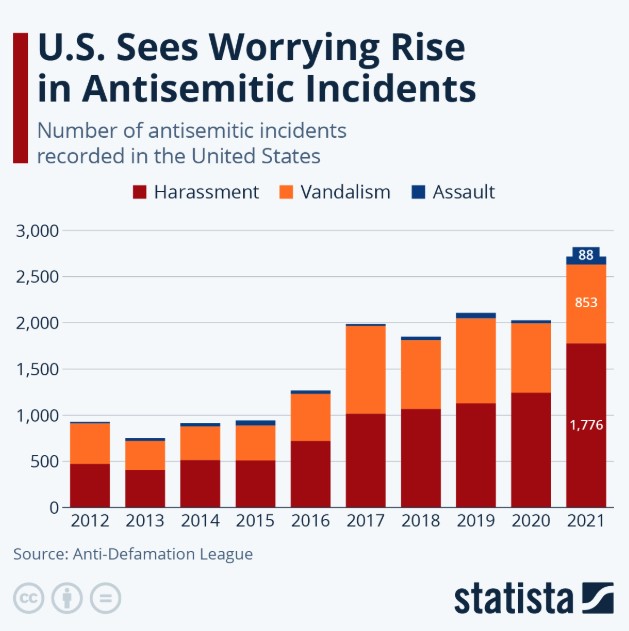
In a world that promised “Never Again,” the troubling truth is — it’s happening again. Across continents and, more painfully, across Canadian provinces, antisemitic incidents are not only increasing but also becoming more brazen.
And while global headlines speak of shocking antisemitic protests and violence, the quiet fear felt in Canadian Jewish communities is just as real — and just as dangerous.
A Global Rise in Hate: What the Numbers Say
Across the globe, antisemitism has re-emerged with disturbing force. In the U.S., the Anti-Defamation League (ADL) reported over 3,600 antisemitic incidents in 2023 — a 34% increase over the previous year. In Europe, Jewish communities are grappling with political extremism, desecrated cemeteries, and conspiracy-fueled hate speech, both online and off.
Why the spike? Experts point to a complex mix of factors: political polarization, the normalization of hate speech on social media, and international conflicts reigniting age-old prejudices.
“The hatred of Jews is the most long-standing and persistent form of hatred the world has known.” – Elie Wiesel
This quote feels less like a reflection of the past and more like a warning we’ve failed to heed.
Canada’s Alarming Trend: The Data Speaks
Canada is not immune. In fact, it’s deeply affected. According to B’nai Brith Canada’s 2023 Annual Audit of Antisemitic Incidents, there were over 3,100 reported cases of antisemitism across the country — the highest number ever recorded in the audit’s 40+ year history.
Let’s break that down:
- Ontario and Quebec led in reported cases, but Manitoba — including Winnipeg — saw a noticeable spike.
- The most common form was online hate speech, followed by vandalism, verbal harassment, and assaults.
- Jewish students on Canadian campuses reported feeling unsafe expressing their identity.
- Synagogues have increased their private security measures, often at great financial cost.
This isn’t just a big-city issue either. A Winnipeg high school teacher — who preferred to remain anonymous — shared that during Holocaust education week, several students laughed during a survivor’s video testimony. “I’ve been teaching 15 years. That had never happened before.”
“We must not tolerate antisemitism any more than we would any other form of hate. An attack on one is an attack on all.” – Justin Trudeau
Local Stories: Winnipeg’s Jewish Community Responds
In Winnipeg’s North End, where Jewish immigrants once built vibrant lives and communities, echoes of the past are mixing with the uncertainties of today.
“I still go to shul every Saturday,” says Mr. Cohen, 78, from River Heights. “But I double-check the locks now. I peek out the window before opening the door. That wasn’t the case ten years ago.”
At a local community center, staff have implemented security protocols similar to what you’d expect at a government office. “It’s necessary,” says program coordinator Leah. “But it’s heartbreaking that our kids now associate Jewish spaces with metal detectors.”
This rising fear is not just emotional — it’s practical. Community leaders are lobbying for increased funding to help with safety infrastructure, staff training, and legal protections.
Social Media: A Double-Edged Sword
The internet has always been a powerful tool, but in the hands of extremists, it’s become a megaphone for hate. Telegram channels, anonymous forums, and even mainstream platforms like TikTok have seen spikes in antisemitic conspiracy theories and Holocaust denial content.
A University of Manitoba student, Sarah, says she’s seen classmates share memes that mock Jewish suffering or trivialize antisemitic tropes. “When I reported it, the response was… silence.”
Unfortunately, Canada’s online safety laws haven’t quite caught up with the rapid spread of digital hate.
Hope in Community: Solidarity and Resistance
But it’s not all bleak. Across Canada — and especially in Winnipeg — there’s resistance. Not just in the form of protests or petitions, but through connection.
Jewish organizations are partnering with Muslim and Christian groups to build bridges. Programs like “Faith Forward” and “Neighbours for Peace” host dialogue events, community meals, and interfaith panels. These gatherings do more than educate — they humanize.
“In the face of hate, we must stand together — united in dignity, justice, and peace.” – Rabbi Jonathan Sacks
That spirit of unity has taken root even in everyday situations. When a swastika was found carved into a park bench in south Winnipeg last year, residents of all backgrounds came together to repaint the bench with messages of love and solidarity. Sometimes, the most powerful response to hate is simply showing up.
What Can Be Done? Moving Beyond Condemnation
Condemning antisemitism is not enough. Education, policy, and vigilance are key. Here’s what needs to happen:
- Stronger enforcement of hate crime laws.
- Mandatory Holocaust and antisemitism education in Canadian high schools.
- Resources for Jewish students in post-secondary institutions.
- Public awareness campaigns that go beyond social media posts — real funding, real messaging, real commitment.
We also need more allyship. As one rabbi in Winnipeg put it: “You don’t have to be Jewish to fight antisemitism. You just have to be decent.”
And maybe — just maybe — it’s also okay to lean on each other for the small stuff too. When Mr. Cohen’s dryer broke down last month, he wasn’t worried about hate — just whether he could fix it himself.
“I’m 78. You think I’m crawling behind a dryer?” he joked. “I called someone from the TechVill website techvillwinnipeg.ca and said: ‘Do your magic. And take off your shoes.’”
Final Thoughts: Never Again Starts with Now
Antisemitism is not a Jewish problem — it’s a human one. Its persistence reflects the cracks in our collective moral foundation. And yet, every time a Jewish child learns Hebrew in Winnipeg, every time a menorah is lit proudly in a public square, and every time someone says “I’m with you,” a small piece of that hate is undone.
History may echo, but so does resistance. And in the end, our response is not just in protest — but in persistence, pride, and presence.
Features
The Torah on a Lost Dog: Hashavat Aveidah in a Modern Canadian City
A neighbour’s dog wanders into your yard on a Wednesday morning in May, dragging a leash and looking confused. You have a choice. You can close the door and assume someone else will deal with it, call the city, or take a photo, knock on a few doors, and try to find out where he belongs.
For most people in Winnipeg and elsewhere in Canada, that choice plays out in a flash of moral instinct rather than reflection. The hand reaches for the phone and the walk around the block begins. The neighbour, if it goes well, is at the door before lunch. The decision feels minor, but it matters more than it looks.
In Jewish tradition, the act of returning a lost animal sits at the centre of one of the oldest practical commandments in the Torah. Deuteronomy 22, near the end of Parashat Ki Teitzei, contains a passage that has become the foundation for an entire body of Jewish ethical law: “If you see your fellow’s ox or sheep going astray, you shall not hide yourself from them; you shall surely bring them back.” The verse goes on to extend this duty beyond animals to any lost property. “So shall you do with every lost thing of your brother’s which he has lost and you have found.” Then comes the line that has occupied rabbis for two thousand years: “You may not hide yourself.”
The Hebrew name for this mitzvah is hashavat aveidah, the returning of a lost thing. It is one of the more practical commandments in a tradition full of practical commandments, and the rabbinic literature surrounding it is unusually thick.
A small commandment with big implications
The reason hashavat aveidah occupies so much rabbinic attention is that, on closer reading, it sets a high ethical bar. The Talmud, particularly the second chapter of tractate Bava Metzia known as Eilu Metziot, devotes pages to questions a modern reader would immediately recognize. How long must you wait for the owner to claim the item? How hard do you have to look for them? What if the animal needs feeding while you search? What expenses can you recover, and what counts as fair? What if the item is too inconvenient to safely return?
The rabbis answer all of these. The answers are not always intuitive. The finder is obligated to feed and shelter the animal while looking for the owner. The animal must not be put to work for the finder’s profit. The owner, when found, repays reasonable costs but is not on the hook for unreasonable ones. If the search takes too long, there are procedures for what to do next, none of which involve quietly keeping what is not yours.
Underneath the legal detail is a moral assumption that is easy to miss in a hurried reading. The Torah does not say to return the animal if it is convenient. It explicitly forbids the act of hiding yourself, of pretending you did not see, of crossing to the other side of the street. The commandment is as much about the person who finds as it is about the animal that is lost.
What this looks like in 2026
Most people who encounter a stray dog in a Winnipeg neighbourhood today are not thinking about Bava Metzia. They are thinking about whether the dog is friendly, whether they should call the City, whether they have time. The instinct to help is usually present. The question is what to do with it.
The practical infrastructure for hashavat aveidah in this country has changed considerably in the last decade. A finder in Winnipeg in 2026 has access to a regional humane society, a network of local Facebook groups, neighbourhood newsletters, and a handful of national platforms that gather sightings and missing-pet alerts across more than 180 Canadian cities. The mechanism is straightforward. A clear photo and a location pin can reach the right owner within hours when the system works, which it usually does.
The most underused of these resources, in any community, is the simple act of posting a sighting. Many people who find a stray feel they need to first catch the animal, find it food, take it home, or in some way solve the problem in full. The rabbis would actually disagree with that framing, and so does modern pet-recovery practice. The first responsibility is to make the sighting visible. The owner is almost certainly already looking. The finder’s main job is to surface what they have seen.
For people in Winnipeg looking for a place to start, a practical guide for what to do when you find a stray walks through the basic steps. Take a clear photo, note the cross-streets and time, check for a tag, and post the sighting where local owners will see it. The work is small. The effect, on the owner who has been awake for two nights and then sees a photo of their dog with a phone number underneath, is much larger than the work itself.
The ethical centre of the commandment
There is a strain of Jewish thought that reads hashavat aveidah as a kind of training in noticing. The deeper commandment goes beyond returning what is lost. It asks the finder to be the kind of person who sees what is lost in the first place, who does not cross to the other side of the street, who does not pretend not to have noticed.
That reading lines up with another Jewish ethical concept that often gets paired with this one: tza’ar ba’alei chayim, the obligation to prevent unnecessary suffering to animals. The Talmud derives this principle from several places in the Torah, including the rest commanded for animals on Shabbat. The two principles overlap in the case of a lost pet. The animal is suffering. The owner is suffering. The finder is, briefly, the only person in the position to do anything about it.
In a small way, the entire Canadian volunteer ecosystem around lost pets, from neighbourhood Facebook groups to national platforms to the dog walker who recognizes a posted photo, is an example of this ethical structure in action. People do not necessarily think of it in those terms. The framework is there anyway, doing its quiet work.
A community-scale point
Winnipeg’s Jewish community has always understood itself as a network of responsibilities to others, the kind that get described as chesed when they are visible and assumed when they are not. The work of returning a lost animal sits comfortably in that frame. It is not heroic, does not make the bulletin, and is exactly the kind of small obligation that knits a community together when nobody is paying attention.
The dog in the yard on a Wednesday morning in May, leash trailing, is one version of the question Deuteronomy asks. The answer, then and now, is the same. Do not hide yourself.
Features
Basketball: How has Israel become one of the best basketball countries in Europe in the last few years?

When Israeli Deni Avdija became the first Israeli to be drafted as the highest Israeli draftee in NBA history in 2020 – then emerged as a key NBA wing in Portland, it was not so much the breakthrough it appeared to be, but a portent of things to come. Israeli basketball development has been decades in the making, and in recent years its clubs have made Europe take notice.
This is why Maccabi Tel Aviv, Hapoel Tel Aviv, and the national basketball team of Israel are now the subjects of serious discussion in European basketball. It is only natural that fans and bettors reading form, depth of the roster, and momentum would look at our Euroleague predictions and then evaluate how Israeli teams would fit into the continental picture.
A rich history: The Maccabi Tel Aviv mythos
The contemporary narrative dates back to before Avdija. Maccabi Tel Aviv won its maiden European Cup in 1977, beating Mobilgirgi Varese and providing a nation under pressure with a sporting icon. Tal Brody’s declaration: “We are on the map” became not just a quote, it became a declaration of Jewish confidence, Israeli strength and a basketball dream.
Maccabi turned out to be the team of the nation since it bore Israeli identity past the borders. Maccabi has been a cultural ambassador before globalization transformed elite lists into multinational conundrums. Its yellow jerseys were the symbol of excellence, rebellion, and identification for the Israeli people at home and Jewish communities abroad.
The six European championships for the club provided a benchmark that has influenced the Winner League and Israeli basketball. Children were not just spectators of Maccabi, they dreamed of Europe as something accessible. Coaches studied in the continental competition. Sponsors and broadcasters realized that basketball had the potential to be the most exportable Israel team sport.
The modern pillars of Israeli basketball’s success
The recent ascendancy of Israel is no magic. It is the result of history, astute recruiting, youth-building and pressure-tested league culture. The nation has made its size its strength: clubs find talent at a young age and enhance the potential with foreign professionals.
Nurturing homegrown talent: The Deni Avdija effect
The most obvious example is that of Avdija. He was a high-ranking contributor in the system of Maccabi Tel Aviv, was chosen as a teenager, and was picked number 9 by Washington in the 2020 NBA Draft. His career was a reminder that an Israeli prospect could be more than a local star; he could be a lottery pick with two-way NBA potential.
Israeli NBA player Omri Casspi had already opened that door, and Avdija opened it even further for the next generation. Their achievements captivated the expectations of youthful players in Tel Aviv, Jerusalem, Holon, Herzliya, etc. An Israeli teenager is now able to envision a path from youth leagues to the Winner League, the EuroLeague, and ultimately – NBA minutes.
It is that dream that has been followed by investment. Israeli clubs put more emphasis on skills training, strength training, and analytics, as well as international youth tournaments. The success of the national program in the face of the best of Europe has also helped.
A global approach: The role of international and naturalized stars
The other pillar of the Israeli basketball program is the openness of Israel to global talent. The Winner League has been an important destination, not a stopover, for American guards and forwards. Most come in with NCAA or G league experience and become leaders due to the fact that the league requires scoring, speed and tactical flexibility.
It is enriched with naturalized players and Jewish players, who are able to use the Law of Return to come to Israel to play. Inspired by legendary players like Tal Brody, current imports who can bond both professionally and personally with Israelis have provided teams with uncharacteristic diversity in their rosters. The outcome has been a mixture of Israeli competitiveness, American shot making, Balkan toughness, and European spacing.
Making waves in Europe: Israel’s modern Euroleague footprint
Even in challenging seasons, Maccabi Tel Aviv has remained the flagship team. Currently, Maccabi is out of a playoff spot in the EuroLeague, but Hapoel Tel Aviv has shot up in playoff discussion. That juxtaposition speaks volumes: Israel is no longer represented by one lone, iconic club. Its profile has expanded.
Nevertheless, it is true that the reputation of Maccabi in the EuroLeague does count. Menora Mivtachim Arena in Tel Aviv is one of the most intimidating arenas for EuroLeague teams to play in: loud and emotional. Recent security and travel realities have affected the usual home-court advantage but the name of the club is still a potent brand.
It is the reason why there is an interesting betting discussion within Israeli teams. The name Maccabi still retains a historical impact, but analysts also need to quantify the present defensive performance, injuries, substitution of venues and guards, and fatigue in the schedule. The emergence of Hapoel has provided another Israeli point of reference and markets have to regard the nation as a multi-club force.
What’s next? The future of Israeli basketball on the world stage
Sustainability is the second test. The Israeli national basketball team desires more serious EuroBasket performances and a future world cup. It requires Avdija types – fit and powerful, more domestic big men, and guards capable of playing elite defense to get there.
The pipeline is an optimistic one. Israeli schools are more professional, teams are bolder with young talents, and the Winner League is a test ground where potential talents have to contend with older, tougher imports each week. Not all players will turn into an Avdija, yet additional players ought to be prepared to participate in EuroCup, EuroLeague, and even NBA games.
To the Jews in the Canadian diaspora, the impact is not only sporting, it is also emotional. Israeli basketball brings pride, drama and a common language to the continents. To the European fan, it provides tempo, creativity and unpredictability. To analysts, it provides a sign that a small nation, with memory, ambition and adaptation, can rise to become a true basketball power. Israel has ceased to be the unexpected guest on the table of Europe. It is a part of it, season after season.
Features
In recent years, we have been looking for something more than a house in Israel – we have been looking for a home

For many Jewish families in the diaspora, Israel has always been more than a destination. It is the land of tefillah, memory, family history and belonging. But in recent years, many families have begun asking a practical question too: should Israel also become a place where we have a home?
Not necessarily immediate aliyah. Sometimes it begins with a future option, something good to have just in case, or simply roots with a stronger connection to Eretz Yisroel.
But what does it mean?
A Jewish home is shaped not only by what is inside the front door, but by what surrounds it: neighbours, synagogues, schools, parks, local services, safe streets and the rhythm of Jewish life. For observant families, these are not small details. They are the things that turn a house into a place of belonging.
This is not a new idea. It is a need that has helped shape Jewish communities in Israel before. The Savyonim idea is rooted in the story of Savyon, the Israeli community established in the 1950s by South African Jews who wanted to create a green, safe and community-minded environment in Israel. It was a diaspora dream translated into life in the Jewish homeland.
That idea feels relevant again today. Many Jewish families abroad are now making plans around where they can feel connected in the years ahead.
Recent figures point in the same direction. Reports based on Israel’s Ministry of Finance data showed that foreign residents bought around 1,900 homes in Israel in 2024, about 50% more than the previous year, with Jerusalem emerging as the most popular place to buy. In January 2026, foreign residents still purchased 146 homes, broadly similar to January 2025, even as the wider housing market remained cautious.
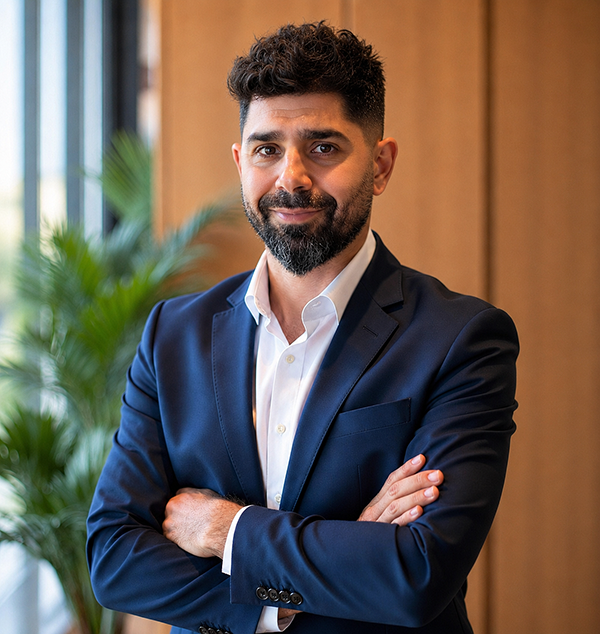
For Lior David, International Sales & Marketing Manager at Africa Israel Residences, part of the continued interest may lie in the fact that today’s residential projects are increasingly built around the wider needs of Jewish families abroad: not only buying a property in Israel, but finding a setting that can support community, continuity and everyday Jewish life. That idea is reflected in Savyonim, the company’s residential concept, which places the surrounding environment at the heart of choosing a home.

This can be seen in Savyoney Givat Shmuel, where the surrounding environment includes synagogues, parks, educational institutions, local commerce, playgrounds and transport links, and in Savyoney Ramat Sharet in Jerusalem, located in one of the city’s established green neighbourhoods.
For families abroad, these things matter. Jerusalem and Givat Shmuel are never just another location. They are home to strong Jewish communities, established religious life and surroundings that allow a family to imagine not only buying property, but building a Jewish home in Israel.
Together, these projects reflect a broader understanding: that for many Jews in the diaspora, the decision to create a home in Israel is not only practical, but rooted in identity, continuity and community. The Savyonim story began with a Zionist community from abroad that succeeded in building a real home in Israel; today, that same vision continues in a contemporary form.