



Uncategorized
A moving tribute to Soviet Jewry, with uncomfortable contemporary echoes
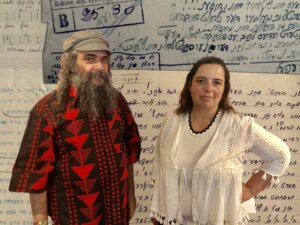
The first Yiddish Glory album, the Grammy-nominated Lost Songs of WWII, was, give or take, 70 years in the making.
The idea of preserving Soviet-Jewish culture by way of an anthology of Yiddish folk originally belonged to Moyshe Beregovsky, a Ukrainian-Jewish ethnomusicologist in the Cabinet for Jewish Culture. But Beregovsky was arrested by Stalin’s government on suspicion of so-called Jewish nationalism in 1947. The sizable archive that he and his colleagues had amassed during and immediately after the Shoah — 263 original songs in all, constituting a record of a culture on the brink of oblivion — languished in the basement of a Kyiv library until it was discovered by chance in 1990.
Two or so decades later, a group of archivists, academics and musicians — led by Anna Shternshis, professor of Yiddish studies at the University of Toronto — took up Beregovsky’s task, and out of the jumbled archive they pieced together an album of Yiddish songs. The majority of the archive consisted of just lyrics (that is, without sheet music) so Shternshis teamed up with Russian songwriter Psoy Korolenko to compose new melodies, taking care to match the music to the lyrics’ subject, period and geographic origin. The resulting album, released in 2019, was hailed as a spectacular insight into the experiences of Holocaust-era Soviet Jewry.
Now, seven years later, Shternshis and her collaborators are back with their sophomore effort, The Silenced Songs of WWII. And though it builds upon the achievements of its predecessor, giving poignant expression once more to the sorrow and bravery of Soviet Jewry during the Shoah, it also has another object: confronting the historiographical status quo.
“Every song on this album is there because it challenges the way we understand the history of the Holocaust,” Shternshis told me over a video call.
In “A Priest Murdered in Kalisz,” the singer, Leyb Diament, recounts the 1939 murder of a Catholic priest in a central square in the titular town in Poland, describing how German forces had dragged the priest from his home and forced four Jewish boys to publicly shoot him before burying him in a Jewish cemetery.
Diament then wonders aloud whether the Germans had hoped this final humiliation would provoke a backlash from the local Polish population. No such reprisal ever occurred. “The Poles saw all of this, but no pogrom happened,” he writes in the song. “Afterwards, the Germans captured everyone; they shot some and hanged others.”
“I would say that this is the first Yiddish song of the Holocaust,” Shternshis said. “And how interesting is it that it doesn’t talk about murders of Jews, but about a murder of the Catholic priest, and of Polish solidarity with Jews in the face of Nazi invasion.”
“The Sad Camp,” a plaintive song about Soviet Jewry’s annihilation, was written by Bershad ghetto survivor Isaac Semidubosky, who, after being liberated from the ghetto in late 1944, was drafted into the Red Army and ultimately ended up in Berlin — thought not before he helped liberate Auschwitz. Yet the song also calls into question the scholarly categories that have often governed histories of Soviet Jewry.
“During the war Soviet Jews were either killed or put in a ghetto, served in the Red Army, or were refugees that ended up in Central Asia or Siberia,” Shternshis said. “These three groups are studied separately, but when you look at this song and the story of the person who wrote it, you realize that doesn’t make too much sense.”
Silenced Songs is more than just anguish, though; there’s uplift, too, the same injections of hope, levity and defiance that made the first instalment of Yiddish Glory so memorable.
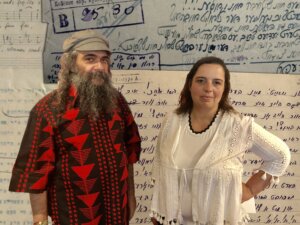
“I am a Typhus Louse,” written by a teacher at an orphanage in the Mogilev-Podolsky ghetto, in the Transnistria region —which today is Moldova — imagines the war from the perspective of an anti-fascist louse. “Me, I am a Typhus louse; I go from house to house; la-la-la-la-la,” the louse declares, before singing that it, too, is afraid of the German doctors who kill lice.
The anonymously written “Yom Kippur Without Fascists,” meanwhile, looks ahead to a holy day without Hitler. “On Yom Kippur he’ll be our sacrificial rooster,” the lyrics go. “And on Simkhes-Toyrehe he’ll burn like a candle at the pole.”
And while “Transnistrian Lullaby” offers a dark account of refugee life, it still concludes almost wistfully. “A storm doesn’t last forever; the war will end,” writes the again anonymous author. “Again the sun will shine for us.”
The song “In Pechera Camp” is particularly notable for addressing, head-on, the question of Soviet complicity in the Holocaust, long a sore subject for Soviet authorities. (Among the reasons for Beregovsky’s arrest was that the archive revealed instances of Soviet collaboration with the Nazis.) The song describes the brutality of the Russian guards at the Pechera camp, an enclosure designed to kill inmates through starvation in the Vinnytsia region of Ukraine. The Soviet Union never formally acknowledged the camp’s existence.
One guard, Lukyan Smetanski, is singled out in the lyrics as especially merciless: “Smetanski came out with a big rifle, oy, oy, oy; two innocent Jews approached, and he shot them for no reason at all.” Smetanski, according to legend, was killed on the spot by a Jewish officer soon after the Red Army liberated Pechera.
History doesn’t repeat — but it rhymes
Maybe the most important decision Shternshis took as curator, though, was to scrub references to warmongering — both Russian and Jewish — that in view of the ongoing conflicts in Eastern Europe and the Mideast would likely have been poorly received.
For where the first Yiddish Glory album was understood principally as an invaluable window onto a bygone era, the follow-up has acquired rather a lot of contemporary importance. Since 2019, Russia has invaded Ukraine, Israel has destroyed much of Gaza, antisemitism is on the rise and Holocaust literacy has never been lower.
Beregovsky’s archive contains more than a few admiring references to the Red Army, several of which were included in the new album’s initial cut; one even name-checked various cities that the Soviets liberated. Russia’s ongoing invasion of Ukraine, however, meant they were omitted.
“A lot of our songs glorify the Red Army and the Soviet Army, they glorify Stalin and they glorify victory,” Shternshis said. “In 2019, we were thinking about this archive as an interesting historical curiosity. Now, it’s like are we really going to glorify the Red Army? It’s a whole different consideration.”
The same rationale drove the decision to exclude songs that gestured at another thorny topic: Jewish militarism. “There are a lot of songs in the archive that praise Jewish soldiers for being violent and cruel towards their enemies,” Shternshis said. “They’re also not on the album.”
Still, Shternshis is optimistic that any parallels between the present turmoil and the album will amplify what she sees as Yiddish Glory’s abiding message. “This album is focused on the most vulnerable victims of the war,” she said. “This is what happens when civilians are caught in that really horrible violence. That message certainly hasn’t lost its significance.”
The post A moving tribute to Soviet Jewry, with uncomfortable contemporary echoes appeared first on The Forward.
Uncategorized
Israel Reprimands Spain Over Blowing Up of Netanyahu Effigy

Spanish Prime Minister Pedro Sanchez speaks during a press conference after attending a special summit of European Union leaders to discuss transatlantic relations, in Brussels, Belgium, Jan. 23, 2026. Photo: REUTERS/Yves Herman
Israel said on Saturday it had reprimanded Spain‘s most senior diplomat in Tel Aviv over the blowing up of a giant effigy of Prime Minister Benjamin Netanyahu in a Spanish town this week.
The seven-meter (23-foot) figure was packed with 14 kilograms (31 lbs.) of gunpowder in El Burgo, a small town near the southern city of Malaga, in a decades-old ceremony on April 5, its Mayor Maria Dolores Narvaez told local television.
“The appalling antisemitic hatred on display here is a direct result of Spanish Prime Minister Pedro Sanchez’s government’s systemic incitement,” Israel‘s Foreign Ministry said in a statement on X which highlighted a video clip.
Reuters was not immediately able to verify the video.
“The Spanish government is committed to fighting against antisemitism and any form of hate or discrimination. As such we totally reject any insidious allegation which suggests the contrary,” a Spanish Foreign Ministry source said in response.
El Burgo’s Mayor Narvaez said the town has previously used effigies of US President Donald Trump and Russian President Vladimir Putin during the annual event.
Spain has been an outspoken critic of the US and Israeli military campaigns in Iran and Lebanon, despite US threats to punish uncooperative NATO allies.
Spain and Israel have been embroiled in a long-running diplomatic row which began over the Gaza war. Israeli Foreign Minister Gideon Sa’ar said a Spanish ban on aircraft and ships carrying weapons to Israel from its ports or airspace due to Israel‘s military offensive was antisemitic.
Spanish Foreign Minister Jose Manuel Albares accused Israel of violating international law and the two-week ceasefire after a massive wave of airstrikes across Lebanon this week. Netanyahu said on Wednesday that Lebanon was not part of the ceasefire and Israel‘s military was continuing to strike Hezbollah with force.
Sanchez, who has emerged as a leading opponent of the Iran war, has closed Spanish airspace to any aircraft involved in a confrontation he has described as reckless and illegal.
Iran has repeatedly praised Spain in recent weeks for its hostile posture toward the US and Israel.
Uncategorized
Why Vanderbilt Is Getting Jewish Life Right and Others Aren’t

Vanderbilt University. Photo: Wiki Commons.
This spring, at Vanderbilt University, more than 600 students gathered for a Passover seder – not in a campus center or dining hall, but on the football field at FirstBank Stadium. A space built for spectacle, rivalry, and school pride was transformed, for one evening, into something sacred.
The symbolism matters. So does the scale. And so does the timing of it all.
One week before the seder, Bloomberg reported that Vanderbilt’s regular-decision acceptance rate for the Class of 2030 had dropped to 2.9 percent – lower than Harvard, lower than Princeton, lower than schools that have spent a century cultivating their selectivity mystique. The headline named the obvious: Vanderbilt has become more competitive “as it avoids the campus controversies that have engulfed many top schools.” Tucked inside that dry admissions sentence is one of the most important stories in American higher education. Jewish families already understand what the data are now beginning to confirm. The market for talented students has spoken – and it is now speaking loudly in Nashville.
This is not just an admissions story. It is a case study in how institutional trust is built – and lost. When universities fail to enforce their own norms or articulate clear moral boundaries, they do not simply generate bad headlines. They trigger exit. Students and families, especially those with the most options, respond not to rhetoric but to signals: Who is in charge? What is tolerated? What kind of community am I entering?
In that sense, what is happening at Vanderbilt is not accidental. It is the result of institutional choices the market is now rewarding.
For generations, ambitious Jewish parents knew the college roadmap by heart: Harvard, Columbia, Penn, Yale – the great northeastern institutions that once excluded Jews with official quotas, then welcomed them, and then watched as Jewish students helped build them into world-class research universities. These schools were more than prestigious. They were symbols of arrival, of the great American bargain: work hard, achieve, belong. They were, in a very real sense, home.
That roadmap is breaking down. And Jewish families are not waiting for institutions to fix themselves.
The Atlantic has documented the shift: Jewish students leaving elite northeastern campuses and heading south – to Vanderbilt, Tulane, Emory, and the University of Florida. The numbers are striking. Vanderbilt now enrolls more than 1,000 Jewish students, roughly 15 percent of undergraduates. Clemson’s Hillel has quadrupled in size. The University of Florida has seen a 50 percent surge in Jewish student participation since 2021, its 6,500 Jewish undergraduates making it one of the largest Jewish student populations in the country. Tulane’s Jewish population is now over 30 percent of undergraduates — one of the highest concentrations anywhere. By Hillel estimates, Southern Methodist University now has more Jewish undergraduates than Harvard.
At the other end of the pipeline, the institutions these families are leaving are telling a different story. Hillel International reports that Jewish enrollment at Harvard, Columbia, Penn, and Cornell has declined in recent years. At Ramaz, the storied Modern Orthodox high school on Manhattan’s Upper East Side, a class that would typically send a dozen or more students to Columbia sent none. Not one. For the first time in living memory. For families who have sent children to Columbia for three generations, that is not a data point. It is a rupture.
These are not random fluctuations. They are directional. They are decisions – deliberate, painful, sometimes grieving decisions – made in thousands of kitchens and synagogues and college counseling offices across the Jewish community. Together, they add up to a verdict.
Before this trend had a name, the argument for heading south was cultural rather than existential. Research had already documented the ideological homogeneity of university administrators at elite institutions and the cultural consequences that follow when institutions lose internal diversity of thought. Southern campuses were maintaining a measure of pluralism and civic openness that had largely vanished from their prestigious northern counterparts. Go where you can actually think out loud. Go where being visibly Jewish does not require a daily calculation of social cost. Go where you can thrive.
After October 7, 2023, that argument became urgent in ways I had not fully anticipated.
A 2024 Hillel survey found that 87 percent of Jewish parents said rising antisemitism was affecting their child’s college selection – not just their anxiety about it, but the actual list of schools their children would consider. FIRE’s free-expression data told the same story from inside the campus: before October 7, 13 percent of Jewish Ivy League students reported self-censoring multiple times a week; after October 7, that number spiked to 35 percent. Even after tensions eased, it settled at 19 percent – well above historical norms, and a number that should haunt every administrator who claims to care about free expression.
A campus in which students systematically self-censor is not merely uncomfortable. It is, by definition, failing in its educational mission.
The message was unmistakable: elite campuses had become environments in which Jewish students systematically adjusted how they spoke, dressed, and moved through public space. For many families, that was not a policy problem to be addressed. It was a dealbreaker.
What we are witnessing is a form of institutional sorting. Universities that maintain basic conditions of pluralism, enforce rules consistently, and create space for visible identity formation are attracting students who want to live and learn in those environments. Universities that substitute process for judgment, or ambiguity for leadership, are experiencing a quieter but no less consequential form of decline.
This is how markets work in higher education. Not instantly, and not perfectly – but over time, unmistakably.
As Alexis de Tocqueville observed, institutions shape habits – and over time, those habits shape the institutions that endure.
What distinguishes the southern schools attracting Jewish students is not geography, and it is not the weather. It is governance.
Consider what happened at Vanderbilt in March 2024. When protesters occupied the chancellor’s office in a disruptive hours-long sit-in – assaulting a campus safety officer to gain entry and physically pushing staff members who offered to meet with them – Chancellor Daniel Diermeier did not convene a task force, issue a hedged statement, or wait for the news cycle to move on. He acted. Three students were expelled. One was suspended. More than twenty were placed on disciplinary probation. The university’s provost was explicit: sanctions reflected the “individual circumstances of each student’s conduct” – a signal that adults were in charge and that the rules applied to everyone.
The protestors called it oppressive. What it actually was is governance – something that, at many elite institutions, has become surprisingly rare.
Elsewhere, this kind of administrative clarity had become almost exotic. At campuses across the Northeast and the West Coast, encampments spread, Jewish students were harassed, and institutional responses ranged from equivocation to paralysis. The contrast with Nashville was not subtle. It was instructive. Vanderbilt enforced its own rules. It turned out that was not a small thing. It was, in fact, the decisive thing.
Students noticed. Families noticed. And, as the admissions data now confirm, they responded. A school where the administration means what it says – where Jewish students can attend Shabbat dinners without political calculation, wear a kippah without mapping potential confrontations, speak openly about Israel without pre-gaming the social cost – is a school where talented, ambitious students of all backgrounds want to spend four years.
This is not aspirational. It is the market working.
And yet the football field seder captures something that the governance story alone cannot.
Jewish families are not only fleeing hostility. They are seeking something positive: campuses where Jewish identity is not peripheral, not controversial, not something to be managed or contained, but woven into the shared fabric of student life. Six hundred students on a football field is not just a religious event. It is what sociologists would recognize as successful institutional integration: a minority identity fully visible within, rather than in tension with, the broader community. It is a demonstration of institutional confidence: the university’s statement that Jewish tradition belongs here, at the center, not at the margins. Students feel that distinction immediately.
One student at the seder put it simply: “I belong to Vanderbilt and I love being Jewish.” Chabad.org described the event as part of a broader national trend of seders held in sports arenas to accommodate “massive crowds of proud and confident Jews.”
That sentence contains an entire theory of what Jewish campus life could look like – and a quiet indictment of what it too often does look like at schools that still trade on reputation while failing the students who trusted them. It is not the sentence most Jewish students at elite northeastern universities are saying right now. It should be the standard by which every campus community measures itself.
None of this means Vanderbilt is perfect, or that every Jewish student should make the same choice. The point is not to replace one prestige default with another. It is to end the reflex that conflates rankings with belonging – and to recognize that Jewish families have far more agency than the prestige reflex would have them believe.
Vanderbilt now ranks alongside – and in some respects above – the Ivy League institutions that have treated governance as optional and campus culture as someone else’s problem. Its students are just as accomplished. Its faculty just as distinguished. Its outcomes just as strong. The prestige gap that once justified defaulting to a narrow set of northeastern schools has closed – and in some cases, it has reversed.
That is the real story behind the 2.9 percent acceptance rate.
Prestige without belonging is not excellence. It is inertia. And inertia, in higher education as in any other sector, is eventually punished.
The signal has been sent. The only question is who is still willing to ignore it.
Samuel J. Abrams is a professor of politics at Sarah Lawrence College and a senior fellow at the American Enterprise Institute
Uncategorized
Syria Says It Foiled Hezbollah Plot to Kill Rabbi as Terror Group Faces Intensifying Israeli Strikes in Lebanon

Rescuers work at the site of an Israeli strike in Beirut, Lebanon, April 8, 2026. Photo: REUTERS/Mohamed Azakir
The Syrian government has announced that security forces foiled a suspected assassination plot against a rabbi in Damascus, dismantling a five-member terrorist cell allegedly linked to the Iran-backed Lebanese group Hezbollah in a targeted security operation.
According to the Syrian Interior Ministry, authorities identified a woman suspected of attempting to plant an explosive device outside the residence of Rabbi Michael Khoury near the Mariamite Church in the Bab Touma district of the Damascus Old City.
Shortly after security forces managed to safely neutralize the explosive device without causing any damage, they arrested five suspects alleged to have links to the Iran-backed terrorist group Hezbollah and believed to have received military training abroad, including bomb-making and placement techniques, local media reported.
Syrian officials have repeatedly disrupted alleged Hezbollah-linked terrorist plots. Last February, investigations uncovered new details about a cell behind attacks targeting the Mezzeh district and its military airport in Damascus, with early findings indicating ties to foreign entities and identifying the weapons used as originating from Hezbollah.
During the initial investigations, the detained suspects reportedly disclosed links to external parties, with findings indicating that the missiles and launch systems used in the attacks, along with drones seized during the operation, were supplied by Hezbollah.
The suspects also reportedly confessed to preparing to carry out new attacks using drones, before security services thwarted the plan.
Hezbollah denied the claims, calling them “false and fabricated allegations.” The terrorist group added that it had “no presence on Syrian territory” and “no activity, connection, or relationship with any party in Syria.”
Hezbollah had close relations with the regime of Syrian President Bashar al-Assad, who was ousted in late 2024 by rebel forces and replaced by the current government.
The Syrian government’s efforts to thwart Lebanon-based Hezbollah came after multiple Gulf countries said last month they dismantled terrorist networks linked to the terrorist group.
Meanwhile, Israel has been waging a military campaign against Hezbollah in neighboring southern Lebanon amid the joint US-Israeli war against Iran. While the campaign against Iran did not initially target Hezbollah, the terrorist group quickly joined the conflict in early March by launching rockets against the Jewish state in support of the Iranian regime, leading to ongoing and escalating Israeli retaliation.
As regional tensions continue to rise, direct talks between Israel and Lebanon are set to begin in the United States on Tuesday, marking the first such engagement in 43 years.
With the United States acting as mediator, Israel’s ambassador to Washington, Yechiel Leiter, and Lebanon’s ambassador, Nada Hamada Meoud, are expected to discuss de-escalation along the northern border and mechanisms for a stable ceasefire. Hezbollah is not officially participating in the talks.
According to a statement from the Prime Minister’s Office, the negotiations aim to advance Hezbollah’s disarmament and lay the groundwork for peaceful relations between the two countries.
For its part, Lebanon is demanding that Israel halt both aerial and ground operations and withdraw its forces from southern territory, while also seeking international assistance for reconstruction, particularly in the country’s south.
However, it remains unclear how far the Lebanese government can move against Hezbollah without risking escalation into civil conflict, especially as Israel has signaled it will not withdraw its forces until the group’s threat is eliminated. Beirut has so far failed to dismantle Hezbollah’s arsenal.
Meanwhile, Israel has made clear that the negotiations will proceed under fire, with the Israel Defense Forces continuing strikes in southern Lebanon.
Last week, the IDF confirmed that more than 250 Hezbollah terrorists and commanders were eliminated in what it described as its largest strike in Lebanon, including dozens in Beirut, as part of its ongoing military campaign against the terrorist group.
The IDF said the attacks amounted to a precise and extensive strike on Hezbollah’s command and control systems.
“The elimination of the commanders resulted in a strategic and broad-based damage that affected all dimensions of the organization’s capabilities,” a senior military intelligence official told Israel’s Channel 12.
“These are commanders with rich experience and knowledge that have been cut off. We have not yet finished assessing the impact of the blow and we are discovering additional eliminated terrorists every day,” he continued.