



Uncategorized
A View From Israel’s Bomb Shelters: Find Hope and Connection Despite the War

Illustrative: Children stay in a bomb shelter following rockets fired from Gaza towards Israel, in Ashkelon, Israel August 7, 2022. REUTERS/Amir Cohen
In between rocket sirens, kids being home, and work piling up, we find moments to live.
Israel is yet again at war with Iran, and ballistic missiles are being fired indiscriminately at population centers around the country. Already, 11 have been killed in this round of missile barrages. May their memories serve as a blessing, and a guide for the rest of us.
I’m often asked by people living outside of Israel, “What’s it like? How are you holding up?”
I answer by saying that we’re once again living in between. Living in between means that when we get alerts of upcoming air raid sirens and missile attacks, as many of us as possible go to the bathroom before entering the bomb shelter. It means we gather the dogs wherever they may be and bring them to the shelter. It means we try to get work, laundry, cooking, dishes, and showers done immediately after getting an all clear, in the hopes of a gap before the next barrage. On Monday morning, the third day of the war, that wasn’t the case.
The Jewish adage of “if not now, when?” and Horace’s “carpe diem” (made famous by Robin Williams’ John Keating in Dead Poets Society) come to mind. We seize every moment we can to make sure everything gets done.
On Sunday, while making food baskets to exchange with neighbors for the upcoming holiday of Purim, which began on Monday night, I was interrupted by several air raid sirens warning of incoming missile barrages. Some of those missiles are suspected to have been either Kheibar missiles or cluster bomb warheads that evaded Israel’s air defense and resulted in several direct hits within a radius of 10 miles from my house.
God bless our kids. Both of my children are under 10. Like all other children their age in Israel, they lived through the COVID-19 pandemic, where we were in isolation for 16 weeks in the first year alone. They didn’t catch it. They lived through two years of war from October 2023 until 2025, including hundreds of rocket barrages from Hamas in Gaza, and a 12-day war between Israel and Iran.
They have become all too familiar with the bomb shelter in our apartment, which has become their full-time bedroom. We make it as hospitable as possible, but there are still the regular sibling issues: one not wanting other people on his bed, the other being bothered when his brother wants to use a tablet a bit too loudly, and four humans and three dogs trying to fit into a single room. This gets especially interesting during missile barrages at night when everyone wants to sleep.
My children have not had what I would call a normal childhood. While there are certainly effects of this, they are having what is now considered a normal childhood in Israel, and we often remind ourselves that we are not alone and that everyone is going through this together.
Things here are a bit different than where I grew up, in Toronto. The village expands to a much wider circle. It was especially essential during the years between the COVID pandemic and the war, when most people had a sense of normalcy, but we were dealing with my wife going through breast cancer. Since that time, we have been graced enough to be able to pay forward some of the kindness shown to us then. That village mentality, where everyone is family, and kindness really pulls us through times like these.
Kindness especially. I ask my children every day what kind thing they did for others. I remind them in the morning or throughout the day to focus on being kind and doing something kind. Whether there is school or we are all staying close to home, there are always opportunities for kindness.
Without kindness, we would not have been able to make it through what we have been through for the past six years. Without kindness, my children would not be nearly as resilient as they are today. Without kindness, we would not be able to live in between.
My advice is simply to be kind. Whether you are living life in between or just living life, be kind, help others, and remember that even the most trying circumstances are, as the closing song from Avenue Q says, “only for now.” This war is transient. The missile barrages, as scary as they may be, will pass. Israel will still be here. My children will grow up.
For now, I will hold both the trauma of the air raid sirens and the joy of the quiet in between them. We will still celebrate Purim. We will smile and laugh. We will learn to live with kindness and pray for calmer days filled with peace.
Raphael Poch is the Director of PR and Communications for Aish, a volunteer EMT, and freelance PR Specialist. He is a former theater director and journalist. He currently lives with his family in the town of Efrat.
Uncategorized
Most Jewish voters rate Mamdani poorly, new poll finds
As New York City Mayor Zohran Mamdani marks four months in office, a new survey of New York City’s Jewish voters suggests he has done little to ease concerns among a community that overwhelmingly did not support his election and remains uneasy about his handling of antisemitism and Israel.
A Mercury Public Affairs poll of 665 Jewish voters who cast ballots in last year’s mayoral election found that 58% rate his performance as “poor” or “fair,” compared to 32% who say “excellent” or “good.” Among the 18% who described his performance as “fair,” a majority — 56% — said they disapprove, while 24% approve.
The poll sponsored by The Jewish Majority, an advocacy group led by AIPAC veteran Jonathan Schulman, was conducted from Feb. 17 to 28 in English and Yiddish via landline and cell phone. The sample has a reported margin of error of plus or minus 3.7%. It included a diverse cross-section of the city’s Jewish electorate: 30% Orthodox; 32% Reform, Conservative, and Reconstructionist; and 20% unaffiliated.
The results published Sunday underscore a political reality that has shadowed Mamdani since taking the helm of the city that is home to the largest concentration of Jews in the U.S. He won just 26% of the Jewish vote in the 2025 election, compared to 55% for Andrew Cuomo and 8% for Curtis Sliwa, according to the poll. His support was strongest among younger voters ages 35-44 (34%) and unaffiliated Jews (42%). He drew just 7% among Orthodox voters.
Antisemitism and Israel loom large
A central tension in Mamdani’s relationship with Jewish groups has been his effort to separate his views critical of Israel from his repeated commitment to protect Jewish New Yorkers.
Mamdani, who rose to power aligned with pro-Palestinian activism, has so far declined calls from Jewish leaders to acknowledge the community’s connection to Israel more directly. That comes into sharper focus now as the Jewish community marks Jewish American Heritage Month. Mamdani is not expected to march in the annual Celebrate Israel Parade on Fifth Avenue on May 31, a choice likely to reinforce perceptions of that distance. This year’s parade theme is “Proud Americans, Proud Zionists.”
Last month, Mamdani vetoed a City Council bill requiring safety plans for protests near schools, while allowing a separate measure protecting houses of worship to become law. Mamdani said he shared concerns raised by progressive groups and labor unions that the legislation could impact their ability to organize and potentially limit demonstrations, particularly on campuses. He also faced backlash from Zionist Jewish organizations on his first day in office after revoking executive orders tied to antisemitism and campus protests.
At the time the poll was taken, an overwhelming 84% of respondents said they had supported the Council’s initial proposal to establish a safe perimeter around houses of worship to prevent harassment and intimidation, while preserving First Amendment rights. Only 7% opposed it.
According to the survey, 82% of respondents said they are concerned about the rise in antisemitism in New York City, and 58% said they believe the increase is linked to the normalization of anti-Zionism.
A majority — 61% — said Mamdani’s refusal to outright condemn the slogan “globalize the Intifada” has emboldened pro-Hamas protesters. Nineteen percent disagreed.
Mamdani stands firm
The Jewish Majority spearheaded an open letter during the mayoral election, signed by more than 1,100 Jewish congregational leaders opposing what it described as “rising anti-Zionism and its political normalization” among figures like Mamdani.
Four months in, Mamdani is showing little sign of changing course, sticking with the coalition that brought him to power even as many Jewish New Yorkers say their concerns remain unresolved.
“I am deeply committed to protecting Jewish New Yorkers,” Mamdani told the Forward last week. “It’s part of a commitment to ensure that public safety is delivered for each and every New Yorker. And I also believe that as we deliver that public safety, as we show an absolute rejection of antisemitism across the five boroughs, we can also do these things while protecting our fundamental constitutional rights.”
The post Most Jewish voters rate Mamdani poorly, new poll finds appeared first on The Forward.
Uncategorized
After a Maryland teacher’s death, her 200-piece Judaica collection finds new life in a Jewish museum
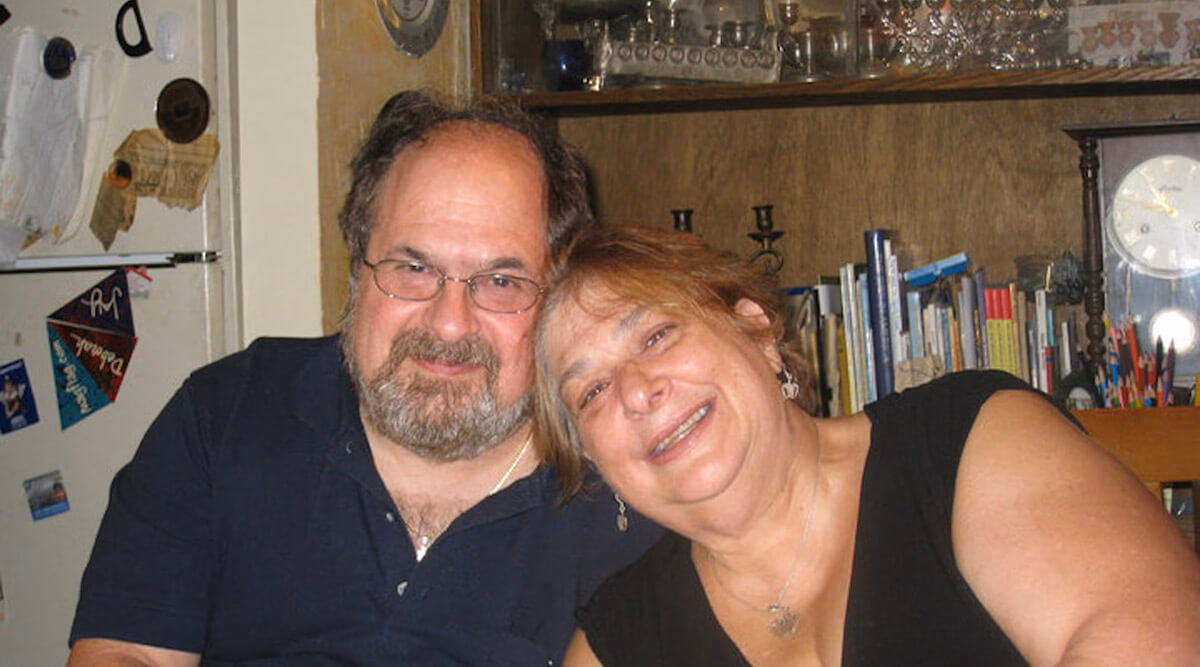
(JTA) — As Rae Ann Kaylie sat on her mother’s couch in the wake of her death, the Judaica felt overwhelming.
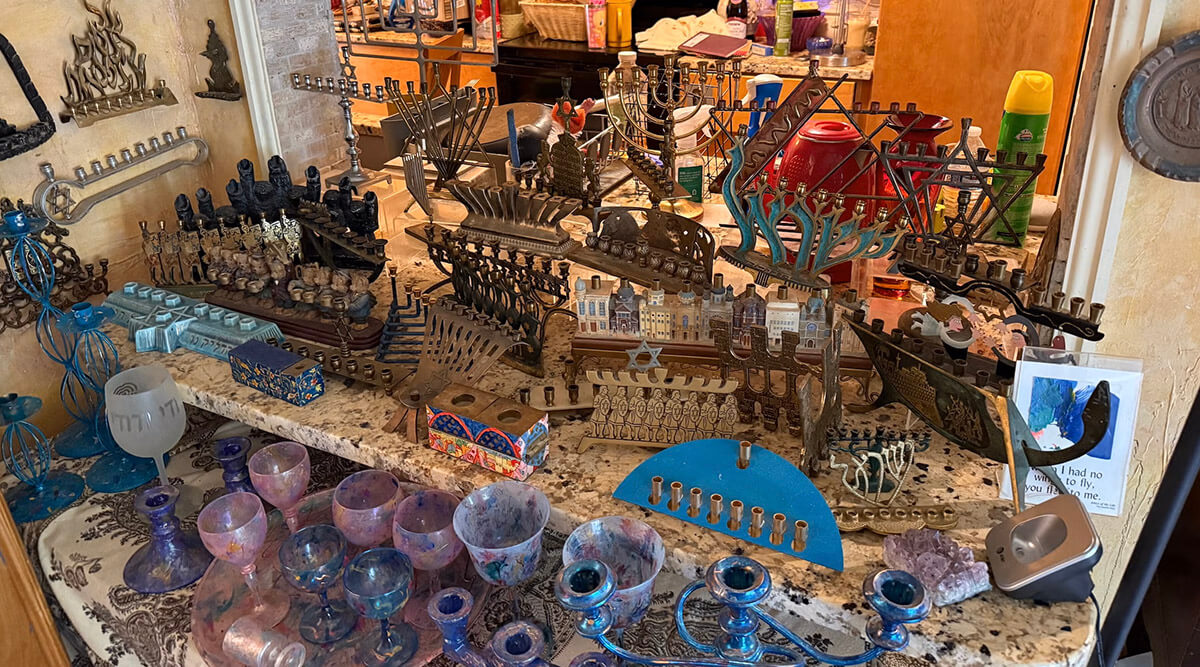
Over 50 menorahs adorned the shelves. A dozen seder plates had been meticulously hung alongside a trove of Jewish art on each wall. And countless dreidels, kiddush cups and shofars filled every corner of the 1,100-square-foot home in Rockville, Maryland.
There were so many hamsas hanging near the entrance, Kaylie joked, “Whoa, Mom, what on earth? Like, how much evil eye do we have in here?”
For 35 years, Kaylie’s mother, Deborah Brodie, had amassed a collection of over 200 Jewish ritual objects, which she had used as a hands-on classroom for her Hebrew school students with special needs. Among the collection, Brodie had also obtained a Torah from Ebay, which her students used to practice for their b’nai mitzvah.
“She wasn’t the one who was like, ‘Oh, don’t touch it. You’re going to break it,’” Kaylie said. “She was like, ‘Touch it, here, take a bunch,’ you know what I mean, and that was really cool about her entire collection.”
Brodie — known as “Bubbie Cookie” to her family — had not built the collection alone. Her longtime partner, Jay Brill, whom she met through a Washington Jewish Week personals ad in 1986, was alongside her throughout the journey, traveling with her to all 50 states to sell Jewish jewelry and a computerized Hebrew-learning program they created together.
Over the years, the couple attended both B’nai Shalom and Shaare Tefila Congregation, two Conservative synagogues in Olney, Maryland. Toward the end of their lives, they attended Chabad of Olney, whose rabbi officiated their funerals.
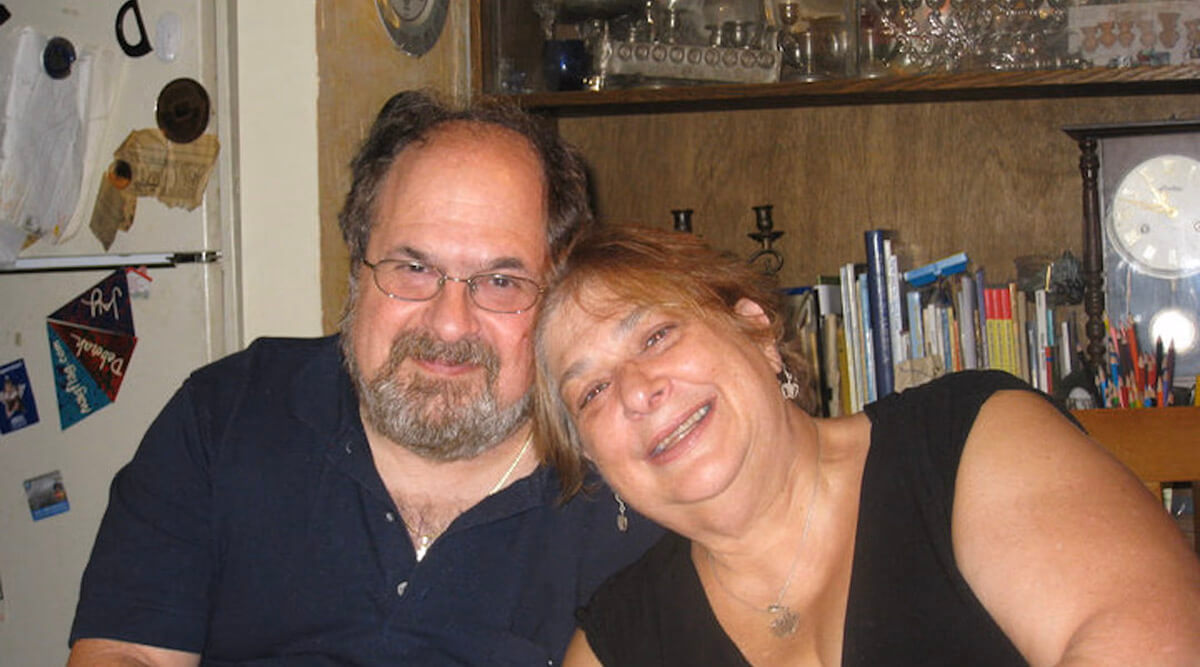
But after Brodie, 76, and Brill, 74, died in February just 19 days apart, Kaylie said she and her family were faced with a painful question: What would happen to the couple’s lifetime of Jewish devotion in their absence?
“We all picked something we wanted, but then, you know, you don’t want to sell it, you don’t want to make any money off of it,” Kaylie said. “It was just trying to figure out, like, what can we do to further her passion, her vision?”
The answer, Kaylie said, arrived through Instagram.
Earlier this month, Kaylie sent a simple message to Nick Fox, who operates a social media series titled “Millennial Inheritance,” writing, “Hey, you want to see a lot of menorahs?”
Since October, Fox has documented dozens of inheritance stories across his social media channels, featuring people grappling with their late parents’ vast collections of Breyer Horse figurines, salt and pepper shakers and Christmas decorations.
But while Fox said the mission of his page is not necessarily to help people find homes for inherited collections, Kaylie’s story felt different.
As he viewed images of Brodie and Brill’s home, Fox, who is Catholic, said that he immediately flashed back to childhood memories attending his classmates’ bar mitzvahs and receiving souvenir hamsas from their trips to Israel.
“It was the fact that she was actively grieving and really had no idea what to do, and I think the fact that I was raised how I was, where I was, that I had a knowledge of what this stuff was and what it meant,” Fox said.
Just days later, Fox posted a short video for his 200,000 followers featuring snippets of the sprawling collection along with a call to help find it a permanent home that would “love it the way Rae Ann’s mom did.”
As the post garnered hundreds of comments offering ideas for the collection’s future and tributes to Brodie’s contributions to Jewish education, it was also making its way through Washington’s Jewish community.
The morning after the post, Jonathan Edelman, the collections curator for the Lillian and Albert Small Capital Jewish Museum, said he woke up to dozens of messages from people urging the museum to find a home for the collection.
“It was so meaningful that so many people in the broader community, and who have never stopped in our museum, tagged us and said, you know, this should be the home of this sort of wild story and this amazing collection,” Edelman said.
By the following weekend, Edelman had travelled to Brodie’s home to meet with Rae Ann to view the collection himself. But even after seeing Fox’s post, Edelman said he was unprepared for what awaited him inside.
“It was incredible, floor-to-ceiling Judaica like I’d never seen in anyone’s home before,” Edelman said. “It wasn’t just thrown on a shelf. It was so thoughtfully laid out. I mean, she had seder plates and hanukkiot hanging on the wall, which is no easy task to do…it felt like a museum quality display. It was really impressive.”
Edelman quickly reported back to the museum, which opened in June 2023, telling them that he believed he had stumbled upon an “incredible opportunity” to launch its inaugural education collection.
Now, the Capital Jewish Museum has plans to house the entirety of Brodie and Brill’s collection in its second-floor education and program space, the Community Action Lab, where visitors will be able to interact with the Judaica firsthand, just as Brodie encouraged her students to do in her home.
The museum also plans to photograph the collection so it is accessible online, and lend individual pieces to schools and organizations in the area for educational use.

“When I heard her mother’s story, you know, we were doing the same thing. Our goal was Jewish education, and she did it as an individual, we’re doing it as an institution,” Edelman said. “It means so much for us to honor her mother’s memory by doing the work that she dedicated her life to…it feels particularly special.”
But while Fox said he was not surprised by the outpouring of support and suggestions from the Jewish community, he said other Jews that inherit large quantities of Judaica should not look to Kaylie’s story as a roadmap.
“This is absolute best-case scenario, but it also makes it so very unique, because there aren’t going to be a lot of collections that museums usually are going to take on,” Fox said, adding that people should not assume that inheritances will find a place in a museum.
Instead, Fox said he encouraged people that inherit Jewish collections to consult their local Jewish community centers or synagogues to see if they might have a use for them.
“In the case of someone having a tremendous amount of Judaica, I think the best way would be to tap into your network, first, talk to people that you know that are in your community,” Fox said. “And then if it goes nowhere, then you have every right to, you know, if you’re looking to sell it, or if you’re looking to donate it, I think the big ask would be, what would your relatives want done with that stuff?”
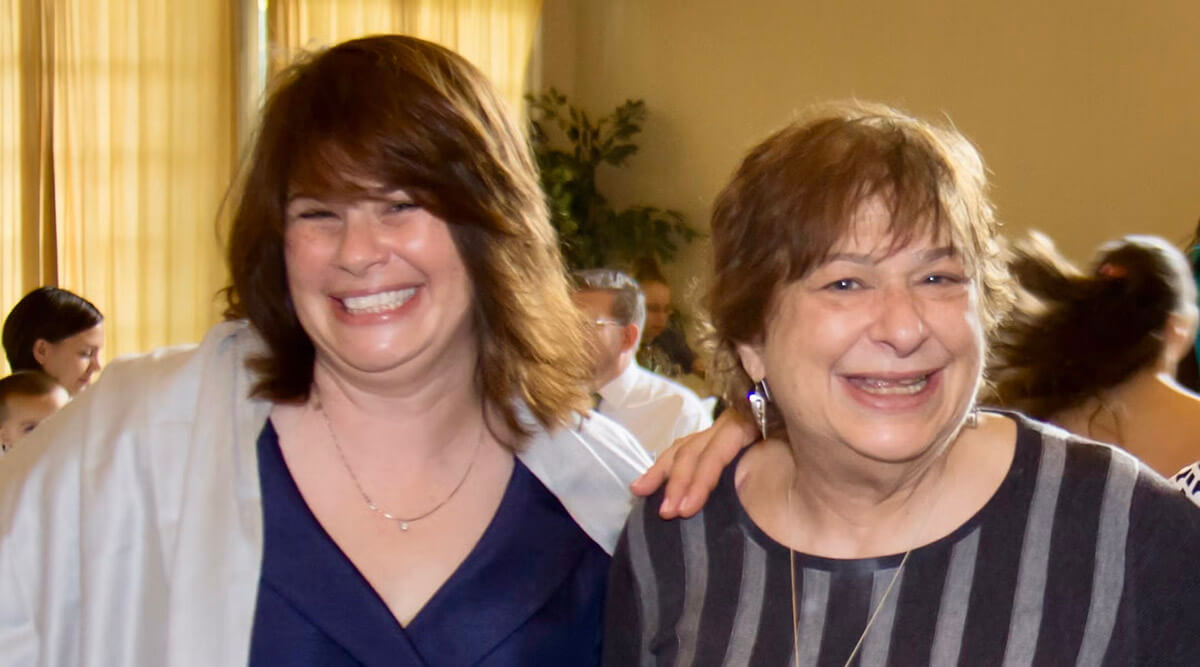
Rachel Steinhardt, a California resident who organized a large-scale Judaica drive for people impacted by the Palisades and Eaton fires last year, recommended that people who find themselves with inherited Judaica they cannot keep turn to local Facebook groups or Judaica rehoming communities such as L’dor V’dor Judaica or Heritage Judaica.
“New Judaica is great, but people definitely value something that has been touched and loved and appreciated over the years…you want something that has a little soul in it,” Steinhardt said. “So I think that even something that’s not of value, other people can appreciate that it has been loved and want to acquire it.”
Reflecting on Fox’s decision to spotlight her mother’s collection, Kaylie said that he had been a “guardian angel.”
“He didn’t have to do that, and really, it’s because of him that we’re able to have my mom’s legacy be how we could have wanted it,” Kaylie said.
Edelman said he expects the collection to be installed in the museum sometime this summer, where it will be displayed alongside a plaque honoring “Bubbie Cookie” and “Zayde Jay,” names the couple were referred to by their families.
For Kaylie, imagining the future museum visitors handling her mother’s kiddush cups and menorahs felt like “exactly how she would have wanted it.”
“When we lost Bubbie Cookie, we said the legend of Bubbie Cookie was over,” Kaylie said. “And now, for the legend and the legacy to move on, I mean, it’s unreal. It’s, I have no words, I can’t even articulate it. It’s just amazing.”
This article originally appeared on JTA.org.
The post After a Maryland teacher’s death, her 200-piece Judaica collection finds new life in a Jewish museum appeared first on The Forward.
Uncategorized
British Green Party candidate tweeted about killing Zionists from Anne Frank parody account
(JTA) — A candidate in the United Kingdom’s Green Party is under fire after posting under that social media handle “thereal.anne.frank” that “every single Zionist” should be killed, marking the latest antisemitic scandal to hit the party in a matter of days.
Two other candidates have been charged with spreading hate online in relation to anti-Israel social media posts, while the party’s Jewish leader, Zack Polanski, is fending off allegations of deep-seated antisemitism.
The latest scandal came after the Jewish News revealed that in a series of posts on Threads, Tina Ion, a Green party candidate in Newcastle, referred to “Zionists” as “vermin” and “rats” and posted an image of an industrial shredding machine, which she called a “Zionist juicer.” She also referred to “Jewish Nazis” as “money grubbing thieves” who “have built mountains of money over centuries,” according to the newspaper.
The profile photo for the account, titled “thereal.anne.frank,” featured an image of a young woman wearing a keffiyeh, the traditional Palestinian headscarf. In one post referencing the image, Ion allegedly wrote that it was used “because Ann Frank wearing a keffieh pisses Zionists off.”
Ion’s rhetoric, which was first surfaced by Labour party activist Steve Cooke, was quickly condemned by a host of Green Party lawmakers, who wrote in a joint statement posted on X Friday that the party was “reviewing our vetting processes.”
“We are appalled by the racist material written and shared by Tina Ion,” the statement read. “We are anti-racists and are clear that antisemitism has no place in our party or society. We do not support her candidacy.”
Ion defended her posts in a statement posted on Facebook, writing that “isolated fragments” of her statements had been used to “distort” her core values and that she “absolutely reject any accusation of antisemitism.”
“My criticism is not directed at an ethnicity or a religion; it is directed at a political ideology and a set of state actions,” Ion wrote. “The common denominator among those I criticise – from Zionist Jewish hardliners to Western supporters and our own government – is not their culture, but their active support for what the International Court of Justice has deemed a ‘plausible risk of genocide.’”
She added, “I acknowledge that in moments of raw, unshielded grief, witnessing live-streamed images of children being torn to pieces, I have used dehumanising language toward those supporting these acts.”
Ion is not the only Green Party candidate facing scrutiny for posting antisemitic content online.
Sabine Mairey and Saiqa Ali, who are both running for seats in the Lambeth borough of London, were detained by the Metropolitan police Thursday “on suspicion of stirring up racial hatred online,” an offense under the UK’s Public Order Act. Mairey and Ali were taken into custody for questioning.
Mairey posted an image on Facebook with text that read, “Ramming a synagogue isn’t antisemitism, it’s revenge,” according to a screenshot from The Telegraph. The post referenced Ayman Mohamad Ghazali, a U.S. citizen and Lebanese immigrant who drove an explosives-laden truck into a synagogue in Michigan in March, shortly after losing several of his family members to Israeli attacks on Lebanon.
Ali has shared an image on Instagram of an armed man wearing a Hamas headband, together with the slogan, “Resistance is freedom,” according to another screenshot.
Other Facebook posts by Ali, which have now been deleted, allegedly claimed that 9/11 was a “false-flag attack” engineered by Israel. She also allegedly posted an image of a serpent marked with a Star of David choking the Earth, and a caricature of a Jew with the caption, “We went through the Holocaust, and now we get to kill everyone, forever!”
The arrests came hours after the stabbing of two Jewish men in London’s heavily Jewish neighborhood of Golders Green, which police are investigating as terrorism. London has also recently seen a string of arson attacks on synagogues and other Jewish sites. And in October, a man drove his car into people gathered outside a synagogue in Manchester and fatally stabbed one man.
The left-populist Green Party seized major gains in recent months, riding issues that have animated the global left — including affordability, the environment and widespread anger over Israel’s military campaign in Gaza. Polanski, the party’s Jewish leader who hopes to topple the Labour government’s power in local elections next week, has accused Prime Minister Keir Starmer of complicity in “the very obvious genocide in Gaza.”
Amid the Green Party’s sudden growth, it has faced mounting scrutiny over its candidates. Polanski admitted during the selection process that vetting was a “real challenge” for the Greens, though he has since said he has confidence in “99%” of his candidates.
Several other candidates have been accused of making antisemitic comments. A candidate in Newcastle, Philip Brookes, said in a Facebook post about Gaza that it “takes serious effort not to be a tiny bit antisemitic.” Aziz Hakimi, a candidate in Camden, has shared content blaming “Zionists” for 9/11 and claiming that Israel orchestrated an arson attack on ambulances owned by the Jewish charity Hatzolah in Golders Green. Other candidates have posted comments that appeared to sympathize with the Hamas attack on Israel or promote tropes about the global influence of Jewish people.
The deputy leader of the Greens, Mothin Ali, privately told the Greens for Palestine group that candidates who were accused of antisemitism should seek “serious legal advice,” The Times of London reported. Ali suggested a “class action” against his own party over its handling of suspensions as “they’re coming after more and more people.”
Polanski has said that some of his candidates were falsely accused of antisemitism because they challenged the Israeli government or supported Palestinians.
“It is really important that we do not conflate genuine antisemitism with legitimate criticism of an Israeli government which is committing war crimes,” Polanski told the BBC, adding that complaints of antisemitism were taken seriously.
“Where you have 4,500 candidates, to have a handful of cases I would say is not some kind of big scandal,” he said.
Polanski has also accused Starmer of weaponizing fears about antisemitism to stifle criticism of Israel. “We’ve got into a bizarre situation in this country where a non-Jewish prime minister is attacking the one Jewish leader on a case of antisemitism,” he told The Guardian.
Since the nomination deadline for the upcoming elections has passed, even if parties withdraw support from candidates, their names cannot be legally removed from ballots even if they are suspended.
This article originally appeared on JTA.org.
The post British Green Party candidate tweeted about killing Zionists from Anne Frank parody account appeared first on The Forward.