



Uncategorized
America’s Real ‘Special Relationship’ When the Pageantry Is Stripped Away
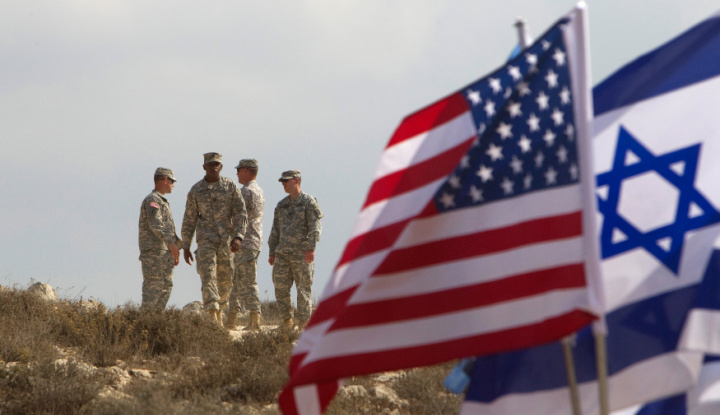
US soldiers stand next to a Patriot anti-missile battery (not seen) west of Jerusalem, Oct. 23, 2012. Photo: REUTERS/Ronen Zvulun
King Charles came to Washington this week to renew an old claim: that Britain remains America’s closest friend, joined by history, language, culture, and long alliance. There is truth in that. The ties are real. Yet the visit also exposed a tension no amount of ceremony could quite conceal. Beneath the pageantry, the handshakes, and the polished invocations of shared destiny, the old “special relationship” seemed less like a settled fact than a British hope. For today, America’s most “special” ally is surely Israel. Who says so? Britain’s own ambassador to the United States, caught in a leaked recording only weeks before the king arrived.
The royal visit was intended to mark 250 years of American independence, an anniversary born from rupture, and was tasked with displaying friendship between two nations whose elected leaders plainly have little warmth for one another.
For decades, the phrase “special relationship” has been used as a kind of Anglo-American incense, waved over every disagreement until the room smelled less of conflict. US President Donald Trump has battered British Prime Minister Keir Starmer for months, leaving the relationship between Washington and London looking bruised, transactional, even contemptuous. The royal visit was supposed to place something older and grander above that. And it nearly worked.
But Britain’s ambassador to Washington, Christian Turner, said the quiet part aloud.
The Financial Times obtained a leaked recording of Turner speaking to British students, in which he called the phrase “special relationship” nostalgic and backward-looking. But there was, he said, one country that could probably claim such a relationship with the United States: Israel. The Foreign Office insisted his remarks were informal and did not represent official policy, but the damage was done.
Turner’s point was awkward because it was true. The United States still values Britain. The historic and cultural ties remain deep. But a special relationship requires more than shared history and flags in matching colors. It requires instinctive trust in moments of danger. Under Starmer, that trust has more than frayed — it is in shreds.
Trump has been quite frank about his anger. He attacked Starmer over Britain’s hesitancy during the US-Israeli campaign against Iran, saying the prime minister was “not Winston Churchill” and criticizing the delay over the US use of its own Diego Garcia base in British territory. Britain initially withheld access to the strategic base for offensive operations.
Trump has also mocked Starmer’s caution, complaining that Britain was no longer what it had been, and treating the prime minister less as an indispensable ally than as a nervous functionary who cannot decide which way to face.
The contrast with Israel is stark. Trump recently praised Israel as a “GREAT Ally” on social media, calling the Jewish state “Courageous, Bold, Loyal, and Smart” and adding it “fights hard” and knows how to win.
US Secretary of War Pete Hegseth has been even sharper. In an official Pentagon briefing just three weeks ago, he thanked Israel for being a “brave, capable, and willing ally,” saying the “rest of our so-called allies saw what real capabilities look like” and should “take some notes.”
Britain gets nostalgia. Israel gets admiration.
Trump’s contempt for Starmer is mirrored back home, where the latter’s popularity has collapsed. YouGov’s March polling put him on a net favorability rating of minus 48, with 70 percent of Britons viewing him unfavorably. In April the same poll showed a similarly cringeworthy net favorability rating of minus 48, with 69 percent of the nation seeing the Labour leader negatively.
The public has watched a prime minister who promised seriousness lurch from one retreat to another: winter fuel payments, farming inheritance tax, digital ID, the two-child benefit cap, tax promises, the Muslim pedophilia rape-gangs inquiry, the Chagos deal … He appears like a man constantly dragged by events he failed to understand.
Even on the day of the king’s address to the US Congress, Starmer narrowly escaped a dangerous Commons vote over the Peter Mandelson affair — his disastrously chosen, Jeffrey Epstein-linked previous choice for US ambassador. Parliament rejected a Conservative motion to refer him to the Privileges Committee only after Labour MPs were instructed to vote against it. While the king spoke in Washington of continuity and alliance, the prime minister survived in London only by party discipline, whipping, and arithmetic.
Trump, for his part, played the royal moment beautifully. His White House speech was warm, even lavish. He called Charles “a very elegant man,” praised Britain’s ancient contribution to American liberty, invoked Runnymede, Churchill, Roosevelt, and yes, the special relationship. The president spoke of the two countries as heirs to a shared civilizational inheritance.
King Charles then took the same project to Congress, his speech masterfully wrapping political argument in historical courtesy. He joked about Parliament taking a hostage when the monarch visits Westminster, praised American democracy, Magna Carta, the Bill of Rights, and the Atlantic partnership. He was visiting, he said, in an era “more volatile and more dangerous” than the world his mother addressed in 1991.
This was royal diplomacy, but it was politics all the same. The king spoke under the protection of reverence. Americans treat the British monarch as a figure of ceremony, curiosity and continuity, almost outside the normal reach of partisan argument. That gave him room to press on the places where Britain differs from Trump’s America: Ukraine, NATO, climate, the global order, the Middle East, the language of shared democratic restraint.
Trump likes royalty. He respected the late queen. He was polite to her son, King Charles. But courtesy is not conversion. A historic royal speech in Congress cannot make an ailing prime minister look strong. A successful state visit cannot make Britain seem reliable if we are led by a prime minister who keeps failing the test when decisions arrive.
The ambassador’s leak cut through the bunting. Britain came to Washington trying to prove it was still America’s closest ally. Its own man in Washington had already suggested otherwise. Israel fights beside America. Britain explains itself to America. That is the difference, and everyone can see it.
The king’s visit brought out military bands and inspections: soldiers in dress uniforms — a spectacular display of ceremonial closeness. Speechwriters crafted their finest flourishes to describe historic ties, cultural affection, and family bonds across the Atlantic. But it was Britain’s most important diplomat, not our prime minister or even our king, who told the truth. His words were embarrassing not because they were shocking, but because he simply said what we already knew.
Just as President Trump and Secretary Hegseth have been saying for weeks, the real military display to demonstrate a truly special relationship was not on show on the South Lawn of the White House, but in the skies, the seas, and on the ground in the Middle East: Israeli and American brothers in arms, fighting barbarism and evil, bound by a common enemy, common goals, and common values. They are fighting for Israel, for America, for the West, and the entire civilized world. That is what a special relationship looks like when the pageantry is stripped away.
Jonathan Sacerdoti, a writer and broadcaster, is now a contributor to The Algemeiner.
Uncategorized
At California Universities, Students Rally to Support Terrorists and Criticize Victims

University of California, Berkeley students on March 11, 2025. Photo: Reuters via Reuters Connect
Universities are supposed to expose students to difficult perspectives, not shield them from uncomfortable ones. But on many campuses, Jewish and Israeli voices are increasingly treated not as viewpoints to engage with, but as problems to manage or condemn.
Few recent incidents captured that shift more clearly than the reaction to a former Israeli hostage speaking at the University of California, Los Angeles (UCLA).
On April 14, UCLA Hillel hosted former Israeli hostage Omer Shem Tov to speak about his experience being held captive in Gaza following the October 7 attacks.
For most universities, hosting a survivor of mass kidnapping and terrorist violence would not seem particularly controversial. At UCLA, however, the event triggered a formal condemnation from the student government that quickly made national headlines.
Rather than merely protesting the event or disagreeing with its message, UCLA’s Undergraduate Students Association Council accused the visit of promoting “one-sided narratives that erase systems of oppression and occupation.” Student leaders further expressed “concern” that having Omer on campus would somehow “marginalize” and “silence” Palestinian and Arab students.
Furthermore, the letter, which reportedly passed with unanimous consent, was drafted on Yom HaShoah, the day set apart to mourn the Jewish victims of the Holocaust. More disturbingly, the student government intentionally excluded USAC General Representative Talia Davood from discussions surrounding the letter, despite her direct involvement in organizing the event with Hillel.
This reveals that the people condemning the event had little interest in actually hearing from anyone who disagreed with them — and proves they clearly did not act in good faith.
Davood was later questioned regarding the funding for the event, even though it did not come from the student government’s budget. So what exactly was the concern supposed to be, other than hostility toward the community that she, Hillel, and Omer represent?
The students’ reaction to Omer’s appearance exposed that rather than engage with voices they disagree with, these liberal students are trying to silence any voices or viewpoints they oppose.
When UCLA organizations such as Students for Justice in Palestine are freely permitted to organize activism on campus while Jewish cultural events are scrutinized and condemned, it reveals a deeply ideological and hostile climate at UCLA.
When pro-Palestinian activists on campus engage in violence, prevent Jewish students from attending class, and destroy university property, the administration drags its feet. But when Jewish students try to invite a speaker to campus, the administration refuses to support them.
For UCLA student Amit Cohen, the message communicated something much larger than disagreement over Middle East politics. “What I took from the letter is that Jewish students don’t belong on campus,” he said. “They condemned our story. They didn’t want to listen to it. It’s the most hypocritical thing I’ve ever read.”
But this hypocritical hostility extends beyond UCLA.
In the same month, UC Berkeley students hosted a convicted failed suicide bomber and justified the event using the same language about standing in solidarity with Palestinians. Of course, the event did not receive condemnation from Berkeley’s student government either.
The contrast would be laughable if it were not so revealing.
A moral inversion of reality is beginning to dominate parts of university culture. Certain forms of violence are granted moral context and institutional patience, while Israeli and Jewish suffering increasingly appears politically inconvenient to acknowledge too sympathetically.
When platforming a literal terrorist is framed as giving voice to the marginalized while a former hostage speaking about his captivity is considered beyond the pale, something is deeply wrong with the culture of those academic communities.
Students at UCLA have the power to influence the culture of their campus. They should not only speak out against this letter, but actively refuse to participate in the atmosphere that these disappointing student leaders are helping to cultivate.
The good news is that Jewish students at UCLA remain undeterred. As Amit Cohen affirmed, “We’ve been keeping our heads up. The UCLA Jewish community is going to stay strong.”
Destiny Lugo is a third year International Relations and Journalism student at Oral Roberts University in Tulsa, Oklahoma. She is a fellow for the Committee for Accuracy in Middle East Reporting and Analysis (CAMERA). The views expressed are the opinion of the author, and don’t reflect those of CAMERA.
Uncategorized
How Israel Adds Economic Value and Technological Advancement to the United States

The lobby of Tel Aviv’s stock exchange. Photo: Wikimedia Commons.
In much of the public debate in the US, the relationship between Israel and the United States is often reduced to a simplistic and misleading story of unilateral American support. According to this view, Israel is portrayed as a dependent state sustained by American generosity.
Such a framing may be politically convenient for critics, but it fails to reflect the complexity and the mutual benefits of one of the most consequential alliances in modern geopolitics.
A more accurate reading shows a partnership that delivers strategic depth, military advantage, technological innovation, and economic gains for the United States, while reinforcing stability for allies around the world.
From a strategic standpoint, Israel functions as a critical anchor of stability for American interests in a region defined by volatility and shifting power struggles. It is one of the few consistent democratic partners the United States can rely on in an area where state collapse, militant movements, and authoritarian regimes often intersect. Israeli experience in counterterrorism and unconventional threats also contributes to this strategic value.
The economic dimension of this relationship is equally significant and often misunderstood. American assistance to Israel, frequently cited as evidence of imbalance, is in practice deeply integrated into the United States domestic economy. A substantial portion of defense related funding is actually a windfall for American defense contractors, supporting skilled employment across multiple states. This includes engineering, manufacturing, research, and logistics sectors that sustain high quality jobs and reinforce the American industrial base.
Beyond defense production, the technological ecosystem known as Silicon Wadi has become an important extension of global innovation networks. Major American technology companies maintain significant research and development operations in Israel, not out of symbolism but out of necessity.
Israeli engineers and entrepreneurs have played central roles in advances in cybersecurity, semiconductor development, artificial intelligence applications, and medical technology. These contributions are embedded in everyday American life, from secure banking systems to consumer electronics and enterprise infrastructure. Thousands of companies founded or co-founded by Israelis operate in the United States, contributing to job creation, tax revenues, and technological competitiveness.
Every American uses products and technologies that were developed in Israel, by Israelis.
The impact of Israeli innovation extends well beyond the United States as well. Agricultural technologies pioneered in Israel, particularly in water management and irrigation efficiency, have been deployed in countries facing severe food security challenges. India has incorporated such systems to improve agricultural yields and resource efficiency across large farming regions. Across Africa and Asia, desalination and water reuse technologies developed in Israel are helping communities adapt to climate-related scarcity.
These examples illustrate a broader reality. Israel functions as a hub of applied innovation, often developing solutions under conditions of constraint that are later adapted globally. This dynamic produces a multiplier effect that benefits not only the United States but also a wide range of international partners.
At a time when global politics is increasingly defined by technological competition, asymmetric warfare, and resource insecurity, the value of this partnership becomes even more apparent. The United States and Israel form a cooperative model that enhances both national security and economic resilience.
The suggestion that Israel represents a burden on the United States does not withstand close examination. It overlooks the strategic advantages, the economic integration, and the technological interdependence that define the relationship. Rather than a one sided arrangement, this alliance operates as a mutually reinforcing system that strengthens both nations and extends benefits to allies across the democratic world.
The partnership between Israel and the United States is not merely a matter of foreign policy tradition or diplomatic preference. It is a strategic asset that advances shared interests in security, innovation, and global stability. In an era of increasing uncertainty, such alliances are not optional. They are essential.
Sabine Sterk is the CEO of Time To Stand Up For Israel
Uncategorized
How the Jewish People Can Unite: A Lesson From Yavne and the Mishnah

Image of the first complete Mishnah. Photo: The British Library.
On May 13, at a national conference in Jerusalem dedicated to repairing Israeli society and building a shared civic future, Israel’s President, Isaac Herzog, warned that division had become the country’s most urgent internal threat.
I was surprised to learn recently that Jewish unity was elusive even in the dire circumstances of the 1943 Warsaw Ghetto Uprising, the largest Jewish revolt against Nazi Germany during World War II — when a few hundred poorly armed Jewish fighters held off a much larger and far better equipped German army for almost a month. (The uprising ended 83 years ago, on May 19.)
During the uprising, there were two Jewish rebel forces: the ZOB (members of left wing groups, such as HaShomer HaTzair and the Bund), and a parallel organization, the ZZW (made up of youth from the political right — Betar and the Revisionists). While the two organizations cooperated to some extent and fought the Germans in parallel, they were never a unified force. Of course, it didn’t really matter. The German army was far too powerful for a few hundred inadequately armed insurgents.
Obviously the current day State of Israel — and its 78 year history — proves that Jewish cooperation does happen. Another example that comes to my mind is the Jewish experience nearly 2,000 years ago at Yavne, a town on the coastal plain of the Holy Land. That was when Rabbi Yohanan ben Zakai ensured Jewish continuity after the destruction of Jerusalem and the Second Temple in 70 CE, by establishing a Jewish academy at Yavne and reconstituting the Sanhedrin.
Jewish society during the lead up to the First Roman-Jewish war was a sectarian society dominated by two groups — the Pharisees, the group responsible for the establishment of the synagogue as a focus of Jewish life outside the Temple, and the Sadducees, the priestly caste that administered the Temple.
Both groups shared the same written scriptures and many traditions. But they differed in that the Pharisees believed in resurrection after death and in the authority of the Oral Law, as well as the Torah. The Sadducees did not.
One American scholar, Shaye J. D. Cohen, describes how the rabbis who gathered in Yavne ended Jewish sectarianism and created a society that tolerated and even encouraged vigorous debate. The result was the abandonment of sectarian labels such as Pharisees and Sadducees, and the writing of the Mishnah.
In all likelihood, most of the rabbis at Yavne were Pharisees, and the centerpiece of Sadducee life, the Second Temple, was gone. However, there is no indication that the rabbis of Yavne were motivated by Pharisaic triumphalism. The goal was not exclusivity, but rather elasticity. Cohen notes that the Mishnah is the “first work of Jewish antiquity which ascribes conflicting legal opinions to named individuals who, in spite of their disagreements, belong to the same fraternity. This mutual tolerance is the enduring legacy of Yavneh.”
A year before he passed away, the late Rabbi Jonathan Sacks published what he titled Seven Principles for Maintaining Jewish Peoplehood. The list includes points such as the need to keep talking, to listen to one another, and to respect one another. But most important of all, never seek victory. I think this is what the rabbis at Yavne understood very well. Rabbi Sacks’ message to the diverse factions that make up Israel’s political and social fabric would be, “Do not think in terms of victory or defeat. Think in terms of the good of the Jewish people.”
Jacob Sivak, a Fellow of the Royal Society of Canada, is a retired professor, University of Waterloo.