


Uncategorized
An 82-year-old Jewish recording legend on his film directing debut: ‘I could have been good at this’

Kenny Vance (born Kenneth Rosenberg), 82, was not quite ready to use my word “omen,” but he acknowledged that in some oblique way the destruction of his home in the Rockaways, compliments of superstorm Sandy, played a role in shaping his award-winning documentary, Heart & Soul: a Love Story.
The evocative and elegiac film pays homage to the groundbreaking and, in Vance’s view, unsung rock and doo-wop performers of the 50s. It interweaves archival footage with Vance interviewing some of its lead players, including Eugene Pitt (the Jive Five,) Arlene Smith (the Chantels) and Jimmy Merchant (Frankie Lymon and the Teenagers).
Vance is best known as the 1961 co-founder of the Billboard chart-topping group Jay and the Americans (whose signature songs included “Mia Cara,” “Come a Little Closer” and “This Magic Moment”) and, more recently, Kenny Vance and the Planotones, whose musical calling card is “Looking for an Echo.”
During his 60-plus year career, Vance has served as the musical director on Saturday Night Live (1980-’81), composed movie scores and appeared as an actor in Animal House, Eddie and the Cruisers and American Hot Wax as well as in a host of Woody Allen films, usually playing musicians or music producers.
Writing and directing a film seemed like the natural next adventure for Vance, particularly in the wake of the storm that devastated the home he had lived in for 40 years.
“The walls were all gone and most of the ceilings were gone, though the kitchen remained without a stove or fridge — looting,” he told me at the Upper East Side coffee shop where we met. “Still, I was able to climb up to my office above the kitchen to retrieve dozens and dozens of CDs wrapped in plastic bags that I had stored in my desk drawers. I took what was salvageable back to the FEMA hotel where I was staying in Staten Island and went through all of it.
“Making the film was meant to be. It was fated as if fueled by an omen,” Vance said, gently mocking my earlier word suggestion.

Tall, clad in black, and sporting sunglasses throughout our indoor meeting, he came across as very reserved, bordering on shy, yet also, paradoxically and by turns, talkative, free-wheeling and free-associative in his commentary.
Recalling his artistic mentors, many of whom appear in the film, he said, “They had a sensuality and spirituality that entered you. It’s not something you can easily describe. But as time went on, these great vocalists were seen as almost comic. They were the world of the TV show, Happy Days. But that was never what they were about.”
Their cultural significance cannot be overestimated either, Vance said. For the first time, Black and white teenagers were dancing in the same space.
“They created a youth culture that never existed before. They inspired the movies that were being made and the clothing that was worn and we’re still feeling their impact today,” he said.
Vance found that the artists he wanted to interview were eager to tell their stories, though some expressed disappointment and anger at the trajectory of their lives while others looked back nostalgically. Some voiced both sentiments.
It took close to ten years to get the film off the ground. The subject matter just didn’t resonate with investors or the festival circuit. But for Vance, it was a story that needed to be told and seen. The time was long overdue for these performers to be the stars of a film before it was too late. “They were always movie stars,” said Vance.
‘The writing was on the wall’
When I asked the Flatbush, Brooklyn native if singing had always been his career choice, he found the very concept of a “career choice” mildly amusing. His life evolved extemporaneously, at least that’s the way he made it sound.
While his mother sang on the radio and was at one time the girlfriend of Irving Fein, who would go on to manage both Jack Benny and George Burns, Vance did not grow up wanting to be a singer.
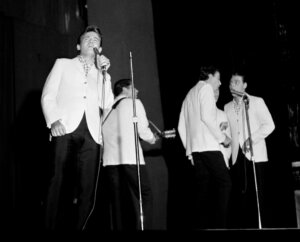
The seminal moment for him, and the scene that opens the film, happened in the 1950’s when he was a teenager attending a mega-show filled with screaming fans at the Brooklyn Paramount Theater, which was known for its legendary shows hosted and promoted by DJ Alan Freed.
“I knew I wanted to be part of that,” Vance said.
In short order, he became a member of a local band, singing in the school hallways, on neighborhood stoops and even in the subways.
“No, we were not buskers,” he said. “We just went down into the subways for their echo. But when we made eye contact with other riders, there was just a connection and we all felt it. There was a simplicity, an essence, and everyone wanted to be part of it. That was spiritual. There was a band on every street corner. That couldn’t happen today.”
At 15, he launched his first vocal group, and ultimately, after a number of band iterations, Vance forged Jay and the Americans, which enjoyed a string of hits. The band performed on The Tonight Show with Johnny Carson, opened for The Beatles and played the closing act following The Rolling Stones at Carnegie Hall.
“They wanted to move The Rolling Stones out of the theater unobserved, thinking if we were on stage that would keep the audience engaged, but it didn’t work that way,” said Vance. “The audience understood what was happening and when we started to sing they were running out of the theater screaming to catch up with the Rolling Stones. In the end, we were performing for an empty house.”
Vance knew this was the death knell for Jay and the Americans and groups of that ilk. They continued to perform and produce hits, but they couldn’t compete with the new breed that appeared on every major TV show and generated unprecedented press coverage. In 1974, Jay and The Americans dispersed.
“The writing was on the wall,” Vance said. “The Beatles wore Nehru suits,” We wore dickies and sweaters.”
Vance managed to thrive doing, among other things, TV jingles to earn extra money.
He produced the soundtrack for Animal House, which sold sold more than one million copies, and the one for Eddie and the Cruisers, which went triple platinum when the movie became a cult hit. In the film American Hot Wax, he played the role of “Professor La Plano” who led a fictional band, the Planotones, which inspired Vance in 1992 to create the very real Kenny Vance and the Planotones. His son, Ladd, is a band member. “We do duets and when we sing he shares a unique version of me. And to share that with him is a unique gift,” Vance told me.
‘How could these rock guys be Jews?’
I asked Vance if he were starting out today, whether he would have kept the name Rosenberg. He said that Vance has been his last name for so long he couldn’t imagine another. “Vance was cool,” he said. “We were all Jews in Jay and the Americans. But everyone assumed we were Italian. Congratulations!”
He told me he rarely discusses his connection to Jewishness — when he was growing up, his family was largely secular, though he did have a Bar Mitzvah.
For him, Jewishness is about “doing the ethical thing,” he said. “I love that. I get it. But I’m not observant. ‘I feel like a hypocrite,’ I told a friend who said, ‘if you get it, you’re not a hypocrite’”
From time to time, though, he does attend Chabad services for what he sees as their essence, purity and authenticity.
“The Lubavitch consider us orphans from the true information” he said. “Orthodox, Conservative and Reform are man-made concepts. Did Moses belong to one of those three denominations? He was an authentic Jewish person. It was his essence. I love the Talmud. When I attend services, I study the commentaries of that week’s Parsha.”
Though he never experienced heavy duty antisemitism, being Jewish on occasion made him feel like an outsider, most pointedly, he said, in the deep south during the Jim Crow days.
“After one show, a bunch of us had gathered in one of our hotel rooms, including several cops, all with guns and sitting there in their undershirts. They were playing cards with some of the guys from the band. We were in a relaxed situation and one of them said, ‘Hey, what are you?’ and one of the guys said, ‘We’re the Chosen.’ I thought I was going to die when he said that, but then the cops started laughing. I didn’t realize it at the time, but the fact that we would be Jews was so far off the radar, they thought it was a joke. How could these rock guys be Jews? It was absurd. I knew we had entered a different reality.”
‘I started to cry’
As we left the restaurant and walked down the street, Vance told me that he’d never imagined that he’d ever be a filmmaker, but now he thinks that his debut documentary may just be his most potent legacy.
“When they showed it on PBS, I started to cry in the middle of it,” he said. “I was so happy to see Eugene Pitt, Wally Roker and Arlene Smith starring in a movie that was on TV. They are stars on screen.”
“I could have been good at this,” he said wistfully, then added, “I’ve been told I belong in The Guinness World Records as the oldest director making a debut.”
Heart & Soul is available on DVD and on various streaming platforms including Fandango and Plex.
The post An 82-year-old Jewish recording legend on his film directing debut: ‘I could have been good at this’ appeared first on The Forward.
Uncategorized
Yiddish Modernism and the political tumult in the 1930s
אין די 1920ער און 1930ער יאָרן האָט דער זשורנאַל „אין זיך“ געדינט װי אַ טריבונע פֿאַר מאָדערניסטישע עקספּערימענטן אין דער אַמעריקאַנער ייִדיש־ליטעראַטור. צו די „אינזיכיסטן“ האָבן געהערט יעקבֿ גלאַטשטײן, אַהרן גלאַנץ־לעיעלעס, ה. לײװיק, שלמה שװאַרץ, יהודה לײב טעלער און אַנדערע.
װי מען קען טרעפֿן פֿונעם זשורנאַלס נאָמען, זײַנען די דאָזיקע ליטעראַטן געװען פֿאַרטאָן אין שעפֿערישע חקירות אַרום דעם אײגענעם „זיך“. און טאַקע, אין די 1920 יאָרן האָט „אין זיך“ ניט געהאַט קײן אינטערעס צו די פּאָליטישע דאגות־היום.
אָבער דאָס האָט זיך געביטן נאָך 1934, װען גלאַטשטײן איז געװאָרן דער רעדאַקטאָר פֿונעם זשורנאַל. דער דאָזיקער תּקופֿה איז געװידמעט דאָס נײַע בוך פֿון איתי זוטרא (אוניװערסיטעט פֿון מאַניטאָבאַ, קאַנאַדע) „אינזיכיזם: ייִדיש־דיכטונג און די ייִדישע אידענטיטעט אין אַמעריקע אין די 1930ער יאָרן“.
גלאַטשטײן האָט פֿאַרטײדיקט די שעפֿערישע אױטאָנאָמיע פֿונעם דיכטער קעגן די אַנגאַזשירטע קאָמוניסטישע קריטיקער װי אַלכּסנדר פּאָמעראַנץ, װאָס האָבן געפֿאָדערט, אַז ליטעראַטור זאָל דינען די אינטערעסן פֿון די פּראָלעטאַרישע מאַסן.
אַזױ איז גלאַטשטײנס אײגענע פּאָעטישע שאַפֿונג געװאָרן אַ מין פּאָליטישע פּאָזיציע. די דאָזיקע פּאָליטיק, האַלט זוטרא, האָט משפּיע געװען אויף זײַן ליטעראַרישן סטיל און דעם סטיל פֿון אַנדערע מחברים פֿון „אין זיך“.
גלאַטשטײן האָט געעפֿנט די זײַטן פֿון „אין זיך“ פֿאַר פּאָליטישע װיכּוחים. ער אַלײן איז אַרױס מיט אַ פֿאָרשלאָג צו שאַפֿן אַ פּאַרטײ, װאָס זאָל זײַן אי פּאָליטיש ראַדיקאַל אי ייִדישיסטיש, הגם קײן פּראַקטישע פּראָגראַם האָט ער ניט פֿאָרגעלײגט.
להיפּוך צו אַנדערע ראַדיקאַלע פּאַרטײען, קודם־כּל דער קאָמוניסטישער, איז דער הױפּטציל פֿון גלאַטשטײנס פּאַרטײ געװען צו פֿאַרטײדיקן ייִדישע נאַציאָנאַלע אינטערעסן. דאָס איז געװען ספּעציעל װיכטיק אין דער צײַט װען דער אַנטיסעמיטיזם האָט געהאַלטן אין אײן װאַקסן אין אײראָפּע.
גלאַטשטײן האָט פֿאַרבעטן ייִדישע ליטעראַטן אַרומצורעדן זײַן פּראָיעקט אױף די זײַטן פֿונעם זשורנאַל. לרובֿ זײַנען זײ ניט געװען אײַנשטימיק מיט גלאַטשטײן. דער עיקר זײַנען זײ געװען קעגן דער אידײ, אַז די אינטעלעקטואַלן דאַרפֿן װערן פּאָליטישע אָנפֿירער פֿון די מאַסן.
חוץ דעם, װי עס האָט באַמערקט חיים זשיטלאָװסקי, זײַנען שױן דאָ געװען גענוג פּאָליטישע פּאַרטײען אין װעלכע ייִדן האָבן זיך אַקטיװ באַטײליקט. צו שאַפֿן נאָך אַ פּאַרטײ װאָלט ניט געהאָלפֿן צו פֿאַרבעסערן דעם מצבֿ פֿון ייִדן.
דער אינזיכיזם, האַלט זוטרא, איז בטבֿע געװען עקלעקטיש סײַ פּאָעטיש און סײַ פּאָליטיש. מען האָט ניט געהאַלטן פֿון טראַדיציאָנעלע זשאַנערס און סטילן. אָפֿט מאָל האָט מען עקספּערימענטירט מיט מישן פּראָזע און פֿערזן.
אין די 1930ער יאָרן האָבן די ליטעראַרישע עקספּערימענטן באַקומען אַ פּאָליטישן אַקצענט. סײַ אין דער קונסט און סײַ אין דער פּאָליטיק האָבן די אינזיכיסטן געזוכט אַן ענטפֿער אױף דער עיקר־פֿראַגע: װאָס איז דער עצם פֿונעם ייִדישן „זיך“ אין אַמעריקע אין דער מאָדערנער תּקופֿה?
דער אינזיכיזם איז געװאָרן אַ נײַער מין ייִדישיזם: אַ קולטורעלע און פּאָליטישע אידעאָלאָגיע, װאָסער ציל איז געװען צו פֿאַראײניקן פֿאַרשײדענע פּאָליטישע שטרעמונגען אױפֿן סמך פֿון דער ייִדישער שפּראַך און דער מאָדערנער װעלטלעכער ייִדיש־קולטור.
גלאַטשטײן האָט געגלױבט, אַז װערטער דאַרפֿן טראָגן דעם װירקלעכן אמת, בפֿרט אין די צײַטן, װען כּלערלײ טאָטאַליטאַרישע רעזשימען האָבן פֿאַרשפּרײט ליגנס פֿאַר די צװעקן פֿון זײער מערדערישער פּראָפּאַגאַנדע.
אינעם בוך לידער „ייִדישטײַטשן“, װאָס איז אַרױס אין װאַרשע אין 1937, האָט גלאַטשטײן געפּרוּװט דערגרײכן די טיפֿסטע פֿאָנעטישע און לעקסישע װאָרצלען פֿון דער ייִדישער שפּראַך.
אין די שורות „אַלטער בױם, פֿעלדז און שטאַם / כ׳קום צו דיר מיט ברױט און גראַם“ דריקט גלאַטשטײן אױס זײַן פּאָזיציע לגבי דער ייִדישער קולטור־ירושה. ער קומט מיט זײַן אַמעריקאַנער „ברױט און גראַם“ צו דעם „אַלטן בױם“ פֿון ייִדיש כּדי צו שעפּן שפּראַכלעסע יניקה פֿאַר זײַן פּאָעזיע.
זוטרא אַנטפּלעקט אין „ייִדישטײַטשן“ סאַטירישע אונטערטענער, װאָס מאַכן חוזק סײַ פֿון די פֿאַשיסטן און קאָמוניסטן און סײַ פֿון די אַמעריקאַנער אַסימילאַטאָרן.
די צװײטע צענטראַלע פֿיגור אינעם אינזיכיזם איז געװען דער דיכטער, קריטיקער און זשורנאַליסט אַהרן גלאַנץ־לעיעלעס. אין 1937, אײנצײַטיק מיט גלאַטשײטנס „ייִדישטײַטשן“, איז אַרױס גלאַנץ־לעיעלעס בוך לידער „פֿאַביוס לינד“.
אין הסכּם מיט די עסטעטישע פּרינציפּן פֿונעם אינזיכיזם איז דאָס דאָזיקע בוך אַ מישמאַש פֿון סטילן, זשאַנערס און שטאַנדפּונקטן, װאָס זײַנען פֿאַרקניפּט דורך דער פֿיגור פֿונעם הױפּטהעלד. דאָס איז אַ פּאָעטישער סך־הכּל פֿונעם איניזכיסטישן פּעריאָד אין לעיעלעסעס שאַפֿונג, האַלט זוטרא.
„פֿאַביוס לינד“ האָט באַקומען התלהבֿותדיקע אָפּרופֿן מצד די קריטיקער. גלאַטשטײן האָט געהאַלטן דאָס בוך פֿאַר דער „ערשטער גרױסשװוּנגיקער און גרױסשטאָטישער פּאָעמע אין דער ייִדישער פּאָעזיע“, און ה. לײװיק האָט עס געלױבט פֿאַר זײַן „אָרגאַנישער גאַנצקײט“.
די פֿיגור פֿון פֿאַביוס לינד איז ניט קײן אױטאָביאָגראַפֿישע. זוטרא מאַכט אַ פּרוּװ צו אַנטפּלעקן די פֿאַרפּלאָנטערטע באַציִונגען צװישן דעם מחבר אַהרן גלאַנץ־לעיעלעס, זײַן פּאָעטישער פּערזאָן אַ. לעיעלעס, און זײַן אױסגעטראַכטן „אַלטער עגאָ“ — פֿאַביוס לינד.
לינד פֿיגורירט אינעם בוך װי אַ צעשפּאָלטענע פּערזענלעכקײט: „פֿאַביוס לינד פֿיל לעבנס פֿירט ער“. ער איז סײַ אַ פּראָדוקט און סײַ אַ קרבן פֿון זײַן תּקופֿה.
לינד האָט ספֿקות װעגן כּלערלײ פּראָיעקטן צו לײזן די „ייִדישע פֿראַגע“, אינעם סאָװעטישן ביראָבידזשאַן אָדער אינעם העברעיִש־רעדנדיקן ייִשובֿ אין ארץ־ישׂראל.
חוץ לידער האָט גלאַנץ געשריבן פּאָליטישע קאָמענטאַרן אין דער ליבעראַלער צײַטונג „דער טאָג“. להיפּוך צו גלאַטשטײן האָט ער ניט פֿאַרטראַכט קײן אײגענע פּאָליטישע פּראָיעקטן. זײַן פּאָליטישער שטאַנד איז געװען אין הסכּם מיטן פּראָגרעסיװן הױפּטשטראָם פֿון פֿראַנקלין רוזװעלטס „ניו דיל“.
דער לעצטער נומער פֿון „אין זיך“ איז אַרױס אין 1940, װען אײראָפּע איז שױן געשטאַנען אױפֿן שװעל פֿונעם חורבן. דער קאָנפֿליקט צװישן אַלװעלטלעכקײט און ייִדישקײט, װאָס איז געװען די צענטראַלע טעמע פֿון די אינזיכיסטישע חקירות, איז געלײזט געװאָרן לטובֿת ייִדישקײט.
גלאַטשטײן האָט פּראָקלאַמירט: „אַ גוטע נאַכט, ברײטע װעלט. […] אױף מײַן אײגענעם געבאָט גיי איך צוריק אין געטאָ“. דאָס איז געװען דער סוף פֿונעם ייִדישן מאָדערניזם, פֿאַרסך־הכּלט זוטרא.
די פּאָעטישע קולטור־ירושה פֿון די אינזיכיסטן איז פֿאָרגעשטעלט געװאָרן פֿאַרן ענגליש־שפּראַכיקן עולם אין דער פּרעכטיקער צװײ־שפּראַכיקער אַנטאָלאָגיע „אַמעריקאַנער ייִדישע פּאָעזיע“, װאָס איז אַרױס אין 1986 אונטער דער רעדאַקציע פֿון בנימין און באַרבאַראַ האַרשאַװ.
אין דער הקדמה האָט בנימין האַרשאַװ פּרטימדיק אַנאַליזירט די פֿאָרמעלע און סטיליסטישע חידושים, װאָס די אינזיכיסטן האָבן אַרײַנגעבראַכט אין דער ייִדישער פּאָעזיע אין די 1920ער יאָרן, אָבער ער האָט קױם באַרירט זײער פּאָליטיק.
זוטראס בוך באַטראַכט די אינזיכיסטישע שעפֿערישקײט אונטער אַן אַנדערן קוקװינקל. אין די 1930ער יאָרן זײַנען פּאָליטיק און פּאָעזיע געװאָרן נאָענט צונויפֿגעפֿלאָכטן אין די װערק פֿונעם לעצטן דור אַמעריקאַנער ייִדישעמאָדערניסטן.
The post Yiddish Modernism and the political tumult in the 1930s appeared first on The Forward.
Uncategorized
I never saw myself in Barbie. Would ‘Hanukkah Barbie’ have changed that?

I wasn’t really a Barbie kid. While I occasionally played with my sister’s hand-me-down Barbies, I preferred American Girl dolls. They were Barbie’s chunkier, cherubic counterparts, each representing a girl from a different period in history and accompanied by a series of historical-fiction books about her life. I devoured those books, including the story of Rebecca Rubin, a 9-year-old Russian-Jewish immigrant living on the Lower East Side in the early 1900s.
So when Mattel released its first Hanukkah Barbie last week — officially marketed as the “Barbie Holiday Sweater Doll” — I wondered whether she would have appealed to me when I was growing up. Would her Jewishness have made her feel more relatable than that blonde-haired, blue-eyed, impossibly proportioned bombshell?
As it turns out, I wasn’t the only one thinking about what it means for Barbie to look Jewish. Shortly after her release, Hanukkah Barbie set off a spirited debate over her appearance. Her nose seemed slightly more prominent than the default Barbie button nose, raising questions about whether Hanukkah Barbie’s face reinforced Jewish stereotypes, or if her distinctive nose reflected a good-faith effort to give the doll recognizably Jewish features.
It was at least clear that Mattel did its homework about the Festival of Lights. The hanukkiah on Barbie’s sweater has the correct number of candleholders, and the dreidels bear accurate Hebrew lettering — which is more than can be said about a lot of Hanukkah merchandise. If sales are any indication, Hanukkah Barbie is resonating. The doll, which originally retailed for about $30, is sold out, with third-party sellers now asking for as much as $345.
There have previously been Barbies modeled after Jewish celebrities, including Olympic gymnast Aly Raisman, Israeli Olympic surfer Anat Lelior and fashion designer Diane von Furstenberg. But Hanukkah Barbie is the first Barbie whose identity is simply Jewish — which means she will have the impossible task of representing Jews of all kinds. Sephardic and Ashkenazi Jews, religious and secular Jews all have to somehow find themselves in the same doll.
Complicating matters, the original blonde Barbie has arguably been Jewish all along. Ruth Handler, the daughter of Polish-Jewish immigrants, invented Barbie in 1959, naming “Barbie” after her daughter, Barbara, and “Ken” after her son, Kenneth. “Barbie is a matrilineal Jew? Love it!” one Reddit user joked last month.
But Barbie was always a little too Aryan-coded to feel Jewish to me. Her origins go back to the postwar German ideal of blonde, white femininity. Handler drew inspiration for Barbie’s look from a German toy named Bild Lilli, marketed toward men as a gag gift and sold in bars and tobacco shops. That doll, in turn, was based on the comic-strip character Lilli, characterized by Barbie’s unofficial biographer M.G. Lord as “a golddigger, exhibitionist, and floozy” who worked as a secretary while looking for a wealthy husband. Bild Lilli was manufactured by O.M. Hausser, a toy company that had produced Adolf Hitler figurines during the 1930s.
No wonder stereotypically Ashkenazi-looking Jews like me, not to mention everyone else who also didn’t fit the Barbie mold, felt left out of Barbie-land. (Which is literally everyone, given that scaled up to human size, a traditional Barbie doll’s proportions would make her unable to survive; there’d be no room for her organs in her tiny waist, and she’d have no choice other than to walk on all fours.)
Over the years, Barbie has become far more inclusive. After the debut of the “Colored Francie” doll in 1967, Barbie expanded to include dolls of different races, body types and abilities, including dolls with prosthetic limbs and wheelchairs and, in 2016, the long-awaited introduction of “curvy,” “petite” and “tall” Barbies. Mattel introduced career-themed dolls in the 1960s, evolving from fashion designer, nurse, and flight attendant to a presidential candidate Barbie in 1992.
The American Girl doll, which Mattel acquired in 1998, was part of a similar response to the limitations of the traditional fashion doll. Created by teacher Pleasant Rowland in 1986, American Girl was designed to help girls see themselves in their dolls while making history feel personal and engaging.

Of course, little kids aren’t thinking so much about the sociological implications of their toy choices. For my part, my mom bought me an American Girl look-alike doll with my brunette hair and choppy bangs, hoping that seeing myself reflected in a doll would help build my self-esteem. But I also gravitated toward a blonde-haired, blue-eyed American Girl doll that looked more Barbie-esque, which I begged my mom to buy.
Looking back, I wonder how much of the Barbie beauty standard I had subconsciously absorbed, even with an array of representative dolls at my disposal. Hanukkah Barbie may more closely resemble women like me. But changing the default cultural image of Barbie will take more than a doll with a light-up Hanukkah sweater.
The post I never saw myself in Barbie. Would ‘Hanukkah Barbie’ have changed that? appeared first on The Forward.
Uncategorized
Minnesota man charged with ISIS-inspired plot on Jewish-owned Mall of America
(JTA) — The FBI accused an 18-year-old man of buying an AK-47 assault rifle with plans to commit a mass shooting in support of ISIS at the Mall of America in Bloomington, Minnesota, the largest indoor shopping mall in North America.
Sheikhdoon Abdullahi Mohamud, of Richfield, Minnesota, was charged on Wednesday with one count of knowingly receiving a firearm and ammunition in order to commit a federal crime of terrorism, according to a federal complaint filed on Wednesday.
Mohamud’s attorney did not respond to JTA’s request for comment.
Mohamud wanted to attack the Mall of America because he believed its owners to be Jewish, the FBI said in a statement. He planned to kill between 30 and 60 people, according to messages he exchanged with a confidential source, according to the complaint.
Mall of America is owned and operated by Triple Five Group, controlled by the Ghermezian family, a Canadian family of Iranian Jewish origin.
Messages sent in September 2026 included a video in which Mohamud pledged allegiance to ISIS, the complaint said. He planned his attack for Oct. 24 because he expected a crowd at the Hmong Arts Celebration scheduled for that day.
The complaint said an undercover FBI agent sold an AK-47 rendered inoperable, four 30-round magazines and 200 rounds of ammunition to Mohamud for $600 on Oct. 6. During the sale, Mohamud confirmed his plans to commit a mass shooting. Mohamud was arrested shortly after the sale.
The complaint said Mohamud wanted to commit an attack similar to the 2016 Pulse nightclub shooting in which 49 victims were killed; the Bondi Beach mass-shooting in Sydney last December, during which 15 victims were killed during a Hanukkah celebration; and a New Orleans truck-ramming attack that killed 14 victims in New Orleans on Jan. 1, 2025.
The investigation into Mohamud began around December 2024, when he messaged the confidential source on multiple social media platforms, according to the complaint, detailing his desire to travel to Somalia to join a group that the U.S. has designated a foreign terrorist organization. If travel was not possible due to financial constraints, he said would move forward with an attack in Minnesota.
This article originally appeared on JTA.org.
The post Minnesota man charged with ISIS-inspired plot on Jewish-owned Mall of America appeared first on The Forward.
