


Uncategorized
Anne Frank and ‘Night’ may soon be required reading in Texas public schools. Is that good for the Jews?
(JTA) — In the years since school libraries became a culture-war flashpoint, Texas has been one of the most active states to pull books from shelves in response to parental complaints — sometimes including versions of Anne Frank’s diary and other Jewish books.
Now, Texas is pursuing a new approach: requiring that Frank’s diary, and several other Jewish texts, be taught throughout the state.
The Texas state education board recently discussed draft legislation that would create the nation’s first-ever statewide K-12 required reading list for public schools. Among the roughly 300 texts on the list: Elie Wiesel’s Holocaust memoir “Night”; Lois Lowry’s young-reader Holocaust novel “Number the Stars”; George Washington’s letter to a Rhode Island synagogue in 1790, and Frank’s diary — the “original edition.”
Each of the works could become mandatory reading for Texas’s 5.5 million schoolchildren as soon as the 2030-31 school year, as the state’s conservative education leaders seek to reverse a nationwide decline in the number of books read or assigned in class while also constraining the texts that activist parents tend to object to. Instead of letting individual teachers put together reading lists that might include “divisive” or progressive content, Republicans in Texas are trying to nudge the curriculum toward a “classical education” said to draw on the Western canon.
Supporters said the list would help ensure every student is on the same page.
“We want to create an opportunity for a shared body of knowledge for all the students across the state of Texas,” Shannon Trejo, deputy commissioner of programs for the Texas Education Agency, told the Jewish Telegraphic Agency about why the group undertook the list project.
While state lawmakers passed a law mandating at least one required book per grade, the board has decided to implement a full reading list. Trejo said the options had been whittled down from thousands of titles suggested in a statewide teachers survey. They were also cross-referenced with a variety of other sources, including books from “high-performing educational systems” in other states and reading lists from the high-IQ society Mensa.
“We’re trying to help students love reading again,” LJ Francis, a Republican member of the state school board who supports the list, said during the Jan. 28 meeting. “I personally think schools should be teaching more than what we have on this list.”
The proposal underscores a complicated moment for Jewish literature in Texas schools, where books about the Holocaust and Jewish history have recently been pulled from shelves amid parental complaints but are now poised to become required reading statewide. Jewish educators and free-speech advocates say the shift reflects both recognition of Holocaust education’s importance — and continuing tensions over who controls what students read and how those stories are taught.
The overall list largely centers the Western canon and deemphasizes modern works as well as most books about race and identity, although selections from Booker T. Washington, Frederick Douglass and other Black American authors made the cut. The Bible is also heavily represented, with selections from both the Old and New Testaments on the reading list.
The state’s Holocaust Remembrance Week education mandate means that Jews are one of the few ethnic groups whose stories are fairly well represented on the state’s required reading list. That doesn’t mean that Holocaust educators are unreservedly enthusiastic about the new approach.
“Obviously I’m pleased that they’re including quality Holocaust materials,” Deborah Lauter, executive director of TOLI, the Olga Lenkyel Institute for Holocaust Studies, told JTA. Lauter noted that many teachers trained by TOLI on how to teach the Holocaust in their classrooms — including in Texas — already rely on books that made the list.
But, Lauter said, teachers generally like to develop their own curricula to tailor to their classrooms. “Mandating certain books, I don’t know how teachers would feel about that,” she said.
Lauter also expressed concern about whether the state would be providing materials to help teachers decode the Holocaust texts for their students. Trejo told JTA that fell beyond the scope of the list and the statute.
“It is just the title that is going into the standards for the state of Texas,” Trejo said. “Beyond that, it would be up to publishers to look to, how can I support districts and teachers in teaching this title?”
To literacy activists in the state, the approach was concerning.
“This is censorship as well,” Laney Hawes, co-director of the Texas Freedom to Read Project, told JTA. The overall list, she said, reflects “a very narrow worldview,” and the large number of books on the list would make it difficult for educators to find time for additional texts of their own choosing in class.
At the same time, Hawes said, “there are some really worthwhile books on this list. ‘The Diary of Anne Frank’ is an incredible book.”
The Jewish titles, Trejo said, were selected with additional input from Holocaust museum experts, local rabbis and Jewish day schools in the state. They also sought input from the Texas Holocaust, Genocide, and Antisemitism Advisory Commission.
“We were invited to provide input regarding a few specific parts of these proposals,” Joy Nathan, the commission’s director, told JTA in an email.
She named “Blessed Is the Match,” a poem by the Hungarian-born poet and resistance fighter Hannah Senesh, as a reading that her commission recommended for the draft list. “We will continue these direct conversations throughout the process.”
At the state education board meeting, a last-minute amendment proposed by the board’s GOP treasurer sought to remove dozens of works from the list, including Senesh’s poem and Washington’s letter.
The amendment would replace those texts with a new crop of selections, including “Refugee,” a young-adult novel by Alan Gratz that partially follows a German Jewish World War II refugee; Biblical passages on Moses; Maurice Sendak’s “Where the Wild Things Are”; George Orwell’s “1984”; and a book about former Polish president Lech Walesa. The amendment also listed “Night” as required in two different grades.
The story of Moses, the board member said, made the amendment’s cut because “there are a lot of parallels between Moses leading the people out of Egypt and the American Revolution.” Debate on the topic dragged into the night, with board members arguing whether requiring Bible passages would violate the Establishment clause and which Biblical translation had superior literary merit.
Following the amendment, the board agreed to postpone a vote on the required books until April to give members time to review both lists. Another board member, pushing for greater racial diversity in the list, submitted his own titles for review as well.
Once voted on, the legislation would enter a public comment period prior to being formally adopted at a later meeting.
A long list of public commenters at the meeting opposed the law on various grounds, including that it was overly prescriptive, lacked proper balance between classical and modern literature, included more books than could realistically be taught, overly emphasized Christian texts over other religious works, and lacked racial and gender diversity. One teacher said that “Night” is traditionally taught at a different grade level than the law mandates.
Among those who testified against the policy was Rebecca Bendheim, a middle-school teacher at an Austin private school and author of young-adult novels about Jewish and LGBTQ identity. “I believe the list underestimates what Texas students can do,” Bendheim said.
A handful of commenters voiced support for the measure. Matthew McCormick, education director at the conservative Texas Public Policy Foundation, which backed the law, said that it covers “important historical eras such as the Great Depression and the Holocaust.”
He added, “By approving this reading list, the board has the opportunity to enact a generational change by ensuring that every public school student has a strong foundation in literacy and literature.”
At Wednesday’s meeting, the board also voted on new required civics training for teachers and new required vocabulary lists, which would be extracted from the required books.
The state’s embrace of Jewish curricula comes after one Texas school district recently pulled “The Devil’s Arithmetic,” another young-reader Holocaust novel, following a “DEI content” weeding process aided by artificial intelligence. A state law currently on the books in Texas places classroom restrictions on “instruction, diversity, equity and inclusion duties, and social transitioning.”
While Jewish texts are generously represented on Texas’s list, works by and about authors of other identities are not; the high school list, for example, features no Hispanic authors. An estimated 245,000 Jews live in Texas, or less than 1% of the population, according to Brandeis University demographics; Hispanics, by contrast, form 40% of the state population, more than the white share.
The state offered lists of approved Holocaust materials teachers may select from when marking Holocaust Remembrance Week last month. Those approved materials, provided by the Texas Holocaust, Genocide, and Antisemitism Advisory Commission, include many of the texts now required in the legislation.
The proposed legislation concerns activists in the state who oppose book bans and restrictions on students’ “right to read.” Hawes, a Fort Worth mother of four children in the state education system, first became an activist after her district removed the “Graphic Adaptation” of Frank’s diary from its shelves in 2022.
That district returned the book after public outcry. But other districts both in and outside of Texas followed suit by pulling the same edition, along with other Jewish books including “Maus” and “The Fixer,” over the last few years.
Seeing Frank’s diary on the state’s required reading list now, Hawes said, “feels weird to me.”
She noted that the draft legislation specifies that the “original edition” must be taught. The 2018 illustrated adaptation, which includes a passage of Frank discussing a same-sex attraction that had been excised from the original published edition, has been opposed by conservative parents across the country.
In a slideshow by the Texas Educational Agency that outlines the proposed requirements, Frank’s diary is portrayed as an “anchor” text for the 7th grade. “Blessed Is the Match,” an ode to self-sacrifice for a higher cause, and Washington’s letter, a landmark statement of religious tolerance, are listed as supplemental texts for the diary.
The goals of the unit, the agency states, are “factual accounts of Jewish resistance during the Holocaust” and “foundational American ideals of religious liberty and tolerance.”
The Biblical passages, the agency notes, are intended to fulfill a statewide requirement that school districts have “an enrichment curriculum that includes: religious literature, including the Hebrew Scriptures (Old Testament) and New Testament, and its impact on history and literature.” Christian activist groups within Texas, and several elected officials, have pushed for years to promote Evangelical Christian texts in public schools.
The inclusion of Washington’s letter, which assures the Newport congregation that Jews will find safe haven in the United States, also struck Hawes as suspicious. The list contains numerous texts promoting patriotism but does not include any material addressing ongoing antisemitism in America.
“This is making us think that George Washington solved antisemitism. And he didn’t,” she said.
Lauter said that if Texas’s policy of statewide Holocaust book requirements becomes a broader trend, she would welcome it — despite her concerns.
“I think it’s a positive. We support more Holocaust education in schools,” she said. “It’s certainly better than the opposite, which is banning books.”
The post Anne Frank and ‘Night’ may soon be required reading in Texas public schools. Is that good for the Jews? appeared first on The Forward.
Uncategorized
This national park would honor a Jewish philanthropist — if Republicans get back on board
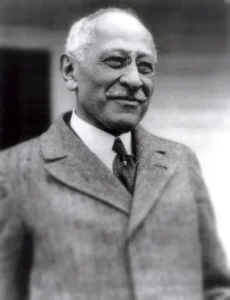
The political climate is hardly favorable for a new national park centered on racial justice.
President Donald Trump this week called for sweeping budget cuts to the National Park Service and, in January, for the removal of slavery-related exhibits he said portray American history in a “woke manner.”
Yet a campaign to establish a national historic park honoring Julius Rosenwald — the Jewish philanthropist who funded schools for rural Black communities during the Jim Crow era — is pressing ahead.
Dorothy Canter, who launched the campaign in 2018, sees an opening for the park to finally become a reality. In February, Sen. Dick Durbin (D-Ill.) introduced legislation to create the Rosenwald National Historic Park, backed by seven Democratic co-sponsors.
But advancing the bill out of committee — much less to President Trump’s desk — will require Republican support. At a time when even the mildest celebration of diversity can be deemed an excess of the “woke” left, Canter is betting that Rosenwald’s story will be the exception.
“The environment is not the best, obviously, but this is a story that should appeal to anyone,” Canter told the Forward. “This is a positive story. Nobody can say it’s DEI.”
Rosenwald’s Legacy
Rosenwald was born in Springfield, Illinois, the son of German-Jewish immigrants. At 16, he dropped out of high school to pursue the family clothing business.
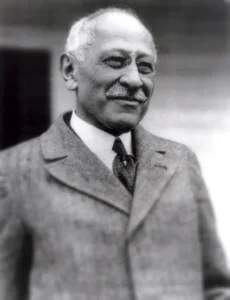
In 1895, he invested $37,500 in Sears, Roebuck & Company — a decision that would ultimately make him one of the wealthiest men in the United States in the early 20th century.
But guided by the Jewish value of tzedakah, he gave much of that fortune away. In 1911, he met Booker T. Washington, the formerly enslaved founder of the Tuskegee Institute, a training center for African American teachers. Washington urged Rosenwald to invest in Black education in the South.
Rosenwald would go on to help fund nearly 5,000 schools for Black students across 15 states. By 1928, one in three Black students in the rural South attended a Rosenwald school. Alumni of Rosenwald schools would include congressman John Lewis, poet Maya Angelou and civil rights activist Medgar Evers.
Canter, a retired biophysicist and national parks enthusiast, first learned about Rosenwald as an adult through a documentary — and was struck that this story of Black-Jewish cooperation was not more widely known.
“I knew that there was not one national park unit among the more than 400 that commemorated the life and legacy of a Jewish American, or told the story of Rosenwald schools,” Canter said. “And I can tell you that today, almost 11 years later, that is still the case.”
There are national historic sites and monuments honoring Jewish Americans, including the Rosenwald family home and the David Berger National Memorial. But a national historic park — a designation that often spans multiple sites and has greater cultural cache — has yet to honor a Jewish American.
Part of Rosenwald’s relative obscurity, Canter said, stems from his own philosophy. Rosenwald embraced a “give while you live” approach and did not believe in permanent endowments, requiring that the Rosenwald Fund spend all of its money within 25 years of his death.
That approach has yielded severe financial challenges decades later. Today, only about 10% of the more than 5,000 Rosenwald school structures remain, according to Brent Leggs, executive director of the African American Cultural Heritage Action Fund at the National Trust for Historic Preservation.
The Trust placed Rosenwald schools on its 2002 list of America’s 11 most endangered historic places, warning of an “urgent crisis of erasure, abandonment and deterioration.”
Many of the schools were built in rural areas that have since been abandoned, Leggs said, adding that the buildings were made of wood that has slowly decayed. The loss is personal for him: Upon researching the history for his job, Leggs discovered that both of his parents attended Rosenwald schools in Kentucky.
“It was a transcendent moment for me,” he said, “because I remember being at a school building that was literally vanishing history.”
The surviving schools have mixed ownership, Leggs said. Some act as local community centers, while others operate as commercial or office spaces, such as the Caldwell Rosenwald School in Huntersville, North Carolina — today, home to Burgess Supply, a carpet store.
A bipartisan issue?
In the final days of his first presidency, Trump gave a significant boost to the campaign for a Rosenwald national park.
He signed the Julius Rosenwald and the Rosenwald Schools Act into law, directing the Department of Interior to conduct a study assessing the feasibility of establishing the park. Eight Republicans had cosponsored the bill, and it passed with broad bipartisan support.
The study “resulted in positive findings,” concluding that the San Domingo School in Sharptown, Maryland, met all the criteria for a national park and recommending that Congress create a grant program to support the preservation of additional Rosenwald schools.
But Republican backing for a national park honoring Rosenwald’s legacy now appears to have waned.
The Forward called and emailed the three Republicans who cosponsored the 2020 bill and are still in office. None responded to the Forward’s question about their position on Durbin’s bill to establish the Rosenwald park.
A White House spokesperson directed the Forward to the national historic site at the Rosenwald family home but declined to say whether Trump was supportive of the national park commemorating Rosenwald schools.
Rep. Andy Harris, a Maryland Republican, went so far as to send a letter to President Joe Biden in 2024 expressing his support for “the expedited designation of a Julius Rosenwald And Rosenwald Schools National Park.”
His office did not respond to the Forward’s request for comment.
Nor did the office of Tim Scott, the Republican senator from South Carolina who previously advertised his support for the restoration of Rosenwald schools in his state. “Booker T. Washington helped build thousands of schools for Black children, advancing impactful educational opportunities throughout the South,” he tweeted in February 2024. “With the restoration of Rosenwald School, his legacy lives on in South Carolina. #BlackHistoryMonth”
‘A story for our time’
Durbin’s bill arrives just as the agency that would create a park faces drastic proposed cuts: Trump this week proposed funding for the already understaffed National Park Service be reduced by $736 million, or 25% of its budget.
Meanwhile, the president has sought to recast historical narratives at existing parks. In January, Trump ordered the National Park Service dismantle an exhibit about nine people enslaved by George Washington. Earlier this month, the Trump administration directed the removal of a pride flag from the Stonewall National Monument in New York City.
Yet Rosenwald’s story doesn’t fit neatly into the culture-war themes that Trump has singled out. Rosenwald himself was a political conservative, a laissez-faire businessman and steadfast Republican who believed in fostering economic self-sufficiency through education.
Dennis Ross, a former Republican congressman from Florida who retired from office in 2019 and has supported the Rosenwald park campaign, told the Forward he sees Rosenwald’s story as one conservatives should embrace.
“I’ve heard the argument that this is a way of trying to backdoor DEI. I totally disagree and take issue with that. This is showing what American history is all about,” Ross said. “If you were to dwell on the oppression of slavery, then maybe that argument might work. But I think the important thing is to look at the transition, the evolution from slavery to success.”
Canter is also optimistic, and said she plans to meet with a Republican senator — she declined to provide a name — whose staff has expressed interest in the park. As to whether Trump would sign the bill: She hopes the campaign will have the opportunity to put it on his desk.
“People with different backgrounds and cultures were able to come together, work together, find common ground and move this country forward,” Canter said. “So if that isn’t a story for our time, I don’t know what is.”
The post This national park would honor a Jewish philanthropist — if Republicans get back on board appeared first on The Forward.
Uncategorized
Trump Says Gas Prices May Remain High Through November Midterm Election

U.S. President Donald Trump takes questions from reporters while Vice President JD Vance and Secretary of State Marco Rubio look on, as they attend a meeting with oil industry executives, at the White House in Washington, D.C., U.S., January 9, 2026. REUTERS/Kevin Lamarque
US President Donald Trump said on Sunday that the price of oil and gasoline may remain high through November’s midterm elections, a rare acknowledgement of the potential political fallout from his decision to attack Iran six weeks ago.
“It could be, or the same, or maybe a little bit higher, but it should be around the same,” Trump, who is in Miami for the weekend, told Fox News’ “Sunday Morning Futures With Maria Bartiromo” when asked whether the cost of oil and gas would be lower by the fall.
The average price for regular gas at US service stations has exceeded $4 per gallon for most of April, according to data from GasBuddy. Trump’s comments on Sunday came after weeks of asserting that the spike in prices is a short-term phenomenon, though his top advisers are cognizant of the war’s economic impacts, officials have said.
Earlier on Sunday, Trump announced on social media that the US Navy would blockade the Strait of Hormuz and intercept any ship that paid a crossing fee to Iran, after marathon talks between the US and Iran in Pakistan over the weekend did not yield a peace deal.
“No one who pays an illegal toll will have safe passage on the high seas,” he wrote on Truth Social.
Any US blockade is likely to add more uncertainty to the eventual resolution of the conflict, which is currently subject to a tenuous two-week ceasefire. The new tactic is in response to Iran’s own closure of the strait’s critical shipping lanes, which has caused global oil prices to skyrocket about 50%.
UNPOPULAR WAR HITS TRUMP’S APPROVAL
The war began on February 28, when the US launched a joint bombing campaign with Israel against Iran. The scope quickly expanded as Iran and its allies attacked nearby countries, while Israel targeted Hezbollah with massive strikes in Lebanon.
The war has buffeted global financial markets and caused thousands of civilian deaths, mostly in Iran and Lebanon.
Trump’s political standing at home has suffered, with polls showing the war is unpopular among most Americans, who are frustrated by rising gasoline prices.
The president’s approval rating has hit the lowest levels of his second term in office, raising concern among Republicans that his party is poised to lose control of Congress in the midterm elections. A Democratic majority in either chamber could launch investigations into the Trump administration while blocking much of his legislative agenda.
US Senator Mark Warner of Virginia, the ranking Democrat on the Senate Intelligence Committee, questioned the strategy behind Trump’s planned blockade.
“I don’t understand how blockading the strait is going to somehow push the Iranians into opening it,” he told CNN’s “State of the Union” on Sunday.
In a separate appearance on CBS’s “Face the Nation,” Warner said the blockade would not undermine Iranian control of the waterway.
“The Iranians have hundreds of speedboats where they can still mine the strait or put bombs against tankers in closing the strait,” he said. “How is that going to ever bring down gas prices?”
Although Trump has repeatedly said that the war would be over soon, Republican US Senator Ron Johnson of Wisconsin told ABC News’ “This Week” on Sunday that achieving US aims in Iran “could take a long time.”
“It’s going to be a long-term project,” said Johnson, who was not asked about Trump’s proposed blockade. “I never thought this would be easy.”
Uncategorized
Israel’s Ben-Gvir Visits Flashpoint Al-Aqsa Mosque Compound

Israeli politician Itamar Ben-Gvir walks inside the Knesset, in Jerusalem, Oct. 13, 2025. Photo: Chip Somodevilla/Pool via REUTERS
Israel’s far-right police minister Itamar Ben-Gvir visited the flashpoint Al-Aqsa Mosque compound in Jerusalem on Sunday, saying he was seeking greater access for Jewish worshipers and drawing condemnation from Jordan and the Palestinians.
The compound in Jerusalem’s walled Old City is one of the most sensitive sites in the Middle East. Known to Jews as Temple Mount, it is the most sacred site in Judaism and is Islam’s third-holiest site.
Under a delicate, decades-old arrangement with Muslim authorities, it is administered by a Jordanian religious foundation and Jews can visit but may not pray there.
Suggestions that Israel would alter the rules have sparked outrage among Muslims and ignited violence in the past.
“Today, I feel like the owner here,” National Security Minister Ben-Gvir said in a video filmed at the site and distributed by his office. “There is still more to do, more to improve. I keep pushing the Prime Minister (Benjamin Netanyahu) to do more and more — we must keep rising higher and higher.”
A statement from the Jordanian foreign ministry said it considered Ben-Gvir’s visit to be a violation of the status quo agreement at the site and “a desecration of its sanctity, a condemnable escalation and an unacceptable provocation.”
The office of Palestinian president, Mahmoud Abbas, said such actions could further destabilize the region.
Ben-Gvir’s spokesman said the minister was seeking greater access and prayer permits for Jewish visitors. He also said that Ben-Gvir had prayed at the site.
There was no immediate comment from Netanyahu’s office. Previous such visits and statements by Ben-Gvir have prompted Netanyahu announcements saying that there is no change in Israel’s policy of keeping the status quo.
Muslim, Christian and Jewish sites, including Al-Aqsa had been largely closed to the public during the Iran war. There was no immediate sign of unrest on Sunday after Ben-Gvir’s visit.