


Uncategorized
As Qatar Emir Visits Canada, Just What is Doha Up To?
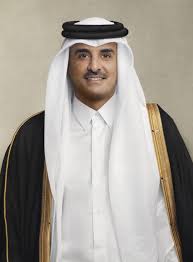
By HENRY SREBRNIK (Sept. 19/24) Qatar…home of Hamas leaders, Al-Jazeera, host of soccer’s 2022 World Cup, and wealth beyond measure. And everyone’s favourite centre for “negotiations” to end the war Hamas unleashed on Israel a year ago. It’s become everyone’s go-to country, a veritable “light unto the nations.”
However, as the 1946 song “Put the Blame on Mame” has it, in a different context, of course, “That’s the story that went around, but here’s the real lowdown” … about this duplicitous Persian Gulf emirate.
Even before the Gaza war began, there was an upswing of commentary celebrating a shift in the policies and behavior of Qatar: away from promoting and subsidizing radical Islamist groups, and towards “deconfliction” and moderation.
Sheikh Tamim bin Hamad Al Thani, the country’s emir, has been basking in the glow of international approval, depicting the country as a global influencer and peacemaker. The Qataris want to make themselves indispensable.
It plays into Doha’s ongoing attempts to create an illusion of rebranding as a moderating actor in the Middle East and beyond, pushed by various propagandists in the West on Qatar’s payroll, including more than a few American university centres and departments awash in Qatari money.
The emir and other officials spent two days in Canada Sept. 17-19, meeting with Prime Minister Justin Trudeau and cabinet ministers. The Gaza war was on the agenda, of course. Indeed, Jewish-Canadian leaders urged Trudeau to criticize him over his patronage of Hamas. But being able to tap into Qatar’s wealth via business and trade was more likely on Trudeau’s mind.
Qatar has one of the highest per capita incomes in the world, at $110,000 a year. And while its total population is some 2.7 million, most of these are guest workers, including European lawyers and consultants at the top of the scale, and at the bottom South Asian labourers. Only some 313,000 are native Qataris, the ones who benefit from the riches it derives from the sale of oil and gas.
The Peninsula, an English language daily newspaper published in Doha, ran an article on the occasion of the emir’s visit by noting the expanding trade and investment cooperation between Canada and Qatar, especially with the signing of a Memorandum of Understanding (MoU) in June between the Qatar Financial Center and the Canada Arab Business Council, a non-profit organization that aims to enhance trade and investment relations between Canada and the Arab world.
The MoU “aims to establish an integrated framework for cooperation and coordination in specific sectors through joint initiatives and the exchange of information and expertise, with a focus on stimulating growth and promoting innovation in areas such as financial services and professional business services.” Ahmed Hussen, Minister of International Development participated in a signing ceremony with Lolwah bint Rashid Al-Khater, Qatar’s Minister of State for International Cooperation.
More than 9,000 Canadian expatriates live in Qatar, working in Canadian and Qatari companies and institutions. From January to July, Canada exported goods valued at $103.45 million to Qatar, while Qatar’s exports to Canada amounted to $90.27 million.
There is also a partnership in academic programs, as the University of Calgary has been in Doha since 2006, offering a Bachelor of Nursing program, along with the College of the North Atlantic, which transformed into the University of Doha for Science and Technology. Furthermore, there are several Doha-based schools that offer Canadian curricula.
In their meeting, Sheikh Tamim expressed his aspiration to work with Trudeau to advance their bilateral cooperation across multiple sectors in order to “contribute to enhancing regional and global peace and stability.” Bilateral relations between the two countries were discussed, especially in the fields of investment, economy and international cooperation, “in addition to developments and situations in the Gaza Strip and the occupied Palestinian territories.”
Qatar has been very successful in its efforts to shape public opinion in Canada, as well as in the far more important United States. The amount of money that Qatar has poured into universities, schools, educational organizations, think tanks, and media across America, and the number of initiatives that Qatar uses to influence American opinion, is overwhelming.
According to a 2022 study from the National Association of Scholars, Qatar is the largest foreign donor to American universities. It found that between 2001 and 2021, the petrostate donated a whopping $4.7 billion to U.S. colleges. The largest recipients are some of America’s most prestigious institutions of higher learning. They include Carnegie Mellon University, Ivy League Cornell University, Georgetown University in Washington, Virginia Commonwealth University, and Texas A & M. These schools have partnered with the regime to build campuses in Doha’s “education city,” a special district of the capital that hosts satellite colleges for American universities. (Texas A&M decided earlier this year to shutter its branch campus in Qatar.)
Georgetown University in Qatar, for instance, was hosting the “Reimagining Palestine” conference Sept. 20-22. The event engages scholars, experts, and the public “in timely and relevant dialogues on globally significant issues,” according to a description of the gathering. One of the speakers, Wadah Khanfar, “was active in the Hamas movement and was one of its most prominent leaders in the movement’s office in Sudan,” the Raya Media Network, a Palestinian outlet, tells us. In the months following Oct. 7, the campus has hosted a variety of seemingly anti-Israel events.
Since 2008, Qatar has donated nearly $602 million to Northwestern University, whose journalism school is ranked as one of the best in the world, to establish a school of journalism in Qatar. The Northwestern University campus in Qatar and Qatari broadcaster Al-Jazeera in 2013 signed a Memorandum of Understanding to “further facilitate collaboration and knowledge transfer between two of Qatar’s foremost media organizations.” Are Northwestern’s interests really aligned with Qatar?
Qatari state-financed entities also often fund individual scholars or programs in the United States without official disclosure or being directly traceable to a government source, thus avoiding public scrutiny. For example, Ivy League Yale University disclosed only $284,668 in funding from Qatar between 2010 and 2022. Researchers at the Institute for the Study of Global Antisemitism and Policy (ISGAP) in a report released in June, though, found that this amount reflected only a small fraction of the money and services the university and its scholars had in fact received over that period. The most common channel for hard-to-track Qatari support for Yale came from individual research grants originating from the Qatar National Research Fund, and their report found 11 Yale-linked QNRF grants which came to at least $15,925,711.
Recent research from the Network Contagion Research Institute indicated that at least 200 American universities illegally withheld information about approximately $13 billion in Qatari contributions. Also, according to the report, from 2015 to 2020 institutions that accepted money from Middle Eastern donors had on average, 300 percent more antisemitic incidents than those institutions that did not.
Overall, the report found that “a massive influx of foreign, concealed donations to American institutions of higher learning, much of it from authoritarian regimes with notable support from Middle Eastern sources, reflects or supports heightened levels of intolerance towards Jews, open inquiry and free expression.”
Much of Doha’s engagement with the world is run out of the Qatar Meeting, Incentive, Conference and Exhibition (MICE) Development Institute (QMDI), which promotes Qatar as a good place for business. The annual Doha Forum gathers major policymakers from around the world.
Qatar’s influence-buying strategies are a textbook example of how to transform cash into “soft” power. The relationship between one of Washington, D.C.’s top think tanks and Qatar, for example, began in 2002, when the emirate underwrote a Doha conference featuring then Qatari Foreign Minister Hamad bin Jassem Al Thani and former U.S. Ambassador to Israel Martin Indyk, at the time the director of the Saban Center for Middle East Policy at Brookings. (Hamad oversaw Qatar’s $230 billion sovereign wealth fund until 2013.) In 2007, Brookings followed up by opening a centre on Doha. It didn’t end well. In 2021 the institute ended its relationship with Qatar amidst an ongoing FBI investigation.
Still, Washington treads carefully when it comes to criticizing Qatar. It’s not just about money. After all, the Al-Udaid Air Base is home to the U.S. military’s Central Command (CENTCOM), and the country is just across the Persian Gulf from Iran. In fact, Washington’s relationship with Qatar is so close that in 2022 the White House officially designated the emirate a “major non-NATO ally.” The Qataris, realizing that their very existence would be threatened were the U.S. to relocate its CENTCOM operations to the UAE or Saudi Arabia, in January hastened to nail down the agreement for another decade.
Yoni Ben-Menachem, a senior researcher at the Jerusalem Center for Security and Foreign Affairs, told the Jewish News Service (JNS) that the Gulf country is more dangerous than Hamas or Hezbollah since it is extraordinarily wealthy and thus in a position to influence U.S. administrations.
Qatar has for many years been involved in financing the campaigns of the Democratic Party, he claimed, “especially Hillary Clinton’s campaign” in 2016. He added that former U.S. President Bill Clinton is known to have flown to Qatar to bring back suitcases full of cash.
According to Jonathan Ruhe, director of foreign policy at the Jewish Institute for National Security of America (JINSA), Qatar has portrayed itself as “indispensable to U.S. interests in the Middle East, including negotiations with the Taliban, reconstruction aid for past Gaza conflicts, and building the massive Al-Udeid base for U.S. forces.”
Yet although it hosts the Pentagon’s regional command, Qatar has long supported terrorism. For decades, it has opened its doors to Islamist terrorists, Taliban warlords and African insurgents. Doha housed the Taliban’s political office before that group returned to power in Afghanistan in 2021.
Beginning in 2012, the Israeli government allowed Qatar to deliver cash to Gaza. Over the next nine years, Qatar provided $1.5 billion. Prior to the outbreak of the present conflict, Doha subsidized Hamas to the tune of $360 million to $480 million a year. With one third of that money, Qatar bought Egyptian fuel that Cairo then shipped into Gaza, where Hamas sold it and pocketed its revenue. Another third went to impoverished Gazan families, while the last third paid the salaries of the Hamas bureaucracy.
The leaders of Hamas, including Khaled Mashaal and the late Ismail Haniyeh, who was chairman of the Hamas Political Bureau until assassinated by Israel in July, have been regular guests in Doha, living in luxury. (The emir sat in the front row with mourners during Haniyeh’s funeral in Doha.) Qatar has defended Hamas’s presence in the country.
“This was started to be used as a way of communicating and bringing peace and calm into the region, not to instigate any war,” Prime Minister Mohammed bin Abdulrahman Al Thani told U.S. Secretary of State Antony Blinken last October. “And this is the purpose of that office.” Blinken seemed to buy this. At a press conference in Doha in February, he asserted that “we’re very fortunate to have Qatar as a partner.”
As far back as 2007, when Hamas seized control of Gaza, Qatar recognized that “adopting” the group would be a worthwhile opportunity: connections with Hamas in Gaza grants Qatar influence and status in the Middle East and beyond. In addition, they bolster the popular Arab perception of Doha as working for the Palestinian cause. In 2012, the emir became the first head of state to visit Gaza, pledging $400 million to Hamas. At the same time, the Qataris became the exclusive mediators between Israel and Hamas.
The U.S. has accused the Qataris of harboring members of Iran’s Islamic Revolutionary Guards Corp (IRGC). But at the same time the Qataris are an important intermediary between America and Iran. Doha has enjoyed good relations with the Biden administration, which it helped in the American hasty withdrawal from Afghanistan three years ago.
While organized as a private company, the Al-Jazeera television network is the voice of Qatar’s regime. Founded in 1996 and financed by the then-emir of Qatar, it has described terrorist attacks that killed Israeli non-combatants as martyrdom operations and even posted articles describing Israel as “the Zionist entity.” For years, Al-Jazeera aired all of Osama bin Laden’s speeches. The late Muslim Brotherhood spiritual leader Yusuf Al-Qaradawi was based in Doha and for years hosted a prime-time program on the network. The war on Israel was declared on Al-Jazeera by Hamas military commander Muhammad Deif last October 7. Its operations in Israel were finally terminated by Jerusalem in May.
Qatar has been using the immense wealth it has accumulated to turn Al-Jazeera into an international media conglomerate, spreading Muslim Brotherhood propaganda, Hamas’ original sponsor, on a global scale. The Muslim Brotherhood was founded in Egypt in 1928 by the cleric Hassan al-Banna as a reaction to his perception that the Muslim world had become week in relation to the West. The royal family of Qatar has since been using the Muslim Brotherhood to minimize political opposition against them. In exchange for allowing the Brotherhood to use the country as a base for its international operations, the Brotherhood makes sure that there is no political threat based on organized religion against the Qatari monarchy.
A major shock to Qatar’s economy occurred when some Gulf Cooperation Council members — Bahrain, Saudi Arabia, and the United Arab Emirates — imposed an embargo on Qatar from 2017 to 2021. The reason for the embargo was Qatar’s support for the Brotherhood.
Qatar owns other news media that are equally awful. The London-based daily newspaper Al-Quds Al-Arabi in June published an article entitled “War Criminal Blinken Wages Diplomatic Campaign to Eliminate Palestinian Resistance and Buy Time for Israeli War in Gaza.”
Qatar is not a neutral agent, despite its attempts to portray itself as such. Time and again, it has supported the region’s most radical nations and paramilitaries, all to the detriment of American and Western interests. Its malign influence activities the United States reflect the broader issue of foreign manipulation in America’s political landscape.
“Qatar has been playing a dual role since the beginning of the Gaza war. On the one hand, it is a well-known supporter of Hamas, and even finances it with a lot of money, and on the other hand, it is trying to help in the deal for the release of the Israeli hostages,” remarked Dr. Udi Levy, a former senior official of Israel’s Mossad spy agency in April. But the U.S. relationship with Qatar will continue as long as the American government finds it useful in the on-again off-again negotiations to have Hamas release the remaining Israeli hostages.
Henry Srebrnik is a professor of political science at the University of Prince Edward Island.








Uncategorized
Israelis head to the polls in country’s most consequential election in decades
(JTA) — JERUSALEM – More than 7 million Israelis are eligible to vote Tuesday in an election that many are calling the most consequential in the country’s 78-year history.
It’s the first parliamentary election since Hamas’s Oct. 7, 2023, mass attack and comes amid security concerns that Prime Minister Benjamin Netanyahu on Sunday framed as a fight for “Israel’s existence.”
Yet, political analysts who spoke to the Jewish Telegraphic Agency in recent days said the vote for the 26th Knesset, Israel’s parliament, was more about domestic issues, namely the future character of the country as a democratic and liberal state.
“It’s a referendum about Israeli democracy,” said Udi Sommer, a professor of political science who heads the Barak Leadership Center at Tel Aviv University. “It’s also about Netanyahu’s performance and accountability for the people who were in charge on Oct. 7.”
The question of whether Netanyahu and his coalition of far-right and ultra-Orthodox parties, which were in office when the Hamas attacks occurred, should remain in power or whether it is time for a change appears to be at the heart of the election.
Facing off against Netanyahu’s bloc is an ideologically diverse group of opposition parties led by former army chief Gadi Eisenkot.
“This election is consequential for both sides,” Tani Frank, director of the Shalom Hartman Institute’s Center for Judaism and State Policy, told JTA.
“For Netanyahu, it could be his last major opportunity — not necessarily because he has set a retirement date, but because he may see the remainder of the Trump administration as a final window to secure what he views as long-term strategic gains for Israel, particularly completing the mission in Iran and expanding and consolidating the Abraham Accords,” Frank said.
“For the opposition, the election is framed as an urgent effort to protect Israel’s democracy and international standing, restore effective governance, address the rapidly growing Haredi community, and ensure its fuller integration into Israeli society,” he added.
According to data shared Sunday by the Central Elections Committee, roughly 7.3 million Israelis are eligible to vote in the election. Additionally, there are estimates that tens of thousands of Israeli nationals living abroad have returned to cast their ballots – literally a slip of paper placed inside a blue envelope. Voting is conducted in person, generally at the polling station assigned to the voter’s registered address.
Election Day is a national holiday in Israel, with most workplaces and schools closed. Shops and entertainment venues, however, remain open, with some stores offering Election Day sales, lending the day a celebratory feel.
According to the Central Elections Committee, 12,018 polling stations will be set up across the country, with around 18,000 ballot boxes and 450 million ballot papers printed for the election. The papers bear the letters or acronyms identifying the competing party lists.
Thousands of election workers and volunteers will staff the polling stations, while around 20,000 police officers will be deployed nationwide “to ensure that all eligible voters can safely reach the thousands of polling stations across the country and exercise their right to vote,” police said in a statement on Monday.
The election committee also said approximately 15,000 cameras would be used by election-integrity inspectors to help detect irregularities at polling stations. Police said their cyber units would work to prevent the spread of disinformation online.
These measures come as the country prepares for a closer-than-ever and high-stakes election.
According to the final set of public opinion polls, published Friday, neither of the main political blocs is projected to secure the 61 seats needed for a majority in the 120-member Knesset.
Although Israelis do not vote directly for prime minister, Netanyahu and Eisenkot are the leading contenders to form the next government, though a few other prominent leaders could emerge. The outcome will depend on which party leaders can assemble a parliamentary majority.
Most polls published in the final days of the campaign put Netanyahu’s bloc at around 50 seats, while Eisenkot’s Yashar party and its potential partners appear better positioned but still short of a majority of 61 seats. The two Arab-majority political groupings, the Joint List and Ra’am, are projected to win a combined 14 or 15 seats.
Neither Arab grouping is expected to join a government led by Netanyahu. Some political analysts believe one or both could nevertheless support an opposition-led minority government, although the terms of any such arrangement remain uncertain.
Three other parties are also hovering near the electoral threshold: Amcha Yisrael, the Reservists and the Haredi Public Party. Each must win at least 3.25% of the valid votes to enter the Knesset. If one or more crosses that threshold, it could significantly alter the distribution of seats and the prospects for forming a government.
Frank said the most likely scenario was that neither bloc would win a clear majority.
“A key question, then, is who remains in power if Israel heads to another election. Netanyahu’s aim would be to stay on as prime minister during additional rounds, as happened in 2019–2020,” he said. “The change bloc, meanwhile, would need to increase its numbers enough to replace the government without depending on Arab parties — particularly the Joint List — even if only to enable the transition rather than form a stable long-term coalition.”
This article originally appeared on JTA.org.
The post Israelis head to the polls in country’s most consequential election in decades appeared first on The Forward.
Uncategorized
Polls show a deadlock, but betting markets strongly favor Eisenkot to replace Netanyahu
(JTA) — Traders on the Kalshi and Polymarket prediction markets are betting that former Israel Defense Forces chief of staff Gadi Eisenkot will replace incumbent Benjamin Netanyahu as Israel’s next prime minister following Tuesday’s election.
That assessment comes despite polls released last week showing that neither candidate has a clear path to a governing coalition with a 61-seat majority.
Most polls predict what has been dubbed the “change bloc” led by Eisenkot at 52 to 56 seats, while Netanyahu’s coalition is polling at around 50 seats.
Kalshi traders, however, give Eisenkot a 52% chance of becoming Israel’s next prime minister, followed by Netanyahu at 28% and the former prime minister Naftali Bennett at 10%. On Polymarket, Eisenkot’s chances stand at 58% and Netanyahu’s at 27%, with no other candidate above 15%.
Moran Ofir, a professor at the University of Haifa’s Faculty of Law who has researched prediction markets, explained the discrepancy, telling the Jewish Telegraphic Agency that there are two fundamental differences between polling and prediction markets.
Polls measure which party voters intend to support, while prediction markets ask a different question: Who will become prime minister?
Secondly, she said that the methodologies are fundamentally different. While polls rely on samples designed to be representative of the electorate, Polymarket reflects only those who choose to put their money on an election outcome.
Also, Polymarket’s percentages represent implied probabilities of winning, rather than shares of voter support.
At first glance, Ofir said, the fact that Polymarket participants have to put money behind their bets should protect the platform against deliberate misrepresentation, to which polls can be vulnerable.
“The promise of these platforms, like Polymarket, Kalshi or PredictIt, is to aggregate the wisdom of the crowd faithfully,” she said.
But that vision is far from the reality on the ground.
In a study conducted by Ofir, Joshua Mitts, a professor of law at Columbia Law School, and Dan Zimmermann, chief intelligence officer at Betting Intelligence (BETINT), the researchers analyzed 1.2 million transactions. They found that 18% of all the money backing Netanyahu on Polymarket was concentrated in a single account, while just seven accounts held 29% of the money bet against him.
“What we see in our research is that the Israeli election market on Polymarket is not a market driven by the wisdom of the crowd, but one dominated by a very small number of relatively large players putting up very large sums of money,” Ofir said.
She described the election betting market as “fragile and highly susceptible to manipulation,” adding that participants may not be acting to maximize profits, but rather to influence public opinion ahead of the election.
“Perhaps Polymarket was, for years, a platform that reflected the wisdom of the crowd. But powerful actors with vested interests identified it, and today, in the world of elections, it has become a platform where large and powerful players step in to shape public perception,” Ofir said.
Another example identified in the study took place last summer. Two accounts placed bets on Ofer Winter, the leader of the Amcha Yisrael party, which was hovering around 3.25%, Israel’s electoral threshold to qualify for seats in the Knesset. The researchers identified two newly created betting accounts that wagered $3,200 on Winter becoming prime minister. The bets briefly pushed him above Avigdor Lieberman, an established Israeli political figure who heads the Yisrael Beytenu party, in the market’s ranking of candidates’ chances of becoming prime minister.
“Two days after the party’s launch: Ofer Winter overtakes Lieberman,” a major Israeli newspaper declared just hours later. Ofir suspects the bets were intended to create a misleading impression that would help persuade Winter’s supporters that his party could clear the electoral threshold.
Ofir said the researchers interpreted betting patterns by the account that placed large wagers on Netanyahu as evidence of possible access to nonpublic information. Other accounts that wagered substantial sums showed similar patterns related to the war with Iran, she said.
Brazil and Serbia held elections over the weekend. On Polymarket, Serbian President Aleksandar Vučić had a 72% chance of winning. In Brazil, incumbent President Luiz Inácio Lula da Silva had just a 17% chance of victory.
Vučić lost. Lula won.
The post Polls show a deadlock, but betting markets strongly favor Eisenkot to replace Netanyahu appeared first on The Forward.
Uncategorized
‘We need to save our country’: Bay Area Israelis fly home to vote in pivotal election
(JTA) — This article was produced by J.–The Jewish News of Northern California in partnership with the Jewish Telegraphic Agency.
ABOARD EL AL FLIGHT 48 — Ayelet Frank was one of the first people to check in on Sunday, Oct. 25, for a nonstop flight from San Francisco to Tel Aviv. A resident of Redwood City, California since she left Israel in 1984, she is flying back for one reason: to vote in the Oct. 27 election.
It’s the first time in her more than 40 years abroad that she is going back to cast a ballot.
“This election is unique. It’s very different than any other,” she told J. “It’s about Israel’s very existence. This election is between the destruction of the country, or building it up in a positive way.”
A native of Kibbutz Ein Harod in the Jezreel Valley, she is spending only two days in Israel before returning to California. It’s a long way to travel just to vote, but, she said, “It’s that important.”
Frank was one of 271 passengers on El Al flight 48, which landed in Israel less than 24 hours before the polls open. It was the first nonstop flight from San Francisco to Israel since the Oct. 7, 2023 Hamas attack. Many on board were part of what one organizing group estimates is a wave of 67,000 Israelis abroad flying home for an election widely seen as a referendum on Prime Minister Benjamin Netanyahu. In a tight race, the Israel Democracy Institute said, that many voters could swing nearly two Knesset seats.
Those travelers are spending thousands of dollars for the chance to cast their ballots in what many are calling the most consequential election in Israel’s history.
The mood in the boarding area at the San Francisco International Airport was buoyant. Lots of people seemed to know one another and were running up to hug friends and chat excitedly. There were families with children and plenty of babies in strollers and carriers. There were a smattering of black kippahs as well as one Hasidic family. There were also Israeli residents returning home from vacation in the Bay Area. But judging from the conversations as well as from people interviewed by J., most passengers were Israeli expats flying back to vote.
Capitola resident Udi Pardo left Israel in 1983, a year before Frank. Most of his family still lives in Israel and he visits twice a year. But for him, this was his first time flying home for an election.
“I never tried to go and vote before because I don’t live there,” he said. “But now it’s a national emergency. I can’t not go.”
“Israel is on the verge of an abyss,” he continued, saying that he has not yet decided between Gadi Eisenkot’s Yashar and Naftali Bennett’s B’Yachad — both center-right parties opposed to Netanyahu’s government. “We need to bring back sanity to Israel and to Israeli politics and reestablish liberal democracy because it’s about to disappear.”
The Oct. 27 election is the first since the Hamas attack and the war that followed. The stakes are so high, pundits say, that Israelis living abroad are flying home to vote in what appear to be unprecedented numbers. Israel does not allow absentee voting, except for diplomats and other state employees posted abroad, so expats who want to cast a ballot must do so in person.
The 67,000 estimate comes from Fly & Vote, a project of the U.S.-based America Israel Democracy Coalition to help expats navigate the logistics of participating in the election. The group cautioned that the figure is based on a voluntary August survey and its own registration data, not a count of arrivals. No comparable data exists for previous elections.
Israel’s Likud-led government has tried to impede Fly & Vote’s efforts with legal action, which was blocked in October by Israel’s Supreme Court. The government reportedly also considered closing or slowing down traffic at Ben Gurion International Airport in the days before the election. Analysts say this is because Netanyahu and his allies believe that many, if not most, of those responding to Fly & Vote’s initiative will vote against the current government.
Indeed, that seemed to be true of most of the expats on this El Al flight from San Francisco. Every person interviewed spoke about the “need for change” in Israel’s government, and those who declared their support for candidates mentioned either Eisenkot or leaders of other anti-Netanyahu parties. The Silicon Valley-based Israeli expat group UnXeptable, which emerged to protest Netanyahu’s judicial overhaul and has become a major anti-Netanyahu voice globally, had a large presence on the flight, with about a dozen key members sporting light blue T-shirts emblazoned with the date of the election and the Hebrew words for “Flight for Change.”
They were handing out shirts to any other passengers who would take them, some of whom put them on right away. Local TV stations showed up for an UnXeptable press conference held at the check-in counter.
Roni Bar-Niv of Sunnyvale is one of several people interviewed who is spending just a few days in Israel, in her case enough time to vote, turn around and fly back to the Hebrew-language school she runs near her Silicon Valley home.
In the 26 years since she left Givatayim, a suburb of Tel Aviv, Bar-Niv said, she visits Israel four or five times a year but she, too, has never flown back to vote until now.
“I thought I didn’t need to vote because I don’t live there,” she said. But everything changed, she added, after Oct. 7. “If we pay taxes — we have an apartment there — and if we send money for the war effort, and if we have children there — my daughter made aliyah five years ago — we need to go and vote,” she said. “The direction our country is going is very bad, for Israelis living there and for us also.”
Berkeley resident Rivka Amado left Jerusalem 22 years ago. A retired ethics professor and Ladino singer, she said it’s the duty of Israeli expats to show up.
“This election is critical, and it’s important for every Israeli to vote, whether you live here or there,” she said.
The surge in emigration since Oct. 7 has also swelled the pool of Israelis abroad. Some 82,800 Israelis left the country in 2024, according to Israel’s Central Bureau of Statistics, up from 55,000 in 2023. More than 69,000 left in 2025, the Times of Israel reported, the second straight year that emigration outpaced immigration.
Gilad Kariv, an opposition lawmaker from the Democrats party who chairs the Knesset’s Diaspora Affairs Committee, has warned of a “tsunami of emigration,” according to the Jerusalem Post. He has called it a “strategic threat to the future of Israel” tied to the government’s conduct.
J Street regional director Shimrit Braun Kamin (left) hugs Galit Lipsitz Goldental near the El Al counter at San Francisco International Airport, Oct. 25, 2026. (Aaron Levy-Wolins/J. Staff/Report for America)
Experts point to the war in Gaza and opposition to Netanyahu’s judicial overhaul as driving forces, suggesting that many recent emigrants are critical of the government.
Thirty-seven parties are on the Oct. 27 ballot, but only about a dozen are expected to clear the 3.25% electoral threshold needed to win Knesset seats. With Netanyahu’s Likud party polling neck-and-neck with his main opponent, Eisenkot’s Yashar party — the final pre-election polls show Yashar winning 22 to 23 seats to Likud’s 19 to 21 — every seat matters.
Neither party is projected to win a clear majority, meaning either one will have to negotiate intensely to form a governing coalition.
That’s why these expats have ponied up the dough, packed their bags and jumped on planes.
Eyal, a tech designer in his 40s who has been living in Mountain View since 2004, declined to give his last name because of his former job in the Israeli military. This, too, is his first trip home to vote.
In general, he said that he agrees with Israelis who believe expats should not have a voice in elections that no longer affect them personally.
“But in this particular election, I think a lot of Israelis want us to come and vote,” he said. “I know my parents do.”
Shlomi from Sunnyvale, who left Israel more than 15 years ago and also declined to give his last name, is worried that if there is not a new government, Israel’s brain drain will accelerate.
“We are in the final moments,” he said, likening Israel’s political situation to a soccer game. “If the government doesn’t change, I think a lot of good people who contribute to the future of the country will leave Israel.”
Shlomi is also worried that Israel will lose its partnership with the United States.
“It’s not about right or left,” he said, declining to say how he’ll vote. “It’s about dignity, about taking responsibility, about leaders that actually make decisions for the people rather than their personal benefit.”
Iddo Tal, a Jerusalem native, has lived in Palo Alto for 15 years, where he is a tech entrepreneur and teaches fundraising to startup founders around the world. He has launched “five start-ups and two kids,” he said, joking that “the kids have been a huge success.”
Unlike most of those interviewed, he has traveled back to vote before. He made the trip to visit his parents but timed it around an election.
“They always say every election is historic, and they’re always right,” he said.
Tal believes expats should vote, saying it keeps Israelis at home and abroad closely connected. “There’s something very exciting about making the Israeli diaspora part of Israel [proper], by coming back to fight, to raise money, to vote,” Tal said.
Hadar Aviram teaches law at UC Law San Francisco while studying to become a rabbi through Hebrew Union College. Born in Israel, she grew up “all over the world” and landed in San Francisco in 2001 for grad school. She wore one of the blue UnXeptable shirts and has joined some of the group’s protests.
“Let’s start with taking accountability for the Oct. 7 massacre and the ensuing war,” she said. “And long before that, we were all hostages to this hateful, bigoted, corrupt government.… I’m flying to release us from him, and him from us.”
She bristles at people who don’t understand why Israelis like her feel so strongly about this election.
“If some of those ignorant folks ask what Zionism is, I invite them to look around at all the people here who have packed their bags and emptied their savings accounts because they want to save their country,” she said, waving at the crowded boarding area. “When you love something very, very, very much, you are willing to go to great lengths to save it.”
The post ‘We need to save our country’: Bay Area Israelis fly home to vote in pivotal election appeared first on The Forward.
