


Uncategorized
Catholic Church urges clergy to address ‘misleading statements’ about Jews by far-right influencers
The United States Conference of Catholic Bishops cautioned its members in a recent memorandum that Catholic “media personalities” are distorting the church’s position on Jews and Israel, and said that priests should use Holy Week and Easter sermons to clarify these stances.
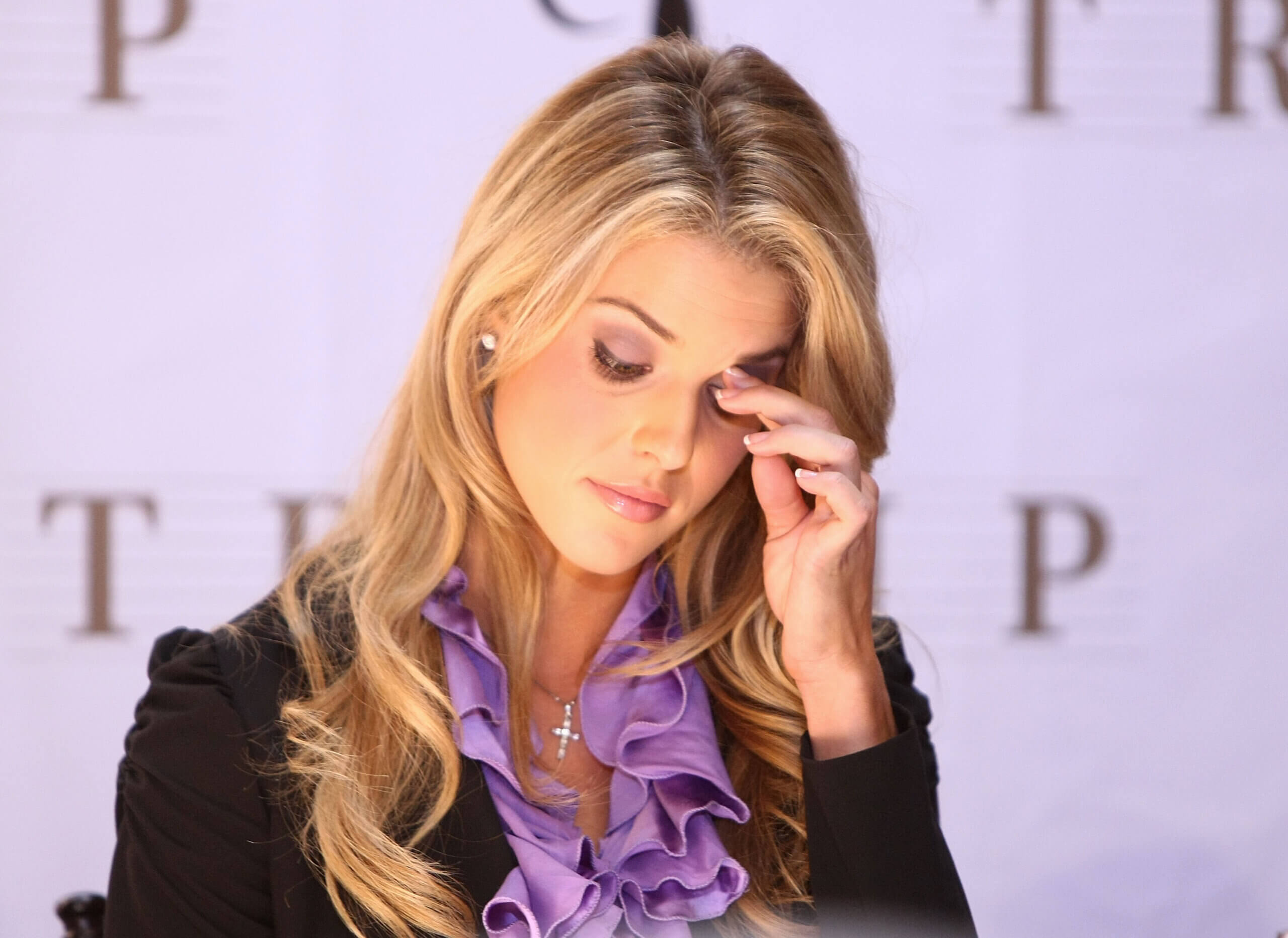
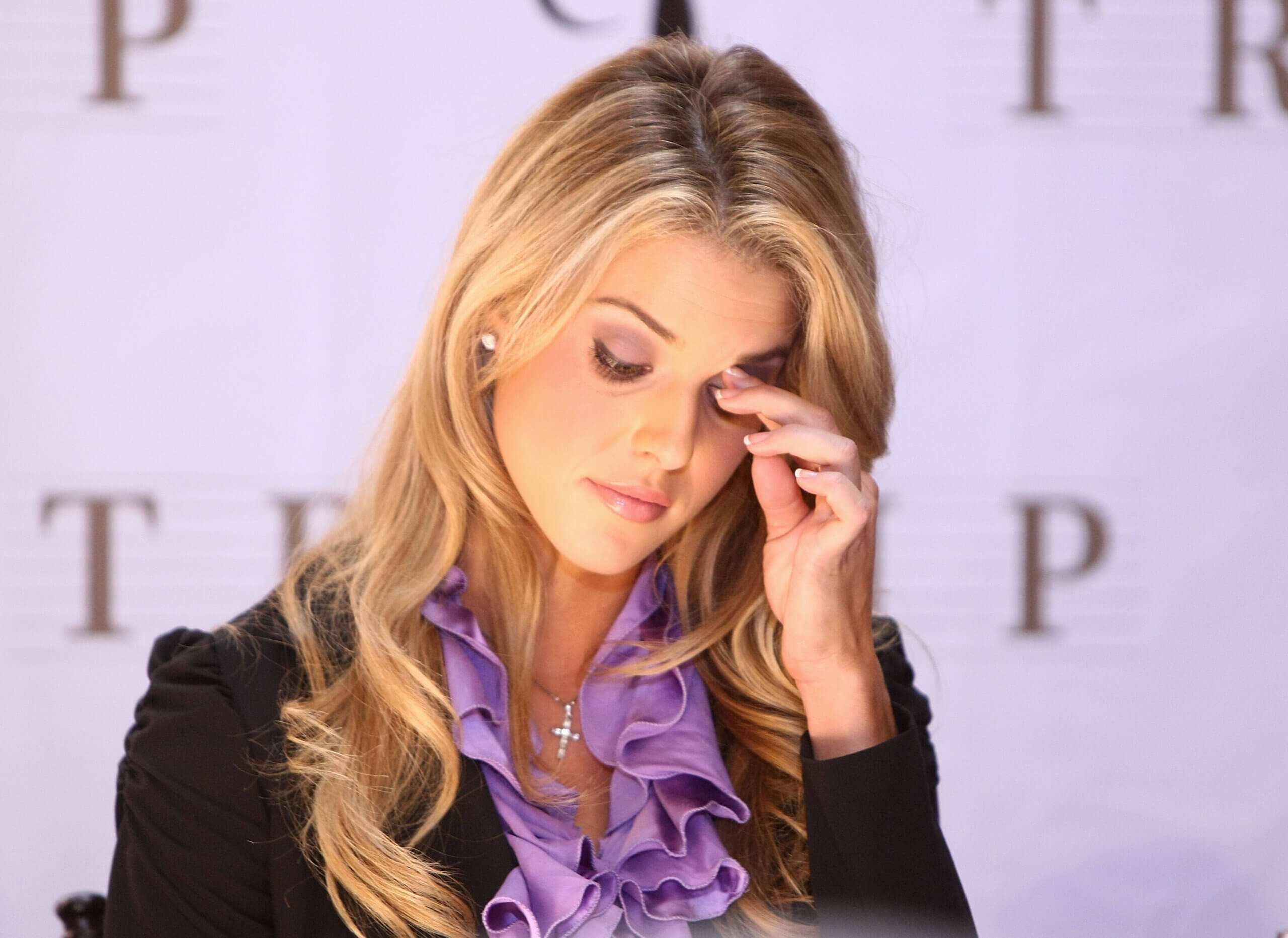
Bishop Joseph C. Bambera, who chairs the conference’s committee on interreligious affairs and authored the March 13 letter, specifically named Carrie Prejean Boller, a recent convert to Catholicism who was removed from the White House’s Religious Liberty Commission after a combative hearing in which she attacked Zionism, declaring it incompatible with Catholicism. In the same hearing, she also defended Candace Owens, the far-right influencer and a fellow Catholic with a long track record of offensive comments about Jews and Judaism.
Prejean Boller stated that devout Catholics were required to be anti-Zionist and should not be slandered as antisemites on that basis, and has argued elsewhere that Catholics have replaced Jews as “the new people of God.”
“There were witnesses at the hearing who rebutted Ms. Prejean Boller’s assertions about Catholic teaching, but it was her claims and not the rebuttal that have circulated in the media,” Bambera wrote in the confidential letter, which was first reported last week by Joe Enders, a conservative Catholic podcast host.
Rev. Russell McDougall, director of ecumenical and interreligious affairs at the conference of bishops, said that the memo was intended to help clergy facing questions from local members or journalists about the Catholic position on Jews and Israel.
It was accompanied by a public-facing video released last Wednesday that declared “Catholics must reject antisemitism.” McDougall said in an interview that the video was originally scheduled to be published at the start of Holy Week next Monday but was rushed out after Bambera’s memo was leaked and met with a hostile reaction from some right-wing Catholics.
“Media influencers are out there claiming to be speaking on behalf of the church,” McDougall said. “But practicing Catholics know that within the church it’s the Pope, in union with the College of Bishops, that are the teachers of the church.”
The controversy over Prejean Boller’s remarks came amid growing alarm by many Jews over far-right Catholic influencers, including Owens and Nick Fuentes, who have paired hostility toward Jews with opposition to U.S. government support for Israel, and often suggested their faith motivates both positions.
Joe Kent became the latest prominent figure to be caught up in the maelstrom when he resigned last week as director of the National Counterterrorism Center with a letter claiming that Israel had caused both the current U.S.-Israel war against Iran and the previous Iraq War.
He was quickly feted at a gala in Washington, D.C. hosted by Catholics for Catholics, a right-wing group, where he said he “was able to hear God’s voice” while deciding whether to resign from the Trump administration. Prejean Boller and Owens also spoke at the gala.
Bambera, who sent his memorandum to bishops three days before Kent’s resignation, wrote: “The misleading statements made by media personalities” about the Catholic position on Jews and Israel “have been troubling not only to us, but to our brothers and sisters in the Jewish community.”
The letter emphasized the positions detailed in Nostra aetate, a declaration made as part of the Second Vatican Council in 1965, a years-long assembly to modernize the church. Nostra aetate, one of the most significant parts of Vatican II, as the council is known, redefined the Catholic church’s relationship with Jews, holding that “the Jews” as a group are not responsible for killing Jesus Christ, that the Jewish people have a legitimate relationship with God even without accepting the salvation of Jesus and that Catholics should oppose antisemitism.
Bambera also cited a resource on countering antisemitism created in conjunction with the American Jewish Committee two years ago called “Translate Hate.”
Rabbi Noam Marans, the AJC’s director of interreligious affairs, praised the letter in a statement to the Forward: “With the growth of influencers who mistakenly use their Catholicism to spread antisemitic tropes, we need and appreciate responsible Catholic leaders who distance Catholicism from this hate.”
Theological spat over Zionism
Prejean Boller said during the religious freedom commission hearing in February that she opposed Zionism on theological grounds as a Catholic, a point that Bambera’s letter pushed back on.
It said that “Catholics can appreciate the religious attachment that the Jewish people have to the land of Israel, but interpret the reemergence in 1948 of a Jewish state in a historical rather than theological context.”
Some critics of the letter — including Enders, the podcaster who first posted a copy on X — argued that by acknowledging that Catholicism rejects “theological claims” related to Israel’s establishment, Bambera was essentially validating Prejean Boller’s statement that Catholics are required to be “anti-Zionist.”
“With all the preceding indignation toward Mrs. Prejean Boller earlier in this directive, it seems out of place to take this long to say she was right about the political state of Israel having “no biblical prophecy fulfillment,” Enders wrote before calling the letter “totally insane.”
McDougall said those who argued that the letter effectively endorsed Prejean Boller’s views on Israel were misguided. He noted that many, including Enders, also complained that the letter had rejected “supersessionism,” a doctrine that Prejean Boller has also expressed support for that holds Christianity had replaced God’s covenant with Jews.
“That’s something the church has repudiated — and quite clearly,” McDougall said. “The Catholic Cchurch may not take a theological position about the State of Israel but it does take a theological position about the people of Israel, and mentions that the permanence of Israel — when so many other ancient people have disappeared without trace — is to be considered part of God’s design.”
Prejean Boller referred the Forward to a social media post she’d made about the memorandum in which she wrote that “individual bishops do not enjoy the prerogative of infallibility every time they issue a statement” and suggested that Bambera’s letter was at odds with Catholic doctrine.
The dispute offers a peek into a roiling intra-Christian debate over Christian Zionism and whether the Bible contains support for Israel’s modern existence. It’s a debate obscure to most American Jews, who often think of Zionism as pertaining to political support for a Jewish state in Israel based on arguments like the need to prevent another Holocaust, rather than on religious grounds like God’s promise to Abraham, which Bambera’s letter references.
The letter was intended to inform sermons across the country during Holy Week, which begins on March 29, and asked bishops to share the contents of the memo with clergy in their respective diocese.
McDougall said the memorandum and letter were intended to reach the church’s core membership, even if they were unlikely to change the views of figures like Prejean Boller and Owens. “I’m not sure that there’s much the leadership of the church can do to reach some of these individuals and groups that think of themselves as more Catholic than the Pope,” he said.
The post Catholic Church urges clergy to address ‘misleading statements’ about Jews by far-right influencers appeared first on The Forward.
Uncategorized
Trump Says Gas Prices May Remain High Through November Midterm Election

U.S. President Donald Trump takes questions from reporters while Vice President JD Vance and Secretary of State Marco Rubio look on, as they attend a meeting with oil industry executives, at the White House in Washington, D.C., U.S., January 9, 2026. REUTERS/Kevin Lamarque
US President Donald Trump said on Sunday that the price of oil and gasoline may remain high through November’s midterm elections, a rare acknowledgement of the potential political fallout from his decision to attack Iran six weeks ago.
“It could be, or the same, or maybe a little bit higher, but it should be around the same,” Trump, who is in Miami for the weekend, told Fox News’ “Sunday Morning Futures With Maria Bartiromo” when asked whether the cost of oil and gas would be lower by the fall.
The average price for regular gas at US service stations has exceeded $4 per gallon for most of April, according to data from GasBuddy. Trump’s comments on Sunday came after weeks of asserting that the spike in prices is a short-term phenomenon, though his top advisers are cognizant of the war’s economic impacts, officials have said.
Earlier on Sunday, Trump announced on social media that the US Navy would blockade the Strait of Hormuz and intercept any ship that paid a crossing fee to Iran, after marathon talks between the US and Iran in Pakistan over the weekend did not yield a peace deal.
“No one who pays an illegal toll will have safe passage on the high seas,” he wrote on Truth Social.
Any US blockade is likely to add more uncertainty to the eventual resolution of the conflict, which is currently subject to a tenuous two-week ceasefire. The new tactic is in response to Iran’s own closure of the strait’s critical shipping lanes, which has caused global oil prices to skyrocket about 50%.
UNPOPULAR WAR HITS TRUMP’S APPROVAL
The war began on February 28, when the US launched a joint bombing campaign with Israel against Iran. The scope quickly expanded as Iran and its allies attacked nearby countries, while Israel targeted Hezbollah with massive strikes in Lebanon.
The war has buffeted global financial markets and caused thousands of civilian deaths, mostly in Iran and Lebanon.
Trump’s political standing at home has suffered, with polls showing the war is unpopular among most Americans, who are frustrated by rising gasoline prices.
The president’s approval rating has hit the lowest levels of his second term in office, raising concern among Republicans that his party is poised to lose control of Congress in the midterm elections. A Democratic majority in either chamber could launch investigations into the Trump administration while blocking much of his legislative agenda.
US Senator Mark Warner of Virginia, the ranking Democrat on the Senate Intelligence Committee, questioned the strategy behind Trump’s planned blockade.
“I don’t understand how blockading the strait is going to somehow push the Iranians into opening it,” he told CNN’s “State of the Union” on Sunday.
In a separate appearance on CBS’s “Face the Nation,” Warner said the blockade would not undermine Iranian control of the waterway.
“The Iranians have hundreds of speedboats where they can still mine the strait or put bombs against tankers in closing the strait,” he said. “How is that going to ever bring down gas prices?”
Although Trump has repeatedly said that the war would be over soon, Republican US Senator Ron Johnson of Wisconsin told ABC News’ “This Week” on Sunday that achieving US aims in Iran “could take a long time.”
“It’s going to be a long-term project,” said Johnson, who was not asked about Trump’s proposed blockade. “I never thought this would be easy.”
Uncategorized
Israel’s Ben-Gvir Visits Flashpoint Al-Aqsa Mosque Compound

Israeli politician Itamar Ben-Gvir walks inside the Knesset, in Jerusalem, Oct. 13, 2025. Photo: Chip Somodevilla/Pool via REUTERS
Israel’s far-right police minister Itamar Ben-Gvir visited the flashpoint Al-Aqsa Mosque compound in Jerusalem on Sunday, saying he was seeking greater access for Jewish worshipers and drawing condemnation from Jordan and the Palestinians.
The compound in Jerusalem’s walled Old City is one of the most sensitive sites in the Middle East. Known to Jews as Temple Mount, it is the most sacred site in Judaism and is Islam’s third-holiest site.
Under a delicate, decades-old arrangement with Muslim authorities, it is administered by a Jordanian religious foundation and Jews can visit but may not pray there.
Suggestions that Israel would alter the rules have sparked outrage among Muslims and ignited violence in the past.
“Today, I feel like the owner here,” National Security Minister Ben-Gvir said in a video filmed at the site and distributed by his office. “There is still more to do, more to improve. I keep pushing the Prime Minister (Benjamin Netanyahu) to do more and more — we must keep rising higher and higher.”
A statement from the Jordanian foreign ministry said it considered Ben-Gvir’s visit to be a violation of the status quo agreement at the site and “a desecration of its sanctity, a condemnable escalation and an unacceptable provocation.”
The office of Palestinian president, Mahmoud Abbas, said such actions could further destabilize the region.
Ben-Gvir’s spokesman said the minister was seeking greater access and prayer permits for Jewish visitors. He also said that Ben-Gvir had prayed at the site.
There was no immediate comment from Netanyahu’s office. Previous such visits and statements by Ben-Gvir have prompted Netanyahu announcements saying that there is no change in Israel’s policy of keeping the status quo.
Muslim, Christian and Jewish sites, including Al-Aqsa had been largely closed to the public during the Iran war. There was no immediate sign of unrest on Sunday after Ben-Gvir’s visit.
Uncategorized
Netanyahu Visits Troops Fighting Hezbollah in Southern Lebanon

Israeli Prime Minister Benjamin Netanyahu speaks during a press conference at the Prime Minister’s office in Jerusalem, Aug. 10, 2025. Photo: ABIR SULTAN/Pool via REUTERS
i24 News – Israeli Prime Minister Benjamin Netanyahu visited Israeli forces operating in southern Lebanon on Sunday as military operations against Hezbollah-linked targets continue.
Netanyahu toured forward positions alongside Defense Minister Yisrael Katz, Eyal Zamir, and Northern Command Commander Rafi Milo, meeting troops and receiving operational briefings from commanders on the ground.
Speaking to soldiers, Netanyahu praised their performance and said operations in the Lebanese security zone were ongoing.
“The war continues, including within the security zone in Lebanon,” he said, adding that Israeli forces were working to prevent infiltration attempts and neutralize threats such as anti-tank fire and missiles.
He described the northern campaign as part of a broader regional struggle involving Iran and its allies, saying Israel’s adversaries were now “fighting for their survival” following sustained Israeli military pressure.