


Uncategorized
Harvard Students to Vote on Anti-Israel Divestment Measure

April 20, 2025, Cambridge, MA, USA: Harvard University and Harvard Square scenes with students and pedestrians. Photo: Kenneth Martin/ZUMA Press Wire via Reuters Connect.
Harvard University students will vote this week on an anti-Israel measure calling for divestment from the Jewish State, amid rising concerns about the growth of antisemitism across the political spectrum.
According to The Harvard Crimson, the Harvard Palestine Solidarity Committee — a self-described revolutionary movement which issued some of the world’s first endorsements of Hamas’s Oct. 7, 2023, massacre across southern Israel — overcame objections expressed by the Harvard Undergraduate Association, a student government body, to place the idea on this academic year’s fall survey. Another group, working in concert with PSC, prevailed over the HUA as well, and added a survey question which aims to build a consensus of opposition to the International Holocaust Remembrance Alliance’s definition of antisemitism.
“Should Harvard disclose its investments in companies and institutions operating in Israel?” asks PSC’s question, which was originally framed to accuse Israel of committing genocide in Gaza. “Should Harvard divest from companies and institutions operating in Israel?”
PSC’s diction was edited at the behest of the administration, which determined that it was “leading” and contravened school rules.
“The commission emphasizes that the survey process is designed to foster an environment where students can share their perspectives freely and without pressure,” Harvard’s Election Commission told the Crimson in a statement. “It is not intended to serve as a platform for activism or advocacy by any particular group.”
The US campus antisemitism crisis has kept Harvard University in the headlines.
In October, school officials disclosed a $113 million budget deficit caused by the Trump administration’s confiscation of much of its federal contracts and grants as punishment for, among other alleged misdeeds, its admitted failure to combat antisemitism on its campus.
According to Harvard’s “Financial Report: Fiscal Year 2025” the university’s spending exceeded the $6.7 billion it amassed from donations, taxpayer support, tuition, and other income sources, such as endowment funds earmarked for operational expenses. Harvard also suffered a steep deficit in non-restricted donor funds, $212 million, a possible indication that philanthropists now hesitate to write America’s oldest university a blank check due to its inveterate generating of negative publicity — prompted by such episodes as the institution’s botching the appointment of its first Black president by conferring the honor to a plagiarist and its failing repeatedly to quell antisemitic discrimination and harassment.
“Even by the standards of our centuries-long history, fiscal year 2025 was extraordinarily challenging, with political and economic disruption affecting many sectors, including higher education,” Harvard president Alan Garber said in a statement. “We continue to adapt to uncertainty and threats to sources of revenue that have sustained our work for many years. We have intensified our efforts to expand our sources of funding.”
Harvard is also in court fighting a lawsuit which alleges that administrative officials violated civil rights law by declining to impose meaningful disciplinary sanctions on two students who allegedly assaulted a Jewish student during a protest held to rally anti-Israel activists just days after the Hamas-led Oct. 7, 2023, massacre across southern Israeli communities.
The university’s lawyers contend that the Jewish student, Yoav Segev, has not backed his claim with evidence and that his grievance is founded not in any legally recognizable harm but a disagreement regarding policy.
“Mr. Segev’s allegation, then, is not that Harvard failed to take action, but simply that he disagrees with the actions taken after the investigation,” a motion to dismiss the suit says, adding that the school believes Segev’s contention that Harvard “conspired” to deny him justice cannot be substantiated.
Segev had endured a mobbing of pro-Hamas activists led by Ibrahim Bharmal and Elom Tettey-Tamaklo, who stalked him across Harvard Yard before encircling him and screaming “Shame! Shame! Shame!” as he struggled to break free from the mass of bodies which surrounded him. Video of the incident, widely viewed online at the time, showed the crush of people shoving keffiyehs — traditional headdresses worn by men in the Middle East that in some circles have come to symbolize Palestinian nationalism — in the face of the student, whom they had identified as Jewish.
Nearly two years after the assault, Bharmal and Tettey-Tamaklo have not only avoided hate crime charges but also even amassed new accolades and distinctions — according to multiple reports.
After being charged with assault and battery, the two men were ordered in April by Boston Municipal Court Judge Stephen McClenon to attend “pre-trial diversion” anger management courses and perform 80 hours of community service each, a decision which did not require their apologizing to Segev even though Assistant District Attorney Ursula Knight described what they did as “hands on assault and battery.”
Follow Dion J. Pierre @DionJPierre.
Uncategorized
These legendary magicians made their Jewish identities — poof! — disappear
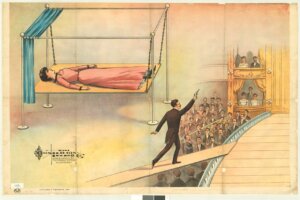
Harry Houdini liked to tell people that he was the son of a rabbi, and although he was known for the tricks he played on audiences, that story was true.
The world-famous escape artist was born as Erik Weisz in Budapest to Rabbi Mayer Samuel and Cecelia Steiner Weisz. The whole family emigrated to Wisconsin in 1878.
Many magicians of the Golden Age of Magic, from roughly the 1850s through the 1930s, were Jewish. Estimates put the number as high as 20%. But audiences were unlikely to know it. Onstage, these performers often became someone else.
“Abracadabra,” a new exhibit at Amsterdam’s Jewish Museum highlights the biographies of these Jewish magicians. It reveals the extraordinary tricks they created and popularized, and suggests that they may have tried to escape antisemitism through their stage acts.

Titia Zoeter, who curated the exhibition with Joanne Rosenthal, said the simplest reason why Jews took up magic as a profession was that they were often barred from tradesman guilds and other professions. Magic offered a way to earn a living independently.
The exhibition focuses on a few key figures, like Houdini, Horace Goldin, the “Whirlwind Illusionist” (born Hyman Goldstein); the Bamberg family, which produced magicians Okito and Fu Manchu, as well as the married couple Alexander and Adelaide Herrmann who toured the globe as “Herrmann the Great” and the “Queen of Magic.”
“The fact that several major names from that era were Jewish was reason enough to dedicate an exhibition to this subject.” Zoeter said. “Through these magicians, we could tell a socio-cultural story about Jews and other migrant communities seeking security and building lives in places where opportunities were available to them.”

It’s not entirely clear why Jewish performers are overrepresented in the world of magic, Zoeter said, but it was in part because of the same factors that drew Jews into the performing arts, vaudeville and Hollywood. The stage offered not only a livelihood but a chance to adopt a new persona.
Houdini sometimes played down his Jewish roots, and often told people he’d been born in the United States, rather than Hungary. Adam Begley, author of the recent biography, Houdini: The Elusive American, described how Houdini married a non-Jewish woman, moved away from the orthodoxy of his youth, and sent out Christmas cards.
But he did not deny his Jewish background, and often talked about his father, the rabbi. Audiences long questioned whether the story was true. It wasn’t until 2016 that Mayer Samuel Weiss’s rabbinical ordination certificate was discovered in the Milwaukee County Historical Society.
“Houdini broke free from his history, maybe the history of Jewish persecution, because he became very well loved, popular and famous,” Zoeter said, “although he was a Jew.”
The Bamberg family started as court magicians in 18th century Holland, and the Dutch family went on to produce five more generations of magicians.
Tobias David Bamberg, who went by Theo, became the first global star of the Bamberg magicians at the end of the 19th century. At age 18, he created a Japanese-style act that he performed in Berlin, that he went on to alter over time. He invented tricks that he built himself, including a coin box and a disappearing wand.

Hans Klok, a well-known contemporary Dutch illusionist, inherited a collection of magic props from Okito some years ago, which he loaned to the Jewish Museum for the exhibition. The 25 Okito items on display include a confetti box, which magically turns confetti into silk handkerchiefs, as well as stage decorations, a scrapbook and family photos.
Okito fled to Latin America as World War II was approaching, and later moved to New York, where he opened a magic shop.
As the Orientalist character Fu Manchu, Theo’s son, David Tobias Bamberg, created shows full of spectacular illusions and also appeared in films and musicals.
Alexander Herrmann, a French magician who once performed for Abraham Lincoln, adopted a suave devilish look, complete with tuxedo and goatee, which later became a popular fashion choice for many other magicians. He became famous for levitating his wife, Adelaide, and also shooting her out of a cannon.
For some of these performers, these elaborate stage identities were a form of protection against antisemitism. Dressing in “exotic” clothes and pretending to be unable to speak English added to their mystique, and allowed them to avoid revealing their true identities.
Asian-themed costumes also served a practical purpose: Okito’s oversized kimono had sleeves wide enough to hide all kinds of vanishing objects.

The exhibition also explores the role of women in magic, not only as indispensable assistants, but also as solo performers. After her husband, Alexander, died, Adelaide Herrmann (who was not Jewish) went on to have a very successful career on her own for another 30 years.
Trained in aerial acrobatics and ballet, Herrmann (born Adelaide Scarcez in London to Belgian parents) performed illusions in which she appeared to cut off her own head, and to catch bullets between her teeth.
She also encouraged many other women into the world of magic, as a mentor and advocate.
“I shall not be content until I am recognized by the public as a leader in my profession,” she once said, “and entirely irrespective of the question of sex.”
The Holocaust claimed the lives of many Golden Age magicians, and forced others to flee Europe, often emigrating to the Americas. In 1933, when Hitler came to power, a German author and amateur, Guenther Dammann, put together a book of some of the best magicians of the Golden Age, “Die Juden in der Zauberkunst,” or “Jews in Magic.”
Many of the Jewish magicians profiled in this exhibition also appeared in his book, which is now considered a record of a lost era.
“Abracadabra” runs until March 29, 2027 at the Jewish Museum in Amsterdam.
The post These legendary magicians made their Jewish identities — poof! — disappear appeared first on The Forward.
Uncategorized
A poet’s reaction to this summer’s terrorist attack in Berlin
דעם 25סטן יולי איז דער פּאָעט דזשײק שנײַדער געפֿאָרן קײן װײַמאַר כּדי צו מאָדערירן אַ כּמו־טעלעװיזיע־פּראָגראַם אױף ייִדיש מיט דער אַקטריסע עלענאָר ריסאַ, אַן אונטערנעמונג אין משך פֿונעם פֿעסטיװאַל „ייִדיש־זומער װײַמאַר“. אױף מאָרגן איז ער אַהײמגעפֿאָרן קײן בערלין, װוּ ער האָט מאַרשירט אינעם יערלעכן שטאָלץ־פּאַראַד – אײדער אַ טעראָריסט האָט אַטאַקירט דעם פּאַראַד, דערמאָרדעט אײן פֿרױ און פֿאַרװוּנדיקט מער װי 30 מענטשן. אָט דער „פּאָעטישער באַריכט“ דאָקומענטירט כראָנאָלאָגיש זײַנע פֿראַגמענטאַרישע געדאַנקען און אײַנדרוקן פֿון דעם דאָזיקן מעת־לעת.
װאָס איז טײַטש „לײַװ“?
פֿון דזשייק שנײַדער
פֿאַרבײַגעגאַנגענע רעקלאַמעס׃
פֿאַרטאָפּלט אײַער עקראַנצײַט!
װערט אַ זעלנערין פֿאַר דײַטשלאַנד!
אײַער דירה־געלט איז צו טײַער!
איך דאַרף נאָך מסרן מײַן ראָװער־גנבֿ.
כאַפּן די פֿאַרלאָזלעך פֿאַרשפּעטיקטע באַן.
שױן זיצט מײַן סטודיאָ־עולם און װאַרט.
פּונקט אַזױ װי די װערטער פֿון דער װאָך.
אונטערװאַרטן, אָפּװאַרטן, צוּװאַרטן.
פּונקט אַזױ װי יאַנקלס נײַער װערטער־װידעאָ.
עס װאַרט אַ שיסל מיט ברױנע עם־ען־עמס.
איך האָב שױן אײן מאָל פּראָבירט דעם קלאַנג.
אַ שמועס־שעה אױף פֿאַרשטומטן ייִדיש.
אַ טעלעװיזיע־פּראָגראַם אָן טעלעװיזיעס.
אַ לעבעדיקע לאַכטאַשמע, דאַנקען גאָט.
„אונדזער עולם“ איז דאָך דאָ אין װײַמאַר.
איך דאַרף נישט איבערחזרן אױף כינעזיש.
פּאָסטקאַרטלעך פֿון װאַרשע, סאַו־פּאַולו.
אַכט מדינות… אָבער נישט דײַטשלאַנד.
עלענאָר באַװױנט אונדזער נישט־טעלעװיזיע.
ליבע־בריװ פֿונעם אונטערװעש־שופֿלאָד.
דאָס טײַערסטע קלײד פֿון אַ גאַנץ לעבן.
אַז מען דערמאָנט פֿראַנק לאָנדאָנען…
כּדי צו שטראָמען באַדאַרף מען נײַעס.
אַזאַ מין איצט באַדאַרף אַן איצטיקײט.
אַנישט קומט דער נעטפֿליקס־עפֿעקט.
אָן־סופֿיקע אַפֿישן אַדורכצובלעטערן.
בײַ ממשותדיקע נײַעס קומען שטױס־מעלדונגען.
די מאָבילקעס, טאַבלעטן און זײגערלעך װיברירן.
און שױן איז אונדזער שמועס־שעה פֿאַרבײַ.
שױן האָבן מיר געבענטשט עלעקרטישע ליכט.
געריסן די חלות, געגעסן די אוגערקעס.
אֵין כּל, אֵין כּל, אֵין כּל…. „טײַ“.
נישטאָ קײן צײַט פֿאַר אַ חצות בײַם טײַך.
די באַן פֿאָרט אומהײמלעך איצטיקיסטיש.
אינסטאַגראַם האָט פֿאַרגעסן זײַן ייִדיש.
שױן אַהײמגעפֿאָרן מיטן דינג־ראָװער.
שױן געגלעט מײַן הינטלס קאָנוס־קאָפּ.
שױן אָנגעטאָן מײַן בער־קאָסטיום.
שױן געפֿאָרן צום פּרײַד־לחײם.
שױן געקװעטשט אױפֿן נײַנטן קנעפּל.
שױן איבערגעקערט אַ טעלער מיט נאַשן.
שױן געהערט מעשׂיות פֿון נעכטן בײַ נאַכט.
שױן פּאָזירט אינעם יערלעכן באַלקאָנבילד.
אַלע טראָגן װי תּמיד די סאַמע מאָדישע זאָקן.
אַ פֿרײלעכן פּרײַד. פֿרײלעך צו זײַן פֿרײלעך.
אַראָפּ און אַרױס מיט די אַנדערע פֿײגעלעך.
אַן אַנדער שׂימחה־גרופּע װאַרט שױן אין דרױסן.
איך טאָר נישט קװעטשן דאָס פֿרײלעך־קנעפּל.
איך טאָר נישט נאַשן קײן שװאַמעלע־שאָקאָלאַד.
מיר יאָגן זיך נאָך די אַנטלאָפֿענע פּאַראַד־װאָגנס.
הײַיאָר פּראָקלאַמירט מען כּמו־פּאָליטישע לאָזונגען.
דעות זענען רײצנדיק. די „גוטע גבֿירים“ בלײַבן.
מיר מאַרשירן טאַנצעװדיק, טאַנצן מאַרשירעװדיק.
ס׳איז דער הױפּטשטראָם־פּרײַד, דער באַנאַלער.
נישט דער לעסבישער, נישט דער פּאַלעסטינישער.
מיר פֿאַרלירן אַ חבֿר אַלע פֿינף מינוט.
מיר װאַרטן אױפֿן קלאָזעט־הײַזעלע.
מיר האַלטן זיך אָפּ בײַ נאָלנדאָרף־פּלאַץ.
דאָרט אױבן אַרבעט מײַן צײנדאָקטער!
דאָרט װוּ עס הענגען די נחת־פֿענער!
אַ ביר פֿון אָרגאַנישן סופּערמאַרק.
כּדי אַרײַנצוגײן דאַרף מען זיך אָנטאָן.
איך דאַרף נאָך ענדיקן דאָס „לײַװ“-ליד.
איך דאַרף שפּאַצירן מיטן קאָנוס־קעפּל.
איך דאַרף נאָך שרײַבן עטלעכע רשימות.
קודם־כּל, פֿאַר װאָס נישט אַ שניצל?
די קיך פֿאַרמאַכט זיך צען אַ זײגער.
מיר באַשטעלן אין דער לעצטער מינוט.
מיר עסן דאָס אױסגעפּלאַטשיקטן פֿלײש.
מיר שפּאַצירן אַהײם דורך די געסלעך.
צװײ פֿײגעלעך פֿון אַ גאַנץ יאָר מיט אַ הינטל.
שױן קומען די שטױס־מעלדונגען.
שױן שטײען מיר אױף דער שװעל.
איך דאַרף זיך שױן „מעלדן בשלום“.
איך דאַרף נאָך מעלדן מײַן ראָװער.
איך דאַרף נאָך ענטפֿערן אױף די בריװלעך.
צי בין איך בשלום? װער איז בלשום?
די מלחמה קעגן מלחמות איז אױס.
עס בלײַבן אונדז בלױז מײנונגען.
יעדער אײנער האָט זײַן אָפּרוף.
יעדער אײנער האָט זײַנע דעות.
יעדער אײנער האָט קלוגע פּירושים.
װער זשע װיל זײַן אין די נײַעס?
בערלין קײן װײַמאַר קײן בערלין, 26-25 יולי
The post A poet’s reaction to this summer’s terrorist attack in Berlin appeared first on The Forward.
Uncategorized
These Bundist pioneers were heroes in their time. Would they be in ours?
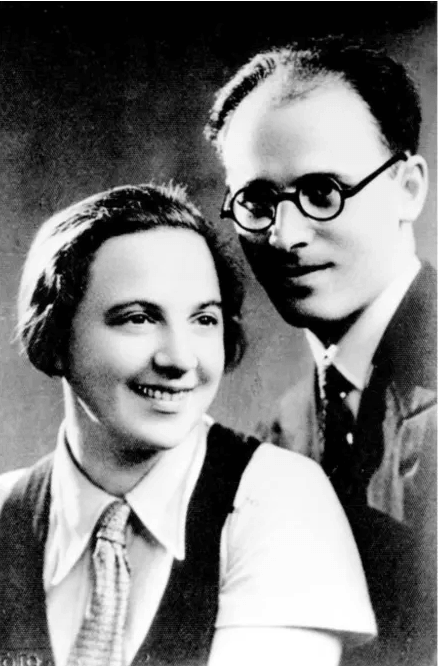
Academic stars in high school, Abrasha Blum and Luba Bielecka shared a slow burn romance and fervor for radical change. That hardly set them apart amid the ferment after the tsarist empire crumbled in 1919. No one would have predicted that Bielecka would go on to be awarded global nursing’s highest honor and Blum Poland’s equivalent of the Congressional Medal of Honor.
But their story poses a provocation in today’s hyper-polarized politics: Blum and Bielecka were devoted Bundists, and as such, they were not only socialists but anti-Zionists.
That combination can get you labeled today as anti-Israel and antisemitic, and even anti-American. Yet at the time they were Jewish heroes.
Bielecka repeatedly risked her life smuggling children out the Warsaw ghetto under Nazi occupation while directing the sole Jewish nursing school, sustaining its rigorous professional standards even as it was squashed into oblivion. Blum, a physically frail man, was dubbed the “ideological father of armed resistance” in the Bund; he led his band of militants into joining forces with the detested Zionists in the historic Warsaw Ghetto Uprising. When the insurgency was crushed — as all the combatants knew it would be — Blum, an engineer by training, led the surviving remnant through the cavernous sewer system to safety. But soon thereafter, in fleeing the police, he plummeted three stories from an apartment building. Badly injured, he was taken to Gestapo headquarters and never seen again.
Blum and Bielecka engaged the world as they found it and fought for justice for Jews and humanity. Blum’s photo is on display at Yad Vashem, Jerusalem’s Holocaust museum.
A lot has changed in 85 years. In 1939, most Americans Jews opposed Zionism and feared it would be misused by antisemites to justify allegations of dual loyalty. At the time, twice as many Jews lived in Warsaw as in all of British Palestine. The Bund swept 17 of 20 Jewish-designated seats on city council (Blum held one of them), far outdistancing all the Zionists parties together. Socialism made sense to Jewish voters, who were overwhelmingly “blue collar.” And so did doikayt (“hereness”), the doctrine that Poland’s three million Jews belonged there, not in a far-off desert, as the Zionists maintained.
The Holocaust radically and irrevocably changed the landscape. Ninety percent of Polish Jewry was exterminated. Even after the Nazis were vanquished, Jews continued to endure pogroms and were largely purged from Poland’s ruling communist party. By then, Israel was the sole destination in the world that welcomed large numbers of Jews.
Blum and Bielecka’s daughter, 17-year-old Aviva (née Victoria), was among the pioneers who migrated to a kibbutz in the new State of Israel. Zionism offered her the promise of milk and honey in a sanctuary free of antisemitism.

For years, her younger brother, Olek, held fast to his parents’ politics. But he too ultimately exited Poland, not for Israel but for the US, saddened that his father’s dream of “a prosperous Jewish minority inside Poland was impossible to realize.”
Like their parents, Aviva and Olek too engaged the post-WWII world as they found it and sought a better world.
Today, socialism and anti-Zionism are each experiencing something of a revival in the U.S. Self-described socialists have won mayoral elections in New York, Seattle and Washington, D.C. DSA-supported candidates won the Senate Democratic primary in Florida and narrowly lost Wisconsin’s gubernatorial primary. A recent CBS News poll found that 58% of Democrats now hold a favorable view of socialism, whereas only 32% view capitalism positively. The gap is even wider among young people. Jews, despite their relative affluence, remain among the most liberal voters in the U.S., although their current views on socialism have not been scientifically surveyed.
Anti-Zionism looks quite different in 2026 than in 1939, at least to Jews. Israel, approaching its 80th anniversary, is far from the desert mirage ridiculed by pre-war Bundists. While only a minority of American Jews self-describe as Zionists, an overwhelming majority support Israel as a Jewish and democratic state. Yet they are deeply troubled by Israel’s direction: Polls show that Zohran Mamdani, a socialist and anti-Zionist, is more popular among American Jews than Israeli Prime Minister Benjamin Netanyahu.
We’re left with this thought experiment: What if Abrasha and Luba resided in America today? What would they view as justice and how would they engage to achieve it? What if they resided in Israel?
And finally, a question about the rest of us: Would we recognize them as heroes?
The post These Bundist pioneers were heroes in their time. Would they be in ours? appeared first on The Forward.
