


Uncategorized
His family was forced to sell their precious Pissarro painting before fleeing Nazi Germany; will he finally see justice?
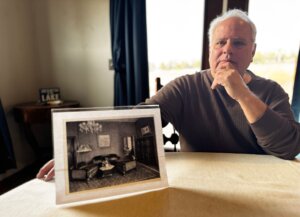
It has been more than four years since I first reported on the looted art case regarding the Camille Pissarro painting, “Rue Saint-Honoré, Apres Midi, Effet de Pluie,” in The Forward. The painting is part of a series the Jewish artist painted from the safety of his hotel room in Paris at the height of the Dreyfus Affair in France.
The scandal, sparked by the false conviction of a Jewish army office tore French society apart and brought to light the country’s deep antisemitism. “Rue Saint-Honoré” is both an important work of Impressionism and a testament to historical events. If recovered, it may even break records at auction, how rare a Pissarro cityscape comes on the market, and how robust the fine art auction industry is at present. “The painting could “easily break the hundred-million-dollar mark at auction, following its recovery,” says historian and looted art expert, Jonathan Petropoulos.
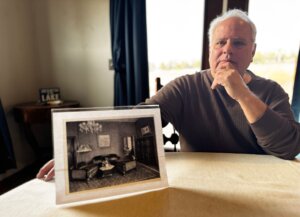
The case of this rediscovered Pissarro painting captured my imagination from an aesthetic, legal, and storytelling perspective. It is a saga that has it all — art, war, robber barons, and more — and forces everyone who encounters it to reckon with fundamental questions on morality and humanity — from both a personal and historical perspective.
The case has been in the public consciousness for far longer than my own connection to it, however. In 1939, just prior to the onset of World War II, Lilly Cassirer — who inherited Rue St. Honoré through her husband, a member of a renowned family of cultural patrons in Germany — was forced to sell the painting under duress in order to flee Nazi Germany.
Sixty years later, in December of 1999, Lilly’s heirs discovered that the Pissarro had not been lost or destroyed in the war. In fact, it had resurfaced at the new Thyssen-Bornemisza National Museum in Madrid, a collection belonging to the Kingdom of Spain acquired directly from the Thyssen Steel family, which had financed Hitler’s early rise to power.
The rediscovery kicked off an Odyssean legal journey up and down the federal courts in California, all the way to the U.S. Supreme Court in Washington twice, and back. Now, another ruling is expected from the Federal District Court in Los Angeles this spring, on remand from the U.S. Supreme Court. The Supreme Court has asked the district court to issue a new ruling in light of a new California law regarding stolen and Holocaust-looted art. For its part, the Thyssen-Bornemisza National Museum maintains that it is the legitimate owner of the painting and that “there were no indications of bad faith in the acquisition of the painting.”

A separate, concurrent effort is underway in Congress to update the Holocaust Expropriated Art Recovery Act of 2016 (HEAR Act), a Federal law that enabled Nazi-looted art claims to be submitted within six years of discovery of a work of art, thereby supplanting any state statute of limitations. The law was intended to expire after ten years, but given the enormous amount of looted art still to be found, the proposed update would remove the sunset clause, as well as dismiss defenses not directly related to the merits of the cases. The new act specifically cites this Pissarro painting and the legal case to recover it, seeking to prevent other looted art claims from facing a similar, protracted legal battle. The bill already passed the Senate Judiciary Committee in a unanimous vote and is on the docket for a vote in the House of Representatives.
On the eve of two significant moments in the adjudication of Nazi-looted art, I sat down with David Cassirer, Lilly’s last living heir, and Sam Dubbin, one of his lawyers working on the case.
David, not long from now, there will be a new court decision on the long running case to restitute your family’s Pissarro painting “Rue Saint-Honoré, Apres Midi, Effet de Pluie,” which was a prized possession of your great-grandmother Lilly. What are you feeling at the moment?
David Cassirer: I’m pretty excited. It’s been such a long time since we started. This case gets exciting, and then it slows down. This is one of those exciting moments. There’s a lot going on, and we’re feeling pretty confident that we’re close to a recovery, after finding the painting more than twenty-six years ago
And what about you, Sam, how are you feeling?
Sam Dubbin: That’s a great question, because in my profession, you get optimistic, and then you get deflated, and sometimes the deflation takes a long time to get over. But deep down, I’m feeling optimistic, like this could really happen. And the moments when I feel lucky that it’s happening, I say to myself, “That’s ridiculous. It’s so long overdue.” What should have been done, should have been done so long ago. If the Thyssen-Bornemisza museum had given it back when Claude asked for it in 2000, he would have had ten years to enjoy it, to show it to people, to donate it. And it would have been a magnificent event.
This painting is important within the oeuvre of Pissarro’s work, but also historically in connection with the Dreyfus affair. Can you elaborate on its cultural and historical importance?
Dubbin: Pissarro painted this painting from the second floor of the Grand Hôtel du Louvre during the height of the Dreyfus Affair, when he literally feared for his life. He could not be seen on the streets of Paris because the antisemitism was so intense, and it’s considered one of the great works of the Impressionist movement. And so when you think about its origin during the Dreyfus Affair, then being looted by the Nazis during the preeminent human rights war crime in history, and now not being returned by the Kingdom of Spain, it’s just such an egregious, arrogant violation of decency and humanity.

And for you David, from a personal standpoint, what does the painting mean to you?
Cassirer: One of the things I like about the case is that there has been so much extraordinary publicity and interest by the public and by the press that it kind of reconnected the dots between the Impressionists and my family. My father would be very proud to read about the fact that his cousins Paul and Bruno, had championed the Impressionists and responsible for some of their success. There’s a new exhibition that’s starting soon in Berlin all about Paul Cassirer. It’s exciting to see this. It’s exciting in light of all the antisemitism that we’ve seen and the resurgence of it lately, to have some good news about Jewish contributions to culture, not to mention that Pissarro himself was Jewish. I’m delighted when I read stuff that starts to put in perspective this whole concept of our role in culture. It’s not the only thing Jewish people do, but it’s a big part of our culture.
I’d be very happy on behalf of the family and our friends to win the case, but it’s equally important that the case stands for something. And my father would feel that in his bones, especially since he really was there in the Holocaust and watched his family wiped out, watched their fortunes wiped out, watched most of his relatives sent off to the camps and so on. So, he felt it on a level I can only empathize with. It’s different if you’re there at a detention camp in the desert outside of Casablanca, and you’re dying of typhoid fever because there’s no running water and there’s no toilets. So luckily, he was young and strong and came back and survived and got here during the war. And of course, he went in to try to enlist. [The Americans] threw him out. “We’re not taking any Germans. Are you crazy?” He was very disappointed that he couldn’t join up and fight the Nazis.
The U.S. Supreme Court held in 2022 that California law should apply in this case, which was a big victory. But then the appellate court ruled against you, once again. What’s at stake with the next court decision?
Cassirer: I badly need this case to come out right, not just for the family. It’s a very important precedent. My father would have wanted people to be able to cite, to point to Cassirer v. Spain, Cassirer v. Thyssen-Bornemisza. That’s a big deal. We want people to be able to rely on that precedent all over the country and maybe in other countries as well, so I’m watching for that. It isn’t just California law versus Spain, it’s American law versus Spain. Generally speaking, throughout the country, the rule would be that you never acquire good title to stolen stuff. That’s the bigger picture here. The Supreme Court ruling meant that we are going to use good old American law to decide this thing ultimately.
Dubbin: By the way, Spanish law is an outlier. Even in other European countries, you cannot acquire good title even after the passage of time, if you take it in bad faith. Even countries like Germany, France, Netherlands, and Switzerland. Only Spain allows you to get good title after six years of adverse possession if you acquired something in bad faith.
It feels like a case in which, hopefully, common sense and morality can align. I think oftentimes, when the public thinks about the law, there’s sometimes a frustration that can arise, because cases are not always litigated based on what the public thinks is the logical, morally correct outcome. But hopefully, from what you’re saying, this could be one of those cases. David, what have been some of the positive things that have come out of this battle?
Cassirer: Lots of great stuff although it’s been difficult to wait so long and to watch my immediate family pass away in the interim. And as you can see, I’m not getting any younger here. (David is 71). It’s been a long, hard slog. The support from non-Jews has been extraordinary. We would expect, and we did receive, endless support from Jewish organizations and Jewish individuals. It’s been amazing, however, how much support we’ve had from day one in the press and in the public and in government, et cetera. I’ve been very heartened by the fact that we’ve had so much support from people “without a dog in the race,” so to speak, beyond the Jewish community.
I’ve also been very heartened in recent years with Sam’s extraordinary success working with legislatures, both in California and in Washington, and that the support isn’t just from one side or the other. It’s amazingly bipartisan. People who don’t even talk to each other gladly work together on these bills, sponsor these bills, and fend off anyone trying to undo it. Even though we haven’t won yet, we have won many battles along the way.
David, what advice would you give to other families who may be pursuing cases? What do you hope people take away from your experience?
Cassirer: That’s a good question. Assuming that we’re ultimately successful, which I’m still pretty confident with Sam’s help and this extraordinary team that we’ve managed to assemble, that we are going to win this thing. People should be encouraged, in a meta sense, that it’s worth fighting for stuff that’s important, even if the odds are long, even if other people might not be successful at it. But that doesn’t mean you shouldn’t try and you shouldn’t stick with it. I’ve been in the case twenty-six years and counting. If you’re tough enough and dedicated enough and you figure out a way to surround yourself with talented, committed people, there’s very little that can’t be accomplished in this country and in other countries as well. I think for me, that’s a pretty big takeaway.
You’ve just struck me that you’re talking about the American dream.
Cassirer: Yes! My father told me that the greatest day he ever had was becoming an American citizen. After what he had been through and being stateless, having had his government turn against him, it’s interesting that, given his extraordinary life, the greatest day of his life to him was when he became a naturalized citizen; because, to him, that was the American dream.
The post His family was forced to sell their precious Pissarro painting before fleeing Nazi Germany; will he finally see justice? appeared first on The Forward.
Uncategorized
Downed Planes Raise New Perils for Trump as Tehran Hunts for Missing US Pilot

Traces of an Iranian missile attack in Tehran’s sky, amid the U.S.-Israeli conflict with Iran, in Tehran, Iran, April 3, 2026. Photo: Majid Asgaripour/WANA (West Asia News Agency) via REUTERS
Two US warplanes were downed over Iran and the Gulf, Iranian and US officials said on Friday, with two pilots rescued and a third still missing and being hunted by Tehran’s forces.
The incidents show the risks still faced by US and Israeli aircraft over Iran despite assertions from US President Donald Trump and his Defense Secretary Pete Hegseth that their forces had total control of the skies.
The first plane, a two-seat US F-15E jet, was shot down by Iranian fire, officials in both countries said.
The second plane, an A-10 Warthog fighter aircraft, was hit by Iranian fire and crashed over Kuwait, with the pilot ejecting, two US officials said.
Two Blackhawk helicopters involved in the search effort for the missing pilot were hit by Iranian fire but made it out of Iranian airspace, the two US officials told Reuters.
The degree of injuries among the crew of the aircraft remained unclear. The status and whereabouts of the missing F-15E crew member was not publicly known.
Iran’s Revolutionary Guard Corps said it was combing an area near where the pilot’s plane came down in southwestern Iran and the regional governor promised a commendation for anyone who captured or killed “forces of the hostile enemy.”
Iranians, who have been pummeled by American air power for weeks, posted gleeful messages celebrating the plane downings. Iran’s Parliament Speaker Mohammad Baqer Qalibaf said on X that the U.S. and Israel’s war had been “downgraded from regime change” to a hunt for their pilots.
Trump has been in the White House receiving updates on the search-and-rescue operation, a senior administration official told Reuters. The Pentagon and US Central Command did not immediately respond to requests for comment.
NO SIGN OF END TO WAR
The prospect of a US service person being alive and on the run inside Iran raises the stakes for Washington in a conflict with low public support and no sign of an imminent end.
Iran has officially told mediators it is not prepared to meet with US officials in Islamabad in coming days and that efforts to produce a ceasefire, led by Pakistan, have reached a dead end, the Wall Street Journal reported on Friday.
The US and Israel opened the campaign with a wave of strikes that killed Iran’s Supreme Leader Ayatollah Ali Khamenei on February 28. The war has killed thousands and threatened lasting damage to the global economy.
So far, 13 US military service members have been killed in the conflict and more than 300 have been wounded, according to the US Central Command.
Iran has rained down drones and missiles on Israel. It has also taken aim at Gulf countries allied to the US, which have so far held back from joining the war directly for fear of further escalation.
In a security alert on Friday, the US embassy in Beirut said Iran and its aligned armed groups may target universities in Lebanon and urged US citizens in the country to leave while commercial flights are still available.
Israel has been waging a parallel campaign against Iran-backed Hezbollah in Lebanon after the militant group fired at Israel in support of Iran.
TRUMP THREAT TO STRIKE BRIDGES, POWER PLANTS
On Friday, as Trump threatened to hit its bridges and power plants, Iran struck a power and water plant in Kuwait, underlining the vulnerability of Gulf states that rely heavily on desalination plants for drinking water.
On Thursday, Trump posted footage on social media showing dust and smoke billowing up as US strikes hit the newly constructed B1 bridge between Tehran and nearby Karaj, which was due to open this year, and said more attacks would follow.
“Our Military, the greatest and most powerful (by far!) anywhere in the World, hasn’t even started destroying what’s left in Iran. Bridges next, then Electric Power Plants!” he wrote in a subsequent post.
On Friday, a drone hit a Red Crescent relief warehouse in the Choghadak area of Iran’s southern Bushehr province.
Kuwait Petroleum Corporation said its Mina al-Ahmadi refinery had been hit by drones. Other attacks were also reported to have been intercepted in Saudi Arabia and Abu Dhabi. Missile debris landed near the Israeli port of Haifa, site of a major oil refinery.
Oil markets were closed after benchmark U.S. crude prices gained 11% on Thursday following a speech by Trump that offered no clear sign of an imminent end to the war.
Uncategorized
US-Iran: Diplomatic Push Falters as Qatar Steps Back and Pakistan Talks Stall

Qatari Prime Minister and Foreign Minister Sheikh Mohammed bin Abdulrahman Al Thani speaks after a meeting with the Lebanese president at the presidential palace in Baabda, Lebanon, Feb. 4, 2025. Photo: REUTERS/Emilie Madi
i24 News – Diplomatic efforts to secure a ceasefire between Washington and Tehran appear to have reached an impasse, as key regional mediators pull back and broader talks stall.
According to reporting by The Wall Street Journal, Qatar has informed US officials that it does not wish to take a central role in mediating between the two sides. Officials familiar with the matter said Doha has made clear it is “not willing” to lead negotiations or act as the primary broker.
At the same time, Pakistan-led efforts to bring Iranian and American officials together have also stalled. Mediators say Tehran has refused to attend proposed meetings in Islamabad, calling Washington’s conditions “unacceptable,” further underscoring the widening gap between the two sides and the growing difficulty of restarting dialogue.
Despite the deadlock, diplomatic channels have not fully closed. Turkey and Egypt are continuing parallel efforts to revive talks, with discussions underway about potential alternative venues, including Doha and Istanbul.
US President Donald Trump downplayed the impact of recent military developments on diplomacy, including the destruction of a US fighter jet during operations in Iran. Speaking in a brief exchange with an NBC News journalist, he said: “No, not at all. It’s war. We are at war.”
He further fueled speculation with a cryptic social media post on Truth Social, writing: “Keep the oil, anyone?” criticising international allies on Friday over rising fuel prices. Trump appeared to mock allies such as the United Kingdom, writing that they should “keep the oil.”
Uncategorized
Report: Iran Retains Significant Missile Capability Despite Weeks of US-Led Strikes

Iranian missiles are displayed in a park in Tehran, Iran, Jan. 31, 2026. Photo: Majid Asgaripour/WANA (West Asia News Agency) via REUTERS
i24 News – Despite weeks of sustained airstrikes by the United States and its allies, Iran has reportedly managed to retain a substantial portion of its military capabilities, particularly its ballistic missile arsenal.
According to a report by The New York Times citing US intelligence assessments, Tehran has developed methods to mitigate the impact of the strikes, allowing it to preserve and restore key parts of its missile infrastructure.
While the Pentagon has claimed responsibility for striking more than 11,000 targets over five weeks and reducing the rate of Iranian missile fire, intelligence officials now caution that the actual damage may be more limited than initially assessed. Iranian forces are reportedly able to rapidly repair or reactivate missile launchers stored in heavily fortified or underground facilities, sometimes within hours of being hit.
Analysts also point to the widespread use of decoy sites, which may have drawn strikes away from operational assets. Many of the targeted locations are believed to have contained dummy installations, complicating efforts to accurately gauge the degradation of Iran’s ballistic capabilities. Combined with deep underground bunkers and dispersed storage networks, this approach is seen as enabling Tehran to maintain a higher level of readiness than publicly estimated.
US intelligence officials assess that this resilience reflects a deliberate strategy: preserving a credible long-range strike capability as both a deterrent and a bargaining tool in any future negotiations, while ensuring regime survival and continued regional influence.
Despite sustained air dominance claimed by Washington and its allies, Iran’s adaptive tactics continue to complicate battlefield assessments, leaving the true balance of power in the conflict uncertain.