


Uncategorized
How a Persian Jewish immigrant became the rodeo king of California
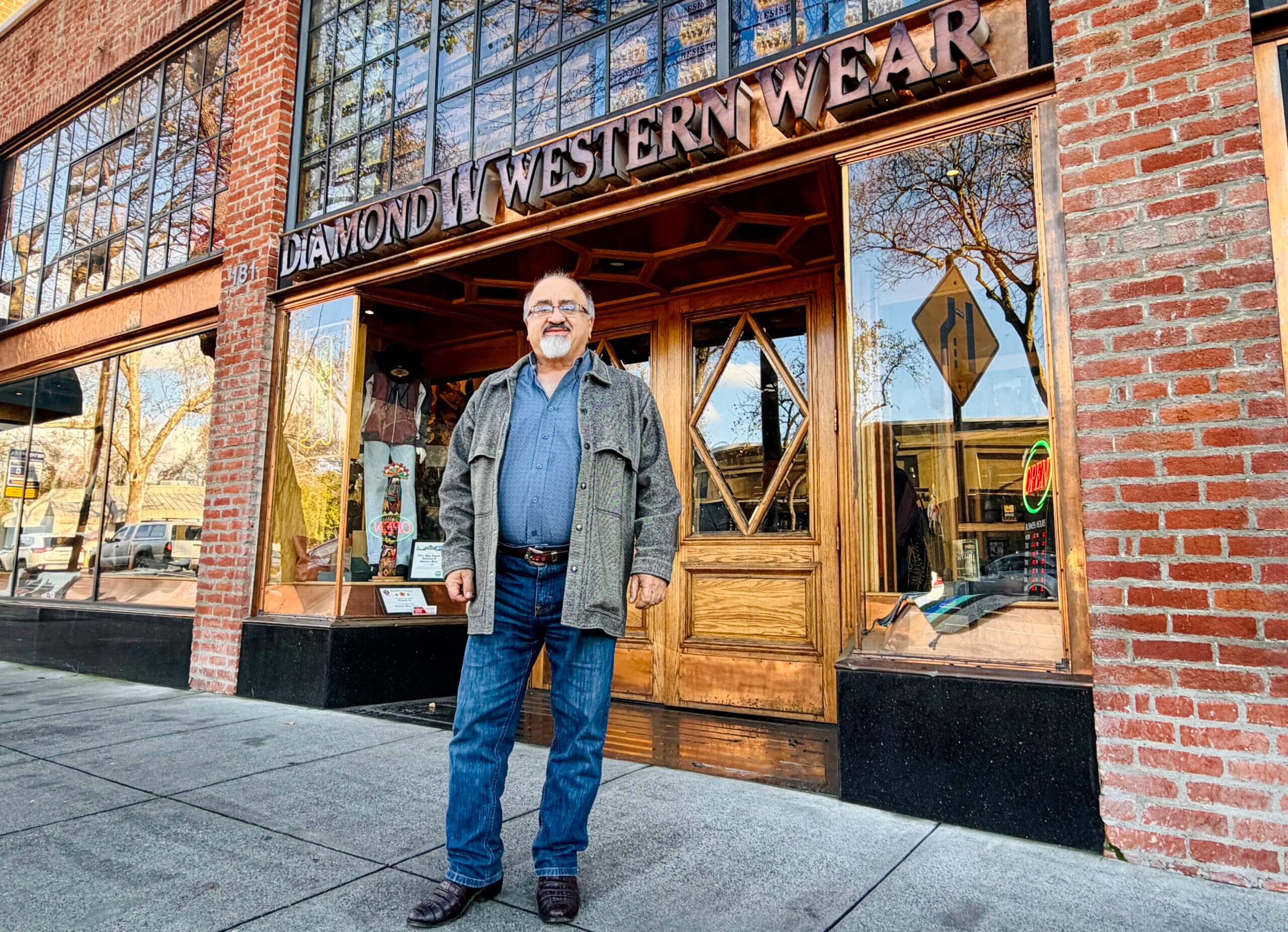
David Halimi grew up Jewish in Tehran, watching Bonanza. He now produces rodeos in Northern California and owns a bar modeled on Cheers.
At 73, Halimi is known around Chico as the man behind a Western wear store stocked with thousands of cowboy boots, a rodeo circuit that draws bull riders from across the region, and a U-shaped bar where locals joke about who might be the town’s version of Norm. Less obvious — but no less central — is that he is also a longtime synagogue president, a Hillel board leader, and a professor who teaches business analytics at the local university.
Asked how an Iranian Jew learned the rhythms of the American West, Halimi doesn’t mystify it. “I’m a quick learner,” he said.
Halimi still follows events in Iran closely. “It’s heartbreaking,” he said. “It’s my heritage.” He has no illusions about the imbalance of power. “People protesting with their bare hands are no match to machine guns and professional assassins.” Still, he allows himself hope. “I wish and I pray that the people will prevail.”
For Halimi, the distance between Iran and Chico is not just geographic. It is the distance between a life shaped by instability — he grew up in Iran in the aftermath of a coup — and one he has spent decades deliberately building.
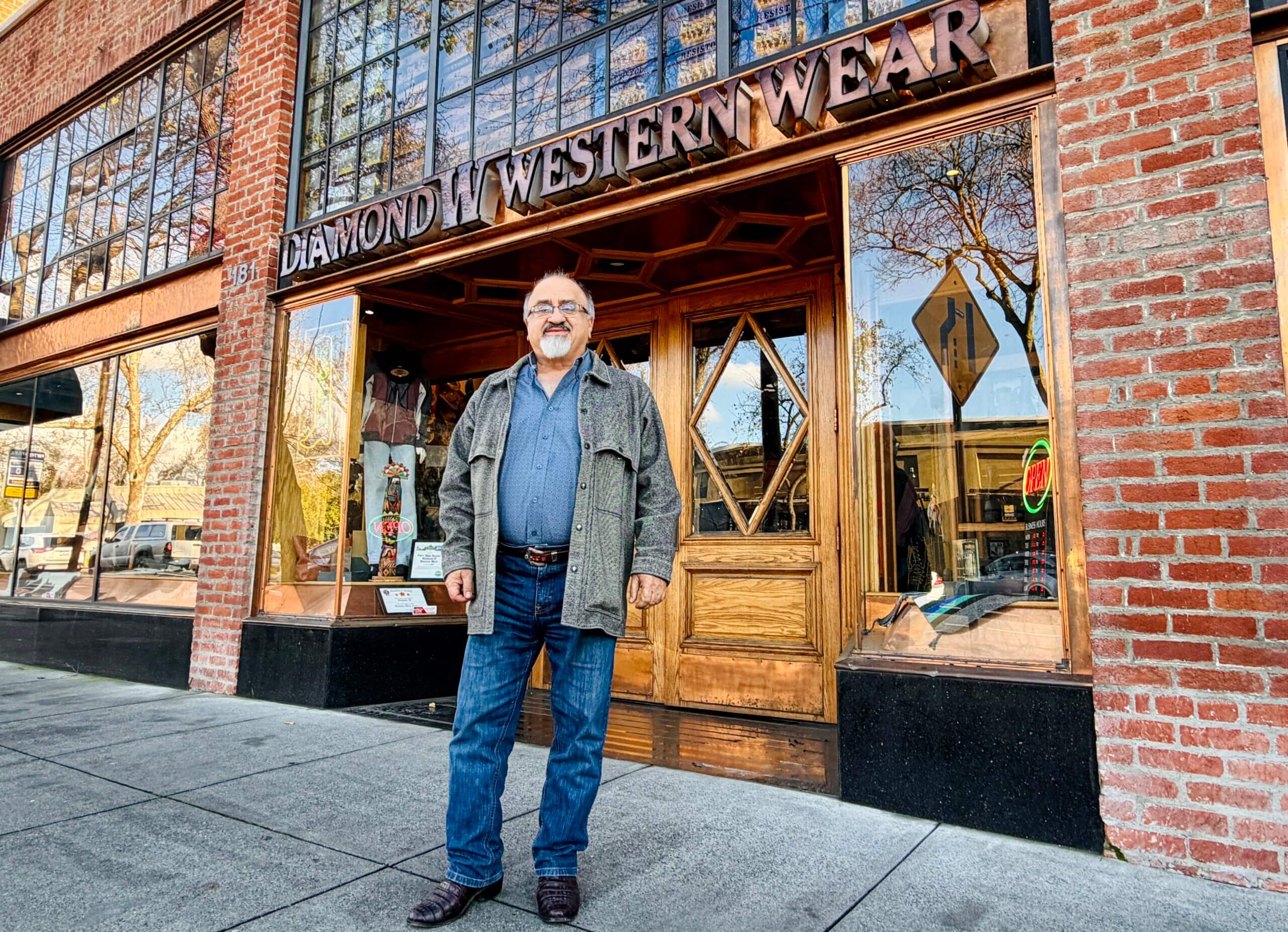
On a recent afternoon inside the 6,000-square-foot Diamond W Western Wear, Halimi wore what he sells — black alligator boots, jeans, a button-down, blazer and a hat — and moved easily past towers of boots, glass cases of belt buckles, pausing as an employee steamed a cowboy hat back into shape. His wife, Fran, emerged from the back. Customers drifted in.
Over the years, his footprint downtown has expanded to include two restaurants and a soon-to-open coffee shop, all within walking distance of his store.
Halimi didn’t arrive in America looking for a job. He arrived looking for an opportunity. When he moved to the United States at 16, in 1969, he worked full time while going to school, bussing tables at a restaurant and saving aggressively. By 18, he had pooled his earnings with his older brother to make his first real estate investment. “I was never looking for a job,” he said. “I always wanted to do my own thing.”
That instinct carried him through college, where he studied mathematics and economics, and later into commodities trading — “the stock market on steroids,” as he put it — before settling in Chico in 1979. It had the virtues he was looking for: a small-town feel, a university’s energy, and room to build.
Mending fences, building community
For all the boots, buckles and bull riders, Halimi’s most consequential work happens closer to home. He has served on the board of Congregation Beth Israel of Chico for decades, including numerous stints as president, and has been a steady presence through the cycles that define small Jewish communities.
Rabbi Lisa Rappaport, who leads the congregation, said that constancy matters. In a community with limited resources, leadership often means stepping in wherever the need arises.
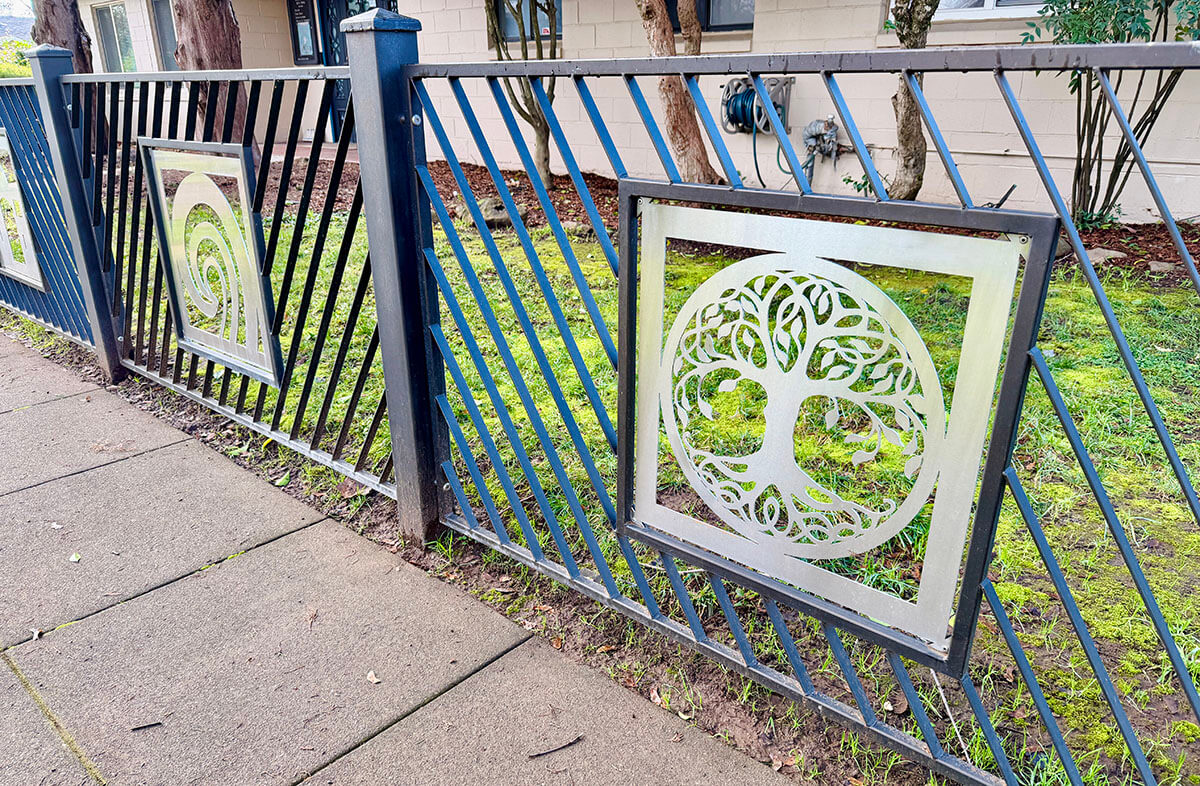
That was especially true after the synagogue was targeted with antisemitic graffiti in late 2022. What followed, Rappaport recalled, was an outpouring of support. Donations funded a new security system. A local metalworker volunteered to create a new sign. Another family, moved by the response, offered to pay for a fence.
Halimi volunteered to design and help build it. Vertical bars, he insisted, would make the synagogue feel like a jail. Instead, he created diagonal metal panels inspired by math’s golden ratio, incorporating stainless-steel symbols of the Twelve Tribes — a boundary meant to protect without closing the place off.
Rappaport credits both Halimi and his wife, a former religious school director and longtime sisterhood leader, with helping sustain the shul. “They’re in it till the end,” she said. In a small community, she added, that kind of commitment is existential. “If you have a couple of people who have that frame of mind,” she said, “it keeps the community alive. It’s people like that that keep it pulsing.”
Halimi, now a grandfather, carries that same lesson into his classroom at Chico State, where he has been teaching since 2009. Each semester he leads two courses: business analytics and the evolution of management theory. He doesn’t think of it as a job so much as a responsibility. “I like seeing the light bulb go on,” he said. Former students, now entrepreneurs themselves, sometimes track him down to say thank you. The payoff, he said, is “psychic income.”
Halimi teaches what he learned: “Even when the odds are against you,” he said, “you can still succeed.”
His rodeo business began, improbably enough, as a marketing complaint. Halimi had been sponsoring country concerts and rodeos to promote the store, but he was unimpressed with the results. Other sponsors, he noticed, felt the same way. So he launched his own production company. First, they hosted country music concerts. Soon, they built a rodeo: the National Bullriding Championship Tour, which just marked its 30th year.
He had expected resistance from the industry. Instead, he found acceptance, and eventually respect. “It’s very unusual,” he acknowledged, “for an Iranian Jew to be a successful rodeo producer.”
The post How a Persian Jewish immigrant became the rodeo king of California appeared first on The Forward.
Uncategorized
Israel’s Ben-Gvir Visits Flashpoint Al-Aqsa Mosque Compound

Israeli politician Itamar Ben-Gvir walks inside the Knesset, in Jerusalem, Oct. 13, 2025. Photo: Chip Somodevilla/Pool via REUTERS
Israel’s far-right police minister Itamar Ben-Gvir visited the flashpoint Al-Aqsa Mosque compound in Jerusalem on Sunday, saying he was seeking greater access for Jewish worshipers and drawing condemnation from Jordan and the Palestinians.
The compound in Jerusalem’s walled Old City is one of the most sensitive sites in the Middle East. Known to Jews as Temple Mount, it is the most sacred site in Judaism and is Islam’s third-holiest site.
Under a delicate, decades-old arrangement with Muslim authorities, it is administered by a Jordanian religious foundation and Jews can visit but may not pray there.
Suggestions that Israel would alter the rules have sparked outrage among Muslims and ignited violence in the past.
“Today, I feel like the owner here,” National Security Minister Ben-Gvir said in a video filmed at the site and distributed by his office. “There is still more to do, more to improve. I keep pushing the Prime Minister (Benjamin Netanyahu) to do more and more — we must keep rising higher and higher.”
A statement from the Jordanian foreign ministry said it considered Ben-Gvir’s visit to be a violation of the status quo agreement at the site and “a desecration of its sanctity, a condemnable escalation and an unacceptable provocation.”
The office of Palestinian president, Mahmoud Abbas, said such actions could further destabilize the region.
Ben-Gvir’s spokesman said the minister was seeking greater access and prayer permits for Jewish visitors. He also said that Ben-Gvir had prayed at the site.
There was no immediate comment from Netanyahu’s office. Previous such visits and statements by Ben-Gvir have prompted Netanyahu announcements saying that there is no change in Israel’s policy of keeping the status quo.
Muslim, Christian and Jewish sites, including Al-Aqsa had been largely closed to the public during the Iran war. There was no immediate sign of unrest on Sunday after Ben-Gvir’s visit.
Uncategorized
Netanyahu Visits Troops Fighting Hezbollah in Southern Lebanon

Israeli Prime Minister Benjamin Netanyahu speaks during a press conference at the Prime Minister’s office in Jerusalem, Aug. 10, 2025. Photo: ABIR SULTAN/Pool via REUTERS
i24 News – Israeli Prime Minister Benjamin Netanyahu visited Israeli forces operating in southern Lebanon on Sunday as military operations against Hezbollah-linked targets continue.
Netanyahu toured forward positions alongside Defense Minister Yisrael Katz, Eyal Zamir, and Northern Command Commander Rafi Milo, meeting troops and receiving operational briefings from commanders on the ground.
Speaking to soldiers, Netanyahu praised their performance and said operations in the Lebanese security zone were ongoing.
“The war continues, including within the security zone in Lebanon,” he said, adding that Israeli forces were working to prevent infiltration attempts and neutralize threats such as anti-tank fire and missiles.
He described the northern campaign as part of a broader regional struggle involving Iran and its allies, saying Israel’s adversaries were now “fighting for their survival” following sustained Israeli military pressure.
Uncategorized
Saudi Arabia Restores Full Capacity on East-West Oil Pipeline to 7 Million BPD After Attacks

FILE PHOTO: General view of Khurais NGL recovery plant in the eastern province of Saudi Arabia, June 28, 2021. Picture taken June 28, 2021. REUTERS/Mohammed Benmansour./File Photo
Saudi Arabia has restored full oil pumping capacity through the East-West pipeline to about seven million barrels per day, it said on Sunday, days after providing an assessment of damage on its energy sector from attacks during the Iran conflict.
The ministry said energy facilities and the pipeline affected by attacks during the conflict have recovered and restored operational capacity.
Saudi did not specify who launched the attacks, but the kingdom has intercepted many Iranian missiles and drones in recent weeks.
The strikes also disrupted operations at key oil, gas, refining, petrochemical and electricity sites in Riyadh, the Eastern Province and Yanbu Industrial City.
OUTPUT RECOVERY TO HELP SUPPLY CONTINUITY
Saudi said on Thursday the attacks had cut its oil production capacity by around 600,000 barrels per day and throughput on its East-West Pipeline by about 700,000 bpd.
The East-West Pipeline has been Saudi Arabia’s only crude export route amid the closure of the Strait of Hormuz. Reuters reported on Wednesday that Iran attacked the pipeline just hours after the ceasefire was agreed.
The ministry said it recovered affected volumes from the Manifa oilfield, where output had previously been reduced by around 300,000 bpd.
Work was ongoing to restore full output at the Khurais facility, after strikes on it reduced Saudi capacity by a further 300,000 bpd, the ministry said.
It said the quick recovery would enhance the “reliability and continuity of supplies to local and global markets.”