


Uncategorized
How Black music brought me closer to Judaism

Once, while my parents were away, my Grandma Min woke my three siblings and me at five in the morning to lecture us on the proper way to squeeze a toothpaste tube. Funny how effective that was. To this day, I can’t pick up a tube of Crest without thinking about how to squeeze it properly.
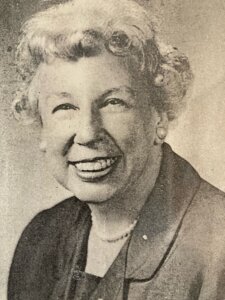
Toothpaste incident notwithstanding, I loved my Grandma Min. She was a rule-breaker and a rebel. Among the first Jewish women in Minneapolis to march for civil rights, she regularly hosted Black community leaders in her apartment and served them her own brand of soul food: blintzes, kugel, borscht, and mandelbrot. Everyone she touched — including me — was changed for the better. She’s the one who introduced me to the world’s greatest guitar teacher.
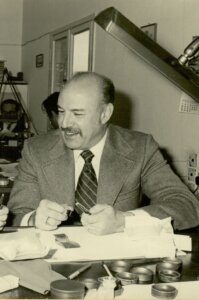
One Sunday afternoon, in the midst of a brilliant sun-shower, Lester Williams pulled up to our house in his pale-yellow Fleetwood Brougham. There’s little question that he was the first Black man to park a Cadillac on our block and walk to the door of a Jewish kid’s house for a guitar lesson.
It was Grandma Min’s idea. She’d seen Lester perform at a Hadassah luncheon, singing songs from Fiddler on the Roof with a big archtop Gibson and a tambourine balanced on his shoe. Afterwards, she asked if he’d teach me.
Lester, who was in his mid-70s at the time, wore a high-rise Don King hairdo and played in a style that was equal parts Texas blues and Yiddish theater. He taught me Sam Cooke’s ”You Send Me” and Lightning Hopkins riffs. When he sang, his eyes closed like he was singing for the Lord.
To this day, I’ve never opened my guitar case without thinking of Lester.
Back then, Jewish felt dorky; Black felt cool. In the early ’70s, a newly bar-mitzvahed kid playing funk and blues was an anomaly. Now, of course, the pop charts are built on it, but in the day it was the Eagles and Jethro Tull, not Kanye and Kendrick Lamar.
I was drawn to the groove and gravitas of Black music — Marvin Gaye, Curtis Mayfield, John Lee Hooker. It wasn’t only sound; it was a worldview. There was truth in that rhythm: sophisticated, sardonic, somehow sacred. It hovered between sex and Godliness. You could put a record on the stereo and feel righteous about reproducing the human species to it. To play that music, you had to become it, not just imitate it. I developed a lilting accent that slipped in naturally when I sang, like a thing that made down-in-the-bones sense. Every rock musician had done it in some form — Jagger, Van Morrison, the whole British Invasion.
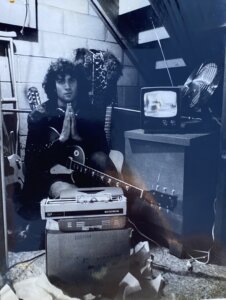
It was a bridge to something larger, a way to escape the confines of white suburbia and begin what would become a lifelong expansion of my creative and spiritual boundaries. In retrospect, it may have been the first step on the path that led me to become an observant Jew.
Most of the kids around me seemed content inside their circumscribed worlds of hockey, keggers and Sadie Hawkins dances. I wanted to erase the margins someone else had drawn around my life. The times I could do that were rare, but they happened most powerfully when I was making music. It was then that the world lost its edges. The interplay between musicians could feel like one spirit inhabiting separate bodies. That’s how it felt when I first played with Wynston Robyns.
At my cousin Jeff’s house near Cedar Lake, we jammed in the basement — low ceiling, unused shuffleboard court in the floor, winter coats piled on the Ping-Pong table. Some older Black guys from the North Side brought their gear, a little weed, and some Ripple wine. I’d never tried Ripple before. I drank to excess.
Soon the room came alive: guitars tuned, reeds moistened, drums whacked, a few tentative chords tossed out. First rhythm, then flight. Jeff on the Fender Rhodes, me on guitar, all of us tearing it up. After an hour, the alto sax player, Jimmy, said, “You boys gotta meet Wynston Robyns.”
With Jeff’s parents away and my parents asleep and dreaming back at my house, we piled into Jimmy’s car and drove north, well past the safety of our suburb. By the time we reached Wynston’s place it was close to one in the morning. Dim light spilled from the basement windows, bass and drums rumbled from below. When Wynston finally opened the door, he filled its frame: barrel-chested, magnetic, with a half-smile suspended between welcome and menace.
We smoked more weed and played until God knows when. Some Stevie, some Lou Rawls. It was nearly dawn when Jeff and I became the new members of Wynston Robyns and Soul SearchLyte.
Rehearsals were constant — four nights a week, sometimes after school, sometimes before. Neither of us was old enough to have a driver’s license, so we took the city bus.
It took months for Soul SearchLyte to land just two gigs. The first was a corporate lunch my dad attended in a suit and tie. “Wynston seems like a really nice guy,” he said afterward, which was true…mostly. The second was New Year’s Eve at the Holiday Inn downtown. We were the “headliners,” scheduled for 1:00 a.m. — which everyone in the business knows means the time everybody has gone home to party. The real headliners went on at midnight. It was another North Side band, Champagne, featuring Morris Day, André Simone, and a diminutive guy with a large afro.
Jeff and I watched them in awe. André’s bass ran through a Mu-tron Funk Box that made every note sound like it came from the world’s best wah-wah. Morris Day’s drumming was tight, crisp, unstoppable. Wynston leaned toward me and shouted over the groove, “You see that guy? The way he chops out that rhythm? His name’s Prince. They say he’s got a record deal on Warners. Peter, that’s what you need to do if you wanna be more than just a basement guitar player.”

No offense to Soul SearchLyte, but Champagne was a brutal act to follow. By the time we went on at 3:00 a.m., only my Uncle Sonny and the bar staff were still around, mopping the floor while we played our hearts out.
A few weeks later, during rehearsal, our lead guitarist, Larry Crags, announced he was quitting.
“Wynston, I’m afraid I’m gonna have to leave the snap,” he said.
Wynston stared at him. “What the fuck did you just say?”
Larry shifted his weight. “My wife thinks it’s not a good idea — all this practice when we haven’t got any gigs lined up.”
Wynston stepped forward and jabbed his finger into Larry’s chest. “You sayin’ I’m not a man?”
It was strange. Larry hadn’t said anything of the sort.
Before Larry could answer, Wynston swung and caught him square in the face. Larry, who’d once told me in strictest confidence he was a Kung Fu master, fell hard, then rose, bloodied, into a fighting stance. Having been an ardent viewer of Kung Fu, the TV series, I waited for the mystical retaliation. It never came. Wynston hit him again, a clean right hook that sent him flying into my amplifier.
Larry crawled away, whimpering, up the stairs and out of the house. Jeff, maybe out of shock, started playing ”Rock-A-Bye Baby” on the high keys of his electric piano. From behind the drum kit someone said flatly, “Why don’t somebody shut off that amplifier?”
Wynston, panting hard, looked at me. “Peter, I suppose you wanna quit this snap too, since you’ve just seen a Black man beat up on a white dude.”
“No, Wynston,” I said. “I love being in this band.”
Hell yes, I did. I just became the lead guitarist.
Those nights in North Minneapolis — half teachable moment, half transcendence — were my first real taste of faith: the moment when music, spirit and belonging coalesced into one sound, one rhythm, one funky-ass pulse of Creation.
I’m positive Grandma Min would approve.
The post How Black music brought me closer to Judaism appeared first on The Forward.
Uncategorized
Downed Planes Raise New Perils for Trump as Tehran Hunts for Missing US Pilot

Traces of an Iranian missile attack in Tehran’s sky, amid the U.S.-Israeli conflict with Iran, in Tehran, Iran, April 3, 2026. Photo: Majid Asgaripour/WANA (West Asia News Agency) via REUTERS
Two US warplanes were downed over Iran and the Gulf, Iranian and US officials said on Friday, with two pilots rescued and a third still missing and being hunted by Tehran’s forces.
The incidents show the risks still faced by US and Israeli aircraft over Iran despite assertions from US President Donald Trump and his Defense Secretary Pete Hegseth that their forces had total control of the skies.
The first plane, a two-seat US F-15E jet, was shot down by Iranian fire, officials in both countries said.
The second plane, an A-10 Warthog fighter aircraft, was hit by Iranian fire and crashed over Kuwait, with the pilot ejecting, two US officials said.
Two Blackhawk helicopters involved in the search effort for the missing pilot were hit by Iranian fire but made it out of Iranian airspace, the two US officials told Reuters.
The degree of injuries among the crew of the aircraft remained unclear. The status and whereabouts of the missing F-15E crew member was not publicly known.
Iran’s Revolutionary Guard Corps said it was combing an area near where the pilot’s plane came down in southwestern Iran and the regional governor promised a commendation for anyone who captured or killed “forces of the hostile enemy.”
Iranians, who have been pummeled by American air power for weeks, posted gleeful messages celebrating the plane downings. Iran’s Parliament Speaker Mohammad Baqer Qalibaf said on X that the U.S. and Israel’s war had been “downgraded from regime change” to a hunt for their pilots.
Trump has been in the White House receiving updates on the search-and-rescue operation, a senior administration official told Reuters. The Pentagon and US Central Command did not immediately respond to requests for comment.
NO SIGN OF END TO WAR
The prospect of a US service person being alive and on the run inside Iran raises the stakes for Washington in a conflict with low public support and no sign of an imminent end.
Iran has officially told mediators it is not prepared to meet with US officials in Islamabad in coming days and that efforts to produce a ceasefire, led by Pakistan, have reached a dead end, the Wall Street Journal reported on Friday.
The US and Israel opened the campaign with a wave of strikes that killed Iran’s Supreme Leader Ayatollah Ali Khamenei on February 28. The war has killed thousands and threatened lasting damage to the global economy.
So far, 13 US military service members have been killed in the conflict and more than 300 have been wounded, according to the US Central Command.
Iran has rained down drones and missiles on Israel. It has also taken aim at Gulf countries allied to the US, which have so far held back from joining the war directly for fear of further escalation.
In a security alert on Friday, the US embassy in Beirut said Iran and its aligned armed groups may target universities in Lebanon and urged US citizens in the country to leave while commercial flights are still available.
Israel has been waging a parallel campaign against Iran-backed Hezbollah in Lebanon after the militant group fired at Israel in support of Iran.
TRUMP THREAT TO STRIKE BRIDGES, POWER PLANTS
On Friday, as Trump threatened to hit its bridges and power plants, Iran struck a power and water plant in Kuwait, underlining the vulnerability of Gulf states that rely heavily on desalination plants for drinking water.
On Thursday, Trump posted footage on social media showing dust and smoke billowing up as US strikes hit the newly constructed B1 bridge between Tehran and nearby Karaj, which was due to open this year, and said more attacks would follow.
“Our Military, the greatest and most powerful (by far!) anywhere in the World, hasn’t even started destroying what’s left in Iran. Bridges next, then Electric Power Plants!” he wrote in a subsequent post.
On Friday, a drone hit a Red Crescent relief warehouse in the Choghadak area of Iran’s southern Bushehr province.
Kuwait Petroleum Corporation said its Mina al-Ahmadi refinery had been hit by drones. Other attacks were also reported to have been intercepted in Saudi Arabia and Abu Dhabi. Missile debris landed near the Israeli port of Haifa, site of a major oil refinery.
Oil markets were closed after benchmark U.S. crude prices gained 11% on Thursday following a speech by Trump that offered no clear sign of an imminent end to the war.
Uncategorized
US-Iran: Diplomatic Push Falters as Qatar Steps Back and Pakistan Talks Stall

Qatari Prime Minister and Foreign Minister Sheikh Mohammed bin Abdulrahman Al Thani speaks after a meeting with the Lebanese president at the presidential palace in Baabda, Lebanon, Feb. 4, 2025. Photo: REUTERS/Emilie Madi
i24 News – Diplomatic efforts to secure a ceasefire between Washington and Tehran appear to have reached an impasse, as key regional mediators pull back and broader talks stall.
According to reporting by The Wall Street Journal, Qatar has informed US officials that it does not wish to take a central role in mediating between the two sides. Officials familiar with the matter said Doha has made clear it is “not willing” to lead negotiations or act as the primary broker.
At the same time, Pakistan-led efforts to bring Iranian and American officials together have also stalled. Mediators say Tehran has refused to attend proposed meetings in Islamabad, calling Washington’s conditions “unacceptable,” further underscoring the widening gap between the two sides and the growing difficulty of restarting dialogue.
Despite the deadlock, diplomatic channels have not fully closed. Turkey and Egypt are continuing parallel efforts to revive talks, with discussions underway about potential alternative venues, including Doha and Istanbul.
US President Donald Trump downplayed the impact of recent military developments on diplomacy, including the destruction of a US fighter jet during operations in Iran. Speaking in a brief exchange with an NBC News journalist, he said: “No, not at all. It’s war. We are at war.”
He further fueled speculation with a cryptic social media post on Truth Social, writing: “Keep the oil, anyone?” criticising international allies on Friday over rising fuel prices. Trump appeared to mock allies such as the United Kingdom, writing that they should “keep the oil.”
Uncategorized
Report: Iran Retains Significant Missile Capability Despite Weeks of US-Led Strikes

Iranian missiles are displayed in a park in Tehran, Iran, Jan. 31, 2026. Photo: Majid Asgaripour/WANA (West Asia News Agency) via REUTERS
i24 News – Despite weeks of sustained airstrikes by the United States and its allies, Iran has reportedly managed to retain a substantial portion of its military capabilities, particularly its ballistic missile arsenal.
According to a report by The New York Times citing US intelligence assessments, Tehran has developed methods to mitigate the impact of the strikes, allowing it to preserve and restore key parts of its missile infrastructure.
While the Pentagon has claimed responsibility for striking more than 11,000 targets over five weeks and reducing the rate of Iranian missile fire, intelligence officials now caution that the actual damage may be more limited than initially assessed. Iranian forces are reportedly able to rapidly repair or reactivate missile launchers stored in heavily fortified or underground facilities, sometimes within hours of being hit.
Analysts also point to the widespread use of decoy sites, which may have drawn strikes away from operational assets. Many of the targeted locations are believed to have contained dummy installations, complicating efforts to accurately gauge the degradation of Iran’s ballistic capabilities. Combined with deep underground bunkers and dispersed storage networks, this approach is seen as enabling Tehran to maintain a higher level of readiness than publicly estimated.
US intelligence officials assess that this resilience reflects a deliberate strategy: preserving a credible long-range strike capability as both a deterrent and a bargaining tool in any future negotiations, while ensuring regime survival and continued regional influence.
Despite sustained air dominance claimed by Washington and its allies, Iran’s adaptive tactics continue to complicate battlefield assessments, leaving the true balance of power in the conflict uncertain.