


Uncategorized
In her inspired and inspiring history of the Jewish Bund, Molly Crabapple has found her anti-Zionist heroes for our time

Here Where We Live Is Our Country: The Story of the Jewish Labor Bund
By Molly Crabapple
One World, 453 pages, $32
The week of Passover, north Brooklyn bus riders found something unusual at several bus shelters. Swapped out for paid ads were quotes including one translated from a 1938 essay in Tsukunft, a Yiddish literary monthly once published by the Forward Association.
“If a Jewish state should arise in Palestine,” it read, “its spiritual climate will be eternal fear of the external enemy (Arabs); eternal struggle for every bit of ground with the internal enemy (Arabs); and an untiring struggle for the extermination of the language and culture of the non-Hebraized Jews of Palestine. Is this a climate in which freedom, democracy and progress can grow?”
There are pithier anti-Zionist slogans graffitied in Brooklyn, but this quote was from Henryk Erlich, a leader of the Jewish Labor Bund, a staunchly anti-Zionist socialist party founded in Vilna in 1897 that became the most influential political party among prewar Eastern European Jews.
The bus shelter takeover was part of a guerrilla ad campaign for Here Where We Live Is Our Country: The Story of the Jewish Labor Bund, a new book by the artist, activist and writer Molly Crabapple. The campaign, which started the same week the Justice Department sued Harvard University, accusing it of tolerating antisemitism by failing to crack down on anti-Zionist student protesters, also included wheatpasted posters of a model in fishnets holding Crabapple’s book.
The Trump administration and leading American Jewish groups like the Anti-Defamation League and American Jewish Committee argue that opposing Zionism, defined as Israel’s right to exist as a Jewish state, is antisemitic; Crabapple’s response is a 400-page Jewish history lesson.

Before World War II, most Jews were not Zionists. Many Orthodox communities felt that forming a Jewish state was heresy, others thought the mass migration of 9 million Jews from a hostile Europe was impractical. The Bund’s opposition to Zionism was not religious or pragmatic; it was ideological. Bundists argued that the future of Jews was linked to all workers, and they should stay and fight repression in Europe, not leave. They called this form of solidarity doikayt, Yiddish for here-ness, as opposed to Zionism’s there-ness.
Crabapple places the Bund, initially an outlawed group in Tsarist Russia, at the center of both the failed 1905 and successful 1917 revolutions. In interwar Poland, as a legal party, it became the most powerful Jewish political movement, even winning seats in municipal elections, and during the Holocaust, Bundists became ghetto fighters and partisans. But the Bund was purged by Stalin, who killed Erlich four years after his Tsukunft essay, and decimated by the Nazis. In postwar America, the Bund was mostly forgotten.
Crabapple, a member of the Democratic Socialists of America and an Occupy Wall Street alumna, learned of the Bund through a watercolor by her great-grandfather the artist Sam Rothbort. The painting, set in the Belarusian shtetl of his youth, shows a young woman in a blue dress throwing a rock through a cottage window. The caption reads: “Itka, the Bundist.”
In her 2018 New York Review of Books essay “My Great-Grandfather the Bundist,” Crabapple recounts discovering that Rothbort’s activism in Tsarist Russia forced him to flee to New York in 1904.
Since the publication of her article, Crabapple spent six years learning Yiddish, visited the former centers of Eastern Europe Jewish life, and dug through obscure Yiddish socialist tomes to produce her book. During the same time, Hamas attacked Israel on Oct. 7, 2023 and Israel responded by killing over 70,000 in Gaza in attacks which many, including the Israeli human rights group B’Tselem, have called a genocide. At the time of this writing, Israel is occupying southern Lebanon and along with the United States is at war with Iran. For the first time, Gallup polls show more Americans sympathize with Palestinians than with Israelis, and an increasing number of younger Jews have rejected Zionism outright and are rediscovering the Bund.
Crabapple’s book is written for this moment. More than translating Bundist theory from Yiddish, she puts it into the language of today’s left. When Julius Martov declared in 1894 “that Jewish workers were oppressed both as workers and as Jews, as a race and a class,” Crabapple explains that he was invoking what the modern-day scholar Kimberlé Crenshaw calls “intersectionality” and was a form of “identity politics.”
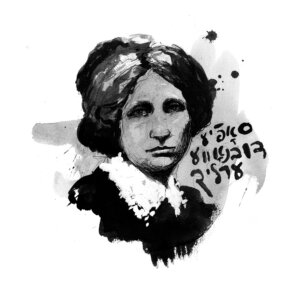
To tell the Bund story, Crabapple focuses on a cast of characters including Erlich’s wife, the poet and activist Sophia Dubnow; the militant leader Bernard Goldstein; the famous ghetto smuggler Vladka Meed (nee Feigele Peltel); and her own great-grandfather Sam Rothbort. In some instances, she relies on memoirs; for Rothbort, she interprets the hundreds of paintings and sculptures in her great-aunt’s Brooklyn home and pulls on genealogical threads from her mother’s shoebox of family papers.
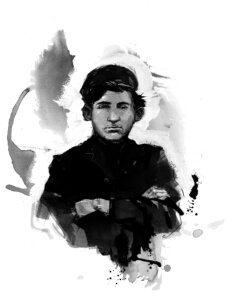
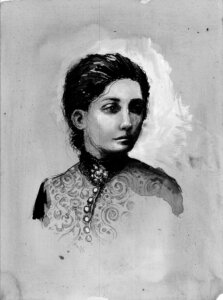
Crabapple, whose artwork is in the permanent collection of MoMA and the Rubin Museum, and has posters currently on display at the Poster House, introduces each character with an ink drawing portrait. Her artwork tends to lay bare her political perspective. She renders Donald Trump grotesque, while her sketches of Bundists are more similar to her portraits that glorify leftist icons like Luigi Mangione, the accused assassin of the United Health Care CEO Brian Thompson.
When asked in 2020 on the progressive Jewish podcast Treyf if progressives were engaging with a “romanticized fantasy of the Bund,” she didn’t disagree. “There’s actually a great value to simplified and aesthetic symbols in politics,” she said. “The fantasy of the Bund that I see is a muscly Jewish guy in a newsboy cap saying ‘fuck the Zionists’ with one middle finger while the other hand punches a Nazi.”
Here Where We Live Is Our Country is not a caricature of the Bund, nor a work of fan fiction; it’s a deeply researched portrait, but at its core lies this romantic vision. The Bund ran soup kitchens, sports programs and day camps, and promoted the Yiddish language, but Crabapple is most attracted to their street-fighting militancy. And her narrative can be one-sided. The Erlich quote in the book and on the bus shelter was part of a public debate with his father-in-law, the historian Simon Dubnow. Dubnow’s response goes untold.
But there are plenty of academic texts that dissect 90-year-old political debates. Crabapple’s book is different, and better for it. Here Where We Live Is Our Country reads like an epic novel with the Bundists as its tragic heroes.
Crabapple, as narrator, relates her experiences protesting at the 2011 Occupy Wall Street encampment, canvassing housing projects with the DSA, reporting from the West Bank and Gaza, and traveling through war-torn Ukraine. The personal interjections remind the reader that this is not a dispassionate history. Naomi Klein’s blurb praises the book as “a portal to an irresistible, lost world,” but Crabapple’s goal is not to write an elegy. She calls the Bund’s history a “candle to illuminate the tumultuous present” and hopes her book “serves as a guide to our urgent moment.” She decouples Zionism from Jewishness and shows that anti-Zionism alone is not antisemitic, but she leaves largely unresolved the question of what the Bund’s example demands of us today.
The Bund organized eastern European Jewish workers who lacked basic civil rights. Today’s challenge is less about Jewish empowerment, than it is about how Jews wield power, vis-a-vis the state of Israel and its military. In the book, however, Israel barely appears as an actual place where millions of Jews and Palestinians live. Instead, Israel is seen through the prism of its founding ideology, Zionism — one which pre-war Bundists argued adopted the worst quality of European ethno-nationalism.
As the Erlich quote argues, a Jewish state in Israel was destined to repeat endless cycles of violence and tribalism. In this view, the socialist kibbutzes that seduced leftists like a young Bernie Sanders or the overtures of peace and coexistence by Liberal Zionists like Yitzhak Rabin, are all illusions. For Crabapple, the inescapable reality of Zionism is instead the right-wing Benjamin Netanyahu, the violent settlers, and increasingly brutal wars and occupation.
The antidote is the Bundists’ concept of solidarity — where Jews join with the workers of the world but, unlike in Communism, hold on to their Jewish identity. One of the quotes Crabapple returns to several times is from the Socialist Congressman and Bundist ally Meyer London in 1905, where he inverts the story of Exodus: “Are you aware that in Russian Poland, thousands of our Jewish boys and girls are giving their lives for liberty? They pray to God, not to lead them again out of Egypt, but to help them to free Egypt.”
The quote, like Crabapple’s book, is poetic and noble. It goes against everything I learned in Hebrew School, yet somehow reflects Jewish values in its call to be empathetic to the oppressed, because we “were once a stranger in a strange land.”
Reflecting on a 1938 Erlich speech about the rise of Nazism, where he calls on Polish Jews to stand in solidarity with the same people who had carried out pogroms across their country, Crabapple writes: “This was it. There was only Egypt, the Bund knew, and they were stuck with the Egyptians. They were people first, not Jews or goys.” It is a beautiful and heartbreaking line, knowing what came next.
This tragic solidarity is presented as a point of inspiration, but how? The 2023 Jewish Voices for Peace cease-fire protest that filled Grand Central Terminal is offered as an example of Bundist-like solidarity in action, but Crabapple, who has supported a cultural boycott of Israel, stops short of prescribing what this anti-Zionism should mean today.
Vast numbers of Jews, including Bundists, did leave Egypt and cross into Israel — not not because of ideology or religion, but because of history. American labor leader David Dubinsky, who is featured in the book, was exiled to Siberia by the Tsar and escaped to New York, where he co-founded the Jewish Labor Committee in 1934, providing Bundists critical support during the Holocaust.
In his memoirs, Dubinsky recalls telling David Ben-Gurion after the war, “even though I am sympathetic to the creation of Israel, I am not a Zionist.” He then spent decades steering American labor to support Israel financially and politically.
Crabapple also includes Vladka Meed, the celebrated ghetto smuggler, drawing on her memoir Both Sides of the Wall, the proceeds of whose English edition were donated to the Ghetto Fighters’ House Museum in Israel, where Meed led groups of Americans on educational trips.
The historian David Slucki in his 2012 book, The International Jewish Labor Bund after 1945, finds that over time the Bund came to terms with the state of Israel; the Bund’s World Coordinating Committee accepted it as an important Jewish community, but not the sole political and cultural center, and eventually advocated a two-state solution.
It’s hard to imagine the Bund simply “Standing with Israel” today. But nearly half of Americans under 30 describe Hamas as a militant resistance group rather than a terrorist organization, and anti-Zionism has been taken up by far right antisemites. Crabapple doesn’t spell out what the Bundist response would be today; she leaves that to the reader. What she does is resurrect a buried political tradition in a way her Bundist heroes would appreciate: not just in book form, but in the streets for everyday Brooklyn bus riders.
The post In her inspired and inspiring history of the Jewish Bund, Molly Crabapple has found her anti-Zionist heroes for our time appeared first on The Forward.
Uncategorized
Yiddish Modernism and the political tumult in the 1930s
אין די 1920ער און 1930ער יאָרן האָט דער זשורנאַל „אין זיך“ געדינט װי אַ טריבונע פֿאַר מאָדערניסטישע עקספּערימענטן אין דער אַמעריקאַנער ייִדיש־ליטעראַטור. צו די „אינזיכיסטן“ האָבן געהערט יעקבֿ גלאַטשטײן, אַהרן גלאַנץ־לעיעלעס, ה. לײװיק, שלמה שװאַרץ, יהודה לײב טעלער און אַנדערע.
װי מען קען טרעפֿן פֿונעם זשורנאַלס נאָמען, זײַנען די דאָזיקע ליטעראַטן געװען פֿאַרטאָן אין שעפֿערישע חקירות אַרום דעם אײגענעם „זיך“. און טאַקע, אין די 1920 יאָרן האָט „אין זיך“ ניט געהאַט קײן אינטערעס צו די פּאָליטישע דאגות־היום.
אָבער דאָס האָט זיך געביטן נאָך 1934, װען גלאַטשטײן איז געװאָרן דער רעדאַקטאָר פֿונעם זשורנאַל. דער דאָזיקער תּקופֿה איז געװידמעט דאָס נײַע בוך פֿון איתי זוטרא (אוניװערסיטעט פֿון מאַניטאָבאַ, קאַנאַדע) „אינזיכיזם: ייִדיש־דיכטונג און די ייִדישע אידענטיטעט אין אַמעריקע אין די 1930ער יאָרן“.
גלאַטשטײן האָט פֿאַרטײדיקט די שעפֿערישע אױטאָנאָמיע פֿונעם דיכטער קעגן די אַנגאַזשירטע קאָמוניסטישע קריטיקער װי אַלכּסנדר פּאָמעראַנץ, װאָס האָבן געפֿאָדערט, אַז ליטעראַטור זאָל דינען די אינטערעסן פֿון די פּראָלעטאַרישע מאַסן.
אַזױ איז גלאַטשטײנס אײגענע פּאָעטישע שאַפֿונג געװאָרן אַ מין פּאָליטישע פּאָזיציע. די דאָזיקע פּאָליטיק, האַלט זוטרא, האָט משפּיע געװען אויף זײַן ליטעראַרישן סטיל און דעם סטיל פֿון אַנדערע מחברים פֿון „אין זיך“.
גלאַטשטײן האָט געעפֿנט די זײַטן פֿון „אין זיך“ פֿאַר פּאָליטישע װיכּוחים. ער אַלײן איז אַרױס מיט אַ פֿאָרשלאָג צו שאַפֿן אַ פּאַרטײ, װאָס זאָל זײַן אי פּאָליטיש ראַדיקאַל אי ייִדישיסטיש, הגם קײן פּראַקטישע פּראָגראַם האָט ער ניט פֿאָרגעלײגט.
להיפּוך צו אַנדערע ראַדיקאַלע פּאַרטײען, קודם־כּל דער קאָמוניסטישער, איז דער הױפּטציל פֿון גלאַטשטײנס פּאַרטײ געװען צו פֿאַרטײדיקן ייִדישע נאַציאָנאַלע אינטערעסן. דאָס איז געװען ספּעציעל װיכטיק אין דער צײַט װען דער אַנטיסעמיטיזם האָט געהאַלטן אין אײן װאַקסן אין אײראָפּע.
גלאַטשטײן האָט פֿאַרבעטן ייִדישע ליטעראַטן אַרומצורעדן זײַן פּראָיעקט אױף די זײַטן פֿונעם זשורנאַל. לרובֿ זײַנען זײ ניט געװען אײַנשטימיק מיט גלאַטשטײן. דער עיקר זײַנען זײ געװען קעגן דער אידײ, אַז די אינטעלעקטואַלן דאַרפֿן װערן פּאָליטישע אָנפֿירער פֿון די מאַסן.
חוץ דעם, װי עס האָט באַמערקט חיים זשיטלאָװסקי, זײַנען שױן דאָ געװען גענוג פּאָליטישע פּאַרטײען אין װעלכע ייִדן האָבן זיך אַקטיװ באַטײליקט. צו שאַפֿן נאָך אַ פּאַרטײ װאָלט ניט געהאָלפֿן צו פֿאַרבעסערן דעם מצבֿ פֿון ייִדן.
דער אינזיכיזם, האַלט זוטרא, איז בטבֿע געװען עקלעקטיש סײַ פּאָעטיש און סײַ פּאָליטיש. מען האָט ניט געהאַלטן פֿון טראַדיציאָנעלע זשאַנערס און סטילן. אָפֿט מאָל האָט מען עקספּערימענטירט מיט מישן פּראָזע און פֿערזן.
אין די 1930ער יאָרן האָבן די ליטעראַרישע עקספּערימענטן באַקומען אַ פּאָליטישן אַקצענט. סײַ אין דער קונסט און סײַ אין דער פּאָליטיק האָבן די אינזיכיסטן געזוכט אַן ענטפֿער אױף דער עיקר־פֿראַגע: װאָס איז דער עצם פֿונעם ייִדישן „זיך“ אין אַמעריקע אין דער מאָדערנער תּקופֿה?
דער אינזיכיזם איז געװאָרן אַ נײַער מין ייִדישיזם: אַ קולטורעלע און פּאָליטישע אידעאָלאָגיע, װאָסער ציל איז געװען צו פֿאַראײניקן פֿאַרשײדענע פּאָליטישע שטרעמונגען אױפֿן סמך פֿון דער ייִדישער שפּראַך און דער מאָדערנער װעלטלעכער ייִדיש־קולטור.
גלאַטשטײן האָט געגלױבט, אַז װערטער דאַרפֿן טראָגן דעם װירקלעכן אמת, בפֿרט אין די צײַטן, װען כּלערלײ טאָטאַליטאַרישע רעזשימען האָבן פֿאַרשפּרײט ליגנס פֿאַר די צװעקן פֿון זײער מערדערישער פּראָפּאַגאַנדע.
אינעם בוך לידער „ייִדישטײַטשן“, װאָס איז אַרױס אין װאַרשע אין 1937, האָט גלאַטשטײן געפּרוּװט דערגרײכן די טיפֿסטע פֿאָנעטישע און לעקסישע װאָרצלען פֿון דער ייִדישער שפּראַך.
אין די שורות „אַלטער בױם, פֿעלדז און שטאַם / כ׳קום צו דיר מיט ברױט און גראַם“ דריקט גלאַטשטײן אױס זײַן פּאָזיציע לגבי דער ייִדישער קולטור־ירושה. ער קומט מיט זײַן אַמעריקאַנער „ברױט און גראַם“ צו דעם „אַלטן בױם“ פֿון ייִדיש כּדי צו שעפּן שפּראַכלעסע יניקה פֿאַר זײַן פּאָעזיע.
זוטרא אַנטפּלעקט אין „ייִדישטײַטשן“ סאַטירישע אונטערטענער, װאָס מאַכן חוזק סײַ פֿון די פֿאַשיסטן און קאָמוניסטן און סײַ פֿון די אַמעריקאַנער אַסימילאַטאָרן.
די צװײטע צענטראַלע פֿיגור אינעם אינזיכיזם איז געװען דער דיכטער, קריטיקער און זשורנאַליסט אַהרן גלאַנץ־לעיעלעס. אין 1937, אײנצײַטיק מיט גלאַטשײטנס „ייִדישטײַטשן“, איז אַרױס גלאַנץ־לעיעלעס בוך לידער „פֿאַביוס לינד“.
אין הסכּם מיט די עסטעטישע פּרינציפּן פֿונעם אינזיכיזם איז דאָס דאָזיקע בוך אַ מישמאַש פֿון סטילן, זשאַנערס און שטאַנדפּונקטן, װאָס זײַנען פֿאַרקניפּט דורך דער פֿיגור פֿונעם הױפּטהעלד. דאָס איז אַ פּאָעטישער סך־הכּל פֿונעם איניזכיסטישן פּעריאָד אין לעיעלעסעס שאַפֿונג, האַלט זוטרא.
„פֿאַביוס לינד“ האָט באַקומען התלהבֿותדיקע אָפּרופֿן מצד די קריטיקער. גלאַטשטײן האָט געהאַלטן דאָס בוך פֿאַר דער „ערשטער גרױסשװוּנגיקער און גרױסשטאָטישער פּאָעמע אין דער ייִדישער פּאָעזיע“, און ה. לײװיק האָט עס געלױבט פֿאַר זײַן „אָרגאַנישער גאַנצקײט“.
די פֿיגור פֿון פֿאַביוס לינד איז ניט קײן אױטאָביאָגראַפֿישע. זוטרא מאַכט אַ פּרוּװ צו אַנטפּלעקן די פֿאַרפּלאָנטערטע באַציִונגען צװישן דעם מחבר אַהרן גלאַנץ־לעיעלעס, זײַן פּאָעטישער פּערזאָן אַ. לעיעלעס, און זײַן אױסגעטראַכטן „אַלטער עגאָ“ — פֿאַביוס לינד.
לינד פֿיגורירט אינעם בוך װי אַ צעשפּאָלטענע פּערזענלעכקײט: „פֿאַביוס לינד פֿיל לעבנס פֿירט ער“. ער איז סײַ אַ פּראָדוקט און סײַ אַ קרבן פֿון זײַן תּקופֿה.
לינד האָט ספֿקות װעגן כּלערלײ פּראָיעקטן צו לײזן די „ייִדישע פֿראַגע“, אינעם סאָװעטישן ביראָבידזשאַן אָדער אינעם העברעיִש־רעדנדיקן ייִשובֿ אין ארץ־ישׂראל.
חוץ לידער האָט גלאַנץ געשריבן פּאָליטישע קאָמענטאַרן אין דער ליבעראַלער צײַטונג „דער טאָג“. להיפּוך צו גלאַטשטײן האָט ער ניט פֿאַרטראַכט קײן אײגענע פּאָליטישע פּראָיעקטן. זײַן פּאָליטישער שטאַנד איז געװען אין הסכּם מיטן פּראָגרעסיװן הױפּטשטראָם פֿון פֿראַנקלין רוזװעלטס „ניו דיל“.
דער לעצטער נומער פֿון „אין זיך“ איז אַרױס אין 1940, װען אײראָפּע איז שױן געשטאַנען אױפֿן שװעל פֿונעם חורבן. דער קאָנפֿליקט צװישן אַלװעלטלעכקײט און ייִדישקײט, װאָס איז געװען די צענטראַלע טעמע פֿון די אינזיכיסטישע חקירות, איז געלײזט געװאָרן לטובֿת ייִדישקײט.
גלאַטשטײן האָט פּראָקלאַמירט: „אַ גוטע נאַכט, ברײטע װעלט. […] אױף מײַן אײגענעם געבאָט גיי איך צוריק אין געטאָ“. דאָס איז געװען דער סוף פֿונעם ייִדישן מאָדערניזם, פֿאַרסך־הכּלט זוטרא.
די פּאָעטישע קולטור־ירושה פֿון די אינזיכיסטן איז פֿאָרגעשטעלט געװאָרן פֿאַרן ענגליש־שפּראַכיקן עולם אין דער פּרעכטיקער צװײ־שפּראַכיקער אַנטאָלאָגיע „אַמעריקאַנער ייִדישע פּאָעזיע“, װאָס איז אַרױס אין 1986 אונטער דער רעדאַקציע פֿון בנימין און באַרבאַראַ האַרשאַװ.
אין דער הקדמה האָט בנימין האַרשאַװ פּרטימדיק אַנאַליזירט די פֿאָרמעלע און סטיליסטישע חידושים, װאָס די אינזיכיסטן האָבן אַרײַנגעבראַכט אין דער ייִדישער פּאָעזיע אין די 1920ער יאָרן, אָבער ער האָט קױם באַרירט זײער פּאָליטיק.
זוטראס בוך באַטראַכט די אינזיכיסטישע שעפֿערישקײט אונטער אַן אַנדערן קוקװינקל. אין די 1930ער יאָרן זײַנען פּאָליטיק און פּאָעזיע געװאָרן נאָענט צונויפֿגעפֿלאָכטן אין די װערק פֿונעם לעצטן דור אַמעריקאַנער ייִדישעמאָדערניסטן.
The post Yiddish Modernism and the political tumult in the 1930s appeared first on The Forward.
Uncategorized
I never saw myself in Barbie. Would ‘Hanukkah Barbie’ have changed that?

I wasn’t really a Barbie kid. While I occasionally played with my sister’s hand-me-down Barbies, I preferred American Girl dolls. They were Barbie’s chunkier, cherubic counterparts, each representing a girl from a different period in history and accompanied by a series of historical-fiction books about her life. I devoured those books, including the story of Rebecca Rubin, a 9-year-old Russian-Jewish immigrant living on the Lower East Side in the early 1900s.
So when Mattel released its first Hanukkah Barbie last week — officially marketed as the “Barbie Holiday Sweater Doll” — I wondered whether she would have appealed to me when I was growing up. Would her Jewishness have made her feel more relatable than that blonde-haired, blue-eyed, impossibly proportioned bombshell?
As it turns out, I wasn’t the only one thinking about what it means for Barbie to look Jewish. Shortly after her release, Hanukkah Barbie set off a spirited debate over her appearance. Her nose seemed slightly more prominent than the default Barbie button nose, raising questions about whether Hanukkah Barbie’s face reinforced Jewish stereotypes, or if her distinctive nose reflected a good-faith effort to give the doll recognizably Jewish features.
It was at least clear that Mattel did its homework about the Festival of Lights. The hanukkiah on Barbie’s sweater has the correct number of candleholders, and the dreidels bear accurate Hebrew lettering — which is more than can be said about a lot of Hanukkah merchandise. If sales are any indication, Hanukkah Barbie is resonating. The doll, which originally retailed for about $30, is sold out, with third-party sellers now asking for as much as $345.
There have previously been Barbies modeled after Jewish celebrities, including Olympic gymnast Aly Raisman, Israeli Olympic surfer Anat Lelior and fashion designer Diane von Furstenberg. But Hanukkah Barbie is the first Barbie whose identity is simply Jewish — which means she will have the impossible task of representing Jews of all kinds. Sephardic and Ashkenazi Jews, religious and secular Jews all have to somehow find themselves in the same doll.
Complicating matters, the original blonde Barbie has arguably been Jewish all along. Ruth Handler, the daughter of Polish-Jewish immigrants, invented Barbie in 1959, naming “Barbie” after her daughter, Barbara, and “Ken” after her son, Kenneth. “Barbie is a matrilineal Jew? Love it!” one Reddit user joked last month.
But Barbie was always a little too Aryan-coded to feel Jewish to me. Her origins go back to the postwar German ideal of blonde, white femininity. Handler drew inspiration for Barbie’s look from a German toy named Bild Lilli, marketed toward men as a gag gift and sold in bars and tobacco shops. That doll, in turn, was based on the comic-strip character Lilli, characterized by Barbie’s unofficial biographer M.G. Lord as “a golddigger, exhibitionist, and floozy” who worked as a secretary while looking for a wealthy husband. Bild Lilli was manufactured by O.M. Hausser, a toy company that had produced Adolf Hitler figurines during the 1930s.
No wonder stereotypically Ashkenazi-looking Jews like me, not to mention everyone else who also didn’t fit the Barbie mold, felt left out of Barbie-land. (Which is literally everyone, given that scaled up to human size, a traditional Barbie doll’s proportions would make her unable to survive; there’d be no room for her organs in her tiny waist, and she’d have no choice other than to walk on all fours.)
Over the years, Barbie has become far more inclusive. After the debut of the “Colored Francie” doll in 1967, Barbie expanded to include dolls of different races, body types and abilities, including dolls with prosthetic limbs and wheelchairs and, in 2016, the long-awaited introduction of “curvy,” “petite” and “tall” Barbies. Mattel introduced career-themed dolls in the 1960s, evolving from fashion designer, nurse, and flight attendant to a presidential candidate Barbie in 1992.
The American Girl doll, which Mattel acquired in 1998, was part of a similar response to the limitations of the traditional fashion doll. Created by teacher Pleasant Rowland in 1986, American Girl was designed to help girls see themselves in their dolls while making history feel personal and engaging.

Of course, little kids aren’t thinking so much about the sociological implications of their toy choices. For my part, my mom bought me an American Girl look-alike doll with my brunette hair and choppy bangs, hoping that seeing myself reflected in a doll would help build my self-esteem. But I also gravitated toward a blonde-haired, blue-eyed American Girl doll that looked more Barbie-esque, which I begged my mom to buy.
Looking back, I wonder how much of the Barbie beauty standard I had subconsciously absorbed, even with an array of representative dolls at my disposal. Hanukkah Barbie may more closely resemble women like me. But changing the default cultural image of Barbie will take more than a doll with a light-up Hanukkah sweater.
The post I never saw myself in Barbie. Would ‘Hanukkah Barbie’ have changed that? appeared first on The Forward.
Uncategorized
Minnesota man charged with ISIS-inspired plot on Jewish-owned Mall of America
(JTA) — The FBI accused an 18-year-old man of buying an AK-47 assault rifle with plans to commit a mass shooting in support of ISIS at the Mall of America in Bloomington, Minnesota, the largest indoor shopping mall in North America.
Sheikhdoon Abdullahi Mohamud, of Richfield, Minnesota, was charged on Wednesday with one count of knowingly receiving a firearm and ammunition in order to commit a federal crime of terrorism, according to a federal complaint filed on Wednesday.
Mohamud’s attorney did not respond to JTA’s request for comment.
Mohamud wanted to attack the Mall of America because he believed its owners to be Jewish, the FBI said in a statement. He planned to kill between 30 and 60 people, according to messages he exchanged with a confidential source, according to the complaint.
Mall of America is owned and operated by Triple Five Group, controlled by the Ghermezian family, a Canadian family of Iranian Jewish origin.
Messages sent in September 2026 included a video in which Mohamud pledged allegiance to ISIS, the complaint said. He planned his attack for Oct. 24 because he expected a crowd at the Hmong Arts Celebration scheduled for that day.
The complaint said an undercover FBI agent sold an AK-47 rendered inoperable, four 30-round magazines and 200 rounds of ammunition to Mohamud for $600 on Oct. 6. During the sale, Mohamud confirmed his plans to commit a mass shooting. Mohamud was arrested shortly after the sale.
The complaint said Mohamud wanted to commit an attack similar to the 2016 Pulse nightclub shooting in which 49 victims were killed; the Bondi Beach mass-shooting in Sydney last December, during which 15 victims were killed during a Hanukkah celebration; and a New Orleans truck-ramming attack that killed 14 victims in New Orleans on Jan. 1, 2025.
The investigation into Mohamud began around December 2024, when he messaged the confidential source on multiple social media platforms, according to the complaint, detailing his desire to travel to Somalia to join a group that the U.S. has designated a foreign terrorist organization. If travel was not possible due to financial constraints, he said would move forward with an attack in Minnesota.
This article originally appeared on JTA.org.
The post Minnesota man charged with ISIS-inspired plot on Jewish-owned Mall of America appeared first on The Forward.
