


Uncategorized
It’s getting more dangerous to be a comedian — but was it ever safe?
Can We Laugh at That?: Comedy in a Conflicted Age
Jacques Berlinerblau
University of California Press, 256 pages, $24.95
Even in these polarized, politically turbulent times, Jacques Berlinerblau argues that the United States still agrees — mostly — on the importance of free speech, in all its complexity and messiness. He calls this the Pre-Digital Free Speech Consensus, and it’s the organizing principle of his attempt at sketching a sociology of comedy in Can We Laugh at That?: Comedy in a Conflicted Age.
Berlinerblau, a chaired professor of Jewish Civilization at Georgetown University, describes this agreement as normative rather than legal, overlapping but not strictly identical with legal and constitutional imperatives. He short-hands the concept this way: “The suppression of human political, intellectual, and artistic expression, either by the government or by citizens, should be avoided to the greatest extent possible.”
But this view, never universally held, may be eroding — including in the United States, traditionally its greatest bastion. Berlinerblau, perhaps because of his deadlines, doesn’t cover the Trump administration’s recent assault on late-night comedy. Even so, he worries that the so-called consensus, “noble and highly imperfect, is coming undone.”
Written in clear prose, without much academic pretentiousness, Berlinerblau’s slim volume falls short of a definitive global account of comedic controversies and their aftermath. It offers instead a rudimentary framework for assessing changing norms in an era of ideological contention and internet virality.
It is not easy being a comedian, and now less so than ever. “The disturbing truth,” Berlinerblau writes, “is that humorists the world over are being assailed in all sorts of ways. They are called out and harassed online. They are boycotted and subjected to ‘cancellation.’ They are hounded in the courts through civil suits and federal investigations. They are menaced by vigilantes, religious fundamentalists, paramilitaries, and terrorist cells.” And in extreme cases, he says, they are “forced into exile, kidnapped, imprisoned, or even murdered.”
The danger varies by location and regime. Berlinerblau divides the book into three main sections. The first, on the United States, suggests that while “cancellation” is an ongoing threat (if often less total or permanent than it initially appears), the free expression consensus is holding. Part II, on other liberal democracies, finds that consensus “under siege.” The final section, on “non-democratic spaces,” depicts humorists operating with few, if any, safeguards and subject to persecution, prison or worse. Why they still risk challenging authority is a question for another, more psychologically focused book.
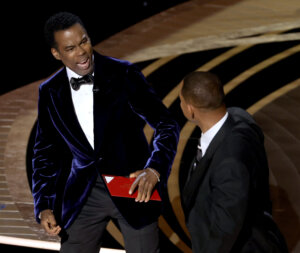
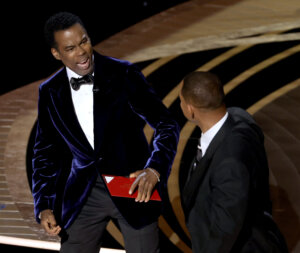
Berlinerblau begins with the slap heard round the world: the 2022 Oscars assault of Chris Rock by the actor Will Smith after the comedian insulted Smith’s wife, Jada Pinkett Smith. He also mentions the shaming and (attempted) cancellation of Louis C.K., consequences not of C.K.’s transgressive comedy, but of his self-confessed sexual misconduct. “C.K.’s reputation took a hit,” Berlinerblau writes, but he “remains a profitable artist” — an example of the limits of cancel culture.
In the U.S. section, Berlinerblau focuses on four stand-up comics who have faced what he calls “the coalition of the outraged:” Dave Chappelle, who has mocked gay and trans people; Sarah Silverman, who has offended targets across the political spectrum and apologized repeatedly; Kathy Griffin, who was criticized for tweeting a fake image of President Trump’s severed head; and Shane Gillis, whose career revived after fallout from his anti-Asian American slurs.
Berlinerblau distinguishes between “punching up” and “punching down,” based on the power position of comedic targets, while admitting that those distinctions can blur. He also discusses comic personae (whose views may not align with the actual comedian’s) and meta-comedy. Lenny Bruce famously talked about his arrests; nowadays comedians riff on their social media travails. The results can be comedic gold, or a dead-end, with comedy devolving into complaint.
Another issue is just how gender plays into audience reactions. Did Griffin suffer more career damage than Gillis because she is a woman? Berlinerblau’s sample size, as he admits, hardly warrants firm conclusions, but his supposition seems reasonable. Self-deprecation traditionally has been more familiar territory for female stand-ups than insult comedy.
In other democracies, Berlinerblau shows, comedians face more difficult terrain. He seems to admire the satirist Vir Das, who implicates his audiences in attacks on the (arguably illiberal Hindu nationalist) Indian government and Indian society more broadly. The comedian was “frequently threatened with, but never tried on, charges of sedition,” Berlinerblau writes.
Berlinerblau also explores the incitements of the French right-wing shock comic Dieudonné M’bala M’bala, whose antisemitic jibes are a particularly tough test for free speech purists. From France, too, comes the most devastating fallout from untrammeled comedic license. In 2015, the satirical magazine Charlie Hebdo’s caricatures of the Prophet Muhammad triggered an Islamist attack on its Paris headquarters that left 12 dead. Soon afterwards a gunman killed a police officer and four shoppers at a Jewish supermarket. More violence followed, including French intervention in the Middle East and deadly terrorist attacks in Paris and Nice. For Berlinerblau, the tragedies raise the question of whether comedy should ever be silenced for the sake of public safety.
Outside of democracies, he notes, comedians are often endangered. Bassem Youssef, Egypt’s answer to The Daily Show’s Jon Stewart, was ultimately exiled from his native country. Samantha Kureya (known as Gonyeti), whose “subversive comedy was virtually guaranteed to infuriate Zimbabwe’s leaders,” was kidnapped and beaten. The brazen attack, Berlinerblau speculates, was an attempt to chill other critical voices.
He concludes closer to home, with the controversial 2014 film, The Interview, about the fictional assassination of North Korean dictator Kim Jong-un. Before its release, the Seth Rogen-Evan Goldberg project precipitated a massive hack of Sony Pictures Entertainment by alleged North Korean operatives. Here the free speech imperatives of the United States collided with North Korea’s paranoid authoritarianism — and the security vulnerabilities of the internet.
Berlinerblau wonders what would have happened if North Korea had issued a credible nuclear threat. More broadly, he frets that the provocations of comedians “imperil the free speech protections they claim to revere.” That’s a paradox that Berlinerblau admits he can’t resolve.
The post It’s getting more dangerous to be a comedian — but was it ever safe? appeared first on The Forward.
Uncategorized
Trump Says Gas Prices May Remain High Through November Midterm Election

U.S. President Donald Trump takes questions from reporters while Vice President JD Vance and Secretary of State Marco Rubio look on, as they attend a meeting with oil industry executives, at the White House in Washington, D.C., U.S., January 9, 2026. REUTERS/Kevin Lamarque
US President Donald Trump said on Sunday that the price of oil and gasoline may remain high through November’s midterm elections, a rare acknowledgement of the potential political fallout from his decision to attack Iran six weeks ago.
“It could be, or the same, or maybe a little bit higher, but it should be around the same,” Trump, who is in Miami for the weekend, told Fox News’ “Sunday Morning Futures With Maria Bartiromo” when asked whether the cost of oil and gas would be lower by the fall.
The average price for regular gas at US service stations has exceeded $4 per gallon for most of April, according to data from GasBuddy. Trump’s comments on Sunday came after weeks of asserting that the spike in prices is a short-term phenomenon, though his top advisers are cognizant of the war’s economic impacts, officials have said.
Earlier on Sunday, Trump announced on social media that the US Navy would blockade the Strait of Hormuz and intercept any ship that paid a crossing fee to Iran, after marathon talks between the US and Iran in Pakistan over the weekend did not yield a peace deal.
“No one who pays an illegal toll will have safe passage on the high seas,” he wrote on Truth Social.
Any US blockade is likely to add more uncertainty to the eventual resolution of the conflict, which is currently subject to a tenuous two-week ceasefire. The new tactic is in response to Iran’s own closure of the strait’s critical shipping lanes, which has caused global oil prices to skyrocket about 50%.
UNPOPULAR WAR HITS TRUMP’S APPROVAL
The war began on February 28, when the US launched a joint bombing campaign with Israel against Iran. The scope quickly expanded as Iran and its allies attacked nearby countries, while Israel targeted Hezbollah with massive strikes in Lebanon.
The war has buffeted global financial markets and caused thousands of civilian deaths, mostly in Iran and Lebanon.
Trump’s political standing at home has suffered, with polls showing the war is unpopular among most Americans, who are frustrated by rising gasoline prices.
The president’s approval rating has hit the lowest levels of his second term in office, raising concern among Republicans that his party is poised to lose control of Congress in the midterm elections. A Democratic majority in either chamber could launch investigations into the Trump administration while blocking much of his legislative agenda.
US Senator Mark Warner of Virginia, the ranking Democrat on the Senate Intelligence Committee, questioned the strategy behind Trump’s planned blockade.
“I don’t understand how blockading the strait is going to somehow push the Iranians into opening it,” he told CNN’s “State of the Union” on Sunday.
In a separate appearance on CBS’s “Face the Nation,” Warner said the blockade would not undermine Iranian control of the waterway.
“The Iranians have hundreds of speedboats where they can still mine the strait or put bombs against tankers in closing the strait,” he said. “How is that going to ever bring down gas prices?”
Although Trump has repeatedly said that the war would be over soon, Republican US Senator Ron Johnson of Wisconsin told ABC News’ “This Week” on Sunday that achieving US aims in Iran “could take a long time.”
“It’s going to be a long-term project,” said Johnson, who was not asked about Trump’s proposed blockade. “I never thought this would be easy.”
Uncategorized
Israel’s Ben-Gvir Visits Flashpoint Al-Aqsa Mosque Compound

Israeli politician Itamar Ben-Gvir walks inside the Knesset, in Jerusalem, Oct. 13, 2025. Photo: Chip Somodevilla/Pool via REUTERS
Israel’s far-right police minister Itamar Ben-Gvir visited the flashpoint Al-Aqsa Mosque compound in Jerusalem on Sunday, saying he was seeking greater access for Jewish worshipers and drawing condemnation from Jordan and the Palestinians.
The compound in Jerusalem’s walled Old City is one of the most sensitive sites in the Middle East. Known to Jews as Temple Mount, it is the most sacred site in Judaism and is Islam’s third-holiest site.
Under a delicate, decades-old arrangement with Muslim authorities, it is administered by a Jordanian religious foundation and Jews can visit but may not pray there.
Suggestions that Israel would alter the rules have sparked outrage among Muslims and ignited violence in the past.
“Today, I feel like the owner here,” National Security Minister Ben-Gvir said in a video filmed at the site and distributed by his office. “There is still more to do, more to improve. I keep pushing the Prime Minister (Benjamin Netanyahu) to do more and more — we must keep rising higher and higher.”
A statement from the Jordanian foreign ministry said it considered Ben-Gvir’s visit to be a violation of the status quo agreement at the site and “a desecration of its sanctity, a condemnable escalation and an unacceptable provocation.”
The office of Palestinian president, Mahmoud Abbas, said such actions could further destabilize the region.
Ben-Gvir’s spokesman said the minister was seeking greater access and prayer permits for Jewish visitors. He also said that Ben-Gvir had prayed at the site.
There was no immediate comment from Netanyahu’s office. Previous such visits and statements by Ben-Gvir have prompted Netanyahu announcements saying that there is no change in Israel’s policy of keeping the status quo.
Muslim, Christian and Jewish sites, including Al-Aqsa had been largely closed to the public during the Iran war. There was no immediate sign of unrest on Sunday after Ben-Gvir’s visit.
Uncategorized
Netanyahu Visits Troops Fighting Hezbollah in Southern Lebanon

Israeli Prime Minister Benjamin Netanyahu speaks during a press conference at the Prime Minister’s office in Jerusalem, Aug. 10, 2025. Photo: ABIR SULTAN/Pool via REUTERS
i24 News – Israeli Prime Minister Benjamin Netanyahu visited Israeli forces operating in southern Lebanon on Sunday as military operations against Hezbollah-linked targets continue.
Netanyahu toured forward positions alongside Defense Minister Yisrael Katz, Eyal Zamir, and Northern Command Commander Rafi Milo, meeting troops and receiving operational briefings from commanders on the ground.
Speaking to soldiers, Netanyahu praised their performance and said operations in the Lebanese security zone were ongoing.
“The war continues, including within the security zone in Lebanon,” he said, adding that Israeli forces were working to prevent infiltration attempts and neutralize threats such as anti-tank fire and missiles.
He described the northern campaign as part of a broader regional struggle involving Iran and its allies, saying Israel’s adversaries were now “fighting for their survival” following sustained Israeli military pressure.