



Uncategorized
King Charles Promotes US-UK Unity in Speech to Congress Amid Iran Tensions
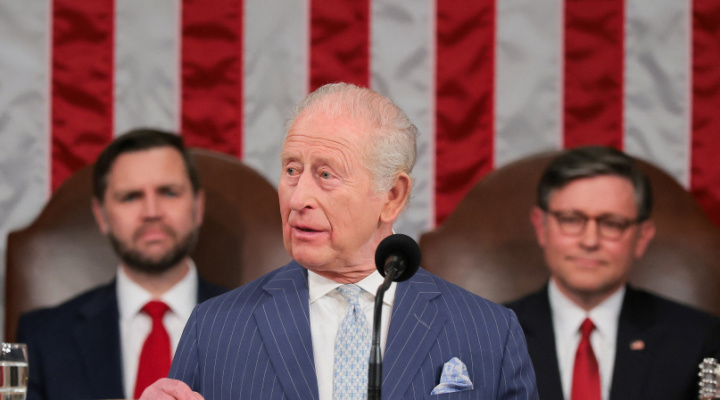
Britain’s King Charles addresses a joint meeting of Congress, next to US Vice President JD Vance and US House Speaker Mike Johnson (R-LA), in the House Chamber of the US Capitol in Washington, DC, US, April 28, 2026. Photo: REUTERS/Kylie Cooper/Pool
Britain’s King Charles told the US Congress on Tuesday that despite an age of uncertainty and conflict in Europe and the Middle East, the UK and the US will always be staunch allies united in defending democracy, at a time of deep divisions between the two long-time allies over the war with Iran.
“Whatever our differences, whatever disagreements we may have, we stand united in our commitment to uphold democracy, to protect all our people from harm, and to salute the courage of those who daily risk their lives in the service of our countries,” Charles told US lawmakers during a rare speech to a joint meeting of the US Senate and US House of Representatives, and after a prolonged standing ovation at his entrance with Queen Camilla.
Charles’ address came on the second day of a four-day state visit to the US during a tense time in relations between the two countries, after US President Donald Trump has repeatedly criticized UK Prime Minister Sir Keir Starmer for what Trump says is his lack of help in prosecuting the Iran war.
“I come here today with the highest respect for the United States Congress – this citadel of democracy created to represent the voice of all American people to advance sacred rights and freedoms,” Charles said.
Trump has said Starmer, who has won some plaudits at home for not joining the Iran offensive, was no Winston Churchill, while he belittled a later offer of military assistance to defend allies in the region.
Before his speech Charles met with top Republican and Democratic lawmakers after a morning visit to the White House with Camilla that included a closed-door meeting between the king and Trump. The events are part of a visit to the US designed to underscore ties forged between Britain and its former colony over the 250 years since American independence.
The king was only the second British sovereign to address the US Congress. His mother, Queen Elizabeth II, spoke to both houses in 1991.
TRUMP UNDERSCORES FRIENDSHIP
Earlier, during a ceremonial outdoor reception at the White House, Trump stressed the friendship that has evolved between Britons and Americans since their days as adversaries during the War of Independence and the “wounds of war” it caused.
“The soldiers who once called each other Redcoats and Yankees became the Tommies and the GIs who together saved the free world as brothers in arms and brothers in eternity,” the president said in a reference to World War II as hundreds of guests gathered on the South Lawn with the Washington Monument in the distance.
After escorting the king and queen to their limousine for departure from the White House, Trump told reporters, “It was a really good meeting. He’s a fantastic person. They’re incredible people and it’s a real honor.”
Addresses to joint meetings of Congress are generally reserved for the closest US allies or major world figures. The last was by Israeli Prime Minister Benjamin Netanyahu, in July 2024.
As tensions between the two countries have grown over the US-Israeli offensive against Iran, an internal Pentagon email suggested Washington could review its support for Britain’s claim to the Falkland Islands.
The Financial Times reported on Tuesday that Britain’s ambassador to Washington, Christian Turner, had said that the only “special relationship” the US has is with “probably Israel” and that he disliked the phrase because it is “quite nostalgic” and it has a “lot of baggage about it.”
Asked about the report, a foreign office spokesperson said Turner was making “private, informal comments” to a group of teenage British students who visited the US in early February. “They are certainly not any reflection of the UK government’s position,” the spokesperson said.
TRUMP CRITICAL OF ALLIES
Trump’s administration has repeatedly criticized many of the US-led military alliance’s other members for not offering more assistance to US operations against Iran and pressed European countries into sharing more of the financial burden for supporting Ukraine against Russia’s invasion.
While written on the advice of the British government, much of the language and tone in the speech came from Charles himself, a Buckingham Palace source said.
Charles’ visit comes after a gunman tried to storm the White House Correspondents’ Dinner on Saturday that was attended by Trump, his wife, and much of his cabinet. They were rushed to safety by law enforcement.
Asked earlier at the White House how she was doing following the incident, Melania Trump replied: “Very well, thank you.”
Tuesday night’s state dinner will be the first at the White House since Trump had the East Wing torn down to make way for his planned ballroom. The East Wing for decades has been the official entrance for guests arriving for state dinners and other functions, and with the area now a construction zone, they will have to take a different route into the building.
Charles presented Trump with a framed facsimile of the 1879 design plans for the president’s Resolute Desk, the originals of which are in the National Maritime Museum in Greenwich, London.
The Resolute Desk, located in the Oval Office, was created from the timbers of the British exploration ship HMS Resolute and presented to President Rutherford B. Hayes by Queen Victoria.
Trump gave the king a facsimile of a 1785 letter by John Adams, describing his reception by King George III as the first US ambassador to Britain at St. James’s Palace and their mutual pledges of friendship following American independence.
Uncategorized
Mamdani’s first Jewish Heritage event reveals a narrowed circle

The Jewish American Heritage Month reception at Gracie Mansion, the mayor’s official residence on the Upper East Side, on Monday evening felt unlike any before it. It was not simply because the host, Zohran Mamdani, is New York City’s first Muslim mayor or because the Shavuot-themed menu was dairy. It was that the annual gathering came amid one of the most strained relationships between a mayor and much of New York’s Jewish establishment in recent memory.
Even the setting reflected the changed atmosphere. Previous receptions under former mayors had spilled into a large tent in the mansion’s garden overlooking the East River, with buffet tables lined with kosher food, bars stocked with liquor and wine, live music and packed crowds of rabbis, communal leaders, elected officials and supporters mingling late into the evening. The longstanding traditional events became demonstrations of the close alliance with mainstream Jewish organizations and pro-Israel activists, who formed a key part of their political base.
This year’s gathering was different. The event was moved indoors to Gracie Mansion’s smaller blue reception room. The crowd of 150 people was served by waiters quietly circulating through the room with small dairy dishes in honor of Shavuot: miniature cheesecakes, halved cheese blintzes, cheese bourekas served with a touch of charif on the side, potato knishes, chocolate mousse, salad cups and cheese-ball skewers. The drink selection was limited to Herzog wine from California and water.
There was no music at all — not even a cappella — despite the easing of traditional restrictions during the final days of the Omer before Shavuot.
Mamdani’s Jewish commissioners, deputy mayors and aides circulated through the room, greeting attendees. But absent were prominent Jewish figures in city government and politics, including Police Commissioner Jessica Tisch, Comptroller Mark Levine, Manhattan Borough President Brad Hoylman-Sigal and most of the local elected officials. The only Jewish elected officials in attendance were Councilmembers Harvey Epstein and Lincoln Restler, and former comptroller and now congressional candidate Brad Lander.
The crowd itself reflected the Jewish coalition emerging around Mamdani’s mayoralty: anti-Zionist activists aligned with groups such as Jews For Racial & Economic Justice and Jewish Voice for Peace; liberal Jewish leaders affiliated with New York Jewish Agenda, who have sharply criticized Mamdani on Israel and antisemitism issues while continuing to engage with the administration, and those aligned with pro-peace organizations; and Hasidic leaders from the Satmar community in Williamsburg, who religiously oppose Zionism and have long shaped their relationship with municipal government around local priorities such as housing, education and nonprofit funding.
Mamdani was introduced by Phylisa Wisdom, executive director of the Office to Combat Antisemitism, who also serves as the unofficial director for Jewish affairs. Rabbi Irwin Kula, president of the National Jewish Center for Learning and Leadership, delivered the invocation, and Jake Levin, manager of the Mayor’s Office of Mass Engagement, served as emcee.
The mayor offered some greetings, describing the preparations for Shavuot across the city, the teaching of Jewish values and his administration’s effort to combat rising antisemitism. “Jewish New Yorkers have worked to cultivate a city that is safe and open to all,” Mamdani said. “You should be accorded the same security and the same peace of mind.”
He then honored Ruth Messinger, the trailblazing Jewish political leader who in 1997 became the first and only woman to win the Democratic nomination for New York City mayor and went on to lead American Jewish World Service. Messinger backed Mamdani in the mayoral race last year. Guests were then privately ushered in to take photos with Mamdani.
Mamdani’s coalition

The reception came just days after Mamdani reignited tensions with many Jewish communities by posting a Nakba Day video produced by his City Hall media team commemorating the displacement of Palestinians during Israel’s founding in 1948. That was followed by what was perceived as a delayed and balanced response to pro-Palestinian protesters descending on a heavily Jewish Brooklyn neighborhood where a synagogue hosted a real estate sale that included West Bank properties.
The Nakba video angered many Jewish New Yorkers who already viewed Mamdani’s sharp criticism of Israel and embrace of Palestinian activism as dismissive of Jewish fears over rising antisemitism. Despite the backlash, there was little indication that Mamdani intends to moderate the political identity that brought him to power. Mamdani defended the video Monday morning when pressed about the civic purpose of using official city resources to mark Nakba Day, saying that acknowledging Palestinian suffering does not negate Jewish suffering or Israel’s history. He also declared that his “door is always open” to Jewish leaders despite the backlash.
But on Monday, a notable array of prominent Jewish leaders did not walk in — or were not invited.
Among those absent were leaders of the Jewish Community Relations Council, the Conference of Presidents, UJA Federation of New York, Board of Rabbis, Anti-Defamation League, American Jewish Committee, the Reform movement, Met Council, Orthodox Union, Agudath Israel of America and Chabad-Lubavitch. Devorah Halberstam and Yaacov Behrman, leaders affiliated with Lubavitch in Crown Heights who recently appeared with Mamdani, did attend.
Some Jewish communal leaders absent from the Gracie Mansion reception have embraced a strategy of total opposition to Mamdani, viewing engagement with him as legitimizing a mayor they see as hostile to Zionism. Other organizations that are dependent on city grants or ongoing access to the municipal government have continued engaging with City Hall even while publicly criticizing the mayor’s rhetoric on Israel and antisemitism.
But that has become increasingly harder for them. The UJA Federation of New York, which hosted Mamdani for a mayoral candidate forum last year, said its leadership did not attend because it was “being hosted by a mayor who denies a core pillar of our heritage — the State of Israel as the homeland of the Jewish people.”
Rabbi Joseph Potasnik, executive vice president of the New York Board of Rabbis, who was among 19 Jewish leaders on Mamdani’s transition team, told the New York Post he declined an invitation to join.
The reception suggested that Mamdani is continuing to cultivate a smaller alternative Jewish coalition, separate from the traditional pro-Israel communal establishment and rooted more in progressive activism and pragmatic community relationships. Mamdani recently appointed Rabbi Miriam Grossman, a JVP activist, as his faith liaison. To his critics, however, the evening underscored how narrow that coalition remains within the broader Jewish community of New York City.
The post Mamdani’s first Jewish Heritage event reveals a narrowed circle appeared first on The Forward.
Uncategorized
The Israeli song that almost won Eurovision was about far more than the breakup of a love affair
Noam Bettan, Israel’s Eurovision candidate who took second place in the competition, sang in three languages, and chose to start his performance in Hebrew. Meanwhile, the winner — from Bulgaria — sang entirely in English.
In all the news coverage of Eurovision, the tradition of Jewish multilingualism — and Bettan’s moving pride in his languages — was left out. But it’s an important part of Bettan’s family history, and it’s also a repeating theme of Jewish history.
Bettan’s parents immigrated to Israel from Grenoble, France, and before that, the Bettans lived in Algeria. Noam Bettan was born in Israel and grew up in Ra’anana, which is home to many English speakers.
As a child, he found it difficult to connect with members of his own family, because he was the only one who was born in Israel. He was also the only one who spoke Hebrew as a mother tongue, he told Israel’s Walla in 2021.
“Michelle,” the song Bettan sang in competition, is a rare trilingual song. It starts in Hebrew, the language in which Bettan feels most at home. Then it moves to French, the language of Bettan’s parents; his French is impeccable, and it was a nod to the importance of non-English languages in a contest that often favors English.
Last year’s winner, Austria’s JJ, performed “Wasted Love” entirely in English. When Israel won Eurovision in 2018 with Neta Barzilai’s “Toy,” the performance was also entirely in English.
When Bettan reached the third language of his song, English, which he likely heard in Ra’anana’s streets growing up, he mentioned walking through the Tel Aviv neighborhood of Florentin. His English was fine, but not as strong as his French.
He then moved back to Hebrew, and visibly moved at the end of his own performance, with tears in his eyes, ended with Am Yisrael Chai — “the people of Israel live.”
To what extent do Bettan’s language skills represent Israel?
More than 80% of Israelis speak more than one language; around 85% have some English proficiency, because English is mandatory in schools. Two percent of Israelis speak French as a mother tongue.
About 1 in 5 Israelis speak fluent Russian. Ten percent of Israeli Jews understand some Arabic but only 2.6% can read and understand Arabic-language media, according to a 2018 study by Sikkuy, an NGO which promotes equality between Israeli Jews and Arabs. Meanwhile, 53% of Israeli Arabs rated their Hebrew “good” or “very good,” according to Israel’s Central Bureau of Statistics. An estimated 250,000 Israelis speak Yiddish, and around 140,000 speak Amharic.
In the controversy over this year’s Eurovision, in which Spain, the Netherlands, Ireland, Slovenia and Iceland, all quit to protest Israel’s inclusion, some online commentators claimed that Bettan was singing about more than a breakup with a woman named “Michelle.” They thought he was singing to Europe, including the countries that walked out because he was on stage.
Mitpalel alayich, sh’tizki le’ehov—“I pray over you, that you will be privileged to love,” he sang. Bein dim’aa l’dimaa, yesh mi sh’yishma. “Between one tear and another tear, there will be someone who hears….”
Some believed that he was singing about the complex Jewish relationship with the European continent, the site of the greatest slaughter in Jewish history, now seeing a resurgence of antisemitism. He was singing, in French, telling Europe — nicknamed “Michelle” — that he was leaving.
But then, at the end, he sang in Hebrew that he hoped something good would happen to us.
That’s the mindset of many Jews right now, who no longer feel welcome in their prior homes — whether that’s a city, a country, or a profession. That pain may have morphed into an award-winning, trilingual song heard by millions, transliterated into English here, which might be about a girl — or, perhaps, about an entire people.
The post The Israeli song that almost won Eurovision was about far more than the breakup of a love affair appeared first on The Forward.
Uncategorized
A Yiddish chorus in Sao Paulo, Brazil finds its voice again
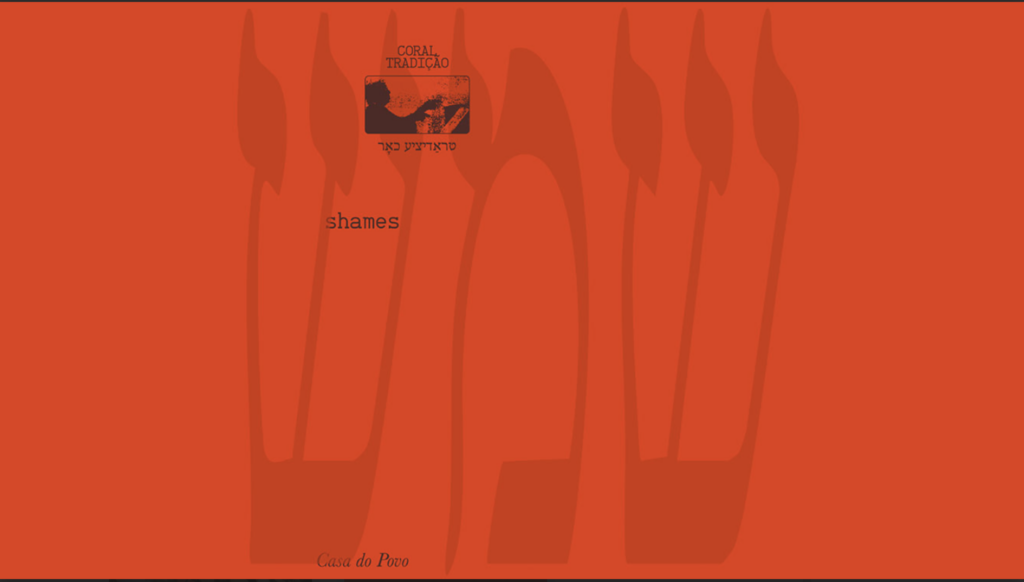
אין סאַאָ־פּאַולאָ, דער גרעסטער שטאָט אין בראַזיל, האָט דער אײנציקער כאָר אין לאַנד װאָס זינגט אױסשליסלעך אױף ייִדיש, אַרױסגעגעבן אַן אַלבאָם װאָס קלינגט סײַ טיף פֿאַרװאָרצלט אין טראַדיציע, סײַ באַנײַעריש. דער אַלבאָם הייסט „שמשׂ“ (אַרויסגערעדט „שאַמעס“).
דעם אַלבאָם האָט דער „טראַדיציע כאָר“ צוגעגרייט אין דער באָם־רעטיראָ געגנט, װאָס איז אױסגעפֿורעמט געװאָרן דורך נאָכאַנאַנדיקע כװאַליעס אימיגראַנטן פֿון פֿאַרשײדענע לענדער און קהילות. דער דיסק הײבט זיך אָן מיט גרױסע שלאַגערס פֿון ייִדישן רעפּערטואַר און ברײטערט זיך אױס אין אומגעװײנטלעכע ריכטונגען, בתוכם אימפּראָװיזירונג, עלעקטראָנישער מוזיק און באַגעגענישן מיט אַנדערע מוזיקאַלישע טראַדיציעס.
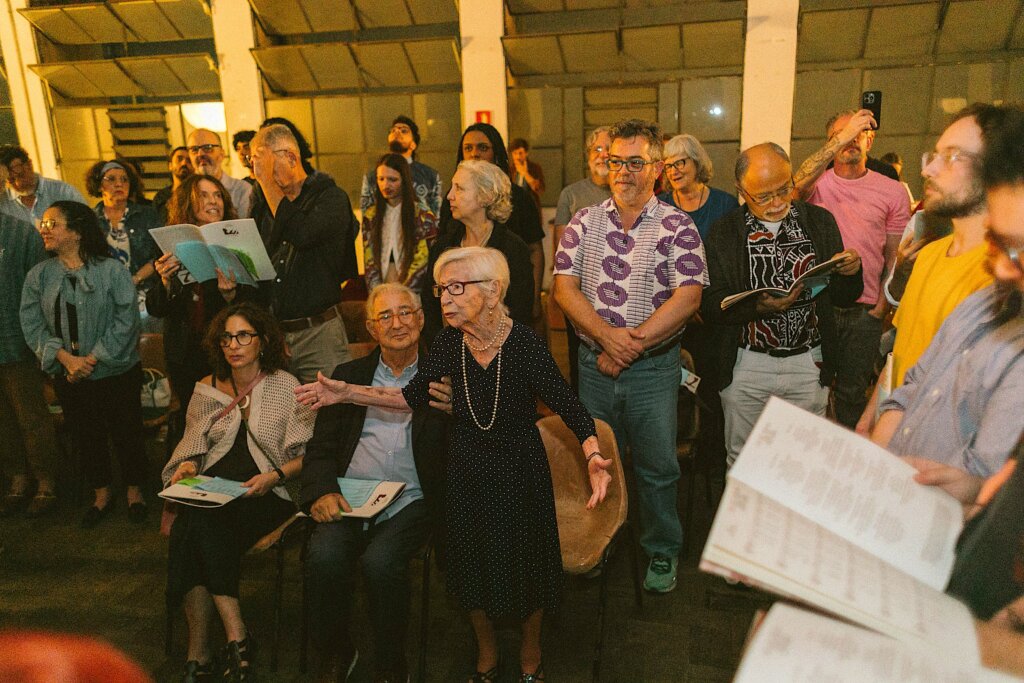
די פּרעמיערע פֿונעם אַלבאָם האָט מען אָפּגעהאַלטן דעם 22סטן אַפּריל אין „פֿאָלקסהױז“, אַ װיכטיקן ייִדישן קולטור־צענטער אין שטאָט, װאָס איז געגרינדעט געװאָרן אין 1946 אין אָנדענק פֿון די קרבנות פֿון חורבן. זינט יענער צײַט אָריענטירט זיך דאָס „פֿאָלקסהױז“ לױט די ייִדישיסטישע און אַנטיפֿאַשיסטישע פּרינציפּן פֿון איקו״ף (דעם „ייִדישן קולטור־פֿאַרבאַנד“), און פֿירט אָן, ביז הײַנט, מיט אַ ייִדישער ביבליאָטעק, קולטורעלע און פּעדאַגאָגישע אַקטיװיטעטן, און מיטן ייִדישן כאָר.
לױט די קוראַטאָרן פֿון אַלבאָם — קאַיאָ־מאָטל לעשער, לאַוראַ װיאַנאַ און זשוליאַ מאָרעלי — פֿונקציאָנירט זײַן טיטל װי אַ שליסל־מעטאַפֿער פֿאַר דעם גאַנצן פּראָיעקט. די 99־יאָריקע דיריגענטקע הוגעטאַ סענדאַטש איז די צענטראַלע פֿלאַם, װאָס װײַזט דעם װעג פֿון דער רײַכער ירושה פֿון דער ייִדישער שפּראַך צו די נײַע דורות זינגערס און ליבהאָבערס פֿון ייִדיש אינעם פֿאָלקסהױז. שוין צענדליקער יאָרן וואָס סענדאַטש פֿירט אָן מיטן כאָר.
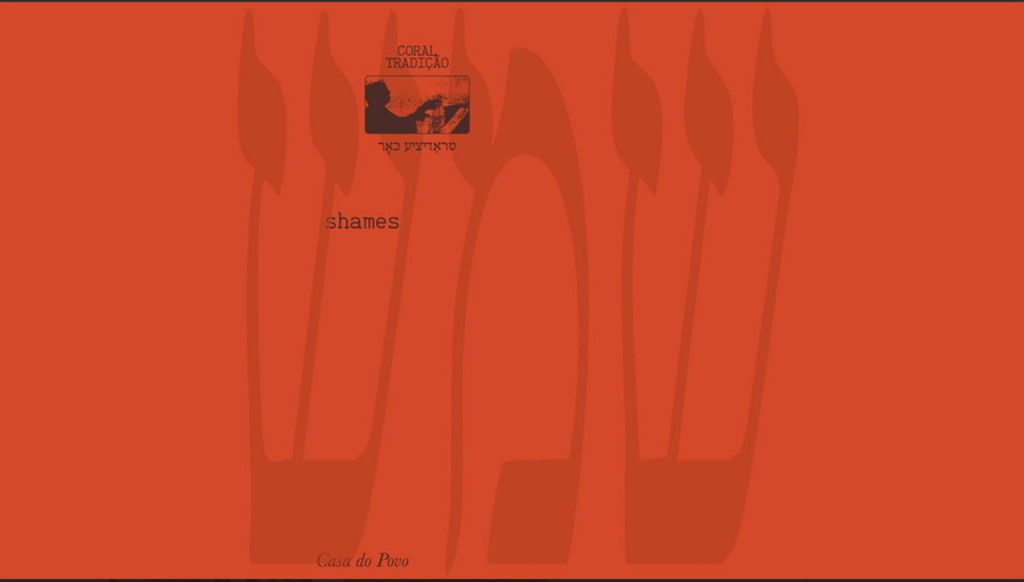
דער אַלבאָם, װאָס איז שױן צוטריטלעך אױף „סאַונד־קלאַוד“, װעט סוף מײַ אָנקומען אין „ספּאָטיפֿײַ“, און װעט אױך אַרױסגעגעבן װערן װי אַ װיניל־פּלאַטע אין סעפּטעמבער. ער איז סטרוקטורירט װי אַ פּאַלינדראָם, פּונקט װי דאָס װאָרט „שמשׂ“ אַלײן, און קען װערן אָפּגעשפּילט אין צװײ ריכטונגען, װאָרעם די כּמעט־סימעטרישע זײַטן א׳ און ב׳ שאַפֿן אַ דיאַלאָג צװישן געדעכעניש און נײַע דערפֿינדונגען.
אױף דער ערשטער זײַט פֿונעם אַלבום, טרעט אױף דער כאָר ווי אַ טראַדיציאָנעלערער אַנסאַמבל, מיט נײַע אַראַנזשירונגען פֿון זשאָאַאָ באַריסבע און הוגעטאַ סענדאַטש. דער רעפּערטואַר נעמט אַרײַן סײַ קלאַסיקערס װי די פּאַרטיזאַנער־הימנע „זאָג ניט קײן מאָל“, סײַ פֿאָלקס־ניגונים. דער טרומײטער פֿראַנק לאָנדאָן, צוזאַמען מיטן קלאַרנעטיסט אַלעקס פּאַרק און דעם פּיאַניסט דניאל שאַפֿראַן, מישן צונויף דאָס כאָר־געזאַנג מיטן אינסטרומענטאַלן קלאַנג פֿון כּלי־זמר־מוזיק.
אױף דער צווייטער זײַט, װערן די זעלבע לידער דעמאָנטירט און באַשאַפֿן אױף ס׳נײַ דורך אײַנגעלאַדענע קינסטלערס, װי אַרטאָ לינדסײ, װאָס אימפּראָװיזירט אויפֿן סמך פֿון „זאָג ניט קײן מאָל“; קאַרלאַ באָרעגאַס, װאָס פֿאַרװאַנדלט אַ װיגליד אין אַן עטערישער (ethereal, בלע״ז), קלינגעװדיקער לאַנדשאַפֿט; פּאַולעטע לינדאַסעלװאַ, װאָס מאַכט איבער דאָס ליד „שאַ, שטיל” אין אַ פּולסירנדיקער עלעקטראָנישער שאַפֿונג; און אַװאַ ראָשאַ, װאָס גיט דעם חסידישן ניגון „בים־באַם“ אַ נײַע אינטערפּרעטאַציע.
אַנדערע דיאַספּאָרישע טראַדיציעס קומען אױך אַרײַן אין שפּיל. אַ כאָר פֿון קאָרעאַנער מאַמעס, װאָס איז טעטיק אין באָם־רעטיראָ, זינגט אַ טײל פֿונעם קאָרעאַניש פֿאָלקסליד „דאָס ליד פֿון מײַן מאַמען“, בשעת די אַפֿראָ־בראַזיליאַנער גרופּע פֿון פֿרױען־פּײַקלערס, „אילו אָבאַ דע מין“, באַגלייט דעם ייִדישן שלאַגער „שפּיל זשע מיר אַ לידל“. דער דאָזיקער נוסח פֿון ליד איז באַשאַפֿן געװאָרן אין צוזאַמענאַרבעט מיט דער ישׂראלדיקער קינסטלערין יעל ברתּנא פֿאַר דער פּיעסע „מיר זײַנען דאָ!“, װאָס איז פֿאָרגעשטעלט געװאָרן אין טאַיִב־טעאַטער.
דער פּראָיעקט נעמט אױך אַרײַן אַ נאָטנהעפֿט מיט װערטער אױף ייִדיש, סײַ מיט ייִדישע אותיות, סײַ טראַנסליטערירט, און אױך אױף פּאָרטוגעזיש. די איבערזעצונגען זײַנען געמאַכט געװאָרן דורך דעם סאַאָ־פּאַולער ייִדישיסטישן קאָלעקטיװ „ייִדישע טרופּע“ און דורך דער דיריגענטקע הוגעטאַ סענדאַטש אַלײן. דער מאַטעריאַל װערט באַגלײט אױך פֿון טעקסטן װעגן דעם רעפּערטואַר און דער טראַדיציע פֿון כאָר־געזאַנג אױף דער ייִדישער שפּראַך.
„שמשׂ“ װירקט װי אַ שטילער מאַניפֿעסט. דער טראַדיציע־כאָר, װאָס שטײט אין דער מסורה פֿון ייִדישע כאָרן אין סאַאָ־פּאַולאָ, מיט אַ העכער הונדערט־יאָריקער געשיכטע, װײַזט אױף אַן אַנדער פֿאָרעם פֿון המשכדיקײט, װאָס באַנײַט זיך אין אױסטױש מיט נײַע קאָנטעקסטן, ריטמען און פּאַרטנערס.
אין „פֿאָלקסהױז“ בלײַבט די ייִדישע קולטור אַזױ לעבעדיק, גראָד װײַל זי בײַט זיך כּסדר און שטײט אין ענגער פֿאַרבינדונג מיט אַנדערע שפּראַכן און מינהגים. אַזױ אַרום דינט דער טיטל פֿון אַלבאָם מער װי נאָר אַ מעטאַפֿער. ער באַשרײַבט דעם פּראָיעקט אַלײן׃ אַ פֿלאַם, װאָס טײלט זיך מיט איר פֿײַער מיט אַנדערע, אָן צו פֿאַרלירן דערבײַ איר אײגן ליכט.
[דער אַרטיקל איז רעדאַקטירט געוואָרן מיט דער הילף פֿון גוסטאַװאָ־גרשום עמאָס]
The post A Yiddish chorus in Sao Paulo, Brazil finds its voice again appeared first on The Forward.