


Uncategorized
Liberal Zionists are under attack. A new book proves their work has never been more important
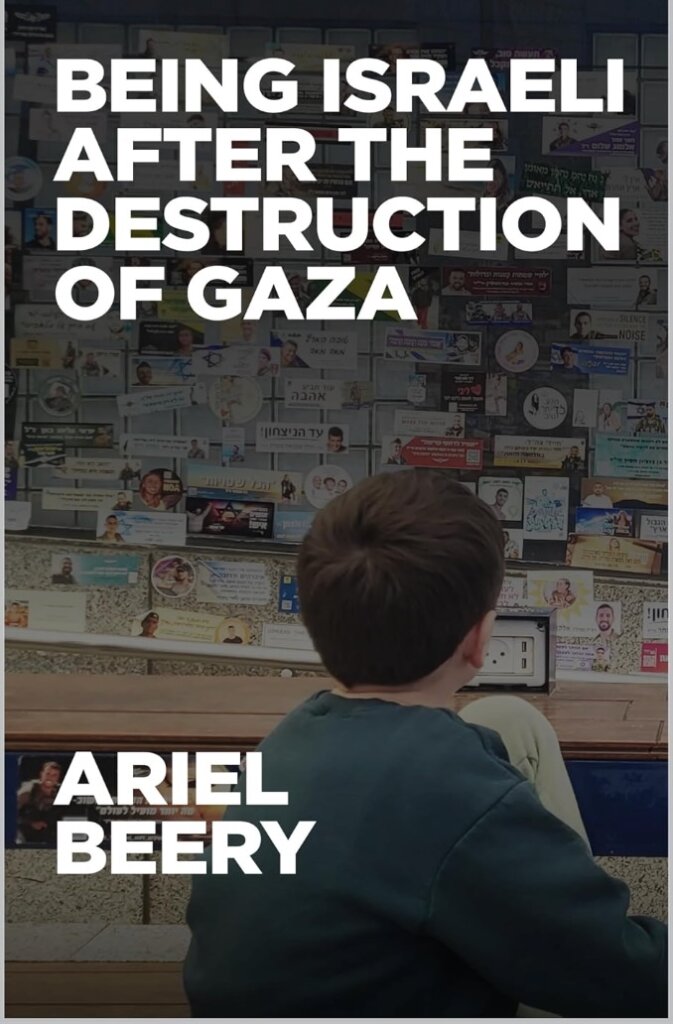
As much as American Jews may care about what happens in Israel, we’re in the bleachers, watching what Israelis are up to on the field.
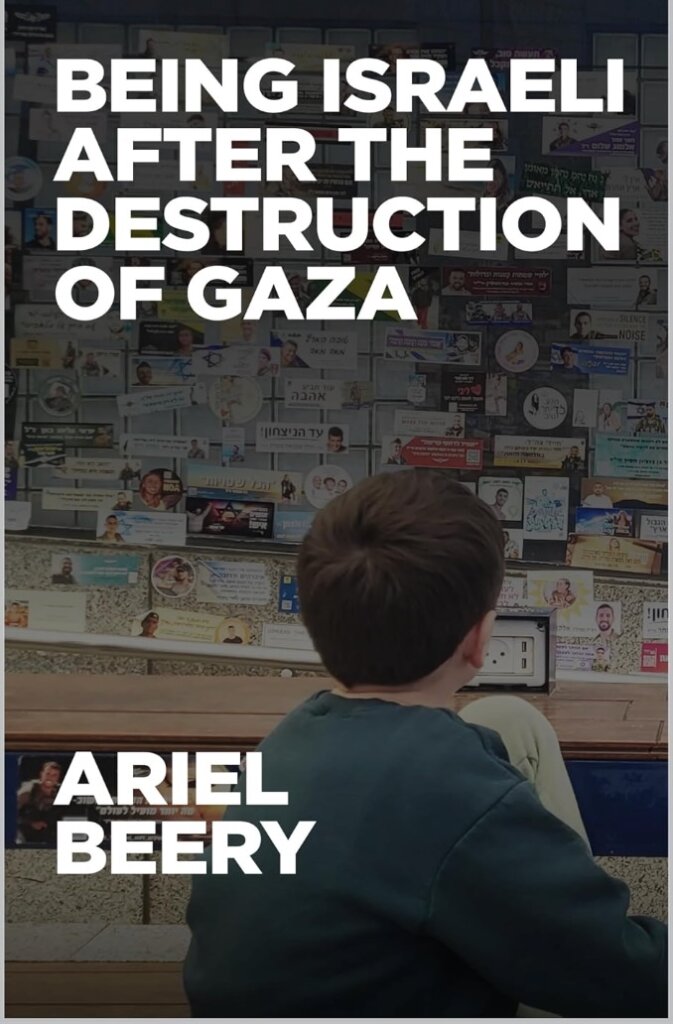
That’s what makes Ariel Beery’s new book, Being Israeli After the Destruction of Gaza, so timely and necessary. “I wanted to explain to the English-speaking world what we liberal democrats in Israel are experiencing,” Beery wrote me in an email, “and give voice to liberal democratic Israelis that may help them speak to their global friends about the present moment.”
The book is based on long interviews that Beery — a 46-year-old American-born tech and social entrepreneur who has lived in Israel since he was 19 — conducted with 11 thoughtful, articulate Israeli Jews. All of them, like him, struggle with the terror and carnage of Oct. 7, Israel’s conduct in Gaza, and the ongoing challenges to Israel’s democracy — but still maintain that Israel must be a secure home for Jews and a democracy for all its citizens.
The book is a lesson in what liberal Zionism looks like within Israel, illustrating pragmatic approaches to the Israeli-Palestinian conflict at a time when, in the United States, the loudest pro- and anti-Israel voices tend to drown out those that are most rational.
Beery’s book is a lifeline, because it proves American Jewish liberal Zionists are not alone — and neither are our Israeli counterparts.
The politically homeless liberal Zionist
American Jews are deep into a post-Gaza War reckoning.
Liberal Zionists like myself are politically homeless. The left writes us off as apologists for what they call a genocidal ethnostate, and the right is either embracing full-bore Candace Owens-style antisemitism or treating Palestinian suffering as a non-issue.
Mainstream American Jewish organizations, which were once the standard-bearers of liberal Zionism, have largely remained mum about Gaza, Prime Minister Benjamin Netanyahu’s assault on democracy and the pogroms that West Bank Jews carry out against their Palestinian neighbors.
That sense of homelessness can make us feel more disconnected from Israel. Even many Israelis who share the traditional liberal Zionist vision of coexistence have, post-Oct. 7, rejected compromise with Palestinians.
But we are not alone. We share, like so many of the people Beery spoke with, a post-Oct. 7 shattered faith in Israel’s government and its military.
“It felt like the murder-suicide of your parents,” Alina Shkolnikov, the former head of the Russian desk at the IDF spokesperson unit, told Beery. “You found out that the two entities you trusted most all of your life, and gave service to — that they were nothing.”
Nor are we alone in the sense that the war that came after was both just, and criminal.
“Gaza is our Dresden,” the journalist Bernard Avishai told Beery. “World War II was a just war, but the firebombing of Dresden was still a war crime. The fact that the war was just doesn’t mean that everything done in the prosecution of the war was just. Those are two different questions. And we have to be able to hold them both.”
By mid-2024, Avishai and others in the book point out, Hamas was militarily crippled and Hezbollah neutered. Where was the justification to continue? “The surgery was done. What we needed was immunotherapy. And instead of immunotherapy, the government kept cutting.”
‘I’m the Free French’
As in the U.S., Israeli liberal Zionists are in despair over the country’s lack of political leadership.
“What does it mean, at the level of consciousness, for a state that says I don’t fix things, I just live from crisis to crisis?” said Yau Levy, a tech entrepreneur. “No Palestinian state, no concessions, no political process, no day-after plan.”
And yet none of the interviewees have given up.
“The mindset I have is: I’m the Free French,” said Aliza Inbal, a former diplomat who served as a speechwriter for the late Prime Minister Yitzhak Rabin. “The battle for an enlightened Israel, whatever Israel may look like in the future, is not something that’s going to be won in a year or two. But we have to fight the fight.”
That sentiment encapsulates the big difference between the handwringing here in the U.S. — where Jews either live within a static fantasy of their preferred Israel, or are free to wash their hands of it for good — and there. It’s apt that Beery’s title wryly echoes that of Peter Beinart’s Being Jewish After the Devastation of Gaza, which became a lightning rod for asserting that Zionism itself is the problem, reflecting the growing American anti-Zionist movement. American Jews have the privilege of engaging in theoretical conversations; Israelis have no choice but to believe in a better future, and work to make it happen.
The possibility of a better future sounds pie-in-the-sky given the facts on the ground. Hamas is still a major force in Palestinian life. Younger Israelis, according to the most recent poll, have shifted right. The massacre of Oct. 7 convinced many Israelis once open to compromise with the Palestinians that coexistence is for suckers.
But there are 14 million people between the Mediterranean and the Jordan River, and nobody is going anywhere. There is no military solution. There is only finding a way to live together fairly, or apart.
“I don’t expect the Palestinians I work with to be anything other than Muslims who, at the end of the day, might want us to leave,” Meredith Mishkin Rothbart, who works on Arab-Jewish civil society initiatives, told Beery. “But the people who work with me, as much as they would like me to leave and get out of their face and even if they believe we should never have come here to begin with, they’re choosing peaceful means to try to fix it and come to a new reality. Just like I am.”
The question Israel’s leadership refuses to answer, Yau Levy said, is “Not what we oppose, but what do we actually want? What are we building toward? What is the positive vision that justifies the sacrifice?”
American Jews don’t really have to answer that question. They can drift away from thinking about Israel when it gets too ugly, or cheerlead as Israel’s most retrograde politicians destroy it from within. But Israelis cannot opt out, not out of the country where they live, nor out of its demographic realities. Their hopes for their future, and their children’s future, are bound to striving for a better outcome.
The asymmetry should give us humility — and spine. If Israel’s liberal Zionists haven’t given up, neither should we.
The post Liberal Zionists are under attack. A new book proves their work has never been more important appeared first on The Forward.
Uncategorized
I’m an empathetic Zionist. But it’s time for all of us to stop counting our dead.
There are, and always have been, several types of Zionism, as Rabbi Angela Buchdahl’s Yom Kippur sermon reminded me. I first had to declare the type of Zionist I am in 1994 at a meeting at the Leo Baeck Temple in Los Angeles that brought together Arabs and Jews to create a speakers’ bureau that would advocate for Middle East peace at synagogues, churches and mosques in southern California.
Approximately 20 people gathered in a small room and a moderator asked each of us to speak briefly about what brought us to the meeting. One by one as the people in the room spoke, they listed the atrocities both Jews and Palestinian Arabs had suffered, including the Holocaust, the Nakhba, the mutual massacres that had taken place in British Palestine before 1948, the suicide bombings and the destruction of Palestinian homes. When it was my turn to speak, I began, “I am a Zionist.”
My Zionism was anchored in 20 years of conducting archaeological excavations in Israel, and a 1986 trip to the Soviet Union to help Jews emigrate to Israel, during which I was arrested three times by the KGB. I was an American, but an active Zionist.
I continued, “But it is time for all of us to stop counting our dead. Jews and Arabs both have enough suffering to go around. We don’t need to justify ourselves to each other by enumerating the terrible losses we have experienced. Let’s focus our attention on understanding and making peace with one another.”
My words had an impact. We moved forward to plan the bureau. I was paired with a leader of the Palestinian community in LA who looked like he could be my older brother. We spoke at universities, synagogues and churches for two years, at a time when the promise of peace was bolstered by the Oslo Accords. But when Benjamin Netanyahu was elected Prime Minister in 1996, I felt I was no longer speaking about an Israeli government that shared my aspirations, and that phase of my life ended.
Today, in the post Oct. 7 world, I feel like I am sitting in that same meeting room, only it encompasses way more than 20 people. Often, when I hear or read about the present Palestinian-Israeli conflict, I hear about the 1,200 people killed on Oct. 7, and the tens of thousands killed thereafter. The death of every child is tallied and the sufferings of every hostage recalled. We can do better.
I am an empathetic Zionist. I support the Jewish state of Israel, and I also feel empathy for its victims. My definition of empathy bridges radical differences between individuals and forces a person to look through another person’s eyes. Sympathy allows one to feel the pain of someone closely related; empathy allows one to understand a thoroughly different person. As a Jew, I sympathize with the Oct. 7 victims, the hostages and their families; but I also empathize with the Palestinians who have suffered and died in the aftermath of the Oct. 7 Hamas attack.
I believe today, as I did in 1994, that the first step toward empathy is a cease fire, not only on the battlefield, but on the frontlines of the constant bickering about who has suffered more. After almost 100 years, the time has come to empathize with the victims instead of counting them.
And we should begin with the children. A child’s suffering can change minds, whether the trauma is witnessed firsthand or through a photograph or a written description. Who in my generation can forget the 1972 picture of the Vietnamese “napalm girl,” nine-year-old Phan Thi Kim Phuc running naked and screaming after a South Vietnamese napalm attack on her village severely burned her back? The Pulitzer Prize-winning photo influenced public opinion and the anti-war movement. As Anne Frank had triggered worldwide empathy for Holocaust victims, Kim Phuc made the Vietnam war seem insupportable.
Who today are the children who can teach us about Gaza? I would choose three: Ariel and Kfir Bibas, four years old and nine months old respectively, and five-year-old Hind Rajab.
Kfir and Ariel Bibas were kidnapped along with their mother Shiri from Kibbutz Nir Oz on Oct. 7 and murdered in captivity; their bodies were returned to Israel on February 20, 2025.
Hind Rajab was five years old when she and her uncle, aunt and three cousins left Gaza City by car. Israeli shelling killed all in the car except Hind and her cousin, 15-year-old Layan Hamadeh. Layan telephoned the Palestine Red Crescent Society and was heard pleading for help and screaming as she was shot. Hind, still alive, stayed on the telephone for three hours. She died from IDF gunfire, and when the Red Crescent workers finally arrived, they too were killed.
Who are the adults today who can teach us to empathize with those children? I would choose two: Noam Chayut and Aziz Abu Sarah.
Noam Chayut was an Israeli soldier patrolling the West Bank. In his memoir, The Girl Who Stole my Holocaust: A Memoir, written in 2007, he describes an encounter with a 10-year-old “scrawny” Palestinian girl wearing “light colored clothes.” On the outskirts of a village there were children playing, she among them. With no particular intent, Noam approached and smiled at her, but she did not smile back. She was terrified, frozen for a second, which allowed Noam to look into her eyes. Then she ran away. But what he saw in her eyes was himself. He saw the soldier, the occupier and he saw someone else, someone evil. He did not see himself as evil, but she did. He empathized with her terror, and it changed his life.
As a young Palestinian man, in 1998, Aziz Abu Sarah visited Yad VaShem with trepidation. He felt if he “empathized with the enemy it would be a betrayal of his own pain,” he wrote in The Future is Peace. But he went anyway, and after he arrived at the underground chamber memorializing the death of one and a half million Jewish children he “walked out of the museum a different person.”
Both Noam and Aziz looked at children they were taught to regard as enemies. And the adversaries who populated their world became human. It is imperative that the deaths of Hind Rajab, Ariel and Kfir Bibas teach us about the trauma of our perceived foes. If we cannot empathize with them and their families, I doubt that Israelis and Palestinians can come to any understanding.
I recognize the very problematic long term political and structural problems inherent in the Israeli-Palestinian conflict. But how will we ever learn how the other side thinks and feels if we do not try to understand each other’s pain? Seeking mutual empathy can be the beginning of a path to a new and peaceful community.
The post I’m an empathetic Zionist. But it’s time for all of us to stop counting our dead. appeared first on The Forward.
Uncategorized
Let my people grow: Jewish online cannabis retailer braces for new federal law to take effect
For the past several years, Jewish cannabis company Tokin’ Jew has offered a little something to take the edge off just about every Jewish occasion.
High Holidays have you feeling stressed? Try “High, Honey,” the company’s THC-infused honey stick. Passover Seder dragging on a little too long? An edible called “4 Cups,” the first officially certified kosher-for-Passover THC gummy, will help get you through it.
Now the company that brought the world cannabis-infused chocolate Hanukkah gelt and THC-laced hamantaschen is facing a decidedly less festive future. In a couple months, the products responsible for the majority of its business will no longer be legal due to a change in federal law.
And it’s not just Tokin’ Jew. The new restrictions, set to take effect in December, threaten to upend a multibillion dollar e-commerce industry that has flourished for nearly a decade.
For co-founders Ben Kraim and Will Cohen, who have spent years building a business around the unlikely intersection of Judaism and cannabis, the change threatens to undo much of their lives’ work.
“It’s not easy being a Jewish weed brand, Kraim told the Forward. “Our brand is incredibly niche, so the prospect of losing access to the customer base we worked hard to build up is especially upsetting.”
What began as a humble meme account has grown into a thriving online operation, selling everything from novelty Judaica gifts and smoking accessories to kosher-certified edibles with clever names like “Apple of My Chai” and “Guava Nagila.”
The company has also cultivated a devoted community, bringing together observant and secular Jews, along with cannabis enthusiasts of all backgrounds, through a shared appreciation for Jewish humor and high-quality kush.
Now, Tokin’ Jew Flower, the division of their company, which Kraim said accounts for approximately 60 to 70 percent of sales, faces an uncertain future.
The legal foundations for Tokin’ Jew dates back to the 2018 Farm Bill, which legalized products containing no more than 0.3 percent delta-9 THC by dry weight. That provision created an opening for companies to manufacture and ship hemp and hemp-derived products, including THC gummies, across certain state lines without needing to abide by the state-by-state licensing systems governing recreational marijuana use.
A booming industry followed. But Kraim acknowledges that the relatively lax federal regulations created opportunities for “bad actors” to sell questionable products.
“I think everybody in this industry knew things were a little too good to be true,” he said.
What he and many others expected, however, was tighter rules, not the effective elimination of their business model.
“We all thought eventually the federal government was going to create more regulation in this space,” he said, adding that he would have welcomed stronger oversight.
“We like to joke that it’s our Jewish guilt that keeps us from selling a subquality product. But we absolutely support stricter regulation – something that would have been entirely feasible.”
Instead, another provision tucked into the federal spending bill signed by President Trump in November 2025 dramatically narrowed the definition of legal hemp. Under the new rules, finished products containing more than 0.4 milligrams per container of total THC and similarly intoxicating cannabinoids will no longer qualify as federally legal hemp.
The restrictions were originally scheduled to go into effect November 2026, but Congress granted a brief extension that pushed the deadline back to December 11.
According to Kraim, it is not only companies like theirs that will be affected. Growers, manufacturers, packaging businesses and warehouses may have to shut down altogether.
“These are people’s entire livelihoods that they now have to just set ablaze,” Kraim said.
“At least we have this brand that can take many shapes and can live on in so many other ways,” he said. “But if you’re a hemp farmer, you are in big trouble.”
The news comes just as Tokin’ Jew has been experiencing explosive growth. According to Kraim, the company now has approximately 250,000 followers across social media platforms, with its Instagram content reaching between 18 million and 22 million people monthly. Orders have roughly tripled over the past year.
But the founders’ relationship with their customers goes beyond sales.
From the beginning, Kraim, who was raised modern Orthodox, and Cohen, who was raised in a Reform community, viewed their company as a way to connect Jews to their identity through humor, particularly those who may feel alienated from more traditional expressions of Judaism.
That same sense of community was on full display when they announced the impending restrictions.
“We were flooded with comments and DMs and emails,” Kraim said, describing messages of sympathy, appreciation and personal testimonials about the company’s products.
What struck him most were the offers of assistance.
“We got tons of messages from people willing to offer a hand,” he said. “‘How can I help? My uncle owns a dispensary. Let’s protest.’ People just coming in hot, trying to help in any way that they can, which is just so beautiful and so Jewish.”
Others began stocking up, taking advantage of the products’ long shelf lives. The company is even considering producing its popular kosher-for-Passover gummies early so customers can buy them before the ban takes effect.
For customers who rely on the products for more than recreation, but relief, Kraim worries about what will happen when home delivery is no longer an option.
He described phoning one of their biggest customers only to discover an elderly Jewish woman on the other end of the line. She told the team how much she relied on their products and how convenient home delivery was, particularly because multiple ailments and limited mobility made it difficult for her to get to a dispensary.
“We were tearing up by the end of the call,” Kraim recalled.
Gabrielle G, a Tokin’ Jew customer since 2024, who declined to give her last name, called the news “truly devastating for the Jewish stoner community.”
“Their Advent calendars were a highlight of my Jewish holidays,” she told the Forward. “I hope they find a solution because TJ feels like family.”
Regardless, TokinJew.com will continue selling accessories, apparel, home goods and Judaica, with plans to expand its offerings.
They’re also planning a gradual move into licensed dispensaries, beginning in New York and eventually New Jersey. But that involves developing separate production, distribution and regulatory requirements for each state, a daunting prospect for a company that spent years developing its national online operation.
“But us Jews are the masters of the pivot,” he pointed out. “We historically have troubles thrown our way, and we always have to figure out our next step.”
For a company whose product line is largely inspired by the Jewish calendar, the date of the new bill feels particularly poignant: The new restrictions are scheduled to take effect on December 11, the evening Jews around the world light the eighth and final Hanukkah candle, commemorating the miracle of a single day’s supply of oil burning for eight.
“We have our plan A, B and C,” Kraim said. “One of which is praying for a Hanukkah miracle.”
The post Let my people grow: Jewish online cannabis retailer braces for new federal law to take effect appeared first on The Forward.
Uncategorized
Trump antisemitism official to visit Michigan synagogue weeks before midterms, backed by ZOA
(JTA) — DETROIT – The Trump administration’s antisemitism czar will speak to a Michigan synagogue on Wednesday for a Justice Department event that also doubles as a fundraiser for the state’s chapter of the Zionist Organization of America.
Leo Terrell, who chairs the administration’s Task Force to Combat Antisemitism, is attending on behalf of the department. The Justice Department touted the event on its website with a link to a ZOA registration page that solicits donations to become an event co-sponsor.
Federal ethics regulations restrict fundraising by government employees and prohibit the use of government property for unauthorized purposes, though they allow authorized official fundraising and certain official speeches at fundraising events.
Terrell is visiting Congregation Shaarey Zedek in Southfield, a Detroit suburb; the synagogue is also listed as a co-sponsor. Other co-sponsors include a local Jewish high school, Mothers Against College Antisemitism and pro-Israel advocacy groups.
It comes weeks before the midterm elections, in which rhetoric on Israel and Jewish safety from the state’s Democratic Senate candidate Abdul El-Sayed has put local Jews on edge.
The Justice Department is billing the event as the first stop on Terrell’s “American Tour Against Hate,” adding, “All faiths and backgrounds welcome.” Terrell will be in conversation with Mort Klein, national head of ZOA, a usual stalwart Trump supporter who has broken with the president at times on Iran policy.
On its registration page for the event, ZOA Michigan notes that it “brings the Department of Justice directly into dialogue with Michigan’s Jewish community.”
ZOA Michigan also alluded to current tensions between the state’s Jewish community and El-Sayed.
“Antisemitism is reaching across Michigan — in schools, in public spaces, and among political candidates,” the event page reads. “Confronting it requires our community to stand together.”
The ZOA is a hawkish pro-Israel organization that backs the West Bank settlement movement and Israeli right wing government policies. In the U.S., it has also endorsed some of Trump’s restrictive immigration policies.
Federal tax law prohibits tax-exempt houses of worship from supporting or opposing political candidates, but Trump has sought to loosen the restrictions.
Rabbi Aaron Starr, of Shaarey Zedek, told the Jewish Telegraphic Agency that the Conservative congregation’s co-sponsoring of the event should not imply that it was endorsing one candidate over another.
“We are looking forward to working with anybody and everybody who wants to combat hate, whether that hate is antisemitism, Islamophobia, homophobia, racism or any other form of hate,” Starr said. He added that the congregation would soon welcome Jewish Democratic Sen. Elissa Slotkin for a veteran’s Shabbat.
Starr said the synagogue became a sponsor because it had been approached by ZOA to serve as an event host. “We’re mostly just serving as a venue for the event,” he said, adding that he personally would not be there.
Terrell did not return a JTA request for comment on the event. But he has promoted it extensively on social media and had hinted at the talk, and the ZOA partnership, in a previous email he sent to JTA reporters.
“We hope to see everyone there making it clear hate has no place in America a.k.a the greatest country on Earth,” he wrote at the time. He also thanked ZOA Michigan “for their tireless work on bringing our powerful message into reality.”
ZOA Michigan’s executive director, Kobi Erez, told JTA the event was nonpartisan, but added that he was aware of voters planning to switch parties — an allusion to Democrats who are considering voting for Rogers.
“We are not planning to discuss particular candidates or tell anyone how to vote,” Erez said in an email.
“We do encourage people to examine candidates’ records and statements concerning the safety of the Jewish community and consider whether they will take antisemitism seriously,” he said. “We feel that Jewish safety is at stake now more than ever. We know people who, because of these concerns, plan to vote for a party they have never supported before, and we understand their position.”
Erez said that the point of the event was not fundraising. “We are accepting voluntary sponsorships and donations to help cover expenses and support our work, but the purpose of this evening is to confront antisemitism and connect the community with the Department of Justice,” he said.
Frankel Jewish Academy, a private Jewish high school in the Detroit suburb of West Bloomfield Township, is also listed as a co-sponsor of the Terrell event. Frankel leaders did not return a JTA request for comment.
Terrell, an attorney, former O.J. Simpson supporter and ex-Fox News contributor, is a senior counsel in the Justice Department’s civil rights division. In that role, he oversees antisemitism taskforces that include staffers from the departments of Justice, Education and Health and Human Services.
Terrell’s visit comes as Trump, and Republicans more broadly, see an opening for Michigan in the midterms, in part via the Jewish vote. Both Trump and Vice President JD Vance will be campaigning in Michigan in the coming days. During Vance’s previous stop in Michigan, he went after El-Sayed for his reaction to the Temple Israel attack earlier this year.
Hundreds of local Jews have signed a petition pledging to vote for El-Sayed’s GOP opponent, former U.S. Rep. Mike Rogers, over their fears of the Democrat’s “extremism” on Jews and Israel, including El-Sayed’s remarks earlier this year about the attack on Temple Israel in the state. He has since apologized for those comments.
A separate petition — spearheaded by Starr and other rabbis — outlines “non-negotiables” that some Jewish leaders have pushed El-Sayed and other candidates to agree to.
This article originally appeared on JTA.org.
The post Trump antisemitism official to visit Michigan synagogue weeks before midterms, backed by ZOA appeared first on The Forward.
