


Uncategorized
The ADL’s turn away from civil rights was years in the making — Oct. 7 accelerated it
The Anti-Defamation League’s broad coalition that helped pass a hate crime law in Georgia at the height of the Black Lives Matter movement six years ago was a classic campaign for the organization, drawing together an alliance of civil rights groups with civic and business leaders to pass a landmark piece of liberal-minded legislation.
After helping the ADL shepherd the bill through Georgia’s legislature, Robert Sills, a young Atlanta-based attorney, decided to apply for a job with the organization. “I thought, ‘I know these people and really like them,’” Sills recalled in an interview.
He was hired in August 2023 to manage state and local policy and set to work on a toolkit to help city governments stop hate groups. “When I joined, the perception was still very much that it was white supremacists and neo-Nazis that we were focused on,” Sills said.
Three years later, much has changed at the nation’s largest Jewish advocacy organization. Sills is gone, and the ADL has shut down its teams focused on democracy and civil rights. Much of the information about #HateFreeGA has been archived and is no longer available on the ADL’s website, nor are hundreds of other pages related to civil rights and extremism, as the organization narrows its focus to antisemitism.
“Core civil rights work is going away,” said Sills, who resigned about a year after he started.
The ADL has tried to walk a fine line between acknowledging a shift away from civil rights while insisting that it remains committed to its historic mission of helping both Jews and non-Jews. The organization said, for example, that removing “protect civil rights” from a prominent section of its website was a technical update; it still notes a commitment to “safeguarding civil rights” in its work countering extremism.
At the same time, Jonathan Greenblatt, the organization’s CEO, has said that the surge of antisemitism following the Oct. 7 Hamas terrorist attack in Israel has been forcing a retreat from the ADL’s historic commitment to such work.
“This moment has required us to be more and more focused on fighting the rise of antisemitism,” Greenblatt said in an interview. “And I hope when this situation abates — when there’s a cessation of hate, when the numbers start to come down — that we’ll be able to make different decisions about how we allocate our resources.”
But many close observers say Greenblatt began shifting the organization away from work on voting rights, abortion, and LGBTQ+ issues, among others, well before Oct. 7 and that the ADL is unlikely to return to those issues under his leadership — a shift that could have major implications for American Jews given the ADL’s outsize influence in shaping the way Americans understand antisemitism.
“Groups that should be natural allies of a group like the ADL aren’t going to trust anything it says.”
Rabbi Jill JacobsDirector of T’ruah
This article is based on interviews with 14 current and former ADL employees, board members and major donors, along with other Jewish leaders who have worked closely with the organization, most of whom spoke on the condition of anonymity because they had signed non-disclosure agreements or because being named would jeopardize their current employment or their working relationship with the ADL.
Jill Jacobs, the director of T’ruah, a liberal rabbis and cantors group, said the ADL’s decision to stop working on behalf of other vulnerable groups, and increasing willingness to antagonize former allies on the left, has been making it hard for every Jewish organization trying to convince partners to take antisemitism seriously.
“Groups that should be natural allies of a group like the ADL aren’t going to trust anything it says — and aren’t going to trust much of what’s said publicly about antisemitism by anyone,” she said.
Sherman Fabes, a spokesperson for the ADL, defended the organization’s track record and said that even as it focuses more narrowly on antisemitism it recognizes that “we can’t do it alone.” Fabes pointed to Greenblatt’s decision to sponsor the 60th anniversary of the March on Washington shortly before Oct. 7, ongoing partnerships with the National Urban League and the League of United Latin American Citizens, and lawsuits defending a church targeted by white supremacists over its support of LGBTQ+ rights and an Ohio city suing a neo-Nazi group.
But Greenblatt has also spoken publicly since Oct. 7 about his frustration with the civil rights organizations that he believes failed to show up for Jews as antisemitism spiked. And the ADL’s move away from civil rights work in the two years since has alienated several mainstream organizations.
Both GLAAD, an LGBTQ+ advocacy group and longtime partner of the ADL, and the Asian American Foundation, which was created with support from the ADL, have pulled back from work with the ADL’s Center on Extremism since Oct. 7 as the organization began almost exclusively monitoring antisemitism, according to a former employee. Meanwhile, a global LGBTQ+ rights coalition and the ADL parted ways as well.
The NAACP once partnered closely with the ADL, including on a campaign targeting social media companies, but the organizations have drifted apart more recently and CEO Derrick Johnson has been absent from recent ADL conferences, though Fabes said he remains affiliated with the organization. And several people close to Maya Wiley, who runs the Leadership Conference on Civil Rights, said she and Greenblatt have repeatedly clashed.
Abe Foxman, the ADL’s former longtime director, cautioned against Jews abandoning civil rights work during a podcast last spring. “We can’t throw it away because at the end of the day we’ll be alone,” he said. “And we can’t survive alone.”
An early retreat from civil rights
Greenblatt had been CEO of the ADL for just over a year when Donald Trump was first elected in 2016, and quickly positioned himself as a bulwark against what many feared would be an erosion of civil liberties under the president. “If one day Muslim Americans will be forced to register their identities, then that is the day that this proud Jew will register as Muslim,” Greenblatt declared shortly after the election.
And when Trump nominated Brett Kavanaugh to the Supreme Court in 2018, Greenblatt issued a statement warning about the risk to “the future of civil rights, civil liberties, and our democracy” and referenced “LGBT rights, voting rights, and women’s rights” before raising an alarm about Kavanaugh’s “demonstrated hostility to reproductive freedom.”
The expression of concern was standard fare for the organization, which was founded in 1913 with a mission “to stop the defamation of the Jewish people and to secure justice and fair treatment to all” and had been reliably liberal on domestic political issues, including abortion.
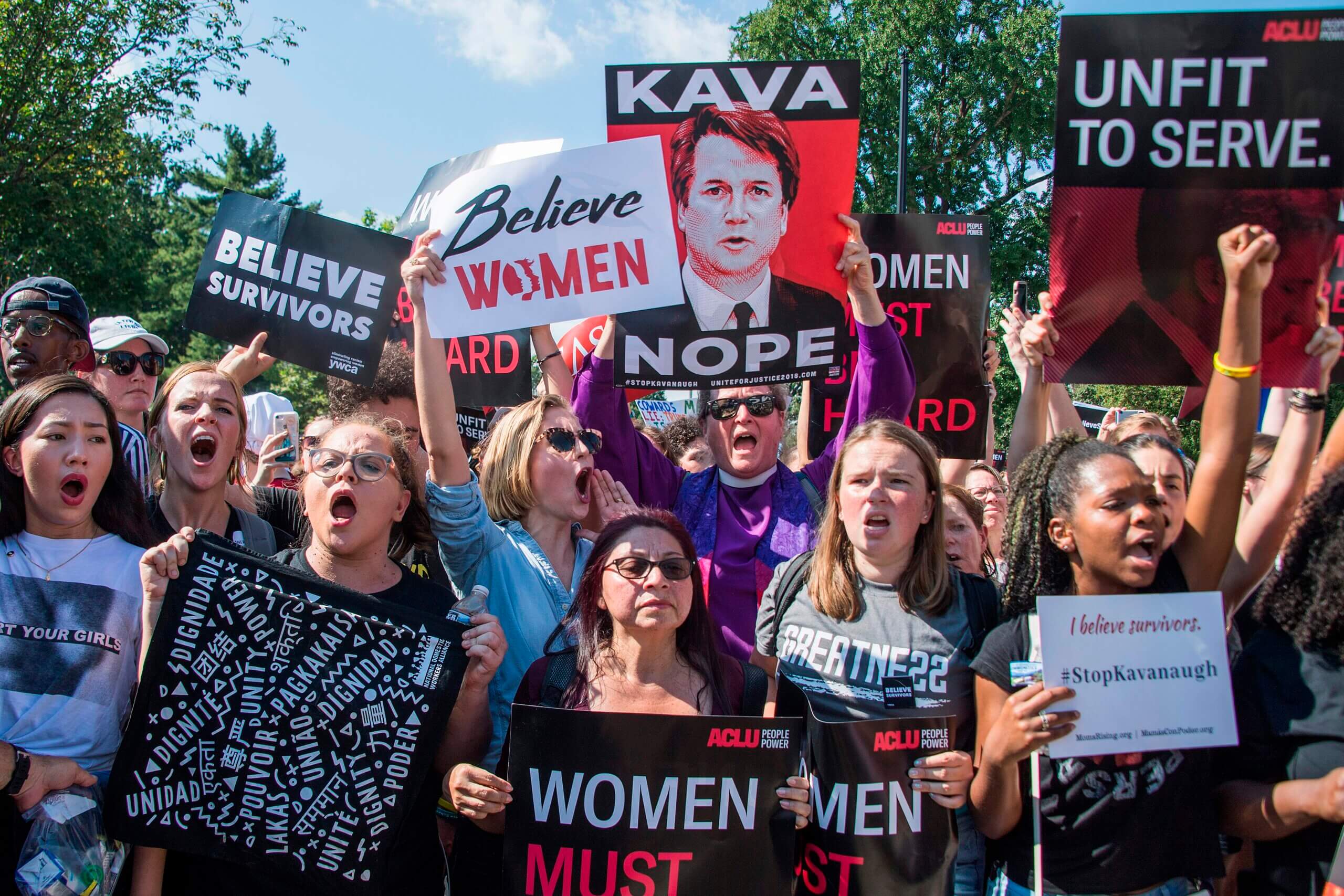
But the Kavanaugh statement frustrated conservative Jews already wary of Greenblatt’s background working as a special assistant to President Barack Obama. Liel Leibovitz wrote an op-ed for The Wall Street Journal claiming that “Greenblatt has frequently steered the ADL into the murky waters of party politics” and was “leaving American Jews behind.”
The column was part of a flurry of attacks across right-wing media that seemed to hit a nerve.
“Jonathan utterly freaked out,” said a former senior ADL leader familiar with the incident. He announced that the organization would not change its official position on abortion “but we’re kind of going to bury and downplay it,” the source recounted.
Melanie Robbins, the former deputy director of the organization’s New York and New Jersey regional offices, told JTA in December that Greenblatt yelled during a meeting following the Kavanaugh hearings that women’s issues were not core issues for the ADL.
Nancy Kaufman, who was CEO of the National Council on Jewish Women at the time, said she also recalled Greenblatt’s decision to stop working on abortion rights following Kavanaugh’s nomination.
“It was the beginning of the retreat by ADL of dealing with the kind of human rights issues that we had come to believe they were supporting,” Kaufman said in an interview. “I was concerned then; I’m concerned now.”
Fabes, the ADL spokesperson, said that the organization had never been an abortion rights organization and that “the confirmation hearings, nor any response, had no impact on the direction of ADL’s work in any area.”
He denied that Greenblatt had been alarmed by right-wing attacks, and said that he “did not yell at anyone.”
Early in his tenure, Greenblatt also diminished the role of the organization’s national commission, a group of several hundred lay leaders that served as its governing board — who were overwhelmingly liberal, committed to broad civil rights work and had long helped set the organization’s policy agenda.
Joe Berman, a Boston attorney who served on the national commission for 15 years, acknowledged that the 350-member body could be unwieldy and said Greenblatt persuaded them to turn power over to a more traditional 20-person board. But Berman said that however practical it may have been, the move “kneecapped” the influence of volunteer leaders and allowed Greenblatt to shift the organization away from a focus on civil rights.
“Let’s be honest, it’s always been a more progressive, left-leaning organization,” Berman said. “Jonathan is paddling upstream against that.”
Fabes said the ADL has always been “strictly nonpartisan and nonpolitical” and that the transition to a more traditional board reflected best practices for nonprofit governance and was made with broad support.
Greenblatt also oversaw the 2017 departure of Deborah Lauter, who had served as national civil rights director at the ADL for nearly a decade when Greenblatt was hired, and shortly thereafter several of the organization’s most senior civil rights staff — including Michael Lieberman, Erika Moritsugu and Moran Benai — departed within a few months of one another, taking with them years of specialized experience.
“It’s always been a more progressive, left-leaning organization. Jonathan is paddling upstream against that.”
Joe BermanFormer member of the ADL’s national commission
Lieberman had served as Washington counsel for the organization since 1989 and led a portfolio focused on hate crime prevention, religious freedom, and LGBTQ+ equality and voting rights, a role that has not been filled. He also managed the ADL’s relationship with many non-Jewish civil rights groups, which gave him credibility to speak with those groups about antisemitism and Israel.
“We need to stand with others if we think that we want them — expect them — to stand with us,” Lieberman said during a speech shortly before he resigned. “If you want a friend, you have to be a friend.”
Eileen Hershenov’s departure without replacement as senior vice president for democracy initiatives in August 2023 marked the end of an executive-level position focused on civil liberties.
When Greenblatt took over in 2015, the ADL had around 10 full-time employees coordinating the organization’s work on its civil rights portfolio. But despite hiring 200 new staff members over the past decade — and nearly tripling the ADL’s budget from $57 million to $163 million — a combination of attrition and the reassignment of regional civil rights counsels to new roles has led to the elimination of any dedicated teams working on civil rights or democracy.
Fabes said Hershenov’s portfolio and the former civil rights counsels were converted to “policy counsels” and folded into a new 29-person “national affairs” team, “the majority of whom do civil rights work.” But he downplayed the significance of these structural changes over the past decade. “All of our work relates to antisemitism,” Fabes wrote in an email. “That’s true now as it was true then.”
In response to a question about how Greenblatt viewed the departures of Lieberman and other senior civil rights staff, Fabes said that the ADL did not comment on personnel matters. But in a recent op-ed Greenblatt lamented that in working on “the broader landscape of social issues” the organization had sometimes “ranged far from our core purpose.”
Oct. 7 and the ‘bolt of lightning’
Greenblatt’s explanation for how the ADL came to eschew a broader advocacy portfolio in favor of a “laser” focus on antisemitism centers on Oct. 7, 2023, and its aftermath. “It was like a bolt of lightning,” Greenblatt told the Forward in an oral history of the day. “I’ve had tough days, but Oct. 7 was the toughest.”
It wasn’t just the carnage in Israel but a sense of betrayal that struck Greenblatt.
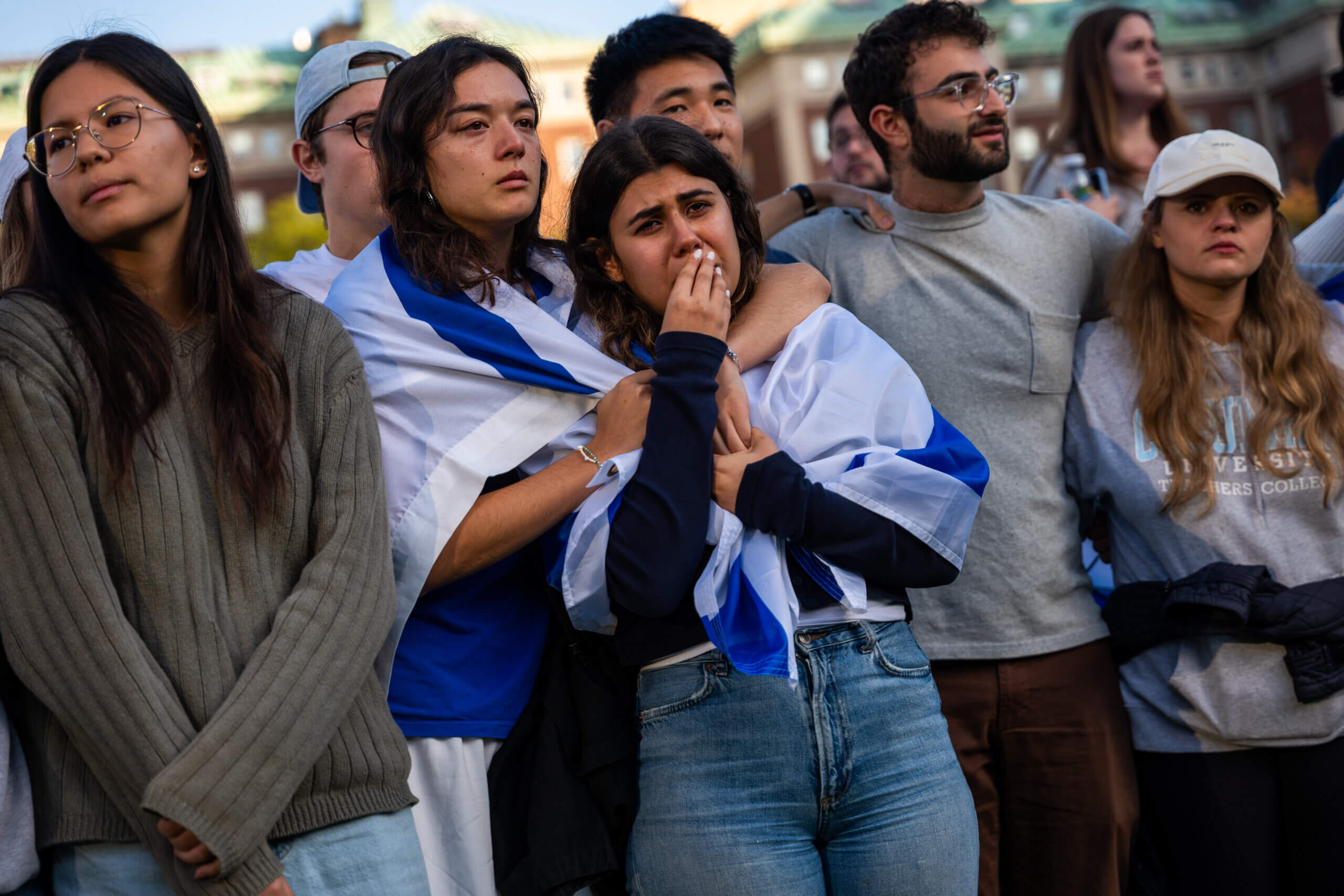
“Jews around the world and here in America mourned,” Greenblatt recalled in a speech this past November. “Yet, to our dismay, many of our so-called allies were nowhere to be found.”
One of those so-called allies was the Council for Global Equality, a coalition promoting LGBTQ+ rights overseas that the ADL had helped create in 2008 and that Julie Dorf, the council’s co-chair, said had regularly partnered with the ADL on policy campaigns during the Obama administration.
But as the ADL began working less on civil rights issues, they faded into the background of her coalition, Dorf said.
Still, the ADL believed that the council’s statement about the Israel-Hamas war, which condemned “all attacks on civilian populations” and called for a ceasefire, was a departure from the organization’s mission and “harmful to our ADL community,” according to Fabes.
“CGE was unwilling to acknowledge the harm the statement had caused,” Fabes added. “ADL, therefore, made the values-based decision to end our membership in the coalition.”
Dorf said she wasn’t sure what the ADL’s specific objection was even after meeting with them at the time.
“It was clear they didn’t even read it carefully because they accused us of all kinds of things that weren’t true — I said, ‘Pull it up, do you see these sentences?’” recalled Dorf, who is Jewish. “They were just grasping for something that would make it an antisemitic statement.”
“There was a time before Oct. 7 and there’s a time after.”
Jonathan GreenblattCEO of the ADL
Dorf said she didn’t hear anything from the ADL following the meeting and removed the organization from the coalition herself. The council continues to represent some of the largest LGBTQ+ groups in the country, including GLAAD, the Human Rights Campaign and the Trevor Project. Following the ADL’s departure, its only Jewish member is American Jewish World Service.
Fabes said the ADL continues to support LGBTQ+ rights and pointed to recent partnerships with Equality Illinois on a hate crimes training law for police in the state and with Free State Justice on an anti-masking law in Maryland.
Inside the ADL, Sills, who previously worked for Amazon, said Greenblatt began adopting the kind of corporate mantras favored by Jeff Bezos. Instead of “every day is day one,” Greenblatt began telling staff that every day was Oct. 8. “It seemed to communicate the expectation that ADL exists in this trauma response state indefinitely,” Sills said.
Greenblatt has maintained this perspective. “When I say we’re still in an Oct. 8 world, we are — and that doesn’t mean that we don’t adapt and evolve, but there was a time before Oct. 7 and there’s a time after,” he said in an interview.
After Oct. 7, what had been a gradual shift away from working on issues other than antisemitism expanded into what some staff saw as a disregard for safeguarding civil liberties when it came to antisemitism work.
A few weeks after Oct. 7, Greenblatt called on nearly 200 college and university presidents to investigate pro-Palestinian student clubs for “materially supporting” Hamas, and months later the organization endorsed mask bans at political demonstrations.
Sills, the head of local policy at the time, said the anti-masking campaign drove his resignation.
“I laid out the legal argument, commented on the fact that employees at ADL with significant expertise were not being listened to, and said, ‘You’ve got to find somebody else to do this — it’s not going to be me,’” Sills recalled. “It’s unconstitutional.”
Fabes said Sills was not privy to high-level decision making at the ADL and that many experts supported the push for anti-masking laws.
“Ultimately, the proposed anti-masking legislation gained full support from Black and LGBTQ groups because ADL’s approach was responsible and legal, harkening back to the anti-masking laws that were first passed to combat the Ku Klux Klan,” Fabes said. He noted that the NAACP’s local chapter in New York backed a law in the state.
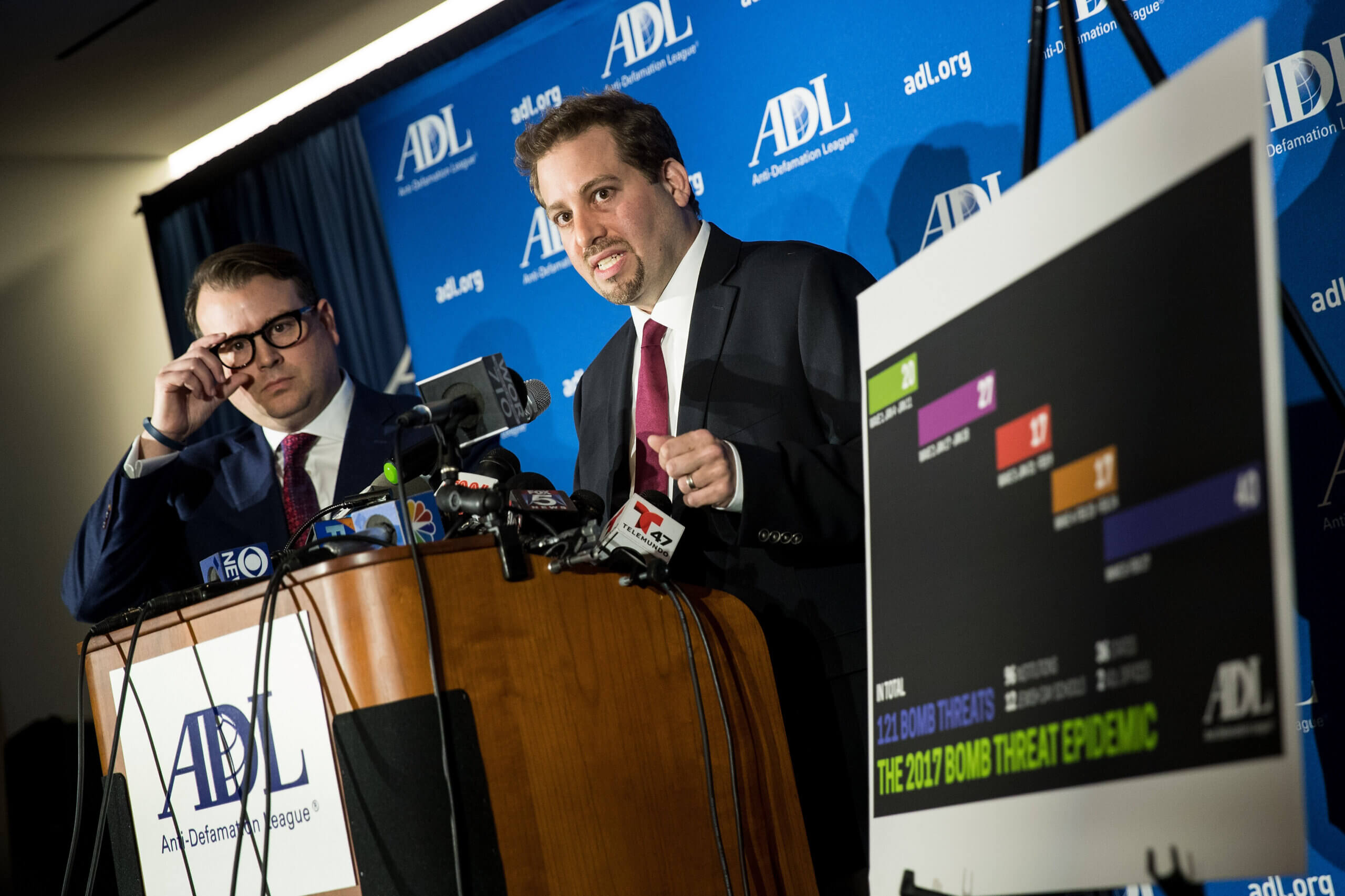
There was also a push within the organization to categorize a wider range of speech as antisemitism, specifically speech targeting Israel. One former employee, who helped the Center on Extremism track antisemitic incidents, said staff initially responded to Greenblatt’s 2022 speech — in which he more forcefully articulated his existing view that anti-Zionism was a form of antisemitism — by defining the concept extremely narrowly.
“The team cared a lot about the data and said, ‘Well, Jonathan has defined anti-Zionism as specifically not supporting a Jewish right to self-determination in Israel, so just saying ‘Israel is a racist state’ isn’t saying Jews have no right to self-determination,’” the employee recalled.
But after Oct. 7, the person said, ADL executives began insisting that the center’s staff classify many pro-Palestinian demonstrations as antisemitic based on the use of anti-Zionist slogans and signs.
The ADL said in a statement to the Forward in January 2024, following the release of its first annual tally of antisemitic incidents following Oct. 7, that it had significantly broadened its definition of antisemitic incidents to include rallies that feature “anti-Zionist chants and slogans.”
“While our methodology may change slightly from time to time, there was no mandate from senior leadership to make changes after Oct. 7,” Fabes said. He added that the ADL only counted 2,596 out of more than 5,000 protests against Israel in 2024 as antisemitic.
The Asian American Foundation, a civil rights organization modeled after the ADL and created with significant support from Greenblatt, has come under pressure to cut ties with the group from 70 Asian American groups and allies frustrated with Greenblatt’s criticism of pro-Palestinian activists. The foundation has maintained its relationship with the ADL, including sharing a board member with the organization, though The New Yorker reported that it ended its partnership with the Center on Extremism in the spring of 2024.
Around the same time, Sarah Moore, who had been monitoring anti-LGBTQ+ extremism in a dual role for both the ADL and GLAAD, started a new role working exclusively for GLAAD. GLAAD did not respond to multiple questions about its current relationship with the ADL, but three former employees said the organization had made an intentional decision to cut ties.
Fabes said the ADL was “proud of the work our teams accomplished together” and “proud that this effort enabled GLAAD to fully fund and house this position within its own team.”
ADL staff in the Center on Extremism wrote a letter to their boss, quoted by The New Yorker, warning that the organization was losing trust with “other extremism researchers, media outlets, anti-hate organizations, civil rights groups and — perhaps most concerningly — large swaths of the Jewish community that we are committed to serving.”
The letter came from “a few people” and “did not represent the views of all staff,” according to Fabes, but he said that Greenblatt met with the team to discuss the issues raised.
The ADL also said that it was in the process of adding a new researcher to the Center on Extremism funded by the League of United Latin American Citizens to monitor threats to the Hispanic community.
Greenblatt made waves early in the second Trump administration for initially defending Elon Musk’s controversial gesture at an inaugural rally as an “awkward gesture,” and then supporting the White House’s “bold” attempt to revoke the permanent residency of Mahmoud Khalil, a leader of the pro-Palestinian demonstrations at Columbia University, and detain him at an immigration jail in Louisiana.
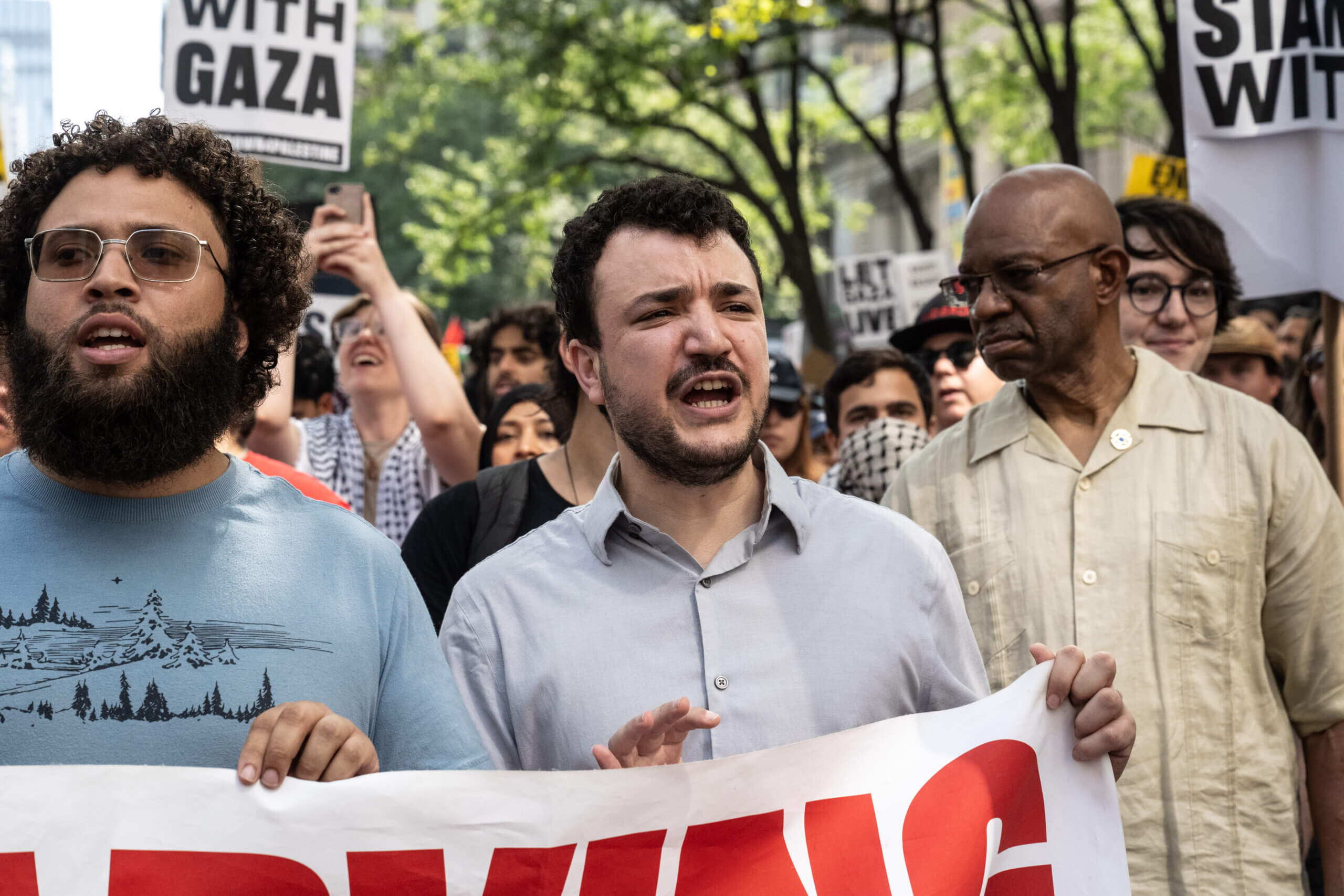
The response to Khalil’s arrest was the final straw for Berman, who first joined the ADL’s regional New England board in 2001 and had held leadership positions on the national commission.
Berman had little sympathy for Khalil’s views, which he called “reprehensible” in his resignation letter, but defending the arrest had “irrevocably degraded the ADL’s moral authority.”
“If we don’t stand for civil rights, we stand for nothing,” he added.
The Khalil controversy did little to change Greenblatt’s hostile posture toward campus protesters. In a closed-door meeting with Republican attorneys general over that summer, he compared masked demonstrators at Columbia to ISIS and al-Qaida terrorists.
In an interview, Greenblatt emphasized that his remarks were not intended for the public.
But his intensifying rhetoric toward protesters drove an even deeper wedge between the ADL and other civil rights groups. In the initial aftermath of Oct. 7, many Jewish clergy and other leaders wondered why their interfaith and social justice partners weren’t condemning Hamas more forcefully, while leaders in other communities questioned a perceived lack of sympathy for Palestinian civilians.
Ginna Green, the founder of Horizon Philanthropy, which encourages Jewish donors to support liberal democracy, said she understood the fear that led to this schism between not only the ADL but many other Jewish establishment groups and civil rights groups in recent years — but said it was shortsighted.
“The American Jewish community has never been less safe,” Green said. “We’ve never needed the protection of democracy and coalitions and partners more than right now — so to make this move at a time when nobody is safe unless they’re a straight, white Christian male seems like an absolute abandonment of the principles the ADL was founded on.”
A former senior staff member at the ADL who worked there before and after Oct. 7 said he shared the frustration toward the progressive and human rights communities but thought there was an opportunity for cooler heads to prevail.
Instead, the organization’s approach — including the call to investigate students for ties to Hamas — caused a tonal shift among former allies from, “We don’t want to work with the ADL because we don’t think they care about us,” he said, to “We can’t work with them because they’re a hate organization.”
Greenblatt tests ‘old friendships’
The ADL’s shifting approach to civil rights began around 2017, but the rupture with other groups also grew from a new understanding of where antisemitism was coming from, which Greenblatt began to articulate a few years before Oct. 7.
Early in the Biden administration, Greenblatt argued that a record-shattering spike in antisemitic incidents was being caused not just by the right, which was responsible for most of the physical violence toward Jews, but by people criticizing Israel. “When you have people make wild claims about the Jewish state, make unhinged accusations, maybe it shouldn’t surprise us that then people attack Jewish Americans,” he said on PBS News Hour in April 2022.
Just a few weeks later Greenblatt delivered a watershed speech at the ADL’s national leadership summit in which he declared that “anti-Zionism is antisemitism” and said the groups promoting it — including Students for Justice in Palestine, Jewish Voice for Peace and the Council on American-Islamic Relations — were the “photo inverse” of violent white supremacists.
“These organizations might not have armed themselves,” Greenblatt said, but “if you demonize another group enough, there are more than a few people out there who will act.”
Greenblatt had spoken out against anti-Zionism for years, but the speech marked a new era in which he would start regularly describing anti-Zionists as posing an equivalent threat to white supremacists.
According to several former employees familiar with the matter, he delivered these remarks over the objection of most of the ADL’s senior leadership team, including Oren Segal, who runs the organization’s Center on Extremism and cautioned that law enforcement might take Greenblatt’s remarks as an excuse to surveil peaceful advocacy groups.
“Oren himself says that he has no recollection of ever having a conversation” in which he raised those concerns, Fabes said.
Greenblatt recognized in his speech that the new direction he was plotting would “fray some old friendships” and “cost us some donations.”
One of those old friendships seemed to fray almost immediately.
Greenblatt’s speech was followed by remarks from Maya Wiley, the incoming CEO of the Leadership Conference on Civil Rights, one of the country’s oldest coalitions of its kind that includes the ADL, NAACP and ACLU, along with scores of smaller groups.
Wiley had not been warned that Greenblatt would unveil a more aggressive posture toward progressive organizations at the event, and it prompted an immediate challenge for her work keeping a sprawling coalition united despite differences over Israel, according to multiple people familiar with the matter.
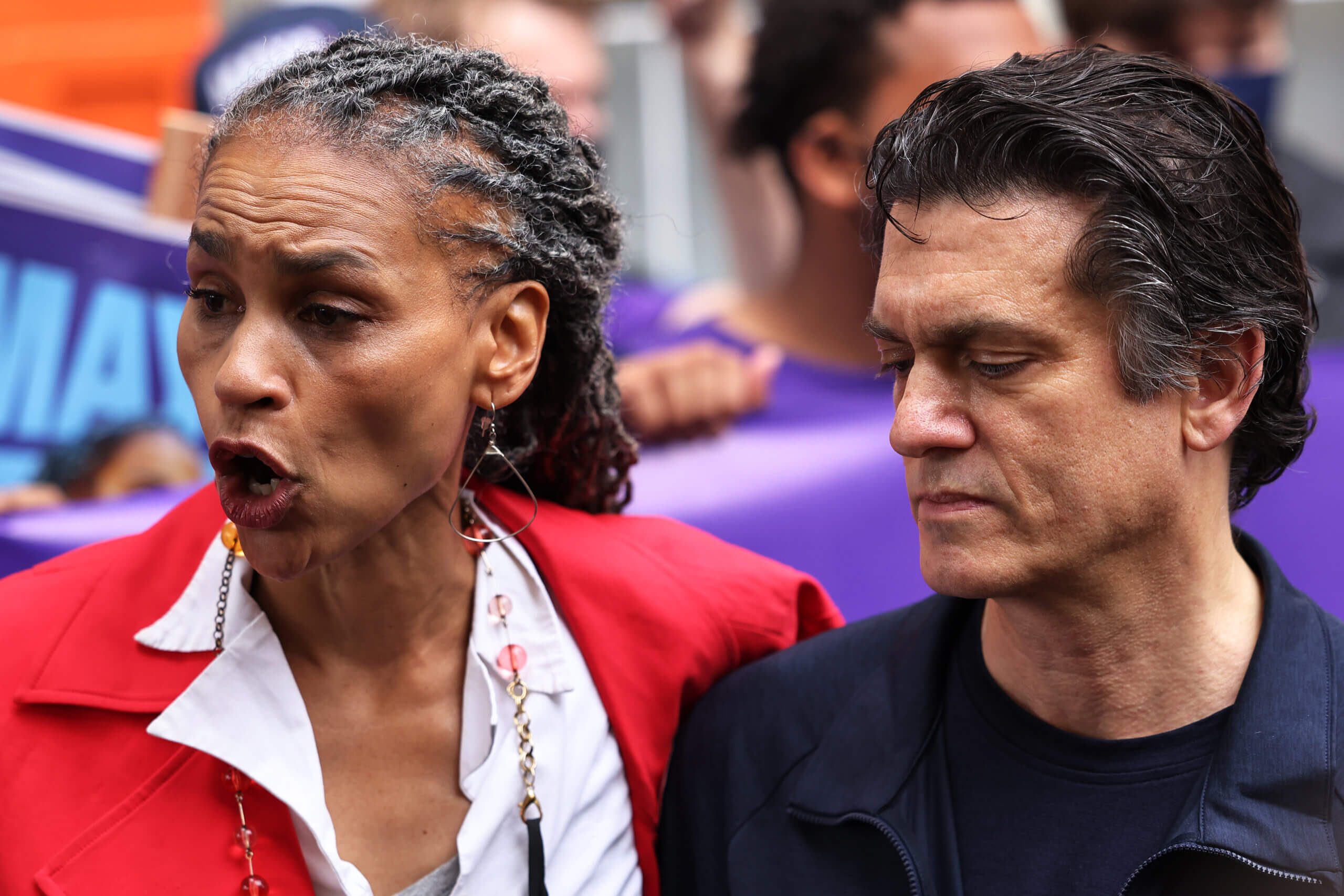
The relationship between Wiley and Greenblatt has continued to deteriorate, sometimes in personal terms, three people familiar with the matter said.
Greenblatt unequivocally denied this. “That’s not true,” he said. “I have a lot of respect for Maya.”
Wiley declined to answer questions about her relationship with Greenblatt.
The ADL was not among the 65 civil rights organizations that signed onto a June statement from the Leadership Conference condemning “antisemitic hate crimes” following the attacks at the Capital Jewish Museum and at a rally in Boulder, Colorado, last spring. Wiley also released a statement last summer defending the National Education Association, a member organization, after Republicans pushed to shut it down over a vote to boycott the ADL.
Several Leadership Conference member organizations also took issue with the ADL before Oct. 7 over a preliminary version of survey results about antisemitism in the African American community that they found oversimplified and offensive. The ADL eventually agreed to delay the survey’s release and modify its presentation. Fabes described the incident as part of the ADL’s belief in “a counsel culture, not a cancel culture.”
Fabes said that Greenblatt has a recurring call with Wiley and that the ADL currently serves on the Leadership Conference’s board and sits on its hate crimes task force. He also said that the ADL continues to work with the NAACP, and that Johnson served as co-chair of its Sports Leadership Council even as he has been absent from recent conferences and called for an arms embargo against Israel.
The NAACP did not respond to questions about the current status of its work with the ADL.
Maya Berry, executive director of the Arab American Institute, is the co-chair of the hate crimes task force that the ADL sits on, and while she once testified alongside Greenblatt during a 2021 congressional hearing about violent extremism, Berry recently said she was pleased the FBI had decided to end its partnership with the ADL.
The ADL has continued to work closely with two Leadership Conference members: the National Urban League, another Leadership Conference member, whose president spoke at its annual conference last year, and the League of United Latin American Citizens.
Wiley said in a statement to the Forward that, despite various divisions, the Leadership Conference has always sought to maintain a diverse coalition committed to “fighting antisemitism and all forms of hate.”
ADL loses longtime supporters
While the ADL has long faced criticism from progressives — including a campaign to #DropTheADL over its support for Israel — many former employees and board members who are speaking out now were unswayed by these previous critiques.
Tracey Lagbold, who served as leadership chair on the national commission and head of the ADL’s education committee, said that “breaking up with ADL was one of the hardest things I’ve done in my entire life.”
She first got involved with the ADL in 2008 after an acquaintance invited her to an event the organization was hosting. “It was the first time I really heard about civil rights from a Jewish perspective,” she said. “I was like, ‘Wow, I didn’t know I was looking for that my whole life, but that’s what I’ve been wanting.’”
Lagbold eventually became chair of the ADL’s Florida board and assumed several national roles. She stomached a series of frustrating decisions made by Greenblatt, she said, including shrinking the organization’s education programming focused on combating bias and eliminating the dedicated civil rights team.
But presenting an award to Jared Kushner in early 2024 for his work on the Abraham Accords was the final straw.
Walter Jospin, a longtime ADL donor, was also angered by the award, and said Greenblatt’s decision to give it caught the organization’s then-board chair Ben Sax by surprise. “He told me that the national board was blindsided — Jonathan just did it,” Jospin said. “They didn’t like it.”
Sax did not respond to a request for comment, and Fabes said the organization does not discuss Greenblatt’s interactions with the board.
“The ADL was founded on this mission of doing two things that I thought were inextricable: caring for others and caring for ourselves,” said Lagbold, whose resignation from the ADL has not been previously reported. “I don’t think of them as two things, because they need each other, they inform each other — and it became clear in the last few years that’s not the way the organization is operating anymore.”
Aaron Ahlquist, who ran the ADL’s regional office in New Orleans and eventually became a regional vice president, resigned in July over similar concerns with the organization, according to a copy of his resignation letter obtained by the Forward.
In a scathing critique of the organization’s leadership, Ahlquist wrote that national board chair Nicole Mutchnik had told regional leaders that “our sole focus was on an immediate ROI on our activity and we would be looking [for] short-term results only.”
“This is a false assertion and the characterization of Nicole is inaccurate,” Fabes said.
Ahlquist argued that this made it hard to advocate for investing in civil rights issues or in building coalitions with other minority groups, work that often takes “years or decades to earn our place at the table.”
He said that a more forceful emphasis on defending Israel while pulling back on education programs that focused on protecting all minority groups was marginalizing the organization and allowing longtime opponents of the ADL, like the Council on American-Islamic Relations, to increase their influence.
“Our move away from our integrated mission has potentially done irreparable harm for ADL in non-Jewish spaces,” Ahlquist wrote.
Greenblatt has framed the ADL’s turn away from working on issues beyond antisemitism as one meant to pair the organization’s limited resources with a growing number of incidents targeting Jews.
“Our core purpose is to protect the Jewish people — not in an esoteric way, not in some attenuated manner, but right here, right now.”
Jonathan GreenblattCEO of the ADL
Fabes noted that the organization tallied the highest number of antisemitic incidents on record in 2019 and then again in 2021 and 2022, and that the synagogue shootings in both Pittsburgh and Poway, California, predated Oct. 7. “The growing crisis underscored our hyperfocus on addressing rising levels of antisemitism,” he said.
But some see this as a false binary.
Lagbold is now a board member at the Jewish Council for Public Affairs, which has argued that preserving democratic norms helps guarantee Jewish safety, and that trading quick wins — like the deportation of college students who protest Israel in ways that some Jews find offensive — in exchange for the erosion of due process is a bad deal. “It’s impossible to separate these issues,” Amy Spitalnick, JCPA’s CEO, said in a text message.
Greenblatt understands this position, and even articulated it in his 2022 book, It Could Happen Here, in which he wrote that “the founders of ADL believed in the simple but powerful premise that America could not be safe for its Jews unless it was safe for all its people.”
Steven Ludwig, a longtime regional board member in Philadelphia, seized on Greenblatt’s previous writing in his resignation letter over the summer.
“Did you mean it when you wrote … ‘There’s still time to stand up for the peaceful, democratic society we want to gift to our children and grandchildren,’” Ludwig asked. “If so, why are you not standing up now?”
In an interview, Greenblatt described the ADL as stepping into a more service-oriented role amid a “tsunami” of antisemitism. “When Jewish people find their homes or their businesses defaced,” he said, “when Jewish professionals are being boycotted from their lines of work, when Jewish members of unions are being harassed — we stand up for them.”
The ADL has responded to these issues with advocacy and also, increasingly, with practical tools, including several helplines that field complaints of discrimination in K-12 schools and on college campuses, which have yielded hundreds of reports and in some cases federal complaints or lawsuits on behalf of callers. Greenblatt said high-minded advocacy on behalf of civil rights or democratic norms was too abstract for the current moment.
“One could make the argument that protecting democracy protects the Jews,” he said. “But our core purpose is to protect the Jewish people — not in an esoteric way, not in some attenuated manner, but right here, right now.”
And, he added, all the work the ADL is doing defending Jews against antisemitism?
“That’s civil rights work.”
The post The ADL’s turn away from civil rights was years in the making — Oct. 7 accelerated it appeared first on The Forward.
Uncategorized
Yiddish Modernism and the political tumult in the 1930s
אין די 1920ער און 1930ער יאָרן האָט דער זשורנאַל „אין זיך“ געדינט װי אַ טריבונע פֿאַר מאָדערניסטישע עקספּערימענטן אין דער אַמעריקאַנער ייִדיש־ליטעראַטור. צו די „אינזיכיסטן“ האָבן געהערט יעקבֿ גלאַטשטײן, אַהרן גלאַנץ־לעיעלעס, ה. לײװיק, שלמה שװאַרץ, יהודה לײב טעלער און אַנדערע.
װי מען קען טרעפֿן פֿונעם זשורנאַלס נאָמען, זײַנען די דאָזיקע ליטעראַטן געװען פֿאַרטאָן אין שעפֿערישע חקירות אַרום דעם אײגענעם „זיך“. און טאַקע, אין די 1920 יאָרן האָט „אין זיך“ ניט געהאַט קײן אינטערעס צו די פּאָליטישע דאגות־היום.
אָבער דאָס האָט זיך געביטן נאָך 1934, װען גלאַטשטײן איז געװאָרן דער רעדאַקטאָר פֿונעם זשורנאַל. דער דאָזיקער תּקופֿה איז געװידמעט דאָס נײַע בוך פֿון איתי זוטרא (אוניװערסיטעט פֿון מאַניטאָבאַ, קאַנאַדע) „אינזיכיזם: ייִדיש־דיכטונג און די ייִדישע אידענטיטעט אין אַמעריקע אין די 1930ער יאָרן“.
גלאַטשטײן האָט פֿאַרטײדיקט די שעפֿערישע אױטאָנאָמיע פֿונעם דיכטער קעגן די אַנגאַזשירטע קאָמוניסטישע קריטיקער װי אַלכּסנדר פּאָמעראַנץ, װאָס האָבן געפֿאָדערט, אַז ליטעראַטור זאָל דינען די אינטערעסן פֿון די פּראָלעטאַרישע מאַסן.
אַזױ איז גלאַטשטײנס אײגענע פּאָעטישע שאַפֿונג געװאָרן אַ מין פּאָליטישע פּאָזיציע. די דאָזיקע פּאָליטיק, האַלט זוטרא, האָט משפּיע געװען אויף זײַן ליטעראַרישן סטיל און דעם סטיל פֿון אַנדערע מחברים פֿון „אין זיך“.
גלאַטשטײן האָט געעפֿנט די זײַטן פֿון „אין זיך“ פֿאַר פּאָליטישע װיכּוחים. ער אַלײן איז אַרױס מיט אַ פֿאָרשלאָג צו שאַפֿן אַ פּאַרטײ, װאָס זאָל זײַן אי פּאָליטיש ראַדיקאַל אי ייִדישיסטיש, הגם קײן פּראַקטישע פּראָגראַם האָט ער ניט פֿאָרגעלײגט.
להיפּוך צו אַנדערע ראַדיקאַלע פּאַרטײען, קודם־כּל דער קאָמוניסטישער, איז דער הױפּטציל פֿון גלאַטשטײנס פּאַרטײ געװען צו פֿאַרטײדיקן ייִדישע נאַציאָנאַלע אינטערעסן. דאָס איז געװען ספּעציעל װיכטיק אין דער צײַט װען דער אַנטיסעמיטיזם האָט געהאַלטן אין אײן װאַקסן אין אײראָפּע.
גלאַטשטײן האָט פֿאַרבעטן ייִדישע ליטעראַטן אַרומצורעדן זײַן פּראָיעקט אױף די זײַטן פֿונעם זשורנאַל. לרובֿ זײַנען זײ ניט געװען אײַנשטימיק מיט גלאַטשטײן. דער עיקר זײַנען זײ געװען קעגן דער אידײ, אַז די אינטעלעקטואַלן דאַרפֿן װערן פּאָליטישע אָנפֿירער פֿון די מאַסן.
חוץ דעם, װי עס האָט באַמערקט חיים זשיטלאָװסקי, זײַנען שױן דאָ געװען גענוג פּאָליטישע פּאַרטײען אין װעלכע ייִדן האָבן זיך אַקטיװ באַטײליקט. צו שאַפֿן נאָך אַ פּאַרטײ װאָלט ניט געהאָלפֿן צו פֿאַרבעסערן דעם מצבֿ פֿון ייִדן.
דער אינזיכיזם, האַלט זוטרא, איז בטבֿע געװען עקלעקטיש סײַ פּאָעטיש און סײַ פּאָליטיש. מען האָט ניט געהאַלטן פֿון טראַדיציאָנעלע זשאַנערס און סטילן. אָפֿט מאָל האָט מען עקספּערימענטירט מיט מישן פּראָזע און פֿערזן.
אין די 1930ער יאָרן האָבן די ליטעראַרישע עקספּערימענטן באַקומען אַ פּאָליטישן אַקצענט. סײַ אין דער קונסט און סײַ אין דער פּאָליטיק האָבן די אינזיכיסטן געזוכט אַן ענטפֿער אױף דער עיקר־פֿראַגע: װאָס איז דער עצם פֿונעם ייִדישן „זיך“ אין אַמעריקע אין דער מאָדערנער תּקופֿה?
דער אינזיכיזם איז געװאָרן אַ נײַער מין ייִדישיזם: אַ קולטורעלע און פּאָליטישע אידעאָלאָגיע, װאָסער ציל איז געװען צו פֿאַראײניקן פֿאַרשײדענע פּאָליטישע שטרעמונגען אױפֿן סמך פֿון דער ייִדישער שפּראַך און דער מאָדערנער װעלטלעכער ייִדיש־קולטור.
גלאַטשטײן האָט געגלױבט, אַז װערטער דאַרפֿן טראָגן דעם װירקלעכן אמת, בפֿרט אין די צײַטן, װען כּלערלײ טאָטאַליטאַרישע רעזשימען האָבן פֿאַרשפּרײט ליגנס פֿאַר די צװעקן פֿון זײער מערדערישער פּראָפּאַגאַנדע.
אינעם בוך לידער „ייִדישטײַטשן“, װאָס איז אַרױס אין װאַרשע אין 1937, האָט גלאַטשטײן געפּרוּװט דערגרײכן די טיפֿסטע פֿאָנעטישע און לעקסישע װאָרצלען פֿון דער ייִדישער שפּראַך.
אין די שורות „אַלטער בױם, פֿעלדז און שטאַם / כ׳קום צו דיר מיט ברױט און גראַם“ דריקט גלאַטשטײן אױס זײַן פּאָזיציע לגבי דער ייִדישער קולטור־ירושה. ער קומט מיט זײַן אַמעריקאַנער „ברױט און גראַם“ צו דעם „אַלטן בױם“ פֿון ייִדיש כּדי צו שעפּן שפּראַכלעסע יניקה פֿאַר זײַן פּאָעזיע.
זוטרא אַנטפּלעקט אין „ייִדישטײַטשן“ סאַטירישע אונטערטענער, װאָס מאַכן חוזק סײַ פֿון די פֿאַשיסטן און קאָמוניסטן און סײַ פֿון די אַמעריקאַנער אַסימילאַטאָרן.
די צװײטע צענטראַלע פֿיגור אינעם אינזיכיזם איז געװען דער דיכטער, קריטיקער און זשורנאַליסט אַהרן גלאַנץ־לעיעלעס. אין 1937, אײנצײַטיק מיט גלאַטשײטנס „ייִדישטײַטשן“, איז אַרױס גלאַנץ־לעיעלעס בוך לידער „פֿאַביוס לינד“.
אין הסכּם מיט די עסטעטישע פּרינציפּן פֿונעם אינזיכיזם איז דאָס דאָזיקע בוך אַ מישמאַש פֿון סטילן, זשאַנערס און שטאַנדפּונקטן, װאָס זײַנען פֿאַרקניפּט דורך דער פֿיגור פֿונעם הױפּטהעלד. דאָס איז אַ פּאָעטישער סך־הכּל פֿונעם איניזכיסטישן פּעריאָד אין לעיעלעסעס שאַפֿונג, האַלט זוטרא.
„פֿאַביוס לינד“ האָט באַקומען התלהבֿותדיקע אָפּרופֿן מצד די קריטיקער. גלאַטשטײן האָט געהאַלטן דאָס בוך פֿאַר דער „ערשטער גרױסשװוּנגיקער און גרױסשטאָטישער פּאָעמע אין דער ייִדישער פּאָעזיע“, און ה. לײװיק האָט עס געלױבט פֿאַר זײַן „אָרגאַנישער גאַנצקײט“.
די פֿיגור פֿון פֿאַביוס לינד איז ניט קײן אױטאָביאָגראַפֿישע. זוטרא מאַכט אַ פּרוּװ צו אַנטפּלעקן די פֿאַרפּלאָנטערטע באַציִונגען צװישן דעם מחבר אַהרן גלאַנץ־לעיעלעס, זײַן פּאָעטישער פּערזאָן אַ. לעיעלעס, און זײַן אױסגעטראַכטן „אַלטער עגאָ“ — פֿאַביוס לינד.
לינד פֿיגורירט אינעם בוך װי אַ צעשפּאָלטענע פּערזענלעכקײט: „פֿאַביוס לינד פֿיל לעבנס פֿירט ער“. ער איז סײַ אַ פּראָדוקט און סײַ אַ קרבן פֿון זײַן תּקופֿה.
לינד האָט ספֿקות װעגן כּלערלײ פּראָיעקטן צו לײזן די „ייִדישע פֿראַגע“, אינעם סאָװעטישן ביראָבידזשאַן אָדער אינעם העברעיִש־רעדנדיקן ייִשובֿ אין ארץ־ישׂראל.
חוץ לידער האָט גלאַנץ געשריבן פּאָליטישע קאָמענטאַרן אין דער ליבעראַלער צײַטונג „דער טאָג“. להיפּוך צו גלאַטשטײן האָט ער ניט פֿאַרטראַכט קײן אײגענע פּאָליטישע פּראָיעקטן. זײַן פּאָליטישער שטאַנד איז געװען אין הסכּם מיטן פּראָגרעסיװן הױפּטשטראָם פֿון פֿראַנקלין רוזװעלטס „ניו דיל“.
דער לעצטער נומער פֿון „אין זיך“ איז אַרױס אין 1940, װען אײראָפּע איז שױן געשטאַנען אױפֿן שװעל פֿונעם חורבן. דער קאָנפֿליקט צװישן אַלװעלטלעכקײט און ייִדישקײט, װאָס איז געװען די צענטראַלע טעמע פֿון די אינזיכיסטישע חקירות, איז געלײזט געװאָרן לטובֿת ייִדישקײט.
גלאַטשטײן האָט פּראָקלאַמירט: „אַ גוטע נאַכט, ברײטע װעלט. […] אױף מײַן אײגענעם געבאָט גיי איך צוריק אין געטאָ“. דאָס איז געװען דער סוף פֿונעם ייִדישן מאָדערניזם, פֿאַרסך־הכּלט זוטרא.
די פּאָעטישע קולטור־ירושה פֿון די אינזיכיסטן איז פֿאָרגעשטעלט געװאָרן פֿאַרן ענגליש־שפּראַכיקן עולם אין דער פּרעכטיקער צװײ־שפּראַכיקער אַנטאָלאָגיע „אַמעריקאַנער ייִדישע פּאָעזיע“, װאָס איז אַרױס אין 1986 אונטער דער רעדאַקציע פֿון בנימין און באַרבאַראַ האַרשאַװ.
אין דער הקדמה האָט בנימין האַרשאַװ פּרטימדיק אַנאַליזירט די פֿאָרמעלע און סטיליסטישע חידושים, װאָס די אינזיכיסטן האָבן אַרײַנגעבראַכט אין דער ייִדישער פּאָעזיע אין די 1920ער יאָרן, אָבער ער האָט קױם באַרירט זײער פּאָליטיק.
זוטראס בוך באַטראַכט די אינזיכיסטישע שעפֿערישקײט אונטער אַן אַנדערן קוקװינקל. אין די 1930ער יאָרן זײַנען פּאָליטיק און פּאָעזיע געװאָרן נאָענט צונויפֿגעפֿלאָכטן אין די װערק פֿונעם לעצטן דור אַמעריקאַנער ייִדישעמאָדערניסטן.
The post Yiddish Modernism and the political tumult in the 1930s appeared first on The Forward.
Uncategorized
I never saw myself in Barbie. Would ‘Hanukkah Barbie’ have changed that?

I wasn’t really a Barbie kid. While I occasionally played with my sister’s hand-me-down Barbies, I preferred American Girl dolls. They were Barbie’s chunkier, cherubic counterparts, each representing a girl from a different period in history and accompanied by a series of historical-fiction books about her life. I devoured those books, including the story of Rebecca Rubin, a 9-year-old Russian-Jewish immigrant living on the Lower East Side in the early 1900s.
So when Mattel released its first Hanukkah Barbie last week — officially marketed as the “Barbie Holiday Sweater Doll” — I wondered whether she would have appealed to me when I was growing up. Would her Jewishness have made her feel more relatable than that blonde-haired, blue-eyed, impossibly proportioned bombshell?
As it turns out, I wasn’t the only one thinking about what it means for Barbie to look Jewish. Shortly after her release, Hanukkah Barbie set off a spirited debate over her appearance. Her nose seemed slightly more prominent than the default Barbie button nose, raising questions about whether Hanukkah Barbie’s face reinforced Jewish stereotypes, or if her distinctive nose reflected a good-faith effort to give the doll recognizably Jewish features.
It was at least clear that Mattel did its homework about the Festival of Lights. The hanukkiah on Barbie’s sweater has the correct number of candleholders, and the dreidels bear accurate Hebrew lettering — which is more than can be said about a lot of Hanukkah merchandise. If sales are any indication, Hanukkah Barbie is resonating. The doll, which originally retailed for about $30, is sold out, with third-party sellers now asking for as much as $345.
There have previously been Barbies modeled after Jewish celebrities, including Olympic gymnast Aly Raisman, Israeli Olympic surfer Anat Lelior and fashion designer Diane von Furstenberg. But Hanukkah Barbie is the first Barbie whose identity is simply Jewish — which means she will have the impossible task of representing Jews of all kinds. Sephardic and Ashkenazi Jews, religious and secular Jews all have to somehow find themselves in the same doll.
Complicating matters, the original blonde Barbie has arguably been Jewish all along. Ruth Handler, the daughter of Polish-Jewish immigrants, invented Barbie in 1959, naming “Barbie” after her daughter, Barbara, and “Ken” after her son, Kenneth. “Barbie is a matrilineal Jew? Love it!” one Reddit user joked last month.
But Barbie was always a little too Aryan-coded to feel Jewish to me. Her origins go back to the postwar German ideal of blonde, white femininity. Handler drew inspiration for Barbie’s look from a German toy named Bild Lilli, marketed toward men as a gag gift and sold in bars and tobacco shops. That doll, in turn, was based on the comic-strip character Lilli, characterized by Barbie’s unofficial biographer M.G. Lord as “a golddigger, exhibitionist, and floozy” who worked as a secretary while looking for a wealthy husband. Bild Lilli was manufactured by O.M. Hausser, a toy company that had produced Adolf Hitler figurines during the 1930s.
No wonder stereotypically Ashkenazi-looking Jews like me, not to mention everyone else who also didn’t fit the Barbie mold, felt left out of Barbie-land. (Which is literally everyone, given that scaled up to human size, a traditional Barbie doll’s proportions would make her unable to survive; there’d be no room for her organs in her tiny waist, and she’d have no choice other than to walk on all fours.)
Over the years, Barbie has become far more inclusive. After the debut of the “Colored Francie” doll in 1967, Barbie expanded to include dolls of different races, body types and abilities, including dolls with prosthetic limbs and wheelchairs and, in 2016, the long-awaited introduction of “curvy,” “petite” and “tall” Barbies. Mattel introduced career-themed dolls in the 1960s, evolving from fashion designer, nurse, and flight attendant to a presidential candidate Barbie in 1992.
The American Girl doll, which Mattel acquired in 1998, was part of a similar response to the limitations of the traditional fashion doll. Created by teacher Pleasant Rowland in 1986, American Girl was designed to help girls see themselves in their dolls while making history feel personal and engaging.

Of course, little kids aren’t thinking so much about the sociological implications of their toy choices. For my part, my mom bought me an American Girl look-alike doll with my brunette hair and choppy bangs, hoping that seeing myself reflected in a doll would help build my self-esteem. But I also gravitated toward a blonde-haired, blue-eyed American Girl doll that looked more Barbie-esque, which I begged my mom to buy.
Looking back, I wonder how much of the Barbie beauty standard I had subconsciously absorbed, even with an array of representative dolls at my disposal. Hanukkah Barbie may more closely resemble women like me. But changing the default cultural image of Barbie will take more than a doll with a light-up Hanukkah sweater.
The post I never saw myself in Barbie. Would ‘Hanukkah Barbie’ have changed that? appeared first on The Forward.
Uncategorized
Minnesota man charged with ISIS-inspired plot on Jewish-owned Mall of America
(JTA) — The FBI accused an 18-year-old man of buying an AK-47 assault rifle with plans to commit a mass shooting in support of ISIS at the Mall of America in Bloomington, Minnesota, the largest indoor shopping mall in North America.
Sheikhdoon Abdullahi Mohamud, of Richfield, Minnesota, was charged on Wednesday with one count of knowingly receiving a firearm and ammunition in order to commit a federal crime of terrorism, according to a federal complaint filed on Wednesday.
Mohamud’s attorney did not respond to JTA’s request for comment.
Mohamud wanted to attack the Mall of America because he believed its owners to be Jewish, the FBI said in a statement. He planned to kill between 30 and 60 people, according to messages he exchanged with a confidential source, according to the complaint.
Mall of America is owned and operated by Triple Five Group, controlled by the Ghermezian family, a Canadian family of Iranian Jewish origin.
Messages sent in September 2026 included a video in which Mohamud pledged allegiance to ISIS, the complaint said. He planned his attack for Oct. 24 because he expected a crowd at the Hmong Arts Celebration scheduled for that day.
The complaint said an undercover FBI agent sold an AK-47 rendered inoperable, four 30-round magazines and 200 rounds of ammunition to Mohamud for $600 on Oct. 6. During the sale, Mohamud confirmed his plans to commit a mass shooting. Mohamud was arrested shortly after the sale.
The complaint said Mohamud wanted to commit an attack similar to the 2016 Pulse nightclub shooting in which 49 victims were killed; the Bondi Beach mass-shooting in Sydney last December, during which 15 victims were killed during a Hanukkah celebration; and a New Orleans truck-ramming attack that killed 14 victims in New Orleans on Jan. 1, 2025.
The investigation into Mohamud began around December 2024, when he messaged the confidential source on multiple social media platforms, according to the complaint, detailing his desire to travel to Somalia to join a group that the U.S. has designated a foreign terrorist organization. If travel was not possible due to financial constraints, he said would move forward with an attack in Minnesota.
This article originally appeared on JTA.org.
The post Minnesota man charged with ISIS-inspired plot on Jewish-owned Mall of America appeared first on The Forward.
