


Uncategorized
The Holocaust Torah that survived a Mississippi synagogue fire was brought there by the state’s only survivor

When firefighters cleared Beth Israel Synagogue after an arson attack this month, the library floor was slick with water and ash. Prayer books lay swollen and blackened. Smoke clung to the sanctuary walls.
Two Torah scrolls burned. A third Torah did not.
That Torah, displayed for decades in a glass case near the front of the synagogue, survived unscathed. Its presence at Beth Israel was not incidental. It was brought to Mississippi by Gilbert Metz, the state’s only concentration camp survivor — a man who retrieved it from Europe and brought it to the American South. It, too, had survived the Nazis.
“The million dollar question is: How in the hell did he get to Mississippi?” his grandson, Joseph Metz, recalled in an interview on Tuesday.
From Auschwitz to Jackson
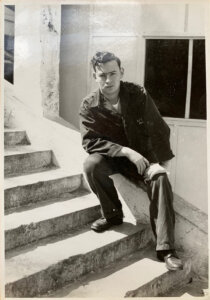
Gilbert Metz was born in 1929 in Alsace-Lorraine, France. At 13, the family was forced into hiding. When people fled Nazi Germany, they often gathered silver or jewelry. Gilbert’s mom packed her prayer books and Rashi commentary instead. She had taught her son Hebrew and Talmud, and she refused to leave those books behind.
They snuck back and forth to their summer home in northeastern France, but were eventually captured by the Nazis and sent to an internment camp. From there, a 14-year-old Metz and his family were sent to Auschwitz. His mother and 10-year-old sister were murdered in the gas chambers shortly after their arrival. His father later met the same fate.
Metz survived multiple concentration camps, including Auschwitz and Dachau, and was liberated by American troops in April 1945. He was eventually bar mitzvahed after the Holocaust at 16, a delayed rite marking a childhood interrupted and then resumed.
Relatives who had settled in Mississippi sponsored Metz to come to the United States. He finished high school in Natchez, attended Tulane University, and served in the U.S. Army during the Korean War — at one point having to reapply for citizenship after being deployed overseas.
He eventually moved to Jackson, where he raised a family and became a traveling salesman before co-founding Metz Industries, a wholesale lingerie business that sold brassieres, hosiery and feather boas to stores across the region — the work of an ordinary American life rebuilt mile by mile. He and his wife, Louise, were married for more than 50 years.
Bringing the Torah to Mississippi
In 1992, Robert Berman, a longtime congregant and former Beth Israel president, heard about an international effort to restore and redistribute scrolls damaged, desecrated or orphaned during the Holocaust. He and his sisters, Joan and Brenda, along with their families donated the funds to acquire one. Shul leaders decided there was only one person who should retrieve it.
Metz and his son, Lawson, traveled to London to bring the Torah back to Jackson. At a restoration warehouse, he was shown piles of scrolls — some burned, some torn, some riddled with bullet holes — many painstakingly pieced together from fragments. They chose a Torah rescued from Prague and took turns carrying it on their laps during the international flight.
Other Torahs rescued from the Holocaust made similar southern journeys, to congregations in Alabama, Louisiana, and Tennessee. Joseph Metz said his grandfather felt honored to be the one chosen from Beth Israel to collect the Torah, and that bringing it to Mississippi was closure for him — a full-circle moment.
A welcoming committee from the shul — including Berman, the rabbi and others — greeted the Metzs and the Torah at Jackson’s airport. “They sang prayers,” recalled Berman, now 94.
Beth Israel held a dedication ceremony at the synagogue and the Torah was installed in a glass case near the front doors, where it remained for decades. The words “Memory sustains humanity” is etched across the top of the case. Next to it hangs a photograph of Metz as an adult wearing the yellow star he was forced to wear under Nazi rule.
The scroll is displayed unfurled to a chapter in Exodus that comes after the Red Sea has closed behind the fleeing Israelites and before the Ten Commandments are given — a narrow span of time when survival has been achieved but meaning has not yet arrived. The scroll has remained that way for years, suspended between catastrophe and covenant.
“The congregation understood exactly whose story that Torah represented,” said Stuart Rockoff, a historian and longtime member of the 165-year-old Beth Israel. “This was a synagogue with one Holocaust survivor.”
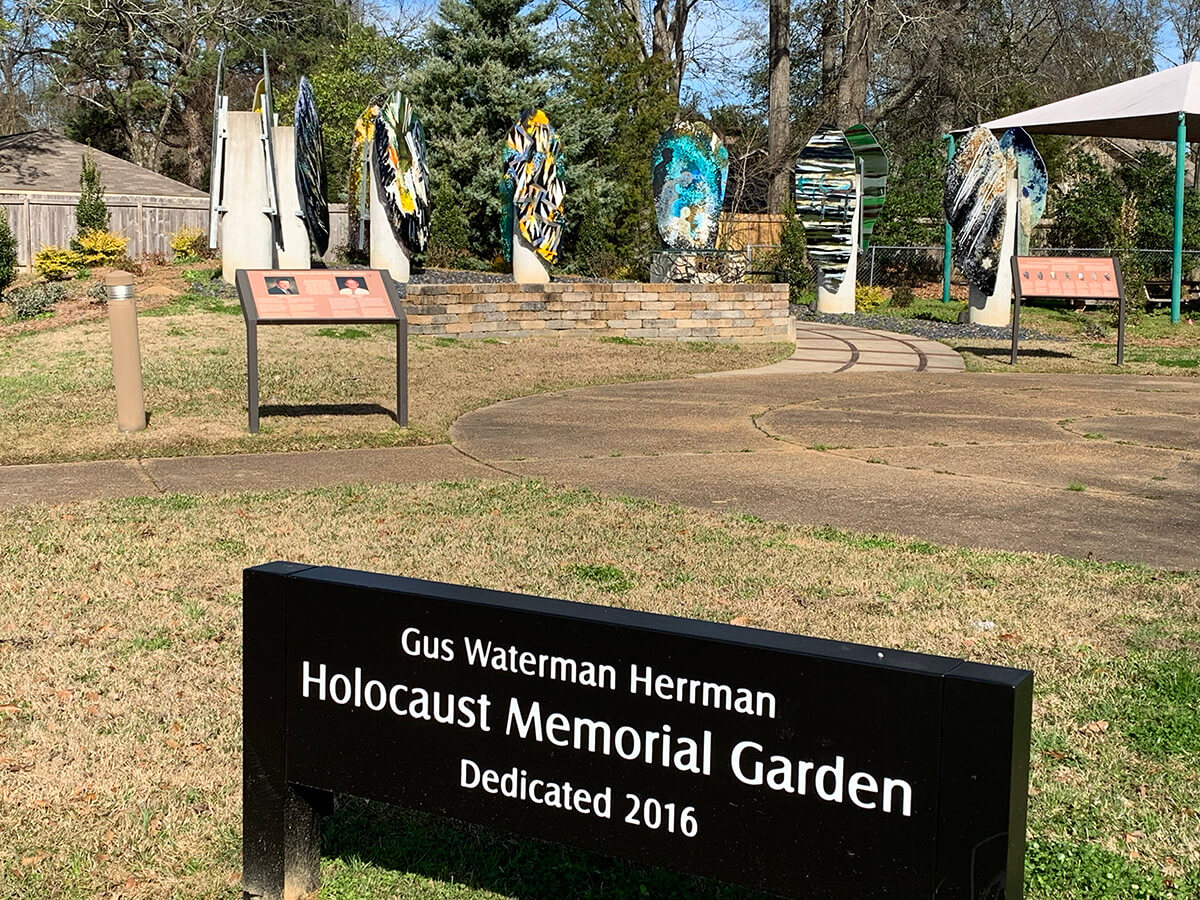
Behind its building, Beth Israel also maintains a Holocaust memorial garden, dedicated to Metz and to Gus Waterman Herrman, a U.S. Army officer from Mississippi who fought in Europe during World War II and later became a philanthropist. The garden, which features stained-glass sculptures and is used for Yom HaShoah commemorations, was not damaged in the fire.
Berman’s daughter, Deborah Silver, had her bat mitzvah and wedding at the synagogue. She’s now a jazz singer, nominated for a Grammy this year, and plans to perform charity concerts in New York City and Jackson to benefit the shul. “We will be back,” she said, “and we will recover.”
Surviving another act of antisemitism
Saturday’s fire at Beth Israel is being investigated by federal authorities as a possible hate crime. A local teen, Stephen Spencer Pittman, confessed to igniting the blaze.
The bulk of the damage was concentrated in the library and administrative offices, which are also home to the Institute of Southern Jewish Life. It’s the same part of the building targeted in a 1967 Ku Klux Klan bombing.
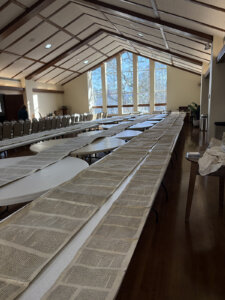
After the fire, the congregation moved the Torahs to the nearby Northminster Baptist Church, which offered its space. There, five Torah scrolls from the sanctuary were carefully unfurled and laid out across long tables, allowing soot and smoke to dissipate.
On the advice of a sofer, a ritual scribe, the Holocaust Torah was not unrolled.
“It’s extremely delicate,” said Sarah Thomas, Beth Israel’s vice president. She said it appeared to have no visible damage and is now wrapped and stored for safekeeping until the congregation is able to move back into the building.
The Torah’s survival can be explained without invoking a miracle: it was protected by its glass case and by where it stood. Still, for those who know its history, the moment carried weight.
What survives
Gilbert Metz spent decades speaking publicly about his Holocaust experience. His oral testimony is preserved in Holocaust archives, and his story has been taught in schools across Mississippi.
That inheritance was also ritual: For decades at Beth Israel, the shofar on the High Holidays was blown by Metz’s son, Lawson, and later by his grandson, Joseph.
Joseph Metz — now the president of the Jewish federation in Mobile, Alabama — has written a book about his grandfather’s survival, Behind the Silent Doors — a phrase Gilbert used to describe the gas chambers. Joseph regularly appears at Holocaust remembrance events and in classrooms. When he does, he pins his grandfather’s yellow star to his jacket before he speaks — the same object that once marked Gilbert for death now marking the story as one that refuses to disappear.
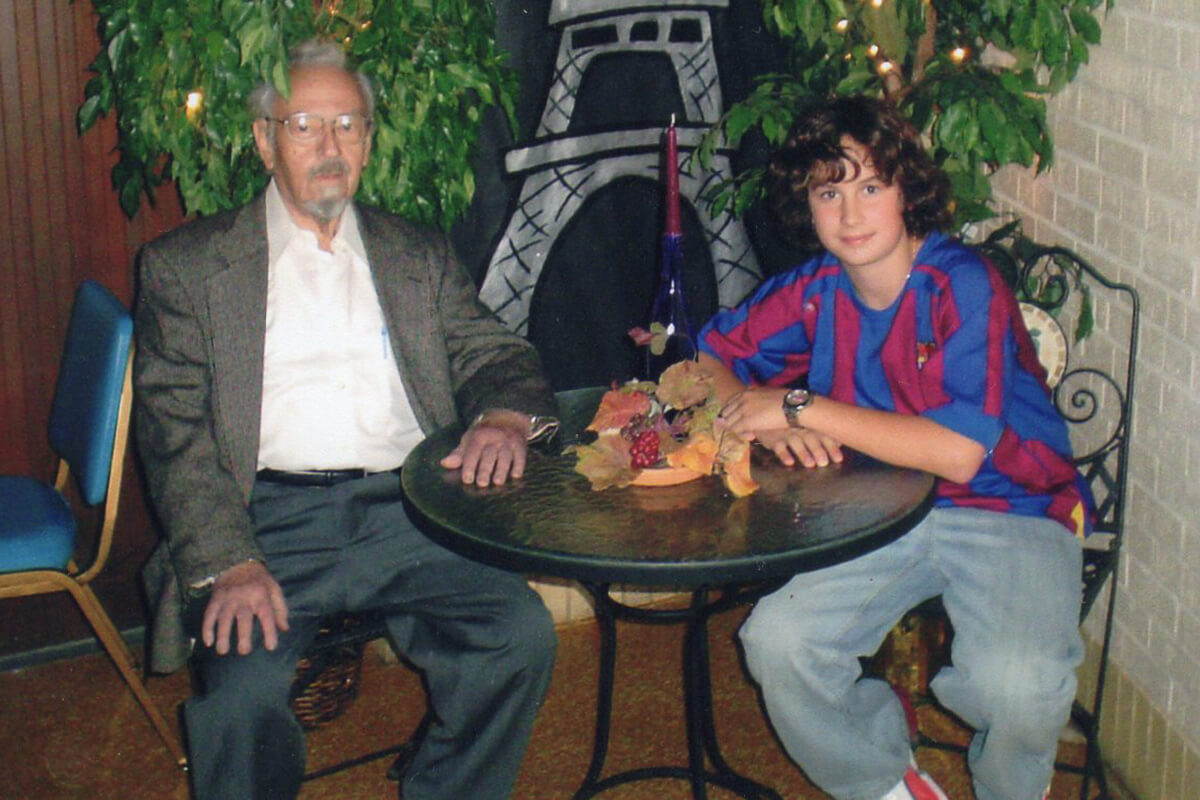
Metz, who died at 78 in 2007, bore the tattooed number the Nazis assigned him at Auschwitz for the rest of his life: 184203. Joseph and his sister, Caroline, each later chose to replicate the number on a tattoo of their own, as an inheritance. He said his grandfather survived so the story would not end with him, but be carried forward.
The Torah Metz carried across an ocean — and across a lifetime — remains.
The post The Holocaust Torah that survived a Mississippi synagogue fire was brought there by the state’s only survivor appeared first on The Forward.
Uncategorized
High-Stakes US Special Forces Mission Rescues Airman From Iran After F-15 Crash

FILE PHOTO: A U.S. Air Force F-15E Strike Eagle aircraft takes off for a mission supporting Operation Epic Fury during the Iran war at an undisclosed location, March 9, 2026. U.S. Air Force/Handout via REUTERS/File Photo
US forces staged the audacious rescue of an airman behind enemy lines after Iran downed his fighter jet, officials said on Sunday, resolving a crisis for President Donald Trump as he weighs escalating the war, now in its sixth week.
The airman rescued by special operations forces, who Trump said was a colonel, was the weapons-systems officer on the downed F-15, a US official told Reuters.
“Over the past several hours, the United States Military pulled off one of the most daring Search and Rescue Operations in US History,” Trump said in a statement, adding that the airman was injured but “he will be just fine.”
The officer was the second of two crew members on the warplane that Iran said on Friday had been brought down by its air defenses. Iran’s Revolutionary Guards said several aircraft were destroyed during the US rescue mission, Tasnim news agency reported.
Reuters reported on Friday that the first crew member had been retrieved, triggering a high-profile search by both Iran and the United States for the remaining airman.
Iranian officials had urged citizens to help find him, hoping to gain leverage against Washington in the war Trump and Israel launched on February 28.
Trump has threatened to escalate the conflict in the coming days with attacks on Iran’s energy infrastructure.
Had Iran captured the airman, the ensuing hostage crisis could have shifted American public perception of a conflict that opinion polls show was already unpopular.
Trump said the airman was rescued “in the treacherous mountains of Iran” in what he said was the first time in military memory that two US pilots had been rescued, separately, deep in enemy territory.
The official told Reuters that as the weapons-systems officer was moved from near a mountain to a transport aircraft parked within Iran, US forces had to destroy at least one of the aircraft because it had malfunctioned.
U.S. AIRCRAFT HIT
The rescue effort, involving dozens of military aircraft, encountered fierce resistance from Iran.
Reuters reported on Friday that two Black Hawk helicopters involved in the search were hit by Iranian fire but escaped from Iranian airspace.
Separately, a pilot ejected from an A-10 Warthog fighter aircraft after it was hit over Kuwait and crashed, the officials said, though the extent of crew injuries was unclear.
Still, Trump was triumphant.
“The fact that we were able to pull off both of these operations, without a SINGLE American killed, or even wounded, just proves once again, that we have achieved overwhelming Air Dominance and Superiority over the Iranian skies,” he said in his statement.
US air crews are trained in what to do if they go down behind enemy lines, measures known as Survival, Evasion, Resistance and Escape, but few are fluent in Persian and face a challenge in staying undetected while seeking rescue.
The conflict has killed 13 US military service members, with more than 300 wounded, US Central Command says. No US troops have been taken prisoner by Iran.
While Trump has repeatedly sought to portray the Iranian military as being in tatters, they have repeatedly been able to hit US aircraft.
Reuters reported on US intelligence showing that Iran retains large amounts of missile and drone capability. Until just over a week ago, the US could only determine with certainty that it had destroyed about one-third of Iran’s missile arsenal.
The status of about another third was less clear, but bombings probably damaged, destroyed or buried those missiles in underground tunnels and bunkers, Reuters sources said.
The US and Israeli war on Iran has spread across the Middle East, killing thousands and hitting the global economy with soaring energy prices that are fueling fears of inflation.
Uncategorized
On Easter, Pope Leo Urges World Leaders to End Wars, Renounce Conquest

Pope Leo XIV waves from the main balcony of St. Peter’s Basilica after delivering his “Urbi et Orbi” (To the city and the world) message, on Easter Sunday at the Vatican, April 5, 2026. Photo: REUTERS/Remo Casilli
Pope Leo urged global leaders in his Easter message on Sunday to end the conflicts raging across the world and abandon any schemes for power, conquest or domination.
The pope, who has emerged as an outspoken critic of the Iran war, lamented in a special message to the thousands gathered in St. Peter’s Square that people “are growing accustomed to violence, resigning ourselves to it, and becoming indifferent.”
“Let those who have weapons lay them down!” the first US pope exhorted. “Let those who have the power to unleash wars choose peace!”
Leo did not mention any specific conflicts in the message, known as the “Urbi et Orbi” (to the city and the world) blessing. It was unusually brief and direct.
The pope said that the story of Easter, when the Bible says Jesus rose from the dead three days after not resisting his execution by crucifixion, shows that Christ was “entirely nonviolent.”
“On this day of celebration, let us abandon every desire for conflict, domination, and power, and implore the Lord to grant his peace to a world ravaged by wars,” Leo urged.
Leo, who is known for choosing his words carefully, has been forcefully decrying the world’s violent conflicts in recent weeks and ramping up his criticism of the Iran war.
In a sermon for the Easter vigil on Saturday night, he urged people not to feel numbed by the scope of the conflicts raging across the world but to work for peace.
The pope made a rare direct appeal to US President Donald Trump on Tuesday, urging him to find an “off-ramp” to end the Iran war.
In his address from the balcony of St. Peter’s Basilica on Sunday to the Square below, decorated with thousands of brightly colored flowers for the holiday, Leo offered brief Easter greetings in ten languages, including Latin, Arabic and Chinese.
The pope also announced he would return to the Basilica on April 11 to host a prayer vigil for peace.
Uncategorized
Temple Mount Set for Limited Reopening to Jews and Muslims

Israeli National Security Minister and head of Jewish Power party Itamar Ben-Gvir gives a statement to members of the press, ahead of a possible ceasefire between Israel and Hamas, in Jerusalem, Jan. 16, 2025. Photo: REUTERS/Oren Ben Hakoon
i24 News – Israeli authorities are preparing to partially reopen the Temple Mount in Jerusalem to both Jewish and Muslim worshipers for the first time since the start of the war with Iran, under a tightly controlled and highly restricted security arrangement, i24NEWS has learned.
According to details obtained by i24NEWS, the Israeli police, backed by National Security Minister Itamar Ben-Gvir, are also expected to permit limited access for Jewish worshipers to the Western Wall as part of the same phased plan.
Under the framework, access to the Temple Mount and surrounding holy sites would be restricted to small groups of up to 150 people at a time. In the event of a missile alert, all visitors would be immediately evacuated in accordance with emergency protocols.
The decision follows a recent Supreme Court ruling allowing demonstrations in a limited format. Police argue that a consistent standard must apply across both civic gatherings and religious sites, with Ben-Gvir insisting that “there cannot be one rule for demonstrations and another for the Temple Mount.”
However, the reopening contradicts recommendations from the Home Front Command, which has advised keeping sensitive sites closed due to the ongoing risk of missile attacks.
Israeli Justice Minister Yariv Levin has proposed transferring authority over such security-related decisions exclusively to defense officials, an initiative that could reshape the balance between the judiciary and security establishment regarding restrictions on public access.