


Uncategorized
This rabbi reshaped and revitalized Judaism in the 20th Century — how have we forgotten him?
These days, public monuments don’t have an easy time of it. Variously speckled with graffiti, pelted with red paint, rendered headless, melted down and reconfigured into something else entirely, their fate is a fickle one, their future no longer assured.
The same can be said of people who, in their own day, were monumental personalities, household names, whose pronouncements were once heralded and heeded but who, with the passage of time, now go unrecognized, their presence erased from our collective memory.
Then again, monumental personalities have a fighting chance at being rescued from the cruel fate that awaits their physical counterparts. Thanks to the intervention of a biographer, they’re given a second lease on life, their impact on society re-evaluated, their names, activities and ideas put back into circulation.
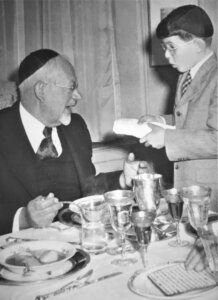
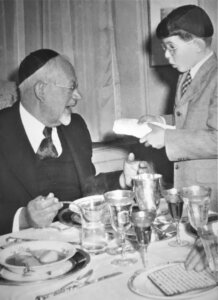
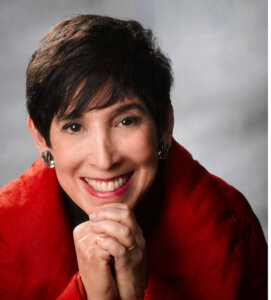
At least, I’d like to think so. As the author of a just-published biography of Mordecai M. Kaplan (1881-1983), a towering figure of the 20th century whose determination to reshape and revitalize American Jewish life set early generations of American Jewry aquiver, I’m heavily invested in obtaining a hearing, or, better yet, a fair shake, for my subject.
It’s not so much a matter of asking “what would Kaplan do?” by literally applying his words and practices to Jewish life today, making of him what so many contemporary American Jews make of A. J. Heschel: the wellspring of our moral conscience, much less a seemingly inexhaustible supply of quotable quotes. That’d be nice, of course, but it’s not what I have in mind when I speak of bringing Kaplan back into circulation.
My objective is more a matter of thinking through the lineaments of his legacy and reckoning with the ways in which his ideas about unity and community, choice, belonging and Israel, as well as his personal experiences with the limits of dissent, shape us. It’s to bring Kaplan into conversation with a generation who knows him not. But should.
Here’s why.
No fan of denominational divisions such as Reform, Conservative and Orthodox which, then, as now, segmented the Jewish community, Kaplan was an advocate, avant la lettre, of what we today call, and embrace, as post-denominationalism. Opening up opportunities for engagement and commitment, his concept of a robust Jewish life pivoted on options and possibilities rather than credentials, obligations and boundaries.
By Kaplan’s lights, all Jewish individuals, no matter their degree of ritual punctiliousness or belief in the divine should feel welcome to study a blatt gemara or observe Shabbat in their own fashion. The big idea, as he put it in 1928, was for Jews to find “joy in being Jews. Their Jewishness should be to them a source of enrichment and a means to the realization of what is best in them.”
Toward that end, Kaplan recalibrated the meaning of being Jewish in modern America, expanding its parameters. Well before “ethnicity” came into play as an omnibus term, one far more capacious and welcoming than “religion” as the locus of identity, he defined Judaism as a “civilization.” In articles, sermons and, in 1934, within the 500-plus pages of Judaism as a Civilization: Toward a Reconstruction of American-Jewish Life, this self-styled theological maverick laid out in great detail his plans for its overhaul. Eschewing “blind habit” and sentimentality in favor of intentionality, he called upon his coreligionists to “rediscover, reinterpret and reconstruct the civilization of his people.”
At the time this whale of a book was published, readers of the Forward would have been familiar with what Kaplan was going on and on about. But they had a simpler, more down-to earth name for the constellation of gesture, movement, humor, foodways, literature, folk sayings, rituals, idioms and beliefs that constitutes a distinctive Jewish culture. They knew it as yidishkayt.
For Kaplan’s audience of alrightniks — rapidly acculturating, upwardly mobile American Jews living the “goods life” — resorting to and promoting a Yiddish term like yidishkayt wouldn’t do. The word didn’t fit with their well-cushioned sense of themselves.
The use of yidishkayt didn’t sit well with Kaplan, either. Having grown up in a litvishe home, himself an immigrant to the United States who, for a spell, lived on the Lower East Side, he was no stranger to Yiddish. But he dismissed it as a “ghetto language,” one that got in the way of modernization.
Kaplan spoke from experience. In 1904, the newly minted, recently hired rabbi at Kehilath Jeshurun, a traditional synagogue on the Upper East Side, was preparing to deliver an English-language sermon, then a novelty, on Rosh Hashanah, when he was stopped in his tracks. Rabbi David Willowski, aka the Slutzker rav, a visitor from the Old World, assumed the pulpit, not Kaplan, and delivered an old-fashioned drush – in Yiddish. Up in arms, Kaplan fired off a letter to his congregants, taking them to task for their belief that Yiddish was the “only means whereby Judaism could be saved.”
In the absence, then, of an acceptable home-grown term by which to express his objectives, it took Kaplan a while to come up with a designation appropriate to the mighty scaffolding that now encased them. Sometimes, he adopted a lyrical turn of phrase, writing in the prestigious Menorah Journal of 1927 that to reduce Judaism to a religion was like “changing a rosebush into a bottle of perfume,” and that to “preserve any of [its] elements without the others is like trying to cultivate roses in a vase.” At other moments, he’d render it more succinctly, almost formulaically: “Before Judaism, Jewishness.” Ultimately, Kaplan put his faith in “civilization” as the antidote to what troubled modern-day Jews: the notion of chosen-ness a vivid case in point.
While recognizing the significance of the “chosen people” concept as well as its hold on the collective Jewish imagination, Kaplan believed the designation to be more of a “spiritual anachronism” than a viable conceit by which to bind contemporary Jews together as one. Its age-old history notwithstanding, chosen-ness, he insisted, was ill-suited to life in a modern democracy, “out of place,” and, in one of his more controversial decisions, retired it from active liturgical and rhetorical duty.
In its stead, Kaplan substituted what he characterized as an “ethically acceptable” and decidedly modern rationale for Jewish collective identity: “peoplehood.” A vague, if emotionally powerful, claim to distinctiveness, it made community and unity the center of gravity of the modern Jewish experience rather than Torah, prayer or even Zionism.
“The old Zionism,” he declared in 1955, “was meant to have the Jewish People rebuild Zion. A New Zionism is now needed to have Zion rebuild the Jewish People.”
In his day, Kaplan worried lest his timing was off, that his ambitious ideas had come too early for the first generation of Eastern European-born American Jews and too late for second generation American Jews. Perhaps he was right to worry. But his vision of a “maximum Jewishness” is neither too early or too late for us. It’s right on time.
The post This rabbi reshaped and revitalized Judaism in the 20th Century — how have we forgotten him? appeared first on The Forward.
Uncategorized
High-Stakes US Special Forces Mission Rescues Airman From Iran After F-15 Crash

FILE PHOTO: A U.S. Air Force F-15E Strike Eagle aircraft takes off for a mission supporting Operation Epic Fury during the Iran war at an undisclosed location, March 9, 2026. U.S. Air Force/Handout via REUTERS/File Photo
US forces staged the audacious rescue of an airman behind enemy lines after Iran downed his fighter jet, officials said on Sunday, resolving a crisis for President Donald Trump as he weighs escalating the war, now in its sixth week.
The airman rescued by special operations forces, who Trump said was a colonel, was the weapons-systems officer on the downed F-15, a US official told Reuters.
“Over the past several hours, the United States Military pulled off one of the most daring Search and Rescue Operations in US History,” Trump said in a statement, adding that the airman was injured but “he will be just fine.”
The officer was the second of two crew members on the warplane that Iran said on Friday had been brought down by its air defenses. Iran’s Revolutionary Guards said several aircraft were destroyed during the US rescue mission, Tasnim news agency reported.
Reuters reported on Friday that the first crew member had been retrieved, triggering a high-profile search by both Iran and the United States for the remaining airman.
Iranian officials had urged citizens to help find him, hoping to gain leverage against Washington in the war Trump and Israel launched on February 28.
Trump has threatened to escalate the conflict in the coming days with attacks on Iran’s energy infrastructure.
Had Iran captured the airman, the ensuing hostage crisis could have shifted American public perception of a conflict that opinion polls show was already unpopular.
Trump said the airman was rescued “in the treacherous mountains of Iran” in what he said was the first time in military memory that two US pilots had been rescued, separately, deep in enemy territory.
The official told Reuters that as the weapons-systems officer was moved from near a mountain to a transport aircraft parked within Iran, US forces had to destroy at least one of the aircraft because it had malfunctioned.
U.S. AIRCRAFT HIT
The rescue effort, involving dozens of military aircraft, encountered fierce resistance from Iran.
Reuters reported on Friday that two Black Hawk helicopters involved in the search were hit by Iranian fire but escaped from Iranian airspace.
Separately, a pilot ejected from an A-10 Warthog fighter aircraft after it was hit over Kuwait and crashed, the officials said, though the extent of crew injuries was unclear.
Still, Trump was triumphant.
“The fact that we were able to pull off both of these operations, without a SINGLE American killed, or even wounded, just proves once again, that we have achieved overwhelming Air Dominance and Superiority over the Iranian skies,” he said in his statement.
US air crews are trained in what to do if they go down behind enemy lines, measures known as Survival, Evasion, Resistance and Escape, but few are fluent in Persian and face a challenge in staying undetected while seeking rescue.
The conflict has killed 13 US military service members, with more than 300 wounded, US Central Command says. No US troops have been taken prisoner by Iran.
While Trump has repeatedly sought to portray the Iranian military as being in tatters, they have repeatedly been able to hit US aircraft.
Reuters reported on US intelligence showing that Iran retains large amounts of missile and drone capability. Until just over a week ago, the US could only determine with certainty that it had destroyed about one-third of Iran’s missile arsenal.
The status of about another third was less clear, but bombings probably damaged, destroyed or buried those missiles in underground tunnels and bunkers, Reuters sources said.
The US and Israeli war on Iran has spread across the Middle East, killing thousands and hitting the global economy with soaring energy prices that are fueling fears of inflation.
Uncategorized
On Easter, Pope Leo Urges World Leaders to End Wars, Renounce Conquest

Pope Leo XIV waves from the main balcony of St. Peter’s Basilica after delivering his “Urbi et Orbi” (To the city and the world) message, on Easter Sunday at the Vatican, April 5, 2026. Photo: REUTERS/Remo Casilli
Pope Leo urged global leaders in his Easter message on Sunday to end the conflicts raging across the world and abandon any schemes for power, conquest or domination.
The pope, who has emerged as an outspoken critic of the Iran war, lamented in a special message to the thousands gathered in St. Peter’s Square that people “are growing accustomed to violence, resigning ourselves to it, and becoming indifferent.”
“Let those who have weapons lay them down!” the first US pope exhorted. “Let those who have the power to unleash wars choose peace!”
Leo did not mention any specific conflicts in the message, known as the “Urbi et Orbi” (to the city and the world) blessing. It was unusually brief and direct.
The pope said that the story of Easter, when the Bible says Jesus rose from the dead three days after not resisting his execution by crucifixion, shows that Christ was “entirely nonviolent.”
“On this day of celebration, let us abandon every desire for conflict, domination, and power, and implore the Lord to grant his peace to a world ravaged by wars,” Leo urged.
Leo, who is known for choosing his words carefully, has been forcefully decrying the world’s violent conflicts in recent weeks and ramping up his criticism of the Iran war.
In a sermon for the Easter vigil on Saturday night, he urged people not to feel numbed by the scope of the conflicts raging across the world but to work for peace.
The pope made a rare direct appeal to US President Donald Trump on Tuesday, urging him to find an “off-ramp” to end the Iran war.
In his address from the balcony of St. Peter’s Basilica on Sunday to the Square below, decorated with thousands of brightly colored flowers for the holiday, Leo offered brief Easter greetings in ten languages, including Latin, Arabic and Chinese.
The pope also announced he would return to the Basilica on April 11 to host a prayer vigil for peace.
Uncategorized
Temple Mount Set for Limited Reopening to Jews and Muslims

Israeli National Security Minister and head of Jewish Power party Itamar Ben-Gvir gives a statement to members of the press, ahead of a possible ceasefire between Israel and Hamas, in Jerusalem, Jan. 16, 2025. Photo: REUTERS/Oren Ben Hakoon
i24 News – Israeli authorities are preparing to partially reopen the Temple Mount in Jerusalem to both Jewish and Muslim worshipers for the first time since the start of the war with Iran, under a tightly controlled and highly restricted security arrangement, i24NEWS has learned.
According to details obtained by i24NEWS, the Israeli police, backed by National Security Minister Itamar Ben-Gvir, are also expected to permit limited access for Jewish worshipers to the Western Wall as part of the same phased plan.
Under the framework, access to the Temple Mount and surrounding holy sites would be restricted to small groups of up to 150 people at a time. In the event of a missile alert, all visitors would be immediately evacuated in accordance with emergency protocols.
The decision follows a recent Supreme Court ruling allowing demonstrations in a limited format. Police argue that a consistent standard must apply across both civic gatherings and religious sites, with Ben-Gvir insisting that “there cannot be one rule for demonstrations and another for the Temple Mount.”
However, the reopening contradicts recommendations from the Home Front Command, which has advised keeping sensitive sites closed due to the ongoing risk of missile attacks.
Israeli Justice Minister Yariv Levin has proposed transferring authority over such security-related decisions exclusively to defense officials, an initiative that could reshape the balance between the judiciary and security establishment regarding restrictions on public access.