


Uncategorized
What the Epstein files show about Jeffrey Epstein’s Jewish world
(JTA) — Sometime in the early 2010s, Jeffrey Epstein walked into Dr. Steven Kaplan’s office for a root canal.
The procedure took some time and required multiple visits. The two men got to chatting. “He was just another guy, that’s it,” Kaplan recalled to the Jewish Telegraphic Agency. The subject of Judaism came up.
“I wanted to put some yiddishkeit into him,” Kaplan said. “I was telling him, ‘You should meet a Jewish girl, because I think these girls are going to want you for your money.’ He said, ‘I would marry a Jewish girl.’”
Kaplan, who says he was unaware at the time of Epstein’s 2008 conviction and sentencing for sexual solicitation of a minor, sent Epstein several books on Judaism and offered to connect him with his rabbi. That meeting never happened, but when Epstein offered to help Kaplan fix up his office, a different proposal emerged: Kaplan asked his patient to donate to his children’s Jewish school or any Jewish institution.
Epstein agreed, telling Kaplan he would do it in honor of his mother. Soon his accounts wired $25,000 to Yeshiva Tifereth Moshe, in Queens, via the Jewish donation service MATCH. (He had initially promised $50,000, Kaplan said.) On a form for MATCH explaining his donation, included in the latest Justice Department release of files pertaining to his investigation, Epstein (or an assistant of his) wrote, “I AM IMPRESSED WITH THE CHILDREN I HAVE SEEN FROM THE YESHIVA.”
“Maybe that donation is helping him in the next world,” Kaplan told JTA. He added that, by the tenets of Orthodox Judaism that stipulate 10% of one’s earnings should go to tzedakah, or charity, Epstein’s donation was “nothing.” A spokesperson for the yeshiva told JTA they didn’t know anything about the Epstein connection. (JTA could not independently verify Kaplan’s account, but in emails revealed in the Epstein files, Epstein’s assistants relate conversations they had with Kaplan in which he urges the donation.)
Kaplan said he was of two minds today about Epstein’s support of Jewish causes throughout his life. “He still has a Jewish neshama,” Kaplan said, using the Hebrew word for soul, of the man who had orchestrated a wide-ranging network of underaged escorts; maybe giving money to Jewish causes was still a net good, regardless of where that money came from.
Yet Kaplan added that if Epstein were alive today and wanted to give to a yeshiva, knowing what he now knows about his crimes, he would have to ask his rabbi.
“I don’t know the answer to that,” the endodontist said. “I would go to the rabbi and say, ‘Is it a mitzvah for him to give it? Or is it bad for us to take it?’”
Kaplan’s ethical dilemma reflects one theme surfaced in the Epstein files released by Congress last month about the financier and convicted sex offender’s connections to the Jewish world.
Scrutinized for evidence of Epstein’s misdeeds, the files have enabled armchair sleuthing about Epstein’s associates, fueled antisemitic conspiracy theories and caused powerful players implicated in them to face new consequences — as when Harvard University broke ties with its former president, Larry Summers, on Wednesday.
The files also offer a window into Epstein’s workaday, small-scale networking, suggesting an almost obsessive effort to be involved in the affairs of his friends and associates. Jewish groups and individuals made up a significant share.
The files show that Epstein made donations to and connections with Jewish causes with which he had little to no personal relationship. They also show that some Jewish groups benefitted from donations from Epstein even after his 2008 conviction for sexual solicitation of a minor — though it remains unclear whether they knew about it. Some have said specifically that they did not.
Epstein served 13 months in a county jail following that conviction, which was largely swept under the rug thanks to a “sweetheart deal” between Epstein and former U.S. Attorney Alex Acosta. Many in the public had little knowledge of him or his misdeeds until investigative reporting about the deal emerged in 2018 and Epstein was arrested the following year.
Epstein sought to leverage his Jewish largesse as he also sought to improve his public image both before and after his conviction, the latest files show.
One email shows that he sought placement on the website eJewishPhilanthropy, then something of a directory for Jewish philanthropy insiders, for one of his foundations in 2013.
“The Foundation supports many jewish causes around the world as well as numerous Israli [sic] causes,” an Epstein staffer wrote in a draft letter sent to Epstein for approval.
Describing Epstein as “a financier and science philanthropist,” they trumpeted his support of the Jewish National Fund, the National Council of Jewish Women, the Columbia Jewish Foundation, UJA- New York, and Friends of the Israel Defense Forces, along with a few yeshivas that were not Kaplan’s. The bio goes on to note Epstein’s “long partnership with Leslie Wexner.”
Epstein’s only note: “no wexner affiliations please.” Six years later, Wexner, a prominent philanthropist to Jewish causes, would reveal that he had broken ties with Epstein years earlier after a decades-long relationship and forced him to repay $100 million he said Epstein had stolen from him. Epstein had previously served as a director of the Wexner Foundation, which funds fellowships for young people entering a career in Jewish communal service and intensive adult education programs for volunteer board members of Jewish organizations.
Now the latest Epstein files release has turned up the heat on Wexner, who again denied knowledge of Epstein’s alleged crimes in a congressional deposition last week. It has also thrown other major funders of Jewish causes into the spotlight, including some for the first time.
Epstein’s Jewish giving far predated his 2008 conviction, and had no clear ideology. Some of it was already known before the latest files release. He and his partner and co-conspirator, Ghislane Maxwell, cultivated relationships with both FIDF, which raises money for the welfare of Israeli soldiers, and Seeds of Peace, which holds summer camps bringing together Israeli and Palestinian youth. They gave large sums to Hillel International and YIVO, as well as $500,000 to the religious day school Ramaz, and backed an Israeli charity that distributed aid to the needy. (That group, Ziv Tzedakah Fund, received $100,000 from Epstein in 2006 before shuttering less than a year later.)
Other Jewish groups solicited Epstein for donations well after his conviction in 2008. Harvard Hillel, whose building Epstein had helped facilitate Wexner’s funds to build, made personal appeals to him in 2010 and 2011 — stoked in part by a Jewish dean, Henry Rosovsky, who brokered Epstein’s giving to Harvard Hillel and who Maxwell testified had received a “massage” at Epstein’s townhouse. (Rosovsky died in 2022.)
“We regret that anyone associated with our organization contacted Mr. Epstein during the years in question, and in the intervening years Harvard Hillel has revised our ethics standards to prohibit interactions of this nature,” Harvard Hillel’s current director, Jason Rubenstein, told the Harvard Crimson this month about the solicitations. Rubenstein added that the staff who sought the donations haven’t been involved with the organization in over a decade.
In 2015, a senior vice president of Touro College, the private Jewish New York institution, made a personal appeal to Epstein for him to fund a “medical incubator as well as resiliency in higher education.”
“I have read with interest about your prior philanthropic pursuits and the Jeffrey Epstein VI Foundation’s generous contributions to various causes,” wrote the official, Michael Newman. “A donation to Touro College would further your foundation’s goals in both education and medical research.” A Touro spokesperson told JTA that Newman’s letter “was a blind prospecting note to a philanthropist that went unanswered.”
Some of Epstein’s post-conviction Jewish giving was prosaic, the kind of mid-level donations made as favors that rarely trigger nonprofits’ due diligence mechanisms.
UJA-Federation of New York, for example, accepted a $50,000 donation from Epstein in 2017. The occasion: the UJA’s signature Wall Street Dinner, which drew more than 2,000 people and raised $29 million. Epstein made his donation in support of one of the honorees, Howard Lutnick, who was then chair of the financial firm Cantor Fitzgerald and is now President Donald Trump’s commerce secretary. (Trump himself is prominently mentioned in the Epstein files.)
Invited to fill a table at the event, Epstein declined, responding that Lutnick — who was also his next-door neighbor — could fill his. Lutnick recently admitted to a more extensive relationship with Epstein than he had previously publicized, including visiting his island after he had previously said he had cut ties; the White House has said it will stand by him.
A spokesperson for the UJA declined to comment further to JTA on Epstein’s donation.
For his part, Epstein did not appear to be wedded to UJA as a cause. Emailing with Summers in 2019, six months before his arrest, he discouraged the former U.S. Treasury Secretary from donating to the New York federation: “much rather you use you extra funds for your own benefit „ rather than the UJA,” Epstein wrote. “Agree re no UJA,” Summers wrote back. “Po=dering [sic] uses of money.”
The American Jewish Committee, meanwhile, invited Epstein to a gala dinner in 2013 in honor of Matthew Bronfman, a prominent Jewish philanthropist, though it was not clear whether he attended.
“AJC takes seriously this inquiry given Jeffrey Epstein’s reprehensible crimes,” a spokesperson told JTA in a statement. The spokesperson said that the 2013 invitation “is a standard form solicitation used routinely for honoree events and doesn’t reflect any AJC ties or relationship with Jeffrey Epstein.” The group added that it had two donations from Epstein on file, both predating his conviction: $15,000 in 2000 and $25,000 in 2003.
Nonprofit watchdogs are suggesting that groups that accepted Epstein’s money after 2008 should take a harder look at their practices.
“With respect to any donations accepted after the conviction, I find the compartmentalization truly astonishing,” said Laurie Styron, of the watchdog Charity Watch. “Throwing sex trafficking victims under the bus in service to revenue growth that will eventually support the mission of some unrelated charitable effort is not OK. Anyone who tries to justify this really needs to take a hard look in the mirror and ask themselves if they would feel differently about trading justice for money if it were their own daughter or mother or sister who was trafficked.”
Indeed, what should be done about Epstein’s Jewish donations now is another thorny question. Some of the Wexner fellowship’s alumni, responding to his Epstein ties, have begun lobbying for Wexner’s name to be dropped from the program; a few have made public reparations for benefitting from Wexner’s money.
And Za’akah, an advocacy group for Hasidic sexual abuse survivors, has harshly criticized the yeshivas and other Orthodox institutions that accepted funding from Epstein, even the ones that had no knowledge at the time of his conviction or the allegations against him.
“You can’t come into the holiest place in Judaism and say, ‘I’m paying for this with the wages of prostitution,’” Asher Lovy, the group’s founder, said in an Instagram video in which he cited Talmudic teachings.
Lovy added, “By doing that, Epstein was afforded the opportunity to launder his reputation — the reputation he had rightly earned as a sex trafficker.”
At least one yeshiva that received an Epstein donation has sought to distance itself from him. The Texas Torah Institute, a yeshiva in Dallas, recently issued a statement saying it was unaware that Epstein had paid out $28,000 in tuition payments across 2008 and 2009.
“Until the recent release by the Justice Department of over 3 million documents related to the Jeffrey Epstein investigation, Texas Torah Institute was unaware of any potential connection with Epstein,” Rabbi Eliyahu Kaufmann, the school’s dean, told the Houston Chronicle.
Kaufmann added that the school “conducted an internal review” and determined that the checks were not signed by Epstein himself, but instead by his financial advisor Harry Beller — who also facilitated other yeshiva donations over the years, the Epstein files show. (Other Jewish schools that received donations from Epstein did not return JTA requests for comment.)
Beyond the donations, the latest files have renewed scrutiny on Epstein’s Jewish associates — and induced a cascade of consequences for many of those named beyond Summers.
Casey Wasserman, the Jewish entertainment agent, has lost top clients over his relationship with Epstein and is currently facing calls to step down from the Los Angeles Olympics planning committee.
Thomas Pritzker, a cousin of Illinois Gov. JB Pritzker, has stepped down from his role as chair of Hyatt Hotels over his Epstein connections, while Norwegian diplomat Mona Juul, who played a large role in facilitating the Oslo Accords between Israel and the Palestinian Authority, has also resigned from government after emails revealed Epstein had left her children millions in his will.
Financier Leon Black, whose foundation publishes the Jewish Lives series of biographies from Yale University Press; World Jewish Congress president Ronald Lauder; art curator David A. Ross; renowned linguist and pro-Palestinian advocate Noam Chomsky; and former Israeli prime minister Ehud Barak are among the other Jewish names also facing a new round of scrutiny over their Epstein ties. The latest files show that Epstein and an Israeli security delegation had had a New York apartment, in which Barak stayed on multiple occasions, outfitted with hidden cameras.
Bard College, meanwhile, has opened an investigation into its longtime president (and former Jerusalem symphony director) Leon Botstein. Botstein has said his interactions with Epstein — whose dinner invitation his spokesperson said he had turned down in 2013 because of a Rosh Hashanah obligation — were part and parcel of the difficult job of raising funds to keep a struggling liberal arts college in business.
Some of Epstein’s interactions on Jewish topics had more to do with status than money.
The files show that he was invited to a “very private screening for friends and family” of the 2017 drama “Disobedience,” about closeted lesbian Orthodox women. The invitation had come through Peggy Siegal, a publicist who was a key power broker in his affiliations with celebrities — while also, the files show, cracking Jewish-inflected jokes to him about his sexual predilections.
Epstein indicated that he would attend. The screening, held at New York’s Museum of Modern Art, had a guest list packed with celebrities, including the film’s co-stars Rachel Weisz and Alessandro Nivola, as well as showbiz royalty like Daniel Craig, Jennifer Connelly, Steven Soderbergh, Naomi Watts, and Jeffrey Wright. Also on the guest list: Israeli writer-director Oren Moverman and director Mira Nair, the pro-Palestinian advocate and mother of current New York City Mayor Zohran Mamdani.
Other files show that he got involved in 2013 in seeking a conversion to Judaism for one of his female associates.
“Jeffrey says he needs a Rabbi who does conversions for Shiksa’s ….might you know of one!” his assistant wrote to an intermediary, using a Yiddish term for a non-Jewish woman.
The intermediary, who had pitched Epstein to finance a variety of deals over the years, was quick to oblige. “Yes, What level Orthodox, Conservative or Reform,” he responded. “Obviously the Orthodox is the most rigid but accepted by everyone, as you go down the scale the work gets easier but less acceptance. Not a real issue unless one has a child and the question of religious acceptance of that child. Pick a flavor and I will find.”
The emails show that the intermediary then reached out to a prominent Orthodox conversion advocate, Rabbi Adam Mintz, who advised him to approach Rabbi Lisa Rubin at Central Synagogue, a Reform congregation in Manhattan. A connection evidently took place, as Epstein later made a reference to a contact being enrolled in “Jew class.”
Reached for comment, Mintz told JTA he never interacted with Epstein and didn’t know the particular conversion request was connected to him.
Rubin directed questions about Epstein to a spokesperson for the synagogue. “Rabbi Rubin has no awareness of any of her conversion students having had any connection to Epstein. She is not aware of any past contact with him,” the spokesperson said.
The year after the initial introduction, Epstein urged the intermediary to apply pressure to speed the conversion. “lisa rubin the rabbi you gave [redacted], its important that [redacted] gets her conversion asap,” Epstein wrote, a day after receiving an email from someone who said she had “missed a third of the classes” taught by Rubin.
In response, the intermediary offered to find another rabbi. Over the following two years, Epstein would personally authorize reimbursements for classes with a female rabbi. It is unclear if the classes ever led to a conversion.
The would-be convert’s name is redacted in most of the files, indicating that she may have been a potential victim or co-conspirator. Epstein’s reasons for seeking a conversion for her are unknown, though he was known to have arranged sham marriages, including same-sex ones, for some of his victims in order to help them obtain American citizenship.
Epstein appears to have had closer relationships to at least one other rabbi. Between 2010 and 2011 he frequently advised contacts to connect with Rabbi Sam Klagsbrun, a former Jewish Theological Seminary professor, who died in 2023. In the emails Epstein occasionally referred people to Klagsbrun, a practicing psychiatrist, seemingly as patients; other times he authorized payments to him.
Synagogue representatives, including some rabbis, also made direct appeals to Epstein at many points, according to the latest files. In 2014, a co-founder of The Beis, an upstart Orthodox synagogue on the Upper West Side geared toward South African Jews, asked Epstein for help with seed money to purchase a building. He drew on his perception of Epstein’s Jewish background in his appeal.
“I couldn’t help but notice your ‘Israel’ chalkboard in the dining room – and I have a feeling that you grew up like me in the City – more culturally Jewish than religious,” the pitchman, film producer Daniel M. Rosenberg, wrote to Epstein. He later added, “The rabbi told me that we all needed to go out of our comfort zones on this one. So this email certainly qualifies. Want to meet with an amazing, worldly, brilliant (and very connected) rabbi?”
Requests for comment to Rosenberg and to The Beis’ rabbi were not returned.
Additional pleas for Epstein’s cash or other forms of largesse came from a Naples, Florida, Reform synagogue president, now deceased, as well as two synagogues located on the U.S. Virgin Islands where Epstein frequented — one Reform, one Chabad.
While it was unclear whether Epstein ever donated to the synagogues, the files showed that Orthodox schools beyond Kaplan’s received his money.
Some donations appear to have come in the form of tuition reimbursements for specific students — such as one redacted attendee of Bais Yaakov of Ramapo, a Jewish girls’ school in New York. A bill for $22,600 in tuition to the school in 2015 was included in Epstein’s files.
Beller, Epstein’s assistant, facilitated multiple donations from Epstein to yeshivas, sometimes specifically for tuition. He signed a check for $15,000 from Epstein’s holdings to Yeshiva Aderes Hatorah in Jerusalem in 2010. The next year Beller signed a check for $1,000 to Chabad Neshama Hebrew School in Brooklyn, and sent another $6,000 of Epstein’s money to American Yedidim, an Israeli aid group based in Florida. In 2014 Beller signed another $18,610 cash withdrawal to Yeshiva Mercaz Hatorah, a Jerusalem school catering to English-speaking Orthodox boys.
Another Epstein associate, Darren Indyke, signed a $24,500 check from Epstein’s office to Yeshiva Gedola Ohr Yisrael, in Brooklyn. The check is dated 2016. Indyke, a co-executor of Epstein’s estate, last week settled a class-action lawsuit Epstein’s victims filed against him for up to $35 million. The suit had claimed that Indyke and fellow co-executor Richard Kahn used financial maneuvers to aid Epstein’s abuses and pay victims and recruiters.
Indyke has also been subpoenaed by Congress in connection with the Epstein investigation. Attempts to reach Beller and Indyke were unsuccessful.
The post What the Epstein files show about Jeffrey Epstein’s Jewish world appeared first on The Forward.
Uncategorized
The definitive Oct. 7 book was written — and sketched — before the attack
As Salomé Parent-Rachdi and Zac Deloupy worked on the drawings for a book about Israeli-Palestinian romance, they had no way of knowing the world they were depicting was on the brink of collapse.
The day they finished their pencil sketches, we learn in the book’s introduction, was Oct. 6, 2023. The next day, Hamas invaded Israel, killing about 1,200 and taking another 251 hostage. By the time the book was published in April 2024, Israel was locked in a multi-front war that still hasn’t quite settled.
That context — a looming attack, a forever war that has not yet begun — colors every panel of Love and Desire in the Promised Land: The Private Lives of Israelis and Palestinians, a French graphic nonfiction book whose English translation was released this summer. Reading the book feels like opening a time capsule that had been buried in the distant past: Even as it reminds you how bad the Israeli-Palestinian conflict was before Oct. 7, it leaves you wishing desperately you could restore things to how they were.
The book follows Parent-Rachdi, a French journalist, as she travels across Israel and the Palestinian territories to interview 16 subjects about their love lives. She talks to a mix of singles and couples, straight and gay, in Israel, West Bank and Gaza. (That’s one giveaway this book couldn’t have been made today: No journalist has been permitted to enter Gaza unaccompanied since Oct. 7.)
A few tell of dating across Palestinian-Israeli lines. Lana, an Arab Israeli, finds herself in a situationship with a right-wing Israeli — and ends up marrying him. Samira, an Arab Israeli woman, tells us about her Israeli ex, whose enlistment during the 2014 Gaza war — when they are living together — brings the unspoken tension in their relationship out into the open. And we learn the complex family dynamics of a celebrity Muslim-Jewish couple: Fauda star Tsahi Halevi and his Arab-Israeli wife, TV anchor Lucy Aharish.
The less politically fraught experiences are relayed with the same empathy. Avi, an ex-Hasid, reveals that, despite unbearable teenage horniness, he initially didn’t know how to find porn on the internet due to his insular upbringing. (He searches for “woman in pajamas” instead.) Rami, Parent-Rachdi’s fixer and taxi driver in Gaza, says, as a single man in his thirties, he told people he had erectile dysfunction so they wouldn’t grow suspicious.
In between these revelations are glimpses of life as it was in Israel and the Palestinian territories before Oct. 7. We ride shotgun as Parent-Rachdi navigates checkpoints on her way out of the West Bank and deals with Israeli and Palestinian officials on the way into Gaza. Rami — who did finally marry — says he made sure his son was born in Jordan so that he wouldn’t be trapped in Gaza as an adult. Parent-Rachdi has brought his stepson a remote-control car — the kind of toy Rami can’t buy in Gaza due to the Israeli blockade.
The love stories describe conflict, of course, and they do not uniformly lead to happy endings. (Or for that matter, breakups.) What they consistently show instead is people — as far as we can tell, basically good people — reaching out to each other in a pressure cooker of cultural, religious, sexual and political attitudes.
The stories also betray civilians’ genuine skepticism of their own communities with a frankness that seems unimaginable today. The clearest example of this comes in Gaza, where Mohammed, a closeted Palestinian looking for hookups, tells Parent-Rachdi about Hamas honor killings of gay men and his own brush with death. “They’re more likely to kill you if you’re a bottom,” he says matter-of-factly. Catfished by a Hamas intelligence officer, Mohammed escapes arrest by swearing he’s a virgin and flees to the U.S. a few days later.
Would Mohammed make the same disclosures today, when “What about Hamas?” has become a refrain for anyone defending Israel’s response to Oct. 7? The Gaza he left behind no longer exists. The book’s afterword, written in Feb. 2024, reveals that Rami’s wife’s cosmetics store — lovingly illustrated by Deloupy earlier in the book — was leveled in Israeli airstrikes; the family was now living in a refugee camp in Rafah. “We have gone from a life with all the modern comforts to a reality where we move with a cart, where we buy wood to split and burn in order to cook and take a shower,” he says.
As for Mohammed, his house was destroyed, as were many friendships with Jews and Israelis: “I write to them,” he says in the afterword. “They don’t respond, but they read my message.” As for Hamas, he says, “today, seeing the suffering, somehow I feel like I better understand their resistance.” When the authors checked in with the subjects, several did not respond. By then, some 30,000 Palestinians were dead.
As it reminds us what we’ve lost, Love and Desire in the Promised Land also points the only way toward a shared future: people on all sides defying the forces pulling them apart. It shows us it can be done. Even in the afterword, one of the interviewees, a Modern Orthodox Jew named Jean-Marc, is optimistic: “I am still convinced, even more so now, that we have to work with the Palestinians,” he says. “Our safety depends on it.”
The post The definitive Oct. 7 book was written — and sketched — before the attack appeared first on The Forward.
Uncategorized
Christian leaders are racing toward the Rapture. Is Israel really to blame?
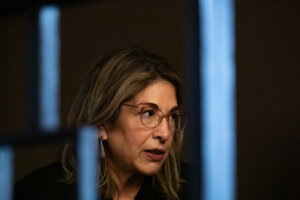
End Times Fascism: And the Fight for the Living World
By Naomi Klein and Astra Taylor
Farrar, Straus & Giroux, 384 pages, $32
Judaism is not usually a religion associated with apocalyptic thought. There’s no Jewish version of the Book of Revelation. There is a concept of a Messianic Age, but most observant groups forbid interfering with — encouraging or discouraging — its arrival.
Yet Judaism, or at least Israel, is central to Christian apocalyptic thought. The lines that drive its connection to Israel are well-traced. The Book of Revelation requires Jews to return to the promised land, and a Third Temple to be built for Jesus to return, and so, for years, Christian Zionists like John Hagee, the founder of Christians United for Israel and Mike Huckabee, the current U.S. ambassador to Israel, have encouraged wars in the region, seeing them as part of prophecy.
Hagee and Huckabee have talked in glowing terms of the many lands they believe comprise “greater Israel” all becoming part of the modern nationstate, in fulfillment of biblical requirements for the Rapture. Byron Stinson, another wealthy evangelical leader, has worked to breed and import blemish-free red heifers to Israel, because their ashes are necessary to build the Third Temple that will herald the return of Jesus.
More recently, the Jewish extremists who are also hungry to build a Third Temple have moved from the fringe into the Israeli government. Several times now, Israeli security minister Itamar Ben-Gvir has stalked around the Temple Mount, where Jews are officially forbidden from prayer, and led a large group in prayer, flanked by the police force he heads. Bezalel Smotrich, Israel’s minister of finance, has promised to fund the construction of a Third Temple.
But as powerful as these Jewish leaders are, the Christians are far bigger. CUFI, the group led by Hagee, is the biggest Zionist group in the U.S., far larger than AIPAC.

And yet End Times Fascism, a new book from activists and writers Naomi Klein and Astra Taylor — Klein is known for books like No Logo and Shock Doctrine, where she coined the relevant term “disaster capitalism” — focuses largely on Israel, and the extremists in its government.
The book’s central argument is that accelerationist fanatics believe an apocalyptic future will benefit them — whether in heaven or on earth. And they’re racing toward that future with increasingly fascistic terms.
These apocalyptic futures vary. For Christians, it might be the Rapture, and ultimately heaven. For AI techies, it’s a world ruled by the silicone grip of an all-knowing machine — or at least a world ruled by the superrich and filled with AI-driven propaganda masquerading as the voice of God while it surveils its users. For ethno-nationalists, it’s a homogenous country in which they can live out their nostalgia for an imagined perfect past. End Times Fascism is divided into sections, each taking on one of these groups and its ravenous vision for the end of the world, and how it is leading the world into fascism — through moral policing, surveillance, xenophobia.
But in the section on religious extremism, Israeli extremists get at least as much airtime as the Christians, despite the fact that these end time fanatics have far less global influence and don’t represent the vast majority of Jews.
It is, of course, important to understand the interplay between Christian apocalyptic thought and Judaism, and this is where things can get tangled. Christian Zionists’ desire for the Rapture leads them to support Israel and, sometimes, to display a kind of philosemitism. Ultimately, they are neither true friends to the Jews nor supporters of Israel; Hagee once gave a sermon claiming God sent Hitler as a kind of shepherd to force Jews back to Israel, in alignment with the biblical plan — when, of course, Jews will convert or burn in hell. But these beliefs have not made most Jewish groups cut ties with CUFI; Israel’s prime minister, Benjamin Netanyahu, has, for decades, referred to U.S. Christian Zionists, and Hagee in particular, as beloved supporters of Israel, and has said that Christian Zionists made Jewish Zionism possible. Many Jews are similarly grateful for evangelical support of Israel, regardless of what less supportive beliefs might undergird it, and are willing to ally with these religious extremists if it means support for Israel’s wars and annexations.

Certainly, all of these thoughts build on one another, and are difficult to untangle; plenty of hawkish Jews and Israelis want Israel to expand for non-biblical reasons. But the vast majority of Jews are not actively working to build a Third Temple and bring about the end of the world as we know it. Yet Klein and Taylor represent Jews largely through extremists like Ben-Gvir, and even focus their discussion of Christian apocalyptic thought on its overlap with Judaism and Israel. These religions share the Hebrew Bible, but little else.
There is far more to Christian apocalyptic thought than Israel. Plenty of Rapture-hopefuls in the U.S. believe their own country is the promised land; indeed, theological power is shifting away from Israel, as a new cohort of Christian extremists like Candace Owens, Nick Fuentes and Tucker Carlson catch hold of the political discourse and steer it toward open antisemitism and harsh scrutiny of U.S. support of Israel.
The old guard is being replaced by a new Christian right that is suspicious of Israel’s every action, and doesn’t egg on its wars. When Tucker Carlson interviewed Ted Cruz, a staunch supporter of Israel, the senator explained the Christian theological grounding of his support for Israel; Carlson, also a loudly devout Christian, jeered.
That’s not to say, of course, that there aren’t still many Christian Zionists in power in the U.S., shaping its foreign policy regarding Israel. But End Times Fascism feels as though it is stuck in a previous era of American Christianity, and of U.S. politics.
This problem is not limited to the section on religious apocalypse. The second part of the book, focused on the AI hunger of transhumanist tech titans, spends time on neoreactionary thinker Curtis Yarvin’s plan for a New Gaza, as it was presented at a Peter Thiel conference. Thiel is, himself, a Christian who is famously obsessed with the antichrist and the end of the world — once again, there is crossover, and these topics all share threads. But Israel is not the major driver of the race toward AI killing us all, or any other tech-related doom.
The fundamental idea of Klein and Taylor’s work is that rapturous obsessions drive not only worldly destruction — that much seems obvious — but also fascism. It’s a smart idea, and they have plenty of examples, whether surveillance by our internet overlords or ICE raids pushed for by white nationalists. But the book spends so much time on its trendiest target — Israel — when it should direct its energy examining figures like U.S. Secretary of Defense Pete Hegseth and the muscular Christianity driving his new testosterone regime for the U.S. military, or influential online figures like Owens or Fuentes agitating for a white, Christian U.S. (Some of these influencers are mentioned, but not as primary drivers.)
Certainly, Israel is involved in U.S. politics, in Christian nationalism, in the building of an ethnostate. (Israel in fact appears least in the third section on ethnonationalism, which is surprising given its identity as a Jewish state.) But despite Israel’s importance, the U.S., and its leaders, are still far more powerful.
The issue might be the book’s structure. The idea that apocalyptic thought drives fascism is a fairly simple one, and many of Klein and Taylor’s examples are familiar. The idea that is more subtle, and harder to grasp, is the way the threads of eschatological thought, ethnonationalism and tech wealth all share ideas and shape each other.
Peter Thiel alone, given his tech companies, his antichrist obsession, his love of Nazi theorists and his influence over Vice President JD Vance, could generate at least a chapter in any of the book’s three sections, or serve as a throughline for the entire book. Yet the topics are divided, as though each form of apocalyptic thought is its own entity, instead of woven together to show the ways they all reinforce each other.
End Times Fascism closes with a section on how to fight the rising fascism. Perhaps this should be the main focus of the book; many people who read the news already feels as though our leaders are racing toward the apocalypse, or at least WW III and a second Great Depression. The real question is what to do.
End Times Fascism offers some inspirations, including New York City’s mayor, Zohran Mamdani, as well as the Jewish Labor Bund. At least if the focus is once again on Jews, this time it’s positive.
The post Christian leaders are racing toward the Rapture. Is Israel really to blame? appeared first on The Forward.
Uncategorized
Why Dolly Parton sang a song about a Jewish journalist
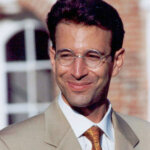
A Broadway show, a star-studded television tribute, a new hotel and museum in Nashville. As odes to Dolly Parton keep coming, a recording of the late country music singer honoring an American Jewish journalist has recently surfaced.
Never before released in America, the song, “A Bridge Across,” sung by Parton and accompanied by the Nashville Symphony, honors slain journalist Daniel Pearl.
The song features spare lyrics set to violin music composed in honor of Pearl, a Wall Street Journal reporter who was brutally murdered by terrorists in Pakistan in 2002.
Originally recorded in 2008 by Parton, renowned fiddler Mark O’Connor, and the Nashville Symphony, the song was intended to be part of a compilation album called This is My America, produced and funded, oddly enough, in Canada but never released in the U.S.
It was O’Connor and his wife Maggie who resurrected the recording this fall, shortly after the deaths of Parton and another musician that connected the four artists: Oregon violinmaker Jonathan Cooper, who died in September.
Deeply troubled by the journalist’s murder in 2002, Cooper learned Pearl was an amateur fiddler and set out to create a quartet of string instruments – two violins, a viola and a cello – in the journalist’s honor. He entrusted the instruments to O’Connor to use during his annual summer music camp in North Carolina. Every year since, four students from the camp have received one of the Daniel Pearl memorial instruments to play for a year.
“These young people carry the message that love fights hatred through music-making and understanding that Daniel Pearl’s family want him remembered for,” O’Connor told The New York Times. Likewise, Cooper’s loving gesture inspired Parton, O’Connor said.
Canadian violinist Samantha Robichaud received one of the violins in 2005 and has gone on to become a successful recording artist with more than a half dozen albums. She has toured North America as an ambassador for the Daniel Pearl Foundation, sharing Pearl’s story, including his passion for

music and its power to change lives. Enter songwriters Tom McBryde and Lynn Wilbanks, whose introduction to Robichaud inspired verse.
On the album, the Nashville Symphony played one of Robichaud’s compositions while Parton introduced Pearl to listeners.
“He believed that music was something that could cross all social barriers, political borders and imaginary boundaries,” Parton says, before singing McBride’s and Wilbanks’ lyrics.
“A bridge across a question one journey begins, one step at a time to a place within.
A bridge across a border, a hand reaching out one heart at a time to erase the doubt.
A bridge across a difference can close a divide, one song to be sung on the other side.”
“It was perfect. She knows what he stood for,” Pearl’s father, Dr. Judea Pearl, told the Forward. “She was such a giving person.”
Judea Pearl met Parton in 2018 at the Los Angeles Press Club where she received that year’s Public Service Award for Contributions to Civic Life for her Imagination Library, which sends free books to children. (It inspired the creation of the PJ Library for Jewish books.) The Press Club recently dedicated its upcoming National Arts & Entertainment Journalism Awards to Parton’s memory.
In 2018, Judea Pearl was there to present the Daniel Pearl Award for Courage and Integrity in Journalism to Saudi Arabian writer and blogger Raif Badawi whose wife accepted the award while he served a 10-year prison sentence for his online activism.
The foundation devoted to Daniel Pearl’s legacy has been less visible since the 2021 death of Pearl’s mother Ruth who, as a young girl, witnessed and survived the anti-Jewish pogroms in Baghdad known as the Farhud.
As the 25th anniversary of his son’s murder approaches in February, Judea Pearl said the foundation will start a new chapter under his daughters’ leadership. Parton’s song lends the effort a touching soundtrack.
The post Why Dolly Parton sang a song about a Jewish journalist appeared first on The Forward.
