


Uncategorized
Who is Jessica Tisch, the Jewish police commissioner both Mamdani and Cuomo want to keep?
For Zohran Mamdani, the democratic socialist who would be New York City’s first Muslim mayor if elected, promising to keep Jessica Tisch as police commissioner is a key campaign gesture, given his past stance on defunding the police. For many Jewish New Yorkers, still shaken by rising antisemitism since the Oct. 7, 2023, attacks and uneasy about a shifting discourse on Israel, Tisch offers a sense of stability and reassurance.
Tisch, 44, who comes from one of the city’s prominent Jewish families, is widely respected in the Jewish community for her record on public safety since her appointment last year and for her strong support of Israel. Five of her deputies are also Jewish.
Critics brushed off Mamdani’s proclamation that he wanted her to stay — at last week’s televised debate — as a political stunt, given the Democratic nominee’s positions on Israel. He has refused to outright condemn the slogan “globalize the intifada,” has said he doesn’t recognize Israel as a Jewish state, supports pro-Palestinian activism on campus and has pledged to order the arrest of Israeli Prime Minister Benjamin Netanyahu if he visits the city.
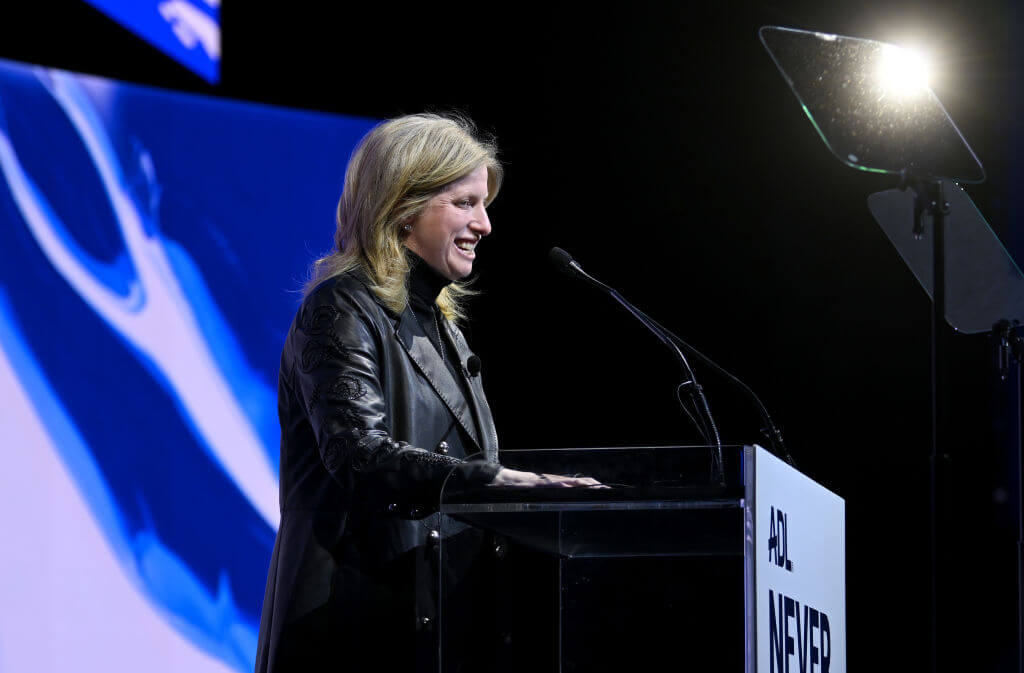
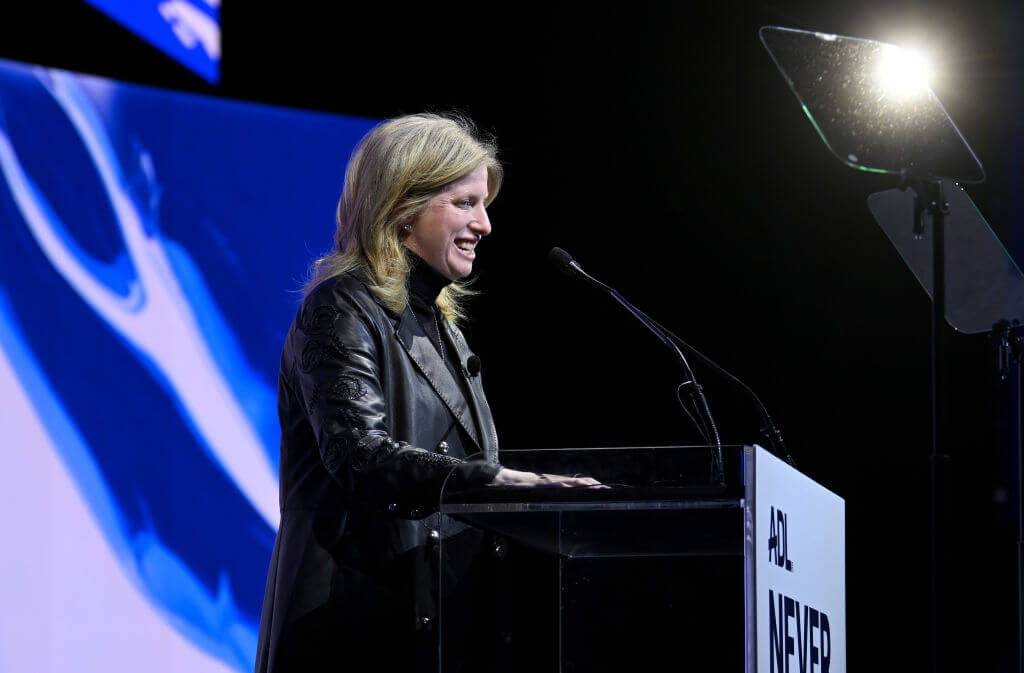
Tisch’s approach to policing is a stark contrast to Mamdani’s progressive public safety agenda. And her public statements on Israel have been unequivocal. When she was sworn in as NYPD commissioner, she wore a Star of David necklace to the ceremony. “My Jewish identity is not something that I put on and take off,” she said in a speech earlier this year at the Anti-Defamation League’s “Never is Now” conference. “It is who I am and who I will always be.”
Still, Mamdani’s pledge to keep her was seen as a reassuring signal. House Minority Leader Hakeem Jeffries, who had previously avoided taking sides in the mayoral race, highlighted the promise in his Friday endorsement, calling it a sign of Mamdani’s sincerity and his commitment “to keep every New Yorker safe, including the Jewish community.”
At least four members of the Tisch family contributed to a super PAC that backed former Gov. Andrew Cuomo’s failed mayoral bid in the primary; Cuomo is running for mayor as an independent in the general election. According to Forbes, the Tisch family gave $1.2 million to the anti-Mamdani Fix the City super PAC.
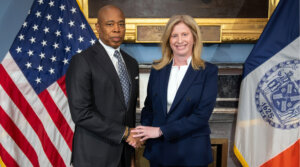
Tisch has not publicly commented on whether she would stay on as police commissioner if Mamdani wins the Nov. 4 election. Cuomo also said he’d want her to stay if he becomes mayor.
Who is Jessica Tisch?
Tisch was born into a family deeply rooted in business and Jewish communal life. Growing up on Manhattan’s Upper East Side, she attended the elite private Dalton School. The family name was originally Tichinsky when her ancestors immigrated to the United States from Ukraine in 1904, later shortened as a nickname when her great-grandfather Avraham was cheered as a captain of the City College of New York’s basketball team.
Her father, James Tisch, serves as president of the Loews Corporation, which the family has led since the 1950s; their fortune is estimated at $10 billion. Her mother, Merryl, is the former chair of the New York State Board of Regents and a longtime leader in Jewish philanthropy. She now serves as chair emeritus of the Met Council on Jewish Poverty.
As a student at Harvard, Tisch was involved with Chabad. After graduating from Harvard with degrees in law and business, she married Dan Levine, a venture capitalist, whom she met at Harvard. The wedding at Central Synagogue in Manhattan was officiated by her grandfather, Rabbi Philip Hiat, a Reform rabbi known for his interfaith work. He served as a police chaplain in the New York City Housing Authority Police Department.
On Rosh Hashanah, Tisch joined services at Central Synagogue and watched her father blow the shofar. Rabbi Angela Buchdahl acknowledged Tisch, thanking her for her service. “You model the best of what it means to serve something bigger than us,” the rabbi said. She also credited Tisch for acting swiftly when the synagogue faced a direct threat in February, arresting the suspect just an hour before Shabbat services, an incident that had not been made public. “What you did was heroic,” Buchdahl said, without providing more details.
Tisch’s grandmother, Sylvia Hiat, was a principal at the Emanuel Midtown Y, a Hebrew school, for 30 years, and called her granddaughter every morning until she died in 2024. On the morning of Oct. 7, Tisch said her grandmother called her and said, ”We are at war.”
After working at a law firm, as a fact-checker in the speechwriting office of President George W. Bush’s White House, and on the editorial pages of The Wall Street Journal and the New York Post, Tisch began her career in government in 2008 as a counterterrorism analyst at the NYPD. She rose through the department’s ranks before leading the city’s departments of information technology and telecommunications and sanitation under Mayors Bill de Blasio and Eric Adams. She keeps her grandfather’s badge on her desk at police headquarters. At her inauguration, she took the oath of office on her grandmother’s Bible.
Speaking before second and third graders at Ramaz School in May, Tisch said about her role at the police department, “You can be anything you want to be, whether you’re a woman, a mother, or an observant Jew.”
Tisch highlighted her Judaism while receiving the Woman of the Year Award from the NYPD Muslim Officers Society in August. “It’s not lost on me what this represents: the first female Jewish Police Commissioner in the history of the NYPD being recognized by our Muslim Officers Society. This could only happen in New York — a city where every faith is practiced, every language is spoken, and every tradition has a home,” she said.
Tom Allon, the Jewish publisher of the City & State magazine who ran for mayor in 2013 and encouraged Tisch to run, called her a “no-nonsense technocrat” like former Mayor Mike Bloomberg.
Tisch has two sons, Harry and Larry.
What Tisch has said about the pro-Palestinian protests and antisemitism
During Tisch’s tenure, the NYPD has handled more than 3,000 pro-Palestinian protests and rising antisemitism. According to the Anti-Defamation League, 68% of the 1,437 antisemitic incidents across the state of New York last year occurred in the five boroughs of New York City. NYPD data shows that antisemitic acts made up 57% of all reported hate crimes citywide this year, though Jews make up only 12% of the city’s population.
At the ADL’s annual summit earlier this year, Tisch noted that on the morning of Oct. 7, reported antisemitic crimes were down 20% compared with the previous year. But from that day to the end of 2023, they jumped 80%, and in 2024 they rose another 7%, accounting for 54% of all hate crimes reported in the city.
Mamdani attended some of the protests just after Oct. 7, and participated in a hunger strike outside the White House to call for a permanent ceasefire in November 2023. He has defended the campus protests and, along with other elected officials, criticized the Adams administration for its crackdown on them.
Tisch called out the antisemitism and defended the policing approach. In the ADL speech, she said that for some of the protesters, “their target was not and is not Israeli policy or geopolitics, or even the horrors of war, but the Jewish people themselves.”
She added, “The NYPD will follow the law, and we will uphold the First Amendment even when the protected language is deeply offensive to our own sensibilities. But make no mistake, anyone who commits a crime will be arrested, they will be held accountable, and our city will not go backward — not on my watch.”
In a recent speech at an award presentation and dedication of a new community center in Borough Park, Tisch said she draws inspiration from the mitzvah of building a fence around the roof when constructing a new home. “When you create something new, you also take on the duty to protect others — not just your family, not just yourself, but every person who enters your space,” Tisch said. She added, “The NYPD will always stand with you, making it clear that you are not alone in this city.”
For Jewish New Yorkers, whether or not Mamdani keeps Tisch as police commissioner, the real test will be whether he keeps his promise to protect all New Yorkers if he becomes mayor when the campaign is over.
The post Who is Jessica Tisch, the Jewish police commissioner both Mamdani and Cuomo want to keep? appeared first on The Forward.
Uncategorized
High-Stakes US Special Forces Mission Rescues Airman From Iran After F-15 Crash

FILE PHOTO: A U.S. Air Force F-15E Strike Eagle aircraft takes off for a mission supporting Operation Epic Fury during the Iran war at an undisclosed location, March 9, 2026. U.S. Air Force/Handout via REUTERS/File Photo
US forces staged the audacious rescue of an airman behind enemy lines after Iran downed his fighter jet, officials said on Sunday, resolving a crisis for President Donald Trump as he weighs escalating the war, now in its sixth week.
The airman rescued by special operations forces, who Trump said was a colonel, was the weapons-systems officer on the downed F-15, a US official told Reuters.
“Over the past several hours, the United States Military pulled off one of the most daring Search and Rescue Operations in US History,” Trump said in a statement, adding that the airman was injured but “he will be just fine.”
The officer was the second of two crew members on the warplane that Iran said on Friday had been brought down by its air defenses. Iran’s Revolutionary Guards said several aircraft were destroyed during the US rescue mission, Tasnim news agency reported.
Reuters reported on Friday that the first crew member had been retrieved, triggering a high-profile search by both Iran and the United States for the remaining airman.
Iranian officials had urged citizens to help find him, hoping to gain leverage against Washington in the war Trump and Israel launched on February 28.
Trump has threatened to escalate the conflict in the coming days with attacks on Iran’s energy infrastructure.
Had Iran captured the airman, the ensuing hostage crisis could have shifted American public perception of a conflict that opinion polls show was already unpopular.
Trump said the airman was rescued “in the treacherous mountains of Iran” in what he said was the first time in military memory that two US pilots had been rescued, separately, deep in enemy territory.
The official told Reuters that as the weapons-systems officer was moved from near a mountain to a transport aircraft parked within Iran, US forces had to destroy at least one of the aircraft because it had malfunctioned.
U.S. AIRCRAFT HIT
The rescue effort, involving dozens of military aircraft, encountered fierce resistance from Iran.
Reuters reported on Friday that two Black Hawk helicopters involved in the search were hit by Iranian fire but escaped from Iranian airspace.
Separately, a pilot ejected from an A-10 Warthog fighter aircraft after it was hit over Kuwait and crashed, the officials said, though the extent of crew injuries was unclear.
Still, Trump was triumphant.
“The fact that we were able to pull off both of these operations, without a SINGLE American killed, or even wounded, just proves once again, that we have achieved overwhelming Air Dominance and Superiority over the Iranian skies,” he said in his statement.
US air crews are trained in what to do if they go down behind enemy lines, measures known as Survival, Evasion, Resistance and Escape, but few are fluent in Persian and face a challenge in staying undetected while seeking rescue.
The conflict has killed 13 US military service members, with more than 300 wounded, US Central Command says. No US troops have been taken prisoner by Iran.
While Trump has repeatedly sought to portray the Iranian military as being in tatters, they have repeatedly been able to hit US aircraft.
Reuters reported on US intelligence showing that Iran retains large amounts of missile and drone capability. Until just over a week ago, the US could only determine with certainty that it had destroyed about one-third of Iran’s missile arsenal.
The status of about another third was less clear, but bombings probably damaged, destroyed or buried those missiles in underground tunnels and bunkers, Reuters sources said.
The US and Israeli war on Iran has spread across the Middle East, killing thousands and hitting the global economy with soaring energy prices that are fueling fears of inflation.
Uncategorized
On Easter, Pope Leo Urges World Leaders to End Wars, Renounce Conquest

Pope Leo XIV waves from the main balcony of St. Peter’s Basilica after delivering his “Urbi et Orbi” (To the city and the world) message, on Easter Sunday at the Vatican, April 5, 2026. Photo: REUTERS/Remo Casilli
Pope Leo urged global leaders in his Easter message on Sunday to end the conflicts raging across the world and abandon any schemes for power, conquest or domination.
The pope, who has emerged as an outspoken critic of the Iran war, lamented in a special message to the thousands gathered in St. Peter’s Square that people “are growing accustomed to violence, resigning ourselves to it, and becoming indifferent.”
“Let those who have weapons lay them down!” the first US pope exhorted. “Let those who have the power to unleash wars choose peace!”
Leo did not mention any specific conflicts in the message, known as the “Urbi et Orbi” (to the city and the world) blessing. It was unusually brief and direct.
The pope said that the story of Easter, when the Bible says Jesus rose from the dead three days after not resisting his execution by crucifixion, shows that Christ was “entirely nonviolent.”
“On this day of celebration, let us abandon every desire for conflict, domination, and power, and implore the Lord to grant his peace to a world ravaged by wars,” Leo urged.
Leo, who is known for choosing his words carefully, has been forcefully decrying the world’s violent conflicts in recent weeks and ramping up his criticism of the Iran war.
In a sermon for the Easter vigil on Saturday night, he urged people not to feel numbed by the scope of the conflicts raging across the world but to work for peace.
The pope made a rare direct appeal to US President Donald Trump on Tuesday, urging him to find an “off-ramp” to end the Iran war.
In his address from the balcony of St. Peter’s Basilica on Sunday to the Square below, decorated with thousands of brightly colored flowers for the holiday, Leo offered brief Easter greetings in ten languages, including Latin, Arabic and Chinese.
The pope also announced he would return to the Basilica on April 11 to host a prayer vigil for peace.
Uncategorized
Temple Mount Set for Limited Reopening to Jews and Muslims

Israeli National Security Minister and head of Jewish Power party Itamar Ben-Gvir gives a statement to members of the press, ahead of a possible ceasefire between Israel and Hamas, in Jerusalem, Jan. 16, 2025. Photo: REUTERS/Oren Ben Hakoon
i24 News – Israeli authorities are preparing to partially reopen the Temple Mount in Jerusalem to both Jewish and Muslim worshipers for the first time since the start of the war with Iran, under a tightly controlled and highly restricted security arrangement, i24NEWS has learned.
According to details obtained by i24NEWS, the Israeli police, backed by National Security Minister Itamar Ben-Gvir, are also expected to permit limited access for Jewish worshipers to the Western Wall as part of the same phased plan.
Under the framework, access to the Temple Mount and surrounding holy sites would be restricted to small groups of up to 150 people at a time. In the event of a missile alert, all visitors would be immediately evacuated in accordance with emergency protocols.
The decision follows a recent Supreme Court ruling allowing demonstrations in a limited format. Police argue that a consistent standard must apply across both civic gatherings and religious sites, with Ben-Gvir insisting that “there cannot be one rule for demonstrations and another for the Temple Mount.”
However, the reopening contradicts recommendations from the Home Front Command, which has advised keeping sensitive sites closed due to the ongoing risk of missile attacks.
Israeli Justice Minister Yariv Levin has proposed transferring authority over such security-related decisions exclusively to defense officials, an initiative that could reshape the balance between the judiciary and security establishment regarding restrictions on public access.