


Uncategorized
Summer is almost here. It’s time to learn the Torah of the garden.
This article originally appeared on My Jewish Learning.
(JTA) — My mother died in February, and since then I’ve been caring for her home. At the time of her death, she had over a hundred plants — and that’s only inside the house. Outside, there were hundreds more — roses and lilacs and dahlias, lilies of the valley and irises and daffodils, violets and honeysuckle and sunflowers. They bloom in almost all seasons, from late winter to late autumn. Except when the ground is frozen, there is never a moment when something is not blooming in my mother’s garden. And she celebrated when they bloomed, whether once a season or once every 10 years. They were, in many ways, the great work of her life, and it’s powerful for me to be caring for them now.
I grew up surrounded by those plants. I ate wild strawberries, chestnuts and pears. I used pine needles for doll beds and hickory nuts for toy food. I slept (or pretended to) on carpets of moss and used branches of sumac as scepters. Once, I dug up some daffodils near the creek and moved them to my “garden” in the woods. My mother was furious (though those daffodils still bloom in the woods every spring). But my early plant experiences were mostly good. I planted peas with my father, and watched him guide the young bean plants up their poles. I noted when the violets came out and when the chestnuts fell from their trees. I particularly loved the wild roses that bloomed in June (in fact, they’re blooming now). For me, as for my mother, the plants are their own kind of people — beings I try to nurture, appreciate and understand.
So it’s moving to me that the Jewish tradition sees plants in a similar way — as beings with voices. Psalm 96:12 states: “Let the fields rejoice and all that is in them; let the trees of the forest sing for joy.” Psalm 17:33 proclaims: “Let the trees of the forest sing at the presence of God.” In Psalm 48:8, the fruit trees offer praise. In Isaiah 55:12, the trees clap hands.
Maimonides understood these verses to be metaphors, but the Midrash — writings that fill in gaps in biblical texts — claims that trees do in fact speak with one another and with other creatures, and that they discuss the earth and its well-being. The Jerusalem Talmud too understands these verses expansively, saying that when Rabbi Yochanan ben Zakkai began to teach mystical secrets, the trees started to sing. The Zohar, the mystical Torah commentary, imagines that when the Creator visits the Garden of Eden at midnight, the trees burst into song.
This description of plants is a reflection of the way many of us experience plants — as alive, and in relationship to us. And it’s likely they reflect how our ancestors did too. Many indigenous spiritual practitioners consider plants to possess intelligence, so it’s certainly possible our ancestors saw plants this way as well. And it might be time for us to be mindful of this too, given that we are breathing in what plants breathe out, and vice versa.
A team of researchers at Tel Aviv University has recently discovered that plants make sounds, albeit at a frequency we can’t hear, and that they make more sounds when distressed. This claim was made long ago in the Midrash, which teaches that when a tree is cut down, its cry goes from one end of the world to the other but no one hears. How differently might we act if we could hear the cries of trees and plants? And how much richer might we be if we could tune into their songs?
Indeed, this might not be as far-fetched as it sounds. In some kabbalistic understandings, we have plant consciousness inside us. According to the mystic Hayyim Vital, plants are a category of beings known as the tzomeach — the growing ones. They exist among four kinds of living creatures: humans, animals, plants and stones (yes, even stones are considered beings). Vital says that the human soul reflects all these kinds of beings, and so perhaps we are kin to all of them. Even God has plant-like aspects: The kabbalists call the structure of the divine personality the Tree of Life, and in the Zohar, the Divine Presence is called the gan, the garden, or the chekel detapuchin kadishin, the holy apple orchard.
My own small New York apartment has many fewer plants than my mother’s home, but I care for them lovingly. Once, while I was away, the cat sitter forgot to water the fuschia and when I came home it was nearly dead and had only five living leaves left. I slowly nurtured it back to health, watering often but not too much, and now, a year later, it has bloomed many times. I may not be able to hear its voice, but I can see its beauty and I can feel the power and persistence of its life-force. As the summer solstice approaches, I invite all of us to celebrate, protect and listen to these green beings, these creatures who eat light and who create the very air we breathe.
—
The post Summer is almost here. It’s time to learn the Torah of the garden. appeared first on Jewish Telegraphic Agency.
Uncategorized
Antisemitic flyers turn up in Ontario neighborhood where a man charged at a synagogue two weeks ago
(JTA) — Police in the Ontario town where a gunman charged the Sons of Jacob synagogue on Yom Kippur are investigating antisemitic flyers distributed around the synagogue’s neighborhood..
In an Oct. 1 press release, Belleville, Ontario, police encouraged those with tips or video evidence to contact police.
“We recognize that incidents such as this can cause concern within our community,” the police said. “Hate has no place in Belleville, and the Belleville Police Service remains in contact with community leaders and are taking proactive steps to support the safety and well-being of residents.”
Police have not identified the distributor of the flyers, and no arrests have been made.
The Canadian Jewish News published photos of the flyers, which included antisemitic conspiracy theories, such as “every single aspect of the Covid agenda is Jewish” and “every single aspect of abortion is Jewish.”
Coming so soon after the attack, the flyers rattled Sons of Jacob congregant Sari Watson, 40. “It’s so incredibly concerning to see this sort of antisemitic rhetoric surface, less than two weeks after the shooting,” said Watson, who skipped attending services the night of the shooting because she was wary of the increase in antisemitic violence in Canada. “This is a sign that this sort of hatred has infiltrated the public consciousness here.”
Belleville police chief Murray Rodd has confirmed the Sept. 20 attack was deliberate.
“This was an exclusive threat to our Jewish community,” he said soon after the attack. “There is no indication there was a threat to any other population or segment of our community, and it was a hate-motivated crime.”
According to police and Ontario’s Special Investigations Unit, the shooter, identified as 29-year-old Sean Ward of nearby Quinte West, Ontario, opened fire on Const. Jeff Smith, who was stationed outside the synagogue as security. Smith, who was seriously wounded, returned fire, and another officer who arrived at the scene also fired at Ward. Ward later died of his injuries. Smith remains hospitalized.
A GoFundMe site dedicated to Smith’s recovery has raised nearly $1 million on behalf of the Canadian Jewish community.
This article originally appeared on JTA.org.
The post Antisemitic flyers turn up in Ontario neighborhood where a man charged at a synagogue two weeks ago appeared first on The Forward.
Uncategorized
From ‘false flag’ to ‘Bibiwood’: flydubai attack spawns conspiracy theories
(JTA) — JERUSALEM – A young girl steps out of the bathroom on a flight and glimpses a bloody scene unfolding in the cockpit: the co-pilot is attacking the pilot with an axe. She screams for help.
A handful of unarmed passengers, still tanned from their vacations in Thailand, rushes by her, successfully grabbing the control wheel as the plane plunges 17,000 feet. They also manage to save the life of the bloodied pilot.
It sounds like the climactic scene from a high-stakes action movie, yet by now most people know that this is what happened last week on a Tel Aviv-bound flydubai jet.
Or did it happen? It is so fantastical that maybe it is just a fabricated story or an event staged by Israel’s Mossad? That is what millions of people on social media seem to be suggesting in online posts.
Even after nonstop media interviews with the hero pilot or with the ordinary passengers who took control of the plane, conspiracy theories about the attempted hijacking are swirling. Some mockingly insist the event never happened. Others say it was a false flag operation. And many of the comments invoke deep-rooted antisemitic tropes.
Some accuse Israeli Prime Minister Benjamin Netanyahu of staging the incident for political survival or to divert attention from the war in Gaza. Others say it was an attempt by Israel to play the victim or garner global sympathy.
“Brought to you by Bibiwood Productions,” wrote one person commenting on a CNN report posted on Facebook.
“Just stop already,” wrote another person beneath CBS’s clip of interviews with the men who fought the rogue co-pilot posted to Instagram. “It’s seriously embarrassing at this point. We didn’t believe it when the news broke; we didn’t believe it the first time you aired this interview. Reposting clips will not convince anyone with half a brain.”
“Bulls–t,” wrote another person.
Monitoring online responses as the attempted hijacking was unfolding last Wednesday, the Combat Antisemitism Movement’s Antisemitism Research Center found that the first conspiracy theories were posted just 67 minutes after the plane sent its first distress signal.
Within five hours, the ARC documented 1,000 hostile posts, and after 12 hours, 2,963 posts. The posts generated at least 30,000 likes and more than 3 million views.
“The fact is that internet companies have promoted a much more open free-speech policy these days, especially on Instagram and X,” said Sacha Roytman, CAM’s Chief Executive Officer, adding that it’s not just the posts that are problematic but also the comments they generate.
“They [the social media platforms] don’t control information anymore; they don’t want to control it,” he said.
Roytman added that another factor is that agitators – likely from Russia or Qatar – have learned how to build an effective bot network to spread misinformation. When the first post appeared after only 67 minutes, he said, “we knew it was not a human posting because no one cares to go online and start posting [that fast].”
“They were activated extremely fast and set up the stage to create an environment that’s toxic enough for other users to be inspired to find the stories they need to build their own claims,” Roytman said.
Amit Cohen, a research fellow at the Institute for National Security Studies and an expert in cyberattacks and digital fraud, said that during such events, “there is often a gap between what the public wants to know and the amount of verified information available at that moment.
“That is exactly the kind of environment in which rumors and conspiracy theories can develop very quickly,” she said. “In this case, claims appeared online within a short period of time suggesting that the event did not happen as reported, that the videos were fake, or that the incident was staged or a false flag.
“Posts like these are not necessarily the original source of the conspiracy theory,” she said, “but they can function as ignition points.”
Cohen said it was important to distinguish between those who “deliberately create disinformation and those who spread it.”
“Someone may share misleading content simply because it fits what they already believe, because it provokes a strong emotional reaction, or even because it seems interesting or ‘worth looking into,’” she said. “They do not need to know where the message originated, and they certainly do not need to be part of any coordinated campaign.”
Gal Yavetz, a senior lecturer of Artificial Intelligence at Bar-Ilan University, said the flydubai story was so incredible, it left many people “looking for answers.”
“Inevitably, some people will accept more natural explanations, and others, who are more extreme, will go and blame the Jews for it,” Yavetz said, pointing out that similar conspiracy theories arose over the summer when thousands of Moroccan nationals flooded Spain’s North African enclave of Ceuta in July.
“Every time there is something that we can’t really understand, that we can’t really explain, we blame the usual suspects — the Jews, the Jews who control the world, the Jews who are the natural scapegoat,” he said, adding that since the Oct. 7, 2023, deadly Hamas raids in Israel, conspiracy theories have become commonplace and all it takes is for a handful of people to start questioning the veracity of the events.
Posts by Egyptian-born, LA-based political satirist Bassem Youssef, known for his controversial comments about Israel and Jews, are a good example. In a series of videos, he mocks the flydubai event and raises suspicions about what really happened.
In one clip posted on X and viewed 130,000 times, Youssef, whose career was supercharged in 2012 when he was boosted by Jewish comedian Jon Stewart, even terms it a “Hollywood production,” drawing on what critics say are familiar antisemitic conspiracy tropes about Jewish control of Hollywood and, by extension, the world.
“I wish it was chatbots, but the truth of the matter is that social media is a breeding ground for this kind of discourse,” said Yavetz, who specializes in social media, political communication and the spread of misinformation and disinformation online.
“They are definitely helping to spread and to reshare most of this misinformation and disinformation, but we know from previous studies that it is really just a negligible number compared to just regular people who are going to the more extreme sides and just taking their own outrageous opinions to social media just because it is now so easy to do so,” he said.
“You don’t really need to do much; you just need to make sure that you can stand behind your claims, and all of a sudden an outrageous post will have 1,000 likes, then 10,000 likes, and these comments are just circulating again and again, going from Facebook to WhatsApp to Messenger and back to Twitter with screenshots and back to Instagram… It’s a flood that you can’t really stop by taking out an umbrella,” Yavetz said.
INSS’s Cohen, who is also a national security expert with the Dvorah Forum, a group that promotes women’s voices in foreign policy, said that “conspiracy theories are not new, but the digital environment has changed their speed, scale, and the ability to obscure where a message originally came from.”
She explained that “in the past, there were more intermediaries between the person producing information and a large audience. Today, a single account can post a claim and reach very large audiences within a very short time.”
And, Cohen added, AI has made the problem worse.
“Mainly because it has dramatically reduced the time, cost, and skill required to create convincing content,” she said.
It has also made it harder for people to believe what appears on their screens.
“The problem is no longer only that AI can create fake content that looks real. It also makes it easier to dismiss real content by claiming that it is fake,” said Cohen. “Once the public knows that convincing images, audio, and video can be artificially generated, the existence of visual evidence no longer necessarily ends the debate.”
This article originally appeared on JTA.org.
The post From ‘false flag’ to ‘Bibiwood’: flydubai attack spawns conspiracy theories appeared first on The Forward.
Uncategorized
The new U.S. passport design is fueling a Star of David conspiracy theory. Here’s what’s really there.
When Secretary of State Marco Rubio unveiled a new U.S. passport design last week, online sleuths zeroed in on a curious detail: “Is that the star of david???” one TikTok user commented on a video of Rubio showing off the document’s revamped look.
“Why do we rock the Star of David on American passports?” asked an X user in a post that garnered 1.6 million views.
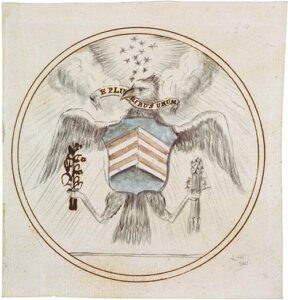
The symbol was not, in fact, the Star of David, but rather 13 stars arranged in a hexagram, representing the original 13 colonies. The design is part of the official Great Seal of the United States, approved by the Continental Congress in 1782 as the official symbol for the newly sovereign country.
The hexagram shape wasn’t a new addition to the passport, either. The Great Seal has long been a fixture of the U.S. passport cover; the new design just enlarges it. The seal — including the cluster of 13 stars in a hexagram — appears on all sorts of government materials, including military uniforms, official presidential documents, and the dollar bill.
The shape’s resemblance to the Magen David, however, has long fueled conspiracy theories about secret Jewish or Israeli influence over the U.S. government. To some online commentators, the redesigned passport was fresh confirmation of that belief.
“It’s a colony of israel (sic) so it makes sense to pay homage to their owners,” a TikToker commented about the new design.
The seal’s history
Shortly after they adopted the Declaration of Independence, the Founding Fathers had another important matter to attend to: appointing a committee to design a seal for the United States.
Benjamin Franklin, Thomas Jefferson and John Adams made up the all-star team. Franklin suggested an image of Moses parting the Red Sea. Jefferson wanted “the children of Israel in the wilderness, led by a cloud by day and a pillar of fire by night.” Adams preferred an image of Hercules, the Greek hero known for his strength.
Evidently, none of them had a great eye for graphic design. Congress tabled their proposals.
Two more committees took up the project. In 1782, Secretary of the Continental Congress Charles Thomson integrated the various committees’ ideas into a new design, which featured a bald eagle, a shield, an olive branch and arrows, and a constellation of 13 stars. Congress approved the seal that year.
Thomson described the design as featuring “thirteen stars forming a constellation”; he did not specify a hexagram or six-pointed star. Original sketches, in fact, show the stars in a seemingly random arrangement.

Robert Scot, the chief engraver of the United States Mint, is credited with arranging the 13 stars into the six-pointed geometric star.
According to legend, George Washington ordered the 13 stars arranged as a Star of David as a tribute to Haym Salomon, a Jewish financier who aided the Revolutionary cause. But there’s no historical evidence of that, nor that Washington or Salomon had any role at all in designing the seal.
One plausible theory is that Scot may have simply been emulating the arrangement of stars on the American flag at the time, rearranging the 13 stars to fit symmetrically inside a circular field.
Even so, the myth of the Star of David intentionally appearing on the seal has reached as far as former presidential candidate Ben Carson, who in 2015 suggested that “Salomon gave all his funds to save the U.S. Army and, some say, no one knows for sure, that’s the reason there’s a Star of David on the back of the one dollar bill.”
Historians were quick to correct the record.
“If you squint, you can say there’s some resemblance but that certainly was not the intention of the designers, that we’re aware,” Wayne Homren of the Numismatic Bibliomania Society, which studies currency, told ABC News.
The theory behind the theory
Kent Harber, a professor of psychology at Rutgers University who studies conspiracy theories, said the passport claim fits within the emerging zeitgeist, in which “conspiracy beliefs about Jews and Israel are getting an increasing amount of currency.”
In this case, gaps in the historical record surrounding the hexagram’s design may have helped the theory take hold.
“We can’t take ‘no reason’ for an answer,” Harber said. “We have to have an explanation, and we will fill in that blank with other explanations, even bogus, sometimes sort of seemingly silly ones.”
Harber’s research has found a strong relationship between conspiracy theories, antisemitic attitudes, and hostility toward Israel.
Conspiracy theories are like “epistemological junk food,” he said. “They satisfy this craving by giving you exactly what you want, even though it’s not particularly good for you or for society.”
The post The new U.S. passport design is fueling a Star of David conspiracy theory. Here’s what’s really there. appeared first on The Forward.
