


Features
Longtime best friends bring exciting way to celebrate special events
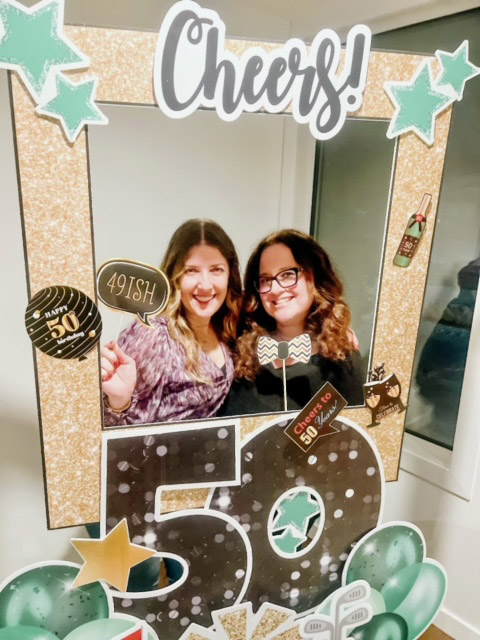
For years, best friends Shannon Golding and Susie Freedman Tapper had talked about going into business together. Almost three years ago, it finally happened.
The impetus behind Bling My Lawn was a combination of the Covid lockdowns and the 16th birthday of Freedman Tapper’s daughter, Maddy, in February, 2021.
“My husband, Jason, and I wanted to do something special for Maddy’s birthday,” Freedman Tapper recalls. “At that time, people were only able to organize drive-by parades and honk. I looked into lawn signs but I didn’t see anything out there that I liked.”
So the former film production manager went online and discovered that “yard cards” are a big and growing industry in the United States but was still in its infancy in Canada. “I found one or two such businesses listed for Toronto, Vancouver and Calgary – but nothing in Winnipeg,” she notes.
Inspired by what she saw online and with a background in graphic design, Freedman Tapper was able to create a unique display to make her daughter’s birthday one that she would never forget. Golding shared it on social media and it was a huge hit.
“Susie called me late one night (in December 2020),” Golding recalls. “We were looking for a business that we could start together – a business which we could do from home which would allow us maximum flexibility.
(Golding has two children – Aaron, 10, and Ethan, 6, while Freedman Tapper has two daughters – Emily, who is 16, along with Maddy, now 18.)
A business partnership is a natural evolution for the two friends who, over the past 30-plus years, have shared many life experiences together: high school, university, being roommates in their first apartments in both Winnipeg and London, England, moving to Toronto together and both returning to Winnipeg (although several years apart) to raise their families.
They met in Grade 9 when the daughter of Bob and Shirley Freedman was enrolled at Joseph Wolinsky Collegiate and the daughter of the late Richard and Anne Tramer was attending Jefferson Junior High School in Garden City.
“I was in the Hebrew program at Jefferson,” Golding recounts. “Susie and I met through a mutual friend at Joseph Wolinsky.”
Golding has spent much of her working career working within the Jewish community. She notes that in Toronto she was the Director of Membership for Holy Blossom Temple for ten years. Before moving to Toronto, she worked in programming at the Rady Centre and when she and her husband, David, moved back here from London (where David is from) in 2012, she continued working for the Rady Centre on special projects.
Freedman Tapper and her husband moved back here 20 years ago. Much of her working career has been in film production both in Toronto and Winnipeg, where she has worked for Frantic Films and Ian Dimerman’s Inferno Pictures. She also served for a time with Manitoba Film and Music, promoting our province’s film and music industries.
The partners started Bling My Lawn by promoting their new service on social media – Facebook and Instagram – and by word of mouth. “After a few months, we had so many orders that it was hard to keep up,” Golding says.
To help out, the partners have been hiring some university students.
Bling My Lawn offers a choice of eye-catching packages consisting of numbers and letters in black, gold and other colours. Golding and Freedman Tapper also provide balloons, cakes, capcakes, stars and hearts in a rainbow of colours and a choice of themes.
While the duo started Bling during the pandemic – thereby restricting their service to outdoor signage, they also now create indoor sign displays for parties and fundraisers – a new division they call “Bling My Bash.” The expansion has led Freedman Tapper and Golding to change their business name to simply “Bling,” which encompasses both Bling My Lawn and Bling My Bash.
“We do bar and bat mitzvahs, birthdays, weddings, graduations, retirements – any celebratory occasions,” Freedman Tapper points out.
Golding adds that the pair have expanded their offerings to include centerpieces for bar/bat mitzvahs and weddings, signing boards, personalized presentation boxes for gifts and cards as well as logo and graphic design.
“Coming up, we are looking forward to doing an amazing bar mitzvah where we will be introducing our new styling service,” she adds.
“Bling is here to bring the bling to your celebration,” the partners note on their webpage. “Indoor or outdoor displays add that extra sparkle and wow factor to any party, event, drive-by, special occasion or… just because! From birthdays to babies, anniversaries to graduations and everything in between, they’ve got your bling.”



| # | Casino | Welcome Bonus | Ratings | Action |
| 1 | Jackbit | 150% First Deposit Bonus of up to C$300, and play any slots | ★★★★★ | Claim Now |
| 2 | Cazeus | 100% up to C$750 + 200 Free Spins (35x wagering; min C$30 deposit) | ★★★★★ | Claim Now |
| 3 | Tikitaka | 100% up to C$750 200 Free Spins (20 per day for 10 days) | ★★★★ | Claim Now |
| 4 | Yukon Gold | 150 Chances to Win C$1 Million on Mega Money Wheel for C$10 deposit + 100% up to C$150 on second deposit | ★★★★ | Claim Now |
| 5 | Captain Cooks | 100 Chances to Become an Instant Millionaire on Mega Money Wheel for a C$5 deposit + up to C$475 across the next 4 deposits | ★★★★ | Claim Now |
Rapid access to winnings is perhaps the number one priority for many Canadian online players. Same-day payout casinos in Canada are influenced by various conditions, including the chosen payment option, the degree of user identification, the presence or absence of active bonuses with betting requirements, and the speed of internal processing of cash-out requests by online casino operators.
In 2026, Interac e-Transfers and cryptocurrency withdrawals will be seen as the standard of fast payout casinos in Canada, since both of those options can be processed much faster than conventional payments with credit cards or bank transfers. This guide reviews five leading fast payout online casinos in Canada based on their verified payout performance, banking infrastructure, game offerings, and bonus terms.
| Casino | Category & Highlights | Avg. Payout Time | Best Payment Methods |
| Jackbit | Same day payout casino Canada. Activate the bonus from your Profile > Gifts > Bonus. | 24-48 hours | Bitcoin, Ethereum, Litecoin, Visa, Mastercard |
| Cazeus | Instant withdrawal online casino: 20 Free spins are valid for 24 hours | 12-24 hours (crypto) | Bitcoin, Bitcoin Cash, Ethereum, Ripple, Credit Card |
| Tikitaka | 24 hour payout casino Ontario: Winnings from free spins have a 40× wagering requirement. | 24-48 hours | Bitcoin, Bitcoin Cash, American Express, Mastercard |
| Yukon Gold | Fast payout online casino Canada. All players enjoy automatic entry into the multi-tier CasinoRewards Loyalty Program | 24-72 hours | Astroay, Skrill, Interac, Neteller, Bank transfer |
| Captain Cooks | Highest payout Online casino Canada; Enjoy weekly bonuses and Canada’s top loyalty program with free casino rewards. | 24-72 hours | Astroay, Skrill, Interac, Neteller, Bank transfer |
List of Fastest Payout Online Casinos Canada 2026
Each review includes a transparent breakdown of the best Canadian casino cashout speed, with pros and cons to help players make an informed decision.
#1. Jackbit Casino – Best Quick Payout Online Casino Canada 
Jackbit Casino is an online casino famous for providing plenty of games and attractive bonuses for Canadian gamers.
The presence of bonuses, free spins, and other deposit options can make this website an ideal choice for beginners as well as experienced gamblers who want to play safely and without big investments. Also, promo codes, if necessary, are automatically added to a player’s account during deposit.
Payments and Support
Jackbit casino has various payment options, which include the following: Bitcoin, Ethereum, Bitcoin Cash, Ripple, Litecoin, and major credit cards. Withdrawals in cryptocurrencies take 12 to 24 hours. Customer service operates round-the-clock.
Welcome Bonus
In Jackbit casino, users can get a deposit matching bonus of up to 100% that ranges from $20 up to $500. In addition, the customer is allowed 100 free spins daily on various slot machines, such as Book of Dead and Gonzo’s Quest.
The platform can give up to 20 free spins that will be used to play certain slot games after registration.
Moreover, each user receives a $55 free chip immediately after registering on the site. Each of the bonuses comes with a minimum rollover requirement of 40x. The free spins can be redeemed within 7 days, while cashout limits for bonuses are between 5x and 10x.
VIP Offers and Promotions
Jackbit casino offers a VIP promotion that provides 5% to 15% cashback and free spins. Additionally, the site gives personalized deals to its VIP members and quick withdrawal services.
VIPs can also receive reload bonuses from 25% to 50%, weekly bonuses up to 10%, and season campaigns, as well as contests for table or slot games.
Pros
- Generous no-deposit free spins and free chip offers.
- Wide variety of games, including progressive jackpots.
- Strong VIP program with cashback and exclusive perks.
Cons
- No-deposit offers are seasonal and rotate based on active promotions.
- Wagering requirements follow industry-standard multipliers for bonus funds.
Bottom Line
To get started with Jackbit Casino, register yourself on its official site and verify your email address. You will have to set up CAD as the currency and visit the Promotions tab to avail the bonuses available.
If needed, make sure you deposit at least $20 for claiming your welcome bonus. Make bets with your free spins and bonus, and then meet all play-through requirements prior to withdrawal.
#2. Cazeus Casino: Fastest Crypto Payout Casino Ontario

Cazeus Casino launched in late 2024 with a Greek mythology theme and a payment system designed for fast transactions. It is licensed by PAGCOR and uses SSL encryption, supporting a wide range of Canadian payment methods, including cards and blockchain networks.
It leads in payout speed through same-day crypto withdrawals for verified users, with no pending period for coins like Bitcoin, Ethereum, Bitcoin Cash, Ripple, and Litecoin.
Interac withdrawals typically process within 24 hours of approval, and the casino supports over 70 payment methods, offering one of the widest cashout selections available.
Payout Speed and Banking Details
Cryptocurrency withdrawals at Cazeus are processed on the same day for verified accounts. Interac e-Transfer withdrawals are complete within 12 to 24 hours following account approval. Credit card withdrawals follow the standard banking timeline of 3 to 5 business days. The minimum withdrawal threshold and specific limits per method are confirmed on the casino cashier page. No pending period is applied to verified crypto accounts.
Accepted payment methods for Canadian players include Bitcoin, Ethereum, Bitcoin Cash, Ripple, Litecoin, Visa, Mastercard, Interac, MiFinity, Paysafecard, and several additional e-wallet providers. The casino processes transactions in CAD, which means no currency conversion costs are applied to Canadian dollar accounts.
Welcome Bonus and Promotions
New players at Cazeus can claim a 100 percent deposit match bonus of up to C$750 plus 200 free spins on their first deposit. The minimum deposit to activate this offer is C$30. Free spins are provided as a package that contains 20 spins per day for ten days running. Free spins have 40x wagering, while the deposit bonus has a 35x rollover.
Weekend Reload Bonus – Friday to Sunday 50% up to $1,050 + 50 free spins. Weekly free spins are awarded by making a deposit on Monday through Thursday. Activation is required before players get their free spins. Cashback rewards can be received via the VIP program that offers as much as 15% cashback.
Game Library and Live Casino
Cazeus provides an extensive selection of games featuring more than 9,000 games created by more than 90 software providers. These games are slot games, progressive jackpots, table games, and Live Casino that boasts more than 400 titles from Evolution Gaming. The live casino includes many different types of blackjack, roulette, baccarat, poker and game shows. Demo mode is provided on all slots, meaning no deposits are needed to try them.
VIP Program
At Cazeus, there is a VIP program comprising five tiers where players earn coins for all deposits and qualifying games played. Players earn coins in the bonus shop, where they are exchanged for rewards such as free spins and bonuses.
Higher VIP tiers unlock improved cashback rates, dedicated account management, and priority withdrawal processing.
Pros
- Same-day crypto withdrawals with no pending period for verified accounts
- Over 70 payment methods supported, including Interac and major cryptocurrencies
- Game library exceeds 9,000 titles from more than 90 providers
- 24-hour customer support available via live chat
- Weekend and weekly reload bonuses provide ongoing free spin value
- PAGCOR is licensed and SSL-encrypted
Cons
- Welcome package activation starts at C$30 minimum deposit.
- Mobile gameplay runs through an optimized browser interface across all devices
Bottom Line
Register at Cazeus and complete identity verification immediately after account creation. This step is the single most important action for ensuring same-day crypto withdrawals from the outset. Make a minimum deposit of C$30 to activate the welcome package and begin building loyalty points toward VIP tier progression. Players who prefer Interac should expect withdrawals to complete within 12 to 24 hours once verification is in place.
#3. TikiTaka Casino: Best Canadian Casino Cashout Speed 
TikiTaka Casino began operating in August 2024 under a license issued by PAGCOR, having chosen a football theme and a quick transaction approach for banking purposes. No additional transaction fee for both deposits and casino withdrawals applies.
Some fees on deposits or withdrawals might be incurred by the financial institution. In essence, TikiTaka Casino positions itself well as a place with speed and a range of game selection.
Offering thousands of games from over 130 different providers, along with a withdrawal method focused on cryptocurrencies and e-wallets, this site provides players with a blend of fast payout time and a wide array of titles.
Payout Time and Banking Information
Crypto payouts happen almost instantly, taking the shortest time possible as long as the player’s account has been verified. E-wallet payouts take about 24 hours maximum, whereas cards may take up to 3 banking days.
The minimum withdrawal amount starts from C$10, while the maximum amount goes up to C$10,000. Deposits are instant and do not require a transaction fee.
Supported methods include Visa, Mastercard, Bitcoin, Neteller, Skrill, and Revolut, among others.
Welcome Bonus and Promotions
With TikiTaka, players get a 150% deposit bonus worth C$1,000 maximum plus 200 free spins; the minimum deposit here is C$15, and the recommended one is C$30. Free spins are awarded on a daily basis throughout 10 days and should be claimed within 24 hours. The maximum bet amount at the time of bonuses is C$7.50, while free spins wins should be wagered x40.
It is important to note that the offer is non-sticky, thus players can use their own money first for greater convenience. Among promotions are the Weekend Reload Bonus and Live Casino Cashback with one-time playthroughs.
Games Library and Live Casino
The TikiTaka game library comprises over 10,000 games from 130 software developers, such as Yggdrasil, Kalamba, Betsoft, Novomatic, and Pragmatic Play. It is the biggest games library among the casinos analyzed in this review. The collection consists of 339 jackpot slots, a live casino with games developed by Evolution, Pragmatic Play, Playtech, and On Air Entertainment, and periodic tournaments accessible to all registered users.
Slot games have a minimum bet amounting to C$0.10. It suits those who utilize bonus funds for betting while meeting wagering requirements.
VIP Program
TikiTaka features a VIP program that consists of five levels. Users collect coins while depositing money or playing various games on the platform. They can convert their coins into free spins, free bets, and bonus credit in the bonus shop.
Players on higher levels gain access to the Bonus Crab mini-game that provides them with more prizes. All active users qualify for the live cashback promotion with bonus credits after only one playthrough.
Pros
- Lowest minimum withdrawal threshold at C$10
- No transaction fees on casino-processed payments
- Largest game library on this list at over 10,000 titles from 130-plus providers
- Non-sticky bonus structure gives players greater control over when to activate the offer
- Live cashback and reload cashback carry low one-time wagering requirements
- 24-hour live chat support available seven days a week
Cons
- Daily free spin batches follow a 24-hour claim schedule across the 10-day period.
- Card withdrawal timelines depend on banking network processing.
Bottom Line
Register at TikiTaka, select CAD as your account currency, and complete verification before making your first deposit. The C$10 minimum withdrawal makes TikiTaka particularly practical for players who cash out regularly in smaller amounts. Use cryptocurrency or an e-wallet for the fastest payout experience. Since the bonus is non-sticky, play through your deposit balance first before activating the welcome offer.
#4. Yukon Gold Casino: Fastes & Highest Payout Online Casino Canada
Yukon Gold Casino has a track record that no other platform on this list can match. Founded in 2004 and operated continuously for more than two decades, it holds dual licensing from the Kahnawake Gaming Commission for international play and from the AGCO for Ontario players.
The casino has also been independently certified by eCOGRA for game fairness and random number generation, which provides an additional layer of verified accountability beyond the licensing standard alone.
As a member of the Casino Rewards Group, Yukon Gold shares its banking infrastructure with 28 partner casinos across the same network. Withdrawal procedures follow the same audited process at every Casino Rewards property, and internal compliance standards are consistent across the group.
Payout Speed and Banking Details
Yukon Gold processes withdrawals in 24-72 hours after an internal review period of up to 48 hours, with no weekend or public holiday processing.
Withdrawals via Interac and e-wallet usually take 1-3 business days from approval, while Visa requires 3 days; bank transfers require 6-10 business days. The lowest withdrawal amount is C$50 with a weekly maximum of C$4,000.
Withdrawals in Interac are made in CAD without currency conversion fees. Early verification will help accelerate the process of getting your first withdrawal done. There are no withdrawal fees charged for Interac and e-wallet withdrawals.
Welcome Bonus and Promotions
Players at Yukon Gold receive 150 free spins on the Mega Money Wheel with a minimum of C$10 deposit, providing opportunities to win C$1 million. Every spin costs C$0.30 with a 200x wagering requirement within 60 days.
Second Deposit Bonus is a matching offer up to C$150 at 200x wagering, with a deadline for completing it in 60 days. Loyalty bonuses are offered through the Casino Rewards VIP program and include sweepstakes, free spins and jackpots. Members gain their loyalty points at 29 casino sites, earning 100 points for every dollar.
Game Library and Live Casino
With Yukon Gold, users can enjoy over 850 slot games, including those produced by Microgaming and Games Global, where the site features a wide array of slot themes as well as several progressive jackpots that allow players to participate in Mega Moolah. Table games at Yukon Gold Casino are numerous, with the casino featuring over 24 live dealer games, where the minimum bet stands at C$1 and the maximum at C$5,000.
Users will be able to spin the bonus wheel every four hours as an additional reward feature. Customer care service is available at all times, offering round-the-clock assistance via phone, email, and live chat.
Pros
- Operating continuously since 2004 with dual KGC and AGCO licensing
- eCOGRA is certified for fair and independently audited game outcomes
- Interac withdrawals with no currency conversion fees
- Loyalty points are pooled across 29 Casino Rewards partner casinos
- 24-hour customer support, including a toll-free Canadian telephone line
- Mobile-optimised platform accessible on all devices
Cons
- Internal review process operates on a structured 48-hour compliance schedule
- Withdrawal processing follows standard banking business days
- Weekly cashout cap sits at C$4,000 in line with Casino Rewards Group standards
- Welcome bonus wagering applies to a C$1 million jackpot spin format
Bottom Line
Create an account at Yukon Gold, activate your email, and complete identity verification before your first withdrawal request. Deposit a minimum of C$10 within the first seven days to receive 150 spins on the Mega Money Wheel.
For the fastest possible payout at Yukon Gold, submit withdrawal requests early in the week using Interac or an e-wallet and ensure all verification documents are on file in advance. The welcome bonus wagering applies within the Mega Money Wheel jackpot spin format, which gives players a direct shot at the C$1 million top prize.
#5. Captain Cooks Casino: Best Quick Withdrawal Online Casino Ontario

Starting from around 1999, Captain Cooks Casino has been functioning in the online casino market of Canada, being one of the oldest operating casinos in the modern Canadian online casino industry. As a member of the Casino Rewards group, Captain Cooks Casino holds a license from the Kahnawake Gaming Commission and runs its payment system based on Yukon Gold Casino.
Among many other qualities, Captain Cooks is known for being very accessible to players. The minimum deposit needed to take advantage of the bonus offered upon registration is C$5 – the smallest amount among all casinos mentioned within this review. Those looking to try out an instant payout service while making the smallest deposit possible can consider this casino.
Payout Speed and Banking Details
Captain Cooks processes withdrawals within 24-96 hours, with an internal review period that can extend up to 96 hours, and no processing on weekends or public holidays.
Interac and e-wallet withdrawals typically take 1-3 business days after approval, Visa takes about 3 days, and bank transfers take 6-10 business days. The minimum withdrawal is C$50, with a weekly limit of C$4,000.
All CAD transactions are fee-free, with no withdrawal charges on Interac or e-wallets. Accepted methods include Interac, Visa, Mastercard, Skrill, Neteller, Paysafecard, and bank transfer, all processed in Canadian dollars.
Welcome Bonus and Promotions
Captain Cooks offers a low C$5 minimum deposit welcome entry with 100 free spins on the Mega Money Wheel, giving chances to win up to C$1 million per spin. Each spin is worth C$0.30.
The welcome bonus package is divided into five deposits; the first is a 100% bonus that matches your total amount up to C$100, followed by a 50% match of up to C$150, 25% match for up to C$125, and finally, a 100% match for up to C$100. Additional benefits include weekly bonuses from Casino Rewards, email-based offers, and retention bonuses.
Game Library and Live Casino
Captain Cooks draws its entire game library from Games Global, one of the leading software providers in the industry. This includes slot games, jackpot slots, crash slots, and table games.
Some of the most popular slot games include Kingfisher, Hatching Gold Rooster Riches, and a variety of progressive jackpot slots. There is no poker room or individual poker tournaments at Captain Cooks Casino.
Casino Rewards VIP Program
Captain Cooks Casino is part of the Casino Rewards VIP program. All rewards from playing in any of the 29 partner casinos accumulate under one account. The rewards include bonuses and special offers as players progress through various VIP levels based on point accumulation from real-money bets. The reward points system allows players to access exclusive events for sporting matches. Having an account at Captain Cooks Casino will help advance faster to higher VIP levels.
Pros
- Lowest minimum deposit on this list at C$5 for the welcome offer
- Five-deposit welcome package extends bonus value across multiple sessions
- Part of the Casino Rewards VIP network with cross-casino loyalty point pooling
- No currency conversion fees on CAD transactions
- Interac and e-wallet withdrawals with no casino-imposed fees
- Operating continuously since approximately 1999
Cons
- The internal review window follows a scheduled compliance process of up to 96 hours.
- Withdrawal processing runs on standard banking business days.
- Weekly cashout ceiling sits at C$4,000 in line with Casino Rewards Group standards.
- The game library is powered exclusively by Games Global, a leading industry provider.
Bottom Line
Get yourself registered at Captain Cooks and validate your email address as well as provide proof of identity, before making any withdrawals.
A deposit of at least C$5 is needed to get the welcome package, which allows players to get 100 spins of the Mega Money Wheel.
Make your withdrawal requests at the beginning of the week in order to take advantage of the internal processing time. Subsequent deposits of C$10 or more unlock the remaining stages of the multi-deposit welcome bonus.
What Makes a Casino a Fast Payout Casino in Canada?
A fast payout casino is one that moves funds from a player’s account to their chosen payment method with minimal delay. The speed of any individual withdrawal depends on four distinct factors working together.
- The payment method has the biggest impact on speed. Crypto is fastest (minutes to hours), Interac and e-wallets take hours to one day, while cards and bank transfers take 3-10 business days.
- Account verification affects approval time. Completing KYC during registration avoids delays; ID and proof of address are typically required.
- Bonus wagering must be completed before withdrawing. Requests made early may be blocked until conditions are met.
- Internal casino reviews add processing time. Some casinos process instantly, while others apply 48-96 hour pending periods.
How to Speed Up Your Withdrawal at Any Canadian Casino?
Identity verification as soon as you create an account is your best bet for making quick withdrawals.
- Sending in your identification forms prior to depositing money, when applicable, will eliminate the need to verify your identity during withdrawal and thus expedite the transaction.
- It is advisable to use the same method to deposit and withdraw funds, as using different payment methods (for example, paying in through Visa and receiving in Bitcoin) may require a manual review and add 48 hours or more to processing time.
- Crypto payments and Interac e-transfers are among the quickest options to receive your money, with the former being completely independent of bank working hours and weekends.
- Reading and fulfilling all wagering requirements before requesting a withdrawal helps avoid delays, while declining bonuses entirely allows players to withdraw winnings without any playthrough restrictions.
Types of Payment Methods at Fast Payout Canadian Casinos
Understanding the available payment methods and their associated payout timelines helps players plan their banking strategy before they register.
Interac e-Transfer
Interac casino withdrawal Canada is the most widely supported fiat method for Canadian players. Interac deposits funds directly into a bank account in CAD with no currency conversion fees, with processing completed within hours at fast payout sites. All casinos reviewed in this guide accept Interac for deposits and withdrawals.
Cryptocurrencies
Cryptocurrency is the fastest withdrawal method, covering coins such as Bitcoin, Ethereum, Bitcoin Cash, and Litecoin. A Bitcoin transaction typically completes in 10 – 45 minutes depending on network load, while other cryptocurrencies can settle in under 15 minutes. Select crypto casinos qualify as an under 1 hour withdrawal casino Canada option for verified users
E-Wallets
E-wallet services, like Skrill, Neteller, MuchBetter, and ecoPayz, offer a compromise between speed and convenience, as withdrawals with them take about 1 to 24 hours after verification of a request.
Credit and Debit Cards
Credit and debit cards, including Visa and Mastercard, are accepted for deposits at all casinos, but are the slowest withdrawal method, taking approximately 3 to 7 business days.
Banks
Bank transfers take the longest, with withdrawal times typically ranging from 6 to 10 business days at certain casinos.
How We Rate Fast Payout Casinos in Canada?
Every casino reviewed in this guide was assessed through a hands-on evaluation process. Testing covered account registration, deposit execution, withdrawal request submission, customer support responsiveness, and licensing verification. The following criteria drove the assessments.
- Withdrawal Speed Verification: Withdrawal speed verification is the primary scoring factor, based on stated processing times, player feedback, and independent testing, with the highest scores given to instant crypto payouts and Interac withdrawals completed within 24 hours.
- Quality of Banking System: The quality of the banking system includes factors such as availability of payments, CAD availability without charges, limits on withdrawals, and applicable charges.
- Licenses and Security Certifications: These involve checking if the licensing and security certifications are genuine and authentic.
- Bonus Fairness: Bonus fairness is assessed in relation to payout speed, with preference given to low wagering requirements, clear terms, and reasonable timeframes over restrictive offers.
- Customer Support Quality: Customer support quality is measured through live chat testing, focusing on response time, accuracy of information, and availability of 24/7 assistance.
Conclusion
The best payout speed casino online in Canada varies depending on your preferred payment type and gaming preferences. Cazeus and Jackbit are great for same-day crypto withdrawal.
TikiTaka is suitable for fast withdrawal with a low C$10 withdrawal limit and a massive game collection; Yukon Gold has an excellent reputation, and Interac withdrawals take 24-72 hours, while Captain Cooks is remarkable with a low C$5 minimum deposit and bonus levels.
To enjoy fast withdrawals, get verified in advance, choose Interac or cryptocurrency payment methods, and complete all wagering requirements before withdrawing.
FAQs
Which is the quickest withdrawal method for Canadian online casinos?
Cryptocurrency is considered to be the quickest in processing time, between 10 and 45 minutes after the withdrawal request is approved. For fiat money, Interac e-Transfer is the fastest, taking anywhere between several hours for the best online casinos to 1-3 business days for average online casinos.
Which casino on this list processes withdrawals the fastest?
Cazeus is the fastest for crypto, with no pending period for verified users. TikiTaka is also very fast for crypto. Yukon Gold and Captain Cooks are slower due to internal reviews, with Interac taking 24-72 hours and 24-96 hours, respectively.
Does completing KYC verification really speed up withdrawals?
Yes. Completing KYC at registration avoids delays during cashout, since identity checks are required before funds can be released.
Can bonuses delay withdrawals?
Yes. Winnings tied to active bonuses must meet wagering requirements before withdrawal. Declining bonuses removes this restriction.
Are all four casinos safe for Canadian players?
Yes. Cazeus and TikiTaka are PAGCOR licensed, Yukon Gold is licensed by Kahnawake and AGCO with eCOGRA certification, and Captain Cooks is Kahnawake licensed and part of the audited Casino Rewards Group.
What is the minimum withdrawal at each casino?
TikiTaka has the lowest minimum withdrawal at C$10. Cazeus minimum withdrawal terms are confirmed on the casino cashier page. Yukon Gold and Captain Cooks both set a minimum withdrawal of C$50 as part of the Casino Rewards Group standard.
Why is my fast payout casino withdrawal still pending?
Pending status means the operator’s accounts team is reviewing your cashout request. Common reasons include incomplete KYC verification, active bonus wagering that has not been cleared, payment method mismatch with your deposit, or the casino’s standard internal review window. Completing KYC at registration and meeting wagering conditions before requesting a withdrawal keeps the pending time minimal.
Features
Gangster Mickey Cohen was a strong supporter of the Irgun – or as he liked to call them: “those Jew guys”
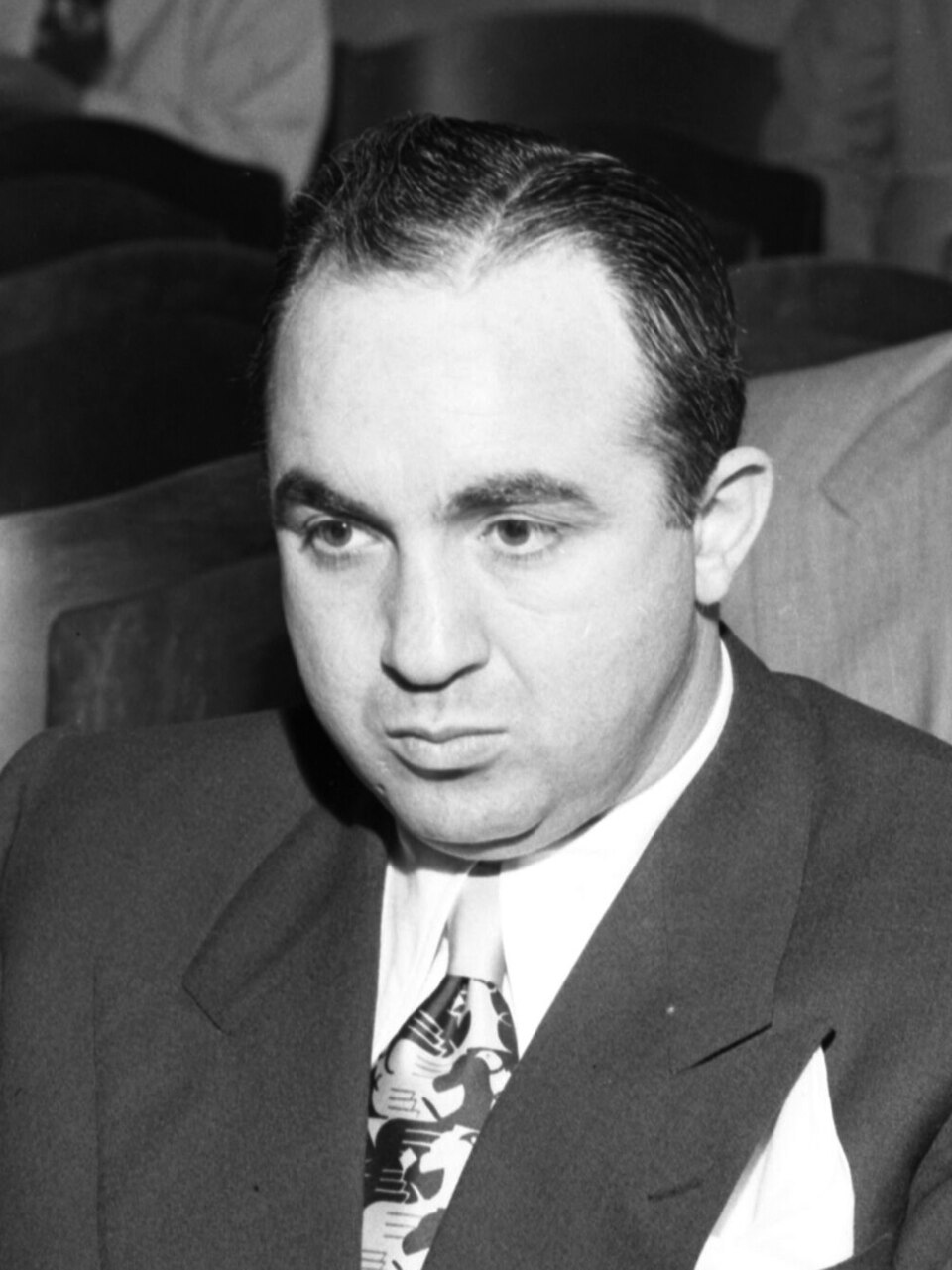
By BERNIE BELLAN The confluence of money and corrupt politicians is something we read about all the time. It’s never been as brazen as it has been under Donald Trump – who will take money from anyone who’s willing to give it to him – almost always for immediate favours or in return for favours down the road.
But Jewish history is replete with stories of corruption, much as many of us like to think that the “chosen people” are somehow more removed from the venal behaviour of the “goyim.”
My story about the brutality of a Jewish gang known as Zwi Migdal, which operated with almost total impunity in Argentina (and several other countries as well) for almost 70 years happened to coincide with my reading a book about a famous Jewish mobster by the name of Mickey Cohen.

This book though happened to be a sort of autobiography of Cohen, as told to a writer by the name of John Peter Nugent. It’s quite an old book – having been published in 1975, just one year before Cohen’s death.
What sets this particular book apart from other books about mobsters, however, is it’s told in Cohen’s own words.
When he refers to his fellow Jews, for instance, he often describes them as “dem Jew guys” or something like that. There was nothing particularly admirable about Cohen. He was a thug, a thief, and a killer, but to read his descriptions of his various sordid activities, you’d think: “Well, that’s one way to make a living.”
Perhaps best known for his friendship with Benjamin Siegel (who hated to be called “Bugsy,” by the way,) I suppose what sets Cohen apart from so many others of his ilk is that he died peacefully in his bed, at the age 62. There had been nine separate attempts on his life during his lifetime, so you might say this guy was extraordinarily lucky to have survived them all.
Cohen is very matter of fact in his descriptions of mob hits – even hits on his own guys. When someone had to be killed, more ofen than not he says the guy “had to have his lights out.” While he certainly enjoyed beating up people – he was only 5’3″, yet he was a terrific fighter who had fought many times as a boxer when he was younger. Still, quite often, while he was beating the crap out of someone – and could easily have killed whoever it was he was mauling, he would hold off. It was just business – you understand. The next day, he would often sit down with the same guy he had just about killed – hey, just because you had to teach someone a lesson didn’t mean you couldn’t still be friends.
I suppose one way you could describe Mickey Cohen was “cruel, but fair” – if you can accept that there is an accepted code of conduct among mobsters.
But, in reading his colourful autobiography, one chapter jumped out for me. Cohen’s being Jewish almost never comes into play in any of the stories he tells. He doesn’t describe having family gatherings during Jewish holidays, for instance and, as for attending synagogue – forget about it.
Other than his preferring to be in the company of other Jews – in the same way that Italian and Irish gangsters also prefer to associate with individuals with whom they share common backgrounds, there wasn’t much about Mickey Cohen that made him seem Jewish – other than his name.
It was in the year 1947, however, that Mickey Cohen’s otherwise totally submerged Jewish identity came to play a prominent role in leading him to become heavily involved in the fight that was going on at that time between Jewish groups and British soldiers in what was then British Mandate Palestine.
Mickey Cohen describes how he first became aware that Jews were trying to get the British kicked out of Palestine. He explains that he had a friend by the name of Mike Howard, who introduced Cohen to the famous Hollywood screenwriter Ben Hecht (of whom Mickey Cohen had never heard. As you might expect, MIckey Cohen was hardly what you would call “worldly,” although he did enjoy the company of many famous Hollywood celebrities, including Frank Sinatra, Sammy Davis Jr., and for a time, Lana Turner – with whom he had a love affair.)
In any event, here’s how Cohen explains what led to his becoming a strong supporter of the Irgun (a para-military force that fought against the British, but which was also a rival to the Haganah, the widely recognized Jewish military force established prior to Israel’s establishment as an independent state and which became Israel’s de facto army during the 198 War of Independence.)
“Mike knew that I would do anything for a cause that was right, and particularly Jewish causes. So they come back and we sit down to talk. And the guy tells me this story about the Haganah, which was organized by the David Ben-Gurion guy. And he tells me especially about the Irgun and the type of war they’re fighting against the British, and they type of guys they are and all this. And I got high on him.
“But you know when you’re kinky, your mind runs kinky. I still figured this must be a racket thing. So I says to the guy, ‘Lookit, I don’t know nothing about these things. I didn’t even know there was a war going on in Israel. Let me think it over.’ “
Later, Cohen explains that he was invited over to meet with someone from the Irgun: “This guy (from the Irgun) got me so goddamn excited. He started telling me how these guys actually fight like racket guys would. They didn’t ask for a quarter and they gave no quarter.”
Cohen goes on to describe how he got quite caught up in raising funds for the Irgun: “Now I got so engrossed with Israel that I actually pushed aside a lot of my activities and done nothing but what was involved with this Irgun war. It’s a nature of mine, see. Either I go whole hog or nothing. So I got involved with this goddamn Israel war…”
He goes on to tell how incensed he was when the British hanged three Irgun members. He warned Ben Hecht that unless the Irgun got a hold of three British officers and hanged them in the same public square as where the Jewish kids from Irgun were hanged, “that’s going to be the end of my involvement with it.”
“And they done it. They hung up some British officers right in the public square.”
The same chapter describes how, with the help of some of his Mafia buddies out East, like Albert Anastasia, they were able to get a hold of a lot of U.S. army surplus that had come back from World War II and was destined to be mothballed, but instead a lot of it was sent to Israel because the Mafia controlled all the docks on the Eastern seaboard.
Why am I writing about Mickey Cohen? you might be asking yourself. Well, it’s the same reason that when I write about what went on during Israel’s War of Independence I say there’s a lot we don’t like to admit happened. I don’t want to revisit all those arguments over the “Nakba” and what happened to the Palestinians. I just thought it extraordinarily interesting to introduce one little known aspect of that war – and that was how Mafia types – some Jewish, some Italian, lent their support to Jews fighting, first against the British, then later against the Arabs.
Just as my story about Zwi Migdal exposes a little known side of Jewish history – including how cruel Jews can be to their own fellow Jews, writing about a famous Jewish mobster may awaken some people to the realization that not all Jews aspire to “Tikkun Olam,” which is a phrase we hear repeatedly is the maxim by which Jews should live. No – there is a very dirty side to Jewish history, but one we should not shy away from examining. I don’t suppose you’re ever going to hear a sermon from any rabbi about Zwi Migdal or Jewish gangsters though. It doesn’t really jive with the notion that Jews are righteous and the “People of the Book.”
Features
Hamilton Hebrew Academy refuses to let 2 Jewish students enrol – because their mother had a Conservative, not an Orthodox conversion

By BERNIE BELLAN (This story was originally posted July 14)

From time to time we receive a request to do an investigative piece about one matter or another. Before I even begin to entertain following up on that type of request I pose quite a few questions to the person or persons who sent me the request. I also send copies of whatever it is that I might consider publishing to subjects of the story for them to comment prior to its publication.
Recently I was contacted by a former member of our Winnipeg Jewish community by the name of Fabio Chusyd, who now lives in Hamilton with his wife, Soraya, and their two daughters (whose names will not be given here.)
Fabio Chusyd first contacted me on July 7. Here is what he wrote in an email:
“My name is Fabio Chusyd. We met years ago while I was living in Winnipeg, and I have always respected your work. My family and I are active members of the Jewish community in Hamilton.
“Hamilton Hebrew Academy is the only full-time Jewish day school in Hamilton. It shares its premises with Adas Israel Congregation, an Orthodox synagogue, and its Dean is Rabbi Daniel Green.
“At the same time, its mission states that it is “dedicated to fostering an inclusive learning environment that welcomes and embraces children and their families from diverse Jewish affiliations and backgrounds.”
“Our daughters, (names redacted) have experienced antisemitism in the public school system, which is why we sought a safe Jewish educational environment. They have received Jewish education at home and through Temple Anshe Sholom. …. also previously attended HHA’s daycare, where Saraya’s Conservative conversion was known and accepted. The girls were invited to visit the school, met the teachers, toured the classrooms, and naturally became excited about attending. They were then ultimately denied admission.
“After two meetings with Rabbi Green much of the discussion focused on Saraya’s Conservative conversion and our willingness to pursue an Orthodox conversion path. Shortly afterward, our daughters were denied admission.
“I lawfully recorded both meetings under Ontario’s one-party consent law. We later submitted six written questions seeking clarification of the decision, but the school declined to answer any of them, stating only that it had nothing further to add.
“The Hamilton Jewish News declined to publish our family’s response, which is why I am reaching out to you.”
I responded to Fabio and asked him whether he might consider trying to contact the Canadian Jewish News and ask them to do a story about his family’s situation – since the CJN website is by far the most important Jewish website in Canada, also Hamilton is only a short distance from Toronto, so it made more sense to try to get the CJN to cover the story.
Fabio wrote back: “Following your suggestion, I have also reached out to the Canadian Jewish News. I wanted to let you know out of courtesy.”
In a later email Fabio elaborated on the Hamilton Jewish News’ refusal to do a story about what had happened to his family. Further, the Hamilton Jewish Federation had also refused to intervene in the situation. By the way, the Hamilton Jewish News is run by the Hamilton Jewish Federation.
I found that all so surprising. And yet, while Hamilton is far removed from Winnipeg physically, a fair number of former members of Winnipeg’s Jewish community have moved to Hamilton in recent years. Hamilton now has a Jewish population over 5,000 and it has become a popular alternative destination for families looking for a cheaper place to live than Toronto. I was quite surprised that both the Hamilton Jewish Times and the Hamilton Jewish Federation had refused to delve into what had happened to the Chusyds. So, I told Fabio that I would be willing to write an article, but only after a thorough investigation of what had happened.
Hamilton actually has two Jewish day schools: the aforementioned Hamilton Hebrew Academy and a school called Kehila Heschel School. Hamilton Hebrew Academy offers classes from JK- Grade 8 (It also may be adding a Grade 9 this coming year.) and has approximately 200 students. On its website HHA describes itself as “dedicated to fostering an inclusive learning environment that welcomes and embraces children and families from diverse Jewish backgrounds.”
There is another important aspect to Hamilton Hebrew Academy. It is directly connected – both physically and spiritually, to Hamilton’s Orthodox synagogue, the Adas Israel. Here is what I was able to find about that connection: “The Hamilton Hebrew Academy (located at 60 Dow Ave) is located adjacent to and was founded by the Adas Israel Congregation (located at 125 Cline Ave S).
“The Orthodox synagogue established the school decades ago to serve the community, and they often share leadership; for instance, the spiritual leader of Adas Israel serves as the Dean of the academy.” (That last point is key to understanding what has happened to the family in this story.)
The other Jewish school in Hamilton, Kehila Heschel School, bills itself as an “independent, egalitarian, community school that welcomes families from the full spectrum of Jewish life” but, as was previously noted, it had only 35 students this past year, according to Fabio Chusyd.
One other point of interest from a Winnipeg perspective: The CEO of Hamilton’s Jewish Federation (until he retired in April) was Gustavo Rymberg. Like the Chusyds, Gustavo and his family first moved to Winnipeg after having emigrated from South America in the early 2000s. I wonder how Gustavo would have reacted to what has happened to the Chusyds? By the way, the new CEO of the Hamilton Jewish Federation, Marion Zeller, does not take over her role until August 10, 2026.
In a subsequent email, Fabio Chusyd elaborated on what happened after the family had been invited to visit Hamilton Hebrew Academy:
“What happened is that they invited the girls to visit the school, they were welcomed by students and the principal – who happens to be a rabbi as well.
“We explain (to)…- the rabbi of the synagogue (who is also) dean of the school that we are happy at the reform synagogue. But he made it mandatory to join the orthodox synagogue with openess to a future orthodox conversion.”
Fabio Chusyd recorded two conversations Rabbi Green had with Fabio and Soraya Chusyd. Fabio sent me transcripts of both conversations – one recorded on June 26 and one on July 2. In both conversations Rabbi Green hinted quite strongly – without ever spelling it out as a direct stipulation, that in order for the Chusyds’ daughters to be allowed to enrol in HHA, Soraya Chusyd would have to undergo an Orthodox conversion and the Chusyds would have to join Adas Israel Congregation.
On July 6 the father received a Whatsapp message from Rabbi Green:
“Hi Fabio,
“I just wanted to give you a headsup. Kym (Gazda, the director of admissions for HHA) will be sending an official email from the school. Based on our conversations, I don’t think the school is the right fit at this time. If you have a change of heart, pls let me know. Wishing you much success.”
That ‘change of heart” apparently referred to Soraya’s reluctance to undergo an Orthodox conversion. In a subsequent email Fabio Chusyd explained that his wife did not want to go through another conversion process after having been converted by a Conservative rabbi in South America. Further, the couple was reluctant to leave their Reform congregation and join the Orthodox Adas Israel congregation, which also seemed to be a prerequisite to their daughters’ being able to enrol in Hamilton Hebrew Academy
Just as Rabbi Green’s email was opaque, the email from the director of admissions was equally opaque in not offering a specific reason for the school’s refusal to admit the Chusyds’ two girls this coming school year. Here is what Kym Gazda wrote in an email on July 7:
“Dear Mr. and Mrs. Chusyd,
“Thank you for your interest in Hamilton Hebrew Academy and for taking the time to meet with us.
“Upon careful consideration, and based on the information provided, we are unfortunately unable to accept …. to the HHA for the 2026–2027 academic year.
“Should anything change, please feel free to let us know, and we would be happy to reconsider your application at that time.
“We wish you and your family all the best.”
I received a further email from Fabio Chusyd, in which he reprinted the Hamilton Jewish News’ editor, Wendy Schneider’s response, also dated July 7, to his request that the paper consider doing a story about what happened to him and his family:
“Dear Mr Chusyd Thank you for this note. I appreciate how deeply upsetting and frustrating this is for you. As I explained yesterday, at this time, I feel I cannot act without advice from the Federation CEO because of the nature of your complaint i.e. a local issue. I sincerely hope this issue is resolved to your satisfaction. Unfortunately, for now, there’s nothing I can do at this point to help ease your distress. “
In response, Fabio Chusyd wrote to Wendy Schneider:
“Thank you for your time on the phone yesterday and for your supportive words.
“However, several years ago, you published a letter titled “Censorship Has No Place in Our Community.” Yet by not allowing me to use the online letters section, you are effectively censoring my voice.
“The slogan of the Hamilton Jewish News is “The Voice of Jewish Hamilton.” By refusing to publish or even accept my letter, you are silencing a member of the very community the publication exists to serve.
“How does this decision align with the principles of free expression and with the mission of your newspaper?”
This was all so puzzling. Here we have a case of a couple with two young children whom they would like to attend a Hamilton Jewish school – and the school simply turns them down flat – without any explanation beyond saying the “school is not the right fit at this time.” It seems clear though that the mother’s refusal to undergo an Orthodox conversion and the parents’ unwillingness to join the Adas Israel Congregation were key to the school’s decision not to accept the couple’s children as students this coming school year.
Now, ordinarily, one might expect that after receiving a slap in the face like that, the parents of the girls would simply say they’ve had enough of that – and resign themselves to sending their daughters back to public school.
But, when I asked Fabio Chusyd why he and his wife were so eager to send their daughters to HHA – or whether they had perhaps considered sending their daughters to Kehila Heschel School , here is what Fabio wrote back:
“We did consider Kehila Heschel School. We visited a few years ago, but with only about 35 students in the entire school, we didn’t feel it was the right fit for our girls. For us, school also means exposure to a larger group of children and a broader social environment. HHA has over 200 students. Also HHA appears to be opening a Grade 9, so I am thinking long-term.
“… is going into Grade 4 and … into Grade 2. As a family of immigrants without an extended support network here, we felt it was important for both girls to attend the same school.
“And then we had moved them out of HHA daycare because our local public school is only five minutes from our home.
“Oct. 7 happened, antisemitism reappeared, and the girls were victims. Hence, HHA that call themselves open to all Jewish affiliations seemed to be the safe spot. Rabbi Green and Kim Gayza were told that the girls had been victims of antisemitism. Mainly …, who gave Hanukkah goodie bags last year and her classmates ripped it, spitted on it and throw them in the garbage, while saying offences.”
There is another factor that one might consider in this entire matter. According to its own annual report, the Hamilton Jewish Federation provided $289,000 in funding for the Hamilton Hebrew Academy for the fiscal year ending June 30, 2025, so the HHA is hardly operating independently of the Hamilton Jewish Federation.
It may not be the place of the publisher of a Winnipeg website that focuses to a large extent on the Winnipeg Jewish community to poke into the affairs of another Jewish community such as Hamilton’s, but where that community’s Jewish newspaper refuses to delve into what appears to be a clear case of wrongdoing by a Jewish institution and, as of writing this, the Hamilton Jewish Federation has also refused to intervene in this matter, then we thought it an important enough issue to broach on this website.
We contacted both Hamilton Hebrew Academy and the Hamilton Jewish Federation, offering them an opportunity to respond to this article prior to its being published.
On July 21, we received a response from Rabbi Green:
“Hamilton Hebrew Academy’s inclusive character and the diversity of its parent and student body are well known throughout the community. Our families include individuals from a wide range of Jewish backgrounds, including converts of all denominations, and many who are not Jewish whatsoever. The school is family-oriented, where we strive to be on a journey of growth togther. (emphasis mine)
“Through Project Lifeline, HHA has also taken a leading role in supporting children who experience antisemitism in public schools, particularly those who may be the only Jewish student in their school or community. For this purpose, we operate transportation routes serving students from Niagara, Kitchener-Waterloo, and other communities outside Hamilton, and provide free bus service and often tuition. This project, I believe, is unprecedented in North America and speaks to the proactive nature of our school in supporting Jewish students at risk. “
I responded to the rabbi:
“With all due respect Rabbi, your email here would seem to directly contradict how you behaved with respect to the Chusyd family. If there is some reason that you have turned down the two Chusyd girls for enrolment in your school – but you are not at liberty to discuss that reason, then I could include that in what I publish.
“But – as it stands, the only reason that I have seen in your correspondence with the Chusyds. is that you don’t think it would be “a good fit” for the Chusyd children to attend HHA.
“I am going to give you every opportunity to explain what you meant by writing that, but I would suggest your latest response is somewhat disingenuous.”
The rabbi responded:
“As I mentioned, I am not at liberty to discuss the admission decision of any specific child or family. “
Also in an email sent to Fabio Chusyd on July 21, Rabbi Green wrote:
“Our position remains unchanged. As previously indicated, Hamilton Hebrew Academy will not engage in public discussion regarding the admission of any individual applicant or family. We have nothing further to add on this matter.”
