


Features
A Complicated Pesach
By ORLY DREMAN We marked a Leil Seder but there was no happiness.
We left an empty chair with a yellow ribbon and I cried as I read the prayer for the hostages- that G-D should have mercy on the few who are still alive and to those who are not among the living that they should at least have the right to be buried in their land.
How can we talk about the holiday of freedom, about redemption and being free? Our hearts ache. Two hundred days with no freedom. Even Hollywood could not come up with a more terrifying script. Our hearts are embedded in Gaza.
Every Israeli recognizes the photos and the names of the hostages. Everyone is praying and expecting them to return. Their families want to embrace them and we want to see them back home. Soldiers who come back from reserves cry that they have not succeeded in returning them. Roommates of students who were kidnapped still keep their rooms for them. Birthday presents are kept for them, their friends keep their favorite university library chair awaiting their return. Children draw pictures for their fathers who are held in captivity.
The adult hostages who returned half a year ago describe how they were in the tunnels suffocating with no air while the terrorists were residing above them in their homes and the hostages were begging for oxygen. Once in three days they got a little water with half a dry pita. Today, those who returned have not recovered, they are thankful for every breath they inhale and are so grateful for every glass of water and food. The children who were released and initially came back happy – with time have to process what has happened. Some have lost family members, some still have relatives in Gaza. They lost friends, they lost their homes and are still residing in hotels in the center of the country- whole families in a twenty square meter room.
In the past the psychologists took care of teenagers who were anxious and depressed. Now however, they have to take care of children as young as eight year olds. People feel they have lost control of their lives. Everything we viewed as “safe” has been shattered. Millions of Israelis are or will be in need of psychological treatment and mental health services will require more psychologists. The pressure and the loss affects all parts of society and we still do not know if the worst is behind us. Many families do not want to return to the south or to the north when the time will come and it is possible the damages are irreversible. Hizballah in the north is much stronger and better equipped than Hamas. The country has shrunk towards the center. We as a nation are used to short, victorious wars, but we have been fighting on several fronts for seven months.
In three weeks we will mark Independence Day. On this day we have the ceremony of the “Israeli Prize”. This year one of the prizes goes to the Director of the National Pathologic Institute- for civil bravery. At the beginning of October the institute was swamped with 1500 body bags. They were unidentifiable. Nowhere in the world were there so many bodies that had to be identified and so quickly. There was never a catastrophic event of that magnitude without a list of people who were there.
At the Twin Towers 2,700 people died, but only 1,680 were identified. In Israel only 11 people are still unaccounted for. Bodies and body parts were burned, tortured, beheaded and often only remnants of body parts were left -scenes reminiscent of Auschwitz. Just last week a family found out their son was buried beheaded. The authorities did not want to cause additional grief to the family so they buried him with a head of a doll until the family demanded to open the grave.
The night we were attacked by over 330 missiles from Iran we were very proud of our defense forces, which downed 99 percent of them. This will be remembered and taught for generations to come in military academies. Seventy five percent success is due to the Israeli air force and our protective systems. Israel owes considerable thanks for the remaining 24 percent to the coalition formed by the U.S, England, France and other countries in the region.
That night, our intelligence was great – together with our active military system. We personally witnessed this success through the booms of intercepted missiles while sitting in our shelters. Of course the danger from Iran is a thousand times greater than that transpiring in Gaza. In most countries people would probably stay home for some days to recover, but here we go through dozens of events in a few months but – being a resilient nation, we managed to get back to almost a normal routine very quickly in spite of the traumatic events.
Personally, my grandchildren tell me they are not able to distinguish between the sound of an ambulance siren and that of an air raid siren, so they are afraid they will not know when to run to the shelter. To illustrate how precarious life is in Israel – when we participate in daily activities such as going to a shopping mall, which is not a safe place because it is crowded, we do not stop for ice cream because of the fear of being attacked.
On another level, our political perspective has changed immensely. For example, there is the issue of the orthodox (Haredi) community, who refuse to serve in the army. In the past we could afford to accept their refusal and they were exempt from conscription in order to study Torah. This present, elongated war and the losses demand a large increase in the size of the IDF. The army is offering adjustments to create small Orthodox regiments along the borders where they can keep their order of the day- pray and protect. However, they still refuse to help us with this burden.
Today, our democracy is severely in need of a new leadership which places its citizens and its country before politics. To date, our leaders have been making empty promises to us. They refuse to plan for the future of how Gaza will be governed when the war is over. They promise us “complete victory,” which now we understand is nonsense and the threat is still there. For the government – as long as the war is going on, they think they can avoid new elections, they are only interested in their political survival. We feel like orphans with no responsible adult.
Even though we are hurting today, l believe in our resilience and better days will come.



Features
He was a privileged Jewish kid from NYC’s Upper East Side. Donald Trump was his greatest invention.
By Ann Levin August 31, 2026
This story was originally published in the Forward. Click here to get the Forward’s free email newsletters delivered to your inbox.
American Scoundrel: Roy Cohn’s Dark Journey from Joe McCarthy to Donald Trump
By Kai Bird with Susan Goldmark
Scribner, $32, 528 pages
By the beginning of the new millennium, Roy Cohn, the red-baiting scourge of the McCarthy hearings, lived largely in the pages of U.S. history books, trotted out on occasion to illustrate how America always manages to overcome its worst nativist impulses. But just in case someone never knew or had forgotten about Cohn’s malign influence on U.S. politics, Tony Kushner brought him back as a villain in his brilliant drama of the early 1990s, Angels in America.
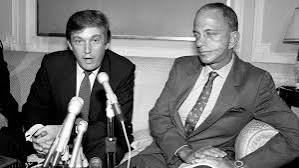
Then, in 2016, Donald Trump was elected president and suddenly, Cohn was breaking news again. The very next year, when Trump was furious at then-Attorney General Jeff Sessions for recusing himself from an investigation into whether Russia meddled with the election, the president cried out to his advisers, “Where’s my Roy Cohn?”
Now, as if in answer to that question, Kai Bird has written a magisterial biography of the notorious lawyer and Trump whisperer that is indispensable reading for anyone who wants to understand the current political moment. Bird, the co-author of American Prometheus, the Pulitzer Prize-winning biography of Robert J. Oppenheimer and inspiration for the Oscar-winning movie, began it in 2022, a couple years before Trump’s re-election. He collaborated with his wife, Susan Goldmark, who did the research for this riveting account of the unseemly, outrageous life of the hustler and con man about whom Trump once said, “If you need somebody to get vicious, hire Roy Cohn.”
Though Cohn has been long gone from public life — he died of AIDS at age 59 in 1986, insisting to the very end that he had succumbed to liver cancer — Bird demonstrates how he practically invented the dark political arts of resentment and division adopted by his former client, protégé and future president of the U.S.
Indeed, over the recent 4th of July weekend — decades after the collapse of the Soviet Union — Trump used Cohn’s divisive, inflammatory rhetoric in back-to-back speeches, including one at Mount Rushmore, branding his political opponents as evil, godless communists.
Bird walks us through Cohn’s life decade by decade. He grew up as an only child in a wealthy Jewish family on the Upper East Side and attended elite private schools, where his boyhood friends included Si Newhouse Jr., heir to the Condé Nast media empire, Gene Pope Jr., who would go on to found the National Enquirer, and, improbably, Al Lowenstein, later a well-known liberal Democratic activist and politician.
After Cohn graduated from Columbia Law School, his father, a judge, pulled strings to get him a job in the U.S. attorney’s office for the Southern District of New York, where he made a name for himself as the boy prosecutor who sent Julius and Ethel Rosenberg to the electric chair in 1953 for passing nuclear secrets to the Soviets. His tactics were highly irregular, including private meetings with the trial judge.
Not long after that, he went to work as chief counsel to Wisconsin Senator Joe McCarthy, using his position to force U.S.-funded libraries abroad to purge 30,000 books on the flimsy pretext that the authors were communists or Soviet sympathizers. He was also a central figure in the so-called Lavender Scare, when hundreds of federal employees thought to be gay lost their jobs because they were deemed a security risk.
By the 1960s, Cohn was back in New York, hanging out at the Stork Club and 21, squiring Barbara Walters around town, and representing mobsters though still living at home with his mother at 1165 Park Avenue. Over the next decade he would be indicted three times by U.S. Attorney Robert Morgenthau Jr. for bribery, perjury, extortion and other white-collar crimes. In each case, he managed to beat the rap though months before his death he was finally disbarred for unethical conduct.
After Cohn’s mother died in 1967, he moved into a stately townhouse on East 68th Street, where he established his law practice and stopped the pretense of dating women though he never publicly came out as gay. Then, in 1973, Cohn met his most consequential client. At the time, Trump was the 27-year-old son of a Queens real estate mogul trying to break into the Manhattan market and living in a rent-controlled studio on East 75th Street with a view of a water tank on an adjacent building.
Cohn advised the family on how to fight a Justice Department lawsuit accusing the real estate company of violating the Fair Housing Act by refusing to rent to Black tenants. Over the course of the litigation, Cohn taught Trump his signature moves: Keep your name in the paper. Never settle. Countersue. Claim victory. Don’t pay the bills.
Cohn also advised Trump on his first major real estate deal in Manhattan — buying the dilapidated Commodore Hotel on East 42nd Street, next to Grand Central Terminal. To get the deal done, Cohn worked his extensive connections to New York’s first Jewish mayor, Abraham Beame, a player in Democratic machine politics and an old friend of Cohn’s father.
For more than a decade, Trump continued to model himself after his mentor, adopting his penchant for personalized license plates and his snarling, scowling demeanor. Bird argues that in the decades since Cohn died, the McCarthyism of the 1950s has morphed into a nativist, America Firster politics that transformed the Republican Party into one of resentments against the old establishment, multiculturalism, globalization and liberal culture — in other words, the MAGA movement of today.
Cohn’s “values, his unethical behavior, and his political mindset have survived and replaced the values of the establishment he so resented,” Bird writes. “Perhaps his life is proof of the ability of one individual to change the arc of history. Certainly, he gave us the narcissistic politics of Donald Trump.”
Ann Levin is a writer and book reviewer who worked for many years at The Associated Press. Read full bio →
This story was originally published on the Forward.
Features
Musings from Dizengoff Street – by Bruce Brown (updated Sept. 1)

(Posted Sept. 1) Can you be more of an international embarrassment and liability? Yes talking about Israeli’s antagonist extraordinaire and National Security Minister Itamar Ben Gvir.
Declaring that Israel should kill ’30-40 Gazans a day’. Seriously?!?! His actual statement may have been more refined and qualified. But it doesn’t really make a difference. That’s the takeaway. Like whose side is he on anyway. Talk about giving our detractors ammunition to delegitimize our little shtetl. Hello?!?!
And a few days later. Showing off in front of a gallows site under construction at a high security prison. Seriously?!?! The death penalty for terrorists. Right or not – I think the former. But like can you give us reason to be compared to an extremist state. That’s the takeaway. Like whose side is he on anyway. Talk about giving our detractors ammunition to delegitimize our little shtetl. Hello?!?!
Serenity now!

(Posted August 28) Kites. Color. Childhood. Hamas and friends should watch Mary Poppins with the final kite flying scene. Remember that song, Let’s Go Fly A Kite. Ya, I know. Somewhat ethnocentric. But still…. I have fond memories of flying kites with my kids. Down the Mediterranean shoreline in Tel Aviv. At the Ness Tziona kite flying festival. Along the green grounds of the Weizmann Institute. Laughing and running. Looking to the sky with awe. Multi-shades and fancy. Kites.
With your fist ‘olding tight
To the string of your kite
…oh, oh, oh!
Lets go fly a kite
Kites. Fun. Laughter. Innocence.
Kites. Not an instrument of war.

(Posted August 25) How principled can you be! Ireland -one of the most anti-Israel and foggiest countries in the EU- insisted that its government’s new, 60$M executive jet NOT be equipped with Elbit’s FalconEye navigation system, which helps pilots navigate in fog -how ironic- and other difficult weather conditions. Without this unique system the plane must be diverted to alternative airports. This a part of the government’s official boycott of Israeli goods. So good luck to Prime Minister Michael Martin in landing his aircraft in Dublin.
And despite some negative sentiment towards everything Israel, Elbit achieved over 32$B in backorders with Europe driving much of its export growth. On a more personal muse. The morning after Iran’s first attack on Israel (April 13 2024), I woke up not with fear and panic. Well. Okay. Some of that. But also great excitement regarding an investment opportunity which developed overnight. Actually it was the wife’s suggestion. After Israel successfully intercepted over three hundred missiles and drones – showcasing the strength of Israel’s defense industry- my wife had a eureka moment. What better public relations for Israel’s defense industry. Let’s buy stock in Elbit, a key player in that ecosystem. We did. And about eighteen months later we cashed in. With about 150% profit. This is not an endorsement to buy… blah, blah, blah….
Again. Good luck to Prime Minister Martin.

(Posted August 21) Sometimes musings are terribly sad. But should be shared.
Happy belated birthday beautiful Ariel. Turned seven on August 5th. Thought about him and his younger brother Kfir and mother Shiri. All murdered by Hamas shortly after their unbelievable and surreal abduction on Oct 7 2023.
As I was driving home today. “I Thank You Child” by Zakk Wylde shuffled onto my Spotify. Always kills me, this song. It was played by Yarden, the father who himself was held hostage, at the funeral of his family. For Ariel and Kfir. The lyrics chilling. The frequent drum rolls haunting.
It was you who made living all worth the while
Oh, I thank you, my child
Comfort in your eyes
For the warmth inside your smile
Faith’s done gone astray
It was you who made living all the while
All my fears repressed
Oh lovin’ you child it’s the best
This song. Written almost thirty years ago. Finds its devastating meaning today. With the Bibas family tragedy.
How.
Listen to the song here:
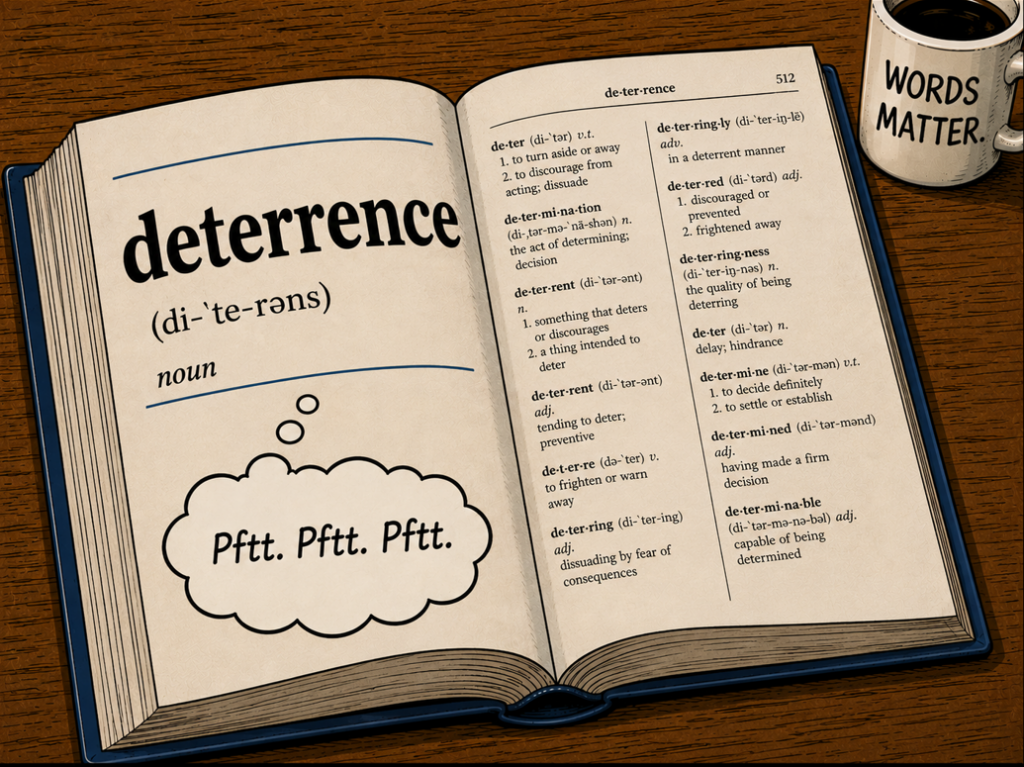
(Posted August 18, 2026) And the beat goes on in the strait. A bit quieter lately although may be heating up again with the 60day ‘ceasefire’ officially expired. And while Iran occasionally lashed out over the last two months, they did not attack Israel. How do you spell deterrence. According to my Yiddisha mama, its spelled ‘Pftt. Pftt. Pftt‘.

(August 14, 2026) Despite three years of varying degrees of warfare. Moody’s biannual report of the Israeli economy was quite positive. Basically, the report saw no pressures on Israel’s credit rating. While the macro data remains strong, Israel still faces a complex geopolitical situation further complicated by upcoming elections (we pondered about how crazy that is in an earlier muse). And Israeli’s inflation rate for the first half of 2026 fell to a historic five year low of 1.2% (vs Canada’s 2.6%). As for my own pocketbook. Haven’t had an infamous Israeli bank overdraft in years. So all is fine.
If that’s not enough economic voodoo talk for one musing. According to one famous barometer. Israel moved to second place in the Economist’s Big Mac Index. Introduced in 1986, this tasty indicator compares the purchasing power parity across countries by measuring the price of a McDonald’s Big Mac -which most can relate to- against the benchmark U.S. burger. So while a Big Mac in the U.S. costs $6.22. In Israel it costs $7.67, the second most expensive place to buy the hamburger in the world, Switzerland being the most pricey at a whopping (no reference to Wendy’s) $9.04. While the cheapest Big Mac can be enjoyed in Indonesia at only $2.38. Canada ranked 22nd of the fifty-four countries considered, at $5.85. Parity. Smarity. I’m going for my Big Mac fix. Just after I finish writing this muse….

(August 11, 2026) Bravo Boy George. We certainly will dance again! And what better way than with his new reggae tune. Now Boy George is dealing with a hostile backlash against his just stand for Israel. Having to withdraw from London’s East End production of Jesus Christ Superstar where he was going to play – guess it. King Herod. Never a big Culture Club fan, but I am anyway -as a sign of support- going to download his greatest hits to my Spotify library. And hoping to have a chance to buy a concert ticket should Boy George perform in Israel. Kind of reminds me of Bob Dylan’s 1983 song Neighborhood Bully. Also in defense of Israel. I’m going to download that song as well. Although don’t think he was hounded the way Boy George is now. Sign of the times I guess.
+++++
Coming clean. I sometimes find myself chanting, to no one in particular, that snappy little ditty ‘from the river to the sea, Palestine will be free.’ Now why can’t we come up with something as catchy. With such an impressive gene pool of great Jewish songwriters. George Gershwin. Irving Berlin. Burt Bacharach. Carole King. Neil Diamond. Leanard Choen. Paul Simon. Gene Simmons, Amy Winehouse. Bob Dylan. And yes, even the Buddhist Boy George. And still… gurnish! No wonder we’re losing the global PR battle

(August 8, 2026) Outside Basimta Café in Central Jerusalem. Love the red shirt against a tiny sea of black. Not sure I am shrugging because of the ultra-orthodox uproar over a Jerusalem café operating on Shabbat or the lack of an ultra-orthodox uproar over a Jerusalem café operating on Shabbat. For the last six weeks Israeli headlines shouted about the cafe chaos. With the ultra-religious blocking entrances and storming the café. While shouting ‘Shabbos! Shabbos!’ Upsetting the secular amongst us just wanting to enjoy our Saturday iced matchas. So the wife and I thought we would check it out. And. Yes. Buy something to support the business. Uproar. Not. Blocked entrances. Not. Storming the café. Not. Albeit there were police barriers separating the devout protesters from the coffee drinkers. The protesters being just a few dozen black clad, pious Jews. Mostly teenagers. And yes. Shouting ‘Shabbos! Shabbos!’ Certainly underwhelming in its reported mayhem. Reminds me of the famous saying misattributed to Mark Twain – “If you don’t read the newspaper, you’re uninformed. If you do, you’re misinformed.” But I did enjoy my iced matcha.

(August 6, 2026) Here we go again. Another round of forever negotiations. As someone who negotiates for a living. The way things are going in the straits. If I had to recommend a book on the subject to a new hire. Between The Art of the Deal, A Presidential Edition by Donald J. Trump or The Real Art of the Deal by the Mullahs of Iran with a special forward by the IRGC. Well. I would choose the latter.

(August 3) Bravo Yoav Segalovitz, Liberal Yesh Atid MK and Monsour Abbas, United Arab Ra’am MK and party head. For breaking a glass ceiling where a Jewish lawmaker joins an Arab political party. No less a political earthquake in my little shtetl. Which can significantly impact coalition block arithmetic and posturing and strategy in the upcoming elections. Now Ra’am can be considered a legitimate ‘Zionist’ partner when forming coalition blocks and potentially pushing the ‘center left/right’ party over the 60 seat majority threshold. In our crazy parliamentary democracy defined by a multi-party (about fourteen!!), proportional representation system. To paraphrase Winston Churchill, Israel’s proportional representation model of governance is the best parliamentary democracy system except for all other forms of working democracies. Stay tuned for more amateurish political musings as we move towards Israel’s 26th national election – five of them held since 2019.

(August 1) Although both sides say they are open to diplomacy. Neither really trusts the other. And American military action, or its threat, continues. I read headlines in the middle of the night -it’s a nervous habit lately– that the Dynamic Duo of Trump and Netanyahu may again strike in unison. Possibly this weekend. Yikes! Prompting me, at 2:30 AM, to dash around the house stocking my safe room. Bottled water. Canned food. Medicines. Documents. The beat goes on….
If it’s crazy here. It’s insane in Italy. With a recent online ‘Jew Hunt’ in the Milan area. Before being removed, the digital forms urged reportings of Israelis and Italian Jews staying in local hotels. The infamous Global Sumud Movement -yes, the one coordinating ‘peace and humanitarian’ flotillas to Gaza- was somehow connected. Although they deny involvement?! This deranged decree was looking to identify Zionist tourism and Zionist neo-colonization in Italy. I’ll stick with stocking the saferoom.
Then there’s New York Mayor Mamdani, a Global Sumud Movement supporter, threatening to arrest Prime Minister Netanyahu if he comes to New York. But since discovered he has no legal right for such a grandstanding, antisemitic, anti-Israel, anti-Western, anti-democratic antic. Maybe Mandami should be arrested! Or at least impeached. For being a grandstanding, antisemitic, anti-Israel, anti-Western, anti-democratic mayor.
Here’s a post Bruce sent us Friday, July 31:
WARTIME MUSINGS
Should credible threats against FLOTUS and ‘FSOTUS’ (first son..) not be justification to attack first.
As for yesterday’s summit. Netanyahu really can’t win. Explainer. If Trump now attacks without victory its ’cause of Netanyahu. If Trump now attacks with victory its ’cause of Trump. And, in Israel, if Trump doesn’t attack -victory or not- Netanyahu failed in his eighth meeting with Trump. And if Trump does attack -victory or not- half the country will vilify Bibi anyway. Missing a permutation?
Ya. I know. Kinda’ need a definition of victory for that musing to work.
And here in my little shtetle. We go to sleep unsure if there will be a code red in the middle of the night. And if not. We wake up thinking it will be tonight. How do you define stress?

Seemed like an appropriate way to end this musing.
Bruce Brown is a former Winnipegger who made aliyah to Israel over 35 years ago. Bruce first began writing for us – in his own inimitable style, in 2012, during what was known as “Operation Pillar of Defense.” His occasional musings on aspects of life in Israel that were far from what you’d typically read in other reports from Israel were hugely popular – both in the print Jewish Post & News and on this website.
We’re now glad to report that Bruce is back writing for us – this time on a regular basis. We will post Bruce’s reports as they arrive – with the date of each post at the beginning of that post.
Here’s some information about Bruce – and awards he’s received for his writing:
Bruce Brown. Canadian born. Now living in Israel (for a long time). Bruce works in Israel’s hi-tech sector by day and, in spurts, is a somewhat inspired writer by night. He received the Americal Jewish Press Association’s award for writing excellence in 2019 and 2015. And wrote the1998 satire, “An Israeli is….”. Bruce’s visuals are AI-assisted and created with ChatGPT under his inimitable visual concept and creative direction. Bruce’s musings are political, social, economic and personal. With lots of biting, contrarian, sardonic, irreverent and mischievous insights.
Features
Hamilton Hebrew Academy refuses to let 2 Jewish students enrol – because their mother had a Conservative, not an Orthodox conversion
By BERNIE BELLAN (This story was originally posted July 14)

From time to time we receive a request to do an investigative piece about one matter or another. Before I even begin to entertain following up on that type of request I pose quite a few questions to the person or persons who sent me the request. I also send copies of whatever it is that I might consider publishing to subjects of the story for them to comment prior to its publication.
Recently I was contacted by a former member of our Winnipeg Jewish community by the name of Fabio Chusyd, who now lives in Hamilton with his wife, Soraya, and their two daughters (whose names will not be given here.)
Fabio Chusyd first contacted me on July 7. Here is what he wrote in an email:
“My name is Fabio Chusyd. We met years ago while I was living in Winnipeg, and I have always respected your work. My family and I are active members of the Jewish community in Hamilton.
“Hamilton Hebrew Academy is the only full-time Jewish day school in Hamilton. It shares its premises with Adas Israel Congregation, an Orthodox synagogue, and its Dean is Rabbi Daniel Green.
“At the same time, its mission states that it is “dedicated to fostering an inclusive learning environment that welcomes and embraces children and their families from diverse Jewish affiliations and backgrounds.”
“Our daughters, (names redacted) have experienced antisemitism in the public school system, which is why we sought a safe Jewish educational environment. They have received Jewish education at home and through Temple Anshe Sholom. …. also previously attended HHA’s daycare, where Saraya’s Conservative conversion was known and accepted. The girls were invited to visit the school, met the teachers, toured the classrooms, and naturally became excited about attending. They were then ultimately denied admission.
“After two meetings with Rabbi Green much of the discussion focused on Saraya’s Conservative conversion and our willingness to pursue an Orthodox conversion path. Shortly afterward, our daughters were denied admission.
“I lawfully recorded both meetings under Ontario’s one-party consent law. We later submitted six written questions seeking clarification of the decision, but the school declined to answer any of them, stating only that it had nothing further to add.
“The Hamilton Jewish News declined to publish our family’s response, which is why I am reaching out to you.”
I responded to Fabio and asked him whether he might consider trying to contact the Canadian Jewish News and ask them to do a story about his family’s situation – since the CJN website is by far the most important Jewish website in Canada, also Hamilton is only a short distance from Toronto, so it made more sense to try to get the CJN to cover the story.
Fabio wrote back: “Following your suggestion, I have also reached out to the Canadian Jewish News. I wanted to let you know out of courtesy.”
In a later email Fabio elaborated on the Hamilton Jewish News’ refusal to do a story about what had happened to his family. Further, the Hamilton Jewish Federation had also refused to intervene in the situation. By the way, the Hamilton Jewish News is run by the Hamilton Jewish Federation.
I found that all so surprising. And yet, while Hamilton is far removed from Winnipeg physically, a fair number of former members of Winnipeg’s Jewish community have moved to Hamilton in recent years. Hamilton now has a Jewish population over 5,000 and it has become a popular alternative destination for families looking for a cheaper place to live than Toronto. I was quite surprised that both the Hamilton Jewish Times and the Hamilton Jewish Federation had refused to delve into what had happened to the Chusyds. So, I told Fabio that I would be willing to write an article, but only after a thorough investigation of what had happened.
Hamilton actually has two Jewish day schools: the aforementioned Hamilton Hebrew Academy and a school called Kehila Heschel School. Hamilton Hebrew Academy offers classes from JK- Grade 8 (It also may be adding a Grade 9 this coming year.) and has approximately 200 students. On its website HHA describes itself as “dedicated to fostering an inclusive learning environment that welcomes and embraces children and families from diverse Jewish backgrounds.”
There is another important aspect to Hamilton Hebrew Academy. It is directly connected – both physically and spiritually, to Hamilton’s Orthodox synagogue, the Adas Israel. Here is what I was able to find about that connection: “The Hamilton Hebrew Academy (located at 60 Dow Ave) is located adjacent to and was founded by the Adas Israel Congregation (located at 125 Cline Ave S).
“The Orthodox synagogue established the school decades ago to serve the community, and they often share leadership; for instance, the spiritual leader of Adas Israel serves as the Dean of the academy.” (That last point is key to understanding what has happened to the family in this story.)
The other Jewish school in Hamilton, Kehila Heschel School, bills itself as an “independent, egalitarian, community school that welcomes families from the full spectrum of Jewish life” but, as was previously noted, it had only 35 students this past year, according to Fabio Chusyd.
One other point of interest from a Winnipeg perspective: The CEO of Hamilton’s Jewish Federation (until he retired in April) was Gustavo Rymberg. Like the Chusyds, Gustavo and his family first moved to Winnipeg after having emigrated from South America in the early 2000s. I wonder how Gustavo would have reacted to what has happened to the Chusyds? By the way, the new CEO of the Hamilton Jewish Federation, Marion Zeller, does not take over her role until August 10, 2026.
In a subsequent email, Fabio Chusyd elaborated on what happened after the family had been invited to visit Hamilton Hebrew Academy:
“What happened is that they invited the girls to visit the school, they were welcomed by students and the principal – who happens to be a rabbi as well.
“We explain (to)…- the rabbi of the synagogue (who is also) dean of the school that we are happy at the reform synagogue. But he made it mandatory to join the orthodox synagogue with openess to a future orthodox conversion.”
Fabio Chusyd recorded two conversations Rabbi Green had with Fabio and Soraya Chusyd. Fabio sent me transcripts of both conversations – one recorded on June 26 and one on July 2. In both conversations Rabbi Green hinted quite strongly – without ever spelling it out as a direct stipulation, that in order for the Chusyds’ daughters to be allowed to enrol in HHA, Soraya Chusyd would have to undergo an Orthodox conversion and the Chusyds would have to join Adas Israel Congregation.
On July 6 the father received a Whatsapp message from Rabbi Green:
“Hi Fabio,
“I just wanted to give you a headsup. Kym (Gazda, the director of admissions for HHA) will be sending an official email from the school. Based on our conversations, I don’t think the school is the right fit at this time. If you have a change of heart, pls let me know. Wishing you much success.”
That ‘change of heart” apparently referred to Soraya’s reluctance to undergo an Orthodox conversion. In a subsequent email Fabio Chusyd explained that his wife did not want to go through another conversion process after having been converted by a Conservative rabbi in South America. Further, the couple was reluctant to leave their Reform congregation and join the Orthodox Adas Israel congregation, which also seemed to be a prerequisite to their daughters’ being able to enrol in Hamilton Hebrew Academy
Just as Rabbi Green’s email was opaque, the email from the director of admissions was equally opaque in not offering a specific reason for the school’s refusal to admit the Chusyds’ two girls this coming school year. Here is what Kym Gazda wrote in an email on July 7:
“Dear Mr. and Mrs. Chusyd,
“Thank you for your interest in Hamilton Hebrew Academy and for taking the time to meet with us.
“Upon careful consideration, and based on the information provided, we are unfortunately unable to accept …. to the HHA for the 2026–2027 academic year.
“Should anything change, please feel free to let us know, and we would be happy to reconsider your application at that time.
“We wish you and your family all the best.”
I received a further email from Fabio Chusyd, in which he reprinted the Hamilton Jewish News’ editor, Wendy Schneider’s response, also dated July 7, to his request that the paper consider doing a story about what happened to him and his family:
“Dear Mr Chusyd Thank you for this note. I appreciate how deeply upsetting and frustrating this is for you. As I explained yesterday, at this time, I feel I cannot act without advice from the Federation CEO because of the nature of your complaint i.e. a local issue. I sincerely hope this issue is resolved to your satisfaction. Unfortunately, for now, there’s nothing I can do at this point to help ease your distress. “
In response, Fabio Chusyd wrote to Wendy Schneider:
“Thank you for your time on the phone yesterday and for your supportive words.
“However, several years ago, you published a letter titled “Censorship Has No Place in Our Community.” Yet by not allowing me to use the online letters section, you are effectively censoring my voice.
“The slogan of the Hamilton Jewish News is “The Voice of Jewish Hamilton.” By refusing to publish or even accept my letter, you are silencing a member of the very community the publication exists to serve.
“How does this decision align with the principles of free expression and with the mission of your newspaper?”
This was all so puzzling. Here we have a case of a couple with two young children whom they would like to attend a Hamilton Jewish school – and the school simply turns them down flat – without any explanation beyond saying the “school is not the right fit at this time.” It seems clear though that the mother’s refusal to undergo an Orthodox conversion and the parents’ unwillingness to join the Adas Israel Congregation were key to the school’s decision not to accept the couple’s children as students this coming school year.
Now, ordinarily, one might expect that after receiving a slap in the face like that, the parents of the girls would simply say they’ve had enough of that – and resign themselves to sending their daughters back to public school.
But, when I asked Fabio Chusyd why he and his wife were so eager to send their daughters to HHA – or whether they had perhaps considered sending their daughters to Kehila Heschel School , here is what Fabio wrote back:
“We did consider Kehila Heschel School. We visited a few years ago, but with only about 35 students in the entire school, we didn’t feel it was the right fit for our girls. For us, school also means exposure to a larger group of children and a broader social environment. HHA has over 200 students. Also HHA appears to be opening a Grade 9, so I am thinking long-term.
“… is going into Grade 4 and … into Grade 2. As a family of immigrants without an extended support network here, we felt it was important for both girls to attend the same school.
“And then we had moved them out of HHA daycare because our local public school is only five minutes from our home.
“Oct. 7 happened, antisemitism reappeared, and the girls were victims. Hence, HHA that call themselves open to all Jewish affiliations seemed to be the safe spot. Rabbi Green and Kim Gayza were told that the girls had been victims of antisemitism. Mainly …, who gave Hanukkah goodie bags last year and her classmates ripped it, spitted on it and throw them in the garbage, while saying offences.”
There is another factor that one might consider in this entire matter. According to its own annual report, the Hamilton Jewish Federation provided $289,000 in funding for the Hamilton Hebrew Academy for the fiscal year ending June 30, 2025, so the HHA is hardly operating independently of the Hamilton Jewish Federation.
It may not be the place of the publisher of a Winnipeg website that focuses to a large extent on the Winnipeg Jewish community to poke into the affairs of another Jewish community such as Hamilton’s, but where that community’s Jewish newspaper refuses to delve into what appears to be a clear case of wrongdoing by a Jewish institution and, as of writing this, the Hamilton Jewish Federation has also refused to intervene in this matter, then we thought it an important enough issue to broach on this website.
We contacted both Hamilton Hebrew Academy and the Hamilton Jewish Federation, offering them an opportunity to respond to this article prior to its being published.
On July 21, we received a response from Rabbi Green:
“Hamilton Hebrew Academy’s inclusive character and the diversity of its parent and student body are well known throughout the community. Our families include individuals from a wide range of Jewish backgrounds, including converts of all denominations, and many who are not Jewish whatsoever. The school is family-oriented, where we strive to be on a journey of growth togther. (emphasis mine)
“Through Project Lifeline, HHA has also taken a leading role in supporting children who experience antisemitism in public schools, particularly those who may be the only Jewish student in their school or community. For this purpose, we operate transportation routes serving students from Niagara, Kitchener-Waterloo, and other communities outside Hamilton, and provide free bus service and often tuition. This project, I believe, is unprecedented in North America and speaks to the proactive nature of our school in supporting Jewish students at risk. “
I responded to the rabbi:
“With all due respect Rabbi, your email here would seem to directly contradict how you behaved with respect to the Chusyd family. If there is some reason that you have turned down the two Chusyd girls for enrolment in your school – but you are not at liberty to discuss that reason, then I could include that in what I publish.
“But – as it stands, the only reason that I have seen in your correspondence with the Chusyds. is that you don’t think it would be “a good fit” for the Chusyd children to attend HHA.
“I am going to give you every opportunity to explain what you meant by writing that, but I would suggest your latest response is somewhat disingenuous.”
The rabbi responded:
“As I mentioned, I am not at liberty to discuss the admission decision of any specific child or family. “
Also in an email sent to Fabio Chusyd on July 21, Rabbi Green wrote:
“Our position remains unchanged. As previously indicated, Hamilton Hebrew Academy will not engage in public discussion regarding the admission of any individual applicant or family. We have nothing further to add on this matter.”
